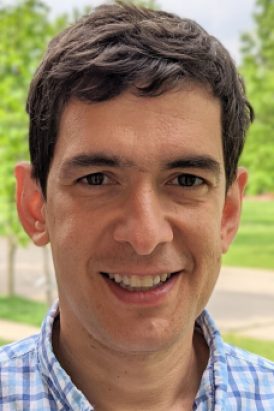
Dr. Kevin G. Jamieson is a faculty member at the University of Washington , School of Computer Science , with prior affiliations at the University of California, Berkeley (Department of Electrical Engineering and Computer Sciences) and the University of Wisconsin-Madison (Department of Electrical and Computer Engineering). His work spans machine learning, reinforcement learning, bandit algorithms, and robotics. Current university: University of Washington Academic rank: Professor His research focuses on: Bandit algorithms and sequential decision-making Optimization in non-stationary environments Reinforcement learning with real-world applications Multi-agent systems and game theory Efficient data selection for multimodal learning Human-in-the-loop AI systems Recent publications highlight his expertise in pure exploration strategies, robotic manipulation, and bridging simulation-to-reality gaps in RL. He has mentored numerous collaborators, though formal student advising details are not explicitly listed here. No scientific awards are mentioned in the provided data.
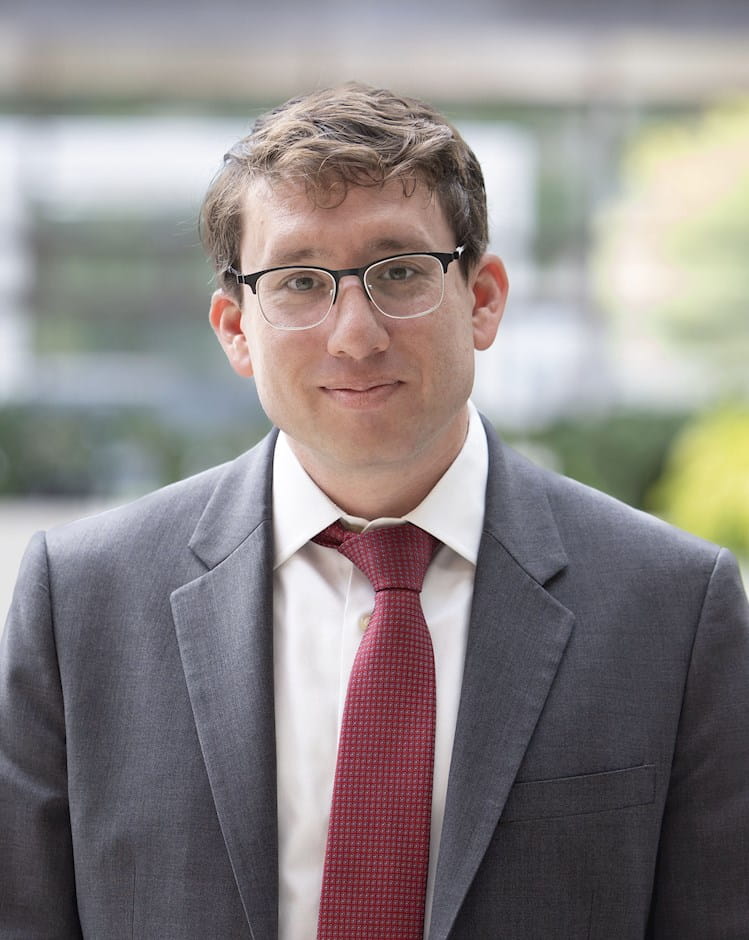
Giorgio Ferrari is a Full Professor for Mathematical Finance at the Institute for Mathematical Economics (IMW), Faculty of Economics, Bielefeld University. His research bridges stochastic control theory with applications in economics, finance, actuarial science, and epidemiology. Education: B.Sc. and M.Sc. in Physics and Mathematical Physics from the University of Rome La Sapienza, Ph.D. in Mathematics for Economic-Financial Applications (2012). Academic Appointments: Post-Doctoral Researcher (2012–2015), Substitute Full Professor (2015), Junior Professor (W1) (2016–2017), Associate Professor (2017–2023), and Full Professor (2023–present) at Bielefeld University. Research Interests focus on Singular Stochastic Control , Optimal Stopping , and Stochastic Games , with applications to economic policy, financial markets, and epidemic modeling. His work extends to Mean-Field Games for large-scale strategic interactions and Free-Boundary Problems for investment decision-making under uncertainty. Scientific Contributions include groundbreaking publications in Stochastic Processes and their Applications , Mathematical Finance , and SIAM Journal on Control and Optimization . His research projects, such as the DFG SFB 1283 subproject C4 and the Research Training Group 2865 , address uncertainty in dynamic economies through game-theoretic and stochastic frameworks. Notable Awards: AMASES Best Young Researcher Paper (2014), YITP Research Prize (2017), and multiple research fellowships from the University of Padova. Leadership: Director of the Bielefeld Graduate School in Theoretical Sciences (2023–present) and Principal Investigator in major DFG-funded initiatives.
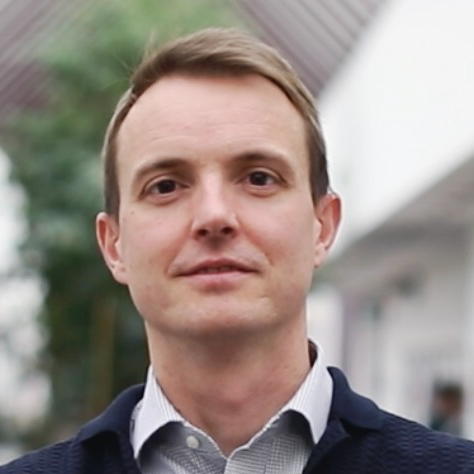
Erhan Bayraktar is a Professor of Mathematics at the University of Michigan, holding the Susan Smith Chair. He serves as Director of the Quantitative Finance and Risk Management Masters Program, which he established in 2015. His academic career at the University of Michigan spans since 2004, progressing from T. H. Hildebrandt Research Assistant Professor to his current full professorship. Professor Bayraktar earned his Ph.D. from Princeton University in 2004, following dual Bachelor's degrees in Electrical Engineering and Mathematics from Middle East Technical University in Turkey. His academic journey reflects a strong foundation in both theoretical and applied mathematical disciplines. Bayraktar's research focuses on mathematical finance, applied probability, machine learning, mean field games, stochastic analysis, stochastic control, and optimal stopping. His work bridges theoretical mathematics with practical applications in finance and risk management. He has developed sophisticated mathematical frameworks for analyzing complex financial systems, market behaviors, and optimal decision-making under uncertainty. His contributions to mean field games have provided new insights into large-scale interacting systems, while his work on stochastic control has advanced methodologies for optimal decision processes. His publication record demonstrates a consistent trajectory of high-impact research, with recent work focusing on Wasserstein space analysis, graphon particle systems, and applications of machine learning to financial mathematics. His research shows increasing interdisciplinary connections between traditional mathematical finance and modern computational approaches. Susan M. Smith Professorship (2010-present) National Science Foundation CAREER Grant (2010-2016) SIAM Activity Group on Financial Mathematics and Engineering Early Career Prize (2010) Professor Bayraktar has mentored 14 Ph.D. students (13 graduated) and approximately 40 post-doctoral researchers. His students hold prestigious positions in academia and industry, including tenure-track positions at Boston University, University of Colorado, University of Sydney, and University of Toronto. He has secured continuous funding from the National Science Foundation, including the current grant DMS-2507940 (2025-2028) and previous grants totaling over 15 years of continuous NSF support. As Director of the Quantitative Finance and Risk Management Masters Program, Bayraktar has built a robust academic community through the Financial/Actuarial Math seminar series, which hosts about 10 outside speakers annually, and by organizing international workshops in stochastic analysis for finance and insurance in Ann Arbor.
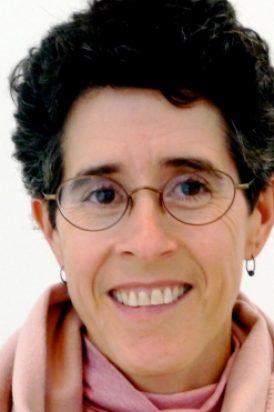
Alexander P. Frankel is the Isidore Brown and Gladys J. Brown Professor of Economics at the University of Chicago Booth School of Business. His research focuses on mechanism design, game theory, and contracting, with applications across various economic domains. Previously, he worked at Yahoo! Research and has published in top economics journals including the American Economic Review and Journal of Political Economy. Education: BS in Mathematics from the University of Chicago BA in Economics from the University of Chicago PhD in Economic Analysis and Policy from Stanford Graduate School of Business Frankel specializes in information economics, mechanism design, and contract theory. His work explores how information structures affect economic outcomes, with applications to delegation, signaling, and strategic communication. He has made significant contributions to understanding how information is designed and used in strategic settings, particularly in areas such as R&D investment, admissions policy, and central banking. Frankel's publication record demonstrates a consistent focus on information design and its applications across diverse contexts. His work spans theoretical developments in signal structures and information hierarchies to practical applications in education policy, corporate decision-making, and monetary policy. The research shows increasing sophistication in modeling information environments and their economic consequences, with recent work addressing contemporary issues like test-optional admissions while maintaining strong theoretical foundations. As a faculty member at Chicago Booth, Frankel teaches Microeconomics (33001) and The Economics of Contracts (33931). His research has received attention in major media outlets including the New York Times, Chicago Tribune, and Freakonomics blog, indicating the broader relevance of his theoretical work to practical economic issues.
Associate Professor at the University of Klagenfurt , affiliated with the Department of Management Control and Strategic Management under the Faculty of Economics and Law . Research focuses on agent-based modeling applied to organizational dynamics , complex systems , and managerial economics . Holds a doctoral degree in Social Sciences and Economics (2012) and venia docendi in Business Economics (2018) . Core faculty member in the Self-Organizing Systems research cluster Academic editor for PLoS ONE and editorial board member for multiple journals Recipient of the 2021 Advancement Award (Humanities/Social Sciences) from Carinthian government Research integrates computational simulation with organizational theory , examining phenomena like decentralized task allocation , incentive mechanisms , and reproducibility in social sciences . Teaching portfolio includes business analytics , management control , and scientific modeling at undergraduate and graduate levels. Recent publications explore organizational resilience , team coordination dynamics , and financial modeling using agent-based simulation techniques. Active participant in international conferences like Social Simulation Conference and European Conference on Operational Research .
Heikki Peura is an Associate Professor in the Department of Information and Service Management at Aalto University School of Business. Previously, he served as an Assistant Professor at Imperial College Business School, Imperial College London. His educational background includes: PhD in Management Science and Operations from London Business School (awarded June 30, 2016) MSc in Engineering Physics and Mathematics from Aalto University, specializing in Systems and Operations Research (awarded April 27, 2010) Professor Peura specializes in analytics methods for understanding and improving firms' operational decisions . His research spans several interconnected domains including revenue management, sustainable energy generation, and supply chain management. He applies advanced analytical techniques to solve complex business problems, particularly focusing on optimization methods and decision-making under uncertainty. His work bridges theoretical operations research with practical business applications, making significant contributions to both academic knowledge and industry practice. Analysis of his recent publications reveals a consistent focus on operational decision-making with applications across multiple sectors. His work demonstrates strong methodological rigor in optimization techniques while addressing practical business challenges in energy markets, supply chain dynamics, and revenue management systems. There's a clear evolution in his research from foundational work in pricing and optimization toward more complex applications involving sustainability, risk management, and strategic decision-making in competitive environments. Professor Peura has been actively involved in teaching operations and supply chain analytics as well as revenue management courses at Aalto University. At Imperial College, he taught courses including Data Structures and Algorithms, and contributed to various Master's programs in Business Analytics and Financial Engineering. His research has established significant connections with industry applications, particularly in energy markets and platform businesses. Professor Peura maintains an active research agenda with several working papers addressing contemporary challenges in non-profit fundraising, decarbonization pathways, and healthcare financing.
Matteo Ploner is a Full Professor at the Department of Economics and Management , University of Trento, and Deputy Coordinator of the Doctoral Programme in Economics and Management under the Doctoral School of Social Sciences. He also serves as Deputy Manager of the Cognitive and Experimental Economics Laboratory (CEEL) at the University of Trento. Academic Roles: Full Professor, Deputy Coordinator (Doctoral School), Deputy Manager (CEEL) Location: Via Inama, 5 - 38122 Trento Contact: matteo.ploner@unitn.it Research Interests: His work focuses on Behavioral Economics , Behavioral Finance , and Experimental Economics , examining human decision-making in economic environments. His research spans topics like cooperation in multicultural societies, information avoidance in climate decisions, algorithmic delegation, and welfare dynamics in advisory markets. Recent Publications highlight experimental analyses of skewness-seeking in finance, cognitive barriers to energy efficiency, and behavioral interventions in low-income contexts. He also explores mental accounting principles and the interplay between trust and innovation through experimental frameworks. Labs & Teams: He is actively involved in the Cognitive and Experimental Economics Laboratory (CEEL) , contributing to experimental market analysis and behavioral research.
Virginia Young is the Cecil J. and Ethel M. Nesbitt Professor of Actuarial Mathematics at the University of Michigan's Department of Mathematics, within the College of Literature, Science, and the Arts. She holds a Ph.D. from the University of Virginia (1984). Her research focuses on actuarial and financial mathematics, particularly decision-making processes for individuals and insurance companies in financial and insurance contexts. This includes topics like optimal reporting strategies, reinsurance mechanisms, and risk management under uncertainty. Her work addresses modern challenges such as defined contribution pension plans and strategic insurance product design. Key research areas include stochastic control theory, game-theoretic models in insurance markets, and optimization under model ambiguity. She explores how insurers and individuals make decisions under risk, with applications to annuities, reinsurance chains, and lifetime financial planning. Recent studies investigate Stackelberg games in reinsurance, optimal deductible insurance, and minimizing lifetime ruin probabilities through strategic annuitization. Virginia Young has no listed scientific awards in the provided texts. She advises no formally documented students, though her role likely involves mentoring within the Mathematics Department. Her work contributes to both theoretical advancements and practical applications in actuarial science and financial risk management.
Bård Harstad is the David S. Lobel Professor in Business and Sustainability and Professor of Political Economy at Stanford University's Doerr School of Sustainability. He holds courtesy appointments as Professor of Economics at Stanford's School of Humanities and Sciences. Previously at the University of Oslo and Kellogg School of Management, Harstad's research bridges Environmental Economics , Political Economy , and Game Theory . Key Research Themes: Climate treaty design and international cooperation Supply-side environmental policy Political economy of conservation Dynamic games in environmental economics Recent Work Trends: Focus on self-enforcing agreements and pledge-and-review mechanisms (2023-2025) Analysis of natural gas transition risks (2025) Trade-deforestation linkages and contingent trade agreements (2023-2024) Scientific Recognition: Double Erik Kempe Award (2013, 2019) ERC Advanced Grant (2022), Consolidator (2016-2021), and Starting Grant (2012-2016) Fellow of Econometric Society (2021) and Det Norske Videnskaps-Akademi (2019) Teaching & Leadership: Currently teaching Environmental Economics (PhD) at Stanford, with past appointments at Harvard, MIT, and Toulouse School of Economics. Served as Editor, Review of Economic Studies (2015-2022).
Jeremy Douthit is an Associate Professor of Accounting at the Eller College of Management, University of Arizona, where he joined in 2014. He holds a PhD in Accounting from Florida State University (2014), an MAcc from The Ohio State University, and a BA from Troy University. His research centers on Management Accounting with emphasis on Budgeting, Control Systems, Behavioral Economics, and Corporate Social Responsibility. He investigates how social norms, firm CSR initiatives, and control system designs influence managerial decision-making processes and employee behavioral outcomes through experimental methodologies. Dr. Douthit's publication trend (2012-2024) reveals consistent contributions to top accounting journals including The Accounting Review and Journal of Management Accounting Research. His work demonstrates a progression from foundational agency theory investigations toward contemporary explorations of CSR's internal organizational impacts, with recurring themes of honesty in reporting, control system design, and behavioral responses to incentives. Scientific awards: Eller Fellow While no formal advisees are listed in the provided materials, his active research agenda suggests ongoing mentorship activities. His working papers on relative performance incentives and team uncertainty indicate current grant-supported projects, though specific funding sources aren't detailed in the source text. Dr. Douthit maintains affiliations with the Dhaliwal-Reidy School of Accountancy and the Center for Trust Studies, reflecting his integration into specialized research communities focused on accounting ethics and organizational trust dynamics.
Reinier Kraakman serves as the Ezra Ripley Thayer Professor of Law at Harvard Law School, Harvard University. A leading authority in corporate law and governance, he has influenced global company law reforms through consultancy with the Bank for International Settlements and advisory roles in Russia and Vietnam. His international engagement includes teaching summer programs in Germany and Japan and holding the Anton Philips Professorship at Tilburg University (2003-2004). His research spans business law, comparative company law, corporate governance, corporate takeovers, limited liability, shareholder-derivative suits, and third-party enforcement strategies. Kraakman's work emphasizes functional and comparative approaches to corporate legal structures across jurisdictions, examining how legal frameworks address agency problems and organizational evolution. Analysis of his publication record reveals consistent focus on foundational corporate law elements, historical development of business organizations, and post-crisis market regulation. His work bridges historical perspectives with contemporary governance challenges, particularly in emerging markets and financial regulatory contexts. Scientific awards and honors include: ECGI Research Associate (2006) Anton Philips Professor at the University of Tilburg (2003-2004) Kraakman co-authored the seminal 'The Anatomy of Corporate Law: A Comparative and Functional Approach' and has advised on corporate governance reforms internationally. His teaching portfolio includes specialized seminars on comparative corporate law for East Asia and Europe at Harvard Law School, contributing significantly to global legal education and policy development.
Ozan Emre UFACIK is an Assistant Professor in the Department of Business Administration at Istanbul Beykent University, Faculty of Economics and Administrative Sciences. He has been actively contributing to academia since 2020, progressing from Research Assistant to Doctor Lecturer and currently holding a faculty position. His email is emreufacik@beykent.edu.tr, and he maintains an ORCID profile (0000-0002-7982-6440), reflecting his active scholarly engagement. His research interests span a wide range of topics in management and organizational sciences, including Leadership (particularly toxic and paternalistic forms), Organizational Behavior , Marketing Ethics , Sustainability in Business , Family Businesses , and Bibliometric Analysis . His work often combines empirical case studies with quantitative and analytical methods, especially in Turkish business contexts. The 15 most recent publications (limited to available data) show a consistent trend in leadership studies, sustainability, and ethical business practices. His research frequently employs bibliometric and case study methodologies, published in both international and national refereed journals. Topics such as toxic leadership , agency theory , and sustainable urbanization reflect his interdisciplinary approach to business administration. He has supervised at least one master’s student, Osman Askin, whose 2024 thesis focused on paternalistic leadership. While no specific grants are mentioned in the text, his consistent publication record across multiple journals indexed in TR INDEX, DOAJ, EBSCO, and others indicates active research funding or institutional support. His work appears in journals such as Journal of Current Marketing Approaches and Research , Eurasian Journal of Social and Economic Research , and Erciyes University Social Sciences Institute Journal . Dr. UFACIK has contributed to academic discourse through nationally and internationally refereed articles, with a strong emphasis on practical implications for Turkish businesses and organizations. His recent works suggest continued focus on leadership dynamics and sustainability challenges in SMEs and family firms.
Seungjin Han is a Professor in the Department of Economics at McMaster University, specializing in economic theory with applications in game theory, mechanism design, and public policy. His work bridges theoretical rigor with practical economic questions in taxation, matching markets, and corporate finance. His academic foundation includes a Bachelor of Economics from Korea University, Seoul; Master of Arts in Economics from McGill University, Montreal; and PhD in Economics from the University of Toronto. Research interests center on competing mechanism games, signaling theory, and market design. Key contributions address equilibrium analysis in strategic environments, tax incidence in differentiated markets, and incentive structures in matching frameworks. His theoretical work frequently appears in top journals like the Journal of Economic Theory and Journal of Mathematical Economics. Recent publications (2021-2025) reveal consistent focus on competing mechanisms and signaling dynamics, with growing emphasis on policy-relevant applications in public finance and labor markets. Over half his work involves collaborative research networks spanning international institutions. Teaching encompasses graduate-level Microeconomic Theory (ECON 721), Mathematical Methods (ECON 765), and Advanced Economic Theory (ECON 4T03) since 2017, reflecting deep engagement with core economic methodology.
Christopher Thomas Ryan is an Associate Professor in the Operations and Logistics Division at the UBC Sauder School of Business. He holds a PhD and BA from UBC in Management Science and Mathematics, respectively. His research spans optimization theory, game theory, theoretical economics, video game design, and pedagogy for business education. He has held positions at the University of Chicago Booth School of Business and is affiliated with the Colibri Learning Foundation. Education: BA (Mathematics) and PhD (Management Science) from UBC; BA (Sociology and Economics) from University of Guelph. He has authored numerous textbooks and case studies, including works on research careers, operations management, and teaching methodologies. His work integrates human-centric approaches to operations and education systems. Research Interests include small business operations, education operations, theoretical economics, and the design of video games. He has published in top journals like Management Science, Econometrica, and Mathematical Programming. His grants include SSHRC and NSERC awards. Ryan advises students across multiple institutions and has mentored prominent faculty in marketing, operations, and MIS fields. Teaching focuses on core operations management for MBA programs and pedagogical innovation. He has developed cases on AI in education, early childhood development, and small business sustainability. Ryan’s work bridges academic research with practical applications in business and education sectors.
Professor Christian Schultz (b. 1957) is affiliated with the Department of Economics at the University of Copenhagen under the Faculty of Social Sciences. His work spans political economy, competition economics, industrial organization, and market regulation, focusing on implications of imperfect information in economic and political systems. PhD (University of Copenhagen, 1989) Current: Professor of Economics (1995–present) Past: Director of Centre for Industrial Economics (2000–2008), Head of Department (2010–2023) His research examines how information asymmetries affect political campaigns, market collusion, and public policy effectiveness. Key contributions include work on price transparency, electoral polarization, and arms-length delegation of public services. Recent publications (2014–2024) focus on price transparency, healthcare economics, technology transfer, and market dynamics. Awards include the 2003 Invisible Hand Award for outstanding teaching. Supervised 7 PhD students and 100+ master's students. Leadership roles: Chairman of Danish Competition Council (2012–present), Chairman of Danmarks Nationalbank’s Board of Directors (2018–present). Editorial and advisory roles include membership in European Science Foundation panels and evaluation committees across Scandinavia.