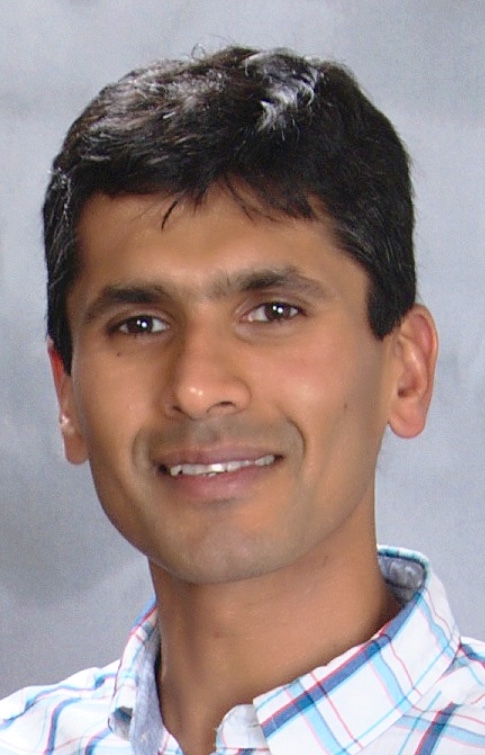
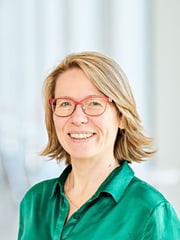
Samuel Häfner is an Assistant Professor in Economics at the University of St. Gallen , with affiliations at the Zurich Center for Market Design and sciCORE facility at University of Basel. His research focuses on Applied Microeconomic Theory with emphasis on auctions, contests, contracts, and blockchain markets. Research interests include: Industrial Organization (contracts, auctions, contests) Blockchain Economics (decentralization, service provision) Game Theory (dynamic contests, equilibrium analysis) Recent publications analyze: Risk aversion in share auctions and TRQ rent estimation in Switzerland Optimal contracting for advice and information acquisition Front-running in candle auctions
Shingo Ishiguro is a Professor at the Graduate School of Economics, Osaka University , specializing in Contract Theory and the Economics of Organizations . His work explores incentive structures, relational contracts, and organizational design. Research Interests: His research investigates asymmetric information, moral hazard, renegotiation, and coordination mechanisms in economic and organizational contexts. Key themes include Relational contracts in competitive markets Hierarchical governance and motivation Dynamic interplay between contracts and economic development Publication Trends: His work spans theoretical and applied economics, with recent focus on relational contracts and hierarchy (2025), subjective evaluations (2023), and management cycles (2022). Subfields include moral hazard, incentive design, and macroeconomic dynamics with limited commitment. Seminar/Conference Participation: Recent presentations at the Australasia Meeting of the Econometric Society (2022) and 8th Workshop on Relational Contracts (2022) reflect his engagement with contemporary economic theory.
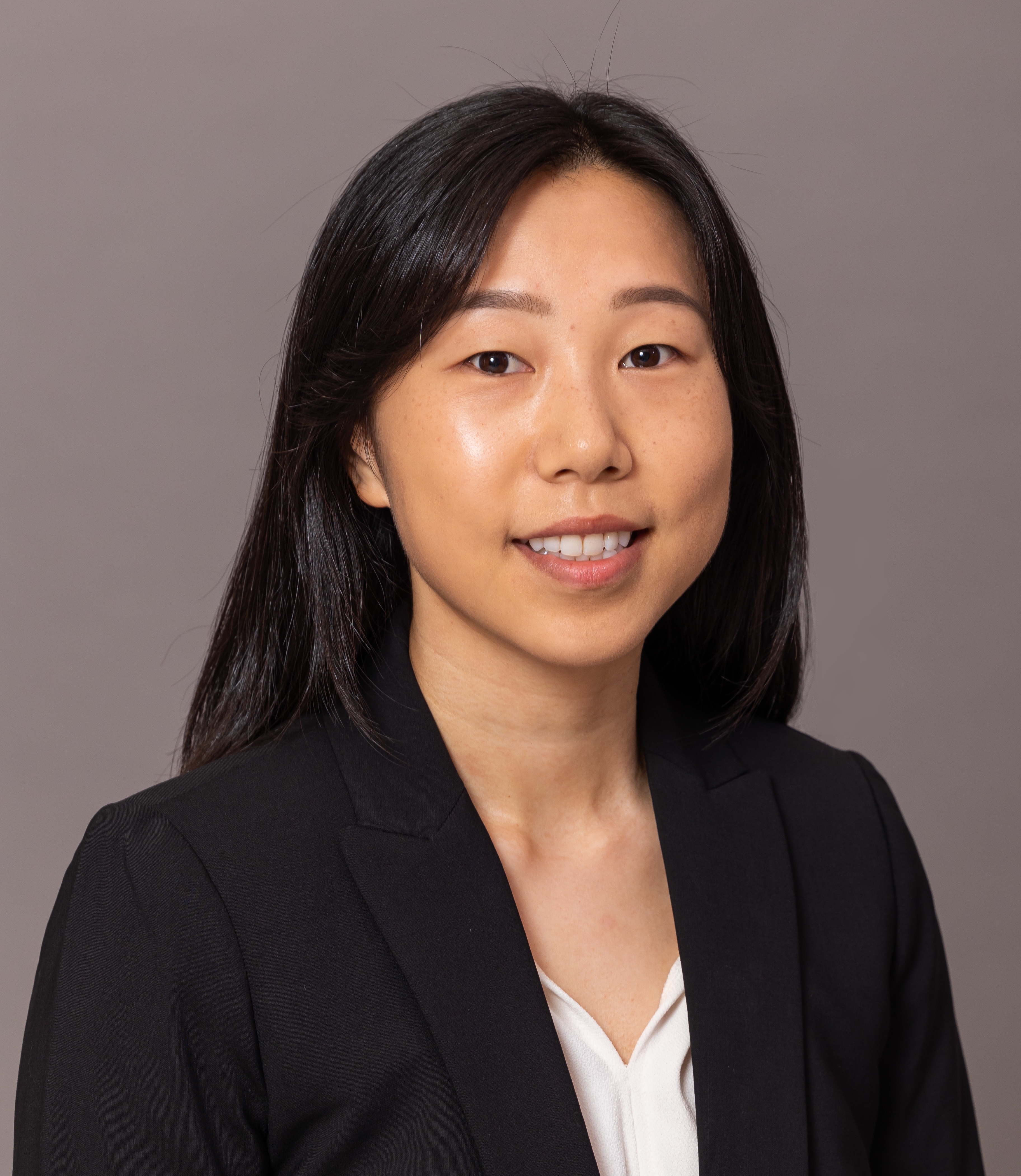
Jackie Baek is an Assistant Professor in the Department of Technology, Operations, and Statistics at the Leonard N. Stern School of Business, New York University, where she joined in January 2023. Her research bridges machine learning, operations research, and societal impact, focusing on algorithmic fairness, decision-making systems, and data-driven applications in healthcare and online platforms. Ph.D., Operations Research, Massachusetts Institute of Technology (2022) Bachelor, Mathematics, University of Waterloo Her research interests span Machine Learning, Algorithmic Fairness, Data-Driven Operations, Healthcare Analytics, Revenue Management, and Transportation Systems . She develops algorithms that improve decision-making while examining the societal consequences of algorithmic systems, particularly in hiring and health interventions. Her work combines theoretical rigor with practical applications, often involving collaborations with institutions like the Simons Institute at UC Berkeley. The recent publications reflect a strong trend in fairness-aware machine learning, bandit algorithms, and behavioral health interventions . Her work on TS-UCB improves Thompson sampling efficiency, while papers on statistical discrimination and algorithmic monoculture highlight ethical concerns in hiring algorithms. Other works apply machine learning to global health, such as COVID-19 forecasting and personalized behavioral interventions. These contributions appear in top-tier journals and conferences including Management Science , Operations Research , PNAS , and ACM FAccT . Her scientific awards include: Winner, Pierskalla Best Paper Award (2024) Second place, MSOM Student Paper Competition (2022) Finalist, George Nicholson Student Paper Competition (2021) Finalist, RMP Jeff McGill Student Paper Award (2021) Honorable Mention, MIT ORC Best Student Paper Award (2021) Oral presentation at EAAMO (2021) Jackie Baek has advised or collaborated on research with students and scholars such as Hamsa Bastani, Shihan Chen, and Vivek Farias. She has contributed to forecasting efforts through the COVID-19 Forecast Hub and presented her work at venues like BIRS. While no specific grants are mentioned, her publications suggest support from institutions like MIT, Simons Institute, and NYU Stern. She is actively involved in research groups focusing on dynamic allocation and matching, as evidenced by her BIRS talk in 2025. She maintains an active research presence with code available on GitHub and participates in interdisciplinary collaborations across computer science, operations, and social impact. Her lab or research team appears to focus on algorithmic fairness and decision systems, likely involving graduate students and postdocs in ongoing projects related to fairness, learning, and operations.
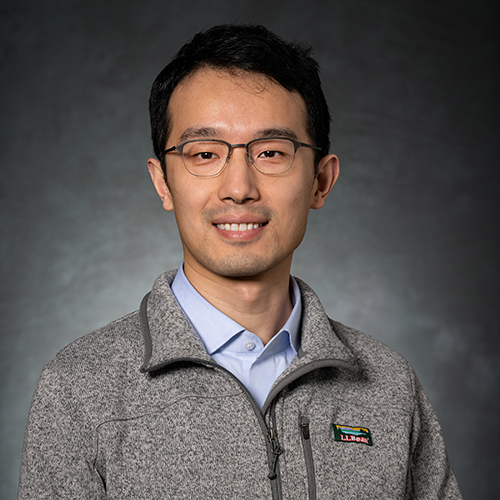
Peter Zhang is an Assistant Professor at Carnegie Mellon University's Heinz College of Information Systems and Public Policy, with a courtesy appointment in Civil and Environmental Engineering. He holds a PhD in Engineering Systems from MIT (2019), an MASc in Mechanical and Industrial Engineering from the University of Toronto (2013), and a BASc in Engineering Science from the same university (2011). His research focuses on optimization theory, applied to supply chains, transportation systems, health, and socio-technical systems. He emphasizes robust optimization, dynamic and bilevel problems, and their applications in policy design and high-stakes decision-making. Education PhD in Engineering Systems, MIT (2019) MASc in Mechanical and Industrial Engineering, University of Toronto (2013) BASc in Engineering Science, University of Toronto (2011) Research Interests Robust optimization and its applications Transportation safety and last-mile delivery systems Supply chain resilience and policy design Machine learning integration with optimization Awards & Recognition INFORMS Koopman Prize (2020) First Place, INFORMS Junior Faculty Forum (2022) Ford Engineering Excellence Award (2015) INFORMS Daniel H. Wagner Prize (2014) Advising & Mentorship Supervised PhD students including Hao Hao and Guanting Wu, with postdoctoral mentorship for Ningji Wei and Alberto Japón Sáez. Research teams have participated in datasets like the U.S. Household Commuting Dataset and NASA’s Blue Skies Competition. Labs & Collaborations Collaborates on transportation fairness, hydrogen aviation decarbonization, and school bus optimization through interdisciplinary projects involving data science and policy analysis.
Navin Kartik is a Professor in the Department of Economics at Columbia University . His research focuses on strategic communication, information design, electoral competition, mechanism design, and behavioral economics. He has contributed to theories of cheap talk, Bayesian updating, and social learning, with applications to political economy and market mechanisms. His recent work examines test-optional admissions policies ( 2025 ), information revelation in elections ( 2019–2025 ), and the interplay between preferences and information in learning environments ( 2024 ). Kartik has collaborated with leading scholars such as Alex Frankel, Andreas Kleiner, and Richard Van Weelden, producing influential papers on veto bargaining ( 2023 ), convex choice environments ( 2024 ), and optimal contracts for experimentation ( 2016 ). His publications appear in top journals like American Economic Review , Econometrica , and Review of Economic Studies . Kartik teaches graduate-level microeconomic theory (GR6212) and has advised PhD students in game theory and political economy.
Maria-Veronica Ciocanel is an Assistant Professor of Mathematics (Primary) and Biology (Joint) at Duke University's Trinity College of Arts & Sciences, where she has held appointments since 2020. Her research sits at the intersection of mathematical biology, cell biology, and computational modeling, with a particular focus on intracellular transport mechanisms and protein organization in cells. Her research interests include mathematical cell and developmental biology, emergent dynamics in intracellular transport, multiscale modeling of filamentous protein organization, parameter inference for models of biophysics experiments, applied dynamical systems, and applied topological data analysis. She develops mathematical and computational techniques to uncover the basic functions of intracellular proteins in development and injury, with applications to RNA transport in frog oocytes, radial glial cells, and neurons. Her work combines differential equations, stochastic modeling, and topological data analysis to address fundamental questions in cell biology. Her recent publications demonstrate a consistent focus on mathematical approaches to biological problems, particularly in cytoskeleton dynamics, intracellular transport, and symmetry analysis in developmental systems. She also maintains an active research program in social justice applications, particularly analyzing racial disparities in federal sentencing through mathematical and statistical approaches. Lee A. Segel Prize for the Best Paper in the Bulletin of Mathematical Biology (2025) for 'Parameter identifiability in PDE models of fluorescence recovery after photobleaching' Red Sock Award (SIAG/Dynamical Systems) for best poster presentation Ciocanel actively mentors undergraduate students through various research programs including DOmath, PRUV, and Muser. Two of her former students, Anna and Niny, have gone on to become Assistant Professors at University of New Mexico and San Francisco State University, respectively. She has secured significant research funding including grants from the National Science Foundation and Pennsylvania State University for projects on microtubule behavior and membrane-actin cortex adhesion. She is also involved in the RTG: Training Tomorrow's Workforce in Analysis and Applications program as a Co-Principal Investigator. Her laboratory focuses on mathematical modeling of intracellular transport processes, with particular emphasis on microtubule dynamics in neurons and mRNA transport mechanisms. She collaborates extensively with experimental biologists at institutions including Brown University, Penn State University, and Duke University to ensure her mathematical models remain grounded in biological reality.
Luigi Butera is an Associate Professor at the Department of Economics at Copenhagen Business School (CBS). He co-founded and directs the Institute for Behavioral Economics at CBS. His work bridges public economics, behavioral economics, and experimental economics, focusing on how emotions, social norms, and belief formation influence economic decisions. Education: B.Sc. & M.Sc. in Economics and Social Sciences, Bocconi University Ph.D. in Economics, University of Lyon , with training at George Mason University and GATE Lab (CNRS) His research explores the neurocomputational basis of moral and social decisions, the role of shame and pride in welfare economics, and mechanisms to improve public goods provision. He has received the 2021 DFF Sapere Aude Research Leader Starting Grant for his innovative work. Current projects include: The "Beliefs Lab" analyzing how beliefs evolve and affect economic outcomes Collaborative research with the Novo Nordisk Foundation on scientific methodology Studying behavioral bias origins and false positives in screening tests
Maria Cristina Molinari is a Researcher at the Department of Economics , Ca' Foscari University of Venice. Her work bridges Political Economy , Game Theory , and Social Network Analysis , with a focus on historical institutional design and corruption dynamics. Research interests include: Electoral systems in pre-modern republics Corruption and privatization Marital network structures Lot-based selection mechanisms Her recent publications emphasize computational social science approaches to historical data, particularly Venetian governance and Genoese voting systems. Teaching responsibilities involve Political Economics courses for undergraduate programs. She is affiliated with the Economics Degree Commission and Economics Department Board , with research funded by MIUR (PRIN 2008-2010: Information markets and institutional efficiency ). Publications span peer-reviewed journals, book chapters, and educational textbooks.
Jorjeta Jetcheva is an Assistant Professor in the Computer Engineering Department at San José State University, part of the Charles W. Davidson College of Engineering. She brings extensive industry experience from leadership roles at Accenture, Fujitsu Laboratories of America, Itron, and Firetide, where she led innovations in AI, smart grids, and wireless networking. Her research focuses on Artificial Intelligence-based Personal Assistants, Natural Language Processing, and Knowledge Management . Her work bridges human-centered AI and enterprise applications, with emphasis on intelligent agents, knowledge platforms, and ethical AI systems. She explores how AI can enhance user productivity, decision-making, and system security across domains such as healthcare, energy, and customer service. The recent publications highlight a strong trend in Natural Language Processing applied to real-world problems like fake health news detection, agent assist systems, and knowledge graph integration. Her research also spans Smart Grid analytics, cybersecurity, and AI ethics , reflecting a multidisciplinary approach grounded in both theoretical rigor and practical deployment. Scientific Awards: Best Application Paper Award at IEEE Big Data Service 2022 Best Paper Award at SmartGridComm 2014 Top 10 Finalist, Fujitsu Next Generation Product Idea Contest 2016 ('Robo Butler') CSU STEM-NET Faculty Fellow (2023) Advising and Grants: Professor Jetcheva is the Principal Investigator of a $2.5 million NSF S-STEM grant titled 'Empowering Students to Succeed in Engineering and Computer Science'. She actively mentors graduate students, including Master’s student Garima Chaphekar, with whom she co-authored an award-winning paper on fake health news detection. She serves on the SJSU AI Advisory Committee and leads the AI Research Cluster, fostering interdisciplinary collaboration and student success. Labs and Teams: She leads the AI Research Cluster at SJSU, promoting innovation in artificial intelligence across departments. Her work involves close collaboration with students, industry partners, and interdisciplinary teams focused on deploying scalable, ethical AI solutions.
Ashwin Kambhampati is an Assistant Professor of Economics at the United States Naval Academy , where he has taught courses such as Game Theory (SE450), Industrial Organization (FE461), and Mathematical Methods for Economics (SM275) since Fall 2021. He earned his PhD from the University of Pennsylvania in 2021 and previously taught Intermediate Microeconomics (ECON101) there.
Elizabeth Ambrose, PhD is an Associate Professor in the Department of Medicinal Chemistry at the University of Minnesota College of Pharmacy. She maintains an active research program focused on medicinal chemistry applications in toxin inhibition, protein function analysis, and drug design. Her primary research interests include: Medicinal Chemistry approaches to protein function analysis Chemical Biology of toxin inhibition (particularly anthrax lethal factor) Penicillin-binding protein interactions and antibiotic resistance Receptor-targeted drug design (including TGR5 receptor) Molecular dynamics and structural analysis of protein-ligand interactions Dr. Ambrose's recent publications demonstrate significant work in proanthocyanidin chemistry (2024), penicillin-binding protein inhibition mechanisms (2022), and receptor-targeted drug design (2019). Her research portfolio shows consistent focus on applying chemical principles to solve biological problems, particularly in the areas of toxin countermeasures and antibiotic development. Her scientific contributions include: 39 research publications spanning 2001-2024 7 major research projects funded by NIH totaling approximately $7 million Significant citations across her work, particularly for her 2019 TGR5 receptor paper Dr. Ambrose has served as Principal Investigator on the Anthrax Toxin Lethal Factor Inhibition Study (2009-2015) and is currently Co-Investigator on the Chemical Methods to Characterize Penicillin-Binding Protein Function and Interactions project (2020-2024). Her work contributes to UN Sustainable Development Goals related to good health and well-being through development of therapeutic approaches and countermeasures against biological threats.
Erik J Olsson is a Professor in Theoretical Philosophy at the Department of Philosophy , Lund University . He coordinates the Information Quality Research Group (LUIQ) and develops computational tools like Laputa for studying knowledge dynamics in social networks. PhD in Theoretical Philosophy (Uppsala University) Docent in Theoretical Philosophy (Uppsala, 2001) Research Fellow at University of Konstanz (1997-2003) Research Interests: His work focuses on epistemology, philosophy of science, and philosophical logic, particularly coherence theory and knowledge dissemination in digital societies. Current projects examine: Filter bubbles in Google search Knowledge value and stability Epistemic democracy in social networks Generality problem in knowledge categorization Scientific Contributions: Author of Against Coherence (OUP 2005), founder of Academic Rights Watch (2012), and principal investigator for projects funded by Riksbankens Jubileumsfond . His research connects cognitive psychology to epistemic justification frameworks.
Chris Shannon is a Professor of Economics and Mathematics at the University of California, Berkeley, holding the Richard and Lisa Steiny Professorship. He serves as Senate Faculty and coordinates the NBER/NSF/CEME conference series on Mathematical Economics and General Equilibrium Theory. His research focuses on Mathematical Economics, General Equilibrium Theory, and Decision Theory under Uncertainty. Key areas include Knightian uncertainty, surplus extraction, mechanism design, and the mathematical foundations of economic theory. His work bridges rigorous mathematical analysis with economic applications, particularly in microeconomic theory and financial markets. Shannon's recent publications (2019-2022) demonstrate a strong trend toward uncertainty modeling in economic mechanisms, with emphasis on robustness, verifiability, and risk-sharing under ambiguity. His mathematical contributions to Lipschitz analysis and transversality theorems support foundational work in equilibrium theory. He has advised doctoral students including Kun Chen (2018) and Junjie Zhou (2012), focusing on stability and microeconomic theory. Shannon has taught Econ 204 (Mathematical Methods for Economic Theory) continuously from 2010 through 2023, with materials showing consistent coverage of set theory, fixed point theorems, differential equations, and measure theory. His teaching spans both in-person and online formats, with detailed lecture notes and problem sets maintained across multiple years. Shannon maintains active research collaborations, particularly with Luca Rigotti, Giuseppe Lopomo, and other leading theorists in uncertainty economics.
Lydia Mechtenberg is a Full Professor of Political Economy at the University of Hamburg since 2023. She serves as spokesperson for the DFG Research Unit 'Big Structural Change' (BISC) since 2025 and acts as Principal Investigator for the EU-funded DEMOS project (1 billion HUF grant). Her roles span research, teaching, and leadership in experimental economics and political economy. Education : PhD in Economics, Technical University of Berlin (2006, summa cum laude ) PhD in Philosophy, Johannes Gutenberg University Mainz (2004, with distinction ) Diplom (Master's) in Economics, Free University of Berlin (2002, best degree of the cohort) Research Interests : Lydia's work focuses on Political Economy , integrating Behavioral Economics and Game Theory to analyze decision-making under social conflict, market design, and experimental policy evaluation. Her experiments often address gender bias, institutional structures, and AI transparency. Publication Trends : Lydia's research bridges theoretical and applied economics. Key themes include voting behavior, principal-agent dynamics, educational bias, and consumer market design, all grounded in experimental methods and interdisciplinary analysis. Scientific Awards : Technical University of Berlin: summa cum laude (2006) Johannes Gutenberg University Mainz: with distinction (2004) Grants & Leadership : She leads the DFG Research Unit 'Big Structural Change' and secured EU funding for DEMOS, a 15-partner project analyzing democratic efficacy and populism. Her work has been published in top journals including Management Science and Review of Economic Studies . Team : Her team includes Research Associates Timm Behler, Felix Bonnes-Valkyser, Fenqi Guo, and Luyang Obertopp, alongside visiting scientists and administrative staff.
Hao Xing serves as an Associate Professor of Finance at Boston University's Questrom School of Business, maintaining an active research program in mathematical finance and financial economics. His office is located in the Rafik B. Hariri Building at 595 Commonwealth Avenue, Boston. Dr. Xing's research spans several critical areas in modern finance, with particular emphasis on stochastic control applications , executive compensation structures , and environmental economics . His recent work examines pollution-incentive misalignment in executive contracts, rational inattention in discrete choice models, and the unintended consequences of circuit breakers in financial markets. He frequently presents at top international seminars including the London School of Economics, Bielefeld University, and the Bachelier Congress. His publication record demonstrates significant impact across premier finance journals including the Journal of Finance , Journal of Financial Economics , Management Science , and Mathematical Finance . Recent research trends show increasing focus on sustainable finance applications and behavioral aspects of portfolio choice under model uncertainty. Honors include: Best paper award in sustainable finance and ESG (World Finance Conference 2024) Best paper in Corporate Finance (Southwestern Finance Association 2023) Dr. Xing teaches graduate courses in the MS in Mathematical Finance & Financial Technology program, including Fundamentals of Finance (MF702), Fixed Income Securities (MF728), and Advanced Machine Learning Applications for Finance (MF815). His research integrates deep mathematical techniques with practical financial applications, particularly in portfolio optimization and contract theory. While no formal lab structure is mentioned, his work often involves sophisticated computational methods for solving stochastic control problems.