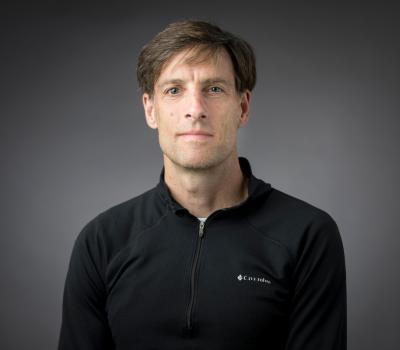
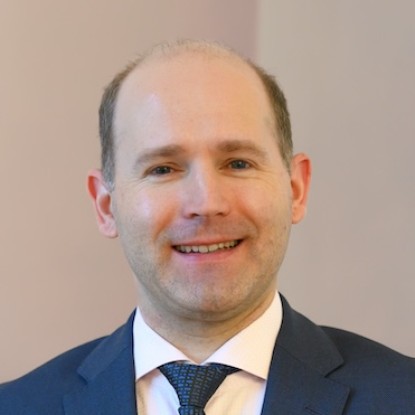
Professor Ben Horan is the Head of School of Engineering at Deakin University , Faculty of Science Engineering and Built Environment. He holds a Doctor of Philosophy and Bachelor of Engineering from Deakin University, with expertise in electrical engineering , control systems , and human-centred computing . As a leading researcher in virtual reality (VR) applications, he focuses on safety training, aged care, and extended reality (XR) systems. PhD in Electrical Engineering (Deakin University) Graduate Certificate of Higher Education (Deakin University) Bachelor of Engineering (Deakin University) His research spans VR for electrical safety training , automated vehicle interactions , and XR applications in museums . His work includes grants from the Department of Health, Melbourne Water Corporation, and City of Greater Bendigo. Recent publications analyze 360° video realism, cognitive load in virtual workplaces, and AR for Industry 5.0. Professor Horan supervises PhD candidates exploring topics like autonomous vehicle pedestrian interactions , VR stress mitigation , and industrial XR systems . He has completed supervision of 10+ PhD and Master’s students.
Alan Fern is a Professor of Computer Science and Robotics in the School of Electrical Engineering and Computer Science at Oregon State University. He leads research in artificial intelligence, focusing on reinforcement learning, planning, and robotics applications like humanoid robotics and agricultural AI. His work includes co-directing the Dynamic Robotics Lab and leading the AgAID National AI Institute for agricultural solutions. Fern holds a Ph.D. from Purdue University and has contributed to over 100 publications. His recognitions include the NSF CAREER Award and multiple best paper awards. Education: B.S., Electrical Engineering, University of Maine (1997) M.S. & Ph.D., Computer Engineering, Purdue University (2000 & 2004) Research Interests: His research spans machine learning, planning, and robotics. Key areas include: AI for humanoid robotics (e.g., bipedal locomotion on Cassie) Reinforcement learning algorithms and applications Agricultural AI for specialty crops Explainable AI and anomaly detection Awards: 2017 College of Engineering Research Collaboration Award 2013 AAAI Outstanding Paper Award 2006 NSF CAREER Award Advising & Labs: Supervised over 50 students. Key collaborations include the Dynamic Robotics Lab (with Jonathan Hurst) and AgAID. His teams address challenges like robot navigation, policy learning, and AI ethics. Labs/Teams: Dynamic Robotics Lab, AgAID National AI Institute, and contributions to computational sustainability initiatives.
Raisa Carpelan is a University Lecturer and Docent in Educational Sciences specializing in school development and leadership at the University of Helsinki's Faculty of Educational Sciences, Department of Educational Sciences. She serves as a supervisor in the Doctoral Program in Cognition, Learning, Teaching and Communication and the Doctoral Program in School, Education, Society and Culture. Her research focuses on educational leadership, inclusive education, diversity, multilingualism, and social justice in education. With expertise in educational change, reforms, and special education development, Carpelan examines leadership practices through multiple lenses including early childhood education settings, comprehensive schools, and policy implementation contexts. Her work particularly addresses how principals construct meaning around inclusive leadership and navigate diversity in Finnish educational environments. Analysis of her recent publications reveals a strong emphasis on practical applications of leadership theories in real-world educational settings, with particular attention to multicultural contexts, migrant communities, and equity-focused practices. Her research consistently bridges theoretical frameworks with practical implementation challenges faced by educational leaders. As an active researcher, Carpelan participates in numerous funded projects including EDUCA (Academy of Finland Flagship Program), OPH VEPO leadership development initiatives, MångSam research on multilingualism, and INSPECT COVID19 studies. She has supervised doctoral work and contributed to educational evaluation through the University of Helsinki Centre for Educational Evaluation (HEA). Her professional activities extend to academic service including membership on the Swedish Research Council evaluation panel, conference organization, and invited presentations on reimagining teacher education and inclusive school community development.
Nan Chen is an Associate Professor at the Department of Mathematics, University of Wisconsin-Madison, and a faculty affiliate of the Institute for Foundations of Data Science (IFDS), a multi-University TRIPODS Phase II Initiative. His research spans applied mathematics with applications in atmosphere-ocean science, climate dynamics, and data science. Education: PhD from Courant Institute of Mathematical Sciences (CIMS) and Center of Atmosphere and Ocean Science (CAOS), New York University (NYU), May 2016 Postdoc research associate at CIMS, NYU (June 2016-May 2018) Master's degree from School of Mathematical Sciences, Fudan University, Shanghai Undergraduate in Mechanical Engineering, Fudan University, Shanghai Visited Department of Scientific Computing at Florida State University working with Dr. Max Gunzburger and Dr. Xiaoming Wang Nan Chen's research focuses on contemporary applied mathematics, particularly modeling complex systems, stochastic methods, numerical algorithms, and data science. He specializes in uncertainty quantification (UQ), data assimilation, and developing statistically accurate algorithms to address the curse of dimensionality in large-dimensional complex dynamical systems with strong non-Gaussian features. His work has significant applications in atmosphere-ocean science, including predicting phenomena such as the Madden-Julian Oscillation (MJO), monsoons, El Niño Southern Oscillation (ENSO), and sea ice dynamics. He has also extended his research to material science, neuroscience, and other complex systems. His recent publications demonstrate expertise in inverse problems, wave equations, numerical methods, and data compression techniques that blend mathematical theory with practical applications. Dr. Chen has authored a book titled "Stochastic Methods for Modeling and Predicting Complex Dynamical Systems --- Uncertainty Quantification, State Estimation, and Reduced-Order Models" published by Springer, and a tutorial paper "Taming Uncertainty in a Complex World: The Rise of Uncertainty Quantification — A Tutorial for Beginners" in the Notices of the AMS. Professional Activities: Organizing "Data Meets Dynamics: Workshop on Data Assimilation for Complex Systems and Applications" (August 21-22, 2025) Author of two articles in Elsevier's Reference Module in Earth Systems and Environmental Sciences Participant in Wisconsin Science and Computing Emerging Research Stars (WISCERS) program Judge for Outstanding Student Paper Award (OSPA) program at American Geophysical Union (AGU) fall meetings Involved in Madison Experimental Mathematics Lab (MXM Lab) Dr. Chen actively mentors undergraduate students for research during semesters and summers, encouraging them to present at the UW undergraduate symposium. He also offers reading and independent study courses for interested undergraduates. He is currently seeking highly motivated PhD students to join his research group with possible Research Assistantship support.
Michele Gattullo serves as an Assistant Professor within the Department of Mechanics, Mathematics & Management at the Polytechnic University of Bari, Italy, specializing in design methods for industrial engineering (ING-IND/15). His research bridges cutting-edge extended reality technologies with practical industrial applications, focusing on human-centered solutions for manufacturing, maintenance, and workplace design. Dr. Gattullo's research portfolio centers on Augmented Reality, Virtual Reality, and Biophilic Design, with significant contributions to Human-Computer Interaction in industrial contexts. He investigates how nature-inspired elements in virtual workspaces enhance employee well-being and productivity, while simultaneously developing practical AR tools for assembly guidance, technical documentation, and maintenance support. His work uniquely integrates ergonomics, cognitive psychology, and industrial engineering to optimize human-technology interaction in complex production environments. Analysis of his 15 most recent publications reveals two dominant research trajectories: biophilic design frameworks for virtual/metaverse workspaces (2023-2025) and industrial AR authoring methodologies. The biophilic stream establishes evidence-based guidelines for digital nature integration, while the AR stream delivers validated tools like ADAM and minimal AR approaches that streamline technical documentation creation. Both trajectories emphasize user experience validation through rigorous industrial studies, demonstrating strong interdisciplinary impact across computer science, industrial engineering, and environmental psychology. Scientific Awards: No awards or honors were documented in the available sources. Advising and Grants: The provided materials contain no information regarding graduate student supervision, research grants, or funding sources. His academic profile emphasizes publication output over mentoring activities or project financing details. Laboratories and Teams: While Dr. Gattullo's research involves advanced XR technologies, the source text does not specify laboratory facilities, research groups, or collaborative teams associated with his work at Politecnico di Bari.
Daragh Byrne is an Associate Teaching Professor at the Carnegie Mellon University School of Architecture , with courtesy appointments in the School of Design and Human-Computer Interaction Institute (HCII) . Previously an Assistant Research Professor at Arizona State University’s School of Arts, Media and Engineering, he manages the NSF-funded XSEAD project and leads MakeSchools , a catalog of making practices in higher education. PhD in Digital Media from Dublin City University (2011) M.Res. in Design and Evaluation of Advanced Interactive Systems from Lancaster University B.Sc. in Computer Applications from Dublin City University His research explores experiential media systems through Internet of Things and tangible interaction design , focusing on how computational tools can capture human experience and enable multidisciplinary collaboration. Key projects include Sentient Concrete (thermochromic architectural surfaces) and Spooky Technology (speculative design around invisible technologies). He has developed CMU’s Designing for the Internet of Things course since 2016, creating hands-on curricula for connected product design. Recent publications examine creative physical computing education , AI-driven documentation systems , and XR-enabled skill training . Awards include multiple CMU research grants and the CHI 2018 Best Paper Award . He actively advises PhD and Masters students in Computational Design, emphasizing human-centered design and speculative technology research .
Professor Chen Lang is a faculty member in the Department of Physics at Southern University of Science and Technology (SUSTech), where he serves as Vice-chair of the Department. He has made significant contributions to the field of complex functional oxides and multiferroic materials. Professor Chen received his Ph.D. in Materials Science from the University of Maryland in 2005, following an M.S. in Condensed Matter Physics from the Institute of Physics, Beijing (2000) and a B.S. in Physical Electronics from Fudan University (1997). Prior to joining SUSTech in 2013, he served as an Assistant Professor at Nanyang Technological University, Singapore (2006-2013) and completed a postdoctoral fellowship at CNRS, France (2005-2006). Professor Chen's research primarily focuses on multiferroic complex oxides , strain and domain engineering , and emergent materials and metamaterials . He has made groundbreaking contributions to understanding the nonlinear piezoresponse of ferroelectric thin films and elucidating ferroelastic domain dynamics. His work on low symmetry phases, domain structures, and in-plane polarization rotation in epitaxial BiFeO3 thin film systems has been particularly influential. Analysis of Professor Chen's recent publications reveals a strong focus on multiferroic materials, complex oxides, and strain engineering. His work spans from fundamental studies of domain structures and phase transitions to applied research on novel materials with exceptional electromagnetic and mechanical properties. A notable trend in his recent work is the exploration of high-entropy oxides and their unique magnetic and mechanical properties. Pengcheng Scholar, Shenzhen Municipality Shenzhen Municipal Government's Peacock Program B category Shenzhen local-level leading talent Navigation Talent B category Nanyue Excellent Teacher Shenzhen Excellent Teacher SUSTech Outstanding Young Scholar SUSTech Excellent Service Award Professor Chen has published over 140 journal papers in prestigious journals including Nature Materials, Physical Review Letters, Advanced Materials, and Nature Communications. His work has been cited over 4,500 times with an h-index of 36. He has secured more than 30 million yuan in research funding, including 7 national-level projects and 7 provincial/municipal-level projects. He serves as a reviewer for numerous prestigious journals such as Advanced Materials and Applied Physics Letters. Professor Chen leads an active research group at SUSTech focusing on complex functional oxides and multiferroic materials. His team employs advanced techniques for materials synthesis and characterization to explore novel electromagnetic and mechanical properties in thin film systems. The group has made significant contributions to understanding domain dynamics, strain effects, and phase transitions in functional oxide materials.
Dina Dechmann is Group Leader at the Max Planck Institute of Animal Behavior, Department of Migration in Radolfzell, Germany. She leads the Ephemeral Resource Adaptations Research Group, focusing on how animals adapt to fluctuating resource availability through behavioral, morphological, and physiological strategies. Her educational background includes: Ph.D. in Animal Behavior from University of Zürich (2005) MS in Systematics & Ecology from ETH Zürich (1999) Habilitation at University of Konstanz (2018) Dr. Dechmann identifies as a classical behavioral ecologist with a passion for evolution, increasingly focusing on how resource distribution in time and space influences animal adaptations. Her research examines movement patterns (particularly in flying foxes and bats), energetics, information transfer during foraging, and morphological adaptations like wing shape. A significant focus involves seasonal phenological changes, especially in brain structure, as seen in her work on Dehnel's Phenomenon in shrews. She is actively involved in the ICARUS satellite tracking initiative to monitor bat migration. Her recent publications reveal consistent themes across animal behavior, neuroecology, and conservation biology. The work demonstrates sophisticated integration of field studies with molecular and physiological approaches, particularly in studying how animals navigate resource ephemerality. Key trends include bat migration patterns, brain plasticity in response to seasonal changes, and methodological innovations in wildlife tracking. Her research bridges fundamental behavioral ecology with practical conservation applications, especially regarding common bat species. Dr. Dechmann mentors a diverse international team including postdocs, doctoral students, and technical staff. Her group maintains strong collaborations across European institutions and with international partners, particularly in Panama where some field studies occur. While specific grant details aren't provided, her work on the ICARUS initiative and extensive publications suggest substantial research funding. The Ephemeral Resource Adaptations Group operates as a small, international team focused on resource distribution challenges for animals. Current projects examine migration as an adaptation to seasonal change, hibernation energetics in climate change contexts, social information sharing for ephemeral resources, alternative wintering strategies in small mammals, and impacts of research methodologies on animal behavior.
Professor Roderich Groß is a faculty member at Technical University of Darmstadt, where he serves as Head of the RCPS Lab (Robotics, Control, and Physical Systems Laboratory). His extensive research career spans over two decades with publications dating back to 2006, establishing him as a leading figure in swarm robotics. His work appears in top-tier robotics journals including IEEE Transactions on Robotics, Nature Communications, and The International Journal of Robotics Research. Professor Groß's research focuses on swarm robotics, multi-robot systems, modular and reconfigurable robotics, and human-robot interaction. His work explores how groups of relatively simple robots can collectively perform complex tasks through decentralized control mechanisms. He investigates modular systems that can adapt their physical structure to different tasks and develops human-robot interaction paradigms that enable effective collaboration between humans and robot swarms. His research has practical applications in search and rescue, environmental monitoring, construction, and industrial automation. Analysis of Professor Groß's recent publications reveals a clear evolution from foundational swarm behaviors toward increasingly sophisticated applications. His work addresses critical challenges including energy management in robot swarms (CapBot), multi-operator control interfaces, heterogeneous systems for industrial applications, and bio-inspired collective behaviors. His research bridges theoretical swarm intelligence principles with practical implementation on physical robot platforms like Kilobots, with recent work integrating artificial intelligence techniques such as language models for swarm control. As Head of the RCPS Lab, Professor Groß leads a productive research group with extensive international collaborations. The lab works with various robot platforms focusing on both theoretical modeling and practical implementation of swarm behaviors, contributing significantly to advancing the field of swarm robotics from theoretical foundations to real-world applications.
Anastasios Zafeiropoulos serves as Assistant Professor at Harokopio University of Athens, specializing in Spatial Data Management and Analysis within the Postgraduate Studies Program for “Applied Geography and Spatial Management” (Direction C: Geoinformatics). His academic role encompasses teaching “Spatial Databases” and advancing research at the intersection of geospatial technologies and distributed computing systems. His research program focuses on Spatial Databases, Internet of Things (IoT), Cloud/Edge Computing, and 6G Network Orchestration, with significant extensions into Knowledge Graph applications for Sustainable Development Goals (SDGs) and socio-emotional learning in education. Key innovations include the EduCardia methodology for student competency assessment and frameworks for climate vulnerability analysis using knowledge graphs. Analysis of his 2024-2025 publications reveals three dominant thrusts: (1) AI-driven orchestration of 6G services across the computing continuum using reinforcement learning; (2) Knowledge Graph applications for SDG interlinkage analysis and materials science; (3) EU-funded IoT/Edge Computing project ecosystems. His work consistently bridges theoretical networking concepts with practical sustainability and educational applications. Dr. Zafeiropoulos actively contributes to EU-funded initiatives in IoT and Edge Computing standardization, particularly through AIOTI WG Standardisation. His project portfolio includes NEPHELE multi-cloud ecosystem development and O-RAN slice admission control research, demonstrating strong industry-academia collaboration in next-generation networking. He leads the development of innovative tools including Palindrome.js for distributed system visualization and the EmoSocio open-access emotional intelligence model, reflecting his commitment to translating research into practical educational and environmental solutions.
Bernardo Tellini is a Full Professor of Electrical and Electronic Measurements at the Department of Energy, Systems, Land, and Construction Engineering (DESTEC) at the University of Pisa, where he also serves as Vice-Rector for Doctoral Research. He has held this institutional role since 2020, overseeing doctoral program planning, accreditation, and admission procedures. Previously, he chaired the doctoral program in Energy, Electrical, and Thermal Engineering from 2012 to 2016 and served on the Leonardo da Vinci Doctoral School in Engineering from 2008 to 2016. Education: PhD in Electrical Engineering, University of Pisa (1999) Degree in Electrical Engineering, University of Pisa (1993) Postdoctoral research at Karlsruhe Research Center for Technology and Environment Industry experience at ABB Tellini's research focuses on electrical and magnetic measurement methodologies for high-power pulsed applications, characterization of electrical and magnetic properties of materials, aging processes in battery cells, and electromagnetic emissions from power circuits. His work spans from fundamental measurement theory to practical industrial applications, particularly in railway technologies where he represents the University on the Steering Committee of the District for Railway Technologies, High-Speed, and Network Safety in Tuscany. He has served as president of the European Pulsed Power Laboratories agreement and chaired major IEEE conferences including I2MTC 2015 and MELECON 2020. His recent publications reveal a strong emphasis on RFID-based localization systems , nanoparticle-enhanced optical sensors , and advanced battery characterization techniques . The research trajectory shows increasing integration of measurement science with emerging technologies like plasmonic sensing, microwire-based transducers, and smart systems for industrial monitoring. His team has developed innovative approaches for battery health monitoring under vibration stress, temperature sensing using magnetic materials, and precise localization methods using phase-based RFID systems. Professional Service: President of Italian Section of IEEE (2019-2021) Scientific director of Pisa research unit in Association of Electrical and Electronic Measurements (GMEE) Member of Certification Committee of Italcertifer SpA (since 2019) Representative on District for Railway Technologies Steering Committee (since 2013) Tellini has authored approximately 200 publications in international journals and conference proceedings. His leadership extends to academic governance through roles on the DESTEC Department Human Resources Committee and various university committees overseeing scientific qualifications and doctoral programs. His research bridges theoretical measurement principles with practical engineering solutions for energy systems, transportation infrastructure, and industrial monitoring applications.
Andreas Weber is an Associate Professor at the University of Twente's Digital Society Institute , specializing in the Knowledge, Transformation & Society (KiTeS) research group . His work examines the long-term historical and global relationship between Science, Technology, and Society , with particular focus on colonial histories of natural history, chemistry, and sustainability , as well as computational technologies for contextualizing digitized archives . He leads the HAICu project (2023–2029) on digital cultural heritage and coordinates STS PhD training for the Netherlands Graduate Research School (2019–2024). MA & PhD in History (2005 & 2012), Leiden University Assistant Professor (2017–2023), University of Twente Andreas' research integrates digital humanities with colonial science history , emphasizing global histories of minerals , digital humanism , and AI's societal context . His 15 most recent publications (2016–2025) explore topics like colonial bias in natural history collections , FAIR data implementation , and semantic annotation of handwritten archives , spanning disciplines from history of science to computer science and museum studies . He has received 7 scientific awards , including multiple Best Teacher Awards (2020–2023) and the IEEE eScience Best Poster Award (2018). Andreas supervises PhD and postdoctoral projects while engaging in media commentary on colonial heritage issues and co-organizing international conferences like Hydrogen Pasts and Futures (2024).
PD Dr. Ansgar Schanbacher serves as a Research Fellow at the Institute for Regional Historical Research, University of Göttingen, specializing in environmental and urban history of Early Modern Central Europe and the Netherlands. His work examines resource management and hazard responses in cities like Braunschweig, Würzburg, and Utrecht through interdisciplinary environmental history frameworks. His academic formation includes a Dr. phil. from Göttingen University (2011-2015) on Potato Blight and Famine in Northwestern Germany (1845-1848), completed within the Research Training Group Interdisciplinary Environmental History. Earlier, he earned an M.A. in History, Economy, and Polish Language/Literature from Leipzig University and Lublin's Catholic University (2003-2010), followed by freelance translation work (2009-2011). Schanbacher's research centers on Environmental History, Urban History (17th-19th centuries), History of Science, and Eastern European History. His scholarship reveals how early modern cities navigated ecological challenges through municipal policies, technological adaptations, and social coping mechanisms, with particular attention to waste management, fire prevention, food crises, and horticulture across German and Dutch urban contexts. His 15 most recent publications demonstrate consistent focus on urban environmental resilience, showing evolution from specific hazard case studies (fires, earthquakes) toward broader sustainability frameworks. Key trends include comparative analysis of municipal responses, interdisciplinary methodology bridging history and environmental science, and contextualization of historical practices within modern sustainability discourse. His scientific recognition includes: Prize of the Historical Commission for Lower Saxony and Bremen (2016) DFG Scholarship at Göttingen University (2011-2014) DAAD Scholarship for Poznań/Kraków (2008) Grant leadership includes Scientific Coordination of 'Sustainability as Argument' (2016-2020) and a 2016 Graduate School of Humanities research grant. He actively disseminates research through the 'Stadtgeschichten' urban history blog (co-editor), 'Epidemien in der frühneuzeitlichen Stadt' podcast series, and public lectures on Central European urban environments. Current affiliations include the European Society for Environmental History and European Association for Urban History, with contributions to the Portal zur Geschichte and Frauenstift Gandersheim projects. Based at Göttingen University's Heinrich-Düker-Weg campus, he maintains active scholarly engagement through editorial work, conference presentations, and interdisciplinary collaborations exploring historical dimensions of urban sustainability.
Brooke Coley is an Assistant Professor in Engineering at The Polytechnic School of Arizona State University . She is also affiliated with the Engineering Education Systems and Design department and serves as an Affiliate Faculty Member in the Mary Lou Fulton College for Teaching and Learning Innovation . Ph.D., Bioengineering, University of Pittsburgh B.S., Chemical Engineering, University of Maryland Research Interests include Engineering Education , Social Justice in STEM , Educational Technology , and Biomechanics . Her work focuses on virtual reality for empathy development, hidden populations in engineering, and inclusive pedagogies . She co-leads NSF-funded studies on diversity in makerspaces and identity formation for underrepresented students. Recent Publications highlight themes of anti-Blackness in STEM , equity in engineering education , and inclusive pedagogical tools . Her 2025 articles explore collaborative innovation , advisor support systems , and intersectional leadership in STEM. Scientific Awards include the Apprentice Faculty Grant from ASEE and the AAAS Science and Technology Policy Fellowship . She advocates for inclusion in research, teaching, and service and mentors the National Society of Black Engineers at ASU. Lab and Teams include NSF-funded studies on makerspaces and community college pathways . She co-facilitates international workshops on inclusive maker pedagogies and collaborates with global institutions to redefine engineering cultures .
Nick Lee is an Associate Professor in the Education Studies department at the University of Warwick, Faculty of Social Sciences. With over 30 publications across Science Studies, Education, and the Sociology of Childhood, his work has appeared in prestigious journals including The Lancet: Infectious Disease, Science, Technology and Human Values, and Sociology. Dr. Lee's research interests span: Childhood, youth and technology Biosocial relationships and imaginations Climate change and sustainability Life processes, learning and innovation His interdisciplinary research examines power dynamics between youth and generation within biotechnological innovation and climate change contexts. In his 2013 book "Childhood and Bio-politics: Climate change, life processes and human futures" (Palgrave Macmillan), he develops theoretical frameworks connecting childhood experiences with environmental challenges. Dr. Lee pioneered the concept of 'residual childhoods' examining how children navigate the material residues of economic growth and technological development. Dr. Lee's publication record reveals consistent interdisciplinary engagement with childhood studies intersecting technology, environmental issues, and biosocial relationships. Recent work (2021-2023) shows expansion into sustainable development education, gender dynamics in STEM, and innovative plant science communication through art. Earlier work established theoretical foundations in biosocial relationships and childhood biopolitics, with increasing applied focus on environmental challenges and technological innovation. Dr. Lee has secured significant research funding from: ESRC (Economic and Social Research Council) BBSRC (Biotechnology and Biological Sciences Research Council) MRC (Medical Research Council) European Neuroscience and Society Network Department for Children, Schools and Families Department for Business, Innovation and Skills As ELSA (Ethical, Legal and Social Aspects) lead for Warwick's Institute for Synthetic Biology, he bridges scientific innovation with societal implications. Dr. Lee has consulted for a global hygiene corporation on antibiotic resistance and the UK Cabinet Office on future prospects for children. Current research projects include: Global Gardens: Co-Learning in Synthetic Biology (with Professor Anne Osbourn) Children, Sexting and Co-Learning (with Birmingham universities) Residual Childhoods (examining children's relationship with technological residues)