Prof. Dr. Frank Ulbrich is a Lecturer and Programme Director for the BSc Business Administration at the Lucerne School of Business (HSLU). He holds a PhD in Business Administration from the Stockholm School of Economics. His academic career spans roles at universities in Sweden, the UK, Canada, and Switzerland, alongside IT & Management consulting experience. Research focuses on management education, project management, information management, and organizational change. He has published extensively in areas like shared services, digital transformation, and curriculum development. Notable awards include multiple Emerald Literati Awards and a Fellowship from the Higher Education Academy. Education: PhD in Business Administration (Stockholm School of Economics) Affiliations: Institute of Business and Regional Economics at HSLU Teaching Subjects: Academic Methods, Higher Education Management, Project Management, Digital Transformation Recent presentations include discussions on bridging academia-industry gaps, curriculum integration of SDGs, and data-driven learning strategies. His work emphasizes aligning education with labor market needs and advancing evidence-based teaching practices.
Prasanna (Sonny) Tambe is a Professor at the Wharton School of the University of Pennsylvania, specializing in the economics of technology and labor markets. His research explores AI’s impact on workforce dynamics, HR algorithms, and the gender wage gap in tech industries. Education: Ph.D. in Managerial Science and Applied Economics (Wharton, UPenn); S.B. and M.Eng. in Electrical Engineering and Computer Science (MIT). His work leverages internet-scale data from job platforms and patent databases to analyze trends in skill acquisition, remote work diversity, and algorithmic bias in hiring. Recent studies examine AI’s role in HR decision-making, the economics of emerging technologies, and labor market responses to IT innovation. Scientific Awards: Best Undergraduate Professors (Poets & Quants, 2020) Best Paper Awards (Management Science, Information Systems Research) ISS Sandra A. Slaughter Early Career Award (2016) Tambe co-directs Wharton Human-AI Research, focusing on ethical AI integration in organizations. His teaching includes award-winning courses on AI’s societal implications and data-driven business strategies.
Prof. Dr. Nicole Ondrusch is a Professor at Heilbronn University (HHN) within the Faculty of Computer Science. She specializes in teaching methodological fundamentals of software engineering, including ERP systems, Design Thinking, Change Management, and digital transformation. Her research focuses on educational concepts for computer science technologies and future-relevant skills. Key Roles and Projects: Member of BW-CAR doctoral center Organizer of Barcamp Heilbronn, an unconference teaching project fostering student teamwork Principal investigator in funded projects like DigiTrans (digital transformation education) and DEV:GAMES (educational game development) SAP Academic Board DACH spokesperson since 2021 Research Interests: Her work emphasizes innovative teaching methods such as Design Thinking, agile project implementation, and digital experimentation. She explores ethical AI education, interdisciplinary collaboration, and the societal impact of digital transformation. Nicole also develops practical teaching tools like virtual escape rooms and game-based learning frameworks. Grants & Partnerships: Funded by DAAD (DigiTrans), Stiftung Innovation, and others Collaborates with industry partners like SAP and local IT organizations (ConnectIT) Labs & Teams: She leads the Lab:D initiative, developing digital teaching platforms, and co-organizes the Barcamp, a student-led event integrating real-world project management and community building.
Jan Eeckhout is an ICREA Research Professor at Pompeu Fabra University (UPF) in Barcelona, specializing in macroeconomic theory, labor markets, and urban economics. His work focuses on market power dynamics, wage inequality, and technological impacts on labor and urban systems. He holds a PhD from the London School of Economics (LSE). Eeckhout has received a prestigious ERC Advanced Grant (€2.45M) for research on 'Macro Market Power and Distribution.' He authored the influential book The Profit Paradox (2021), exploring how dominant firms reshape labor markets and economies, translated into multiple languages. His research frequently appears in top journals like the Quarterly Journal of Economics and Review of Economic Studies. Research Interests: Macro-Labor Theory, Labor Markets, Urban Economics, Market Power, and Economic Inequality. Recent work examines technological origins of labor market stagnation, IT-driven urban polarization, and wealth effects on worker productivity. Advising and Grants: Supervises PhD students (e.g., Milena Djourelova, David Puig) and collaborates with institutions globally (CEMFI, EUI, Sciences Po). His team includes co-authors like Jan De Loecker and Philipp Kircher. Active in policy discussions via think tanks and media outlets like VoxEU and the NYT. Labs/Teams: Leads a diverse research group at UPF, with projects on market power, urban economics, and labor dynamics.
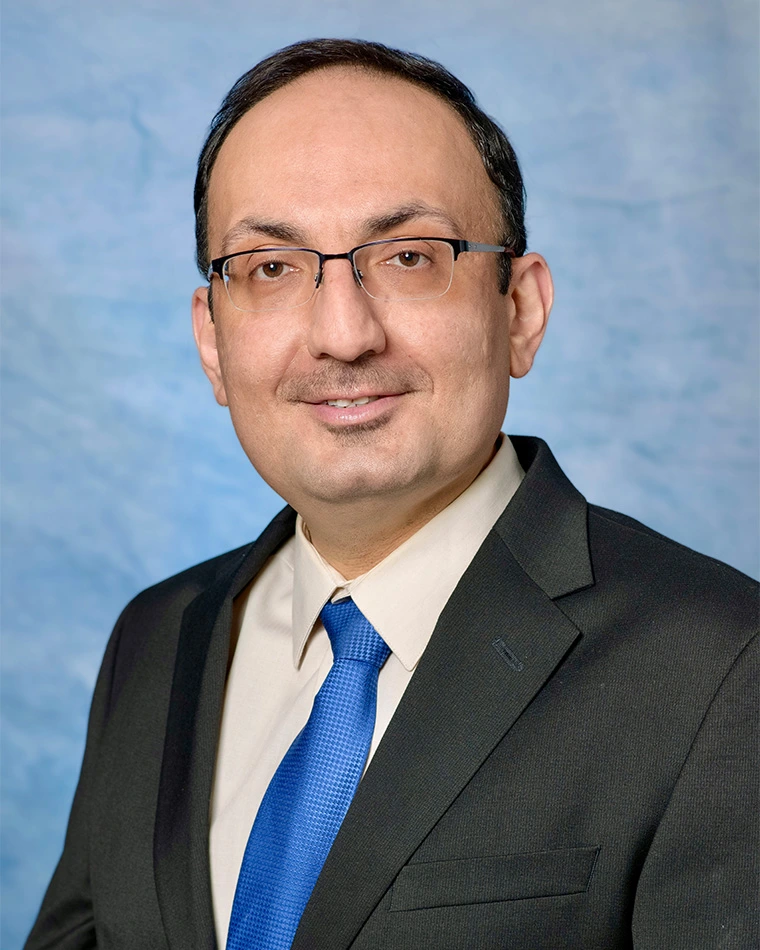
Ehsan Azimi is an Assistant Professor in the Department of Electrical and Computer Engineering and the Department of Computer Science at the University of Arizona, where he is also a member of the Graduate Faculty. His research bridges human-AI interactive systems, extended reality, robotics, and human-centered design, with a strong focus on medical applications. His research interests lie in creating synergistic human-AI systems that enhance medical procedures through advanced technologies. Key areas include extended reality for surgical navigation , robotics in minimally invasive surgery , and intelligent user interfaces . His work has led to innovations in smart glasses calibration, intraocular robotic snakes, needle steering, and digital twins for surgical training, all aimed at improving precision, safety, and learning in medicine. The recent articles highlight a consistent trend in medical robotics , augmented reality in surgery , and human-robot collaboration . These works span from hardware development to AI-driven interfaces, emphasizing real-time interaction, user experience, and clinical applicability across disciplines like ophthalmology, otology, and surgical education. Scientific Awards: Siebel Scholar Provost Postdoctoral Fellowship Link Fellowship Ehsan actively mentors students and scholars in research projects, indicating a strong commitment to academic advising. While specific grant details are not listed, his patented technologies and publication record suggest successful funding and translational research outcomes. His work has been featured in Engineering Magazine and other media, reflecting its impact and innovation. His research is conducted within an interdisciplinary lab environment focused on human-centered AI and medical robotics, integrating expertise from computer science, engineering, and clinical medicine to develop next-generation surgical and training systems.
Charles A. O'Reilly is The Frank E. Buck Professor of Management in the Organizational Behavior area at Stanford Graduate School of Business, where he has been on faculty since 1993. Previously, he served as Professor at University of California, Berkeley (1980-92) and Assistant Professor at University of California, Los Angeles (1976-80). His educational background includes a PhD in Organizational Behavior from University of California Berkeley (1975), MBA from University of California, Berkeley (1971), and BS in Chemistry from University of Texas El Paso (1965). O'Reilly's research focuses on leadership, organizational culture, innovation and change, organizational demography and diversity, and executive compensation. His work has increasingly concentrated on narcissistic leadership and its organizational consequences, ambidextrous organizations that can simultaneously exploit existing capabilities while exploring new opportunities, and the relationship between organizational culture and performance. His influential papers on person-organization fit, organizational ambidexterity, and leadership have shaped contemporary organizational theory. His publications reveal a strong trend toward examining the dark side of leadership, particularly narcissism in executives, and how CEO personality shapes organizational culture. His recent work explores the connection between narcissistic leadership and organizational outcomes including unethical behavior, legal vulnerabilities, and cultural toxicity. Distinguished Scholar Award by the Academy of Management Organizational Behavior Division Lifetime Achievement Award (2010) Distinguished Teaching Award for MBA teaching at Stanford Graduate School of Business (2001) California Management Review Best Paper Award (1996, 2009, 2019, 2020) Administrative Science Quarterly Scholarly Contribution Award (1995, 1998) Hank McKinnell-Pfizer Inc. Faculty Fellow (2022-23) O'Reilly has developed and directed executive education programs including Culture as a Competitive Advantage and Leading Change and Organizational Renewal. He has consulted for numerous public and private firms globally and has taught at UC Berkeley, UCLA, Columbia, and Harvard Business School. His research has been supported by various academic and corporate funding sources that enable his extensive studies of organizational dynamics and leadership. As Co-Director of Culture as a Competitive Advantage and Leading Change and Organizational Renewal programs, O'Reilly works with executive teams to transform organizational culture and implement strategic change. His research on organizational ambidexterity has influenced how companies approach innovation within established organizations, particularly through his work with Michael Tushman on the concept of 'corporate explorers' who drive innovation from within.
Yves Wautelet serves as an Associate Professor at the Faculty of Economics and Business at KU Leuven, where he conducts research in conceptual modeling, business process management, and digital transformation. His work addresses critical challenges at the intersection of information systems engineering and business strategy, with particular focus on sustainability-driven modeling approaches and IT governance frameworks. His primary research interests include: Conceptual modeling methodologies and frameworks Business process management and information systems design Digital transformation strategies and implementation IT governance and business-IT alignment Sustainability-driven modeling for circular economy Agile software development practices and methods Requirements engineering with user stories Wautelet's recent publication record demonstrates significant scholarly productivity with numerous 2024-2025 publications spanning conceptual modeling frameworks for sustainability (Circulise), tools for identifying ambiguity in user stories (AmbiTRUS), and approaches to align strategic and operational agility. His work bridges theoretical foundations with practical applications across diverse domains including healthcare, circular economy, software development, and organizational transformation. His research consistently applies model-driven approaches to solve complex real-world problems, often integrating sustainability considerations into information systems engineering. As a promotor and co-promotor, Wautelet currently supervises multiple doctoral research projects including: Automatic generation of conceptual models from textual descriptions (2024-2028) Sustainability-Driven Modeling Assistant for Twin Transition in Vietnam (2024-2028) Home Care Business Process Management using Distributed Ledger Technologies (2024-2028) Teaching Modeling Skills in BPMN formalism (2021-2025) His research is conducted through the Information Systems Engineering Research Group (LIRIS) at KU Leuven's Brussels campus, where he contributes to advancing model-driven approaches for addressing contemporary business and technological challenges.
Professor Anna Traianou is a distinguished academic at Goldsmiths, University of London, where she serves as Professor of Education and Director of the Centre for Identities and Social Justice. Her work spans multiple dimensions of educational research with a particular focus on the intersection of policy, practice, and ethics in contemporary educational contexts. Her research interests center on culture, learning and teacher 'expertise' in contemporary policy and politics; the contestation of education policy in contemporary Europe, austerity and the changing form of the education state; and philosophical perspectives on ethics and their implications for researcher autonomy. She has published extensively on these topics, with notable works including 'Understanding Teacher Expertise in Primary Science: a sociocultural approach' (2006) and 'Ethics in Qualitative Research: Controversies and Contexts' (2012) co-written with Martyn Hammersley. More recently, she co-edited 'Austerity and the Remaking of European Education' (2019) with Ken Jones. Her recent publications reveal a strong focus on education policy under austerity conditions, particularly in Greece, where she has examined the role of trade unions in education reform and the intricacies of conditionality in policy implementation. She has also made significant contributions to research ethics, particularly regarding the concept of vulnerability in social research and its application to studies involving political elites. Professor Traianou teaches on the BA (Honours) Education Culture and Society, MA Education: Culture Language and Identity, and MPhil/PhD Education programmes. Her doctoral supervision focuses on education policy, particularly the interplay between supranational policy influence and national traditions; learning and teacher 'expertise' in contemporary policy and politics; and research ethics as situated practice. She has secured significant research funding, including from the British Academy (2019-2022) for research on structural adjustment in Greece (2010-2018) and from the National Education Union (NEU) for her current project on teachers' curriculum autonomy. Her recent report 'Are you on slide 8 yet?' examines the impact of standardized curricula on teacher professionalism.
John R Anderson is the Richard King Mellon University Professor of Psychology and Computer Science at Carnegie Mellon University (CMU), affiliated with the Department of Psychology within the Dietrich College of Humanities and Social Sciences. His research focuses on understanding higher-level cognition, particularly mathematical problem-solving, through the development of the ACT-R cognitive architecture—a computational framework simulating human cognitive processes. This architecture integrates behavioral, neural, and educational data to model learning and decision-making. Anderson’s work bridges cognitive science, neuroscience, and educational technology. He investigates how brain imaging (e.g., fMRI, EEG) can reveal the temporal dynamics of cognitive processes and improve instructional methods. His research emphasizes analyzing brain activity time courses to uncover underlying mechanisms of problem-solving and skill acquisition. Key Research Themes: Cognitive architectures, neural correlates of learning, computational models of memory, and intelligent tutoring systems. Notable Contributions: Development of the ACT-R architecture, integration of neuroimaging with cognitive modeling, and studies on skill transfer and learning strategies. Anderson’s publications include seminal books like Cognitive Psychology and Its Implications and How Can the Human Mind Occur in the Physical Universe? His work has advanced understanding of associative memory, strategic decision-making, and the application of cognitive models in educational technology. His lab, the ACT-R Research Group, collaborates across disciplines to model complex cognitive tasks and their neural foundations. Current projects analyze real-time brain activity to refine educational interventions and improve human-machine interaction.
Lynn Wu is an Associate Professor at the Wharton School of the University of Pennsylvania, focusing on the intersection of artificial intelligence, analytics, and innovation. She teaches MBA, undergraduate, and doctoral courses on emerging technologies' transformative impact on business and society. Education: B.S. in Finance and Computer Science, MIT M.S. in Computer Science, MIT Ph.D. in Management Science, MIT Sloan Her research explores how AI and digital platforms reshape productivity, workforce dynamics, and innovation strategies, with applications in antitrust policy and startup ecosystems. Key trends in her publications include AI's role in post-IPO innovation, robotics' impact on managerial roles, and social media's ability to mitigate funding disparities. Scientific Awards: Kauffman Best Paper Award (2019) Sandy Slaughter Early Career Award (2019) AIS Early Career Award (2018) ISR Best Published Paper (2014) Best Paper Awards at ICIS (2009), HICSS (2013), etc. She has collaborated with IBM, Google, Meta, and advised the U.S. Department of Justice and World Bank, with her work cited by The New York Times , The Economist , and Harvard Business Review .
Katrin Bromber is a German Researcher at the Centre for Modern Oriental Studies in Berlin, where she has led the research group "Progress and its Discontents: Ideas, Practices, Materiality" since 2014. Her career spans senior research roles at ZMO and academic teaching positions at the University of Vienna. Nationality: German. Language skills: Native German, fluent English/Swahili, moderate Amharic, good reading knowledge in French/Russian, basic Tigrinya. Habilitation (2009–): African Studies, University of Vienna PhD (1993): African Linguistics, University of Leipzig MA (1988): Swahili Studies, University of Leipzig Katrin Bromber's research interrogates intersections of body politics , sports history , Swahili linguistics , and Ethiopian modernity . Her work traces how physical culture, media representation, and colonial/imperial narratives shape national identities across Africa and Asia. Current focus: "Progress" as contested concept in Ethiopian and Gulf urbanism. Key article trends reflect her translocal methodology: 2017 studies on Ethiopian stadiums and fitness culture ; 2014-2013 publications analyzing East African military press , sports branding in the Gulf , and Swahili poetry ; 2007-2000 works on colonial linguistic politics , Indian Ocean slavery , and German colonial Swahili promotion . Recurring sub-fields: body as political text, translocal modernity, media historiography. Scientific Awards: Research Grant of the Berlin City Council (1999-2000): Gendered Slavery study Service to the Scientific Community: Chairwoman, Academic Association for Horn of Africa Studies (2012–) Editorial Advisory Board - Stichproben. Vienna Journal of African Studies (2015–) Editorial Advisory Board - Studies of Department of African Languages and Cultures (2015–) Teaching Experience: Textlinguistics, Mediacommunication, African Linguistics, Swahili (elementary/advanced), Swahili Literature, Swahili in Arabic Script at Leipzig, Humboldt-Berlin, Free Berlin, and Vienna universities Anthropology of the Body at Mekelle University Summer School Field Research: Tanzania (1993-2003): Swahili Poetry, Intellectual History Kenya (2005): Indian Ocean WW2 UAE/Bahrain (2009): Sports and Body Cultures Ethiopia (2009-2015): Sports, Body Politics
Anders Åkerman is a Professor in the Department of Economics and Finance at the UiS School of Business and Law, University of Stavanger. He is an active researcher in applied economics with a focus on labor, trade, technology, and environmental policy. His research interests span applied microeconomics , international trade , labor economics , and environmental economics . He investigates how technological change, market structure, and global shocks affect firms, workers, and policy outcomes. His work often combines empirical methods with policy relevance. The recent articles reflect a strong trend in analyzing digital transformation (e.g., broadband and trade), environmental impacts of trade and production , and economic resilience during crises such as the pandemic. His publications appear in leading journals like the Quarterly Journal of Economics and American Economic Journal: Applied Economics . He has contributed to public discourse through op-eds in Dagens Nyheter and Svenska Dagbladet , and has been involved in policy commissions like Sweden's Coronakommissionen. He regularly presents research at seminars and international conferences, including the Nordic International Trade Seminar and Stockholm Institute of Transition Economics. Anders Åkerman has advised or collaborated with several researchers and policy experts, including Torsten Persson, Magne Mogstad, and Karolina Ekholm. While formal student advisees are not listed, his collaborative work suggests active mentorship and team leadership. He is affiliated with research networks and institutes such as IFN (Research Institute of Industrial Economics) and participates in interdisciplinary teams focused on economic policy and transition. His upcoming work continues to explore the intersection of technology, environment, and labor markets.
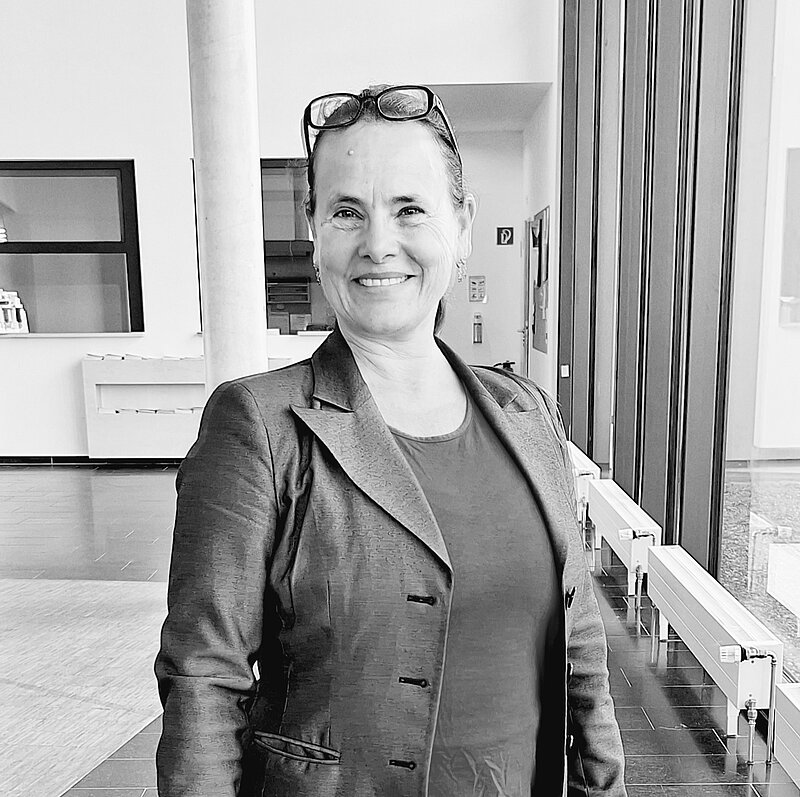
Prof. Dr. Sabine C. Koch is a Professor of Dance and Movement Therapy at Alanus Hochschule Alfter and Head of the Research Institute for Creative Arts Therapies (RIArT). She holds a habilitation and multiple professorships, including at SRH Hochschule Heidelberg (2012–present) and has led the Alanus Research Institute since 2015. Her work focuses on embodiment theory, applying it to creative arts therapies such as dance, theater, and art to address mental and physical health challenges. Her education includes a Diplom in Psychology from Heidelberg University (1999) and a PhD (2003) and Habilitation (2009) from Heidelberg. She has led major projects like the BMBF-funded 'Körpersprache' (2009–2011), the EU TESIS project (2011–2015), and the Heidelberg Center for Motion Research (2016–2022). Awards include ADTA Research Awards (2007, 2013, 2014, 2023) and a Fulbright Scholarship (1996). Research interests span embodiment theory, enaction, systems theory, and their application in therapies. Her work emphasizes the role of movement in mental health, including studies on autism, schizophrenia, oncology, and refugee trauma. She collaborates internationally, including with institutions in Chile, Slovenia, and France. Her recent articles explore drama therapy for flood-affected children, dance therapy for dementia patients, and embodied approaches to experience studies. Grants and networks include the DFG-funded EmbodiNet (2024–2026) and a PhD program in Creative Arts Therapies with Witten/Herdecke University. Koch’s labs and teams focus on interdisciplinary motion research and clinical applications of movement therapies. She has advised numerous studies on therapeutic efficacy and co-authored over 200 peer-reviewed articles and books, including 'The Routledge International Handbook of Embodied Perspectives in Psychotherapy' (2019).
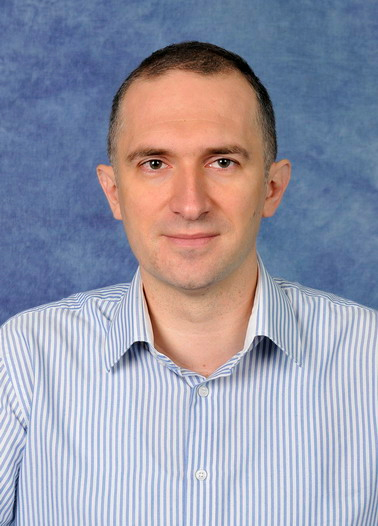
Zoran Kalinic serves as an Assistant Professor at the Faculty of Economics, University of Kragujevac, where he teaches Electronic Business since October 2012. Previously, he worked at the Faculty of Mechanical Engineering in Kragujevac from 1996 to 2005, and joined the Faculty of Economics in February 2005 as an assistant in Information Systems, later teaching Information Technology and Electronic Business from 2009 onward. Doctorate (2012): Faculty of Engineering, University of Kragujevac, specializing in information systems development and mobile communications Postgraduate studies: Faculty of Mechanical Engineering in Kragujevac (completed with average grade of 10) Bachelor's degree: Faculty of Mechanical Engineering in Kragujevac (1996, average grade 9.43) Professor Kalinic's research focuses on digital transformation and its economic implications, with particular expertise in mobile commerce, electronic business systems, digital payment technologies, and consumer behavior in online environments. His work frequently employs advanced analytical methods including artificial neural networks, structural equation modeling, and hybrid analytical approaches to investigate technology adoption patterns and digital marketplace dynamics. He has conducted extensive research on Serbian digital markets, including studies on mobile payment systems, e-commerce development barriers, and real estate price prediction using AI techniques. His publication record demonstrates a clear progression from foundational technology acceptance research toward more complex analyses of digital ecosystems, with recent work examining influencer marketing effects on TikTok, biometric payment systems, and gig economy measurement in Serbia. The integration of artificial intelligence methodologies with traditional consumer behavior theories represents a distinctive feature of his scholarly approach. Professor Kalinic maintains active international academic engagement through short study visits to institutions including the University of Udine, Vienna University of Economics, University of Maribor, Krakow University of Economics, Coventry University, Polytechnic of Turin, and Comenius University in Bratislava. He spent six weeks at the University of Maribor in 2007 through a Tempus IMG grant and served as a visiting lecturer at the Krakow University of Economics in 2012. Author/co-author of over 60 papers in international and domestic journals and conferences Participant in multiple scientific research and professional projects Recipient of academic awards during studies from University, Faculty, Ministry of Science and Technology of Serbia, Embassy of Norway, WUS-Austria, Zastava-Yugo Automobiles, and Kragujevac City Assembly His professional development includes a month-long visit to the Faculty of Informatics at the University of the Basque Country in San Sebastian (2004) and ongoing collaboration with regional and European academic institutions. Professor Kalinic's research bridges theoretical frameworks with practical applications in the Serbian and Western Balkan digital economy context.
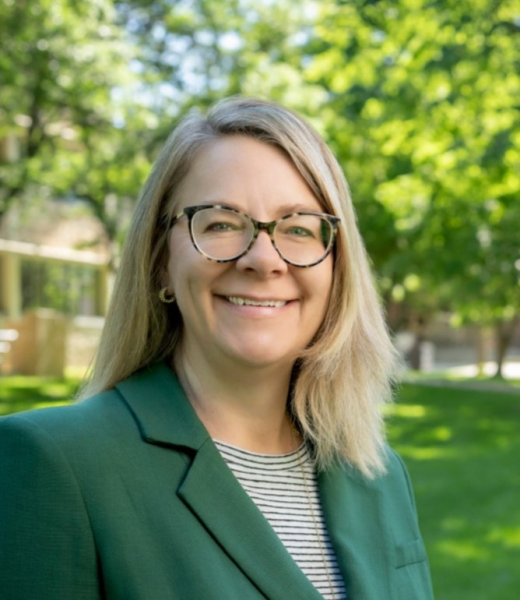
Kjerstin Thorson serves as the Dean of the College of Liberal Arts at Colorado State University, a position she assumed on August 1, 2024. Previously, she was the Brandt Endowed Professor of Political Communication and Associate Dean for Strategic Initiatives at Michigan State University’s College of Communication Arts & Sciences. An internationally recognized scholar, her research centers on digital platforms and their impact on civic life and culture. Her educational background includes: BA in English from Macalester College MA in Journalism from the University of Missouri-Columbia PhD in Mass Communication from the University of Wisconsin-Madison Thorson's research explores the intersection of digital media, political communication, and civic engagement. She investigates how social media platforms shape political participation, news consumption, and civic discourse, with a particular focus on young adults and historically marginalized communities. Her work addresses critical issues such as equity in digital civic infrastructure, the role of algorithms in political exposure, and the dynamics of online moderation and community governance. She examines both the empowering potentials and the challenges of digital media for democratic participation. Her recent publications (2023-2025) reveal a sustained investigation into platform governance, volunteer moderation, and the urban-rural divide in digital civic engagement. She also delves into Gen Z's civic behaviors, the spread of misinformation, and the evolving landscape of political learning on social media. Her work often employs mixed-methods approaches, combining digital trace data with surveys to understand complex media effects. Thorson has received notable recognition for her contributions: Michigan State University’s Teacher-Scholar Award 2022-2023 Fellow of the Big 10 Academic Alliance Leadership Program Her research has been supported by prestigious organizations including the National Science Foundation (NSF), the Social Science Research Council, and the Spencer Foundation. In her administrative roles, she has prioritized student success through initiatives like the Ignite the Future program, which supports first-generation and marginalized students, and has championed faculty development through the creation of a Center for Teaching and Learning. While specific advisees are not listed, her leadership in student success programs underscores her commitment to mentoring. Under her leadership at Michigan State University, the College of Communication Arts & Sciences expanded its revenue-generating partnerships, created a college-wide Center for Teaching and Learning, launched the Ignite the Future family of programs, and grew the esports initiative. She has also focused on improving culture and climate through promotion pathways for non-tenure track faculty, climate surveys, and community-building events.