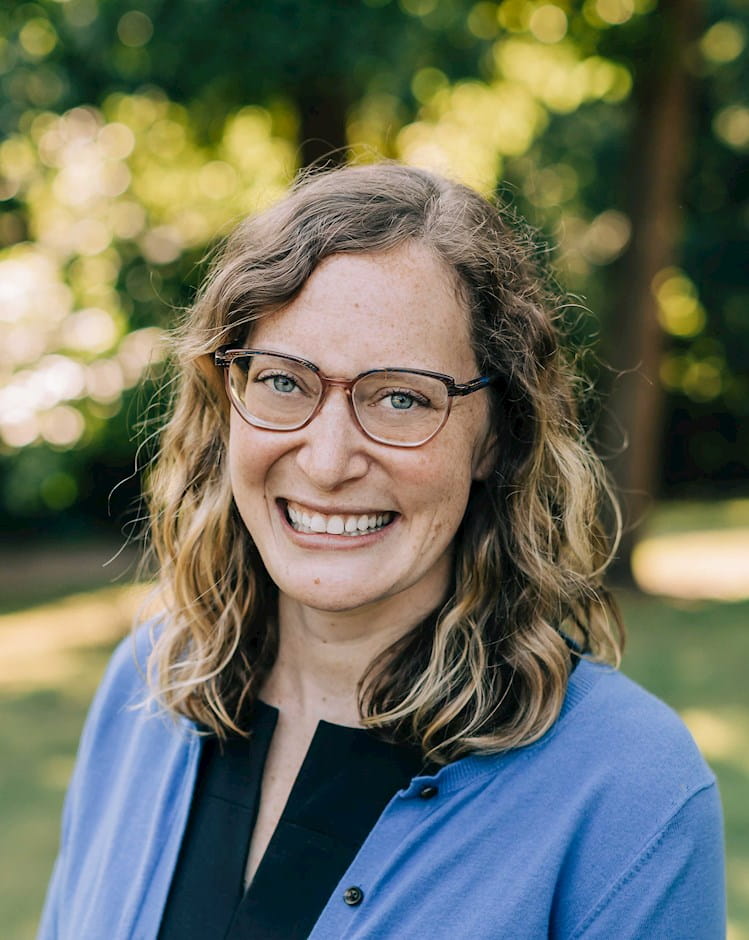
Scott Nelson is an Associate Professor of Finance at the University of Chicago Booth School of Business. His research bridges consumer credit markets, regulatory frameworks, and behavioral economics, with a focus on how information asymmetries and algorithmic decision-making shape market outcomes. He has contributed to understanding the impacts of the 2009 CARD Act, eviction protections in housing markets, and fairness in credit scoring systems. PhD in Economics, Massachusetts Institute of Technology BA (summa cum laude) in Economics and Mathematics, Yale College Nelson's work employs diverse data sources, including credit reports, court filings, and tax records, combined with structural models to analyze consumer and firm behavior. Key themes include regulatory efficiency, validity disparities in predictive models, and the welfare implications of policy interventions. His articles reveal trends in algorithmic regulation (2025), eviction dynamics (2025), credit scoring disparities (2024), and public finance impacts on Chinese real estate (2023). These publications highlight interdisciplinary methodologies integrating economics, law, and data science. Scientific awards include the AQR Top Finance Graduate Award (2018) and National Science Foundation Graduate Research Fellowship. He has held postdoctoral roles at the Consumer Financial Protection Bureau/Princeton University and visiting research positions at the Federal Reserve Bank of Boston.
Maria José Serna Iglesias is a Full Professor at the Departament de Ciències de la Computació of the Universitat Politècnica de Catalunya (UPC), Barcelona Tech . She leads the research group ALBCOM (Algorithmics, Bioinformatics, Complexity and Formal Methods) and coordinates doctoral programs in Computing. Her research focuses on algorithmics, computational complexity, social network analysis, and game theory. She actively participates in conferences such as SEA 2023-2025 , CIAC , and Algorithmic Decision Theory . Teaching includes advanced algorithmics courses for undergraduate and master’s programs. Current projects include the MOTION initiative (PID2020-112581GB-C21) on large-scale data processing. Past projects involve EU initiatives like WISEBED and DELIS . Her work bridges theoretical computer science with applications in networks and social systems, emphasizing algorithmic solutions for complex problems.
Jesús Carro is an Associate Professor at Universidad Carlos III de Madrid in the Department of Economics . He specializes in micro-econometrics and labor economics, focusing on dynamic discrete choice models and unobserved heterogeneity analysis. Doctorate from CEMFI Active research since 2004 Key methodological contributions in econometric modeling His research spans: Labor supply dynamics Education policy evaluation Health economics Intergenerational preference transmission Recent publications highlight: Dynamic binary choice modeling with maximal heterogeneity (2014) State dependence in health outcomes (2014) Bilingual education program impacts (2016) Preference transmission mechanisms (2017) He teaches courses in: Micro-econometrics Economics of Education Policy Evaluation
Jean-Pierre Dubé is the James M. Kilts Distinguished Service Professor of Marketing at the University of Chicago Booth School of Business. He serves as director of the Kilts Center for Marketing at Booth, is a Research Associate at the National Bureau of Economic Research, an elected fellow for the Informs Society for Marketing Science, and a faculty fellow at the Marketing Science Institute. He has been working as a research consultant with Amazon since 2018 and previously consulted for Yahoo! from 2008-2010. B.Sc. in quantitative methods in economics from the University of Toronto (1995) M.A. in economics from Northwestern University (1996) Ph.D. in economics from Northwestern University (2000) Dubé's research focuses on the intersection of industrial organization and quantitative marketing. His empirical studies examine consumer preferences for branded goods, price discrimination, advertising, food deserts and nutrition policy, and the role of misinformation in consumer demand. His work frequently employs advanced econometric methods to analyze consumer behavior across various markets, including packaged goods, digital platforms, and media consumption. Many of his recent projects involve collaborations with companies in the US and China, reflecting the applied nature of his work. Dubé's publications span leading journals in economics and marketing, with recent work focusing on personalized pricing, media effects on consumer behavior during the pandemic, craft brand preferences among millennials, and nutritional inequality. His research demonstrates strong methodological rigor while addressing practical business and policy questions, often challenging conventional wisdom as seen in his work on food deserts which found neighborhood environments contribute minimally to nutritional inequality. 2023 Hillel J. Einhorn Excellence in Teaching Award Chicago Booth Class of 2016 Phoenix Award for service to extracurricular activities 2008 Paul E. Green Award for Best paper in the Journal of Marketing Research 2005 Faculty Teaching Excellence Award for Evening MBA and Weekend MBA Programs Elected fellow for the Informs Society for Marketing Science Multiple MSI Research Grants Kauffman grant Yahoo! Faculty Research Grant Professor Dubé serves as Department Editor at Management Science and has previously served as an area/associate editor for several leading journals including The Journal of Marketing Research, Management Science, Marketing Science, and Quantitative Marketing and Economics. His industry collaborations, particularly with Amazon and previously Yahoo!, have enabled him to conduct large-scale field experiments that inform both academic theory and business practice. Dubé joined the Chicago Booth faculty in 2000 and continues to be actively engaged in research, teaching, and professional service, influencing both academic scholarship and industry practice.
Lars Peter Hansen is the David Rockefeller Distinguished Service Professor at the University of Chicago, affiliated with the Department of Economics, Department of Statistics, and Booth School of Business. He directs the Macro Finance Research (MFR) Program under the Becker Friedman Institute and co-leads the Macro Financial Modeling Project (MFM) with MIT's Andrew Lo. His research bridges macroeconomics, finance, and statistics, focusing on uncertainty quantification in economic models. Education : PhD in Economics (University of Minnesota, 1978), B.S. in Mathematics & Political Science (Utah State University, 1974) Hansen's work addresses uncertainty in economic decision-making, climate change policy, and macro-financial linkages. His methodological contributions include generalized instrumental variables and robustness frameworks for models with ambiguity. He explores how fragile beliefs affect asset pricing and systemic risk. His articles emphasize uncertainty modeling , climate economics , and financial market dynamics . Recent collaborations with Thomas Sargent examine decision-making under ambiguity, while work with Miao and Xing investigates discrete choice under uncertainty. Scientific Awards : Nobel Prize in Economic Sciences (2013), BBVA Foundation Frontiers of Knowledge Award (2010), CME Group-MSRI Prize (2008), Erwin Nemmers Prize (2006), Frisch Medal (1984) As director of the MFR Program, he organizes workshops on climate finance, macroeconomic uncertainty, and financial stability. The program receives support from the Sloan Foundation and collaborates with institutions like MIT, NYU, and the Luohan Academy.
Rosa Marina González Marrero is a Full Professor in the Department of Economics, Accounting and Finance at the University of La Laguna, Spain. She is affiliated with the Institute for Regional Development Research (IUDR) and actively contributes to two research groups: DECENT (Development, Inequality and Environment) and ETSDReg (Transport Economics, Sustainability and Regional Development). Her academic work centers on the fundamentals of economic analysis within the domain of regional development and transport systems. Her research interests lie primarily in transport economics , regional development , and sustainability , with a methodological focus on discrete choice modeling. She applies these tools to understand passenger transport demand, particularly in inter-island contexts such as between Gran Canaria and Tenerife. Her work bridges theoretical economic models with real-world policy implications for sustainable regional planning. The available publications (not listed in detail) reflect a consistent focus on transportation modeling, regional economic dynamics, and environmental considerations. These works fall within the broader disciplines of economics and regional planning, with specific subfields including public transport demand, discrete choice analysis, sustainability assessment, regional inequality, environmental impact modeling, and infrastructure policy. PhD in Regional Development, University of La Laguna (1995) Rosa Marina González Marrero supervises doctoral candidates in the Official Doctoral Program in Regional Development. While specific grants are not mentioned, her sustained research group participation and supervision activities suggest active engagement in funded research projects related to regional and transport economics. She collaborates closely with leading scholars, including her PhD supervisors Dr. Juan de Dios Ortúzar Salas and Dr. Nieves R. Pérez Marante. She is a key member of the DECENT and ETSDReg research groups at the IUDR institute, where she contributes to collaborative research on development, inequality, transport sustainability, and regional policy formulation.
Emma Levine is a Professor of Behavioral Science at the University of Chicago Booth School of Business. Her academic work focuses on understanding human behavior in ethical contexts, particularly examining how individuals navigate complex moral dilemmas in both personal and professional settings. As a faculty member at one of the world's leading business schools, she contributes significantly to the field of behavioral science through research, teaching, and thought leadership. Levine earned her BA in Philosophy, Politics, and Economics and BS in Economics from the University of Pennsylvania. She later completed her PhD at The Wharton School, University of Pennsylvania. Prior to her doctoral studies, she gained practical business experience working at Procter and Gamble, which likely informs her applied research approach. Professor Levine's primary research investigates the psychological dynamics of ethical decision-making, with a particular focus on the tension between honesty and benevolence. Her work explores how individuals navigate common ethical dilemmas where telling the truth might cause harm, while deception could provide comfort or protection. Using diverse research methods in both laboratory and field settings, she examines specific circumstances where people welcome deception versus situations where they underestimate the benefits of honesty. Her secondary research stream investigates prosocial behaviors and how individuals give credit to others for good deeds, as well as other ethical conflicts such as rule-following versus discretion, and autonomy versus paternalism. Analysis of Professor Levine's recent publications reveals a consistent focus on deception, honesty, and ethical decision-making across multiple contexts. Her work spans psychology, organizational behavior, and business ethics, demonstrating interdisciplinary relevance. A notable trend is her examination of 'prosocial lies' - situations where deception serves benevolent purposes - and how these are perceived differently across relationships and contexts. Her research also explores leadership ethics, particularly how honesty and benevolence preferences change when dealing with friends versus leaders. The methodological diversity in her work, ranging from controlled laboratory experiments to field studies, strengthens the external validity of her findings. Professor Levine's research has been published in top-tier journals including Proceedings of the National Academy of Sciences, Journal of Personality and Social Psychology, Psychological Science, Journal of Experimental Psychology: General, Academy of Management Journal, Organizational Behavior and Human Decision Processes, and Journal of Marketing Research. Her work has also been featured in media outlets and Chicago Booth Review, where she has written on topics such as new frameworks for talking about lying, the perception of 'little white lies,' and the social implications of sharing professional achievements. As an educator, Professor Levine teaches 'Strategies and Processes of Negotiation,' scheduled for Spring 2026. Her teaching likely integrates her research on ethical decision-making and interpersonal dynamics, providing students with practical insights into navigating complex negotiation scenarios where honesty and relationship management must be balanced.
Jesús M. Carro is an Associate Professor of Economics at Universidad Carlos III de Madrid (UC3M) since 2004. He holds a PhD in Economics from the Centro de Estudios Monetarios y Financieros (CEMFI). His research focuses on econometric methodologies for dynamic discrete choice models, emphasizing the role of unobserved heterogeneity. He has also contributed to labor economics, education economics, and health economics. Education: PhD in Economics, CEMFI Research Interests: Dynamic Discrete Choice Models Panel Data Analysis Bias Correction in Fixed Effects Estimation Educational Policy Evaluation Intergenerational Transmission of Preferences Health Economics Recent Research Trends: His work bridges econometric theory and applied research, with recent emphasis on program evaluation (e.g., bilingual education), labor market dynamics, and the impact of economic shocks like the Great Recession. Methodologically, he advances techniques for handling unobserved heterogeneity in panel data. Teaching: Courses include Micro-econometrics, Economics of Education, and Policy Evaluation. Labs/Teams: Collaborates with researchers across disciplines, including co-authorship with economists like Ángel Albarrán and Rosa Mora on educational and demographic studies.
Xavier Molinero Albareda is a Professor at the University of Politècnica de Catalunya (UPC) , affiliated with the Terrassa Faculty of Optics and Optometry (FOOT) and the Department of Mathematics . He is a core member of the ALBCOM Research Group (Algorithms, Bioinformatics, Complexity and Formal Methods) and the GRTJ Research Group (Game Theory). Education: Holds a degree in Mathematics and a Doctorate in Mathematics from UPC. His academic career has been continuous with no indication of retirement or former status. Research Interests: Focuses on Algorithms , Combinatorics , Computational Complexity , and Game Theory , with applications to Social Networks . His work bridges theoretical foundations with practical applications in areas like voting systems, network analysis, and cognitive science. Recent projects include studies on typeface legibility, influence games in signed networks, and optimization of weighted voting mechanisms. Grants & Projects: Involved in competitive R&D projects such as ALGECOM (Algorithmics and Combinatorics) and ALINEX (Algorithms: Engineering and Experimentation). Collaborates on interdisciplinary initiatives like Complex Networks and Social Influence Analysis . Labs/Teams: Leads the Game Theory and Social Networks subgroup within ALBCOM, focusing on computational models for strategic interactions and network dynamics.
Alfredo N. Marin Perez is a Professor at the Department of Statistics and Operations Research, Faculty of Mathematics, University of Murcia. His research focuses on operations research, discrete location problems, hub network design, and optimization theory. He has extensively published on p-median problems, hub location models, and equity-based facility allocation. Research Areas: Facility Location, Game Theory, Mathematical Optimization Key Collaborations: Mercedes Landete, Antonio M. Rodriguez-Chia, Justo Puerto Albandoz Methodologies: Lagrangian Relaxation, Branch-and-Cut Algorithms, Polyhedral Analysis Selected Publications: His work includes foundational contributions to the tree of hubs problem, capacitated p-center models with failure foresight, and rank pricing optimization. Recent articles explore equity in location problems and multi-period stochastic covering models.
Jacobo Feas Vazquez is a Professor at the University of Santiago de Compostela , affiliated with the Faculty of Administration and Business Management and the Department of Financial Economy and Accounting . His work bridges financial economics with environmental sustainability and social policy. Education : Ph.D. in Financial Economics and Accounting from the University of Santiago de Compostela (2008), thesis: "A multicriteria methodology for the sustainable management of water resources". Research Interests focus on: Financial economics, accounting, and public finance Sustainable water management and environmental preservation Gender equality, policy dynamics, and decision support systems Recent Publications highlight trends in Environmental policy and resource management (water, mangroves, bitumen) Gender equality and political agenda shifts Financial well-being, energy policy, and talent management Contact : jacobo.feas@usc.es
José Ángel Martín Baos is an Assistant Professor (PhD) at the Escuela Superior de Informática of the University of Castilla-La Mancha , where he earned his PhD in 2023, BSc. in 2018, and MSc. in 2019 (all with honors). Since 2016, he has been a researcher in the MAT (Modelos y Algoritmos en Sistemas de Transportes) research group. PhD in Computer Science (University of Castilla-La Mancha, 2023) MSc. in Computer Science (University of Castilla-La Mancha, 2019) BSc. in Computer Science (University of Castilla-La Mancha, 2018) His research focuses on applying machine learning and artificial intelligence to solve optimization problems in transportation, particularly using kernel logistic regression for discrete choice modelling and transport demand analysis . His work also explores fuzzy community detection in social networks and IoT-based environmental monitoring systems. Key publications include tools like PyKernelLogit (Python library for kernel logistic regression) and ROBIN (rail mobility simulation software). He was awarded the XXI Abertis Award (2024) for his doctoral thesis on machine learning applications in sustainable mobility. Contact: JoseAngel.Martin@uclm.es | Office: 2.17, Escuela Superior de Informática, Paseo de la Universidad 4, Ciudad Real, Spain
Carles Misericordia is an Associate Professor at the Department of Economics , Universitat Rovira i Virgili (URV) . With a PhD in Health Economics from URV, her work focuses on healthcare institution management , clinical trial evaluation , and cost-benefit analysis of medical treatments. PhD, Universitat Rovira i Virgili Licenciatura in Economics, UNED Her research explores regional healthcare impact , health insurance pricing , and population screening optimization . Publications highlight collaborations with GRAES (Research Group in Economic Analysis and Health) and projects spanning breast cancer screening cost-effectiveness , healthcare policy , and medical insurance market dynamics . Recent articles analyze AI in thyroid nodule management , shared decision-making in screening , and stroke care economics , reflecting her interdisciplinary approach. She serves as Vice-Rector for Knowledge Transfer and Innovation at URV, previously holding the Dean role at the Faculty of Economics and Business. Teaching roles include Health Economics at URV's Master in Nursing Science and Doctoral Program in Economics , with emphasis on industrial organization theory and technology transfer . Collaborations in projects like "Optimization of Population Screening Programs" and "Economic Impact of SAGESSA" demonstrate her applied research leadership.
Jose Apesteguia is an ICREA Research Professor at the Department of Economics and Business , Universitat Pompeu Fabra (Barcelona). His research bridges behavioral economics and decision theory , focusing on bounded rationality and stochastic choice modeling. PhD in Economics (Public University of Navarra, 2001) Postdoctoral work at University of Bonn Academic career at UPF since 2006 His work examines how individuals deviate from classical rationality through random utility models , reference dependence , and sequential decision rules . Articles in journals like Econometrica and Journal of Political Economy analyze the computational and empirical foundations of behavioral heterogeneity. Recent studies include air pollution's impact on adolescent attention and stochastic representative agent models . Collaborations span Miguel A. Ballester, Albert Costa, and Jörg Oechssler across economics, psychology, and business domains.
Julio González-Díaz is a university professor at the Department of Statistics, Mathematical Analysis, and Optimization at the Faculty of Mathematics, University of Santiago de Compostela. His research focuses on game theory, operations research, and decision models, with applications in economics and mathematics. He leads the research group MODESTYA (Optimization, Decision, Statistical Models and Applications) and is affiliated with the Galician Mathematical Research and Technology Center (CITMAga). Education: PhD from the University of Santiago de Compostela (2005), thesis titled Essays on Competition and Cooperation in Game Theoretical Models , supervised by Dr. María Estela Sánchez Rodríguez and Dr. Ignacio García Jurado. Research Interests: Game theory (cooperative and non-cooperative), operations research, optimization, and statistical models. His work includes studies on core stability, airport cost allocation, paired comparisons analysis, and algorithmic game theory. Publications: Over 30 peer-reviewed articles and books, including influential works like An Introductory Course on Mathematical Game Theory (2010) and widely cited contributions on core-center concepts and ranking methods. Recent work involves polynomial optimization algorithms (RAPOSa solver), gas transportation networks, and bilevel portfolio design. Collaborations: Extensive co-authorship network, including researchers like Fiestras-Janeiro, Sánchez-Rodríguez, and international collaborations in optimization and game theory. Contact: julio.gonzalez@usc.es