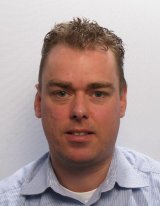
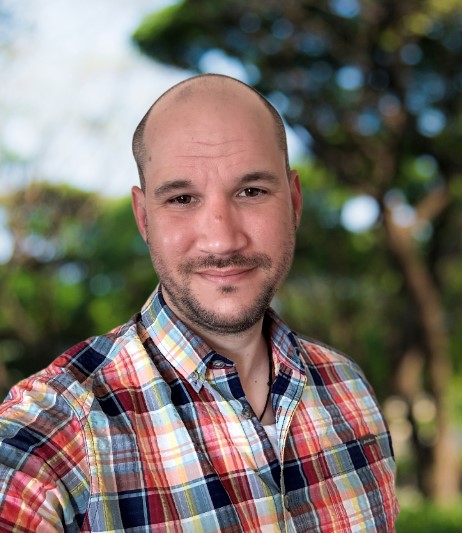
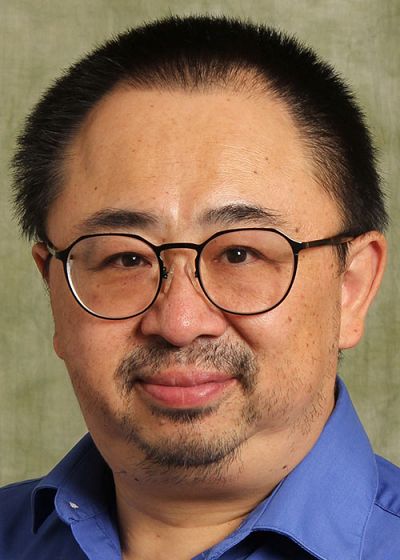
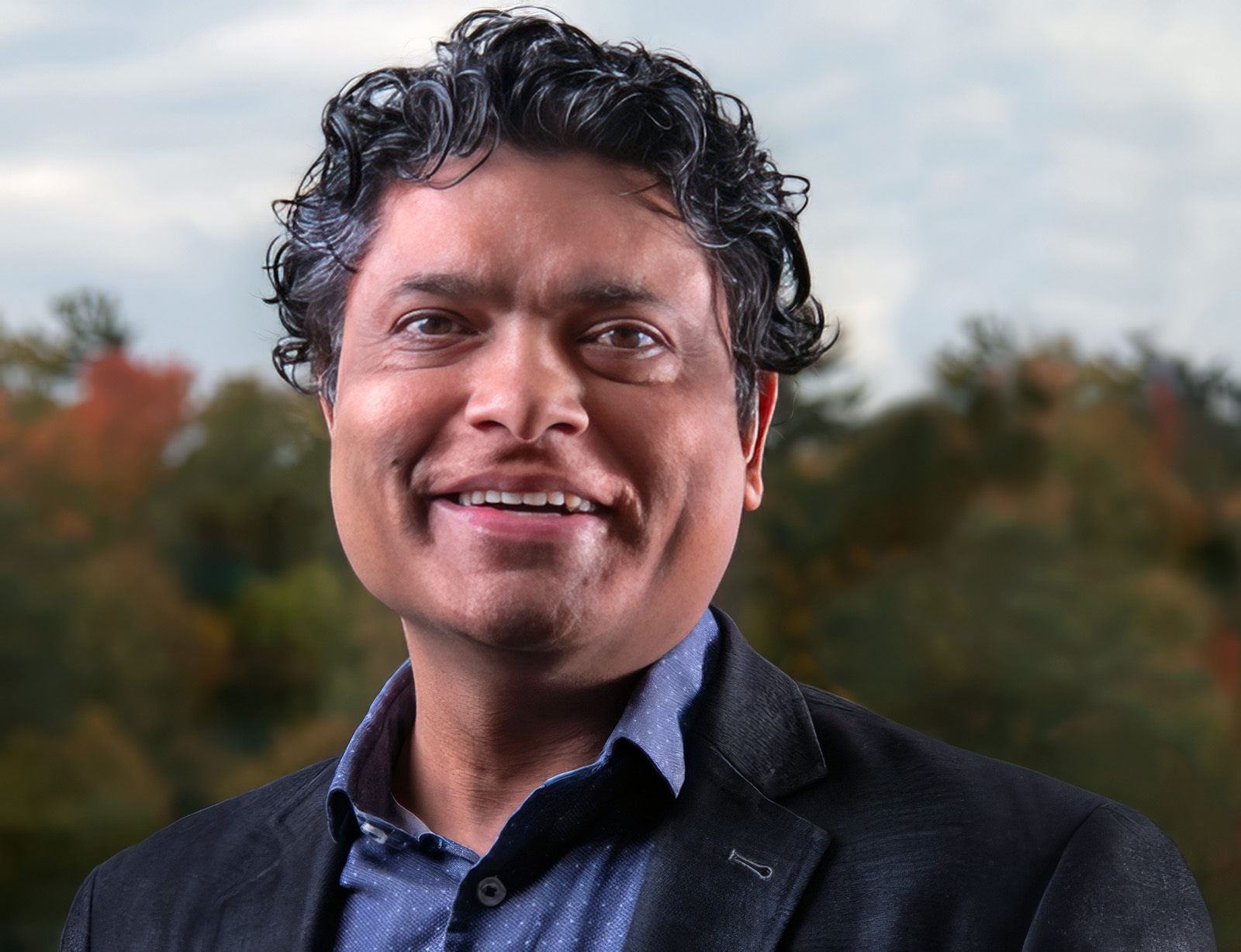
Willem Leterme is a Professor of High Voltage Technology at RWTH Aachen University, specializing in advanced power systems engineering. His research focuses on high-voltage direct current (HVDC) grids, fault protection mechanisms, and grid integration challenges. His work addresses critical issues such as DC fault mitigation, converter control strategies, and system resilience under fault conditions. He leads projects on HVDC grid protection algorithms, cable aging analysis, and interoperability solutions for multi-vendor systems. Key research themes include: DC grid protection and fault detection Modular multilevel converter (MMC) control High-frequency insulation testing Renewable energy grid integration Recent studies (2023-2025) emphasize: Advanced DC fault response modeling Hybrid AC/DC grid stability Multi-terminal HVDC interoperability Transformer insulation under harmonic stresses Publications highlight contributions to protection system design, DC cable testing methodologies, and grid-forming wind turbine applications. He collaborates on EU-funded initiatives for HVDC infrastructure development and standardization efforts.
Daniel Peña Torres is a Postdoctoral Researcher in the Department of Built Environment, specializing in Water and Environmental Engineering. His research focuses on sustainable resource management, particularly the water-energy-food nexus, multi-objective optimization, and environmental impact analysis. He explores systems engineering approaches to address complex sustainability challenges, including climate resilience and resource efficiency. His work includes studies on electric vehicle impacts in Chile and lithium-ion battery recycling feasibility in metropolitan regions. He employs process systems engineering (PSE) methodologies and conducts literature reviews to advance nexus system design. Key research trends involve multi-criteria decision-making, lifecycle assessments, and interdisciplinary frameworks for sustainable infrastructure. While no awards or grants are explicitly mentioned, his contributions highlight innovative approaches to nexus system optimization and environmental sustainability.
Dr. Mehmet Gumus is a Professor of Operations Management and Academic Director of the Master of Management in Analytics (MMA) at the Desautels Faculty of Management, McGill University. He holds the Desautels Chair in Supply Chain Management and Business Analytics (2024–2029). His research focuses on supply chain dynamics, consumer behavior, and risk management, with publications in top journals like Management Science and Operations Research . Education : PhD (2007), Industrial Engineering and Operations Research, University of California, Berkeley MA (2007), Economics, UC Berkeley MS (2002), Industrial Engineering and Operations Research, UC Berkeley BSc (1997), Control Systems Engineering and Naval Science, Turkish Naval Academy Research Interests : Supply chain risk management, consumer behavior models, dynamic pricing, supply chain contracting, and mechanism design. His work integrates game theory, dynamic programming, and data analytics to address real-world operational challenges. Recent Article Trends : Recent work explores payment method impacts on urban mobility, channel profit optimization, and personalized delivery systems. Themes include sustainability, digital transformation, and ethical consumerism in retail and logistics. Awards : Bensadoun Faculty Scholar Award (multiple terms) M&SOM iFORM Best Paper Award (2015) MDIIM Faculty Fellow (2015–2017) Grants & Leadership : Principal Investigator on NSERC grants totaling CAD 400K+ for supply chain and pricing research Co-investigator in SSHRC grants for supply chain risk management and sustainable agriculture Academic Contributions : Leads the MMA program, teaches courses in operations analytics and statistics, and collaborates on initiatives like the Marcel Desautels Institute for Integrated Management.
N. van Oort is an Associate Professor in the Department of Transport, Mobility and Logistics at Delft University of Technology. He specializes in public transport systems, sustainable mobility, and data-driven decision making. His research focuses on optimizing transport networks, electrification strategies, and future mobility scenarios. He has led the Smart Public Transport Lab, contributing to projects like the CriticalMaaS initiative (2019-2023), exploring Mobility as a Service dynamics. His work spans over 249 publications and 8 recognized prizes, including awards for innovative transport solutions and research excellence. Van Oort actively engages in public discourse, appearing in media like NPO Radio 1 and Trouw, discussing topics such as 2050 mobility futures and challenges in Dutch public transport. He has advised on policy matters and serves as a keynote speaker at industry events.
Benjamin Jones is an Associate Professor of Economics at the University of New Mexico (UNM), serving as the Graduate Director. He holds a Ph.D. and M.A. in Economics from UNM and a B.A. in Economics from the University of Texas at Austin. His research focuses on the intersection of environmental economics and human health, particularly examining invasive species, deforestation, wildfire smoke, water quality, and energy resources. His work has been published in leading journals like the Journal of Environmental Economics and Management and featured in media outlets such as The Los Angeles Times and Nature Sustainability. Research interests include environmental economics, epidemiological dimensions of environmental health, dynamic optimization, and coupled human-natural systems. Notable research areas involve quantifying the health impacts of environmental stressors like dust storms, invasive species, and cryptocurrency mining pollution. Jones collaborates with interdisciplinary teams through affiliations like the Science Impact Laboratory for Policy and Economics (SILPE) and the Center for Social Policy. His articles frequently analyze policy-relevant topics such as the economic costs of wildfire smoke, health damages from cryptocurrency mining, and the role of urban afforestation in improving infant health. His work emphasizes inclusive valuation approaches to capture non-market benefits of environmental policies. Affiliations include the Nepal Study Center, Institute for Social Research, and Water Resource Program. Jones teaches courses in environmental economics, resource modeling, and microeconomic theory, reflecting his commitment to integrating theoretical and applied economic analysis.
Professor David Stone is a faculty member in the School of Electrical and Electronic Engineering at the University of Sheffield, where he holds the position of Professor in Electrical Engineering and serves as Theme Lead for Electrical Machines. He earned his BEng (Hons) in Electronic Engineering from the University of Sheffield (1982–1985) and a PhD in Automatic Weld Penetration Control from Liverpool University (1989). Since joining the University of Sheffield in 1989, he has been affiliated with the Electrical Machines and Drives (EMD) Group, advancing to full professorship in 2013. His research focuses on power electronics , energy storage systems , and their applications in electric vehicles (EVs) and renewable energy integration . Notable work includes leading the CREESA initiative, which operates the UK's largest grid-connected lithium titanate battery storage system. Current projects explore hybrid energy storage, EV battery second-life applications, and high-frequency resonant converters for industrial heating. Research interests span: Simulation of energy systems and hybrid storage technologies Electric vehicle energy consumption modeling using dashcam telemetry Smart battery management for EVs and grid support High-efficiency wireless EV charging systems Advanced control strategies for power converters His publications (2020–2025) reflect contributions to: Energy storage system design and control Electric machine fault detection and diagnostics Grid integration of renewable energy sources Piezoelectric transformer-based power supplies Microgrid optimization with hybrid energy storage He collaborates with industry through initiatives like the EPSRC Prosperity Partnership in Offshore Wind and the TransEnergy project linking road-rail energy exchange. His work addresses challenges in sustainable energy systems and smart grid technologies.
Yu Chen is a Professor in the Department of Electrical and Computer Engineering at Binghamton University, State University of New York. He leads the Ubiquitous Smart & Sustainable Computing (US2C) Lab and serves as Director of the Center for Information Assurance and Cybersecurity (CIAC). His research focuses on Trust, Security, and Privacy in Edge-Fog-Cloud Computing, IoT, and Smart Cities. Dr. Chen holds a PhD from the University of Southern California (2006), with prior research under Professors Kai Hwang and Anthony F. J. Levi. His work has been funded by NSF, DoD, AFOSR, and industrial partners, yielding over 200 publications. He is a Senior Member of IEEE and SPIE, and a member of ACM. Education: PhD in Electrical Engineering, University of Southern California (2006) Affiliations: Director, US2C Lab Associate Director, CIAC Research Interests: Smart Cities, Intelligent Surveillance, Edge-Fog-Cloud Computing, IoT Security, and Privacy-Preserving Technologies. His work emphasizes real-time systems, resilient edge architectures, and decentralized consensus protocols for IoT. Grants & Awards: Funded by NSF, DoD, AFOSR, NYS MDPI Computers 2019 Best Paper Award Best Student Poster Award (IEEE AIPR 2014) Students & Labs: Advised 19 students (PhD/Master’s). Key projects include secure edge video processing, ENF-based authentication, and blockchain for IoT. The US2C Lab explores smart city applications and edge computing resilience.
Dr Melvyn Weeks serves as a University Senior Lecturer, Director of Teaching, and Director of Undergraduate Studies at the Faculty of Economics, University of Cambridge. His academic leadership spans curriculum development and student supervision within one of the world's leading economics departments. Specializing in Microeconometrics , Causal Inference , and Machine Learning , Weeks' research bridges advanced statistical methodology with real-world economic applications. His work prominently features in energy economics (analyzing consumer behavior in prepayment energy systems), development economics (examining microcredit impacts and religious institution effects in India), and economic growth theory (addressing model uncertainty in convergence clubs). Publication trends reveal a consistent integration of machine learning techniques with traditional econometric frameworks, particularly in causal tree estimation for heterogeneous treatment effects and robust model averaging approaches. His recent work demonstrates growing emphasis on machine learning applications in economics , causal inference methodologies , and distributional analysis across diverse economic contexts. As a doctoral supervisor, Weeks mentors PhD candidates including Christian Tien (focusing on causal inference and machine learning applications) and Cheuk Fai Ng (specializing in cluster-robust inference for high-dimensional regression). His teaching portfolio spans foundational statistical inference through advanced topics including machine learning in economics, causal inference, and research computing. Based at Clare College with office in Room 60, Weeks maintains active research collaboration through the Faculty of Economics' Econometrics Research Group, contributing to Cambridge's reputation in quantitative economic analysis.
Pierre Six is a Professor of Finance at NEOMA Business School. He holds a PhD from the University of Paris 1 Panthéon-Sorbonne (2009) and an accreditation to supervise research from the University of Paris-Dauphine (2017). His expertise focuses on commodities, risk management, derivatives, and dynamic asset allocation. He has taught risk management and commodity markets extensively. Research Interests His work spans: Commodity market dynamics and hedging strategies Asset allocation under varying risk aversion Derivative pricing with stochastic convenience yields Financial statement analysis for bankruptcy prediction Key Contributions Recent studies include: Oil producer hedging behavior (European Journal of Operational Research, 2025) Bankruptcy prediction models (European Accounting Association, 2025) Dynamic consumption-asset models (Finance Research Letters, 2024) Awards Received the Best Paper Award in Derivatives (Eastern Finance Association, 2010). Roles & Activities Holds administrative positions at NEOMA and actively participates in academic conferences globally, including presentations at the European Finance Association and Energy Finance conferences.
Hashmat U. Khan is a Professor in the Department of Economics at Carleton University, Ottawa, Canada. He also serves as Associate Vice-President (Academic Programs and Strategic Initiatives) and is Co-Director of the Centre for Monetary and Financial Economics (CMFE). His research focuses on macroeconomics, business cycles, monetary and fiscal policy, and DSGE modeling. Education: B.A. from Shri Ram College of Commerce (SRCC) M.A. from Delhi School of Economics Ph.D. from the University of British Columbia (UBC) His research interests center on macroeconomic dynamics , particularly the role of monetary policy, inflation environments, and structural frictions in driving business cycles. He specializes in Dynamic Stochastic General Equilibrium (DSGE) models , nominal and real frictions , and open-economy macroeconomics . His recent work assesses the impact of U.S. tax reforms on Canada, the role of collateral shocks, and the effectiveness of unconventional monetary policy. The 15 most recent publications demonstrate a strong focus on empirical and theoretical macroeconomics , with recurring themes in monetary policy transmission , fiscal multipliers , household and firm behavior , and pandemic-related economic responses . His work frequently appears in top journals such as Journal of Money, Credit and Banking , Journal of Monetary Economics , and Canadian Journal of Economics . Scientific Awards and Recognition: 2023 SSHRC Insight Development Grant 2020 Research Achievement Award 2019 SSHRC Insight Development Grant Professor Khan has supervised Ph.D. students and collaborated extensively with scholars across North America. He has secured competitive research funding, including from SSHRC, to support his work on macroeconomic stability and policy evaluation. His research has practical implications for central banks and fiscal authorities, especially in open economies like Canada. He is actively involved in the CMFE, where he contributes to research initiatives and mentorship. His team engages in quantitative modeling of macroeconomic phenomena, often using large datasets and structural models to inform policy.
Dr. Nan Liu is a Senior Lecturer in Real Estate at the University of Aberdeen Business School, where she has been a faculty member since 2012. She serves as Head of the Real Estate group and is actively involved in research and teaching. Her office is located in the Edward Wright Building, Dunbar Street, Aberdeen. Position: Senior Lecturer Institution: University of Aberdeen School: Business School Department: Real Estate Email: nan.liu@abdn.ac.uk Phone: +44 (0)1224 272211 Dr. Liu's research focuses on residential and commercial real estate, with a strong emphasis on sustainability and innovation. Her key interests include Environmental, Social, and Governance (ESG) factors in real estate, energy efficiency, flexible working spaces, tokenisation of real estate assets, investment behaviours, and governance of the built environment. She also explores urban studies and housing market dynamics, particularly in Scotland. Her recent publications (2025–2012) demonstrate a consistent focus on ESG in commercial real estate, green building premiums, flexible workspace tenancy, housing market transparency, and the impact of economic cycles on energy efficiency. She has published in top journals such as Urban Studies , Energy , Journal of Property Research , and International Review of Financial Analysis . Her work often combines empirical analysis with policy implications, especially in the context of sustainability and urban transition. Dr. Liu is actively involved in research funding and supervision. She currently supervises PhD students in real estate, including Fernanda Antunes, whose project focuses on coworking dynamics. She has secured research grants from the RICS Research Trust and the Carnegie Trust for Scottish Universities for projects on distributed ledgers in real estate and cladding issues in high-rise buildings, respectively. She teaches courses such as Land and Property Economics (PO2009), Principles of Property Valuation (PO2509), and Real Estate Research (BU5030), contributing to both undergraduate and postgraduate programs. Her academic leadership includes coordinating courses and guiding the Real Estate research group. Dr. Liu is affiliated with the Centre for Real Estate Research at the University of Aberdeen, which supports interdisciplinary research in property markets, sustainability, and urban development. She collaborates with colleagues such as Professor Hutchison and has co-authored multiple publications with researchers like Y. Zhao and D. Lo.
Rajeev Tyagi is a Professor of Marketing and holds the Walter B. Gerken Chair in Enterprise and Society at the Paul Merage School of Business, University of California, Irvine. He has been a faculty member since 1996, progressing from Assistant Professor to full Professor, and has held significant leadership roles including Interim Dean and Senior Associate Dean for Academic Affairs. PhD, MA, Marketing – The Wharton School, University of Pennsylvania (1996) MBA – Indian Institute of Management, Calcutta (1992) BE, Electronics Engineering – National Institute of Technology, Surat (1988) His research focuses on the economics of marketing strategy, particularly competitive marketing strategies, distribution channels, and new product introduction. He develops quantitative and game-theoretic models to analyze strategic interactions in markets. His work spans pricing, product positioning, channel design, and consumer welfare implications of technological change. His recent publications in Marketing Science , Management Science , and Journal of Marketing Research reflect a consistent focus on strategic decision-making in competitive environments. Key themes include bundling of time-sensitive events, channel decentralization benefits, pricing under uncertainty, and the impact of entry on market dynamics. His research often reveals counterintuitive outcomes, such as how technological advances can reduce consumer surplus or how entry can soften competition through strategic differentiation. Multiple school- and university-wide awards for excellence in teaching Rajeev Tyagi teaches courses at the PhD, MBA, and Master’s levels, including Marketing Analytics, Marketing Strategies in High-Tech Markets, New Product Development, Business Economics, and Multivariate Statistics. While specific advisees are not listed, his extensive publication record with co-authors suggests active mentorship and collaboration. His research has been supported by his academic appointments and institutional affiliations, with no external grants explicitly mentioned. He maintains an active research agenda, with publications as recent as 2022, indicating ongoing scholarly contributions. His work bridges theoretical rigor with practical implications for marketing and strategy.
Rainer Schulz is a Senior Lecturer at the Business School of the University of Aberdeen, where he conducts research and teaches in real estate economics, housing markets, and financial economics. He is actively accepting PhD students and supervises research in real estate. His affiliations include the Gillmore Centre for Financial Technology at Warwick Business School and the Berlin Center for AI Research in Economics and Management. Research Interests: Dr. Schulz's research focuses on urban real estate markets using econometric and machine learning methods. Key areas include automated valuation modelling (AVM), real estate investment vehicles, fund management, and location choice. He investigates the impact of teleworking on housing demand and the application of real options in real estate development. His work is interdisciplinary, combining urban economics, financial theory, and data science. Publication Trends: His recent publications (2022–2024) emphasize the effects of teleworking on housing markets, machine learning applications in real estate, and local housing market information systems. Earlier works focus on land value mapping, hurdle rates in investment, and the relationship between house prices and macroeconomic variables. His research consistently applies advanced quantitative techniques to real-world property market problems. Scientific Awards: Poster award for Semiparametric Estimation of Land Values, 2015 Aareal Award of Excellence in Real Estate Research, 2012 ARES Foundation Award, 2006 Deutsche Immobilien Akademie Research Prize for doctoral thesis, 2003 Advising and Grants: Dr. Schulz is currently accepting PhD students in Real Estate. He leads the compilation of the Aberdeen Housing Market Report, a knowledge exchange project with the Aberdeen Street Property Company (ASPC). While specific grants are not listed, his research is supported through institutional collaborations and publications in high-impact journals. Labs and Teams: He is affiliated with the Centre for Real Estate Research at the University of Aberdeen Business School. He collaborates with researchers at Humboldt University (Berlin) and participates in international research networks such as the Berlin Center for AI Research. His work involves interdisciplinary teams focusing on urban data, housing policy, and financial technology.
Dr. Paul Wang is a Senior Lecturer of Operations Management and Management Science at Cardiff Business School, Cardiff University . He teaches graduate-level courses including BST514 - Operations Analysis (MBA) and BST124 - Logistics Modelling (MSc), focusing on quantitative decision-making in supply chains. His educational background includes a PhD in Dynamics of Nonlinear Supply Chain Systems from Beihang University, China (2013), an MAdmin and BAdmin in Business Administration. Prior to joining Cardiff, he served as a Lecturer in Logistics Management at Beijing Jiaotong University. Dr. Wang’s research centers on operations and supply chain dynamics , with a strong emphasis on inventory control, the bullwhip effect , stochastic lead times, and demand forecasting. His work integrates system dynamics and mathematical modeling to analyze complex behaviors in production and inventory systems. He has extensively studied food waste in online grocery supply chains and developed models to improve resilience and efficiency. His recent publications reveal a consistent focus on inventory variability , forecasting accuracy , and supply chain resilience , published in top journals such as European Journal of Operational Research , International Journal of Production Economics , and Omega . His research often involves collaboration with scholars like Stephen Disney, Fotios Petropoulos, and Valentina Sanchez Rodrigues. Chinese National Scholarship for Postgraduate Students (2012) Young Scientist Award, 21st International Conference on Production Research (2011) Dr. Wang has advised on industry projects such as the Ocado salads waste project , demonstrating applied impact. He has not listed any PhD students, but his work has contributed significantly to both academic theory and practical supply chain solutions.
Jee Eun (Jamie) Kang is an Associate Professor in the Department of Industrial and Systems Engineering at the University at Buffalo, located within the School of Engineering and Applied Sciences. Her research focuses on transportation modeling, applied operations research, and sustainable mobility systems. She has contributed extensively to studies on autonomous vehicles, emergency evacuation planning, and electric vehicle infrastructure. Her work bridges theoretical optimization frameworks with real-world applications, addressing challenges in multi-modal travel environments, disaster logistics, and shared mobility systems. Dr. Kang's research often involves data-driven methodologies, leveraging automated fare collection systems and smart card transactions to infer user behavior and optimize transportation networks. Her publications span topics such as strategic parking location models for autonomous vehicles, pricing mechanisms in bike-sharing systems, and scenario-based analyses for battery electric vehicle feasibility. She actively advises students on projects related to urban mobility, evacuation planning, and transportation sustainability. Scientific Awards: None explicitly mentioned in the provided texts. Dr. Kang's advising and collaborative work include projects on household activity patterns, hydrogen refueling station optimization, and evacuation warning systems. Her research has been applied to real-world scenarios like the Nepal earthquake relief efforts and California's hydrogen infrastructure planning.