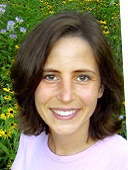
Yu Lan is a Research Fellow at the Yale School of Public Health , specializing in spatial epidemiology and health geography . Her work integrates genomic data (e.g., WGS) with geographic information systems (GIS) to analyze transmission patterns of infectious diseases like COVID-19 and tuberculosis . Education: PhD in Geography, University of North Carolina at Charlotte MA in Geography, University of North Carolina at Charlotte Research Interests focus on space-time disease modeling , infectious disease transmission , and data-driven public health tools . She develops web-based systems for real-time disease surveillance and environmental risk assessment, including tools for private well contamination and urban neighborhood dynamics . Scientific Awards include the SISMID Scholarship (2024) , Student Honors Paper Competition Finalist (2023) , and David Woodward Digital Map Award (2021) . Collaborations include work with the Ted Cohen Lab and researchers like Joshua Warren and Eric Delmelle . Her publications emphasize genomic-spatial integration and cluster detection algorithms for diseases such as tuberculosis and SARS-CoV-2.
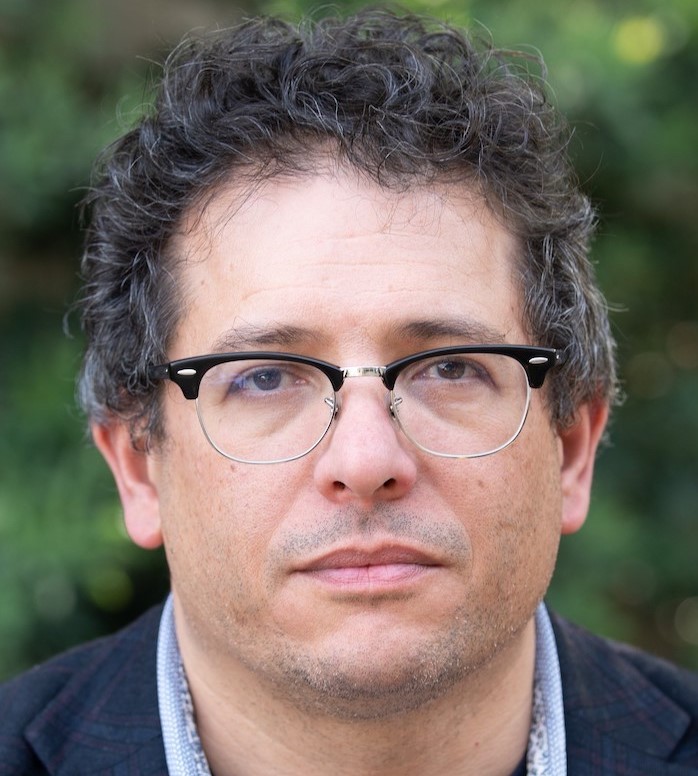
Seth Frey is an Associate Professor in the Department of Communication at the University of California, Davis, with affiliate status at Indiana University's Ostrom Workshop and as Research Director at Metagov. His research focuses on computational social science approaches to understanding self-governance in complex social systems, particularly through the lens of online communities as model institutions. Education: Ph.D. in Cognitive Science and Informatics (complex systems), Indiana University, 2013 B.A. in Cognitive Science, UC Berkeley, 2004 Research Interests: Frey specializes in computational approaches to institutional analysis and the cognitive science of strategic behavior . His work examines how communities design governance systems to overcome collective action problems, with emphasis on: Emergent institutional structures in digital commons Policy-as-data through NLP and institutional grammar frameworks Cognitive mechanisms underlying cooperative behavior Design principles for participatory change in online platforms His methodology integrates large-scale data analysis, web-based experiments, and computational modeling across diverse contexts including Minecraft, Reddit, and professional sports ecosystems. Publication Trends: Recent publications (2023-2025) demonstrate a cohesive trajectory toward computational institutional analysis, with increasing focus on NLP-driven policy analysis (e.g., NLP4Gov), decentralized governance architectures (DAOs, multi-level platform governance), and the cognitive foundations of collective action. His work consistently bridges theoretical institutional analysis with practical applications in digital community design, showing particular growth in translating Ostrom's design principles into computational frameworks. Awards: Honorable Mention Award for Best Paper at ACM CSCW 2019 Advising and Grants: Frey mentors students interested in data science applications at the intersection of communication, cognition, and complex systems, emphasizing resourcefulness and intellectual curiosity. His research has secured substantial funding from: National Science Foundation (NSF) NASA Ford Foundation Google Open Source Foundation He actively encourages aspiring graduate students with strong self-directed research skills to explore computational approaches to social phenomena. Labs and Teams: He leads the Computational Communication Lab at UC Davis and co-directs the Institutional Grammar Research Initiative. Through Metagov, he develops the 'Governance API' framework for modular community governance. His past affiliations include Disney Research (Walt Disney Imagineering) where he applied complexity science to theme park systems, and the New England Complex Systems Institute (NECSI). Current collaborations span Ethereum governance, Minecraft server ecosystems, and Colorado's cannabis monitoring infrastructure.
Byron Boots is the Amazon Professor of Machine Learning in the Paul G. Allen School of Computer Science and Engineering at the University of Washington, where he directs the UW Robot Learning Laboratory. He also serves as a Principal Research Scientist in the Seattle Robotics Lab at NVIDIA Research and co-chairs the IEEE Robotics and Automation Society Technical Committee on Robot Learning. Dr. Boots received his Ph.D. from the Machine Learning Department in the School of Computer Science at Carnegie Mellon University, where he was a member of the Sense, Learn, Act (SELECT) Lab co-directed by Carlos Guestrin and his advisor Geoff Gordon. Prior to joining the University of Washington faculty, he was an Assistant Professor in the School of Interactive Computing within the College of Computing at Georgia Tech, and before that, he completed a post-doc in the Robotics and State Estimation Lab directed by Dieter Fox at the University of Washington. Professor Boots' research focuses on the intersection of machine learning, artificial intelligence, and robotics, with particular emphasis on developing theory and systems that tightly integrate perception, learning, and control. His work spans computer vision, state estimation, localization and mapping, high-speed navigation, motion planning, and robotic manipulation. His group develops algorithms drawing from deep learning and neural networks, nonparametric statistics, graphical models, nonconvex optimization, quantum physics, online learning, reinforcement learning, and optimal control. The research demonstrates a strong theoretical foundation while maintaining practical relevance to real-world robotic systems. His recent publications reveal a clear trend toward integrating advanced machine learning techniques with robotics, particularly in model predictive control, motion planning, and learning-based approaches to robot control. His work shows increasing focus on developing theoretically grounded methods that can handle the complex, nonlinear dynamics of real-world robotic systems while maintaining computational efficiency. The publications span top venues including ICRA, CoRL, IROS, and NeurIPS, demonstrating broad impact across multiple subfields of robotics and AI. Finalist for Best Systems Paper at Conference on Robot Learning (CoRL-2021) Multiple papers selected for oral presentations at top robotics conferences Work recognized for theoretical contributions and practical applications in robot learning As director of the UW Robot Learning Laboratory, Boots leads a vibrant research group focused on fundamental and applied research in robot learning. The lab maintains strong collaborations with NVIDIA Research and has produced numerous high-impact publications that bridge theory and practice. Professor Boots teaches courses in autonomous robotics, machine learning, and reinforcement learning, contributing to both undergraduate and graduate education at the University of Washington.
Philipp Koralus is the McCord Professor of Philosophy and AI at the University of Oxford and serves as Director of the Human-Centered AI Lab (HAI Lab) within the Institute for Ethics in AI. He is also a member of St Catherine's College. Koralus holds a Ph.D. in Philosophy and Neuroscience from Princeton University and a B.A. from Pomona College. His research focuses on the human capacity for reasoning and decision-making, exploring how these processes relate to artificial intelligence agents and large language models like GPT. He advocates for the Erotetic Theory of Reason (ETR), which posits that reason aims to resolve issues or questions directly, explaining both human rationality and fallibility. His work extends to moral judgment, definitions of intelligence, and interdisciplinary collaboration with computer scientists, psychologists, linguists, and neuroscientists. Koralus is preparing to launch the HAI Lab in Fall 2024, aiming to advance human-centered AI ethics and cognition research. His educational background includes advanced studies in philosophy and neuroscience, combining analytical rigor with empirical insights. Collaborations span diverse fields, including fisheries management through agent-based modeling and healthcare ethics in AI applications. He has published widely on topics such as attention mechanisms, visual perception, and the theoretical foundations of AI reasoning. Koralus regularly teaches graduate seminars on philosophy and AI, including upcoming sessions like 'Building the Philosophy to Code Pipeline' starting in 2025. He has supervised doctoral students in both philosophy and computer science but currently lists no specific advisees. His research has been recognized in symposia and commentary, though no formal scientific awards are explicitly mentioned.
Dr. Floris Peters is an Assistant Professor in Interdisciplinary Social Science at Utrecht University, specializing in Migration, Cultural Diversity, and Ethnic Relations. He holds a PhD from Maastricht University (2015) on citizenship's role in immigrant integration. His research focuses on citizenship policies, migration integration, and large-N administrative data analysis. Previously, he was a postdoctoral researcher in the ERC-funded 'Migrant Life Course and Legal Status Transition' (MiLifeStatus) project (2018–2021) and a Visiting Research Fellow at Malmö Institute for Studies of Migration, Diversity and Welfare (MIM). His work bridges migration studies, public policy, and social capital effects. Research interests include citizenship naturalization dynamics, socio-economic integration of migrants, and policy evaluation. Notable contributions explore the impact of dual citizenship, naturalization costs on immigrant decisions, and social capital's role in organ donation. Awards include the FASOS Valorisation Prize (2018) and APSA honors (2017). His interdisciplinary approach combines quantitative methods with policy analysis, addressing migrant life course trajectories and institutional conditions. He collaborates across institutions, leveraging administrative data to understand integration pathways and policy outcomes.
Jonas Eliasson is a Visiting Professor at Linköping University's Department of Science and Technology (ITN), focusing on Communications and Transport Systems. He concurrently serves as Director of Transport Access at the Swedish National Transport Administration and chairs the Planning & Construction committee of the Royal Academy of Engineering Sciences. Previously, he was Director of the Stockholm City Transportation Administration (2016–2019) and a professor at the Royal Institute of Technology (KTH) from 2007 to 2016. His research emphasizes transport policy design and evaluation, including cost-benefit analysis, transport pricing, railway capacity allocation, and public acceptability of policies. He advises governments on sustainable transport planning, congestion pricing, and socio-economic appraisals. His work bridges theoretical frameworks and practical implementation, with a focus on accessibility, equity, and climate targets. Key research themes include infrastructure cost overruns, traffic demand reduction strategies, and the integration of passenger and freight transport systems. Recent publications analyze policy impacts, forecasting methods, and carbon-neutral transportation systems. His interdisciplinary approach addresses both technical and socio-political dimensions of transport challenges. Eliasson collaborates with research groups like Railway and Public Transport and contributes to initiatives like the 'Next Generation Smart Transportation Systems' project. Despite extensive professional roles, no formal student advisees are listed. His work is disseminated through journals like Transportation Research Part A and policy reports for national and regional governments.
Dr. Tessa M. Hill is a Professor in the Department of Earth and Planetary Sciences at the University of California, Davis, and serves as the Associate Vice Provost for Academic Programs, Public Scholarship & Engagement. She is affiliated with the Bodega Marine Laboratory, leading the Bodega Ocean Acidification Research (BOAR) group and the Ocean Climate Lab. Her work focuses on climate change impacts, particularly ocean acidification and deoxygenation, and integrates research with policy and education initiatives. Tessa holds a B.S. in Marine Science from Eckerd College (1999) and a Ph.D. in Marine Science from UC Santa Barbara (2004). She was a UC President’s Postdoctoral Fellow at UC Davis before joining the faculty. Her research examines marine species responses to environmental changes, leveraging interdisciplinary approaches to inform management strategies. Notable projects include collaborations with shellfish farmers and K-12 educators to address ocean acidification challenges. Tessa is a Fellow of the California Academy of Sciences and the American Association for the Advancement of Science (AAAS), and serves on the West Coast Ocean Acidification and Hypoxia Panel. She advocates for inclusive academic reward systems and equitable impact metrics in science. Key Roles: Faculty member, BOAR group leader, AAAS panelist, science education advocate Research Groups: Bodega Ocean Acidification Research (BOAR), Ocean Climate Lab, Hill Biogeochemistry Lab Her outreach efforts emphasize bridging science and policy, including workshops on paleoceanography’s relevance to decision-making. Tessa’s work highlights the importance of seagrass ecosystems in mitigating coastal ocean acidification and the need for adaptive strategies in marine conservation. She also addresses microplastic pollution and its effects on shellfish health, reflecting her broad commitment to environmental science and societal impact.
Thom de Vries is an Associate Professor at the University of Groningen's Faculty of Economics and Business, based in the HRM & Organizational Behavior department. He also serves as Program Director for the Master of Science in Human Resource Management and holds a lecturer position in Industrial Engineering Management. His expertise focuses on organizational resilience, team boundary spanning, and infrastructure management. He holds a Ph.D. in Business Administration (cum laude) from the University of Groningen (2015), with prior experience as a Business Researcher at TNO and academic leadership roles in program committees. Education highlights include: Ph.D. in Business Administration (cum laude), University of Groningen (2015) Res. M.A. and M.A. in Business Administration (cum laude), University of Groningen (2011, 2009) B.A. in Public Administration, Thorbecke Academie (2007) Research interests emphasize team dynamics in complex environments, particularly: Resilience and adaptability in critical infrastructure organizations Boundary spanning across teams/organizations Design of multiteam systems for complex tasks Disruption management in supply chains Notable projects include the NGinfra-funded ConCorCom initiative studying coordination during infrastructure challenges, and NWO grants exploring resilience and decision-making under uncertainty. His work has earned awards like the Academy of Management Best Paper Award and multiple teaching recognitions. Grants include: NGINFRA/NWO: ConCorCom (Context, Coordination, Competencies) NWO VENI: Team Boundary Spanning in Disruptions NWO: Resilience-Efficiency Balance in Planning Teaching roles span disciplines including Organizational Behavior, Survey Research, and Experimental Design across faculties. He actively supervises research master students and contributes to executive education programs.
Asli Göçmen is an Associate Professor at the University of Wisconsin–Madison in the Department of Geography & Nelson Institute for Environmental Studies. Her work focuses on environmental planning, sustainable land development, and GIS applications. She holds a Ph.D. from the University of Michigan and has expertise in spatial analysis and urban planning. Education: Ph.D., Urban, Technological, and Environmental Planning, University of Michigan Certificate in Spatial Analysis & GIS, University of Michigan Master of Community Planning, University of Cincinnati Bachelor of City Planning, Middle East Technical University, Turkey Research Interests: Examines human dimensions of environmental sustainability, particularly how stakeholders' attitudes and policies influence land development patterns. Current projects include planner perspectives on sustainable development and conservation subdivisions' ecological benefits. Teaching: Urban & Regional Planning 622: GIS Applications in Planning Urban & Regional Planning 841: Planning for the Ecological City Urban & Regional Planning 590: Resilience to Natural Hazards Advising & Students: Advised over 20 graduate students in urban planning and environmental studies programs. Current advisees include Colleen Henegan and Alex Jeffers. Former students have contributed to ecological design and policy research.
Dr. Aaron Schurger is an Assistant Professor in the Psychology Department at Chapman University’s Crean College of Health and Behavioral Sciences. He is also a member of the Institute for Interdisciplinary Brain and Behavioral Sciences. Schurger holds a BA from Indiana University, and MA and PhD from Princeton University. His research focuses on the neuroscience of volition, consciousness, and decision-making, particularly exploring the readiness potential (RP) and its implications for free will debates. His work challenges classical interpretations of the RP using computational models, suggesting it reflects stochastic neural processes rather than preconscious decisions. Recent contributions include studies on the origins of the RP in spiking neural networks, critiques of causal structure theories of consciousness, and interdisciplinary analyses of free will. His findings emphasize that the RP may not indicate preconscious decision-making but instead arise from natural neural fluctuations during decision thresholds. Schurger collaborates across neuroscience, philosophy, and cognitive science, contributing to debates on consciousness, action initiation, and neural correlates of subjective experience. His research also addresses methodological rigor in studying unconscious processing and integrates computational models with empirical data, as seen in studies on movement timing and neural stability during perception. While no specific grants or labs are explicitly listed, his affiliations suggest involvement in interdisciplinary projects at Chapman.
Thierry Warin is a Full Professor of Data Science for International Business at HEC Montréal, directing the Department of International Business. He holds the Professorship in Data Science for International Business and is a Principal Investigator at CIRANO, leading the World Economy theme. His roles include affiliations with Harvard Business School’s Microeconomics of Competitiveness program and the International Trade and Finance Association presidency (2020-2022). Education: PhD from ESSEC Business School (France, 2000). Professional development includes the Harvard Business Analytics Program (2018-2020) and GIS training at Harvard. Research Interests: Data science applications in global economic transformations, including network theory, natural language processing, and computational methods. Focus areas: algorithmic collusion, platform economies, and metadata-driven analyses. He develops open-source tools like the statcanR package and advocates for reproducible research. Articles Trends: Recent work explores AI regulation, algorithmic competition, climate transition plans, and central bank speech analysis. Methodologies span structural topic modeling, social media analytics, and entropy-based frameworks. Awards: Honored with the Highly Commended Paper Award (2017-2018) and Emerald Literati Award (2018) for reverse innovation research. Recognized for contributions to computational social science and regulatory frameworks. Advising & Grants: Supervised 16 master’s projects since 2019, focusing on data science applications in global business challenges. Active in interdisciplinary initiatives like the St. Lawrence–Great Lakes corridor data hub. Labs & Philanthropy: Founded quantum simulations and leads Ed’Haîti , an NGO addressing education in Haiti. Collaborates on Science des données au féminin en Afrique , empowering 200 African women with data science skills.
Dr. Keisha April is an Assistant Professor at Rutgers University's School of Criminal Justice. She holds a Ph.D. in Clinical Psychology from Drexel University, J.D. from Benjamin N. Cardozo School of Law, and A.B. in Psychology from Princeton University. Her research focuses on juvenile justice systems, policing practices, mental health intersections with crime, community-based interventions, and racial/ethnic disparities. Using mixed methodologies, she examines justice system interactions to inform policy reforms. Recent publications explore police-youth dynamics, treatment-to-prison pipelines, and community participatory research. Her work integrates public health models with restorative justice approaches.
Michael Obal is an Associate Professor of Marketing, Entrepreneurship, and Innovation at the Manning School of Business, University of Massachusetts Lowell. He holds a PhD from Temple University and teaches courses on marketing strategy, digital marketing, and innovation. His research focuses on disruptive technologies, new product development (NPD), and the diffusion of innovations. He has published extensively in journals like Journal of Business Ethics , Research-Technology Management , and Journal of Business Research . Obal has received numerous awards, including the 2024 UML Researchers and Scholars Investment and the 2023 AMA Promising Research Award. Obal’s career spans academia and industry, transitioning from sales at the Boston Beer Company to digital marketing at iProspect before pursuing his PhD. He emphasizes the importance of adaptability in career paths and encourages students to build skills in emerging technologies. His research explores topics like remote work’s impact on business relationships, customer participation in NPD, and sustainability integration in innovation processes. He is an associate editor for Journal of Business-to-Business Marketing and serves on editorial boards for Industrial Marketing Management and Journal of Business Research . Obal’s work also addresses challenges posed by technological disruption and global market dynamics. His recent studies analyze how remote work affects customer engagement and how firms navigate turbulent technological environments. He collaborates internationally through initiatives like the Global Entrepreneurship Exchange (GE2), fostering innovation ecosystems and cross-cultural entrepreneurship education.
Overview Dr. Catherine Prentice is a Professor of Marketing and Head of the Marketing Discipline at the University of Southern Queensland, Australia. She also serves as Director of the Asia Pacific Association for Gambling Studies (APAGS) and holds editorial roles across multiple top-tier journals including Journal of Business Research and International Journal of Contemporary Hospitality Management . Her research focuses on artificial intelligence, emotional intelligence, service innovation, consumer behavior, and gambling studies, with significant contributions to the tourism and hospitality sectors. Education MBA, Lincoln University (2001) PhD in Marketing, Victoria University (2009) Research Interests Dr. Prentice’s work bridges theoretical and applied research, emphasizing the practical implications of her findings. Key areas include: - The role of AI in enhancing customer engagement and loyalty - Emotional intelligence in service encounters and leadership - Consumer psychology in tourism and hospitality contexts - Strategic marketing in the gambling and gaming industries - Sustainability and innovation in service delivery Publications & Impact Her over 100 peer-reviewed articles span journals like Journal of Hospitality & Tourism Research and Tourism Management , with a focus on empirical investigations of service quality, customer loyalty, and organizational performance. Recent work explores the intersection of AI and human service interactions. Leadership & Service In addition to her academic roles, Dr. Prentice contributes to industry through: - Editorial board memberships across 12+ Q1 journals - Leadership in professional associations like NAGS and ANZMAC - Consultancy in business strategy and marketing for corporations and governments
Upaka Rathnayake is a Professor of Civil Engineering and Principal Investigator at the Mathematical Modelling and Intelligent Systems for Health and Environment (MISHE) research unit at Atlantic Technological University Sligo, Ireland. He has held academic and research roles globally, including in Sri Lanka, Japan, the UK, New Zealand, Australia, and Fiji. His research focuses on water resources management, hydrological modeling, climate analysis, and AI-driven solutions for environmental challenges. He holds a PhD from the University of Strathclyde and advanced certifications from Hokkaido University. Education: PhD in Optimal Management of Urban Sewer Systems (University of Strathclyde, 2013) Professional Memberships: Institution of Engineers Sri Lanka, Engineers New Zealand, International Association of Hydrological Sciences Research interests include: Hydrological modeling and climate change adaptation Multi-objective optimization and soft computing techniques Explainable AI applications in environmental systems Remote sensing and GIS for water resource management Recent articles highlight AI-driven solutions for air quality prediction, soil nutrient analysis, and flood risk assessment. Awards include the 2023 Presidential Award for Scientific Publications and multiple university excellence awards. He actively advises PhD students on projects like urban water systems optimization and climatic trends analysis. Rathnayake is an editorial board member of journals like Scientific Reports and PLoS ONE , contributing to peer review and policy-oriented research. His work bridges data-driven methods with traditional hydrological practices to address global environmental challenges.