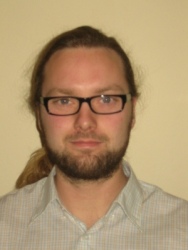
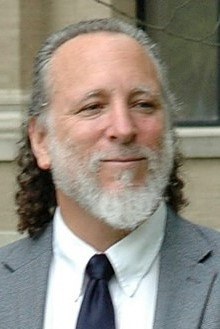
John P. Spencer is a Professor of Psychology at the University of East Anglia , UK, and a member of its School of Psychology . He previously served as a Professor of Psychology and founding Director of the Delta Center at the University of Iowa. His research focuses on the development of executive function, working memory, attention, and word learning, with a pioneering emphasis on dynamical systems theory and dynamic neural field models of cognition and action. Sc.B. with Honors, Brown University (1991) Ph.D. in Experimental Psychology, Indiana University (1998) His work utilizes fMRI , fNIRS , and eye-tracking to explore neural-cognitive dynamics in infancy and childhood, particularly in low-resource settings. Recent articles highlight cross-situational word learning, air quality impacts on cognition, and brain network myelination studies. Scientific awards include: 2003 Early Research Contributions Award (Society for Research in Child Development) 2006 Robert L. Fantz Memorial Award (American Psychological Foundation) APA Fellow since 2007 Current projects include brain imaging centers, infant cognition in India, and theoretical advancements in dynamic systems. He leads the Developmental Dynamics Lab and collaborates with institutions worldwide.
Dr. Raha Hassan is an Assistant Professor in the Department of Psychology at Western University and the director of the Social and Emotional Wellbeing (SEW) Lab. She holds a PhD in Clinical Psychology from McMaster University and completed her predoctoral residency at the Royal Ottawa Mental Health Centre. Her research focuses on the role of temperament in social and emotional wellbeing, particularly in children's interactions and interpretations of social environments. She employs a developmental framework and emphasizes naturalistic observation of behavior, with an interest in cultural influences on these processes. Dr. Hassan’s work integrates psychophysiological measures such as EEG studies to explore brain mechanisms underlying shyness and self-regulation. Her articles investigate generational trends in shyness, the relationship between inhibitory control and social behavior, and the physiological underpinnings of social anxiety. Key themes include the double-edged nature of self-regulation, contextual factors affecting temperament, and the interplay between biology and environment in developmental outcomes. No scientific awards are explicitly mentioned in the provided text. Dr. Hassan’s lab, the SEW Lab, focuses on advancing understanding of social-emotional health through interdisciplinary methods.
Martha C. Tompson is Associate Professor and Clinical Program Director in the Department of Psychological & Brain Sciences at Boston University. She earned her PhD from UCLA and directs the Family Development and Treatment Lab. Her research examines family processes in mental health, with focus on depression, bipolar disorder, and schizophrenia interventions. Key research areas include: Family-focused treatments for childhood depression Impact of maternal depression on child development Family psychoeducation for bipolar disorder Dr. Tompson has developed novel family-based interventions for preadolescent depression and studied transgenerational transmission of depression vulnerability. Her work emphasizes culturally responsive treatments and includes randomized trials demonstrating treatment efficacy. She mentors clinical psychology students and teaches evidence-based intervention strategies.
Dr. Lin Wang is a Lecturer in Applied Data Science and Signal Processing at Queen Mary University of London (QMUL), affiliated with the School of Electronic Engineering and Computer Science. He leads the Machine Listening Lab and is a member of the Centre for Multimodal AI, Centre for Intelligent Sensing (CIS), and Institute of Coding (IoC). His research focuses on audio-visual signal processing, robotic perception, and machine learning, with applications in healthcare, drone-based sensing, and human activity recognition. Dr. Wang holds a PhD from Dalian University of Technology and has held postdoctoral positions at QMUL, the University of Sussex, and the Alexander von Humboldt Foundation in Germany. Education and Roles: PhD in Signal Processing, Dalian University of Technology (2010) Postdoc at Queen Mary University of London (2014–2017) Postdoc at University of Sussex (2017–2018) Alexander von Humboldt Fellow at University of Oldenburg (2011–2013) Fellow of the Higher Education Academy (UK) Research Interests: Audio-visual signal processing for drones and wearable devices Machine listening and robotic perception Machine learning for healthcare and environmental monitoring Human activity recognition using multimodal sensors Awards and Grants: Early Career Champion on AI&Data, UK Acoustics Network Outstanding Article Award, Frontiers in Computer Science (2022) EPSRC grant: Bioacoustic Monitoring Using Drones (£46,821, 2022–2023) Innovate UK grant: Music Source Separation (£48,144, 2024–2025) Teaching and Students: Dr. Wang teaches Applied Statistics , Website Design and Authoring , and Machine Learning for Visual Data Analysis . He supervises PhD students including Ashish Alex (speech separation), Michael Clayton (drone audition), and Dmitrii Mukhutdinov (audio-visual processing). Labs and Teams: He co-leads the Machine Listening Lab and is part of the Centre for Multimodal AI, focusing on interdisciplinary projects in robotics, acoustics, and AI.
Dr. Hannes Petrowsky is a Senior Research Associate at the Chair of Business Psychology, Social Psychology & Experimental Methods at Leuphana University of Lüneburg. He earned his M.Sc. in Management & Marketing (2017-2019) and completed his Ph.D. on first-offer effects in negotiations (2020-2023). Academic Affiliation: Institute for Management & Organization (IMO) Location: Universitätsallee 1, C6.419, Lüneburg Contact: hannes.petrowsky@leuphana.de | +49.4131.677-1437 His research spans negotiation psychology , consumer behavior , and the impact of digital technologies (e.g., big data, machine learning, AI, VR). He investigates anchoring effects, price-ending strategies, and socially innovative transformations through inclusive working environments. Key Trends in Recent Publications: Analysis of concession patterns in negotiations using behavioral economics principles Development of immersive VR frameworks for skill acquisition Behavioral science-driven interventions for climate change mitigation Meta-analyses of negotiation dynamics across 25-26 million real-world transactions Exploration of technology adoption in public health contexts Dr. Petrowsky contributes to projects like the Digital Transformation Lab and MEHRCE (circular economy initiatives). His work bridges experimental psychology with digital innovation and sustainable entrepreneurship .
Andrea Stevenson Won is a researcher at Cornell University in the Department of Communication , focusing on virtual reality (VR), human-computer interaction, and social dynamics in immersive environments. Her work explores avatar embodiment , nonverbal behavior , and accessibility in VR for users with disabilities. Research Themes : Virtual embodiment and its psychological effects Accessibility solutions for blind and low-vision users in social VR Nonverbal communication analysis in immersive environments Pro-social behavior through VR interventions Collaborative VR systems and AI integration Recent Article Trends : 2024: Investigated avatar behavior transformation in mixed reality ( MRTransformer ), AI-guided accessibility tools, and nonverbal cue adaptations 2023-2022: Focused on educational VR applications, 360° video narratives, and longitudinal team dynamics 2021-2014: Pioneered avatar embodiment studies, anxiety detection via movement tracking, and homuncular flexibility in VR
Diana Tamir is a Professor at Princeton University, where she directs the Princeton Social Neuroscience Lab. She earned her Ph.D. from Harvard University and specializes in the intersection of internal mental processes and external social cognition. Her research investigates: How minds predict others' emotions and mental states The cognitive consequences of self-disclosure and social media use Neural mechanisms of social prediction using fMRI and machine learning Effects of fiction reading on theory of mind Dynamics of spontaneous thought and social bonding Her recent publications (2024-2025) demonstrate strong focus on emotion prediction mechanisms, social interaction dynamics, neural signatures of psychological states, and developmental aspects of social cognition. Methodologically, she employs neuroimaging hyperscanning, ecological momentary assessment, and computational modeling across diverse populations. She currently advises graduate students including Faustine Corbani and Yeaju Diana Kim. Her lab focuses on empirical approaches to understanding how individuals navigate between internal experiences and external social environments.
Dr. Eddie M. Clark is a Professor of Psychology in the Experimental Social Psychology program at Saint Louis University's College of Arts and Sciences. He directs the Applied Social Psychology Lab and teaches courses including Social Psychology, Health Psychology, and African American Psychology. Education: Ph.D. and M.A., Ohio State University B.A., Northwestern University His research examines health attitudes/persuasion and close relationships, with emphasis on psychosocial factors affecting African American communities. Current projects investigate the interrelationships between personality, social capital, religiosity and health outcomes. Dr. Clark leads an active research team studying relationship maintenance, infidelity, and health communication. His NIH-funded research on structural racism and cancer disparities involves collaborators from multiple universities. The lab employs longitudinal designs and community-based approaches to examine health behavior determinants. Awards and recognition include selection as a Top Cited Researcher (Research.com, 2024) and major NIH funding for cancer disparities research. His mentorship extends to multiple graduate students investigating predictors of relationship dissolution, health promotion in chronic illness, and substance use disorders.
Prof. Hatice Gunes is a Full Professor of Affective Intelligence and Robotics at the University of Cambridge's Department of Computer Science and Technology, leading the Affective Intelligence and Robotics Lab (AFAR Lab). She holds an EPSRC Fellowship and is an EPSRC Fellow. Her research focuses on multimodal affective and social intelligence for AI systems, particularly embodied agents and robots, integrating Machine Learning, Affective Computing, and Human Nonverbal Behaviour Understanding. Key projects include the CHANSE initiative (2025–2028) for child mental health assessment via social robotics, the EPSRC Fellowship on robotic EQ for wellbeing (2019–2025), and the EU Horizon 2020 WorkingAge project. Prof. Gunes has pioneered systems like the EU SEMAINE project's SAL system, recognized with Best Demo and Paper Awards, and co-founded SensingFeeling, a spin-out company from the Innovate UK Sensing Feeling project. Her work emphasizes ethical AI and fairness, earning awards like the Best Paper Award in Responsible Affective Computing (IEEE ACII'23). She has delivered keynote talks at IEEE FG’19 and ICPR’22 and collaborates with the Department of Psychiatry and wellbeing professionals. Education: PhD in Computer Science from University of Technology Sydney (UTS) under Australian Government IPRS Scholarship Postdoctoral Research at Imperial College London (SEMAINe project) Research Interests: Multimodal affective computing, social robotics for mental wellbeing, fairness in AI systems, human-robot interaction (HRI), and ethical deployment of AI technologies. Her lab develops robots for workplace wellbeing coaching and child mental health assessment, with over 700 media coverages and partnerships with industry and healthcare sectors. Notable Achievements: Runner-up Collaboration Award (2023 VC Research Impact) Better Future Award (2023 Hall of Fame) Finalist RSJ/KROS Interdisciplinary Research Award (2021) Shortlisted Sony Women in Technology Award 2025 Labs & Teams: AFAR Lab drives interdisciplinary research in Cambridge, focusing on socially intelligent robots and AI systems that address critical societal challenges in wellbeing and mental health.
Sebastian Willen is a Researcher at the Chair of Empirical Social Research at the University of Duisburg-Essen. He is affiliated with the working group of Prof. Dr. Stein and contributes to interdisciplinary projects like ATMo² and InnaMoRuhr , focusing on sustainable mobility and social dynamics. Research Interests include family sociology, transport sociology, dyadic modeling, and empirical methods. His work examines partnership negotiation in family expansion, mobility behavior transformation, and plagiarism dynamics through advanced statistical analysis. Recent Publications highlight family formation processes, sustainable urban mobility, and ethical decision-making. Articles span journals like Kölner Zeitschrift für Soziologie und Sozialpsychologie , Demographic Research , and edited volumes on mobility. His work integrates quantitative methods with theoretical frameworks in social research. Scientific Activities involve empirical social research, teaching advanced statistical analysis, and presenting at conferences such as the Wissenschaftsforum Mobilität . He has contributed to projects addressing mobility transitions and social inequality.
Aaron Pincus is a Professor of Psychology at Penn State University's Department of Psychology within the College of the Liberal Arts. He is a Licensed Psychologist with extensive research expertise in personality psychology, clinical psychology, and interpersonal processes. Dr. Pincus directs the Personality Psychology Laboratory with a focus on adult clinical psychology. His primary research interests include Contemporary Integrative Interpersonal Theory (CIIT), pathological narcissism, and the DSM-5 Alternative Model of Personality Disorders. His work integrates clinical and personality psychology through the "interpersonal situation" framework, examining how individual differences in personality impact social functioning across multiple timescales. Dr. Pincus has developed several assessment tools including the Pathological Narcissism Inventory (PNI), the Inventory of Interpersonal Problems Circumplex Scales (IIP-C), and the Interpersonal Stressors Circumplex (ISC). His recent publications demonstrate expertise in circumplex measurement methods, interpersonal pathoplasticity, and the integration of personality structure and dynamics. Contemporary Integrative Interpersonal Theory (CIIT) Circumplex Measures and Methods Interpersonal Pathoplasticity Integration of Personality Structure and Dynamics Pathological Narcissism (grandiosity and vulnerability) DSM-5 Alternative Model of Personality Disorders His laboratory employs intensive repeated measures of social perception and behavior using daily diary assessments via smartphone technology to examine intraindividual variability across interactions, days, weeks, and years. This research connects social perception, behavior, emotions, and symptoms to stress, health, psychopathology, and adjustment.
Roles and Affiliations: Doina Olaru is a Professor in the Department of Management and Organisations at the University of Western Australia (UWA) Business School. She is affiliated with the Planning and Transport Research Centre and holds a visiting position at the University of Burgos, Spain. Her work focuses on transport planning, urban sustainability, and data-driven decision making. Education: PhD in Transport Engineering (University Politehnica of Bucharest, 2000). Prior industry experience includes roles as a railway engineer and Postdoctoral Research Scientist at CSIRO. Research Interests: Urban transport systems, travel behavior modeling, accessibility analysis, environmental impacts of transport, and applications of artificial intelligence. She emphasizes sustainable solutions integrating land-use and transport policies. Grants and Collaborations: Principal investigator on 31 grants, including ARC Linkage Projects and industry partnerships with iMOVE CRC. Collaborates with institutions like the University of Oxford, University of Leeds, and University of Sydney. Awards: Multiple teaching awards (UWA Business School) and recognition for contributions to transport research, including the Dennis Moore Australian Computer Society Orator honor. Teaching: Courses include Data Analysis and Decision Making, and Quantitative Data Analysis. Over 10 teaching excellence nominations. Current Projects: Focus areas include smart transport technologies, roundabout modeling via drone analytics, and hybrid work impacts on transport demand.
Professor David Abbink is a Full Professor of Haptic Human-Robot Interaction at Delft University of Technology, holding a joint appointment between the Department of Cognitive Robotics in the Faculty of Mechanical Engineering and Industrial Design Engineering since November 2023. He founded the Delft Haptics Lab and co-founded the Cognitive Robotics Department in 2017. Abbink leads the transdisciplinary research and innovation centre FRAIM, which was awarded the prestigious NWO Stevin Premie (Dutch Nobel Prize equivalent) in June 2024. Trained as a mechanical engineer specializing in biomechanics, Abbink's research focuses on human behavior adaptations when interacting with autonomous systems. He has published over a hundred scientific articles on human-robot interaction, haptics, shared control, tele-operation, driver assistance systems, and sensorimotor control. His research has been funded by industry partners (Nissan, Boeing, Renault), RVO (Brightsky project 2022-2026), and the Dutch Science Foundation NWO through personal grants (VENI 2010-2014, VIDI 2015-2019). Abbink's recent work centers on worker-robot relations as an academic focus, collaborating with organizations like Erasmus Medical Centre for nursing work, Schiphol and KLM for baggage handling, and KLM Engine Repair Services for maintenance work. He also serves as scientific director for the Centre for Meaningful Human Control, launched in October 2024. His work bridges engineering, social sciences, and practical applications to responsibly shape the future of work with emerging robotic capabilities. NWO Stevin Premie (2024) Best IEEE SMC journal paper on Cybernetics (2019) Top 25 scientific talents according to New Scientist (2015) Best teacher of Faculty 3mE (2013, 2014) Best teacher of Department of BioMechanical Engineering (seven consecutive years) Abbink has supervised over 110 MSc students and 11 PhD students. His educational contributions include developing the Master Programme in Robotics at TU Delft and receiving international recognition for his course 'The Human Controller.' He is also a prominent science communicator, featured on national television, radio, and major Dutch newspapers, and has delivered lectures at venues like The Royal Institution and Lowlands Festival. Despite his academic commitments, Abbink maintains a drummer persona, having recorded four albums and performed over 400 shows across three continents between 1999-2014.
Fred Feinberg is the Joseph and Sally Handleman Professor of Marketing and Professor of Statistics (by courtesy) at the University of Michigan, where he is also an Affiliated Faculty member of the Center for the Study of Complex Systems. His work integrates advanced Bayesian methods with large-scale marketing data to illuminate how people make choices under uncertainty. Education Ph.D., Sloan School of Management, Massachusetts Institute of Technology (1989) Doctoral program in Mathematics, Cornell University (1983–84) S.B. Mathematics & S.B. Philosophy, Massachusetts Institute of Technology (1983) Research Focus Feinberg’s scholarship centers on discrete choice models that leverage real-world decisions to infer latent attributes such as demographics, product appeal, and socioeconomic status. Methodologically, he employs Hierarchical Bayes (HB) models and cutting-edge MCMC algorithms to handle massive data sets, while theoretically he advances dyadic utility theory and optimal search under uncertainty. Applications span click-through behavior, menu-based choice, online dating preferences, spatial marketing, and consumer reactions to intangible or aesthetic product features. Recent empirical studies explore the wearout versus weariness effects of online advertising, the impact of data breaches on consumer behavior, and dynamic pricing for digital media subscriptions. Across these projects, Feinberg couples rigorous statistical innovation with actionable managerial insights, bridging marketing science, operations, and engineering. Scientific Awards & Leadership Joseph and Sally Handleman Endowed Professorship Past President, INFORMS Society for Marketing Science Departmental Editor, Production and Operations Management Former Co-Editor, Marketing Science Co-author (with T. Kinnear & J. Taylor) of the textbook Modern Marketing Research: Concepts, Methods, and Cases Grants & Collaborations While explicit grant lists are not provided, Feinberg’s prolific publication record in top-tier journals (e.g., Journal of Marketing Research , Marketing Science , Management Science ) and editorial board service imply sustained external funding and interdisciplinary partnerships, particularly with operations, engineering, and computer-science groups. Laboratories & Teams Feinberg is formally affiliated with the Center for the Study of Complex Systems (CSCS) at the University of Michigan, where he collaborates on network-based choice frameworks and large-scale behavioral data analytics. He maintains active ties to the Ross Marketing faculty and the Department of Statistics, fostering joint workshops and doctoral training initiatives.
Stephen Humphrey is the Alvin H. Clemens Professor of Management and Organization at the Smeal College of Business, Pennsylvania State University. His research focuses on social relations at work, with a primary emphasis on teamwork dynamics, negotiation theory, and organizational behavior. He holds a PhD in Organizational Behavior and Human Resource Management from Michigan State University and a BS in Psychology from James Madison University. Professor Humphrey's research explores two core areas: (1) the 'bottom-up' formative design of teams (including composition, role allocation, and reward structures), and (2) the 'top-down' management of existing teams (focusing on temporal dynamics, structural adaptation, and conflict resolution). His work on team microdynamics examines multilevel, multi-period, and multi-theoretical aspects of teamwork. His recent publications demonstrate strong research trends in team dynamics, organizational reputation, negotiation pedagogy, and ethical decision-making. Articles frequently employ meta-analytic approaches and focus on contextual factors influencing team performance across diverse settings. The research consistently bridges theoretical frameworks with practical organizational applications. Professor Humphrey teaches negotiation skills across undergraduate, MBA, EMBA, and executive education programs. He has developed several negotiation simulations derived from real-world scenarios and teaches doctoral seminars on organizational research design. As faculty advisor, he mentors PhD and DBA students in research methodology and academic development.