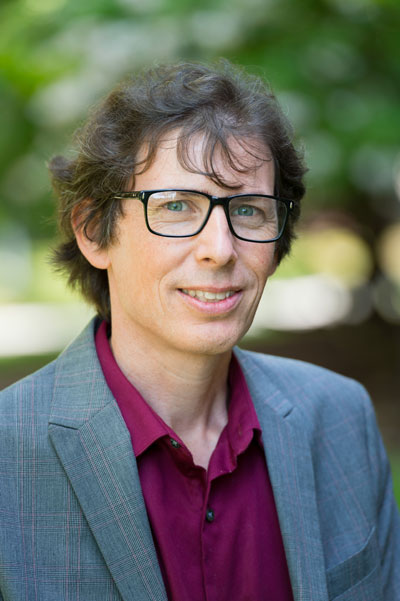
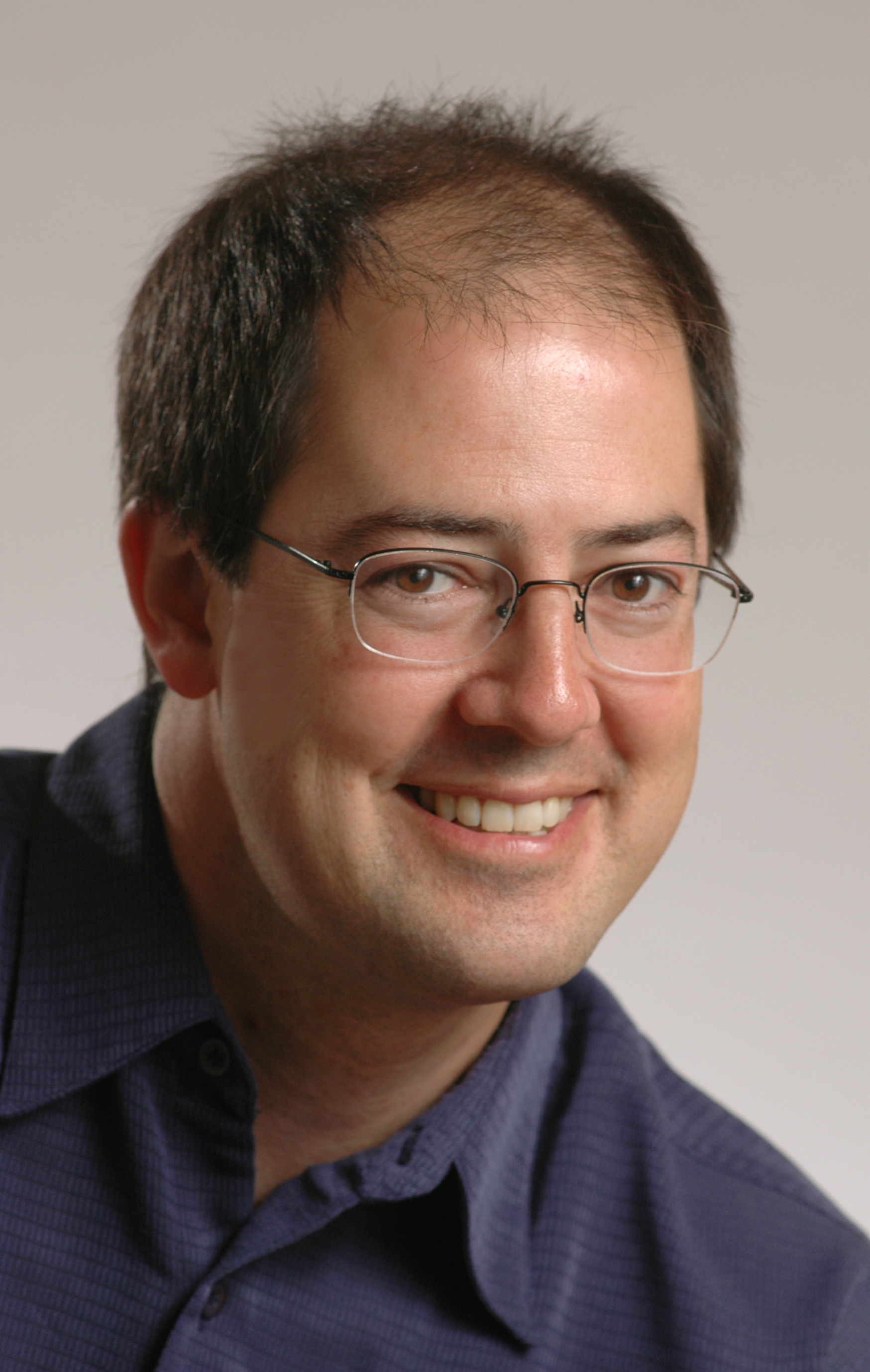
Steven Rogak is a Professor in the Department of Mechanical Engineering at the University of British Columbia's Faculty of Applied Science. He holds a P.Eng. license and degrees including a B.A.Sc. in Mechanical Engineering from UBC, and M.Sc. and Ph.D. from Caltech. P.Eng., University of British Columbia B.A.Sc., University of British Columbia M.Sc., Ph.D., California Institute of Technology His research focuses on aerosol science, particularly solid nanoparticles from combustion processes, their climate and health impacts, and mitigation strategies. Key areas include: Soot morphology and transport properties Engine emission reduction via fuel injectors Indoor air filtration systems Membrane-based energy exchangers Atmospheric particulate analysis The 15 most recent articles span experimental and theoretical studies on soot characterization, membrane technologies, and aerosol dynamics, with applications in climate modeling, healthcare ventilation, and sustainable materials. Collaborations include Westport Innovations and interdisciplinary teams. Rogak leads the Aerosol Laboratory at UBC, where he applies fluid mechanics and heat transfer fundamentals to address environmental and health challenges. He emphasizes experimental rigor and welcomes graduate students with expertise in these areas.
Kristofer Pister is a Professor in the Department of Electrical Engineering and Computer Sciences at the University of California, Berkeley. He co-directs the Berkeley Sensor and Actuator Center (BSAC) and the Ubiquitous Swarm Lab. His career spans groundbreaking innovations in Micro/Nano Electro Mechanical Systems (MEMS), Control Systems, and Low-Power Circuits, with a focus on Smart Dust and synthetic insects. Education: Ph.D. and M.S. in EECS from UC Berkeley (1992, 1989); B.A. in Applied Physics from UC San Diego (1986). His research areas include MEMS , Control Systems , Robotics , and Integrated Circuits , with recent work on self-powered micro-sensors, crystal-free radios, and interplanetary swarm networks. Key awards include the ISA Albert F. Sperry Founder Award (2009) , Alexander Schwarzkopf Prize (2006) , and the NSF CAREER Award (1996) . He has authored numerous influential publications in wireless sensor networks and microrobotics. His lab, Ubiquitous Swarm Lab , explores distributed robotics and swarm intelligence. Pister emphasizes open collaboration in research, ethical conduct in academia, and efficient resource utilization for graduate students.
James Tinjum is a Professor in the Department of Civil & Environmental Engineering at the University of Wisconsin-Madison, College of Engineering. His interdisciplinary expertise spans geotechnical, geological, environmental, transportation, and sustainable energy engineering. Education PhD 2006, University of Wisconsin-Madison MS 1995, University of Wisconsin-Madison BS 1993, University of Wisconsin-Madison Research Interests Professor Tinjum’s research integrates energy geotechnics with environmental sustainability. He investigates wind energy site design, district-scale geothermal heating/cooling systems, beneficial reuse of industrial byproducts (e.g., coal-combustion residuals, cement kiln dust), life-cycle environmental analysis, and remediation of contaminated sites. Additional focus areas include thermal conduction in unsaturated soils, landfill liner performance, and PFAS management in Wisconsin. Recent Research Directions His 2020–2024 publications reveal a strong emphasis on geothermal system performance , wind-turbine foundation–soil interaction , and emerging contaminant transport (PFAS, chromium). Fiber-optic distributed temperature sensing (FO-DTS) is a recurring enabling technology, applied to both geothermal borefields and landfill covers. Life-cycle assessment methodologies are consistently employed to quantify environmental benefits of renewable energy and waste-reuse strategies. Scientific Awards 2018 Fellow, American Society of Civil Engineers (ASCE) 2003 ASCE Zone III Practitioner Advisor of the Year 2002 ASCE Wisconsin Section Outstanding Young Engineer Teaching & Mentoring Professor Tinjum teaches core geotechnical courses (Soil Mechanics, Foundation Systems) alongside specialized offerings in wind-energy balance-of-plant design and sustainable systems engineering capstone. He supervises numerous master’s and doctoral students through GLE 790/890 research credits each semester. Labs & Teams He directs field-scale instrumentation campaigns at two wind-turbine sites and multiple campus/district geothermal installations, leveraging fiber-optic sensing networks and thermal response testing to advance energy geotechnics.
Marilyn J Smith is the David S. Lewis Professor and Director of the Vertical Lift Research Center of Excellence (VLRCOE) at the Georgia Institute of Technology's Daniel Guggenheim School of Aerospace Engineering. She leads a seven-university consortium conducting vertical lift research for the U.S. Army, Navy, and NASA, and has secured over $200 million in collaborative research funding. Computational Nonlinear Computational Aeroelasticity Lab Director NASA FUN3D development team contributor Aerospace Systems Design Lab (ASDL) affiliate Her research spans unsteady aerodynamics, computational aeroelasticity, and sustainable energy applications across rotary-wing, fixed-wing, and launch vehicles. She serves on the Vertical Lift Consortium (VLC) Board of Directors and Vertical Flight Society (VFS) Board, while acting as VFS Deputy Technical Director for Aeromechanics and leading international NATO AVT panels on UAV aerodynamics. Recent publications focus on galaxy cluster cosmology, ship-helicopter dynamic interface modeling, and Type Ia supernova analysis. She has won prestigious awards including the AIAA Aerodynamics Award and multiple American Helicopter Society honors for research, mentoring, and service. 2022 AIAA Aerodynamics Award 2015 Best Paper Awards at AHS Forum 2014 & 2012 AHS Agusta-Westland International Fellowships Her laboratory work integrates high-performance computing with aerospace design and develops advanced turbulence models through partnerships with Georgia Tech Research Institute (GTRI). She contributes to public science communication with appearances on National Geographic, PBS, NPR, and local media.
James King is an Associate Professor in the Department of Geography at the University of Montreal, specializing in geomorphology and aeolian processes. His research focuses on wind erosion, mineral dust dynamics, and their impacts on climate and ecosystems, particularly in high-latitude regions like the Yukon and Namibia. He holds a BSc in Earth surface sciences from the University of Guelph and a PhD in Physical Geography from an unmentioned institution, with postdoctoral training in climatology. Key research areas include dust emission climatology, glacial retreat impacts, and aerosol-climate interactions. Over 20 ongoing and completed projects, including dust dynamics in proglacial valleys and high-latitude dust sources, are funded by CRSNG, FCI, and international collaborations. King supervises graduate students on topics like dust deposition effects on ecosystems and remote sensing applications. His work integrates field measurements, remote sensing, and climate modeling to advance understanding of dust processes in arid and semi-arid environments. He collaborates with global teams, such as the Hominin Dispersals Research Group, and contributes to initiatives like the Changing Atmospheric Chemistry, Transport, and Emissions (ACTE) project.
Allison Kirkpatrick is an Associate Professor, Associate Chair, and Director of Undergraduate Studies in the Department of Physics & Astronomy at the University of Kansas. Her research focuses on understanding the relationship between supermassive black holes and galaxy evolution through observational astronomy. Dr. Kirkpatrick earned her PhD in Astronomy from the University of Massachusetts in 2016 and her BS in Mathematics from the University of Florida in 2007. Prior to joining KU in 2018, she was a Postdoctoral Fellow at the Yale Center for Astronomy and Astrophysics. Her research centers on observational studies of supermassive black holes and their effect on galaxy evolution. She utilizes data from major space telescopes including Spitzer, Herschel, Hubble, Chandra, and the James Webb Space Telescope. She is particularly known for coining the term "cold quasar" in 2019 to describe galaxies hosting luminous unobscured AGN while simultaneously maintaining prodigious star formation. Dr. Kirkpatrick serves as Principal Investigator for the MIRI EGS Galaxy and AGN (MEGA) survey, a 67-hour Cycle 2 JWST observing campaign that represents the largest area MIRI survey in more than 3 filters. Her work has been featured extensively in the press, with coverage in NewScientist, The Atlantic, Space.com, and other major media outlets from 2019-2024. She actively contributes to diversity and inclusion efforts in astronomy as the inaugural chair of her department's Diversity, Equity, and Inclusion Committee, faculty liaison for the Diversity in Physics group, and former Co-Director of the university's Multicultural Scholars Program.
Jay Strader is a Professor in the Department of Physics and Astronomy at Michigan State University, where he serves as Graduate Director for the astronomy PhD program and Associate Chair for astronomy. His research focuses on compact objects, particularly black holes and neutron stars in globular clusters, neutron star binaries in Fermi gamma-ray sources, and intermediate-mass black holes. He has received a Packard Fellowship for Science and Engineering and grants from NSF and NASA. His research group includes postdoc Ryan Urquhart, graduate students Thomas Do and Rebecca Kyer, and several undergraduates, with past students like Teresa Panurach (now director of NoVEL Consortium) and Samuel Swihart (NRC fellow at Naval Research Lab). Education: PhD in Astronomy, UC-Santa Cruz/Lick Observatory Awards: Packard Fellowship Collaborations: Member of Rubin Observatory's Stars, Milky Way, and Local Volume science collaboration since 2008 Previous Positions: Hubble Fellow and Menzel Fellow at Harvard-Smithsonian Center for Astrophysics (2007-2012) Program Initiatives: Co-founder of PAREDS program for early research opportunities at MSU His work has been supported by NSF and NASA grants, and he has contributed to studies on black holes in M22, hypervelocity globular clusters around M87, and transitional millisecond pulsars. His group collaborates with Laura Chomiuk and contributes to data catalogs like the M31 globular cluster velocity dispersion database.
James Rothwell is a Professor of Physical Geography at The University of Manchester, specializing in environmental pollution and hydrology. He leads the MSc in Green Infrastructure and has held senior academic roles including Deputy Head of Geography and Co-Director of the Manchester Environmental Research Institute. His research focuses on urban challenges, microplastics, and peatland ecosystems, supported by over £15M in grants from NERC, EU, and others. He has supervised 8 PhD students and teaches courses on pollution, hydrology, and sustainable cities. Education: PhD (2006) and BSc (2002) in Geography from The University of Manchester. Professional roles include Lecturer (2008-2014), Senior Lecturer (2014-2017), Reader (2017-2019), and current Professorship since 2019. Research interests include green infrastructure for urban flooding, microplastic transport, and heavy metal dynamics in peatlands. Major projects include EU-funded GrowGreen (€11M+) and UK-based flood management initiatives. Over 50 peer-reviewed articles address environmental challenges in cities, peatlands, and global ecosystems. Grants highlight interdisciplinary work across continents, with notable projects like the Manchester Sky Garden Challenge (2024) and studies on peatland restoration. Media coverage includes high-profile reports on UK microplastic pollution in rivers. Teaching spans undergraduate to postgraduate levels, integrating research into courses like Environmental Pollution and Green Infrastructure Planning. Administrative roles include leading admissions and undergraduate programs in Geography.
Professor James Im serves as Professor of Materials Science in the Departments of Earth and Environmental Engineering and Applied Physics and Applied Mathematics at Columbia University, with an office at 1106 S.W. Mudd (Mail Code 4701). His academic career spans over three decades at Columbia, where he progressed from Assistant Professor (1991-1994) to Associate Professor (1995-2002), and ultimately to full Professor (2002-present), including a tenure as Chair of the Materials Science and Engineering Program (2002-2014). His educational background includes a B.S. with Distinction in Materials Science from Cornell University (1984) and a Ph.D. in Electronic Materials from MIT (1989), followed by postdoctoral research at Caltech (1989-1991). Cornell University: B.S. Materials Science (1984) MIT: Ph.D. Electronic Materials (1989) Caltech: Postdoctoral Scholar (1989-1991) Im's research centers on ultra-rapid phase transitions in beam-irradiated thin films, specifically focusing on laser crystallization of silicon films , energy-beam-induced melting and solidification , and nucleation in discontinuous phase transitions . His work employs experimental, computational, and theoretical approaches to develop innovative semiconductor materials for advanced displays, solar cells, and integrated circuits. Notably, his invention of Sequential Lateral Solidification (SLS) technology has been licensed to major display manufacturers (Samsung, LG, Sharp) and implemented in products by Apple, Blackberry, and Nokia. Current research focuses on advancing the Spot-Beam Crystallization (SBC) platform using fiber lasers for next-generation microelectronics. His publication record spans environmental aerosol studies (2019-2024), oilfield operations technology (2002-2014), and foundational atmospheric research (1980s), reflecting interdisciplinary expertise bridging materials science, environmental engineering, and petroleum technology. The most recent works emphasize low-cost sensor development and aerosol monitoring. Professional recognition includes membership in prestigious societies: Bohmisch Physical Society Sigma Xi Alpha Sigma Mu Materials Research Society American Physical Society Im's research group maintains strong industry connections through technology licensing and collaborative projects, particularly in display manufacturing. His leadership as former department chair demonstrates administrative commitment alongside scientific innovation. The laboratory leverages state-of-the-art laser systems and beam delivery optics for materials development, with recent focus shifting toward environmental monitoring applications while maintaining core semiconductor research.
Dr. Dirk de Beer is the leader of the Microsensor Group at the Max Planck Institute for Marine Microbiology in Bremen, Germany. His research focuses on the structure and function of marine sediments, investigating how microbial conversions (e.g., photosynthesis, chemoautotrophy, anaerobic nitrogen/carbon/sulfur cycling) are controlled by transport processes and how microbial species distributions are regulated in hot spots like seeps, microbial mats, and biofilms. His group employs advanced techniques such as microsensors and planar optodes to study high-resolution geochemical dynamics in marine systems. Key research areas include: Biogeochemical cycling of oxygen, sulfur, and carbon Microbial community interactions in sediments and mats Environmental regulation of microbial processes Reactive oxygen species in marine environments Coral bleaching and ocean acidification Recent publications highlight collaborations on arsenic cycling, hydrogen peroxide dynamics, and microbial respiration in extreme environments. Dr. de Beer's work is central to understanding how microbial processes influence global elemental cycles and climate regulation.
B. B. Cael is an interdisciplinary climate and ocean scientist affiliated with the Department of the Geophysical Sciences at the University of Chicago and the Climate Systems Engineering Initiative . His work integrates data analysis and theoretical models to investigate global-scale questions about Earth's carbon cycle and climate system. Cael's research interests span climate mitigation , climate sensitivity , climatic extremes , ocean biogeochemistry , plankton ecology , remote sensing , and paleoclimate . His publications focus on ocean carbon fluxes, climate feedbacks, and marine ecosystem dynamics, with recent work applying machine learning to oceanographic data. His academic journey includes a PhD from the MIT-WHOI Joint Program , a Simons Foundation Postdoctoral Fellowship at the University of Hawai’i at Manoa, and a Principal Scientist role at the UK's National Oceanography Centre. Current research at UChicago addresses both carbon dioxide removal and solar geoengineering strategies. Scientific Awards Simons Foundation Postdoctoral Research Fellow
Prof. İpek İmamoğlu is a Professor of Environmental Engineering at Middle East Technical University (METU), Ankara, Turkey, specializing in environmental chemistry and pollutant fate. She holds leadership roles, including former Vice Dean of the Faculty of Engineering (2012-2015) and Vice Chair of the Environmental Engineering Department (2009-2012). Her research focuses on organic compound fate, microplastic interactions, contaminated site management, and receptor modeling for pollutants like PCBs and PBDEs. Education: PhD from University of Wisconsin-Milwaukee (2001), M.S. from University of Newcastle upon Tyne (1996), and B.S. from METU (1995). Awards include the METU Ph.D. Dissertation Supervision Award (2017, 2010) and the British Chevening Scholarship (1995/96). She has supervised over 20 PhD and MS students in environmental chemistry and engineering. Research spans contaminated sediment remediation, PCB/PBDE degradation pathways, and policy impacts of microplastics. Her projects include TUBITAK-funded studies on microplastic-organic interactions and POPs management. She advises on national policies, including Turkey’s implementation of the Stockholm Convention on POPs. Key Projects: Molecular Level Microplastic-Organic Interactions (TUBITAK 2021), PCB Fate in Aquatic Sediments (TUBITAK 2015), and Zeolite-Wastewater Treatment (METU Funded 2002). Awards: UWM Dissertator Fellowship, NATO Travel Grant, and ISO 17025 Auditor Certification. Her publications (over 80) cover environmental forensics, receptor modeling, and bioremediation. She actively participates in international conferences and serves as a consultant for UNDP and EU-funded initiatives.
Dr. Jacqueline McCleary is an Assistant Professor of Physics at Northeastern University's College of Science, specializing in observational cosmology with a focus on galaxy clusters and dark matter. She leads research using weak gravitational lensing to study cosmic structures, collaborating on projects like the COSMOS-Web (JWST), SuperBIT (balloon telescope), and LoVoCCS surveys. Her work leverages multi-wavelength data from space, stratospheric, and ground-based observatories. Education: M.S. in Astronomy (New Mexico State University), M.S. and Ph.D. in Physics (Brown University), Postdoctoral Fellow at NASA's Jet Propulsion Laboratory. She transitioned to Northeastern as an ADVANCE Future Faculty Fellow before becoming a tenure-track faculty member in 2022. Research Interests: Dark matter interactions, galaxy cluster dynamics, gravitational lensing techniques, and next-generation observational platforms. Her team develops advanced algorithms and instrumentation for high-resolution imaging. Recent Contributions: COSMOS-Web has enabled unprecedented observations of distant galaxies using JWST, while SuperBIT's stratospheric flights provide diffraction-limited data. Key publications focus on lensing surveys, data reduction techniques, and dark matter-halo relationships. Awards: Recognized as a Northeastern ADVANCE Future Faculty Fellow. Media Engagement: Regularly comments on space exploration, asteroid risks, and cosmic phenomena for public outlets.
Chris Matzner is a Professor and Associate Graduate Chair at the University of Toronto's Department of Astronomy and Astrophysics, affiliated with the Dunlap Institute for Astronomy & Astrophysics. He earned his Ph.D. from UC Berkeley in 1999. His research focuses on astrophysical fluid dynamics, particularly star formation processes (protostellar disks, molecular clouds, energy feedback) and stellar explosions (supernovae, gamma-ray bursts), employing analytical, numerical, and observational approaches. His research encompasses: Dynamics of protostellar outflows and molecular cloud interactions Models for supernova shocks and gamma-ray burst mechanisms Fragmentation in star and planet formation Massive black hole accretion processes Evolution of giant molecular clouds Stellar feedback in galactic environments Analysis of his 15 most recent publications reveals strong emphasis on supernova dynamics (particularly Type Ia explosions), star formation mechanisms in clusters and molecular clouds, shock wave physics in astrophysical contexts, and the development of astronomical instrumentation. The works demonstrate consistent focus on explosive transients, fluid dynamics in cosmic environments, and observational constraints on theoretical models. As Associate Graduate Chair, he oversees academic programs and student development. His laboratory affiliations include the Dunlap Institute's computational astrophysics and instrumentation groups. Current work involves modeling star cluster-galaxy interactions, tidal disruption events, and developing next-generation UV/IR detectors.
Amy Bonsor is an Official Fellow and Director of Studies in Natural Sciences (Physical) at Queens' College, University of Cambridge. Her academic work focuses on the intersection of astronomy and planetary science, particularly examining the composition and evolution of planetary systems through the lens of white dwarf pollution. Dr. Bonsor's research primarily centers on understanding the composition of exoplanetary material by studying polluted white dwarfs. Her work combines observational astronomy with theoretical modeling to investigate planetary debris disks, tidal interactions, and the geochemical signatures of accreted planetary material. She has made significant contributions to understanding how white dwarfs can serve as cosmic laboratories for studying the bulk composition of exoplanetesimals, including their differentiation processes and volatile content. Her recent publications reveal a strong emphasis on the chemical analysis of planetary material through white dwarf spectroscopy, with particular attention to mineralogy, elemental abundances, and the implications for planetary formation and evolution. She has pioneered approaches combining machine learning with traditional astronomical techniques to categorize and interpret white dwarf spectral data at scale. As Director of Studies in Natural Sciences at Queens' College, Dr. Bonsor plays a key role in undergraduate education within the Physical Sciences track of Cambridge's renowned Natural Sciences Tripos. Her leadership position indicates her standing within the Cambridge academic community and her commitment to nurturing the next generation of scientists.