Professor Arun S. Mujumdar is affiliated with the National University of Singapore (NUS), where he served as a Professor of Mechanical Engineering in the Faculty of Engineering. He established the globally collaborative Transport Processes Research (TPR) Group, which focuses on transport phenomena, material science, and mathematical modeling of engineering systems. The group includes collaborators from twenty countries and emphasizes archival publications, books, and open-access resources. Research interests: Transport phenomena, industrial drying technologies, food processing, nanofluids, mathematical modeling, and R&D policy Collaborations: Academic institutions in China, India, Thailand, and other countries Contributions: High productivity in peer-reviewed publications and books; active in innovation and global research networks
Professor Tatjana Kaludjerović Radoicić is a Full Professor in the Department of Chemical Engineering at the Faculty of Technology and Metallurgy, University of Belgrade. She was elected to her current position on April 14, 2021, and maintains an active role in teaching and research within the chemical engineering discipline. Her research focuses on multiphase systems , particularly fluidized bed technology, granulation processes, and drying operations. Key areas include mechanical operations, process optimization in chemical production, and particle-fluid dynamics. Her work bridges theoretical modeling with experimental validation in industrial applications. Professor Kaludjerović Radoicić has supervised 37 master's theses between 2013-2024, with recent research emphasizing fluidized bed granulation, multiphase system dynamics, and process optimization for pharmaceutical and industrial applications. Her publication record demonstrates consistent contributions to chemical engineering literature, particularly in fluidized bed drying and separation processes. Supervised 37 master's students (2013-2024) Teaches core courses including Multiphase Systems, Mechanical Operations, and Process Design Active in experimental research and process optimization projects
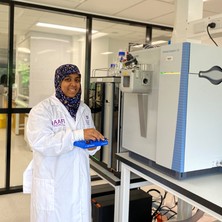
Dr Saleha Akter is a Postdoctoral Research Fellow at the Centre for Nutrition and Food Sciences , Queensland Alliance for Agriculture and Food Innovation (QAAFI), within The University of Queensland. She is available for student supervision and leads research focused on the nutritional, bioactive, and safety aspects of native Australian foods using advanced in-vitro digestion and cell-culture models. Education Doctor of Philosophy (PhD) – The University of Queensland Research Interests Dr Akter’s core passion is understanding the nutritional and bioactive potential of Native Australian foods . Her work integrates in-vitro simulated gastrointestinal digestion with mammalian cell-culture techniques to evaluate how phytochemicals and nutrients are biotransformed and absorbed in the human body. She is particularly focused on: bioaccessibility and bioavailability of functional food ingredients, microbial degradation pathways of bioactive phytochemicals, identification and characterization of gut-microbiota interactions for health promotion and disease prevention. Publication Themes & Trends Across more than 50 scholarly outputs, Dr Akter’s publications reveal a consistent trajectory toward valorising under-utilised Australian native plants —especially Terminalia ferdinandiana (Kakadu plum), Terminalia canescens (Jilungin), Tasmannia lanceolata , and other indigenous herbs. The studies combine compositional analysis, processing effects (drying, roasting, nano-encapsulation), in-vitro digestion/fermentation, cytotoxicity screening, and functional product development. The collective impact positions these native species as potent sources of antioxidants, antimicrobials, and functional ingredients for the nutraceutical and food industries. Funding & Grants Current (2024–2025): Roogenic Pty Ltd Open Grant – “Assessing the safety of Jilungin by using in vitro techniques and gut health properties by using in vitro dynamic gut model” Past (2023–2024): Roogenic Pty Ltd Open Grant – “Assessing the quality and safety of herbal beverages for market access” Supervision & Mentorship Dr Akter is actively available for supervision of higher-degree research students interested in food science, nutrition, phytochemistry, and gut-health research. Prospective students are encouraged to contact her directly via saleha.akter@uq.edu.au . Research Facilities & Collaborations Her work is conducted within the Queensland Alliance for Agriculture and Food Innovation (QAAFI) , leveraging state-of-the-art analytical platforms (UHPLC-PDA-MS/MS), cell-culture suites (Caco-2, hepatic and intestinal cell lines), and in-vitro dynamic gut models. Collaborations span industry partners (Roogenic Pty Ltd) and multi-disciplinary research teams across food chemistry, microbiology, and plant sciences.
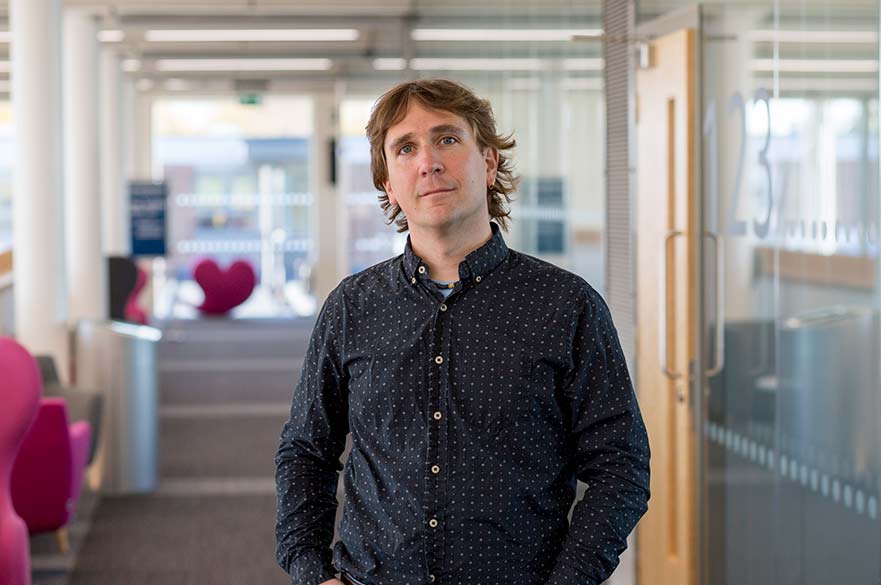
Lucas Goehring is a Professor in the Physics and Maths department at Nottingham Trent University (NTU), where he leads an experimental research group studying pattern formation and complex fluids. His work spans fundamental physics of mechanical instabilities to interdisciplinary applications in geophysics and biophysics. He teaches condensed matter physics, forensic image processing, and first-year physics labs, with prior teaching experience in environmental physics, non-linear dynamics, and soft matter physics. Goehring's educational background includes a PhD from the University of Toronto on columnar joints (e.g., Giant's Causeway), followed by postdoctoral research at the University of Cambridge studying colloidal drying and cracking. He later habilitated while teaching at the University of Göttingen during his tenure as a research group leader at the Max Planck Institute for Dynamics and Self-Organisation. His research centers on complex fluids and solids – multi-phase materials where microscopic structure determines macroscopic properties. Key themes include: Mechanical instabilities (fractures, wrinkling, buckling) Geophysical pattern formation (salt polygons, columnar joints, mud cracks) Colloidal dispersion dynamics (drying paint, biogenic systems) Cross-scale physics connecting nano/micro to macro behavior This work addresses fundamental questions about structural emergence in nature, applying solid mechanics and complex systems theory to diverse phenomena from reptile scales to Martian permafrost. Analysis of his 15 most recent publications reveals dominant trends in porous media convection (salt lakes, dry soils), biophysical pattern formation (cyanobacteria mats), and colloidal drying mechanics . These span interdisciplinary fields including geophysics, soft matter physics, and active matter, with consistent focus on experimental validation through microfluidics and advanced imaging techniques. Goehring actively supervises PhD students including P.S. Atkinson (2024) and M. Emerse (2023), with research opportunities available in MPhil/PhD programs at NTU. His major international collaborations include Bernard Cabane (ESPCI ParisTech), Ran Holtzman (Hebrew University), Eleni Katifori (University of Pennsylvania), and Max Planck Institute researchers in biophysics. He maintains an affiliated position at the Max Planck Institute for Dynamics and Self-Organisation and serves on the editorial board of Proceedings of the Royal Society A , while leading an experimental lab focused on pattern formation in complex materials.
Zeynep GÖKKUŞ is a Lecturer at Kastamonu University , specifically within the Computer Programming Program of the Kastamonu Vocational School . She has held this full-time position since 2023, previously working at the same institution's Computer Technology and Programming Department in the İnebolu Vocational School from 2009 to 2021. Her academic career has been consistently focused on Applied Statistics and Statistical Analysis , with additional expertise in Fuzzy Logic and Biostatistics . PhD in Statistics from Ondokuz Mayıs University (2018) MSc in Mathematics from Kafkas University (2008) BSc in Mathematics from Atatürk University (2005) Research Interests : Her work spans Statistical Modeling for agricultural and aquacultural applications, including Fuzzy ANOVA , Cox Regression , and Group Sequential Testing . She has developed innovative approaches in Multi-Criteria Decision Making for environmental assessments and contributed to Nanofiber Synthesis and heavy metal removal studies. Article Trends : Her publications (2012–2025) show increasing focus on Fuzzy Logic integration with traditional statistical methods (ANOVA, AAS), alongside applications in Aquaculture Survival Analysis and Environmental Remediation . Recent works emphasize Circular Intuitionistic Fuzzy Control Charts and Geospatial Agricultural Quality Rankings . Scientific Impact : According to Google Scholar metrics, she has 10 citations and an h-index of 2 . Her research has been published in journals like Aquaculture (SCI) and Turk Tarım ve Doğa Bilimleri Dergisi (TR Dizin), with conference presentations at international events including INFUS 2023–2024 and the International Sport Sciences Congress.
Karathanos Vaios is a Professor of Physical Chemistry and Food Engineering at Harokopio University, Department of Dietetics-Nutrition Science. His research focuses on food physical chemistry, drying processes, and functional food development. Education: Diploma in Engineering, School of Chemical Engineering, National Technical University of Athens (1984) MSc in Food Science, Rutgers University (1988) PhD in Food Science, Rutgers University (1988) His work spans food engineering, antioxidant activity, and postprandial metabolic responses, with recent emphasis on Corinthian currants, 3D food printing, and starch-protein interactions. Publications address environmental impacts of food processing, gut microbiome modulation, and computational modeling of drying processes. Recent studies analyze phenolic compounds in currants, legume flour enrichment in bakery products, and CFD algorithms for drying technologies. His research integrates food chemistry with health outcomes and agricultural sustainability. Contact: Laboratory of Food Chemistry, Biochemistry and Physical Chemistry, Harokopio University, 70 El. Venizelou Str., Athens, Greece. Email: vkarath@hua.gr. Office Tel.: 210-9549224, -306.
Tobias Andersson is a Senior Lecturer in Mechanical Engineering at the University of Skövde , affiliated with the School of Engineering Science and Department of Engineering . His work focuses on advanced manufacturing simulations and optimizations. Research Projects: ShiftLabs (Digital Transformation), QWELD (Laser/Ultrasonic Welding), Virtual Engineering initiatives Technical Expertise: Finite Element Analysis, Multi-physics Modeling, Laser Welding, Adhesive Layer Mechanics His recent publications highlight trends in AI-driven manufacturing, including ANN predictive models for machining deviations and deep learning applications in welding quality assessment . He also investigates thermal stress in cutting processes and fracture mechanics in aerospace alloys. Collaborations span institutions in Sweden and Argentina, with frequent co-authorship on topics like hairpin welding optimization and multi-objective drilling simulations. Current initiatives include ReactEU Energy Storage & Power Electronics and ShiftLabs digital transformation services.
Theodora Kourti is an Adjunct Associate Professor in the Department of Chemical Engineering at McMaster University , with a focus on multivariate statistical process control and industrial applications. Her career spans over three decades, blending academic research with practical implementations in pharmaceutical and chemical manufacturing.
Wolfgang Birk is a Professor of Automatic Control at Luleå University of Technology (LTU), affiliated with the Division of Signals and Systems within the Department of Computer Science, Electrical and Space Engineering. Currently, he is on leave of absence to support his spin-off company Predge in an intense growth phase, while maintaining his academic affiliation with LTU. Professor Birk received his MSc in Electrical Engineering from Universität des Saarlandes in Germany in 1997, followed by PhD studies at Luleå University of Technology where he earned his PhD in Automatic Control in 2002. His academic journey includes professional experience at Volvo Car Corporation (2002-2006) before returning to LTU in 2006. He was promoted to Associate Professor in 2012 and to Full Professor in 2015. From 2013-2016, he served as Director of Third Cycle Studies, and from 2017-2019, he was a member of the LTU board. Professor Birk's research focuses on the boundary between control theory and practical industrial applications. His primary research interests include structural properties of multivariable and complex systems, control structure selection and interaction in multivariable systems, multivariable and decentralized control, estimation and prediction of system behavior (particularly for condition monitoring and maintenance), and modeling and simulation of complex dynamic systems. His work spans several application domains including process control in industries, transport systems (particularly railway), and energy systems (renewables, district heating and cooling, data centers, and buildings). His recent publications reveal a strong trend toward practical applications of control theory in industrial settings, with particular emphasis on Zero Defect Manufacturing, district energy networks, predictive maintenance, and digital twin technologies. His work demonstrates a consistent focus on bridging theoretical control concepts with real-world implementation challenges across multiple industries. Professor Birk has received notable recognition for his work: Henry Ford Technology Award for the development of Volvo Cars Driver Alert (2007) The Donald Julius Groen Prize 2007 for the journal article "A Driver-Distraction-Based Lane Keeping Assistance System" As an academic supervisor, Professor Birk has guided numerous doctoral students to completion, including Miguel Castaño (2012), Ulf Andersson (2013), Roland Hostettler (2014), Dennis Kleyko (2018), Ali Khadim (2018), and Johan Simonsson (2024). He has also supervised postdoctoral fellows including Maryam Razi, Martin Haller, Roland Hostettler, Miguel Castaño, and Khalid Atta. His research has been supported by various funding sources including H2020 Framework Program, ERA-Net SES, VINNOVA, and the Swedish Energy Agency, with projects focusing on areas such as AI-augmented cooling systems, flexible energy system integration, and efficient wood drying. Professor Birk is actively involved in both academic and commercial applications of control theory, having co-founded SafeCont AB during his PhD studies and later starting SafeMobility (now Sentient+) in 2009. His current focus on Predge represents the continued translation of academic research into practical industrial solutions.
Cengiz ÇETİN is a Lecturer at the Department of Hotel, Restaurant and Catering Services, Eflani Vocational School, Karabük University, Turkey. He has served as a full-time instructor since 2018 and holds dual administrative roles as Assistant Department Head and Assistant Vocational School Director since 2022. His academic qualifications include: PhD in Food Engineering from Sakarya University (2019) MSc in Food Engineering from Harran University (2012-2014) BSc in Food Engineering from Harran University (2008-2012) Dr. ÇETİN specializes in Food Microbiology and Fruit and Vegetable Technology, with expanding research in Food Safety, Sensory Analysis, and Food Chemistry. His work addresses microbial risk assessment in food systems, thermal processing optimization, and sustainable food waste management. Recent investigations focus on phenolic compound applications for acrylamide reduction and drying kinetics of agricultural products. Analysis of his 2022-2024 publications reveals a strong interdisciplinary trajectory merging food engineering with sustainability science. Key thematic clusters include predictive modeling for microbial safety, heat/mass transfer dynamics in cooking (notably soufflé preparation), and circular economy approaches to food waste. His solar drying research on onions demonstrates consistent expertise in post-harvest technology and quality preservation. Scientific recognition: No formal awards documented in available sources Dr. ÇETİN has contributed to two significant research projects: an ongoing study on acrylamide reduction in sourdough bread using red onion phenolics (2024-2025), and prior research on drying kinetics of chopped onions (2013-2014). He teaches 15+ courses annually including Food Safety, Sensory Analysis, and Food Technology, but has no thesis supervisees. His research network spans Karabük University colleagues and former Harran University collaborators. He maintains active research partnerships with six academics including Mukaddes Kılıç Bayraktar, Tolgahan Tabak, and Suzan Öztürk Yılmaz, focusing on food safety protocols and sustainable processing methodologies.
Mustafa Altay Eroğlu is a full-time Lecturer at the Interior Design Department of Safranbolu Vocational School, Karabuk University, Turkey. He earned his BSc in Woodworking Industrial Engineering from Hacettepe University in 2006, followed by an MSc in Forest Industrial Engineering from Karabuk University in 2017. His ongoing PhD research at Karabuk University's Institute of Science focuses on modeling mechanical properties of wood-polymer composites using artificial neural networks. Education: BSc: Hacettepe University, Professional Technology Vocational School, Woodworking Industrial Engineering (2001-2006) MSc: Karabuk University, Institute of Science, Forest Industrial Engineering (2015-2017) PhD: Karabuk University, Faculty of Forestry, Forest Industrial Engineering (2017-2024) His research areas include wood processing, wood-based composites, and wooden structures. He has contributed to 4 publications, including two journal articles and two conference papers, focusing on advanced drying techniques and composite material modeling. Eroğlu is involved in a 2022-2024 higher education-supported research project on wood-polymer composites and collaborates with researchers like Suat Altun, Hüseyin Yörür, and Hasan Hüseyin Ciritcioğlu. Key Contributions: Developed ANN-based predictive models for composite mechanical properties Investigated vacuum drying optimization for sessile oak wood Explored cryogenic treatment effects on wood flexibility Documented historical wooden structures for preservation
Dr. Werner Pauer serves as a working group leader in the Institute of Technical and Macromolecular Chemistry at the University of Hamburg's Department of Chemistry within the Faculty of Mathematics, Informatics and Natural Sciences. His research focuses on advanced chemical engineering methodologies with industrial applications. His primary research interests span seven key areas: acoustic levitation for containerless droplet analysis, microreaction technology for exothermic processes, polymerization technology, disperse systems, reaction calorimetry, chemical kinetics modeling, and online measurement systems. These fields address critical challenges in chemical process optimization, safety, and product quality control across pharmaceutical, food technology, and materials science sectors. Dr. Pauer's work emphasizes practical applications including spray drying processes for powdered products (infant formula, coffee), catalyst production, and polymer synthesis. His microreaction technology research explores safety characteristics of highly exothermic reactions through systems with micrometer-scale dimensions, leveraging exceptional surface-to-volume ratios for improved heat transfer and process control. His laboratory utilizes specialized equipment for acoustic levitation studies, microstructured reactor systems, and advanced analytical methods including Raman spectroscopy for real-time reaction monitoring in levitated droplets.
Lothar Schrott is a Professor at the University of Bonn, leading the Research Group Geomorphology and Environmental Systems within the Institute of Geography. His work focuses on mountain permafrost, sediment budgets, natural hazards, post-glacial landscape evolution, and global environmental change, with fieldwork in the Andes, Alps, and Himalayas. Academic Rank: Professor Affiliation: University of Bonn Research Themes: Geomorphology, Natural Hazards, Climate Change, Disaster Risk Governance Fields of Interest include periglacial processes, rock glacier dynamics, sediment cascades, flood risk management, and GIS applications in geomorphology. His group integrates quantitative methods (ERT, UAVs, SAR) with field studies to understand climate-geomorphology interactions. Recent Publications highlight rock glacier kinematics in Argentina (2025), post-flood geomorphic changes in Germany (2025), and permafrost degradation impacts across mountain ranges. Collaborations span institutions in Norway, Switzerland, and Canada. Scientific Awards include contributions to journals like Geomorphica and leadership in Erasmus+ teaching initiatives. Grants address disaster risk frameworks and climate adaptation. Teaching covers geomorphological methods, natural hazards, and fieldwork in the Alps and Andes. He supervises PhD and Master’s theses on topics like blockslope permafrost, sediment storage, and disaster resilience.
Dr. Magdalene Chong is a Research Fellow at the Department of Pure and Applied Chemistry, University of Strathclyde (UK). Her work combines advanced spectroscopic techniques with sustainable development goals. Expertise in Raman spectroscopy and crystallization processes Active contributor to food composition modeling and pharmaceutical quality assurance Recipient of multiple scientific awards including the CPACT Malcolm McIvor Prize Her research focuses on developing innovative analytical methods for material characterization and quality control in both pharmaceutical and food science domains. Key trends in her recent publications include: Calibration-free polymorph discrimination using Raman spectroscopy Temperature correction algorithms for spectroscopic monitoring Digital design approaches to optimize crystallization and isolation workflows Award highlights: 2025: £300 bursary for Spring SciX conference attendance 2022: £500 Royal Society of Chemistry Researcher Development Grant 2018: Second prize for poster presentation 2017: CPACT Malcolm McIvor Prize Dr. Chong actively collaborates across disciplines, with network connections spanning 12 similar profiles and multiple international collaborations.
Marc Mallet is a researcher affiliated with Queensland University of Technology, specializing in atmospheric chemistry, aerosol science, and environmental science. His work focuses on understanding aerosol composition, cloud condensation nuclei activity, and emissions from biomass burning and marine sources. Research Interests include: Atmospheric aerosol characterization Hygroscopicity and volatility of particles Biomass burning emissions Sea spray aerosol properties Climate-relevant interactions between oceans and atmosphere Article Trends reveal a focus on: Quantifying organic enrichment in sea spray aerosols (2020) Analyzing semi-volatile aerosol species (2018) Investigating biomass burning impacts in Australia (2017) Exploring iron solubility in tropical aerosols (2016) Early studies on biodiesel exhaust nanoparticle aging (2013) He has no explicitly listed scientific awards or student advisement activities. His work frequently involves field campaigns like SAFIRED and collaborative studies across multiple institutions.