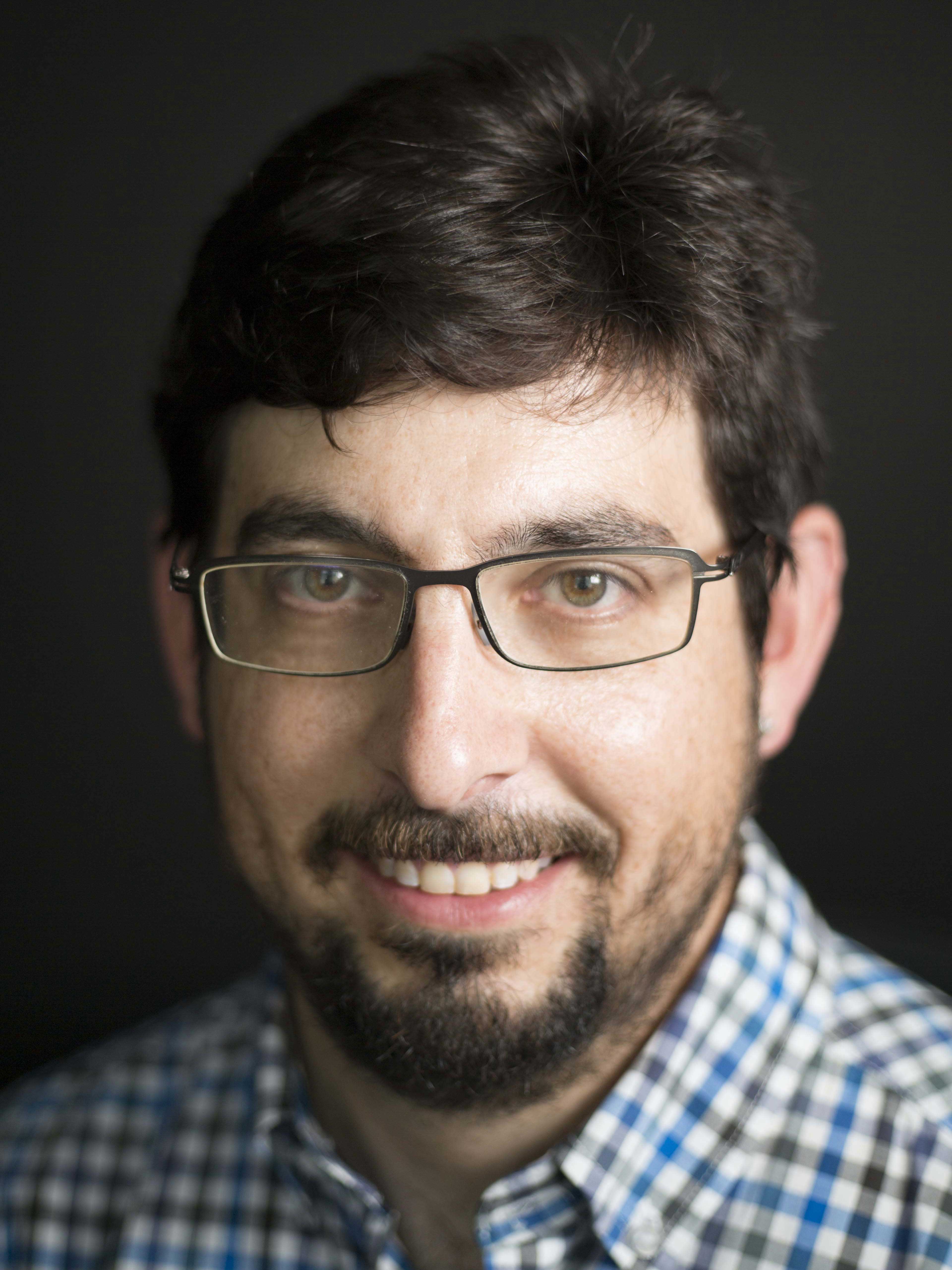
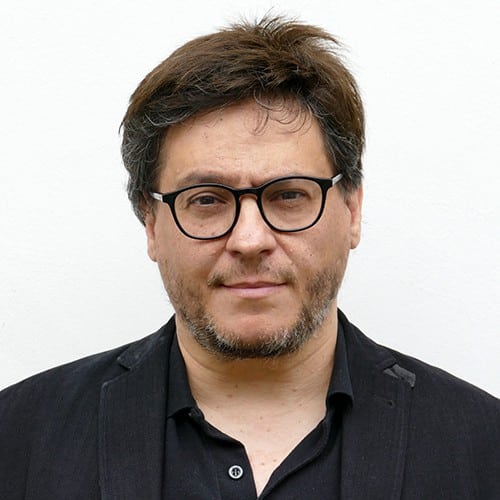
Peter Dennedy-Frank is an Assistant Professor at Northeastern University with a joint appointment in the Departments of Civil and Environmental Engineering and Marine and Environmental Sciences within the College of Engineering. His research focuses on ecohydrologic modeling for water resources and conservation, blending interdisciplinary approaches to address environmental challenges. He holds a PhD in Hydrology from Stanford University (2018), MS degrees in Earth System Science (Stanford, 2015) and Earth and Planetary Sciences (MIT, 2006), and a BS from Caltech (2003). Research Interests: His work emphasizes watershed restoration, groundwater management, and sustainable resource engineering. He explores how land-use changes and subsurface dynamics influence water systems, with applications in environmental policy and ecohydrology. Recent studies include global watershed simulations and economic analyses of conservation programs in Brazil. Advising & Grants: Dennedy-Frank mentors undergraduate researchers through Northeastern’s PEAK Experiences Awards, fostering hands-on environmental research. His lab, the Water Resources Ecohydrology Lab, drives collaborative efforts in environmental modeling and policy. Though no specific grants are detailed, his publications reflect sustained interdisciplinary engagement.
Gordon McTaggart-Cowan is an Associate Professor and Associate Director in the School of Sustainable Energy Engineering at Simon Fraser University (SFU). He holds a Ph.D. (2006), M.A.Sc. (2002), and B.Eng. (1999) in Mechanical Engineering from the University of British Columbia and the University of Victoria. His research focuses on clean, low-carbon transportation technologies, including vehicle modeling, renewable gaseous fuels, and emissions control in internal combustion engines. He has pioneered work on hydrogen-diesel dual-fuel systems, natural gas engine optimization, and high-pressure fuel injection strategies. Recent publications highlight advancements in hydrogen compression systems, hybrid electric truck performance analysis, and thermoelectric energy harvesting. He has contributed to over 50 peer-reviewed articles and holds multiple patents on fuel injection and combustion control technologies. McTaggart-Cowan is an Associate Editor for the Proceedings of the Institution of Mechanical Engineers, Part D and collaborates internationally through visiting fellowships at Loughborough University and Michigan Technological University. Teaching responsibilities include fluid mechanics, thermodynamics, and sustainable energy design projects. His work aligns with global efforts to decarbonize heavy-duty transport and stationary power systems through innovative engine design and alternative fuel integration.
Prof. Tuna Balkan is a Professor in the Mechanical Engineering Department at Middle East Technical University (METU), Ankara, Turkey. He holds a B.Sc. (1979), M.Sc. (1983), and Ph.D. (1988) from METU. His research focuses on control systems, robotics, fluid power control, and dynamic modeling. He leads the Control Systems Laboratory at METU and teaches courses such as Control Systems (ME 304), Fluid Power Control (ME 516), and Mechanical Engineering Systems Laboratory (ME 410). His work spans hydraulic actuator design, platform stabilization, and industrial robotic applications like spray painting and arc welding. Research interests include real-time control, Kalman filtering, and energy-efficient hydraulic systems. He has supervised numerous theses, including studies on hydraulic load simulators, energy-efficient actuators, and vibration-based energy harvesting. His publications cover topics like instability analysis in hydraulic systems, friction compensation in motion platforms, and microelectromechanical systems (MEMS) for energy harvesting. Prof. Balkan’s lab, Control Systems Lab (Room G-130), develops advanced control algorithms and experimental setups. His contributions to automotive safety, agricultural machinery design, and robotic spray painting have been widely recognized. He has collaborated on projects involving durability test rigs, unmanned aerial vehicles, and sensor integration for industrial applications.
Edward Clennett is an Associate Lecturer at the School of Natural Sciences, Birkbeck, University of London. He specializes in reconstructing plate tectonic history through deep time using geodynamic models, seismic tomography, and plate kinematic analyses. His teaching includes the Global Tectonics undergraduate module. Education: PhD in Geosciences from The University of Texas at Austin (2024), MSc in Earth Sciences from the University of Oxford (2019). Research focuses on integrating geodynamic, seismic, and kinematic data to improve plate reconstruction accuracy. Key interests include tectonic controls of critical minerals, crustal thickness changes during deformation, and the interplay between Earth’s interior and surface processes. Publications emphasize novel methods in plate tectonic modeling, including sediment lubrication effects on plate velocities and four-dimensional reconstructions combining multiple datasets. Awards: UTIG Outstanding Graduate Student Award (2024), Fulbright Scholarship (2020), BP Prize for best Master's project (2019). Advising and grants: No specific grants listed, but active in supervision of research projects related to plate tectonics and geodynamic modeling. Labs/Teams: Collaborates with institutions like the University of Texas Institute for Geophysics and the Jackson School of Geosciences on geodynamic projects.
Dan Brown is a Clinical Professor at the Segal Design Institute, Northwestern University. He has over 30 years of experience in design and product commercialization, with 15 years as a consultant, inventor, and entrepreneur. He holds a Master of Product Development (MPD) from Northwestern and has secured over 30 U.S. Utility Patents. His research focuses on health/safety training in maker spaces and how design drives competitive advantage in commercial markets. Professional Affiliations: Founder/President of LoggerHead Tools Principal at Consul-Tech Concepts Affiliated with Master of Engineering Management and Product Design & Development Management programs His work bridges academic research and industry practice, emphasizing practical application of design principles. Publications include studies on engineering education methodologies and interdisciplinary computational models in psychology and AI. Technical Credentials: 30+ U.S. Utility Patents International design and innovation awards (specifics not disclosed)
Patrizia Di Campli San Vito is a Researcher in the School of Computing Science at the University of Glasgow, focusing on Human-AI Interaction and Assistive Technologies. She holds a PhD from the University of Glasgow and prior degrees from the University of Ulm, Germany. Her current work involves participatory harm auditing of AI systems through the PHAWM project and developing adaptive radio systems (RadioMe) for dementia care. Previously, she contributed to ENTER and RadioMe projects addressing aging populations' needs through multimodal interfaces. Education: PhD: University of Glasgow Master's & Bachelor's: Media Informatics, University of Ulm Research Interests: Human-Computer Interaction (HCI), Assistive Technology for Aging Populations, Thermal/Haptic Feedback Systems, Automotive UIs, and Ethical AI Evaluation. She explores how multimodal interactions (e.g., thermal, haptic, audio) can improve accessibility and safety in healthcare and automotive domains. Key Projects: RADIO-ME: Adaptive radio system with agitation detection and music intervention for dementia patients PHAWM: Tools for non-experts to evaluate AI systems' societal impacts ENTER: Multimodal interaction for older adults Recent Work: Her publications focus on stress detection systems, in-car thermal feedback for navigation, and dementia-friendly calendar interfaces. She collaborates with Prof. Simone Stumpf (GIST Lab) and Prof. Stephen Brewster (Multimodal Interaction Group). Labs/Teams: Active in the Glasgow Interaction Systems Team (GIST) and previously contributed to the Multimodal Interaction Group.
Joshua A. Levine is an Associate Professor in the Department of Computer Science at the University of Arizona. His research focuses on visualization, topological data analysis, and high-performance computing, with applications in quantum-inspired computing and geometric modeling. He leads the HDC Lab and has previously held postdoctoral and faculty positions at the University of Utah’s Scientific Computing and Imaging Institute and Clemson University. Education: PhD in Computer Science, The Ohio State University (Advisor: Tamal K. Dey) BS and MS in Computer Science, Case Western Reserve University (Advisor: Michael S. Branicky) Research Interests: Levine's work spans visualization algorithms, topological methods for scientific data, and computational tools like TTK, Cleaver, and DelPSC. He integrates high-performance computing and acoustic metamaterials for quantum-analogue systems, addressing challenges in nonlinear dynamics and scalable data processing. Grants & Funding: NSF New Frontiers of Sound (NewFoS) Center (DMR-2242925) DOE Neural Field Processing for Visual Analysis (DE-SC-0023319) NSF Collaborative Research: Neural Volume Visualization (IIS-2006710) Awards: 2024-2025 Faculty Teaching Award 2023-2024 Faculty Service Award 2020-2021 DEI Award Teaching: Levine teaches advanced visualization courses (CSC 544/444), emphasizing d3.js, SVG, and data-driven design. Recent courses include Spring 2025's CSC 544 with topics like flow visualization and transfer functions. Labs & Collaborations: His group collaborates on projects like TTK (Topology ToolKit) and explores applications in acoustic computing, leveraging interdisciplinary approaches to advance visualization and computational methods.
Mikael Ersson is a Professor at the Royal Institute of Technology (KTH) in Stockholm, Sweden. He holds a prominent role in the Department of Materials Science and Engineering, contributing to academic leadership and research in metallurgical processes and sustainable materials production. His work focuses on advancing fossil-free steel production through innovative metallurgical processes and numerical modeling of high-temperature systems. Professor Ersson leads the MSc programs in Materials Design and Materials Science at KTH, emphasizing education and training for the next generation of materials engineers. He is actively involved in teaching courses such as Fluid Mechanics and Heat Transport, Material Design I, and Thermodynamics I, reflecting his expertise in both theoretical and applied aspects of materials science. His research interests span metallurgical process optimization, steel production sustainability, fluid mechanics in casting systems, and electromagnetic stirring. He employs computational fluid dynamics (CFD) and numerical modeling to study phenomena such as melt pool dynamics, solidification behavior, and inclusion transport in steel and magnesium alloys. Recent projects include investigations into hydrogen-reduced iron production, swirling flow effects in casting systems, and decarburization processes in converters. Professor Ersson collaborates with industry partners to bridge academic research with industrial applications, driving innovation in environmentally friendly steel manufacturing. His contributions have impacted the Nordic and EU steel industry's transition to sustainable practices. He is also engaged in academic outreach, organizing events like the Library Fair and contributing to student development through KTH’s campus initiatives.
Paolo Enrico Camurati is a Full Professor in the Department of Control and Computer Engineering (DAUIN) at the Polytechnic University of Turin, where he contributes to research and teaching in formal methods and hardware verification. He is a member of the Formal Methods (FM) research group and has been actively involved in PhD supervision in the Computer and Systems Engineering program. His research interests include formal verification, binary decision diagrams, SAT solvers, electronic CAD, and the formal verification of hardware design correctness. These areas align with theoretical computer science and cyber-physical systems, contributing to advancements in reliable computing systems. Recent publications (2022–2024) show a strong focus on model checking techniques, interpolation-based learning, and optimization of binary decision diagrams for machine learning applications, indicating active and impactful research in formal methods and EDA. He has taught core computer engineering courses such as Specification and Simulation of Digital Systems , Algorithms and Data Structures , and Programming Techniques at both bachelor's and master's levels, supporting quality education in computing disciplines. He has no listed scientific awards in the provided material. Prof. Camurati advises PhD students in the Computer and Systems Engineering program and has taught extensively across multiple academic years. While specific grants are not mentioned, his ongoing research output suggests active funding and project involvement. He is a key member of the FM - Formal Methods Group (DAUIN), which drives research in formal verification and automated reasoning. The FM - Formal Methods Group (DAUIN) serves as his primary research lab, focusing on theoretical and applied aspects of formal verification, model checking, and decision diagram technologies.
Ricard Solé is an ICREA Research Professor at the Catalan Institute for Research and Advanced Studies, based at Universitat Pompeu Fabra (UPF), where he leads the Complex Systems Lab within the Department of Experimental and Health Sciences. He is also External Professor at the Santa Fe Institute (USA), fellow of the European Centre for Living Technology (Italy), and external faculty at the Center for Evolution and Cancer at UCSF. He teaches undergraduate courses in Biomathematics, Biological Design, and Complex Diseases. Research Interests: Ricard Solé's work focuses on the emergence of complexity in biological systems. He investigates the evolutionary origins of major transitions—such as the rise of protocells, multicellularity, symbiosis, cognition, and language—through the lens of synthetic biology and mathematical modeling. He introduced the concept of 'synthetic major transitions' to simulate evolutionary innovations in the lab. Another key area involves unstable evolutionary dynamics in RNA viruses and cancer, where high mutation rates drive adaptation. He also explores 'terraforming' ecosystems to prevent catastrophic shifts, advocating for a multiscale synthesis across synthetic biology, ecology, and systems theory. The recent publications highlight his interdisciplinary approach, bridging virology, network theory, and evolutionary dynamics. His 2021 review on phase transitions in virology and 2018 paper on mutualistic networks as evolutionary spandrels reflect his focus on critical transitions and emergent structures in complex biological systems. Scientific Awards and Recognitions: ERC Advanced Grant (2012) Fellow, European Centre for Living Technology Advising and Grants: While specific students are not listed, Ricard Solé leads a research lab and likely mentors graduate students and postdoctoral researchers. His research is supported by major grants, including funding from the European Research Council and Fundación Botin, enabling long-term, high-risk theoretical and experimental work in synthetic and evolutionary systems. Labs and Teams: He heads the Complex Systems Lab at the PRBB in Barcelona, fostering interdisciplinary research at the intersection of physics, biology, and computation.
Péter Korondi is a Professor at the University of Debrecen in Hungary, affiliated with the Department of Electrical Engineering and Mechatronics . His work spans robotics, control theory, and industrial automation, with a focus on bio-inspired systems and human-robot interaction. Research Interests : Robotics, Mechatronics, Control Theory, Human-Robot Interaction, Industrial Automation, Sensor Fusion Recent Article Trends : Sliding mode control, friction compensation in micro-telemanipulation, path planning for mobile robots, smart industrial systems Collaborations : Co-authored works with Gabor Sziebig, Ferenc Tajti, Géza Szayer, and international researchers in IEEE Transactions , Sensors , and Acta Polytechnica Hungarica . Technological Focus : Development of rehabilitation devices, holonomic drive systems, and ethorobotics models inspired by animal behavior.
Prof Tariq Muneer is a faculty member at Edinburgh Napier University , affiliated with the School of Computing Engineering and the Built Environment . His research focuses on renewable energy systems , particularly solar PV and wind turbines , with applications in climate change mitigation , energy economics , and sustainable transport . He has supervised numerous postgraduate students and led projects funded by organizations such as the Scottish Government and EPSRC . Research Interests Tariq's work spans renewable energy generation , energy storage , and data-driven performance assessment of wind and solar systems. Key areas include bifacial photovoltaics , urban heat island effects , and electric vehicle infrastructure , emphasizing technical and economic feasibility in real-world contexts like Scottish agriculture and island communities. Recent Publications His 2023 article on solar-wind hybrid systems in Scotland highlights cost-competitiveness with fossil fuels. Earlier works (2020-2022) cover diffuse radiation models , view-factor algorithms , and EV thermal management , reflecting a trend toward hybrid renewable systems and urban sustainability . Articles from 2019 and earlier explore island energy solutions and cement industry emissions . Projects He led projects such as the EPSRC-funded Enerwater (2014-2018) on energy recovery in food processing and the Scottish Government’s LED lighting feasibility study (2012). Other initiatives include renewable integration in Sark Island and decentralized energy solutions for South Asia and sub-Saharan Africa.
Ali Hassan is a researcher affiliated with the National University of Sciences and Technology (NUST), School of Electrical Engineering and Computer Science, Department of Computer and Software Engineering. His work spans multiple domains in computer science, engineering, and applied mathematics, focusing on areas such as machine learning, IoT, energy systems, and medical informatics. His research explores: Reinforcement learning applications for battlefield information systems IoT antenna design and performance evaluation Optimization of second-life battery systems in electric vehicles Transformers for real-time vehicle collision avoidance Image hashing techniques using visual attention models Neural network-based phasor estimation for power grids Biomedical sensor systems for non-invasive health monitoring Mathematical modeling of viral dynamics Recent publications demonstrate his emphasis on interdisciplinary approaches combining AI, signal processing, and sustainability. He has collaborated with institutions across Pakistan, France, Saudi Arabia, and the USA, with a focus on practical implementations in cybersecurity, energy optimization, and healthcare technology.
Kjell Gunnar Robbersmyr is a Professor at the University of Agder's Department of Engineering Sciences and director of the Top Research Center in Mechatronics. With a Ph.D. in mechanical engineering from NTNU (1992), his career spans academic leadership, research management at Agder Research, and active contributions to IEEE. His work focuses on mechatronics, machine design, and condition monitoring, with special emphasis on fault diagnosis in electric motors and vehicle crash modeling. Senior Member of IEEE Member of Norwegian Academy of Technical Sciences Member of Agder Academy of Sciences Research interests include: Advanced fault diagnosis in electric drives using AI and signal processing Vehicle crashworthiness modeling with lumped parameter and finite element methods Optical measurement technology for machine monitoring Digital twin applications for infrastructure and wind energy systems Condition monitoring of low-speed bearings and rotating machinery Recent publications demonstrate expertise in: Deep learning for imbalanced motor fault datasets Transformer networks in power electronics diagnostics 3D reconstruction techniques for mechanical systems Multi-classifier decision fusion in power systems Dynamic operations modeling for electric vehicles Scientific contributions include: Over 50 peer-reviewed articles Leadership in the Intelligent Monitoring research group Development of novel inverter topologies Innovations in wind turbine condition monitoring Advancements in laser-based mechanical diagnostics
Dr. Fadi Kahwash serves as a Lecturer in Mechanical Engineering within the School of Computing, Engineering and the Built Environment at Edinburgh Napier University, where he teaches design and energy-related modules. He joined Napier University in 2021 after working as a research assistant and research fellow at Northumbria University, where he participated in EU-funded projects including Erasmus+ for renewable energy teaching and Horizon 2020 for research initiatives. Dr. Kahwash earned his PhD in Mechanical Engineering in 2018 from Northumbria University with research focused on novel numerical methods applied to modeling machining of composite materials. His educational background established the foundation for his expertise in physics-based modeling and simulation techniques that continue to drive his research agenda. His research spans renewable technologies, energy storage, aerodynamics, materials science, and manufacturing processes, unified by a common thread of physics-based modeling and numerical methods. Recent work demonstrates increasing focus on practical applications in healthcare energy systems, residential multi-energy integration, and biodegradable medical implants through additive manufacturing. His publications reveal a strategic evolution from fundamental machining simulations toward applied energy solutions addressing real-world sustainability challenges. Dr. Kahwash's recent publications show strong emphasis on energy system integration for healthcare facilities, residential applications, and industrial processes. His work combines theoretical modeling with practical implementation considerations, particularly in unreliable grid environments and specialized applications like medical facilities. The research demonstrates sophisticated understanding of both technical and economic aspects of energy systems. Fellowship of the Higher Education Academy (FHEA) Member of the Institution of Mechanical Engineers (MIMechE) Chartered Engineer (CEng) Dr. Kahwash actively supervises multiple PhD students on projects including energy management strategies for hybrid renewable systems, work and heat exchange networks for hydrogen industry, photovoltaic integration in buildings, and optimization of additively manufactured medical parts. His research portfolio includes significant funding from diverse sources including the British Council (£80,000 for Resilient & Green Healthcare in Egypt), EPSRC (£49,531 for Multi-Scale Energy Systems Modelling), and Scottish Funding Council (multiple £4,999-5,000 grants for energy storage projects). These projects demonstrate his ability to secure competitive funding for applied research addressing energy sustainability challenges. His work involves collaboration with multiple research teams including Energy Systems Catapult, Northumbria University researchers, and international partners in Egypt. Current projects focus on developing AI-aided energy management software, modular energy storage solutions, and innovative approaches to healthcare facility power resilience, reflecting a strategic research direction toward practical, implementable energy solutions for critical infrastructure.