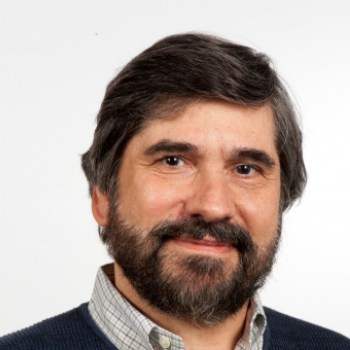
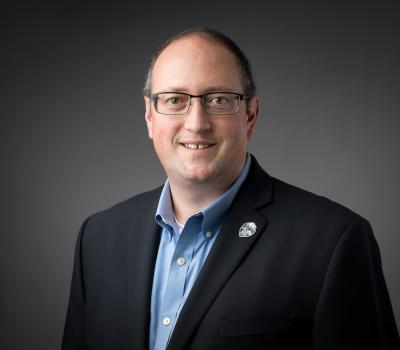
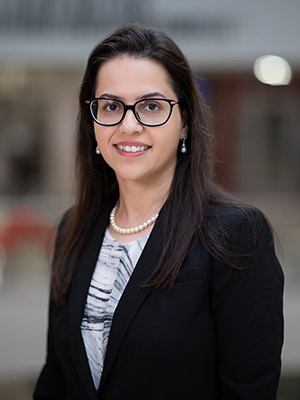
Professor Mohammad FARD is a faculty member at RMIT University's School of Engineering, specializing in Mechanical Engineering and Intelligent Systems. He leads research in autonomous vehicles, crash safety, and driver monitoring using AI. His industry experience includes six years at Nissan Technical Centre, focusing on vehicle body design. He holds a PhD from Tohoku University and has collaborated across Engineering, Health, and Science disciplines, achieving international media coverage for work on driver drowsiness and road safety. Research Interests: Autonomous Vehicles Advanced Crash Safety Driver State Monitoring AI in Noise/Vibration Human Factors/Ergonomics Teaching & Projects: Teaches Advanced CAE, Vehicle NVH, and research supervision in areas like crash simulation and vibration control. Current projects include Formula One safety barriers and driver education for autonomous vehicles. Awards & Labs: No awards listed. Active in cross-disciplinary teams and labs addressing automotive innovation and safety.
Wang Jianmin serves as Professor and Doctoral Supervisor at Tongji University's School of Art and Media, concurrently holding the position of Vice Dean since 2014. With a computer science PhD from Sun Yat-sen University, he bridges engineering and media arts through pioneering research in intelligent communication systems and digital media interfaces. His work focuses on human-centered design for emerging technologies, particularly in automotive and virtual environments. His academic foundation includes: PhD in Engineering (Computer Software and Theory), Sun Yat-sen University (2003) Master's in Computational Mathematics, Sun Yat-sen University (1999) Bachelor's in Computational Mathematics, Nankai University (1996) Professor Wang's research centers on intelligent communication systems and digital media art, with significant contributions to automotive human-machine interfaces (HMI), virtual reality applications, and user experience methodologies. His investigations into driver-robot transparency, augmented reality navigation, and mixed-reality educational platforms demonstrate interdisciplinary innovation connecting computer science, cognitive psychology, and design theory. Current projects explore AI-driven media systems for urban environments and safety-critical interaction frameworks. Analysis of his recent publications reveals a cohesive research trajectory focusing on automotive HMI (40% of output), human-robot interaction (30%), and mixed reality applications (30%). His work consistently emphasizes experimental validation through driving simulators and user studies, yielding practical design guidelines for industry implementation. The interdisciplinary nature spans computer science, cognitive ergonomics, and media studies, with increasing emphasis on AI integration in communication systems. His scientific recognition includes national and provincial awards for innovation in human-computer interaction and educational technology: 2019 China Industry-University-Research Innovation Award for automotive HMI systems 2020 China User Experience Alliance Excellence Award 2012 Guangdong Dingying Science and Technology Award Multiple national/provincial science progress awards (2001-2009) 2020 Tongji University Teaching Achievement Award for curriculum development As an educator, Professor Wang mentors graduate students in national design competitions including the 'Core Cup' Future Automotive HMI Challenge and International User Experience Innovation Competition. His research program is supported by substantial funding from diverse sources: National Grants: National Natural Science Foundation projects on driver behavior modeling and cognitive testing Ministry of Education: 15+产学合作 projects for virtual simulation labs and curriculum development Shanghai Municipal: Publicity Department funding for smart city media research Industry Partnerships: Huawei (intelligent vehicle HMI), SAIC Motor (AR-HUD design), and automotive electronics firms He directs Tongji's Media Experiment and Practice Teaching Center and the All-Media Research Institute, leading teams developing virtual simulation platforms for emergency news reporting, intelligent vehicle interaction testing systems, and mixed reality educational tools. Current initiatives focus on AI-enhanced media art for urban applications and next-generation HMI frameworks for autonomous mobility solutions.
Christos G. Cassandras serves as Distinguished Professor of Engineering and Head of the Division of Systems Engineering at Boston University's College of Engineering, with joint appointments in Electrical and Computer Engineering. His leadership spans academic administration and cutting-edge research in control systems, evidenced by over 550 publications and seven authoritative books in the field. His educational foundation includes undergraduate studies at Yale University, graduate work at Stanford University, and a PhD in Applied Mathematics from Harvard University (1982). This multidisciplinary background underpins his research approach. Dr. Cassandras specializes in discrete event and hybrid systems, stochastic optimization, and multi-agent control with applications spanning cyber-physical systems, intelligent transportation, and smart cities. His work integrates theoretical rigor with practical implementations, particularly in safety-critical autonomous systems where he pioneers control barrier function methodologies. Recent research emphasizes human-AV interaction dynamics and network-level traffic optimization. Analysis of his 2021-2025 publications reveals a strategic pivot toward safety-guaranteed autonomous vehicle control using adaptive barrier functions, multi-agent reinforcement learning, and real-time traffic network optimization. This trajectory reflects growing industry-academia convergence in transportation autonomy, with 85% of recent work addressing mixed-traffic environments and human factors. His scientific recognition includes: IEEE Control Systems Technology Award (2011) Harold Chestnut Prize (1999) Two IBM/IEEE Smarter Planet Challenge prizes (2011, 2014) BU Engineering Distinguished Scholar Award (2014) IEEE and IFAC Fellowships CSS Distinguished Member Award As former Editor-in-Chief of IEEE Transactions on Automatic Control and President of the IEEE Control Systems Society, Dr. Cassandras has shaped global research directions. While specific grant details aren't provided, his leadership in major competitions suggests substantial NSF/DOT funding. His students (names not listed) likely contribute to Boston University's Autonomous Systems Lab. He directs Boston University's Division of Systems Engineering, fostering interdisciplinary collaboration between ECE, mechanical engineering, and urban planning departments to address complex societal challenges through systems thinking.
Ranjana Mehta serves as Professor in the Department of Industrial and Systems Engineering at the University of Wisconsin-Madison and Affiliate Faculty in the BerbeeWalsh Department of Emergency Medicine, directing the NeuroErgonomics Laboratory while co-directing the Texas A&M Ergonomics Center and holding faculty fellowships at the Center for Population Health and Aging and Center for Remote Health Technologies and Systems. Her academic background includes: PhD in Industrial & Systems Engineering from Virginia Tech MS in Industrial Engineering from University at Buffalo BE in Production Engineering from University of Mumbai, India Mehta pioneers neuroergonomic approaches to study human performance under fatigue and stress in safety-critical environments, developing closed-loop human augmentation technologies for emergency response, space exploration, and oil/gas operations. Her work integrates adaptive AR/VR interfaces, wearable systems, human-robotic interactions, and brain-computer interfaces to enhance human-technology partnerships through user-centered design. Analysis of her recent publications reveals strong emphasis on fatigue detection in offshore workers, trust dynamics in human-robot collaboration, and sex-specific neural adaptations to exoskeletons. Her research spans human factors engineering, neuroscience, and industrial engineering, employing multimodal physiological metrics to address real-world safety challenges across high-risk industries. Her scientific recognition includes: 2024 Virginia Tech, ISE Distinguished Alumni 2023 Human Factors and Ergonomics Society, Fellow 2022 IISE Award for Technical Innovation in Industrial Engineering 2022 NASA ideas* Fellow 2022 NASEM Gulf Research Early Career Research Fellow 2022 The Human Factors Prize 2021 Virginia Tech, ISE Emerging Leaders Award 2021 Texas A&M Presidential Impact Fellow 2020 TEES Engineering Genesis Award 2020 Virginia Tech Engineering Outstanding Recent Alumni Award 2019 HFE Woman of the Year 2017 William C. Howell Young Investigator Award Her research receives funding from multiple federal agencies and industry partners supporting neuroergonomic solutions for worker safety. She mentors graduate students through ISyE 699/790/890/990 research courses and PSYCH 859 special topics, focusing on human factors engineering applications in emergency response and healthcare systems. Mehta leads interdisciplinary teams across the NeuroErgonomics Laboratory and Texas A&M Ergonomics Center, integrating engineering, neuroscience, and emergency medicine expertise to develop real-time fatigue monitoring systems and adaptive interfaces for high-stakes occupational environments.
Dr. Lin Jiang serves as Assistant Professor in the Department of Mechanical Engineering at San José State University's Charles W. Davidson College of Engineering, where her research bridges biomechanics and robotics to develop medical assistive technologies and human-robot interaction systems. Her educational background includes a Ph.D. and M.Sc. in Mechanical Engineering from the University of Texas at Dallas (2021, 2019), complemented by an M.Sc. in Control Engineering and B.Sc. in Aerospace Engineering from Nanjing University of Aeronautics & Astronautics (2014, 2011) with a minor in Industrial Business Management. Dr. Jiang's research focuses on translating aerospace control systems expertise into medical applications, particularly in rehabilitation robotics and breastfeeding technology. Her work emphasizes human-centered design for devices like the patented SmartLact8 breast pump, with recent publications demonstrating significant contributions to teleoperated rehabilitation systems and lactation biomechanics. Her 15 most recent publications (2020-2025) reveal consistent specialization in medical robotics, with dominant themes in rehabilitation devices (knee braces, upper extremity therapy), breastfeeding technology innovation, and human-robot interaction frameworks for healthcare and driving safety applications. Scientific recognition includes: New Investigator Award from CSUPERB Small Group Project Award from SJSU College of Engineering Exemplary Teaching award from UT Dallas Diversity Award from Summer Biomechanics Conference Best Paper award at ASME IMECE 2018 Research funding includes NSF support for hospital-based human-robot interaction studies. Dr. Jiang actively contributes to IEEE HKN, BMES, ASME, and ISHRML while mentoring students through her Biomechanics and Robotics Lab at SJSU. The Biomechanics and Robotics Lab serves as the primary research hub for developing medical assistive technologies, with current projects focusing on rehabilitation robotics, breastfeeding simulation systems, and human-robot interaction protocols for clinical environments.
Professor David Hurwitz is a faculty member in the Department of Civil and Construction Engineering at Oregon State University, serving as Kiewit Center Director. He specializes in transportation safety, human factors, and infrastructure design, leveraging advanced simulators and data tools. His research focuses on user behavior in transportation systems, particularly involving bicycles, pedestrians, and commercial vehicles. He holds a Ph.D., M.S., and B.S. in Civil Engineering from the University of Massachusetts Amherst (2009, 2006, 2004). His honors include the ITE Wilbur S. Smith Award and multiple teaching excellence recognitions. His lab develops innovative solutions for safer road systems through simulation and data-driven approaches. Research interests span traffic control systems, driver-bicyclist interactions, and curriculum development. He advises students like Doug Cobb and supports initiatives like curb management strategies and micromobility analysis. Collaborations involve state agencies and advanced technologies for systemic safety improvements.
Catherine Burns is a Professor in the Department of Systems Design Engineering at the University of Waterloo, Canada, and holds the Tier 1 Canada Research Chair in Human Factors in Healthcare Systems. She also serves as the Associate Vice President, Health Initiatives, overseeing research in health and health technology alignment with the university's strategic goals. Her roles include leadership in institutional initiatives such as the Health Initiatives Task Force and the Centre for Bioengineering and Biotechnology. Education: She earned a Bachelor's in Systems Design Engineering (1992, University of Waterloo), a Master's in Industrial Engineering (1994, University of Toronto), and a Doctorate in Mechanical and Industrial Engineering (1998, University of Toronto). Research: Her work focuses on human factors engineering, systems engineering, safety, ergonomics, and cognitive engineering, with applications in healthcare systems and technology. Key interests include interface design, usability testing, and decision-making processes in complex environments. Awards: Notable recognitions include multiple Outstanding Performance Awards from the University of Waterloo, the Research Excellence Award (2009), and Fellow status in the Human Factors and Ergonomics Society (2015). Advising & Grants: As the Principal Investigator of an NSERC CREATE Training program, she has trained over 40 graduate students. Her grants include the NSERC Discovery Accelerator Supplement (2008). Labs & Teams: Founded and led the Centre for Bioengineering and Biotechnology (2012–2019), advancing interdisciplinary research in biomedical and health technologies.
Maryam Zahabi is an Associate Professor in the Department of Industrial & Systems Engineering at Texas A&M University, holding the Mike and Sugar Barnes Faculty Fellowship. She leads the Human-Systems Integration (HSI) Lab, focusing on enhancing human performance through Human-Systems Engineering methods. Her work addresses complex systems challenges in healthcare, transportation, and assistive technologies. Dr. Zahabi holds a Ph.D. in Industrial & Systems Engineering and a Ph.D. minor in Statistics from North Carolina State University (2017). Her research emphasizes cognitive workload assessment, human-robot interaction, and police officer performance optimization. She has pioneered studies on prosthetic device usability, in-vehicle technology for law enforcement, and adaptive training systems. Research Highlights: Developed neuroadaptive cockpit systems for pilots Created SUMA metric for accessibility-focused usability evaluation Designed adaptive training frameworks for law enforcement Recent Focus Areas: Autonomous vehicle interfaces for aging populations Cognitive workload classification via physiological signals Prosthetic device evaluation in virtual reality environments Her 2024 publications reveal growing emphasis on law enforcement technology adaptation, cognitive biases in aviation, and neuroadaptive systems. Recent awards include the IISE Early Career Award (2024) and NSF CAREER Award (2021). She actively advises PhD students like Junho Park (now Assistant Professor at Santa Clara University) and Vanessa Nasr (2024 Student Honors recipient). Dr. Zahabi’s grants include NSF CAREER funding and TEES Young Faculty support. Her lab collaborates on projects like ADAPT-LEO (Adaptive Driver Assistance for Law Enforcement) and HSI Lab’s virtual reality training systems. Current initiatives explore police vehicle cybersecurity, EMG-based prosthetic controls, and human-AI collaboration in critical tasks.
John Gaspar serves as Director of Human Factors Research at the University of Iowa's Driving Safety Research Institute within the College of Engineering. His work bridges the Department of Industrial and Systems Engineering and the National Advanced Driving Simulator (NADS), where he leads critical research on driver-vehicle interactions. With a PhD in Psychology from the University of Illinois Urbana-Champaign, his academic foundation supports interdisciplinary work spanning engineering, cognitive science, and transportation safety. Gaspar's research focuses on human factors in vehicle automation systems, drowsy driving countermeasures, and driver monitoring technologies. He employs multimodal methodologies including high-fidelity simulation, naturalistic driving studies, and physiological monitoring to examine driver behavior in automated vehicles. His work specifically investigates mental model development around ADAS technologies, transition of control in conditional automation, and fatigue management strategies during long-haul driving. Analysis of his recent publications reveals dominant research themes in drowsy driving countermeasures (25% of recent work), ADAS mental model development (20%), driver monitoring system validation (15%), and rural automated vehicle deployment challenges (10%). His methodological approach consistently integrates simulation with real-world validation, particularly through NHTSA-funded projects examining human-automation interaction. As principal investigator on three active NHTSA projects, Gaspar leads research on automated vehicle HMIs, drowsiness countermeasures, and driver state detection systems. His work directly informs transportation safety policy through collaborations with the Transportation Research Board, Human Factors and Ergonomics Society, and Society of Automotive Engineers. The Driving Safety Research Institute under his direction operates multiple high-fidelity simulators including NADS-1 and NADS-2, supporting both fundamental human factors research and applied vehicle safety development. Gaspar's laboratory infrastructure includes the National Advanced Driving Simulator complex with motion-base platforms, instrumented on-road vehicles, and rural driving scenario capabilities. His team specializes in multimodal data collection combining eye-tracking, physiological monitoring, vehicle dynamics, and behavioral coding to create comprehensive driver state models. Current projects emphasize real-world applicability of laboratory findings, particularly for vulnerable populations including older drivers and those operating in rural environments.
Dr. Sebastien Demmel is a Senior Research Fellow (Advanced Technologies) at the School of Psychology & Counselling, Faculty of Health, Queensland University of Technology (QUT). He is affiliated with the Centre for Accident Research & Road Safety – Queensland (CARRS-Q). His roles include managing the CARRS-Q Advanced Driving Simulator and serving as a major engineer for L4-capable autonomous vehicles like Zoé2. He holds a PhD from QUT (2013) and a dual Masters from the University of Versailles (France). His research focuses on Automated Driving (including CHAD and ODD projects), wireless vehicle communication (CAVI FOT), driving simulation (LAARMA project), and naturalistic data collection. Key collaborations include LIVIC (France), VEDECOM, and INRIA. He has contributed to projects like the Ipswich Connected Vehicle Pilot and AVR3 training center. Dr. Demmel’s work spans vehicle automation safety, human factors in autonomous systems, and transportation technology. His international expertise includes training at Vedecom Tech (France) and expertise in L4 autonomous vehicles. He has co-authored over 20 peer-reviewed publications, focusing on driver behavior, automation handover, and road safety.
Prof. Gerald Ackner is a Professor at the University of Applied Sciences Furtwangen, based at the Tuttlingen campus. His research focuses on human factors in automated driving systems, driver behavior analysis, and human-machine interaction (HMI) design. He specializes in optimizing driver assistance systems, collision warning strategies, and visual attention management in automotive interfaces. His work bridges cognitive science and engineering, with a strong emphasis on improving road safety through better understanding of driver-system interactions. Key research interests include: Design and evaluation of proactive voice assistance systems in automated vehicles Reduction of unnecessary collision alarms through adaptive assistance strategies Analysis of non-driving task engagement in highly automated environments Development of LED-based visual attention guidance systems His publications from 2016-2025 consistently address challenges in automated driving safety, with a thematic focus on: Driver-vehicle interface design Collision avoidance system efficacy Driver behavior under automation Human perception vs. system perception discrepancies He participated in the interdisciplinary UR:BAN-MV research project, contributing to urban mobility HMI design and driver behavior prediction. His work reflects a commitment to both theoretical and applied research in automotive human factors.
Niloufar Shirani is an Assistant Research Professor in the Department of Civil and Environmental Engineering at the University of Connecticut's College of Engineering. Her research focuses on intelligent transportation systems, traffic safety, and sustainable transportation, with expertise in crash modeling, connected/automated vehicles, and transportation-public health intersections. Dr. Shirani earned her Ph.D. from the University of Alabama in 2020. Her educational background emphasizes transportation engineering methodologies and statistical analysis applied to real-world infrastructure challenges. Her primary research areas include Intelligent Transportation Systems (ITS), Driving Simulator Studies for connected and automated vehicles, Highway Traffic Safety, Crash Modeling and Analysis, Transportation and Public Health, and Sustainable Transportation. She employs advanced data-driven techniques like mixed logit modeling, unsupervised classification, and spatial analysis to investigate driver behavior, infrastructure safety, and policy impacts. Analysis of her recent publications reveals a dominant focus on traffic safety analytics, particularly distracted driving, automated vehicle interactions, and infrastructure-related crash risks. Her work frequently leverages Connecticut and Alabama case studies, demonstrating strong state transportation department collaborations. She also explores critical intersections between transportation systems and public health outcomes, including accessibility services and environmental sustainability. Dr. Shirani actively contributes to advancing behavioral safety tools for the Connecticut Department of Transportation and utilizes driving simulator facilities to evaluate human factors in emerging vehicle technologies. Her research directly informs transportation policy and infrastructure design through evidence-based safety performance functions and risk assessment frameworks.
Chris Schwarz serves as Director of Engineering and Modeling Research at the Driving Safety Research Institute (DSRI) within the University of Iowa's College of Engineering. Holding a PhD in Electrical and Computer Engineering from the University of Iowa (1998), Dr. Schwarz has been a research engineer at DSRI since 1997 and plays a key role in the National Advanced Driving Simulator (NADS) program, a high-fidelity motion-base simulator owned by NHTSA and operated by the university. His educational background includes a B.S. in Electrical and Computer Engineering from the University of Illinois at Urbana-Champaign (1990) and his doctoral degree from the University of Iowa. Dr. Schwarz's research spans multiple critical areas in transportation safety and vehicle technology development, with particular expertise in simulation methodologies for emerging automotive systems. Dr. Schwarz's primary research interests focus on vehicle automation, connected simulation, driver modeling, and driver state detection. His work encompasses advanced driver assistance systems, connected vehicles, warning systems, automated vehicle technologies, and driver impairment modeling. He has developed numerous simulation-based testing approaches that address critical safety challenges in emerging vehicle technologies, with particular attention to human factors considerations in partial and full automation scenarios. His research often bridges engineering principles with behavioral science to create more effective and safer vehicle systems. Dr. Schwarz has led or co-led significant research initiatives for major organizations including the Mid-American Transportation Center, the SAFER-SIM University Transportation Consortium, the Iowa Department of Transportation, and Toyota's Collaborative Safety Research Center. His publication record of over 70 papers demonstrates consistent contributions to the field, with recent work focusing on distributed simulation architectures, driver monitoring systems, and automated vehicle testing methodologies. Senior Member of the Institute of Electrical and Electronics Engineers (IEEE) Member of the Society of Automotive Engineers (SAE) Active participant in the vehicle-highway automation committee of the Transportation Research Board (TRB) Member of the simulation task force within the SAE On-Road Automated Driving (ORAD) committee Dr. Schwarz maintains extensive collaborations across multiple disciplines, working with researchers in human factors, electrical engineering, computer science, and transportation safety. His recent work on multi-sensor driver monitoring, silent failure detection in partial automation, and distributed simulation frameworks demonstrates his ongoing leadership in advancing methodologies for testing and validating next-generation vehicle technologies. His contributions to the 25-year history of the National Advanced Driving Simulator highlight his long-standing commitment to advancing driving simulation technology for safety research.
Céline Lemercier is Full Professor of Cognitive and Ergonomic Psychology at Université Toulouse – Jean Jaurès (UT2J) and member of the joint CNRS laboratory Cognition, Languages, Langage, Ergonomie (CLLE). Since 2020 she co-leads the “Cognition in Complex Situations” research team and the interdisciplinary TIMH-Lab (Toulouse Innovative Mobility Human-factors Lab), and since 2018 she heads the educational innovation programme Cog’Cap for Bachelor students in Psychology. Education Ph.D. in Cognitive Psychology, Université de Poitiers (1996–1999) Master in Psychology, University of Angers (1991–1996) Research Interests Her work is organised around four tightly linked axes: Attention & Automated Driving – studying how age, emotion and expertise influence takeover behaviour in Level 2–5 automated vehicles and designing human-machine interfaces that facilitate safe transitions of control. Illusion of Control & Gambling – investigating cognitive biases underlying persistent gambling, especially among older adults, in collaboration with Prof. Valérie Le Floch. Agriculture & Industry 4.0 – examining acceptability factors of smart HMIs for operators in viticulture and agri-food contexts. Fundamental Mechanisms of Attention – re-examining the Stroop effect and related cognitive control processes across development. Scientific Awards & Funding The research programmes she coordinates have received eight external grants, including funding from MILDECA (Inter-ministerial Mission for the Fight against Drugs and Addictive Behaviours) and the French National Research Agency (ANR). Two completed PhD theses and three ongoing PhD projects directly stem from these programmes. Doctoral Supervision & Teaching Prof. Lemercier currently supervises several PhD students whose topics range from takeover behaviour in automated vehicles (Sharon Ouddiz, Maxime Delmas, Robin Cazes) to flow and gamification in mobility applications (Célia Vancaemelbecke) and gambling in ageing populations (Maylis Fontaine). At the undergraduate level she is responsible for the compulsory module “Experimental Methodology” and the optional course “Attention & Technological Innovations”. Laboratories & Teams She leads the TIMH-Lab research group, a cross-disciplinary hub focusing on human factors in future mobility systems, and co-directs the “Cognition in Complex Situations” team within CLLE.
Shubham Agrawal is an Assistant Professor in the Department of Psychology at Clemson University (since 2022) and an Adjunct Assistant Professor in the Glenn Department of Civil Engineering (since 2024). His research bridges engineering and social sciences, focusing on human factors in transportation, emerging technologies like connected/automated vehicles, and wearable technologies. He holds a Ph.D. in Transportation and Infrastructure Systems Engineering from Purdue University (2020), an M.S. from Purdue (2015), and a B.Tech in Civil Engineering from IIT Bombay (2012). His work addresses challenges such as driver behavior in automated systems, policy impacts on mobility adoption, and pandemic-driven labor shifts. Key research interests include traveler behavior modeling, smart mobility systems, and workforce development for automated technologies. His recent articles (2021–2024) explore topics like MRI integration in emergency vehicles, pandemic-era trucking dynamics, and cross-cultural attitudes toward autonomous vehicles. He teaches courses such as 'Wearables in Cars' and 'Structural Equation Modeling.' His NSF-funded project, WEAVE, focuses on preparing the workforce for automated vehicle systems. He collaborates across disciplines, contributing to journals like Applied Geography , Transportation Research , and Accident Analysis and Prevention . Labs/Teams: Active in Clemson’s Human Factors Institute and Institute for Engaged Aging. Current research themes emphasize cognitive effects of in-vehicle tech, sustainable EV routing, and policy interventions for equitable mobility.