Michał Adamczyk is a researcher at Wrocław University of Science and Technology, affiliated with the Faculty of Electrical Engineering and the Department of Electrical Machines, Drives and Measurements. His work focuses on advanced control techniques for electric drives and fault-tolerant systems. Research areas include current sensor fault detection, Luenberger observers, and parameter estimation Participated in the OPUS 21 project on sensor fault compensation under Prof. Teresa Orłowska-Kowalska Email: michal.adamczyk@pwr.edu.pl Recent research trends in his publications (2022-2024) emphasize fault-tolerant control strategies for induction motor drives using modified Luenberger observers, extended Kalman filters, and neural network-based approaches. His work addresses sensor fault compensation through virtual sensor implementations and resistance estimation techniques. His publications demonstrate expertise in industrial electronics applications, particularly in improving control systems' robustness against sensor failures while maintaining performance in safety-critical and industrial automation contexts.
Alexia Auffèves serves as a First Class Research Director (DR1) at the French National Centre for Scientific Research (CNRS) and holds a Visiting Research Professor position at the Centre for Quantum Technologies (CQT), National University of Singapore. She directs the CNRS International Research Lab MajuLab and co-founded the Quantum Energy Initiative (QEI), an interdisciplinary global consortium investigating the energy footprint of quantum technologies. She completed her experimental PhD under Nobel laureate Prof. Serge Haroche. From 2017-2022, she led the QuantAlps center for quantum science in Grenoble before launching the Quantum Energy Initiative in 2022. Dr. Auffèves pioneers research at the intersection of quantum energetics, quantum optics, and quantum foundations. Her work establishes fundamental principles for quantifying energy costs in quantum information processing, bridging theoretical physics with philosophical inquiry. Recent focus includes developing energy efficiency metrics for quantum processors and analyzing thermodynamic constraints in quantum measurements. Her 2023-2025 publications reveal a cohesive research trajectory centered on quantum thermodynamics. Key contributions include establishing energy cost frameworks for quantum measurements, demonstrating reservoir-free decoherence mechanisms, and linking quantum negativity to anomalous energy exchanges. These works consistently integrate theoretical modeling with experimental validation through collaborations with leading quantum hardware groups. She leads multiple high-impact projects including BACQ and HQI (French Quantum Strategy), NGap (NRF), and OECQ (French Public Bank of Investment), involving industry partners like Alice&Bob, Quandela, and EDF to optimize quantum processor energy efficiency. Dr. Auffèves mentors a multinational research team comprising Kiarn Laverick, Kian Hwee Lim, Samyak Prasad, Nathan Shetell, Harshit Verma, Hanlin Nie, and PhD student Tejas Acharya. Her group operates within MajuLab and the Quantum Energy Team, driving collaborative research across France, Singapore, and international institutions.
Professor Emma Bond is the Pro Vice-Chancellor for Research and Knowledge Exchange and Professor of Socio-Technical Research at the University of Suffolk. As a key member of the Executive and Senior Leadership Team, she drives the university's research agenda, oversees research institutes/centers, and leads preparations for the Research Excellence Framework (REF) 2027/8. She is a Senior Fellow of the Higher Education Academy with over 20 years of teaching and research experience. Her research examines online risks for vulnerable groups , including image-based abuse, domestic violence, child safeguarding, and digital participation. She develops participatory methodologies to engage marginalized communities and collaborates with organizations like the UK Safer Internet Centre and Marie Collins Foundation. Key projects include Home Office-funded evaluations of online safety resources and the development of the Higher Education Online Safeguarding Self-Review Tool . Her publications focus on digital society ethics , online harassment policy, and socio-technical vulnerabilities. Recent work critiques legislative gaps in revenge pornography and advocates for rights-based online safeguarding frameworks. Scientific Awards: Senior Fellow, Higher Education Academy Fellow, Royal Society for Arts, Manufactures and Commerce Advising & Grants: She supervises 10 PhD students researching technology's role in domestic abuse, non-binary youth experiences, and health professional training. She secured grants from the Home Office, Office for Students, and UK Safer Internet Centre for projects on digital civility, online harassment, and child exploitation prevention. Labs & Teams: Directs the Research and Knowledge Exchange Directorate, coordinating cross-university research culture and partnerships with UK policing bodies, NGOs (e.g., Amnesty International), and international consortia like the Health Literacy in Childhood and Adolescence group.
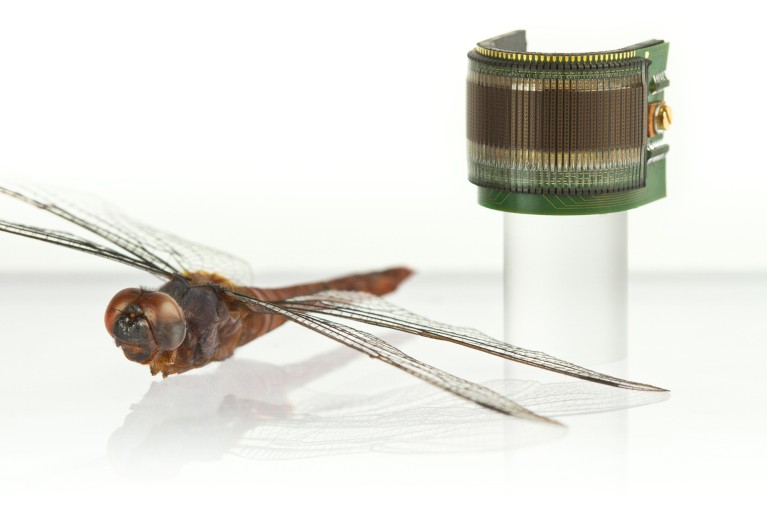
Professor Song Young-min is joining the Department of Electrical Engineering at Korea Advanced Institute of Science and Technology (KAIST) as a Professor, with his appointment beginning July 1, 2025. His research focuses on developing innovative bio-inspired optical systems for robotics, with particular expertise in biomimetic cameras and neuromorphic vision systems. Professor Song's research interests span flexible optoelectronic devices and nanophotonics, with specific applications in biomimetic cameras for intelligent robots , optoneuromorphic devices and systems , nanophotonics-based reflective displays , and infrared-controlled radiative cooling devices . His work bridges electrical engineering, materials science, and biological inspiration to create energy-efficient vision systems that reduce computational demands. His recent publications demonstrate significant advancements in bio-inspired vision technology, particularly in feline-inspired vertical pupil systems that improve object tracking stability and cuttlefish-inspired W-shaped pupil designs for uneven lighting conditions. These innovations show how hardware improvements can substantially reduce energy consumption in robotic vision systems. Professor Song has established significant research collaborations with institutions including MIT (working with Frédo Durand on the Artificial Compound Eyes with Artificial Intelligence project), EPFL, and Northwestern University. His work has been published in high-impact journals including Nature, Science Robotics, and Science Advances. His laboratory focuses on developing next-generation vision systems that integrate biological inspiration with cutting-edge optical engineering, with applications ranging from surveillance robots to autonomous vehicles. Current projects include improving wide-angle imaging capabilities and developing more efficient optic flow processing systems for drone navigation.
Yuhiro Iwamoto serves as Associate Professor at Nagoya Institute of Technology within the Department of Electrical and Mechanical Engineering, with additional affiliation to the Graduate School of Engineering's Mechanical Engineering Program and the Center for Innovative Young Researchers. His academic foundation includes: Bachelor of Engineering from Doshisha University (2008) Master's degree from Doshisha University (2010) Doctor of Engineering from Doshisha University (2013) Dr. Iwamoto's research centers on fluid engineering phenomena with emphasis on magnetic responsive fluids. His work explores thermomagnetic pumping mechanisms, phase-change behavior in water-based magnetic fluids, and innovative applications of permanent magnet elastomers for energy harvesting and tactile sensing. This research bridges fundamental fluid dynamics with practical implementations in thermal management systems, robotic sensing, and sustainable energy technologies, demonstrating significant contributions to manufacturing technology and mechanical engineering disciplines. Analysis of his recent publications reveals a cohesive trajectory in functional fluid systems, particularly focusing on temperature-sensitive magnetic fluids for self-driving thermal transport and elastomer-based transduction mechanisms. His work consistently integrates material science, electromagnetic principles, and fluid mechanics to develop novel solutions for heat transfer enhancement, energy conversion, and soft robotics applications. His research excellence has been recognized through prestigious awards: Japanese Society of Mechanical Engineers Encouragement Award (2020) for research on thermal conductivity control using silver nanowire magnetic nanofluids Best Presentation Award at the 9th Asia-Pacific Symposium on Applied Electromagnetics and Mechanics (2018) Dr. Iwamoto actively contributes to academic governance as committee member for the Institute of Electrical Engineers of Japan's Special Committee on Electromagnetic Responsive Fluids (2019-2022) and the Japan AEM Society Editorial Committee (2017-2022). His industrial property portfolio includes multiple patents related to magnetic elastomers and thermal transfer systems, reflecting strong industry-academia collaboration. He maintains active membership in eight professional societies including The Japan Society of Applied Electromagnetics and Mechanics and The Japanese Society for Multiphase Flow.
Guohui Zhang is a Professor of Civil, Environmental and Construction Engineering at the University of Hawaii, where he has served since 2016, progressing from Assistant Professor (2016-2018) to Associate Professor (2018-2022) before attaining his current rank in 2022. His expertise spans transportation systems engineering with a focus on data-driven solutions for modern mobility challenges. His educational foundation includes: Ph.D. in Civil Engineering, University of Washington, Seattle (2008) M.S. in Systems Engineering, Tsinghua University, China (2003) B.S. in Control Engineering, Harbin Institute of Technology, China (2000) Professor Zhang's research integrates advanced computational methods with transportation theory across six core domains: Large-Scale Transportation Systems Modeling, Traffic Control and Operations, Sensor Data Analysis, Cyber-Transportation Security, Congestion Pricing, and Safety/Security systems. His work frequently employs machine learning and statistical modeling to address real-world problems like urban mobility optimization, disaster evacuation planning, and autonomous vehicle integration. Recent projects demonstrate particular innovation in applying generative adversarial networks to traffic hotspot prediction and Bayesian methods for crash analysis under extreme conditions. Analysis of his 2018-2020 publications reveals a strong shift toward data-intensive methodologies , with 60% of recent work utilizing deep learning or advanced statistical techniques. Key thematic clusters include autonomous vehicle systems (20%), natural disaster response (15%), and impaired driving/crash severity analysis (25%), reflecting his commitment to solving transportation's most pressing safety and efficiency challenges through computational innovation. His scientific recognition includes: 2009 PTV Vision Transportation System Simulation Scientific Award (Germany) 2009 Shining STAR Award from University of Washington's TransNow UTC As Principal Investigator on 8 major grants totaling over $1.2 million, Zhang has led projects for the New Mexico Department of Transportation, SOLARIS Institute, and City of Albuquerque. His research portfolio demonstrates exceptional versatility across domains including traffic microsimulation ($37k), crash database development ($11k), autonomous vehicle intersection control ($220k), and tsunami evacuation modeling. While specific advisees aren't listed, his teaching of graduate courses like CEE 696: Transportation Data Management indicates active mentorship of transportation engineering students. Professional leadership includes Guest Editor roles for IEEE Intelligent Transportation Systems Magazine and Transportation Research Part C , plus active committee service with the Transportation Research Board.
Dr. Junfeng Zhao is an Assistant Professor at Arizona State University's Polytechnic School within the Ira A. Fulton Schools of Engineering. He serves as the Principal Investigator of the Battery Electric & Intelligent Vehicle (BELIV) Lab and holds graduate faculty appointments in both the Robotics & Autonomous Systems (RAS) and Clean Energy Systems (CES) programs. Dr. Zhao's educational background includes: Ph.D. in Mechanical Engineering from The Ohio State University (2015), recipient of OSU Presidential Fellowship M.S. in Mechanical Engineering from University of British Columbia (2009) B.S. in Electrical Engineering from Tsinghua University (2007) Dr. Zhao's research focuses on connected and automated vehicles (CAV), with expertise spanning system integration, safety assessment, motion planning and controls, cooperative perception, AI/ML applications in automotive systems, and electrified propulsion control. His BELIV Lab develops advanced systems for battery electric and intelligent vehicles, targeting safer, cleaner, and more energy-efficient transportation solutions. With industry experience at General Motors R&D and Cummins Technical Center, his work bridges theoretical research with practical automotive applications. Analysis of Dr. Zhao's recent publications reveals a strong emphasis on cooperative perception frameworks, safety assessment methodologies for automated driving systems, integration of satellite positioning for vehicle localization, and novel testing approaches using digital twin and augmented reality technologies. His research consistently addresses critical challenges in autonomous vehicle deployment. Professional recognitions include: OSU Presidential Fellowship during doctoral studies 15 patents in automotive and vehicle systems Dr. Zhao actively mentors 9 current graduate students across PhD and Master's programs, with research areas spanning autonomous driving, battery management systems, and intelligent transportation. His former students have secured positions at major companies including Caterpillar Inc., BYD North America, and TSMC. The BELIV Lab has established itself as an Autoware Center of Excellence, received funding from industry partners like Cox, and has been featured in media coverage including The State Press and documentaries on self-driving technology. BELIV Lab maintains active industry collaborations and participates in outreach activities such as the 10th Annual Hands-on STEM Fair, demonstrating Dr. Zhao's commitment to inspiring future engineers and advancing autonomous vehicle technology through both academic research and practical implementation.
Enrico Rukzio is a Professor at the University of Ulm, Germany, leading a prominent research group focused on human-computer interaction with particular emphasis on automotive user interfaces, mixed reality, and accessibility. His research spans multiple domains including automated vehicles, virtual reality, and sustainable interaction design, with consistent publication output in top-tier venues such as CHI, UIST, and AutomotiveUI. Professor Rukzio's research interests center around the intersection of human factors and emerging technologies. His work investigates how users interact with automated systems, particularly in transportation contexts, with significant contributions to external vehicle communication, in-vehicle interfaces for automated driving, and accessibility solutions for diverse user populations. His research group has pioneered methods for optimizing user interfaces through Bayesian optimization and has conducted extensive studies on user acceptance of automated vehicle technologies. His publication portfolio reveals a clear trajectory of research evolution from foundational HCI work to specialized applications in automated transportation systems. Recent work shows increasing focus on accessibility aspects of automated vehicles, particularly for users with visual impairments, as well as exploration of emerging domains like Urban Air Mobility. The research demonstrates strong methodological diversity, incorporating controlled experiments, field studies, and computational optimization techniques. Professor Rukzio has supervised numerous doctoral students who have become active researchers in the field, including Mark Colley, Pascal Jansen, and Luca-Maxim Meinhardt. His research group maintains strong international collaborations and has secured funding for multiple projects at the forefront of automotive user experience research. The group's work has practical implications for automotive manufacturers and technology developers creating next-generation transportation interfaces.
David Minh is an Associate Professor of Chemistry and the Robert E. Frey, Jr. Endowed Chair in Chemistry at Illinois Institute of Technology (IIT), affiliated with the Lewis College of Science and Letters. He serves as Associate Director of the Center for Interdisciplinary Scientific Computation (CISC). His research focuses on computational chemical biology, developing methods to predict protein dynamics and molecular interactions for structure-based drug design. Education: Ph.D. in Chemistry, University of California, San Diego M.S. in Chemistry, University of California, San Diego B.A. in Chemistry, University of California, Berkeley Research Interests: Dr. Minh's group specializes in computational methods to study small molecule-biological interactions, including: Structural mechanisms of G protein-coupled receptors (GPCRs) and signaling proteins Advanced binding free energy calculations incorporating entropy Enhanced sampling in molecular simulations Bayesian statistical integration of experimental data Modeling bacterial metabolic enzymes and inhibitor development Articles Trends: Recent work emphasizes antiviral drug discovery (e.g., SARS-CoV-2 protease inhibitors), Bayesian analysis of binding data, and computational tools like AlGDock for free energy predictions. Collaborations with biologists (e.g., Oscar Juárez) drive antibiotic discovery targeting pathogenic bacteria. Advising & Grants: Leads interdisciplinary projects funded by NIH and industry partnerships. Mentors students in computational modeling and experimental validation. Active in open science initiatives like the D3R Grand Challenge in drug design. Labs & Teams: Directs the Minh Computational Chemistry Lab at IIT, focusing on molecular simulations, machine learning, and interdisciplinary collaborations to address biomedical challenges.
Professor Wenfei Fan is a Chair of Web Data Management at the University of Edinburgh since 2006. He holds adjunct roles at Huawei Edinburgh Research Laboratory and the International Research Center on Big Data at Beihang University. His research focuses on database systems, theory, big data, data quality, and constraint applications. He is a Fellow of the ACM and Royal Society of Edinburgh, and recipient of the ERC Advanced Grant (2015). His work includes foundational contributions to XML constraints, data quality management, and graph databases, with over 160 top-tier publications and 8 patents. Education: BSc and MSc from Peking University (1985, 1988); PhD from the University of Pennsylvania (1999). Professional Roles: Editor for TODS, TCS, VLDBJ, and TBD; PC Chair for PODS, CIKM, APWeb, and others. Key awards include the Roger Needham Award (2008), Yangtze River Scholar (2007), and multiple best paper awards at SIGMOD, PODS, VLDB, and ICDE. He has led over 15 grants totaling €6M and advised students who all received top conference awards. His labs and initiatives drive industry collaboration, with deployed solutions at Huawei for big data query optimization.
Dan Hu is a Lecturer in Mechanical Engineering at the CEES School of Engineering. He specializes in biomechanical modeling, vehicle dynamics, and estimation algorithms. His research focuses on human movement analysis, musculoskeletal systems, and advanced control systems for automotive applications. He is currently accepting PhD students in two projects: developing predictive modeling tools for personalized rehabilitation devices and creating experiment-free clinical diagnosis systems using machine learning. Dr. Hu holds a Doctorate in Biomechanics & Automotive Engineering from Jilin University (2014), where his thesis addressed musculoskeletal modeling of drivers' hands. He also earned an MSc in Automotive Engineering (2009), focusing on Kalman filter applications for vehicle state estimation. His research interests span biomechanical engineering, computational modeling of human motion, and vehicle state estimation using extended Kalman filters. Notable contributions include 3D whole-body walking models, metatarsophalangeal joint kinematics studies, and biomimetic prosthetics design. His work bridges biomechanics with automotive engineering, aiming to improve healthcare technologies and vehicle safety systems. Dr. Hu has peer-reviewed for journals like Scientific Reports , IEEE Transactions on Neural Systems , and Computer Methods in Biomechanics . His research collaborations span biomechanics, robotics, and automotive control systems. Current projects emphasize predictive modeling and clinical diagnosis innovation.
Dr. Xinyu Zhang is a Research Fellow at the Australian Institute for Machine Learning (AIML), University of Adelaide's Faculty of Sciences, Engineering and Technology. Her research bridges computer vision and machine learning, focusing on image/video generation, self-supervised learning, and multimodal retrieval for human-centric AI applications. Zhang's current investigations include: Causal representation learning and multimodal integration Bayesian deep learning frameworks Video generation with temporal consistency Lightweight detection transformers Unsupervised person re-identification Analysis of recent publications reveals strong emphases on generative modeling innovations (especially video synthesis), efficient transformer architectures for real-time applications, and self-supervised representation learning. Her work frequently addresses the alignment between latent representations and human perception across vision-language tasks. Dr. Zhang co-supervises graduate students on projects involving multi-agent 3D scene generation and knowledge transfer in low-supervision learning. She serves as conference reviewer for premier venues including CVPR, ICCV, and NeurIPS, contributing to the advancement of computer vision research.
Jose Miguel Reynolds Barredo is an Associate Professor and Director of the Doctorate in Plasmas and Nuclear Fusion at Carlos III University of Madrid. His research focuses on plasma physics, magnetohydrodynamics (MHD), and energy systems resilience. He leads studies on stellarator reactor design, plasma confinement optimization, and the integration of renewable energy into power grids. His work spans advanced MHD equilibrium solvers (e.g., SIESTA, FLIPEC) and fusion device optimization for ITER and Wendelstein 7-X. He also investigates climate impacts on renewable energy efficiency and power grid stability under high renewable penetration. Notable contributions include HVDC grid segmentation strategies and non-axisymmetric plasma transport modeling. Key Areas: Fusion reactor design, MHD stability, power grid resilience, climate-energy interactions Tools: SIESTA, FLIPEC, GENE, OPA cascading blackout model Projects: Doctorate in Plasmas and Nuclear Fusion, W7-X bootstrap current studies, climate-energy system interdependencies Research emphasizes computational plasma physics and interdisciplinary energy solutions, blending theoretical, numerical, and applied engineering approaches.
Mateja Novak is an Assistant Professor at AAU Energy, Aalborg University, Denmark, within the Department of Applied Power Electronic Systems under the Faculty of Engineering and Science. Her research focuses on model predictive control, multilevel converters, machine learning, and reliability of power electronic systems, contributing to sustainable energy systems and renewable energy integration. She holds a Ph.D. from Aalborg University (2020) and an M.Sc. from Zagreb University (2014). Previously, she was a Postdoc at AAU Energy (2020-2023) and a visiting researcher at Kiel University (2018) and Danfoss (2023). Notable achievements include the EPE Outstanding Young EPE Member Award (2019) and 2nd place in the 2021 IEEE-IES Student and YP Competition. Her work spans projects like ALL2GaN (2023-2026) and AI-Power (2022-2027), addressing GaN IC solutions and AI-driven power electronics advancements. She is actively involved with IEEE societies including the Power Electronics Society and IEEE Women in Engineering. Her research outputs emphasize control strategies for power electronics, reliability analysis, and optimization techniques. Key areas of exploration include thermal stress balancing in converters, statistical model checking, and multiobjective control algorithms. Collaborations with industry partners like Danfoss and academic institutions like Kiel University underscore her interdisciplinary approach to advancing power electronics technology.
Anne Marie Kanstrup is a **Professor** and **Pro-rector** at **Aalborg University**, affiliated with the *Faculty of Social Sciences and Humanities* and the *Department of Culture and Learning*. Her research focuses on participatory design, assistive technology, and inclusive digital solutions for vulnerable populations, such as individuals with cognitive disabilities or severe physical impairments. She leads or participates in high-impact projects like the *Center for Rehabilitation Robotics*, developing exoskeletons and assistive technologies for severely disabled individuals. Her work emphasizes user involvement and interdisciplinary collaboration, addressing challenges in healthcare, education, and technology design. Key research themes include participatory design methodologies, digital coping strategies for youth with disabilities, and mobile health (mHealth) applications for chronic disease management. Her recent publications explore topics like exoskeleton usability, digital inclusion of disabled youth, and shared decision-making in healthcare. As Pro-rector, she drives initiatives such as the *PBL Digital Masterplan* to integrate digital learning tools into university education. Her activities include organizing workshops on creativity in technology design and advising on policies for health informatics and academic innovation. Notable projects include user-centered development of the EXOTIC exoskeleton and collaborative studies on mHealth applications for adolescents with knee pain. Her work bridges academic research with practical implementation, emphasizing societal impact and user empowerment.


/prod01/channel_2/media/uniofsuffolk/website/content-assets/images/staff-profile-photos/research/Emma-Bond-1.jpg)