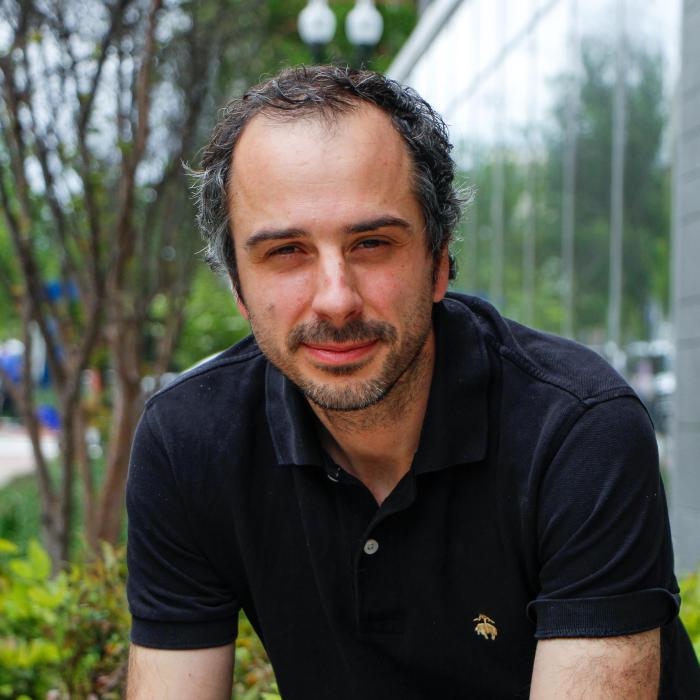
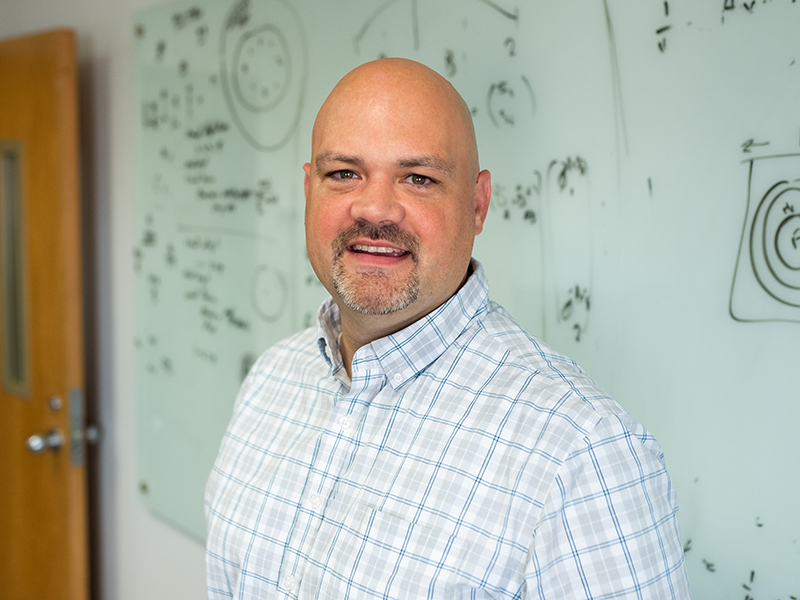
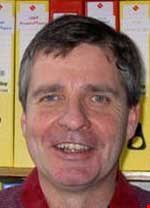
Jakub Kostal is an Associate Professor of Chemistry and Director of the MS Environmental and Green Chemistry Program at George Washington University. He leads the Kostal Research Group, focusing on computational chemistry, green chemistry, and predictive toxicology. His work aims to develop computer models to predict chemical toxicity and design safer, sustainable chemicals. Education: PhD from Yale University (2012), B.A. from Middlebury College (2006). He collaborates with the Lapkin Group at the University of Cambridge on sustainable process engineering using AI. His research team includes graduate students Jillian Brejnik, Diana Garnica Acevedo, and Geetesh Devineni. Research interests center on reducing chemical hazards through computational methods, including predicting environmental persistence, optimizing chemical reactions for sustainability, and advancing machine learning tools for toxicity prediction. His team’s contributions include refining models for pesticide safety and designing bio-based alternatives. Publications highlight advancements in quantum mechanics modeling, in silico toxicity prediction, and sustainable chemical design. He actively engages with policymakers, including speaking at the White House on sustainable chemistry strategies.
Janne Heikkilä is a Professor at the Faculty of Information Technology and Electrical Engineering, University of Oulu, Finland. With over 30 years of experience in computer vision and machine learning, he leads the Center for Machine Vision and Signal Analysis (CMVS) and has contributed extensively to both theoretical and applied research. Research Interests: 3D computer vision, biomedical image analysis, computational photography, and deep learning. Scientific Leadership: IAPR Fellow, Senior IEEE Member, and former President of the Pattern Recognition Society of Finland. His work spans computer vision, radiotherapy planning, and biomedical imaging, with over 200 publications and 14,000 citations. He has secured funding from prestigious organizations like the Academy of Finland and Business Finland. His recent research focuses on debiasing AI models, 6D object pose estimation, and radiotherapy dose prediction. Scientific Awards: IAPR Fellow Senior Member of IEEE
Daniel Vallero is an Adjunct Professor in the Department of Civil and Environmental Engineering at Duke University . He holds a Ph.D. from Duke (2000) , an M.S. from the University of Kansas (1996) , and a B.A. from Southern Illinois University (1974) . His career spans environmental engineering, exposure assessment, and climate change adaptation, with affiliations including North Carolina Central University (2012-2013) as Associate Professor. Education B.A., Southern Illinois University, 1974 M.S., University of Kansas, 1996 Ph.D., Duke University, 2000 Key Research Areas Environmental systems science Air pollution modeling and control Hazardous waste bioremediation Climate change governance Exposure-based chemical prioritization Biogeochemical cycling under climate stress Publication Trends Focus on PFAS exposure pathways , climate adaptation strategies , and pollutant fate in ecosystems Recent work includes high-throughput exposure models and environmental justice in global warming Scientific Awards Federal Honor Awards (2025) from the U.S. EPA Jeffrey B. Taub Award (1999) at Duke University Notable Contributions Authored Air Pollution Calculations and Environmental Systems Science Developed exposure prioritization tools like Ex Priori Post-9/11 environmental contamination studies in New York City
Dr. Vicente Valero is a Professor and Deputy Chairman in the Department of Breast Medical Oncology at The University of Texas MD Anderson Cancer Center. He has been affiliated with MD Anderson since 1991, with expertise in breast cancer, particularly inflammatory breast cancer (IBC) and HER2-positive cancers. His academic credentials include an M.D. from Universidad Autonoma de Nuevo Leon, followed by postgraduate training in Internal Medicine at St. Elizabeth Hospital and Northeastern Ohio University College of Medicine, and fellowships in Hematology-Medical Oncology at the University of Cincinnati and The University of Texas Medical Branch in Galveston. Board-certified in Internal Medicine, Medical Oncology, and Hematology, Dr. Valero is a leading researcher in neoadjuvant therapies, molecular residual disease, and IBC treatment protocols. His research focuses on improving outcomes for metastatic breast cancer patients, optimizing surgical de-escalation strategies, and advancing immunotherapy and targeted therapies. He leads multiple clinical trials, including NRG-BR004 and NRG-BR003, and has authored over 150 peer-reviewed articles. Dr. Valero is recognized for his dedication to education, having received the Division of Medicine Teacher of the Year award twice and the Educator of the Month honor. He actively contributes to multidisciplinary quality assurance conferences and serves as a primary investigator for several funded research protocols. Key achievements include developing the R-IBC residual tumor burden calculator and pioneering studies on eliminating breast surgery for exceptional responders to systemic therapy. His work emphasizes translating research into clinical practice to enhance early detection, prevention, and treatment efficacy in breast cancer.
Johannes Kruisselbrink is a Researcher at Biometris , a department within Wageningen University & Research , specializing in food safety and cumulative risk assessment. His work focuses on pesticide residues, dietary exposure, and computational modeling for regulatory compliance. Key Collaborations: European Food Safety Authority, EFSA Projects: Active in pesticide exposure analysis (2024-2028), cumulative risk assessment tools (2019-2023), and regulatory frameworks (2018-2019). His research integrates data modeling and statistical software to enhance risk assessment methodologies. Recent projects emphasize interoperability and accessibility of platforms like MCRA and PARC. Scientific Contributions: Developed AMIGA Power Analysis tool for equivalence testing Authored reports on pesticide risk surveillance in fruits and vegetables Advancing EFSA standards for acute reference dose calculations
Andrew Fielding is an Associate Professor in the School of Chemistry & Physics at Queensland University of Technology (QUT), Faculty of Science. His research and teaching focus on medical physics, particularly in radiation therapy, medical imaging, and Monte Carlo dosimetry techniques. He is the Course Coordinator for the Graduate Diploma and Master of Applied Science in Medical Physics programs at QUT. He holds a PhD in Physics from the University of Portsmouth and a B.Sc. (Hons) from the University of Surrey. He completed postdoctoral research at the Institute of Cancer Research / Royal Marsden Hospital and the University of Liverpool before joining QUT in 2004. His academic progression includes Lecturer (2004–2008), Senior Lecturer (2008–2022), and Associate Professor (2023–present). His research interests lie in medical imaging, radiation therapy, image-guided radiotherapy, Monte Carlo techniques for dosimetry, and radiation oncology physics. He emphasizes translating research into clinical practice to improve cancer care. His recent publications reflect a strong focus on Monte Carlo simulations, small-field dosimetry, preclinical irradiation, and the integration of AI and simulation in radiotherapy education and treatment verification. His scientific achievements are recognized through professional memberships including Fellow of the Institute of Physics (FInstP), Chartered Physicist (CPhys), and Member of the Australasian College of Physical Scientists and Engineers in Medicine (MACPSEM). Fellow of the Institute of Physics (FInstP) Chartered Physicist (CPhys) Member of the Australasian College of Physical Scientists and Engineers in Medicine (MACPSEM) Andrew Fielding actively supervises PhD and research master’s students in areas such as Monte Carlo dosimetry, tumor motion tracking, and radiotherapy optimization. He has secured competitive research grants, including Australian Competitive Grants for projects on tumor motion monitoring and in-vivo dosimetry verification. His teaching philosophy emphasizes authentic, clinically aligned learning using simulation, virtual reality, and real-world applications. He leads or teaches several core medical physics units, including Radiation Physics, Radiotherapy, Medical Imaging Science, and Research Methodology. He is involved in developing and evaluating innovative tools such as 3D volumetric outlining systems and immersive simulation environments for radiotherapy training. His work bridges physics, clinical application, and education, contributing significantly to the advancement of medical physics both in research and pedagogy.
Kevin Clarno is a tenured Associate Professor in the Department of Nuclear and Radiation Engineering at the University of Texas at Austin, holding the Charlotte Maer Patton Centennial Fellowship in Engineering. His research focuses on computational nuclear energy, multiphysics reactor simulation, and high-performance computing (HPC). Previously, he spent 15 years at Oak Ridge National Laboratory (ORNL), where he led major initiatives such as the Consortium for Advanced Simulation of Light Water Reactors (CASL) and contributed to the development of software tools like SCALE, CTF, and VERA. Education and Career: Assistant Professor at University of Tennessee-Knoxville (2010–2016) Senior Research Scientist at ORNL (2006–2021) Research Interests: Multiphysics coupling methods for reactor simulation Multiscale neutronics and thermal-hydraulics modeling Advanced reactor design (e.g., molten salt reactors) HPC-driven software integration for nuclear analysis Uncertainty quantification in coupled simulations Grants and Projects: Lead of CASL’s Physics Integration Focus Area Development of the Advanced Multi-Physics (AMP) fuel code ORNL-led strategic research projects in reactor simulation Labs and Tools: VERA: Virtual Environment for Reactor Applications CTF: Thermal-hydraulic solver for PWR analysis MPACT: Neutronics simulation tool within SCALE
Dr. Jason Chan is an Associate Professor in the Department of Radiation Oncology at the University of California, San Francisco (UCSF) School of Medicine. His clinical practice focuses on the treatment of head and neck, skull base, cutaneous, and thoracic malignancies, offering advanced techniques including Cyberknife radiosurgery and high-dose-rate brachytherapy for both initial and repeat radiotherapy. Dr. Chan received his medical degree from Brown University and completed his Internal Medicine internship at Kaiser Permanente San Francisco followed by a residency in Radiation Oncology at UCSF. His academic journey has positioned him as a prominent researcher in head and neck oncology, with particular expertise in HPV-associated oropharyngeal cancer, nasopharyngeal cancer, lung cancer, thyroid cancer, and cutaneous malignancies. His research spans multiple domains including radiation therapy optimization, AI applications in radiation oncology, cancer outcomes research, and translational studies. Dr. Chan's work frequently addresses critical questions in treatment de-escalation for HPV-positive cancers, reirradiation techniques, and health disparities in cancer outcomes. Recent publications demonstrate his leadership in investigating swallowing function outcomes, dosimetric analysis of brachytherapy, and the impact of socioeconomic factors on nasopharyngeal carcinoma outcomes. Dr. Chan actively participates in numerous clinical trials and translational studies, particularly in head and neck and lung cancers. His collaborative approach is evident in his extensive co-authorship network with colleagues at UCSF and other institutions. His work bridges clinical practice with technological innovation, especially in the application of artificial intelligence to radiation therapy planning and delivery. Dr. Chan's research portfolio reflects a commitment to improving both the precision and accessibility of cancer care while addressing significant clinical challenges in radiation oncology.
Oguz Durumeric is an Associate Professor in the Department of Mathematics at the University of Iowa, part of the College of Liberal Arts and Sciences. His research focuses on differential geometry, medical image analysis, and geometric topology. He earned his PhD from SUNY Stony Brook and has contributed to interdisciplinary applications of geometry in medical imaging, particularly in lung biomechanics and radiation therapy planning. Education: PhD in Mathematics from SUNY Stony Brook. Research Interests: Dr. Durumeric’s work bridges pure and applied mathematics. In differential geometry, he explores knot energies and curvature properties. In medical imaging, he develops advanced registration techniques for 4DCT and MRI data to study lung ventilation patterns and improve cancer treatment accuracy. His geometric topology research includes ideal knot structures and conformal transformation analysis. Recent Research Trends: His articles highlight innovations in medical image registration (e.g., lung motion artifact correction, out-of-phase ventilation detection) and geometric models for biomedical applications. He also addresses foundational challenges like shape collapse in large-deformation registration. Grants & Collaborations: While specific grants are not listed, his work implies collaboration with medical imaging labs and oncology teams. No formal advisees are documented here. Labs/Teams: Affiliated with the University of Iowa Mathematics Department’s research groups in geometry and applied mathematics. His website provides further details on ongoing projects.
Clinical Associate Professor Tim Roberts is a cataract and glaucoma specialist at the University of Sydney and Royal North Shore Hospital. He holds a MBBS from UNSW, MMed from Sydney, and is a Fellow of RANZCO. His academic roles include Academic Lead for Ophthalmology at SERT Institute and Academic Coordinator at the Northern Clinical School. Education: MBBS (UNSW), Master of Medicine (Sydney), specialist training at Sydney Eye Hospital. Research focuses on femtosecond lasers, IOL power formulas, MIGS, and presbyopia-correcting lenses. He has published >60 articles and serves on editorial boards for major ophthalmology journals. Recent articles emphasize IOL technology advancements and surgical efficiency improvements. Awards include Global Achievement Awards from AAO and APACOS. Leadership roles include NSW QEC Chair and National Medical Director of Vision Eye Institute. Advises on >38 students via collaborative research projects. Labs/Teams: Leads surgical training programs at SERT Institute and collaborates with international eye care initiatives like Myanmar Eye Care Program.
Tomasz Kozlowski is an Associate Professor and Associate Head for Undergraduate Programs at the University of Illinois at Urbana-Champaign's Grainger College of Engineering, Department of Nuclear, Plasma, and Radiological Engineering (NPRE). He holds additional positions as Associate Professor at Poland's National Centre for Nuclear Research (NCBJ) and Affiliated Professor in Computational Science and Engineering at UIUC. His research focuses on multi-physics modeling, reactor design/safety, computational methods, and thermal-hydraulics. He has taught courses like NPRE 200 (Mathematics), NPRE 455 (Neutron Transport), and advanced modeling topics. Education: B.S., M.S., and Ph.D. in Nuclear Engineering from Purdue University (2000–2005), followed by a Docent Habilitation in Nuclear Power Safety from the Royal Institute of Technology (KTH, 2011). He has collaborated on a $2M DOE grant for fuel storage solutions and contributed to UIUC's submission for a micro-reactor license application. His work includes advanced reactor design, uncertainty quantification, and computational tools like TRACE and MCNP-ORIGEN. Research emphasizes reactor analysis methods, numerical solver development, and inverse uncertainty quantification. Over 100 publications span topics like TRISO fuel performance, BWR instability, and hydrogen production integration with microreactors. He serves as Associate Editor for Nuclear Technology and actively engages in international benchmarks (e.g., BEAVRS, OECD/NEA).
Ruben Pauwels is an Associate Professor in the Department of Dentistry and Oral Health at Aarhus University, Denmark. As the strategic research coordinator of the 'Intelligent Systems' research theme, his work focuses on integrating artificial intelligence (AI) and deep learning into clinical workflows, particularly in medical imaging, radiation protection, and dental data science. His research spans applications like image enhancement, automated segmentation, lesion detection, and risk assessment for treatment planning, with a strong emphasis on cone-beam computed tomography (CBCT) and medical physics in dentistry. His educational background includes a PhD and MSc, and he actively contributes to interdisciplinary research involving multiple departments. Teaching activities align with his expertise, covering digital workflows and novel technologies in dental practice. Key research areas include biomedical image processing, machine learning in odontology, and biophysics. He has authored 118 publications, with recent work focusing on AI-driven medical imaging solutions and radiation protection standards. Notable contributions include the European consensus on patient contact shielding and organ-specific deep learning models for radiation dose calculation. Received awards such as the Bagger-Sørensen Young Researcher Award (2024) and ECMP Best Radiation Protection Presentation (2022). Active in professional networks: EMRA, EFOMP, and ITU/WHO/WIPO initiatives on AI in healthcare. Supervised students like B. N. de Freitas and R. J. Gonçalves da Motta in projects involving digital twin technology and mandibular canal labeling.
John Ryan is a Lecturer at Monash University's Department of Medical Imaging and Radiation Sciences. With a clinical background as a radiation therapist spanning Ireland, England, and Australia, he combines practical expertise with academic leadership. His work focuses on enhancing radiation therapy education through blended teaching methods and innovative software tools like a personal dosimeter app. Honours Bachelor of Science (Radiation Therapy), Trinity College Dublin Master of Medical Imaging Science (Hybrid Imaging), University of Sydney Part-time PhD candidate at RMIT University on Functional Imaging-Guided Radiotherapy John's research bridges radiation therapy and functional imaging for glioblastoma treatment planning, with recent publications exploring PET scan timing and digital education tools. His work emphasizes radiation safety and technological integration in clinical workflows. Scientific Awards include the RMIT School of Health and Biomedical Science Team Award (2019), and dual accolades from Trinity College Dublin: the St Luke’s Award and University Gold Medal (2010).
Dr. Cormac Lucas is a Senior Lecturer in the Department of Mathematics at Brunel University London, affiliated with the College of Engineering, Design and Physical Sciences. His work bridges mathematical optimization with practical applications in finance and operations management. Lucas specializes in Mathematical Optimisation Stochastic Optimisation Asset and Liability Management (ALM) Risk Analytics Portfolio Optimization Supply Chain Planning Under Uncertainty His research combines theoretical advancements with industrial projects, such as US Coast Guard Cutter Scheduling, Insight Investment's ALM, and Unilever's Natural Oil Buying Policy. Recent publications (2013–2024) highlight his focus on Portfolio Rebalancing with Transaction Costs Scenario Generation for Stochastic Programming Heuristic Algorithms for Cardinality Constraints Queuing Systems with Standby Servers Robust Supply Chain Planning Financial Derivative Modeling These works utilize methods like Variable Neighbourhood Search, Differential Evolution, and Lagrangian Relaxation. Email: cormac.lucas@brunel.ac.uk
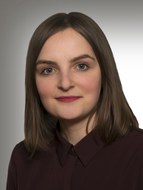
Judith Josupeit (Dr. rer. nat.) is a Lecturer at the Faculty of Psychology, Technische Universität Dresden, Germany. She specializes in human factors research within virtual reality environments, focusing on interindividual differences in cybersickness susceptibility and physiological indicators of VR-induced discomfort.