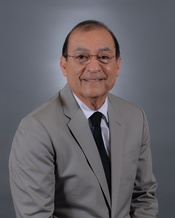
Dr. Carlos A. Garcia is the Dean of the School of Mathematics, Science and Engineering at the University of the Incarnate Word since 2012, holding a tenured faculty position. He holds a Ph.D. in Biochemistry and dual M.S. degrees in Physiological Optics/Vision Science and Microbiology. His administrative expertise spans strategic planning, accreditation, budgeting, and international education initiatives. His research focuses on neurodegeneration in diabetic retina/brain, ozone exposure effects on vision/cardiovascular systems, and health information technology. He has published extensively on retinal toxicology, cytokine signaling in diabetic models, and ozone-induced cardiac dysfunction. He teaches courses in biochemistry, toxicology, and ophthalmic sciences at both undergraduate and graduate levels. His work bridges academic leadership with impactful research in environmental health and chronic disease mechanisms.
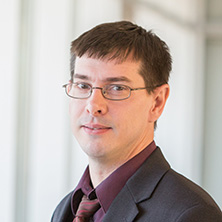
John Assad is a Professor of Neurobiology at Harvard Medical School, Harvard University, where he leads a research laboratory focused on the neuronal mechanisms of voluntary movement initiation. He is affiliated with the Department of Neurobiology and actively contributes to interdisciplinary neuroscience initiatives, including the MBB (Mind, Brain, Behavior) project at Harvard. Research Interests: Neural circuits underlying motor control Dopamine signaling and behavioral vigor Basal ganglia function in movement disorders Integration of electrophysiology, optical imaging, and computational modeling His research combines behavioral paradigms with advanced neurophysiological techniques in mouse models to understand how the brain initiates self-paced actions—a question with profound implications for Parkinson’s disease and other motor disorders. The recent publications and preprints from his lab focus on dopamine dynamics, basal ganglia output, and neural correlates of behavioral vigor. These works reflect a strong trend in systems and circuit neuroscience, with an emphasis on in vivo recording and computational analysis of neural activity during naturalistic behaviors. Scientific Awards and Recognition: No personal scientific awards were mentioned in the provided text. Advising and Funding: PhD student Nigel Hunter was awarded the Edward R. and Anne G. Lefler Center Predoctoral Fellowship. Postdoc Dan Svedberg received the Goldenson Postdoctoral Fellowship. The lab is supported by a U19 research grant, as evidenced by the recent perspective in Nature Neuroscience . Laboratory and Team: Dr. Assad's lab includes PhD students, postdoctoral researchers, and collaborators working on cutting-edge neuroscience projects. The team utilizes a multidisciplinary approach combining electrophysiology, optical imaging, and computational modeling in mouse models. The lab maintains active publication and grant funding, indicating a vibrant and productive research environment.
Dr. Attila Bende is a Leading Researcher (R4) at the National Institute for Research and Development in Isotopic and Molecular Technologies (ITIM) , Romania, and a member of the Laser-Induced Processes research team. With a PhD (2004) and MSc (1997) in Theoretical Physics from Debrecen University and Babeș-Bolyai University respectively, his career spans over 25 years of theoretical and computational research. Research Focus: Electronic excited state dynamics in molecular systems Spin crossover phenomena in organometallic complexes Intermolecular interactions in supramolecular clusters Theoretical modeling for attosecond pulse generation Photochemical behavior of polydopamine-based nanostructures DNA structural changes under coherent radiation Key Projects: Coordinator of EUV-Soft X-ray Photonic Integrated Circuits (2021-2024) Key expert in dual SERS-electrochemical pollutant detection (2020-2024) Principal investigator for laser-controlled spin crossover systems (2017-2019) Contributor to antimicrobial peptide design and attosecond physics Scientific Recognition: Outstanding Reviewer for Physical Chemistry Chemical Physics (2022) Acknowledged reviewer for Quantum Reports (2023) His work combines Density Functional Theory (DFT) calculations with experimental validation, targeting applications in molecular photonics, environmental sensing, and radiation-matter interactions.
Dr. Adrienne Lahti is a Professor and Chair in the Department of Psychiatry - Behavioral Neurobiology at the University of Alabama at Birmingham (UAB) School of Medicine . She holds joint appointments in Psychology (College of Arts and Sciences) and Neurobiology (Academic Joint Departments), and serves as Senior Scientist at multiple UAB research centers including the Comprehensive Neuroscience Center and Civitan International Research Center . With over 150 peer-reviewed publications, her research focuses on neuroimaging biomarkers in psychosis, glutamate dysfunction, and smoking cessation interventions. Degrees: Doctor of Medicine (MD), University of Liege (1978) Research Highlights: Her work examines intrinsic brain network connectivity in first-episode psychosis using resting-state fMRI and MRS, investigates cortical myelin pathology in schizophrenia-spectrum disorders, and develops novel smoking cessation strategies for high-risk populations. Recent studies explore hippocampal connectivity patterns, frontoparietal network dynamics, and biomarker validation for treatment response. Key Contributions: Principal investigator for NIMH grants on neuroimaging in psychosis Co-editor of systematic reviews in World Psychiatry and Schizophrenia Bulletin Mentorship for 12+ graduate students including Hillary Patton and Eric Nelson Teaching Activities: She has taught the Neuroimaging Journal Club (NBL782) and supervised dissertation committees across multiple departments since 2016.
Erik Hill, Ph.D., is an Assistant Professor in the Department of Biological Sciences at Seton Hall University. His research focuses on microbial biosynthetic pathways and the discovery of novel antimicrobial compounds from soil and insect gut bacteria. He is active in undergraduate education, mentoring students in research, and securing extramural grants. Education: Ph.D. in Biochemistry, Ohio State University (2010) B.A. in Chemistry, Johns Hopkins University (2000) Research Interests: Soil and environmental bacteria as reservoirs for antimicrobial therapeutics Biosynthetic gene clusters driving microbial competition Development of course-based undergraduate research experiences (CUREs) Publications: Recent work spans virology, molecular biology, and neuroscience, including studies on viral immune evasion mechanisms (e.g., Molluscum contagiosum virus) and cocaine-insensitive dopamine transporter models. Awards: Research Award (collaboration with Aastha Patel) Teaching & Outreach: Teaches General Biology, Microbiology, and Ecology courses Promotes community outreach programs linking science education to local stakeholders
Jocelyne Ventre-Dominey is a Senior Researcher at INSERM, affiliated with the University of Burgundy's Faculty of Sports Sciences (UFR Staps). Her primary research focuses on embodied cognition, neurocognitive mechanisms of language and perception, and motor control systems. She is part of the INSERM U1093 Laboratory, collaborating extensively with Prof. Philippe F. Dominey and other international researchers. Her work bridges robotics and neuroscience, investigating how visuo-tactile feedback impacts telepresence embodiment, and explores neural systems underlying sentence-picture comprehension across languages. She has contributed to understanding the role of dopamine vs. STN stimulation in Parkinson's disease and the structural-functional connectivity of semantic systems. Recent studies also address human-robot interaction acceptability and parallel neural processes in motor sequence execution. Publications span journals like Scientific Reports, NeuroImage, and Frontiers in Human Neuroscience, reflecting her multidisciplinary approach. Her research integrates EEG/ERP, neuroimaging, and behavioral experiments to dissect cognitive and neural processes in embodied systems and language. Based in Dijon, France, she maintains ties with the University of Burgundy's sports sciences faculty while engaging in international collaborations. No specific grants or awards are listed, though her active publication record indicates sustained research engagement.
Juan M Dominguez is a Professor and Centennial Chair Honoring Harry Huntt Ransom at the University of Texas at Austin's Department of Psychology, College of Liberal Arts. He holds a Ph.D. in Behavioral Neuroscience from the University at Buffalo (SUNY). His research focuses on neuroendocrine regulation of motivated behaviors, particularly addiction and depressive disorders, using mating behavior as a model. He has taught courses like 'Love, Mating, and the Brain' and 'Biopsychology' since 2020. Notably, he received the President’s Associates Teaching Excellence Award. Education: Ph.D., Behavioral Neuroscience, SUNY Buffalo. Postdoctoral training at University of Cincinnati College of Medicine and Florida State University. Prior roles include Assistant Professor at American University (DC). Research interests emphasize neural-endocrine mechanisms underlying motivation, addiction, biological-sex differences in drug responses, and depressive disorders. His lab uses rodent models to study mesolimbic pathways and hormonal influences on behavior. Recent publications (2023-2015) explore hormonal regulation of reward circuits, cocaine effects in female rats, age-related sexual function changes, and astrocyte roles in ejaculation latency. He contributes to Psychology Today’s 'Motivated Behaviors' blog, addressing topics like adolescent vaping, junk food’s brain impact, and drug effects on teens. Award: President’s Associates Teaching Excellence Award. Current roles include Vice Provost for Academic and Curricular Innovation at UT Austin.
David Belin is a Professor of Behavioural Neuroscience at the University of Cambridge's Department of Psychology and a Fellow/Director of Study for Psychological and Behavioural Sciences at Homerton College. His research focuses on neural mechanisms underlying impulsive/compulsive disorders such as addiction and OCD, emphasizing corticostriatal networks' role in habit formation and vulnerability. Research techniques include optogenetics, molecular biology, and electrophysiology, combined with behavioral assays like self-administration models and decision-making tasks. Key areas include insular-cortical interactions, amygdala-striatal pathways, and astrocytic dopamine regulation. Belin collaborates with Professors Amy Milton and Barry Everitt, and his work bridges preclinical findings to translational insights for addiction treatment. He accepts PhD students and leads the Compulsivity Lab, addressing environmental influences on addiction vulnerability and developing diagnostic tools via machine learning. His lab employs a multidisciplinary approach, integrating behavioral, cellular, and systems neuroscience methodologies.
Kyle Gobrogge is a Lecturer in the Undergraduate Program in Neuroscience at Boston University. He holds a PhD from Florida State University. His research focuses on the neurobiological mechanisms underlying aggression, social bonding, and neurochemical regulation in animal models such as voles and fruit flies. Key themes include dopamine pathways, oxytocin roles in social behavior, and the neuroendocrine basis of addiction and stress responses. Dr. Gobrogge’s work bridges behavioral neuroscience with molecular mechanisms, exploring how neurotransmitters like dopamine and cortisol interact with social and environmental factors. His studies utilize optogenetic techniques and transgenic models to dissect neural circuits involved in aggression, pair-bonding, and drug reward systems. Recent investigations include the impact of group dynamics on gene expression in voles and the role of CRF-VTA circuits in stress-induced cocaine addiction escalation. Publications highlight interdisciplinary approaches, linking basic neuroscience to broader implications for human behavior, mental health, and addiction treatment strategies. His research has contributed to understanding the neurobiology of pair-bonding, the role of vasopressin in monogamy, and the effects of amphetamine on social attachment systems.
Annie Park is a Research Fellow at the University of Oxford, affiliated with the Department of Physiology, Anatomy and Genetics. She is part of the Waddell Group and collaborates with Stephen Goodwin. Her research focuses on understanding how heterogeneity in dopamine neurons enables reward encoding in Drosophila (fruit flies). By recording neuronal activity and studying behavioral responses, she investigates the physiological basis of reward-seeking behavior and alcohol-induced aggression. She has authored several publications on alcohol's effects on pheromone signaling and aggression in Drosophila , including preprints and journal articles in eLife and Addiction Biology , with a 2024 article on thirst-directed behaviors. Her work integrates neurogenetics, behavioral biology, and neural circuit analysis. Scientific awards include the Wellcome Trust Early Career Award. She holds a PhD and is actively involved in postdoctoral research within the Drosophila neurobiology field.
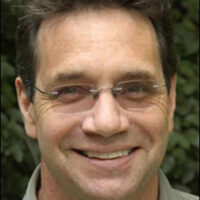
Geoffrey Hall is a Professor in the Department of Psychology, Neuroscience & Behaviour at McMaster University and a Research Scientist at the Imaging Research Centre of St. Joseph's Healthcare, Hamilton . He serves as Director of the Research and Clinical Training Graduate Stream and is a core member of the McMaster School of Biomedical Engineering , Offord Centre for Child Studies , and McMaster Institute for Music and the Mind . Dr. Hall’s research focuses on the neurological foundations of human emotion and cognition , particularly in neurodevelopmental disorders (e.g., autism) and psychopathology (e.g., depression, bipolar disorder). His work employs multimodal neuroimaging (fMRI, DTI, PET, MRS) to explore neural connectivity , amygdala-fusiform interactions , and lifelong neural plasticity . Current projects include studies on gene-adversity interactions in depression , brain networks in autism , and mobile psychiatric assessments via the IMPACT tool. Dr. Hall’s recent publications (2019–2020) highlight his contributions to understanding brain structural and functional changes in depression, autism, and postpartum mental health. His team has developed computer-based social cognition assessments for autism (CASSA) and mobile diagnostic tools for underserved populations. Collaborations span institutions like the University of Calgary , University of Toronto , and CAN-BIND consortium.
Prof. César Rodriguez-Emmenegger, PhD, is a Principal Investigator at the Institute for Bioengineering of Catalonia (IBEC) , leading the research group Bioinspired Interactive Materials and Protocellular Systems . His work focuses on designing synthetic materials that interact with biological systems, particularly antifouling polymer brushes and biomimetic vesicles. Education : Chemical Engineer, Universidad de la República (Uruguay); PhD in Biophysics, Charles University (Prague, Czech Republic) Postdoctoral Training : Karlsruhe Institute of Technology (Germany); University of Pennsylvania (USA) Research Interests : His research bridges materials science , surface chemistry , and synthetic biology to develop non-fouling interfaces , dendrimersomes , and smart coatings for medical devices. Key themes include protein adsorption resistance , hemocompatibility , and biofilm prevention . Scientific Contributions : His work has led to 15+ high-impact publications (2020-2023) in journals like Advanced Materials , ACS Nano , and PNAS , with a focus on dendrimersome self-assembly , light-triggered surface modifications , and medical implant coatings . Articles reveal expertise in glycoengineering , nanovesicle design , and complement activation in blood-plasma interactions. Grants & Collaborations : Supported by Alexander von Humboldt Postdoctoral Fellowship , with collaborations spanning Cambridge University , University of Pennsylvania , and Karlsruhe Institute of Technology . Holds patents on antifouling polymer brushes and co-authored a book on Biological Fluid-Surface Interactions . Labs & Teams : Currently leads a multidisciplinary team at IBEC , previously establishing junior groups at IMC Prague and DWI Aachen . Integrates polymer chemistry , biointerface engineering , and synthetic cell mimics for next-gen biomaterials.
Sissel Ida Schmidt is a postdoctoral researcher at the Department of Biochemistry and Molecular Biology, University of Southern Denmark (Faculty of Health Sciences), specializing in biomedical mass spectrometry and systems biology. Her research focuses on neurodegenerative diseases, particularly Parkinson's Disease and Frontotemporal Dementia, using induced pluripotent stem cell (iPSC) models and proteomics approaches. Parkinson's Disease Neuroscience (100%) Parkin Neuroscience (77%) Stem Cell Research (65%) Synuclein and Proteomics (43-36%) Her work explores mechanisms like α-synuclein aggregate formation, RhoA signaling, and autophagy/metabolic dysfunction in neurotoxicity. Publications analyze neurite outgrowth impairments and astrocytic reactivity, with recent high-impact articles in npj Parkinson's Disease and Cell Reports . Collaborations span international institutions, with open-access research and peer-reviewed articles. She utilizes advanced proteomics platforms and iPSC models to study disease pathways, though no formal scientific awards are listed. Her work is widely read (over 100 Mendeley readers) and cited, with social media engagement and news coverage.
Francesco Giacalone is a Full Professor at the Department of Biological, Chemical and Pharmaceutical Sciences (STEBICEF) at the University of Palermo. He specializes in the development of hybrid catalytic materials for CO2 conversion, functionalization of carbon nanostructures, and sustainable organic synthesis. His research integrates ionic liquids, polyhedral oligomeric silsesquioxanes (POSS), and nanocarbon supports for cross-coupling reactions. Recent publications highlight his work on: Deep eutectic solvents for carbon nanoform functionalization Catalytic systems for CO2 conversion into cyclic carbonates Palladium nanoparticle immobilization on modified nanocarbons Applications of supported ionic liquids in organic reactions He has extensively explored the synergistic effects of heterogenized catalysts in reactions like Suzuki-Miyaura, Heck, and alcohol oxidation, with a focus on recyclability and green chemistry principles.
Nicky Haire is a Lecturer in Music Therapy at Queen Margaret University’s School of Health Sciences. She is an HCPC-registered music therapist, violinist, and educator with expertise in improvisation, dementia care, and arts-based methodologies. Her work bridges clinical practice with performative and cross-cultural contexts. Phenomenological philosophy (Merleau-Ponty) Arts-based reflexivity Experiential learning Research Focus Nicky explores improvisation as a mode of relational being, with emphasis on: Humour in music therapy with dementia patients Embodied musical practices Creative-reflexive supervision methods Cross-cultural projects in post-conflict regions Psychoanalytic theory integration Performative auto-ethnography Publications & Affiliations Her recent works address pandemic-era collective experiences and therapeutic improvisation. She is affiliated with organizations including the British Association for Music Therapy , Institute for Music in Human and Social Development , and the Glasgow Improvisers Orchestra .