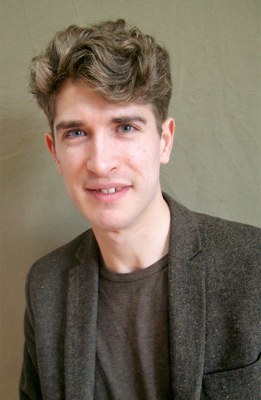
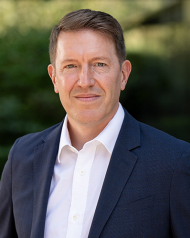
Dr. Victor Kempf is a postdoctoral researcher at the Institut für Philosophie , Humboldt-Universität zu Berlin, since March 2025. He completed his PhD at Goethe-Universität Frankfurt in 2017 and focuses on social and political philosophy from a critical theory perspective.
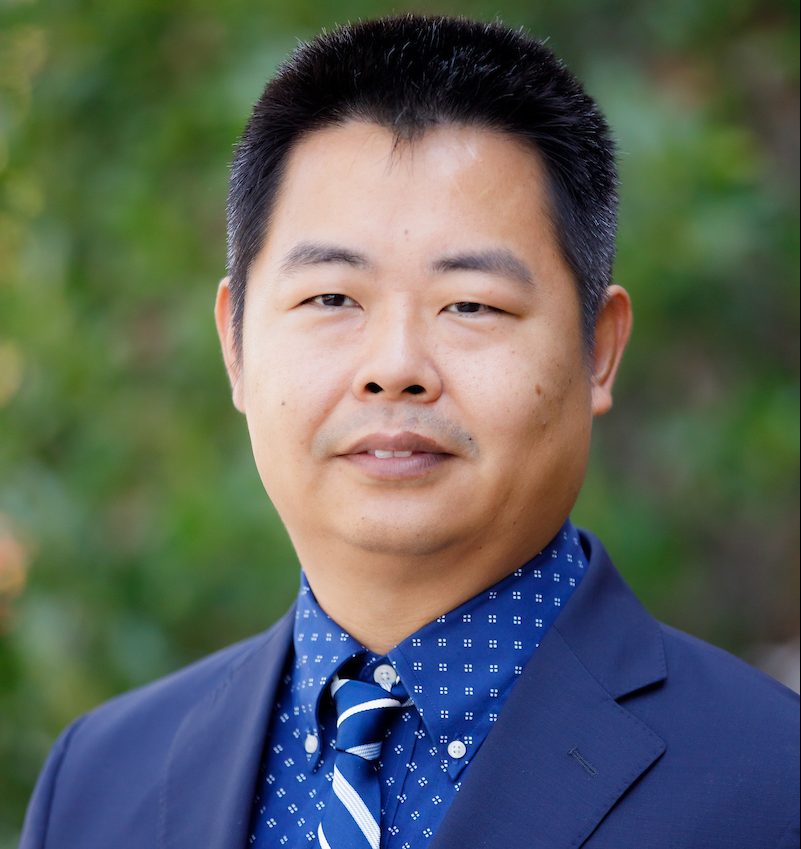
Illya V. Hicks is a Professor in the Computational and Applied Mathematics Department at Rice University. He holds a PhD from Rice University (2000) and a BS from Texas State University (1995). His research focuses on combinatorial optimization, integer programming, graph theory, and matroid theory, with applications in social networks, cancer treatment, and network design. He has advised numerous doctoral, post-doctoral, and masters students. Education: PhD and MA in Computational and Applied Mathematics, Rice University, 2000 BS in Mathematics, Texas State University, 1995 Research Interests: Utilizing graph decomposition techniques to solve NP-complete problems, including branch decompositions and matroid circuit problems. Applications include sensor network design, healthcare logistics, and algorithmic graph theory. Awards: Recognized with the 2015 Presidential Mentoring Award (Rice University), 2010 Forum Moving Spirit Award (INFORMS), and the 2005 Optimization Prize for Young Researchers. Grants and Projects: Includes NSF-funded research on branch decomposition techniques, submodular optimization, and healthcare service distribution. Active in promoting minority participation in operations research through travel grants and mentoring initiatives. Labs/Teams: Engaged in collaborative research on graph algorithms, combinatorial optimization, and interdisciplinary applications in healthcare and engineering.
Carolina Alves is an Associate Professor in Economics at University College London's Institute for Innovation and Public Purpose (IIPP). She holds a distinguished position as a Fellow in Economics at Girton College, University of Cambridge, and serves on the Leadership Team of the UCL Centre for Capitalism Studies. Her academic journey spans prestigious institutions including SOAS, University of London for her PhD, and Unesp and Unicamp in Brazil for her undergraduate and master's degrees. BSc in Economic Science from Unesp (Brazil) MPhil in Sociology of Labour from Unicamp (Brazil) PhD in Economics from SOAS, University of London Joan Robinson Research Fellow in Heterodox Economics at Girton College, University of Cambridge Dr. Alves' research spans critical areas including Critical Macro-Finance, Structuralist Macroeconomics, and the Decolonisation of Economics, with influences rooted in Classical Political Economy, Latin American Structuralism, Dependency Theory, and Marxian economics. Her work critically examines the international monetary system, power relations in economic systems, and Eurocentric limitations in economic theory. Her recent publications demonstrate a strong focus on heterodox economic approaches, with particular attention to government bonds, international financial subordination, and the historical development of economic thought. Her eight most recent publications reveal a consistent research trajectory examining the intersections of political economy, financial systems, and economic theory development, with increasing attention to decolonial perspectives in economics. This work has garnered significant attention across academic and policy circles, with multiple citations and social media engagement. Joan Robinson Research Fellowship in Heterodox Economics at Girton College, University of Cambridge Co-founder of Diversifying and Decolonising Economics initiative Co-editor of The Developing Economics blog Trustee for Cambridge Trust for New Thinking in Economics As an educator, Dr. Alves serves as module leader for 'New Economic Thinking and Public Value' and co-leader for 'Rethinking Capitalism' at UCL. She is deeply engaged in initiatives aimed at transforming economics education, particularly through the Diversifying and Decolonising Economics movement which she co-founded. Her leadership extends to multiple advisory roles including the Rebuilding Macroeconomics Advisory Board, Progressive Economy Forum Council, and Positive Money Advisory Panel.
Dr. Jiaqi Gong serves as Associate Professor in Computer Science and Adjunct Associate Professor in Mechanical Engineering at The University of Alabama's College of Engineering, while directing the Alabama Center for the Advancement of Artificial Intelligence. His academic foundation includes: B.S. in Engineering, China University of Geoscience (2004) Ph.D. in Engineering, Huazhong University of Science and Technology (2010) Dr. Gong's research pioneers human-AI convergence through cyber-physical systems and smart health technologies, developing mobile/wearable platforms to enhance human perceptual, cognitive, and physical capabilities. His work spans artificial intelligence, machine learning, computer vision, and IoT with applications in healthcare, environmental monitoring, and education. The Sensor-Accelerated Intelligent Learning (SAIL) laboratory he founded drives innovation in behavior change interventions, human movement modeling, and educational data mining. Recent publications reveal strong interdisciplinary trends: healthcare AI dominates with medication adherence prediction and surgical classification systems, while environmental applications feature flood-risk communication and drought analysis. His work increasingly integrates generative AI and LLMs across domains, demonstrating methodological innovation in federated learning, knowledge graphs, and explainable storytelling frameworks. Notable recognitions include: Best Student Paper Award, IEEE/ACM Connected Health Conference (2022) Best Student Paper Award, Body Sensor Networks Conference (2019) Data Challenge Win, IEEE Biomedical Health Informatics (2018) Best Paper Award, Body Area Networks Conference (2014) Best Demonstration Award, IEEE Wireless Health Conference (2014) Dr. Gong leads significant funded projects including a $2M CDC/NIOSH grant for first responder safety and $3M NSF funding for hydrologic research. As SAIL laboratory director, he mentors students in developing clinically deployed technologies for multiple sclerosis, dementia, and mental health. Future work focuses on scaling AI applications in chronic disease management and climate resilience through the Alabama AI Center. The SAIL laboratory (founded 2017) operates as a multidisciplinary hub developing wearable/mobile systems for health applications, with active collaborations across medical clinics and engineering departments for real-world deployment of behavior change interventions and movement analysis tools.
Prof. Dr. Christian Breitsamter is a Professor at the Technische Universität München (TUM), leading the Chair of Aerodynamics and Fluid Mechanics within the TUM School of Engineering and Design. He has held this position since 2007 and has been a member of key committees such as the ICAS Programme Committee and STAB-Programmleitung. His research focuses on aerodynamics of aircraft and rotorcraft configurations, including vortex dynamics, aeroelasticity, and fluid-structure interaction. Education: PhD in Aerodynamics (1997) Master’s in Aerospace Engineering (1989) Research Interests: Prof. Breitsamter’s work spans experimental and numerical studies of high-agility aircraft, helicopter aerodynamics, and advanced wing designs. Key areas include leading-edge vortices, gust load mitigation using flexible wings, and flow control techniques. His group investigates cutting-edge topics like deep learning for buffet prediction and hybrid neural networks for aerodynamic modeling. Awards: Willy Messerschmitt Preis (1999) AIAA Associate Fellow (2007) Advising & Grants: While specific student names are not listed, his research involves collaborative projects with industry partners (e.g., RACER Compound Helicopter) and EU initiatives like the FURADO program. His team contributes to the NFDI4ING infrastructure for engineering data. Labs/Teams: Active in the Aerodynamics Wind Tunnel facilities (Windkanäle A/B/C) and leads the SAGITTA flying wing demonstrator project. His group also explores membrane wings and elasto-flexible morphing technologies.
Steven Klein is a Senior Lecturer in Political Theory at King’s College London’s Department of Political Economy. He holds a PhD from the University of Chicago and previously taught at the University of Florida. His research focuses on democratic theory, political economy, welfare state institutions, and European integration. He has received an ERC Starting Grant for his project on systemic risk and democracy, and fellowships from the European University Institute and the American Academy in Berlin. Education: BA (Honours) in Political Science from the University of British Columbia (2008), MA (2012) and PhD (2016) in Political Science from the University of Chicago. His work examines democratic potential in welfare struggles, Karl Polanyi’s theories, and contemporary finance/debt politics. He leads research groups on political theory, PPE, and global inequality. Key awards include the Berlin Prize Fellowship and ERC funding. His book The Work of Politics: Making a Democratic Welfare State (2020) explores democratic welfare institutions. Current projects include a global history of trade unions and a study of systemic risk’s impact on democracy. Advising: No listed students. Active in research groups like the Political Theory Research Group and the Global South Research Group. He also contributes to public discourse through articles in Foreign Policy and The Berlin Journal .
Minghao Qi is a Professor in the Department of Electrical and Computer Engineering at Purdue University's College of Engineering, West Lafayette. His research focuses on integrated photonics systems for optical communications, quantum information, and precision metrology applications. Professor Qi's work spans several critical photonics domains: Design and application of microresonator-based optical frequency combs (Kerr combs) Silicon and silicon nitride integrated photonic circuits Thin-film lithium niobate devices for nonlinear optics Quantum information processing using frequency-bin entangled photons Photonic neuromorphic computing with machine learning co-design Optical sensors and time-of-flight ranging systems Analysis of his 2022-2025 publications reveals three dominant research vectors: (1) Vernier microcombs for optical atomic clocks and RF stabilization, (2) Trident edge coupler architectures for octave-spanning nonlinear processes on lithium niobate, and (3) Physics-informed neural networks applied to photonic device design and signal processing. His recent work demonstrates strong convergence between integrated photonics, quantum technologies, and machine learning.
Annie BLANDIN is an Enseignant Chercheur (Professor) at IMT Atlantique, a leading French technological university, where she is affiliated with the Department of Network Systems, Cyber Security and Digital Law at the Rennes campus. Her academic work bridges legal studies and digital technology, focusing on the evolving relationship between law, governance, and the digital world. Professor BLANDIN's research interests center on digital law and governance, with particular emphasis on European digital sovereignty, data protection frameworks, internet regulation, telecommunications law, and the intersection of market forces with digital rights. Her work critically examines how legal frameworks can address the power dynamics between large digital platforms and nation-states, exploring whether law can serve as a tool for digital sovereignty rather than merely accommodating existing technological and economic power structures. Her recent publications (2020-2024) reveal a consistent focus on European regulatory approaches to digital challenges, with particular attention to data sovereignty, digital market regulation, and the geopolitical dimensions of internet governance. Her work demonstrates a sophisticated understanding of how digital sovereignty operates both as a factual reality shaped by platform dominance and as a legal construct that can be shaped through regulation and ethical frameworks. The research shows increasing attention to practical implementation challenges of digital rights, such as data portability, and the international dimensions of digital governance, particularly regarding EU-Asia and EU-Canada relations. Professor BLANDIN has maintained a productive academic career spanning nearly three decades, with publications dating back to 1996. Her early work focused on telecommunications regulation within the European context, evolving to address broader digital governance issues as technology advanced. She has authored significant books including Droits et souveraineté numérique en Europe (2016) and L'Union européenne et internet : entre logique de marché et préoccupations citoyennes (2001), demonstrating her longstanding engagement with the legal and policy challenges posed by digital technologies. Her scholarly contributions appear across various formats including peer-reviewed journal articles, conference papers, book chapters, and research reports. She frequently collaborates with other scholars from diverse disciplines, reflecting the interdisciplinary nature of digital governance issues. Her work has been cited in academic and policy contexts, particularly regarding European approaches to digital sovereignty and data protection.
Steven Kelts is a Lecturer at Princeton University, affiliated with the School of Public and International Affairs (SPIA) and the Department of Computer Science . He leads the Integrated Ethics in CS program and has served as Director of the non-profit All Tech Is Human. Research Focus: Kelts examines ethical frameworks in technology innovation, historical political economies, and the intersection of democratic theory with corporate responsibility. His work spans Measuring ethics education in computing Evolving corporate structures for ethical action Locke's economic justice theories Machiavelli's republican ideals Madison's institutional designs Publications reveal trends in: Utilitarian logic in Agile teams Roman censorship models 17th-century English economic debates Mill's social value legislation Scientific Recognition: Recipient of Princeton's Council on Science and Technology grants for Agile Ethics program Google seed grant for corporate ethics frameworks University-wide award for GradFutures AI ethics leadership Advisory Roles: Includes ethics advisor to the Responsible A.I. Institute and institutional design mentor for political theory projects.
Uwe Flick is a Seniorprofessor in the Department of Education and Psychology at Freie Universität Berlin, specializing in Qualitative Social and Education Research. He has held professorships at Alice Salomon University and Hannover Medical School and is internationally recognized for his contributions to qualitative methodology. Education: Dr. phil. from Freie Universität Berlin (1988), Habilitation in Psychology from Technical University of Berlin (1994). Professional Affiliations: Freie Universität Berlin (2013–present, Seniorprofessor since 2022), Alice Salomon University (2004–2013), Hannover Medical School (1996–1997). His research centers on qualitative methods , social representations of health and illness , chronic illness , migration , and vulnerability . He investigates the lived experiences of marginalized groups, including chronically ill youth, homeless adolescents, and refugees, often employing triangulation and mixed methods to deepen understanding. The 15 most recent publications highlight his sustained focus on advancing qualitative research methodology—editing handbooks, writing foundational texts, and refining concepts of research quality, triangulation, and design. Simultaneously, his empirical work explores health communication, peer relationships, and integration challenges among vulnerable populations, demonstrating a powerful integration of methodological innovation with socially relevant inquiry. Scientific Awards: Lifetime Achievement Award in Qualitative Inquiry, ICQI (2019) Flick actively advises doctoral students through his Promotionskolloquium and has secured substantial research funding for projects on refugee integration, sleep disorders, and chronic illness. His editorial roles in journals like Qualitative Research , Journal of Health Psychology , and Sozialer Sinn , and his leadership in book series such as Qualitative Sozialforschung , underscore his influence in shaping the field. He is a central figure in qualitative research communities, frequently engaging as a visiting scholar and professor across Europe and globally. He leads a research team at Freie Universität Berlin, supervising master’s and doctoral projects on topics like peer relations, health concepts, and migration, fostering the next generation of qualitative researchers.
Christine L. Williams is Professor of Sociology and the Elsie and Stanley E. (Skinny) Adams, Sr. Centennial Professor in Liberal Arts at the University of Texas at Austin. She received her Ph.D. in sociology from the University of California, Berkeley and served as the 111th President of the American Sociological Association in 2020. Her work focuses on gender, race, and class inequality in workplace settings across various industries. Williams' research examines how social inequalities become embedded in organizational structures and workplace cultures. Her scholarship spans multiple domains including gender atypical occupations, retail work, and the oil and gas industry. She has conducted extensive research using qualitative methods to understand workplace dynamics, particularly focusing on gender, sexuality, and power relations in professional settings. Her publications reveal trends in workplace inequality, particularly how diversity initiatives often fail to address systemic issues. Williams' work shows that while companies may implement diversity programs, economic downturns often lead to disproportionate layoffs of women and minorities, allowing industries to revert to their white male cores. Her research demonstrates how organizational gaslighting occurs when companies maintain rhetoric about diversity while implementing practices that undermine it. Jessie Bernard Award from American Sociological Association Rosabeth Moss Kanter Career Award from ASA section on Occupations, Organizations, and Work Distinguished Lecturer Award from Sociologists for Women in Society Feminist Mentor Award from Sociologists for Women in Society Williams has chaired the Department of Sociology at UT Austin from 2010-2014 and edited the journal Gender and Society from 2003-2006. She teaches courses in gender, sexualities, labor and labor movements, and qualitative research methods. Her research has been supported by various academic institutions and has influenced scholarship on workplace inequality across multiple disciplines.
Barbara Applebaum is a Professor in the Department of Cultural Foundations of Education at Syracuse University's School of Education. She specializes in social justice pedagogy, white complicity, and moral education. Her research focuses on addressing systemic inequities in education through critical whiteness studies and epistemic justice frameworks. Education: Ph.D. in Moral and Multicultural Education, University of Toronto (1994) M.A. in Moral Development & Education, Hebrew University of Jerusalem (1990) B.A. in Philosophy/Education, Hebrew University of Jerusalem (1987) Research Interests: Applebaum's work examines white educators' moral responsibility, willful ignorance in educational contexts, and strategies to dismantle complicity in racial hierarchies. She critiques liberal discourses that obscure systemic racism and advocates for vigilant humility in pedagogy. Teaching: Recent courses include 'Critical Whiteness Theory and Education' and 'Epistemic Injustice in Education.' She prioritizes curricula that center marginalized voices and challenge dominant narratives. Service: Serves on Syracuse University's Senate committees, including the Provost’s Advisory Council for Tenure and Promotion. Editorial roles include the Studies in Philosophy and Education and Whiteness and Education . Labs/Teams: Engaged in collaborative projects with the Complicity Network and the Philosophy of Education Society, focusing on ethical pedagogy and social justice advocacy.
Jan Eeckhout is an ICREA Research Professor at Pompeu Fabra University (UPF) in Barcelona, specializing in macroeconomic theory, labor markets, and urban economics. His work focuses on market power dynamics, wage inequality, and technological impacts on labor and urban systems. He holds a PhD from the London School of Economics (LSE). Eeckhout has received a prestigious ERC Advanced Grant (€2.45M) for research on 'Macro Market Power and Distribution.' He authored the influential book The Profit Paradox (2021), exploring how dominant firms reshape labor markets and economies, translated into multiple languages. His research frequently appears in top journals like the Quarterly Journal of Economics and Review of Economic Studies. Research Interests: Macro-Labor Theory, Labor Markets, Urban Economics, Market Power, and Economic Inequality. Recent work examines technological origins of labor market stagnation, IT-driven urban polarization, and wealth effects on worker productivity. Advising and Grants: Supervises PhD students (e.g., Milena Djourelova, David Puig) and collaborates with institutions globally (CEMFI, EUI, Sciences Po). His team includes co-authors like Jan De Loecker and Philipp Kircher. Active in policy discussions via think tanks and media outlets like VoxEU and the NYT. Labs/Teams: Leads a diverse research group at UPF, with projects on market power, urban economics, and labor dynamics.
Dr. Omotoyosi Odukomaiya serves as Assistant Professor of English at Hope College, where she commenced her teaching career in Fall 2023. Her role encompasses instructing courses in American ethnic literature, Black science fiction, and women's literature while advising the English Club to cultivate critical literary engagement. Her academic credentials include: Ph.D. in English Literature, Southern Illinois University (2023) MBA, Webster University (2016) M.Sc. in Marketing Communication, University of Birmingham, UK (2010) B.A. in English Language and Literature, Redeemer’s University, Nigeria (2005) Dr. Odukomaiya's research centers on Black science fiction and women's literature , critically examining intersections of race, gender, and technology. Her work investigates how marginalized voices challenge dominant narratives through decolonial futurism , historical trauma analysis, and diasporic identity construction. She emphasizes the transformative potential of speculative fiction in envisioning liberated futures for Black communities globally. Her scholarship consistently explores Africanfuturism and feminist science fiction through analyses of authors like Nnedi Okorafor, Tade Thompson, and Octavia Butler. Recurring themes include diaspora identity negotiation, historical reclamation, and gendered resistance within speculative frameworks, bridging literary criticism with critical race and gender theory. Scientific Awards: None documented in source materials As faculty advisor for Hope College's English Club, Dr. Odukomaiya mentors students in literary exploration and critical discourse. She develops curricula that interrogate cultural representations and center diverse literary traditions, prioritizing inclusive pedagogy that examines identity, power structures, and narrative sovereignty across historical and contemporary contexts.
Ju Hui Judy Han is an Associate Professor in Gender Studies at the University of California, Los Angeles, with additional affiliations at the Center for Korean Studies, Center for the Study of Women, and Asia Pacific Center. Her office is located in 1117 Rolfe Hall at UCLA. As a cultural geographer, Professor Han is committed to building critical and transnational conversations concerning gender, sexuality, and activism, regularly contributing to community-based projects and public events both on campus and beyond. Professor Han received her Ph.D. in Geography from UC Berkeley and her B.A. in English and Women's Studies from UC Berkeley. Her educational background bridges humanities and social sciences, providing a strong foundation for her interdisciplinary research. Her research interests span (Im)mobilities, Religion and difference, conservatism, LGBTQ/queer politics and activism, Comics and graphic novels, Korean studies, and Cultural geography. Professor Han approaches these topics through a critical lens that emphasizes transnational perspectives, particularly focusing on South Korea and the Korean diaspora. Her work often examines how power operates through spatial arrangements and how marginalized communities navigate and resist dominant structures. She has developed innovative approaches to studying activism through comics and graphic nonfiction, creating accessible yet theoretically rich analyses of complex social phenomena. Professor Han's publications reveal consistent engagement with queer politics in South Korea, religious movements, and transnational activism. Her work shows a progression from analyzing specific case studies to developing broader theoretical frameworks about resistance, solidarity, and spatial politics. The recurring themes across her publications include the intersection of religion and queer politics, the spatial dimensions of activism, and the transnational connections between social movements. UCLA Center for the Study of Women/Barbra Streisand Center, inaugural Barbra Streisand Fellowship on Truth in the Public Sphere Podcast Support Grant, University of California Humanities Research Institute (UCHRI), 2021-22 Society of Hellman Fellows Award, UCLA, 2021-22 UCLA Faculty Career Development Award, 2018-2019 Co-Applicant, 'Protesting Publics in South Korea,' SSHRC Insight Grant (PI: Jennifer Jihye Chun), 2015-2020 Co-Investigator, 'Urban Aspirations in Seoul: Religion and Megacities in Comparative Studies,' Max Planck Institute, 2011-2017 Professor Han actively contributes to public discourse through media appearances and community engagement. She has received significant research funding supporting her work on South Korean protest movements and urban religious dynamics. Her teaching portfolio is diverse, including the Gender Studies undergraduate core class on power (102), senior capstone seminars (187), elective courses on transnational feminist politics (131) and comics and graphic nonfiction (185), as well as graduate seminars on feminist geographies, queer temporalities, and research design.