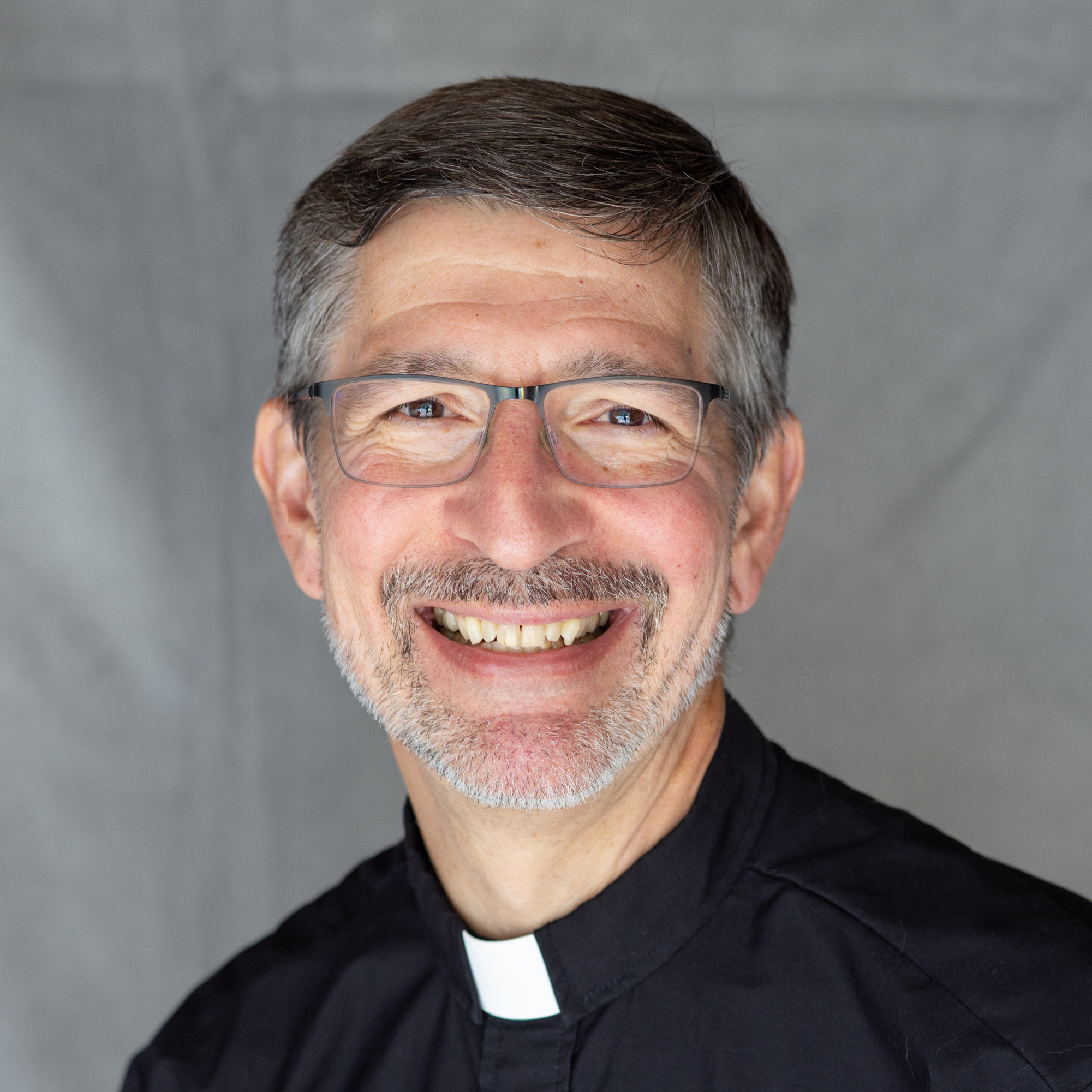
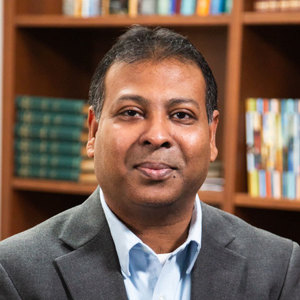
Charles Schulz is a Professor of Theology at the University of Chicago's College of Theology, Arts & Humanities, with prior tenure at Concordia University (2001–2024) and pastoral experience at St. Thomas Lutheran Church (2005–2014). His academic journey includes degrees from Concordia University, Concordia Seminary, Washington University, and the University of Virginia. His research focuses on Patristic Exegesis, Reformation Theology, and early Christian biblical interpretation. Key publications include his 2020 PhD dissertation on Patristic citations of Psalm 82:6 and translations of Martin Luther's sermons (2017–2018). His work bridges ancient and Reformation-era theological methods, emphasizing pastoral motives in exegesis. Recent presentations address topics like Patristic interpretations of Scripture and the impact of medical science on faith. He has received prestigious awards including the E. J. Otto Award (1998) and the University of Virginia Presidential Scholarship. His teaching excellence was recognized at Concordia University in 2022–2023. Schulz actively engages in theological commissions and academic symposia, contributing to both scholarly and pastoral discourse.
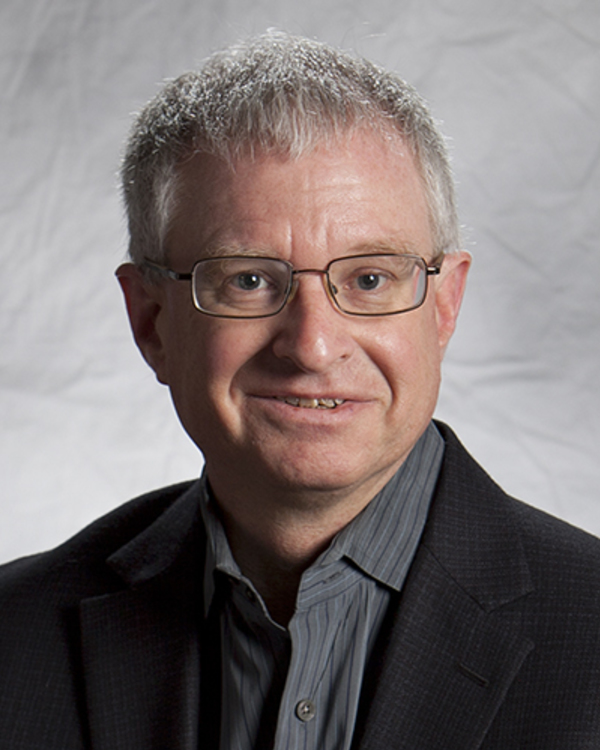
Professor Philip G. Ziegler is a theologian specializing in systematic theology, historical theology, and ethics. He holds the personal chair of Professor of Christian Dogmatics at the University of Aberdeen's School of Divinity, History, Philosophy & Art History. Previously, he taught at the Atlantic School of Theology in Canada and held postdoctoral fellowships at Princeton University. Ordained in the United Church of Canada since 1996, he also serves as an associated elder at St Machar Cathedral and Trustee of the Church of Scotland's General Assembly. His research focuses on Dietrich Bonhoeffer, Karl Barth, and apocalyptic theology, with recent work exploring Christology, ethical responsibility, and divine freedom. Education : BA (Hons.), MA (University of Toronto) STL (Regis College) MDiv, ThD (Emmanuel College, Victoria University) Research Interests : Ziegler's work bridges historical theology and contemporary ethical questions, particularly through Bonhoeffer's theology of resistance, Barth's soteriology, and Kierkegaard's existentialism. He emphasizes apocalyptic motifs in Reformed thought and their implications for Christian ethics. Recent projects include global theology's engagement with Bonhoeffer and the interplay between divine grace and human freedom. Key Contributions : His 2024 Warfield Lectures on 'God's Adversary and Ours' explore diabolical theology, while his 2018 book Militant Grace reimagines Pauline apocalypticism. He co-edits volumes on modern German theology and chairs major theological committees at Aberdeen. Academic Leadership : He has held numerous administrative roles, including Head of School (2009-12), Director of Research (2014-17), and Co-Director of the Aberdeen Centre for Protestant Theology. Current roles include Convenor of the Hay of Seaton Lectureship Committee and elected University Senate member. Awards : Senior Fellow of the UK Higher Education Academy (2024). Labs/Teams : Co-director of the Aberdeen Centre for Protestant Theology, fostering interdisciplinary dialogue on Reformed traditions and modern theology.
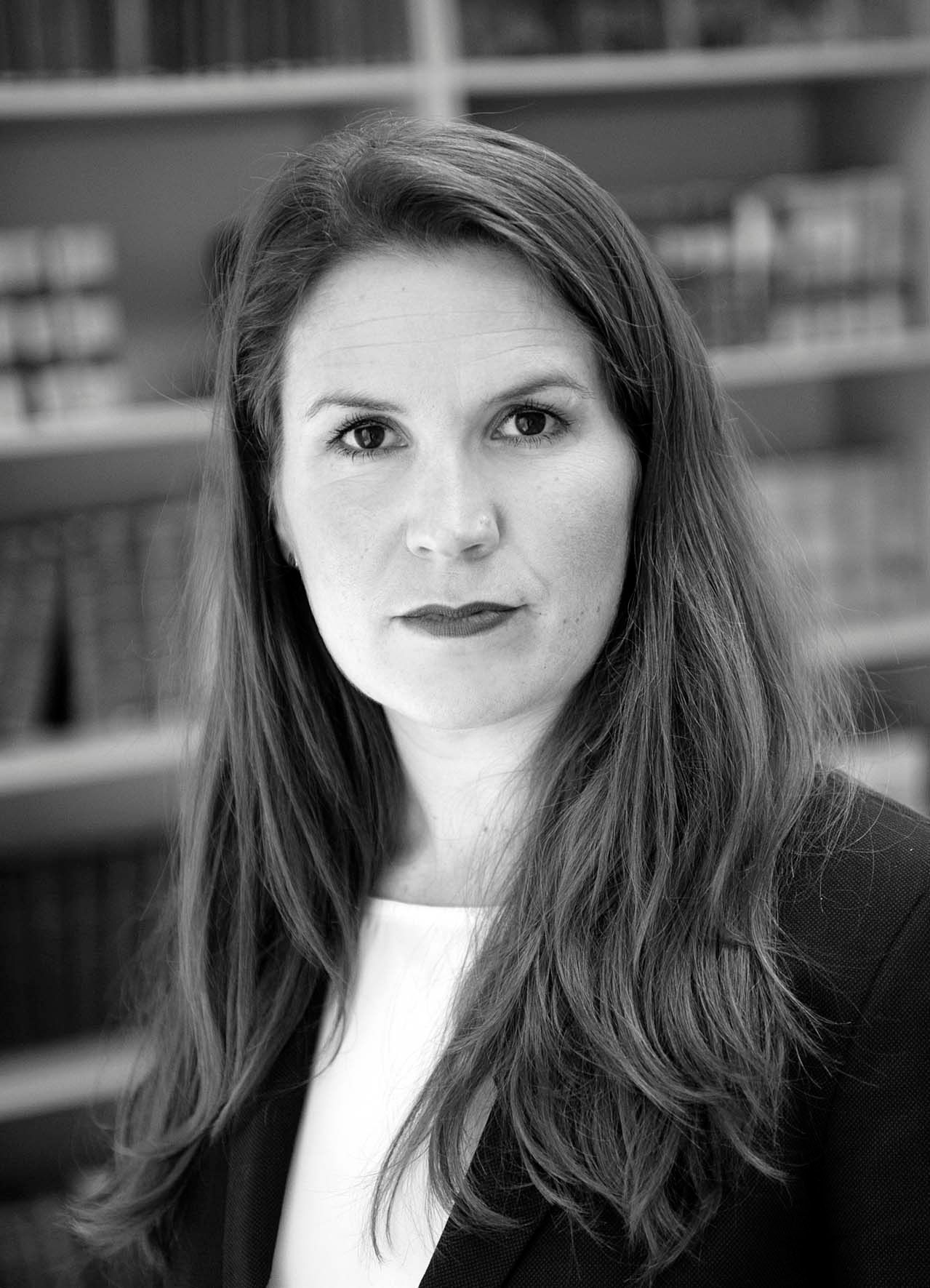
Prof. Dr. Johanna Rahner serves as Professor of Dogmatics, History of Dogma and Ecumenical Theology at the Catholic Theological Faculty of the Eberhard Karls University of Tübingen since 2014. She also holds the position of Director of the Institute for Ecumenical and Interreligious Research at the same institution. Her research interests span a wide range of theological topics including: Biblical Hermeneutics for Systematic Theology (especially Christology), Ecumenical theology and its ecclesiological problem areas, the relationship between religion, culture, educational processes, politics and society, interaction of contemporary culture with worship and theology of the sacraments, theoretical foundations of dialogue between world religions in a globalized world, relationship between reason and faith, theology and philosophy, theology and natural sciences, patchwork religiosity and subjective religious pluralism, and religiosity of children and adolescents with special consideration of youth and cult literature and pop music. Prof. Rahner's publications demonstrate a consistent focus on contemporary challenges facing the Catholic Church, ecumenical dialogue, and the intersection of theology with modern culture. Her work frequently addresses the Second Vatican Council's implications for contemporary theology, the relationship between science and faith, and the practical application of theological concepts in interreligious contexts. She has made significant contributions to understanding eschatology, ecclesiology, and the practical application of theological concepts in interreligious contexts. Wissenschaftlicher Beirat des Kuratoriums zur Vorbereitung des Reformationsjubiläums 2017 Ökumenischer Arbeitskreis evangelischer und katholischer Theologen Editorial-Board der Ökumenischen Rundschau Wissenschaftlicher Beirat der Europäischen Melanchthonakademie, Bretten Societas oecumenica AG der deutschsprachigen katholischen Dogmatiker und Fundamentaltheologen Europäische Gesellschaft für Katholische Theologie. Deutsche Sektion e.V. AGENDA – Forum katholischer Theologinnen e.V. Prof. Rahner has been involved in several significant research projects including Moralische Urteilsfindung im säkularen Diskurs als Herausforderung für die christlichen Konfessionen, Intergenerationelle LehrerInnen-Ausbildung, Theorie und Praxis des interreligiösen Lernens, Kirche und Bildungsregime in Lateinamerika, Reformationsgedenken und Ökumene, and Grundfragen theologischer Anthropologie in Auseinandersetzung mit aktuellen naturwissenschaftlichen Modellen. She leads the Institute for Ecumenical and Interreligious Research, which serves as a hub for scholarly research on contemporary challenges in interfaith relations and ecumenical theology.
Gerald McKenny is the Walter Professor of Theology at the University of Notre Dame. His primary research focuses on Moral Theology/Christian Ethics, with expertise in natural and revealed law, the Decalogue, and the ethical implications of biotechnology. He holds a Ph.D. from the University of Chicago. His research interests span Christian ethics, biomedical ethics, biotechnology ethics, religious ethics, and the philosophy of medicine. Notable publications include Biotechnology, Human Nature and Christian Ethics (2018), The Analogy of Grace: Karl Barth’s Moral Theology (2010), and To Relieve the Human Condition (1997). He has authored over fifty articles and co-edited four books, including The Ethical (2003) and Altering Nature (2008). McKenny’s work bridges theology and contemporary ethical challenges, particularly in biotechnology and medical ethics. He is currently completing a second book on Karl Barth’s ethics and developing a Gospel-based Christian ethics framework.
Stephen Bullivant is Professorial Research Fellow in Theology and Sociology at the University of Notre Dame Australia (Sydney Campus), School of Philosophy & Theology, and also Professor of Theology and the Sociology of Religion at St Mary's University, London. He holds doctorates from Oxford (Theology) and Warwick (Sociology), and directs the Benedict XVI Centre for Religion and Society at St Mary's. His research spans the sociology of religion, Catholic theology, atheism, nonreligion, and religion’s interaction with science and technology. Key areas include Catholic disaffiliation, secularization, empirical studies of Christianity, and the abuse crisis in the Church. He has published extensively, including major works like Mass Exodus , The Oxford Handbook of Atheism , and The Cambridge History of Atheism . The recent articles reflect a strong interdisciplinary focus on Catholicism, secular trends, and moral theology. They show a consistent methodological blend of empirical data, sociological analysis, and theological reflection, particularly on British and American religious contexts. Topics include youth commitment, liturgical change, conscience, and ecclesial power structures. Fellow, International Society for Science and Religion (2019–) Fellow, Higher Education Academy (2010–) Fellow, Word on Fire Institute (2019–) Co-director, Nonreligion and Secularity Research Network (2008–14) Prof. Bullivant has led and co-led numerous research grants, including major projects funded by the John Templeton Foundation, Arts and Humanities Research Council, and Porticus UK. He supervises research in theology and sociology of religion and collaborates widely across institutions. He is actively engaged in public scholarship, with media contributions in BBC, The Guardian, The New York Times, and EWTN. He is also involved in editorial work for journals such as Secularism and Nonreligion , Antiphon , and the International Journal for Evangelization and Catechetics .
Andrew Torrance is Professor of Theology at the School of Divinity, University of St Andrews, and Co-Director of the Logos Institute for Analytic and Exegetical Theology alongside Oliver Crisp. He received his doctorate from the University of Otago in 2013, focusing on Søren Kierkegaard's and Karl Barth's theology of conversion. His educational background includes a doctorate from the University of Otago (2013), with a focus on Kierkegaard and Barth's theology of conversion. Prior to his permanent appointment at St Andrews, he launched and led the programme 'Scientists in Congregations Scotland,' exploring constructive conversations about science and faith within church contexts. Professor Torrance's research spans systematic theology (analytic, exegetical, and philosophical approaches), Christian doctrine (creation, Christology, theological anthropology, revelation, pneumatology), 19th-20th century Christian thought (Kierkegaard, Bonhoeffer, Barth), philosophy of religion, and science-theology dialogue. His work consistently bridges theological inquiry with philosophical and scientific frameworks. His recent publications demonstrate a sustained focus on accountability, theological anthropology, and science-theology intersections. A significant trend emerges in how he develops theological concepts that engage contemporary philosophical and psychological frameworks, particularly regarding human flourishing, accountability as a relational virtue, and the nature of religious belief within scientific contexts. $329,372 (NZD) from John Templeton Foundation (2020-2023) for 'Theological Anthropology, Fundamental Need, and Human Flourishing' $134,966 (USD) from Templeton Religion Trust (2018-2021) for 'Accountability as a Relational Virtue' $100,000 (USD) from Blankemeyer Foundation (2018-2021) for James Gregory lectures £1,584,754 from Templeton Religion Trust (2016-2020) for Logos Institute $50,000 (USD) from John Templeton Foundation (2016-2018) for James Gregory lectures $3,500 (USD) for project on Christian conversion (2016-2017) £509,389 from John Templeton Foundation (2013-2016) for 'Scientists in Congregations, Scotland' Professor Torrance supervises postgraduate research students, with 14 students listed in his supervised work. He teaches courses including Theology: Issues and History, The Theology of Søren Kierkegaard, Theological Anthropology, Analytic Theology: God, History, and Revelation, Reconciliation: Divine and Human, Persons: Divine and Human, and Pauline Theology. He serves as theological advisor for Learn, member of the Theological Forum for Church of Scotland, and member of the Advisory Council for the Grasping the Nettle initiative in Scotland.
Prof. Dr. Hilary Anne-Marie Mooney serves as Professor of Catholic Theology and Religious Education at the University of Education Weingarten, Germany, a position she has held since her 2009 appointment. Previously, she was appointed "außerplanmäßige Professorin" at Albert-Ludwigs-Universität Freiburg in 2006 and held visiting professorships at Weingarten (2007-2008). Her academic career spans multiple institutions including Boston College, Eberhard-Karls-Universität Tübingen, and Albert-Ludwigs-Universität Freiburg, where she conducted habilitation research from 1998-2000 and 2001-2005. Education: Bachelor of Arts in Philosophy, Ancient Greek and Latin, University College Dublin Baccalaureate in Divinity in Philosophy and Theology, Milltown Institute of Theology and Philosophy, Dublin Doctorate in Theology, Phil.-theol. Hochschule Sankt Georgen, Frankfurt am Main (1991) Habilitation in Dogmatics, History of Doctrine, and History of Theology, Albert-Ludwigs-Universität Freiburg (2003) Dr. Mooney's research centers on systematic theology and historical theology, with specialized expertise in ancient church history and medieval theology. She is internationally recognized for her groundbreaking work on Johannes Scottus Eriugena's theological framework, particularly regarding theophany and theological anthropology as demonstrated in her monograph Theophany: The Appearing of God According to the Writings of Johannes Scottus Eriugena (2009). Her scholarship consistently bridges patristic sources (especially Gregory of Nyssa) with contemporary theological challenges, exploring themes of imago Dei, eschatology, and mystical theology within early Christian thought. She maintains active dialogue with modern theologians including Hans Urs von Balthasar and Bernard Lonergan, examining intersections between theological aesthetics and anthropological foundations. Analysis of her 15 most recent publications reveals three dominant research trajectories: first, sustained engagement with Eriugena's thought across multiple dimensions including creation theology, wisdom literature, and sin theology; second, comparative studies of patristic writers (particularly Gregory of Nyssa) on eschatological themes and imago Dei concepts; third, contemporary applications of historical theology to issues of pluralism, tolerance, and scriptural interpretation. Her methodological approach consistently integrates historical-critical analysis with hermeneutical reflection, demonstrating how ancient theological frameworks address modern anthropological and ecclesiological questions. Scientific Awards: Lonergan Fellowship at Boston College (1990) DFG Habilitation Fellowship (1998-2000) Dr. Mooney has provided significant academic leadership through her service on the executive board of the German section of the European Society for Catholic Theology (2015-2023) and editorial roles including co-editing the series Ökumenische Religionspädagogik (2009-present). While specific grant details beyond her DFG fellowship are not enumerated, her sustained research output indicates continuous funding support. Her teaching encompasses systematic theology, historical theology, and religious education methodology, though specific student mentorship details are not provided in the source text. She maintains active international scholarly engagement through presentations at major conferences including the International Conference on Patristic Studies in Oxford and the Annual Lonergan Workshop at Boston College. Her collaborative work extends across European theological networks, particularly through her involvement with Pro Oriente publications and the European Society for Catholic Theology. Current research directions appear focused on integrating patristic anthropology with contemporary theological challenges, as evidenced by her 2024 publications addressing memoria, transformation, and biblical-doctrinal roots within modern theological frameworks.
Synnøve Ugelvik is Professor at the Department of Public Law, Faculty of Law, University of Oslo, where she began as an associate professor in 2016 and was promoted to professor in 2023. She served as deputy head of the department from 2018-2021. Currently (2024-2025), she is on research stay at Vrije Universiteit in Amsterdam, conducting a project on Norwegian police in Europol. Ugelvik's research centers on the state as a research object, with particular focus on police control of citizens and its effects. Her work examines Norway's position within international contexts, especially regarding EU relations, immigration law, and international influences on Norwegian governance. Her scholarship integrates legal theoretical perspectives with human rights frameworks. Analysis of her publication record reveals a consistent focus on police cooperation, sovereignty, and the evolving relationship between national states and supranational entities. Her work demonstrates increasing sophistication in examining how non-EU countries like Norway participate in EU police cooperation mechanisms while maintaining formal independence. Recent publications show growing attention to digital aspects of criminal law and the practical implementation of legal frameworks. Ugelvik teaches Police and Prosecution Law (JUS5506), Criminal Procedure, and lectures in Social Control and Criminology of Globalization. She supervises master's theses in these and related subjects. She is affiliated with multiple research groups including International Law and International Governance, the Research Group for the Study of Punishment (2016-2022), and Criminal Law and Criminal Procedure. Her doctoral work, completed in 2014 with an updated book in 2018, focused on Norway's relationship with EU police cooperation.
Jan Reitzner is a Research Associate at the Chair of Church History I (Institute for Late Middle Ages and Reformation) at Eberhard Karls University of Tübingen. He holds a Dr. theol. (2022) from Georg August University of Göttingen and was awarded the 2023 Doctoral Award of the University Association. As an ordained volunteer pastor in the Evangelical Lutheran Church of Hanover (since 2024), he combines academic and pastoral roles. His research focuses on medieval monasticism, liturgical practices, and Reformation-era theology, with particular attention to 12th-century French monasticism and the Gregorian Mass. He has held a DFG-funded research position (2018-2021) and served as a vicar in Bexhövede parish (2021-2023). Education PhD (Dr. theol.) in Protestant Theology, Georg August University Göttingen (2022) Scholarship holder, Konrad Adenauer Foundation (2013-2018) Studies in Protestant Theology at Universities of Wuppertal, Tübingen, Jerusalem, and Göttingen (2013-2018) Church examination, Evangelical Lutheran Church of Hanover (2018) High school diploma, Carolinum High School Osnabrück (2013) Research Interests Dr. Reitzner's work bridges medieval monastic studies and early modern Reformation history. He examines how monastic traditions influenced late medieval liturgical practices ( Die Verba Seniorum monograph, 2022) and explores theological debates in Reformation-era Europe. His recent work on the Gregorian Mass (ZKG 2024) highlights liturgical developments in 12th-century France. He also engages in systematic theology through translations of Bruce McCormack's works on Barthian theology. Publications Trends His publications emphasize interdisciplinary approaches: combining historical analysis (e.g., medieval liturgy studies) with systematic-theological reflections (e.g., translations of McCormack). Recent reviews demonstrate expertise in late medieval piety, Reformation-era doctrine, and early modern European church networks. Awards & Grants Doctoral Award of the University Association (2023) DFG Project: Reception of Apophthegmata Patrum (2018-2021) Labs/Teams Member of the Institute for Late Middle Ages and Reformation at Tübingen. Active in scholarly societies including the Wissenschaftliche Gesellschaft für Theologie (WGTh), Mediävistenverband, and Societas mediaevistica evangelicorum theologicorum.
Dr. David Williams serves as Vice Provost for Academic Affairs and Dean of Faculty in Theology at Belmont Abbey College. He holds dual Ph.D.s in Political Science and Theology from Boston College, complemented by a B.A. from Georgetown University. His research focuses on American and Medieval Political Thought, History of Christian Exegesis, Monasticism, Natural Law, and New Testament Political Philosophy. He actively engages in academic presentations and publications across theological disciplines. Dr. Williams teaches courses such as 'Jesus and Salvation,' 'Paul and his Letters,' and 'World Religions.' His scholarly contributions include works on Thomas Aquinas, biblical hermeneutics, and Suarezian natural law theory. Though no formal awards are listed, his academic leadership roles reflect institutional recognition. He maintains involvement with monastic communities and the Abbey Players outside the classroom.
Ashish Naidu is a Professor of Theology at the Talbot School of Theology, Biola University. He specializes in historical theology and patristics, focusing on the theological contributions of figures like John Chrysostom and Cyril of Alexandria. His research bridges early Christian thought with practical theological application, emphasizing Christology, soteriology, and biblical authority in the early church. Naidu holds a Ph.D. from the University of Aberdeen and an M.A. from Oral Roberts University. His publications include Transformed in Christ: Christology and the Christian Life in John Chrysostom and multiple articles on patristic exegesis, early church aesthetics, and intercultural theology. He has served in pastoral roles across Asia, North America, and Europe, advocating for cross-cultural theological engagement. His work explores how patristic insights inform contemporary Christian life, particularly through liturgical practices, moral transformation, and intercultural mission. Naidu is an ordained minister and active in evangelism-discipleship ministries, reflecting his commitment to integrating doctrinal depth with practical Christian living.
Filip Sondej is a Researcher at the Department of Cognitive Science within the Faculty of Philosophy at Jagiellonian University in Krakow, Poland. His work bridges cognitive science and artificial intelligence, focusing on critical safety aspects of modern language models and multi-agent systems. His primary research interests include AI safety, LLM unlearning techniques, Chain-of-Thought faithfulness, AI conflict resolution, and digital sentience. Sondej's work addresses fundamental challenges in ensuring that increasingly powerful language models behave safely and align with human values. Analysis of Sondej's publication record reveals a strong interdisciplinary focus combining cognitive neuroscience methodologies with AI safety research. His recent work demonstrates a clear trajectory from traditional cognitive neuroscience investigations toward cutting-edge AI safety mechanisms, particularly in developing methods for removing unsafe behaviors from language models while maintaining functionality. The publications show sophisticated integration of neural network analysis with human cognitive processes. Sondej collaborates extensively with researchers including Anna Grabowska and Magdalena Senderecka, appearing as co-author on multiple publications in high-impact journals such as NeuroImage, Cerebral Cortex, and Journal of Cognitive Neuroscience. His research program bridges theoretical cognitive science with practical AI safety applications.
Dr. Jeremy Otten is a Guest Assistant Professor of New Testament at ETF Leuven and Senior Researcher in New Testament Studies. He holds a Ph.D. in Biblical and Theological Studies (New Testament) from Wheaton College Graduate School (2016), an M.Div. in Pastoral Care from Trinity Evangelical Divinity School (2010), and a BA in English Writing and Biblical Literature from Taylor University (2004). His academic roles also include adjunct professorships at Wheaton College (2012–2017) and guest lectureships in Japan and the U.S. Dr. Otten’s research focuses on New Testament exegesis, particularly exploring themes like social identity, remnant theology, and intertextual connections between biblical narratives. His work often intersects with Lukan theology, Elijah motifs, and early Christian hermeneutics. Key projects include analyzing Luke’s use of Old Testament patterns in Acts and the Synoptic Gospels, studying Markan narratives through socio-rhetorical lenses, and examining Christological developments in Luke-Acts. His publications include monographs like I Alone Am Left: Elijah and the Remnant in Luke-Acts (2021) and edited volumes such as Let God Be True: Perspectives on Romans 3 (2023). He regularly presents at major conferences including the Evangelical Theological Society and Society of Biblical Literature, focusing on topics like Lukan Christology, Markan demonology, and pedagogical strategies for diverse student populations. Dr. Otten is a member of the Society of Biblical Literature and Evangelical Theological Society. His teaching emphasizes interdisciplinary engagement, biblical languages, and formative theological education for pastoral leaders. Current research continues exploring Elijah typology in the New Testament and reception history of patristic exegesis.
Dr. Martin Illert serves as an Adjunct Professor (Apl. Prof.) at the Martin Luther University Halle-Wittenberg's Faculty of Theology, specifically within the Seminar for Eastern Church Studies. His academic journey includes a Doctorate (1997) and Habilitation (2015) in Eastern Church Studies, focusing on theological dialogues between the Evangelical Church in Germany (EKD) and Orthodox Patriarchates since 1959. He has held teaching positions since 2014 and became a Privatdozent in 2016. Additionally, he was appointed an Adjunct Professor at the Lviv Theological Academy in 2016. Current roles include Programme Executive for the Faith and Order Commission at the World Council of Churches (Geneva) and teaching at the Ecumenical Institute Bossey since August 2024. Prior roles include leadership at the EKD's Department for Orthodoxy and Ecumenism (2012–2019) and editorial work for the Ecumenical Review (2014–2019). Research interests encompass Eastern Christian theology, ecumenical dialogues, patristics, and church history with a focus on Balkan and Slavic religious contexts. Major works include studies on John Chrysostom, Bogomilism, and bilateral Orthodox-Protestant dialogues. His awards include the Priest’s Cross from the Ethiopian and Serbian Orthodox Churches (2016), the Gold Medal from Yerevan State University (2017), and the Ehrenplakette from Arad University (2023). He has contributed to academic projects like the "Bogomilism in History and the Present" initiative funded by Bulgaria's Ministry of Education. Publications span monographs, edited volumes, and over 100 articles in journals like ThLZ , Eastern Church Studies , and Revista Teologia . Key projects include co-editing the Eastern Church Identities series and serving on editorial boards for theological journals.
Rev. Prof. John Behr holds the Regius Chair in Humanity at the University of Aberdeen, appointed in 2020. Previously, he served as Dean of St Vladimir’s Orthodox Theological Seminary (1995–2017) and held the Father Georges Florovsky Distinguished Professorship. His work bridges patristic scholarship and contemporary theology, focusing on early Christian thought, Nicaean theology, and theological anthropology. He earned a D.Phil. (Oxford) and D.D. (Melbourne). Research interests include the theology of Irenaeus, Origen, and Gregory of Nyssa, with a focus on Christology, asceticism, and the Council of Nicaea. His major works include The Mystery of Christ (2006), Becoming Human (2013), and critical editions of Origen’s On First Principles (2017). His recent articles explore Nicaean legacy, patristic exegesis, and theological responses to modern challenges. His publications reflect engagement with ecumenical dialogue, biblical hermeneutics, and the intersection of science and faith. Behr’s academic leadership includes directing theology programs and editing series like the Popular Patristics . His contributions emphasize the continuity of early Christian tradition with contemporary theological discourse.