Dr. Maxime Cordeil is a Senior Lecturer in Human Centred Computing at the School of Electrical Engineering and Computer Science, The University of Queensland. His research focuses on Virtual and Augmented Reality technologies for data interaction, interactive visualization systems, and AR interfaces for industry applications. He has authored over 60 publications in top-tier venues such as ACM CHI and IEEE VR, and was nominated as Australia's Field Leader in Computer Graphics in 2021 and 2022. Research Interests: Data visualization, immersive analytics, medical imaging, collaborative systems, and human-computer interaction. Current Projects: Includes embedded visualizations for sports performance, interactive machine learning in 3D environments, and mixed-reality applications in forensic science. PhD Supervision: Actively guiding students in topics like immersive gesture exploration, AR for digital health, and collaborative VR systems. His work bridges theory and practice, with tools like IATK (Immersive Analytics Toolkit) and the MADE-Axes hardware system. He collaborates with industry partners like Raytracer and CSIRO, focusing on applications in space exploration, underwater training, and remote operations. Awards: Multiple best paper recognitions at ISS and CHI, plus industry-driven research grants. Labs: Leads the Immersive Analytics research group at UQ, specializing in embodied interaction and spatial computing.
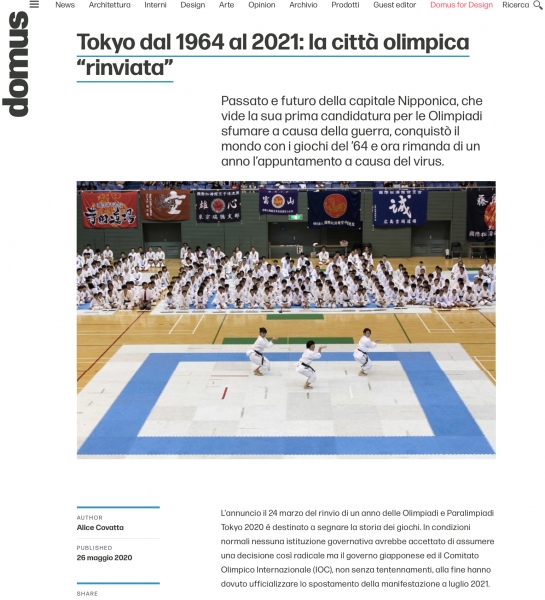
Alice Covatta is an Adjunct Professor at Université de Montréal's Faculty of Planning and School of Architecture, with affiliations to the Centre for Urban Design and Mental Health, co+labo at Keio University, and the Japan Studies Association of Canada. Her work bridges architecture, urban design, and mental health across Europe and Japan. PhD in Architecture and Urban Design (University of Udine, 2015) Postdoctoral Fellow at Keio University (2016-2019) Research interests focus on: Integrating health into urban planning Temporal urbanism in hyper-dense environments Foodscapes as catalysts for community engagement Playable architectural interventions Recent publications analyze Tokyo's liminal spaces, Montreal's ephemeral ecosystems, and cross-cultural comparisons of public space design in Copenhagen and Japan. Her work emphasizes hybrid formal/informal systems and socio-spatial strategies for mental wellness. 2017 Europan 14 Winner 2016 Japan Foundation Fellowship 2015 Honorable Mention for Passages Competition Grants include CRSH and FRQSC funding for projects on urban habitability, public space, and participatory research. She co-founded CoPE Architects, which won multiple international awards for innovative urban design.
Prof Apostolos Antonacopoulos is a Professor of Pattern Recognition at the University of Salford, leading the PRImA research Lab (Pattern Recognition and Image Analysis). He holds a PhD from UMIST (1995) and has held academic roles at the University of Liverpool and Salford. His expertise spans Document Analysis, Computer Vision, and AI applications in Cultural Heritage. Education: PhD in Computer Science, University of Manchester Institute of Science and Technology (UMIST), UK (1995) Research Interests: Digitisation of historical documents and large-scale data Image Analysis and Pattern Recognition AI-driven solutions for cultural heritage preservation Performance evaluation frameworks for OCR systems Recent Projects: Leading a £750K ONS-funded project (2020–2025) digitising UK census reports Europeana Newspapers (€4M EU project, 2012–2015) for European Digital Library SUCCEED (€1.8M EU project, 2013–2015) for digitisation competencies Awards and Roles: IAPR/ICDAR Young Investigator Award (2005) Former President of International Association for Pattern Recognition (IAPR) Editorial roles in IJDAR and IEEE Transactions on Multimedia Labs/Teams: Director of PRImA Lab, collaborating with institutions like British Library and Wellcome Library. Active in industry partnerships for digitisation solutions.
Antoine Doucet is a Full Professor at the University of La Rochelle, where he teaches in the Computer Science department of the University Institute of Technology (IUT). He conducts his research at the Computer Science, Image and Interaction Laboratory (L3i) within the 'Images and Content' team, which he has led since 2015. He is also a member of the Franco-Vietnamese laboratory ICTLab and serves as Director of the ICT Department at the University of Science and Technology of Hanoi since 2016. His research focuses on information retrieval, natural language processing, text mining, and artificial intelligence, with emphasis on automatic analysis of text in all forms across languages. His work prioritizes generic methods that work across languages without relying on language-specific linguistic resources. This approach is particularly valuable for under-resourced languages and noisy texts from sources like social media or OCR output. As coordinator of the Horizon 2020 NewsEye project, he led efforts to improve access to European historical newspapers through semantic enrichment and advanced search capabilities. His research has practical applications in epidemic surveillance, document fraud detection, and historical content analysis. The NewsEye project involved 11 teams across Europe, including 3 national libraries and multiple research groups. Best paper award from IMIA Yearbook 2016 (among 1,272 candidates) Best paper award at HCI International with Ilona Nawrot Press coverage for ACL 2013 paper in major publications Recipient of French scientific excellence award (Prime d'Excellence Scientifique) Doucet actively supervises PhD and Master's students, with recent advisees including Chloé Artaud (Document fraud detection), Paul Martin (Photograph Time-Stamping), Ilona Nawrot (Temporal and Multilingual Text Analysis), and Gaël Lejeune (Multilingual Epidemic Surveillance). His research has been funded through multiple projects including ANR Digistory, AmeliOCR, PHC Nusantara, and USTH SWARMS. He has also coordinated significant European projects like NewsEye and Embeddia. At L3i, he leads a research group of approximately 40 persons focused on Images and Digital Content. His work bridges theoretical advances in multilingual text processing with practical applications in historical document analysis, epidemic surveillance, and document security.
Erik Kwakkel is a Professor at the University of British Columbia, School of Information , specializing in the History of the Book , Codicology , and Digital Humanities . His research examines premodern communication systems, focusing on manuscript design, marginalia, and knowledge dissemination before print culture. Director, UBC iSchool (2020–present) Member, Comité International de Paléographie Latine (CIPL) Active in digitization projects and outreach through medievalbooks.nl blog and social media His research bridges material culture with digital innovation, analyzing medieval parchment reuse, manuscript fragments in early-modern bindings, and collaborative book production networks in Paris. He pioneered framed fragment storage at UBC for safer pedagogical use of delicate materials. Selected Publications include Books Before Print (2018), Medicine at Monte Cassino (2019), and The European Book in the Twelfth Century (2018). His media impact spans BBC World Service , CNN , and Smithsonian Magazine . Awards & Recognition : International expert on medieval manuscripts Buzzfeed's '8 Book Historians Killing It Online' (2014) CIPL Membership
Robert S. Laramee is a Professor at the University of Nottingham (previously at Swansea University), specializing in visualization research. His work focuses on data visualization, scientific visualization, and computational fluid dynamics. He has authored over 170 publications in top journals like IEEE Transactions on Visualization and Computer Graphics, Computer Graphics Forum, and IEEE Computer Graphics and Applications. Research Interests: His research spans information visualization, flow visualization, visual literacy, and educational aspects of visualization. He emphasizes practical applications in fields like healthcare, digital humanities, and computational science. Recent Trends: Recent work includes studies on treemap literacy, educational frameworks for visualization, and interactive systems for clinical data. He has also contributed to visualization resources and surveys, aiming to bridge academic and industry needs. Grants & Collaborations: Collaborations include projects on visualization for smart cities, protein-lipid interactions, and quantum chromodynamics data analysis. No specific grant details are provided in the text. Labs & Teams: Affiliated with visualization research groups at Nottingham and Swansea, though specific lab names are not mentioned.
Professor Sue Niebrzydowski holds a professorship in Medieval Literature at Bangor University's School of Arts, Culture and Language. She serves as Dean of Postgraduate Research and previously directed the Graduate School for the College of Arts and Humanities. Her scholarly work focuses on medieval women's writing, devotional practices, and the intersections of gender, material culture, and life course studies. PhD supervision in medieval women's literature Director of Stephen Colclough Centre for History and Culture of the Book Editorial leadership in Yearbook of English Studies Research themes include: Medieval women's engagement with literature Materiality of devotional texts Ageing and female representation Marian devotion in lay contexts Recent publications examine: Chaucerian manuscript traditions Medieval book of hours practices Global medieval women's writing Scientific Awards: Fellow of the Royal Historical Society Fellow of the Learned Society of Wales Fellow of the English Association Fellow of the Higher Education Academy
Yihao Ding is a Research Fellow at the School of Physics, Mathematics and Computing at The University of Western Australia. He holds a Ph.D. in Computer Science from the University of Sydney, awarded on November 11, 2024. Dr. Ding's educational background includes: Doctor of Philosophy in Computer Science, Visually Rich Document Understanding and Intelligence, University of Sydney (March 1, 2021 - November 11, 2024) His research focuses on multimodal large language models, deep learning-based document analysis, information retrieval, question answering, and interdisciplinary applications of deep learning. Dr. Ding has published extensively in leading conferences and journals, including ACL, CVPR, AAAI, IJCAI, SIGIR, ECML-PKDD, COLING, and CIKM. His current work spans visual document understanding, multimodal learning, natural language processing, and interdisciplinary applications including geographic information systems. Dr. Ding's recent publications demonstrate a strong focus on visually-rich document understanding, multimodal learning, and interdisciplinary applications. His work ranges from developing novel multimodal models for form document understanding to creating comprehensive datasets for visual question answering and applying machine learning to environmental challenges like lithium recovery from water sources. His research shows a consistent pattern of addressing complex multimodal problems with innovative deep learning approaches. Dr. Ding is an active member of the AI community, having organized workshops, tutorials, and competitions at top-tier venues such as AAAI, IJCAI, and CIKM. He has also served as a Chair or Reviewer for major conferences including IJCAI, ARR Rolling, ICLR, ACMMM, CVPR, ICCV, WACV and IJCNN.
Gregory Peter Fewster is a Research Fellow in Antiquity and Early Christian Studies at MF College of Theology, Religion, and Society. His research focuses on ancient Mediterranean religious and textual cultures, particularly authorship, pseudepigraphy, and manuscript interpretation. Currently, he leads a project exploring epistolary forms and textual authorities in Graeco-Roman culture (96-235 CE), culminating in his upcoming monograph The Authentic Paul: Critical Scholarship and the Making of a Christian Book . Previously held SSHRC Postdoctoral Fellowships at the University of Toronto's Classics Department and worked at the Royal Ontario Museum cataloging papyri. Education: PhD in Religious Studies from the University of Toronto (2014–2019). Research interests span Pauline epistolary studies, ancient papyrology, and the interplay between material texts and authorial identity. His work bridges textual criticism, manuscript studies, and early Christian literary practices. Publications include contributions to Mouseion , Early Christianity , and New Testament Studies , with a focus on ancient letter collections and their modern reception. He has served as Coordinator of the Bridging Disciplines in Manuscript Studies working group at the Jackman Humanities Institute.
Arnab Nandi is a Professor of Computer Science and Engineering at The Ohio State University, with a courtesy appointment in Biomedical Informatics. He holds leadership roles including Steering Committee Member for the Human-in-the-Loop Data Analytics (HILDA) Workshop and has served as Workshops co-chair for SIGMOD 2025-26 and Demonstrations co-chair for SIGMOD 2024. His research focuses on bridging human interaction and data infrastructure, spanning database systems, human-in-the-loop data analytics, and next-generation query interfaces. Nandi's work emphasizes interactive data exploration through projects like DICE (Distributed Interactive Cube Exploration), GestureDB (Querying Beyond Keyboards), and Omni (Multimodal Data Exploration). His recent research explores integrating LLMs into database education, augmented reality interfaces for data analytics, and multimodal approaches to video querying. Nandi has received numerous honors including the NSF CAREER Award, Google Faculty Research Award, IEEE TCDE Early Career Award, and the University's Alumni Award for Distinguished Teaching. He was also named to Columbus Business First's '40 under 40' and became an ACM Distinguished Member in 2024. As an educator, he teaches courses including CSE 3241 (Introduction to Database Systems), CSE 5242 (Advanced Database Systems), and CSE 5251 (Introduction to Software Startups). His educational innovations include DBTutor, which integrates LLMs into database systems education. At Ohio State, Nandi co-founded the OHI/O Program, which fosters tech culture through hackathons, and The STEAM Factory, an interdisciplinary research collaboration network. Prior to academia, he was founder and CEO of Mobikit, a connected vehicles data analytics startup acquired by Azuga Inc. (a Bridgestone company). His research has been supported by the NSF and industry partnerships, with applications spanning precision agriculture (CropFusion), clinical data pipelines (ICARUS), and interactive visualization systems (Perceptvis).
Professor Joseph Wood is a Professor of Visual Analytics at City St George's, University of London, where he serves as a founding member of the giCentre. His academic career spans over three decades, with continuous contributions to Geographic Information Science and visualization since 1990. He previously served as Head of Department for Computer Science at City University between 2014 and 2017. Professor Wood's educational background includes a PhD in Geographical Information Science from the University of Leicester (1996), an MSc in the same field from the University of Leicester (1990), and a BSc in Physical Geography & Geology from the University of Sheffield (1989). His academic progression shows steady advancement from Research Scholar at the University of Leicester (1990-1992) through various lecturer and senior positions to his current professorship. His research interests center on visual analytics and data visualization, with particular expertise in geographic information science and terrain analysis. Professor Wood has developed innovative methods bridging GI Science, Data Visualization, and education domains. His specific interests include narrative of visual analytic design, computational thinking in pedagogy, and novel visualization design for geographic data. His work demonstrates a consistent focus on making complex spatial data understandable through innovative visualization techniques. Analysis of Professor Wood's recent publications reveals a strong emphasis on practical applications of visualization techniques across diverse domains including transportation, epidemiology, sports analytics, and historical migration patterns. His work shows an evolution from foundational geographic information science toward broader applications in visual analytics, with increasing focus on narrative structures, responsive design, and accessibility considerations in visualization. The interdisciplinary nature of his research is evident in collaborations spanning computer science, geography, urban planning, and public health domains. Professor Wood has been actively involved in the academic community, serving on organizing and program committees for major international conferences including IEEE Infovis and VAST, Eurovis, GIScience, Spatial Accuracy, and Geomorphometry. His contributions to the field have been recognized through invitations to deliver keynote talks at prestigious venues ranging from GeoComputation to TEDx, where he presented on topics such as visualizing movement behavior of cyclists. As an advisor, Professor Wood has supervised numerous PhD and Master's students, with current supervision of Julia Crossley (Student conceptualisation of abstraction in computer science) and Jude Nzemeke (Understanding student misconception in recursive algorithmic thinking). His extensive supervision history includes completed PhDs on topics ranging from cycling behavior to spatio-social relations in photographic archives. His academic leadership extends to software development, with contributions to tools like litvis, elm-vega/el-vegalite, giCentre Utils, handy, and LandSerf GIS. Professor Wood is an active member of professional organizations including IEEE (2007-present), Association of Computing Machinery (ACM) (2007-present), and Association of Geographic Information (AGI) (1997-present), demonstrating his commitment to interdisciplinary collaboration across computer science and geographic information domains.
Stuart E. Middleton is a Professor in the Electronics and Computer Science (ECS) department at the University of Southampton, where he has been employed since 2003. His research bridges artificial intelligence with practical applications in social science, mental health, and security domains. He leads multiple research projects funded by DTP and CISDnS CDT, focusing on multimodal natural language processing and large language models for social good applications. Professor Middleton's research interests center on Natural Language Processing, Large Language Models, and Human-in-the-loop AI systems. His work spans mental health applications (particularly suicide risk detection and mood change analysis), social media analysis for crisis mapping, geoparsing for location extraction, and argument mining in political discourse. He has developed numerous open-source NLP projects and datasets including CPIQA for climate science, ConversationMoC for mental health monitoring, and M-Arg for multimodal argument mining. His research demonstrates how AI can effectively support human decision-making in critical domains like mental healthcare, defense applications, and crisis management. His recent publications reveal a strong trend toward applying LLMs to high-impact societal challenges, particularly in mental health monitoring and climate science verification. He has pioneered methods for detecting suicidal ideation in social media, identifying moments of mood change, and developing context-aware question answering for climate papers. His work consistently emphasizes the importance of human oversight in AI systems, with numerous publications on responsible AI, regulation, and human-in-the-loop approaches. Ranked 1st in ECAL-2024 shared task on suicidal ideation detection Ranked 1st in NAACL-2022 shared task on suicide risk and mood change classification Winner of 'best paper' award at WWW2002 Semantic Web Workshop Professor Middleton actively supervises PhD students through multiple funded projects including 'Multimodal Natural Language Processing for Computational Social Science', 'Large Language Models for Military Veteran Mental Health', and 'Large Language Models for Human/AI Information Foraging to Combat Digital Human Trafficking into Terrorism'. He has secured significant funding from UKRI, DSTL, and other sources to support his research in responsible AI applications. He organizes major workshops including the RAI UK Workshops on Responsible AI for Mental Health and AIUK workshops on AI for Data Rescue and Defense applications. His research group maintains numerous GitHub repositories with open-source NLP tools and datasets that have been widely adopted by the research community.
Juan Manuel Monterroso Montero is a Professor of Art History at the University of Santiago de Compostela (USC), affiliated with the Department of Art History within the Faculty of Geography and History. He holds a Ph.D. from USC (1995) with a thesis on Baroque Painting in Galicia (1620-1750). His career includes roles as Dean of the Faculty of Geography and History at USC (2008–2016), Director of the Department of Art History (2003–2008 and 2016–2021), and President of the Commission for the University of Santiago de Compostela’s Statutes (2009–2012). Monterroso leads the Iacobus research group (GI-1907) and coordinates the doctoral program in History, Geography, and Art History. His research focuses on Galician modern-era art, iconography, and cultural heritage management. He has coordinated the Interuniversity Master’s in Architectural and Artistic Heritage Management with the University of Las Palmas de Gran Canaria. His work spans academic leadership, exhibition curation, and international collaboration, with a strong emphasis on Galician cultural patrimony. Monterroso’s publications include the Opus Monasticorum series exploring monastic heritage in Galicia, studies on Santiago de Compostela’s architectural and artistic legacy, and analyses of Baroque and modern-era religious art. His research bridges historical analysis with contemporary heritage preservation, reflecting his dual role as scholar and institutional leader.
Jennifer P. Mathews is a Professor of Anthropology in the Sociology and Anthropology Department at Trinity University, where she teaches courses in archaeology and biological anthropology. Her academic career is deeply rooted in Maya studies, with particular expertise in ancient and historical Maya archaeology, as well as issues of sustainability and tourism. She has received significant recognition for her teaching excellence, including the prestigious Dr. and Mrs. Z.T. Scott Faculty Fellowship (2019-20), the state-wide Piper Professor award (2020), and the Murchison Term Professorship (2023-2026). Dr. Mathews earned her Ph.D. and M.A. in anthropology, with a specialization in Maya archaeology, from the University of California at Riverside, and her undergraduate degree in anthropology from San Diego State University (1991). Since 1993, she has conducted extensive fieldwork and archival research in Mexico, establishing herself as a leading expert in Maya archaeology. Her research has evolved from focusing on ancient Maya studies—particularly roads, architecture, and site layouts—to examining the post-Colonial period of the Yucatan Peninsula (1850–1950), with particular attention to commodity extraction including sugarcane, chicle (the base for chewing gum), rum production, and avocados. Her scholarly output includes numerous journal articles, book chapters, and several edited books such as Quintana Roo Archaeology , Lifeways in the Northern Maya Lowlands , The Value of Things: Prehistoric to Contemporary Commodities in the Maya Region , and Construction of Maya Space: Causeways, Walls, and Open Areas from Ancient to Modern Times . She has also co-authored significant works like Chicle: The Chewing Gum of the Americas: From the Ancient Maya to William Wrigley and Bittersweet History: Sugarcane, Rum, Labor and Life on the Yucatán Peninsula . Currently, she is working on a book about the deep history of the avocado, tracing its journey from Mesoamerican origins to California in the nineteenth century. Her recent publications reveal a strong focus on historical archaeology of the Yucatan Peninsula, particularly examining how 19th century practices relate to contemporary issues. She explores topics ranging from chicle gum's role in popular culture to the preservation challenges facing archaeological sites amid modern development pressures. Her work consistently bridges ancient and modern contexts, demonstrating how historical practices inform current sustainability challenges. Dr. and Mrs. Z.T. Scott Faculty Fellowship (2019-20) Piper Professor award (2020) - a state-wide teaching award for superior teaching at the college level Murchison Term Professorship (2023-2026) Dr. Mathews actively engages with the community through collaborations with local institutions like the San Antonio Museum of Art (SAMA), where she teaches docents about ancient Mesoamerican cultures. Her students contribute research papers to museum collections and help develop e-Museum descriptions. She incorporates service learning into her courses, organizing projects that support causes like the San Antonio Food Bank, the San Antonio Zoo's primate conservation efforts, and Maya women artisans in Mesoamerica. Additionally, she has curated two significant exhibits: 'The Modern Maya: The Photographs of Macduff Everton' and 'Crafting Maya Identity.' Her academic affiliations span multiple interdisciplinary programs including Environmental Studies, Global Latinx Studies, Museum Studies, and the MAS: Mexico, the Americas, and Spain program.
Jan Kratochvíl serves as a Lecturer at the Department of Drawing within the Faculty of Architecture at Brno University of Technology, where he also holds the position of Vice-dean for BSP and MSP Studies. His academic profile spans architectural design, parametric modeling, and sustainable urban development, with active involvement in both educational and professional projects. His research interests focus on parametric design methodologies , Building Information Modeling (BIM) , and 21st-century library architecture , emphasizing sustainable practices and cultural context. Kratochvíl bridges theoretical frameworks with practical applications through projects like Rekonstrukce obecních knihoven and Cesty do Benátek , exploring regional identity and digital design innovation. His publication trends reveal a consistent engagement with architectural theory (e.g., Vitruvian principles in modern contexts) and practical design solutions for residential, public, and cultural spaces. Projects frequently address sustainability, historical preservation, and community-centered design, reflecting his commitment to architecture as a socially responsive discipline. Kratochvíl teaches courses including BIM-NE Computer Skills , Parametric Design , and Marketing for Architects , while leading initiatives like Nové digitální techniky v architektonickém navrhování . His artistic outputs span realized buildings (e.g., Vila v Brně-Jundrově ), competition entries, and exhibitions such as Galerie Zdeňka Buriana , demonstrating applied research in urban and landscape design.