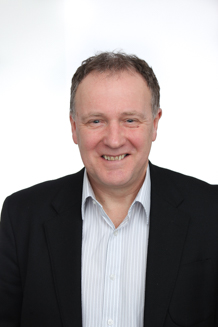
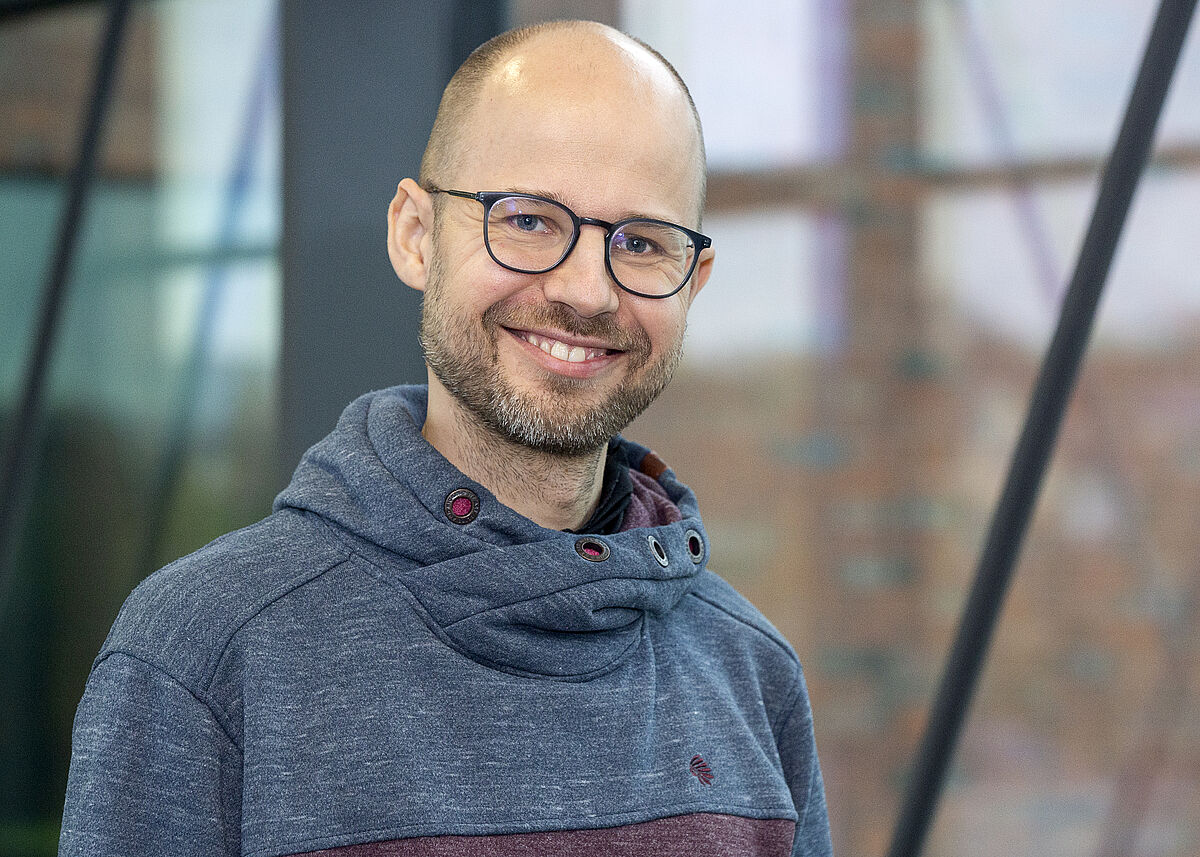
Mike Burton is a Professor of Psychology at the University of York, with a career spanning institutions across the UK, including the University of Aberdeen and University of Glasgow. His research focuses on face perception, emphasizing the mechanisms enabling identification across variable visual conditions and applications in computer-based face recognition and forensic settings. Education: BSc in Joint Honors Mathematics and Psychology (1980), University of Nottingham; PhD in Psychology (1983), University of Nottingham. Mike’s research explores how perceptual systems derive stable representations from variable face images, using experimental and computational modeling. Collaborations extend to security agencies and institutions like Kent University, Durham University, and the University of New South Wales. Recent work examines neural dynamics, multimodal cues, and virtual environments in face recognition. His publications span cognitive science, neuroscience, and forensic psychology, with a focus on unfamiliar face matching, neural correlates of familiarity, and computational modeling. Key grants include an ESRC Professorial Fellowship (2012–2016), an ERC Advanced Grant (2013–2018), and ongoing ESRC projects on high-fidelity avatars (2023–2026) and individual face recognition (2023–2026). Scientific Awards: Fellow of the British Academy (2017) Fellow of the Academy of Social Sciences (2019) Fellow of the Royal Society of Edinburgh (2006) Mike has held editorial roles in journals like Quarterly Journal of Experimental Psychology and Psychological Science , and served on REF2014 and REF2021 panels. He collaborates with researchers such as Rob Jenkins, Holger Wiese, and Markus Bindemann.
Dr. Tobias Strauß is a Lecturer at the Institute of Mathematics, Faculty of Mathematics and Natural Sciences, University of Rostock. He teaches courses such as Elementary Algebra and Number Theory and Analytical Geometry, focusing on foundational mathematical concepts and their applications. His research interests span historical document analysis, machine learning, and neural networks, with a particular emphasis on handwritten text recognition (HTR) and computational solutions for cultural heritage digitization. He actively contributes to the Mathematics Society RHO eV, supporting students in mathematics competitions and enrichment programs. Dr. Strauß’s research combines computer vision and machine learning to address challenges in document analysis, including text line detection, cursive script recognition, and keyword search in historical manuscripts. His work also explores semi-supervised learning techniques and neural network architectures tailored for HTR tasks. Through RHO eV, he promotes mathematics education through weekend seminars, district clubs, and game-based learning activities, fostering student engagement and problem-solving skills. His publications highlight advancements in HTR systems, such as the CITlab Recognition & Retrieval Engine, and address topics like regular expression-based decoding and Arabic handwriting recognition. These contributions underscore his expertise in bridging theoretical mathematics with practical applications in digital humanities and education. Dr. Strauß can be contacted via tobias.strauss@uni-rostock.de or through the university’s chat platform. No formal awards or grants are noted in the provided materials, though his involvement in international competitions (e.g., ICFHR, ICDAR) reflects his scholarly engagement.
Daan de Raaf served as a Visiting Fellow at the Department of Marketing Management, Rotterdam School of Management, Erasmus University Rotterdam. His research from 1996-2002 centers on brand-crisis dynamics, with seminal work on adverse publicity response and website quality management. Key research domains include: Brand Management: Strategic protection against reputational threats Crisis Management: Mitigation of negative publicity impacts Negative Publicity: Consumer perception and corporate response frameworks Web Quality: Process-oriented digital platform development His interdisciplinary approach bridges marketing theory with practical crisis communication solutions, emphasizing reputation preservation in volatile environments. Publication analysis reveals evolving focus from theoretical publicity impacts (1996) to integrated brand-protection systems (2000) and digital process innovation (2002), consistently addressing corporate vulnerability to negative narratives. No scientific awards or student supervision details were documented in source materials.
Nadia Amoroso is an Associate Professor in the Department of Landscape Architecture at the University of Guelph, affiliated with the School of Environmental Design and Rural Development. She holds a PhD from University College London and degrees from the University of Toronto. Her research focuses on visual communication in landscape architecture, digital design, data visualization, and GeoDesign, with emphasis on creative mapping and urban data analysis. She co-founded DataAppeal, a company developing 3D GIS tools for accessible data visualization. Amoroso leads the Digital Design Research Hub (DDRH), exploring hybrid design methods combining traditional and digital techniques. She has authored influential books like The Exposed City: Mapping the Urban Invisibles and Representing Landscapes series. Awards include the CFI-JELF Award (2018) and CELA Communications Award (2018). Her teaching spans design visualization, digital technologies, and environmental representation. She advises student projects like the award-winning Winter Stations installation, blending climate change themes with public art. Education : PhD Architectural Design, University College London (2010) MUD Urban Design, University of Toronto (2002) BLA Landscape Architecture, University of Toronto (2000) Research Interests : Data visualization & creative mapping GeoDesign and spatial analysis 3D datascaping for urban planning Digital design pedagogy Visualization of environmental data Grants & Projects : Canada Foundation for Innovation funding for DDRH (2018) Winter Stations Competition win (2018) DataAppeal software development Affiliations : Ontario Association of Landscape Architects American Society of Landscape Architects Council of Educators in Landscape Architecture Labs/Teams : Leads the Digital Design Research Hub (DDRH) at U of Guelph, fostering experimental digital design practices.
Francesca Matrone is a Fixed-term Assistant Professor in the Department of Environment, Land and Infrastructure Engineering (DIATI) at Politecnico di Torino, Italy. Her work bridges geomatics, artificial intelligence, and cultural heritage conservation, with a focus on 3D modeling, GIS, and HBIM integration for urban and historical environments. Her research interests include Geomatics, Cultural Heritage Digitization, AI in Geospatial Analysis, Drone-Based 3D Modeling, Semantic Segmentation of Point Clouds, and Smart Cities . She applies advanced technologies like UAVs, deep learning, and BIM-GIS integration to enhance the documentation, maintenance, and resilience of built heritage. The recent publications highlight a strong trend in using AI and machine learning for semantic segmentation of 3D heritage models, integration of HBIM with GIS using standards like IFC and CityGML, and drone-based photogrammetry for urban and territorial planning. These works reflect a multidisciplinary approach combining computer science, civil engineering, and digital heritage. Francesca Matrone is actively involved in research projects such as: HERITALISE (2025–2028, EU-funded): Digitization and cloud visualization of heritage buildings ACLIMO (2024–2026): Research collaboration with APAM on protected areas COGNITIO-FORT (2025–2026): Scientific Director for a project with Unione Montana Valle Stura She teaches across multiple programs: PhD : GeoAI for advanced urban analyses; Drones for 3D modeling (Main Teacher) Master’s : GIS Modeling for City and Land; Knowledge of Built Heritage under Climate Change Bachelor’s : GeoAI: Artificial Intelligence and Geospatial Data; Topography (Course Collaborator) She is a member of the Teaching Colleges for Civil and Building Engineering and Electronic, Telecommunications and Physics Engineering. She also holds a Learning to Teach (L2T) Open Badge from Politecnico di Torino, demonstrating her commitment to pedagogical excellence. Francesca is a co-inventor of the MAIN10ANCE PLATFORM , a national software patent aimed at enhancing the maintenance and conservation of historical built heritage through integrated HBIM-GIS systems.
Andrea Aquino is a postdoctoral researcher and academic in the Department of Geosciences at the University of Tübingen, Germany, affiliated with the Faculty of Science and the Terrestrial Sedimentology Workgroup. She holds a dual expertise in geology and forest science, bridging sedimentology, mineralogy, and ecological systems. Her academic work spans teaching, research, and cultural heritage conservation, with a growing focus on the interplay between geology and vegetation. University: University of Tübingen School: Faculty of Science Department: Department of Geosciences Research Group: Terrestrial Sedimentology Email: andrea.aquino@uni-tuebingen.de Dr. Aquino earned her PhD in geology focusing on stone decay in historical buildings, and later completed a Master's in Forest Science from the University of Padova with top honors (110/110). Her educational path reflects a deep commitment to interdisciplinary science, combining earth sciences with ecological and conservation applications. PhD in Geology – Focus: decay of natural and artificial stones in cultural heritage Master of Science in Forest Science – University of Padova (110/110) Background in mineralogy, petrology, and sedimentology Her research interests are highly interdisciplinary, centered on Vegetation Geology —a novel framework she is developing that places geology at the core of ecological interpretation. She investigates how geological substrates influence forest vegetation, soil moisture, and ecosystem resilience. She also continues active research in sedimentology, focusing on loess, soil micromorphology, and the mineralogical analysis of building stones. Her methodological toolkit includes XRD, XRF, SEM, micromorphology, and remote sensing (e.g., satellite-derived vegetation and water indices). The 15 most recent publications reflect a strong trend in cultural heritage conservation , ore and building stone mineralogy , and sedimentary processes . A significant portion of her work applies analytical techniques to historical materials, assessing durability, decay mechanisms, and conservation strategies. There is also a clear thread in interdisciplinary methodologies , including 3D modelling, image analysis, and mobile applications for on-site heritage assessment. While her earlier work focused on geochemical and petrographic analysis, her recent trajectory shows an expansion into ecological integration and digital tools. Andrea Aquino has not received any publicly listed scientific awards in the provided text. She is actively involved in academic mentoring and teaching, though no formal students are listed. She teaches courses in sedimentology, stratigraphy, rock identification, and the geology of building stones, and leads field excursions to Mainz and the Black Forest. She is also engaged in research grants and collaborative projects related to cultural heritage and environmental geology, though specific grant names are not mentioned. Her work often involves multi-institutional collaborations, particularly with Italian research groups. She is a key member of the Terrestrial Sedimentology Workgroup at the University of Tübingen’s Geo- and Environmental Research Centre (GUZ). This team focuses on sediment dynamics, loess studies, and applied geology. Her lab work integrates mineralogical and geochemical analyses with conservation science, and she collaborates on digital heritage projects involving 3D modelling and image analysis. Her evolving research integrates field teams for vegetation-geology studies and remote sensing applications in forest ecosystems.
Blake Marques Carrington is an Associate Professor at Pratt Institute's School of Art, Department of Digital Arts and Animation, where he coordinates the Art+Technology program. His work merges sound, visual, and performing arts through the lens of 'speculative forensics', exploring transdisciplinary practices in art and technology. In 2025, he will pursue research at the University of São Paulo via a Fulbright U.S. Scholar Award. Key research areas: Transdisciplinary Art and Technology Ambient Narrativity AI-Driven Creative Workflows Phenomenology in Digital Landscapes Sound-Visual Interplay Notable works: Interactive audiovisual installations like Study on the Metaphysical Status of a Table (2022) and An Infinite Density Over Zero (2021) explore simulated realities, authorship in AI, and the materiality of digital landscapes. His practice spans electronic music releases, public projections, and collaborative concert visuals with artists like Patti Smith. Awards: Fulbright U.S. Scholar Award (2025) Jerome Foundation Travel Study Grant NYFA Fellowship in Electronic Arts NYSCA Distribution Grant Education: B.A. in Digital Media, Indiana University Bloomington M.F.A. in Computer Art, Syracuse University
Leszek Wojciechowski serves as a Professor in the Department of Ancient, Byzantine and Medieval History at the Institute of History, Faculty of Humanities, John Paul II Catholic University of Lublin, Poland. His academic profile includes an ORCID identifier (0000-0001-6024-0127) and institutional email leszek.wojciechowski@kul.pl. His scholarly work centers on medieval religious culture with strong regional focus on Central and Eastern Europe, particularly Poland's historical development within broader European contexts. Wojciechowski's research spans Medieval History, Byzantine Studies, Pilgrimage Literature, and Medieval Encyclopedism, with specialized attention to relics of the Holy Cross, geographical descriptions in encyclopedic works, and Polish religious identity formation. His methodological approach combines source criticism with cultural analysis, frequently examining how medieval texts constructed religious and geographical knowledge. Key thematic threads include the intersection of material culture and devotion, the transmission of classical knowledge through medieval channels, and Poland's representation in foreign historical narratives. Analysis of his 15 most recent publications reveals consistent engagement with primary sources from the 6th to 17th centuries, particularly medieval encyclopedias, pilgrimage accounts, and religious treatises. His work demonstrates increasing specialization in Holy Cross relics and Saint Catherine pilgrimage routes since 2020, while maintaining longstanding interest in Isidore of Seville's legacy and Polish-Latin textual traditions. Geographically, his research bridges Iberia, Sinai, Lublin, and broader Central European contexts through comparative analysis of religious practices. No scientific awards were documented in the provided information. Information regarding academic advising responsibilities, graduate student mentorship, or research grant acquisition was not included in the available materials. His editorial work as chief editor for publications like 'Borderlands. City - Countryside - Religiosity' (2020) and conference organization including 'The Image of the World and Man' (2016) indicate leadership in scholarly dissemination.
Moomna Waheed is a researcher at the Faculty of Medicine, Health and Human Sciences at Macquarie University, specializing in health informatics and telehealth applications. Her work bridges digital health technologies with primary care practices. Research Interests: Telemedicine implementation in primary care Physical examination data extraction using AI Chronic disease management through virtual consultations Research Outputs: Focus on multi-modal approaches combining text and image analysis for telehealth systems, with applications to diabetes and cardiovascular disease management. Recent work includes automated extraction of clinical interactions and documentation patterns. Education: Doctor of Philosophy (PhD)
Roman Ptak is a researcher at the Department of Computer Engineering, Faculty of Information and Communication Technology, Wrocław University of Science and Technology. His work focuses on document analysis, handwriting recognition, and geohistorical data modeling. Research interests include: Document Analysis: Specializing in text line segmentation and handwriting recognition techniques Geohistorical Data: Addressing heterogeneity in historical information systems Image Processing: Developing algorithms for document examination and artifact analysis Roman's recent research trends show: 2024: Tensor voting applications in handwriting analysis 2023: Advanced segmentation techniques for handwritten documents 2021: Heterogenic spectral database development 2020: Hybrid approaches combining histograms and projection methods 2019: Ink spectral analysis and polymorphic microscopy 2017: Historical document authentication and GIS-based cultural geography studies Contact: roman.ptak@pwr.edu.pl
João Pedro Matos-Carvalho is an Assistant Professor at Lusófona University in Lisbon, affiliated with the School of Engineering and the Department of Electrical and Computer Engineering. He is also an Integrated Member of the Center of Technology and Systems (CTS) at UNINOVA and COPELABS, Lusófona University, contributing to interdisciplinary research in robotics and intelligent systems. Ph.D. in Electrical and Computer Engineering, FCT NOVA (2021) M.Sc. (Hons.) in Electrical and Computer Engineering, FCT NOVA (2017) His research focuses on aerial robotics, machine learning, remote sensing, and sensor networks, with applications in UAV navigation, precision agriculture, environmental monitoring, and embedded AI. He has made significant contributions to GPS-denied navigation, multispectral imaging, and AI-driven signal processing. The recent publications reflect a strong trend in integrating deep learning with real-world engineering systems, particularly in UAV autonomy, IoT, and human-centric applications like fall detection and online learning analysis. His work spans algorithm design, software development, and practical deployment in complex environments. Best Paper Award at IEEE Conference (2018) Distinguished Paper Award by LASIGE at FCUL (2021) Best Poster Presentation Award at International Complex Systems and Their Applications Conference (2023) He has secured the competitive Scientific Employment Stimulus (CEEC) grant from FCT and has advised or collaborated on multiple research projects. He has guest-edited special issues in journals such as Drones and Frotiers in Computer Science , and serves as a reviewer for leading scientific journals. He leads the development of open-source tools like AutoNAV and Raster Forge, supporting simulation and geospatial analysis. He is actively involved in research teams at CTS-UNINOVA and COPELABS, focusing on intelligent systems, aerial robotics, and data fusion. His lab work emphasizes practical UAV platforms, sensor integration, and AI deployment in real-time systems.
Guido Bologna is an Assistant Professor at the Haute école du paysage, d'ingénierie et d'architecture de Genève (HEPIA), within the School of Technique et IT and the Department of Informatique et systèmes de communication. His research focuses on explainable artificial intelligence (XAI), rule extraction from neural networks, and their applications in healthcare and computer vision. His work emphasizes transparent decision-making in AI systems, particularly for medical diagnostics (e.g., melanoma detection from images) and radiotherapy side-effect prediction. He co-leads the HES-XPLAIN platform, an open-source initiative to democratize XAI development. Key projects include PRE-ACT (predicting radiotherapy side effects) and Fidex/FidexGlo algorithms for explaining ensemble models and SVMs. Notable contributions include rule extraction from deep neural networks using techniques like DIMLP ensembles and DCT-based feature maps. His research bridges theoretical advances in AI with practical applications, such as sensory substitution devices for visually impaired individuals and gait analysis for elderly mobility aids. Bologna collaborates internationally on interdisciplinary projects, spanning healthcare informatics, robotics, and neuroscience. His work addresses challenges in algorithmic transparency, fairness, and privacy in AI systems, with a focus on real-world deployable solutions.
FH-Prof. Dr. Markus Seidl is a Professor in the Department of Media and Digital Technologies at the University of Applied Sciences St. Pölten. He leads the Creative Computing (BA) program and serves as interim head of the Media Computing Research Group within the Institute of Creative Media/Technologies. His roles include academic director and former Managing Director (2015–2020). Seidl holds a PhD in Computer Vision from TU Wien (2016) and has extensive experience in interdisciplinary projects, particularly in digital cultural heritage. His research focuses on computer vision techniques for analyzing rock art (petroglyphs) and enhancing museum experiences through multi-touch interfaces and BYOD integration. Key projects include the Europa Nostra-award-winning rock art analysis work and multi-touch table applications exhibited globally. He has supervised over 20 theses on topics like medieval manuscript analysis and AI-driven cultural artifact understanding. Notable contributions span 120+ publications, including work on 3D surface segmentation, flood level estimation from social media, and interactive museum technologies. His work bridges computer science with archaeology, design, and education, emphasizing experiential learning and technology-driven cultural preservation.
William K. Allard is a Professor in the Department of Mathematics at Duke University. He holds a Sc.B. from Villanova University and a Ph.D. from Brown University. His research focuses on Calculus of Variations, Parallel Computing, Image Processing, and Scientific Computing, with notable projects including the KDI initiative and studies on spiral wave dynamics in cardiac systems. He has taught a wide range of courses, including Basic Analysis, Mathematical Logic, and Scientific Computing. His recent work includes contributions to differential geometry, image denoising via total variation regularization, and adaptive mesh refinement algorithms. Personal links highlight his family and residence information, though these are non-academic. Research highlights include geometric analysis, computational methods for image processing, and parallel computing applications. His teaching spans foundational mathematics to specialized topics like elliptic PDEs and motion by mean curvature. Collaborative work with John Trangenstein on distributed computational codes demonstrates interdisciplinary engagement. Despite the page's outdated timestamp (last modified 2003), his academic contributions remain well-documented in these materials.
Ayman Gh. serves as a Postdoctoral Research Fellow at the Australian National University's Biological Data Science Institute (BDSI) and concurrently as a Visitor Scientist at CSIRO Bioprediction, Agriculture and Food Division, Crops Integrated Analytics. His academic foundation includes a 2022 PhD in Advanced Machine Learning from the University of Technology Sydney (UTS) and prior Biomedical Engineering degrees from Cairo University, Egypt. Education: PhD in Advanced Machine Learning, School of Computer Science, Faculty of Engineering and Information Technology, University of Technology Sydney (UTS), Australia (2022) Master of Biomedical Engineering, Faculty of Engineering, Cairo University, Egypt Bachelor of Biomedical Engineering, Faculty of Engineering, Cairo University, Egypt Research Focus: Gh.'s work centers on neural network applications for BioSignal processing, Bioinformatics, and Preference Learning. His expertise spans computational genomics, brain-computer interfaces, and novel machine learning algorithms, addressing complex challenges in biomedical image processing and neural decoding through deep learning architectures. Publication Analysis: His 2012-2024 publications reveal an evolution from ECoG-based finger movement decoding to advanced image generation techniques. Consistently leveraging neural networks, his research bridges biomedical engineering and computer vision, with increasing emphasis on generative models and robust computational solutions for biological data. Scientific Recognition: No specific awards or fellowships are documented in the provided materials. Mentorship: Registered for research student supervision though no advisees are listed, with no grant funding details disclosed in the available information. Collaborative Infrastructure: Operates within ANU's Biological Data Science Institute while maintaining active collaboration with CSIRO's Bioprediction team in agricultural analytics.