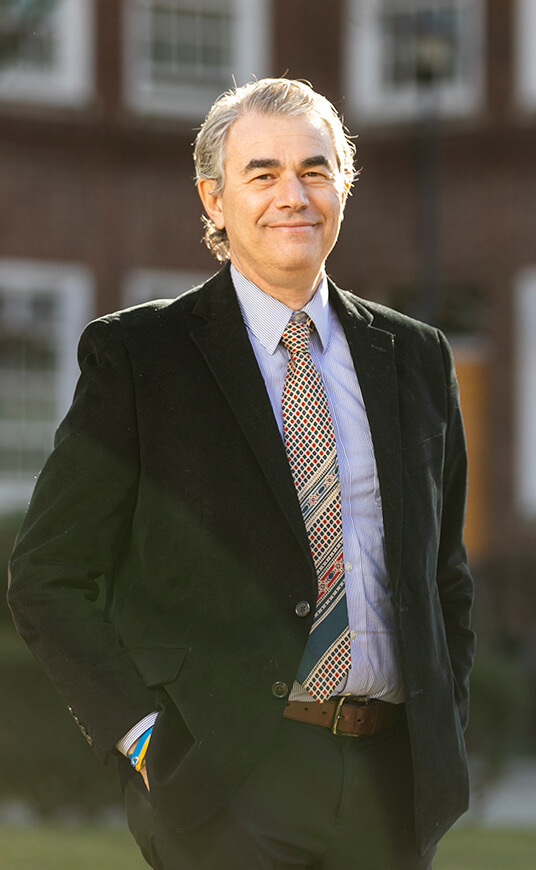
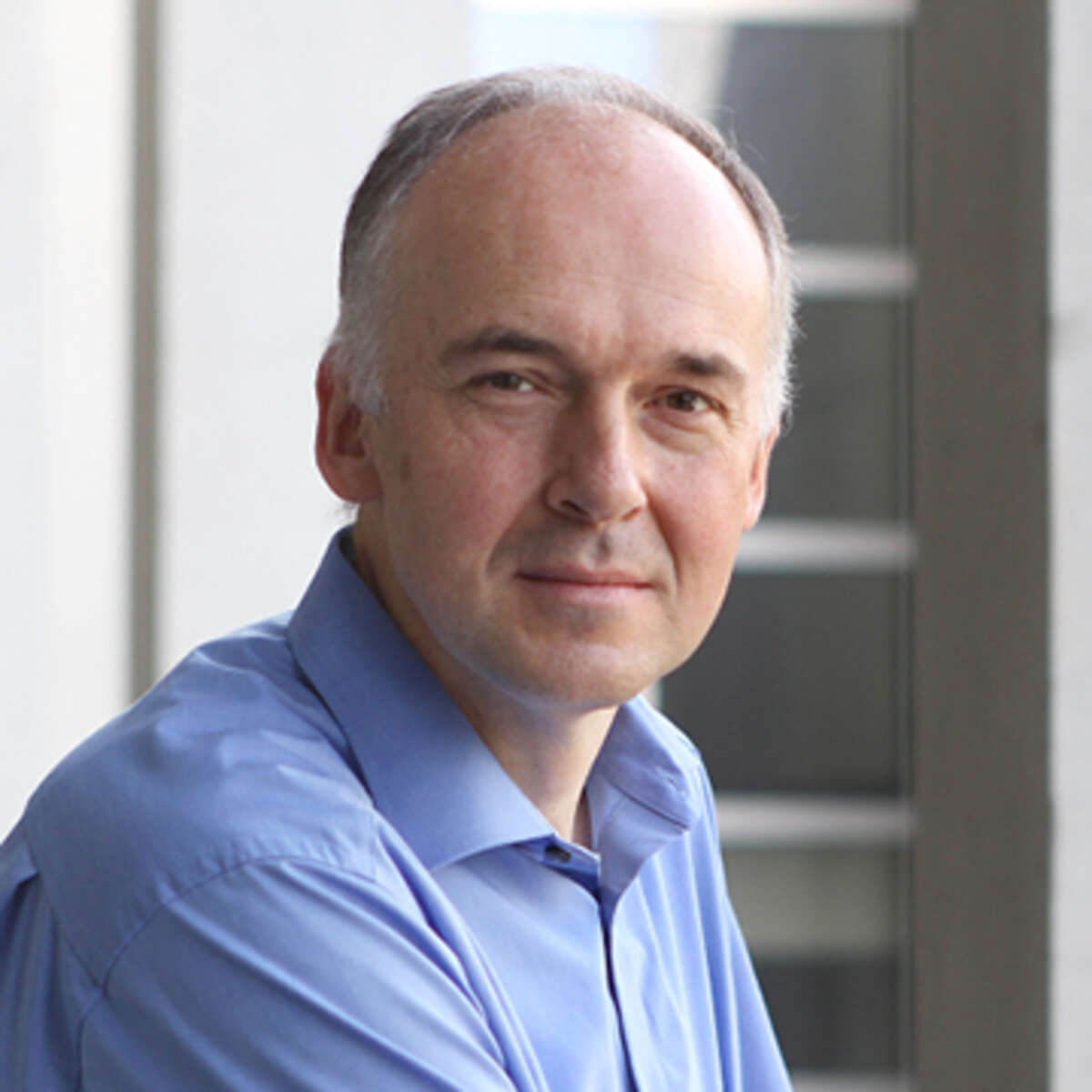
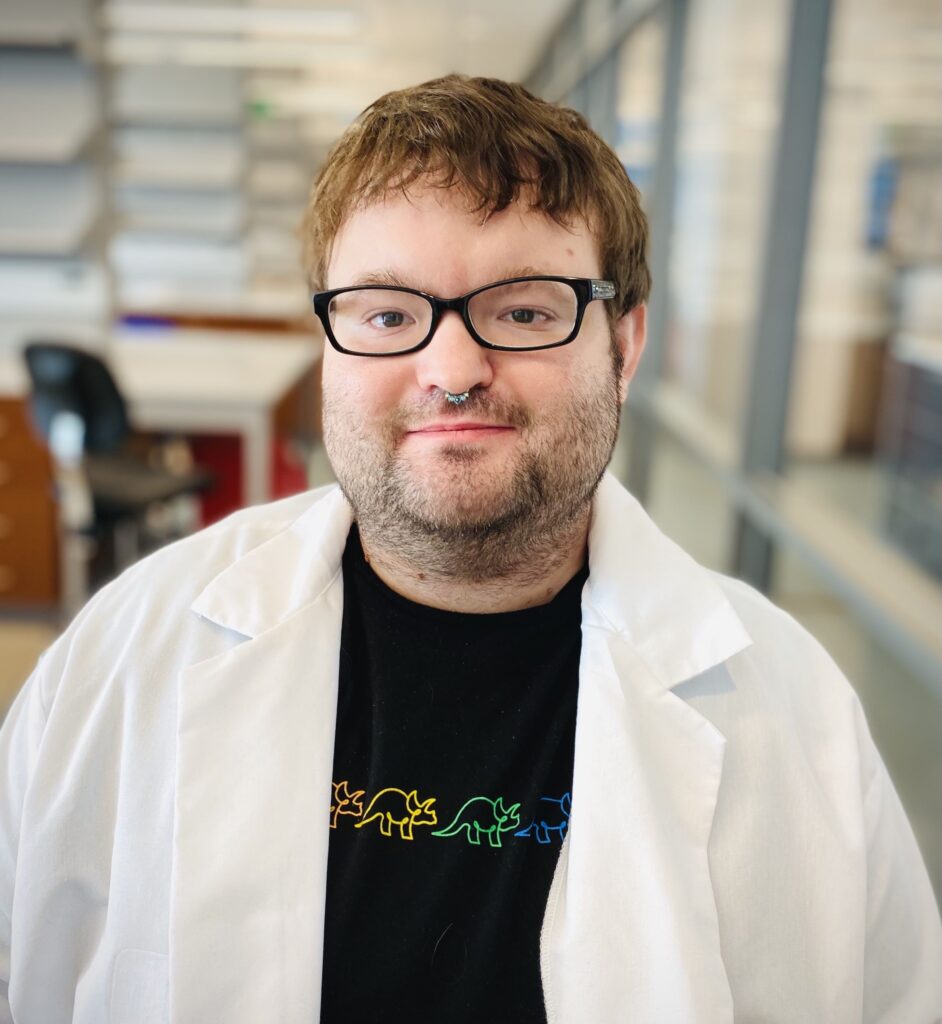
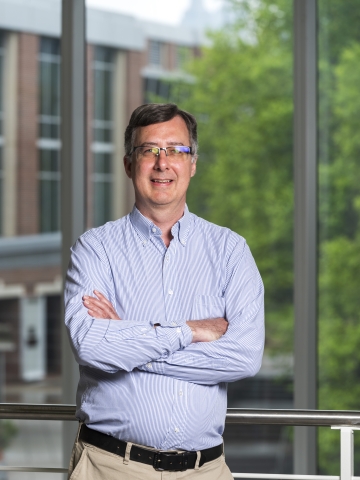
Dr. Ivet Bahar is the Louis and Beatrice Laufer Endowed Chair and Director of the Laufer Center for Physical & Quantitative Biology at Stony Brook University. She holds a joint appointment as Professor in the Department of Biochemistry and Cell Biology across the College of Arts & Sciences and Renaissance School of Medicine. Her research bridges structural biology, biophysics, and computational modeling to understand biomolecular systems dynamics, protein interactions, and allosteric regulation. Her education includes a Ph.D. in Chemistry from Istanbul Technical University (1986), M.S. in Chemical Engineering from Bogazici University (1983), and B.S. in Chemical Engineering from Bogazici University (1980). Research focuses on: Biomolecular intrinsic dynamics and evolutionarily optimized functions Computational frameworks for protein dynamics and drug discovery Allosteric mechanisms in membrane proteins and signaling complexes Multi-scale modeling of cellular networks and disease mechanisms Her recent publications predominantly explore protein dynamics, computational methods, and therapeutic targeting, with recurring themes in allosteric regulation, conformational mechanics, and applications in neurodegeneration, infectious diseases, and cancer. Major scientific awards include: Vehbi Koc Science Prize (2022) Election to National Academy of Sciences (2020) Kadir Has Outstanding Achievement Award (2019) Biophysical Society Fellow (2024) TUBITAK-TWAS Science Prize She leads an active research group with 13+ members, mentoring PhD students and postdocs. Major grants include NIH funding for mitochondrial targets, liver fibrosis therapies, and computational drug discovery. The lab develops open-source tools like ProDy and Rhapsody for protein dynamics analysis.
Emilio Gallicchio is a Professor at the Department of Chemistry and Biochemistry , School of Natural and Behavioral Sciences , Brooklyn College, CUNY . He leads the Computational Molecular Biophysics Laboratory and is a Levy-Kosminsky Professor of Physical Chemistry . Education: B.A. in Theoretical Chemistry (University of Basilicata, Italy), Ph.D. in Chemical Physics (Columbia University) Research: Thermodynamics of protein-ligand and protein-protein binding, solvation models, free energy methods, and large-scale parallel computing Scientific Awards include NSF CAREER, NIH/NIGMS R15 grants, OpenEye COMP Outstanding Junior Faculty Award, and NVIDIA GPU Best Poster Award. His most recent publications focus on alchemical transfer methods, binding free energy prediction, and solvation models in drug discovery. Notable students include Joe Z. Wu and Solmaz Azimi, both recent Ph.D. graduates (2024).
Janne Sepp is a part-time lecturer in Pharmacognosy at the Institute of Pharmacy, University of Tartu Faculty of Medicine , while working full-time as a specialist at the State Agency of Medicines since 2011. He is a member of the Estonian Academic Society of Pharmacy and has contributed to pharmaceutical statistics through annual reports. PhD studies in Pharmacognosy (2016–2024, interrupted) MSc in Pharmacy (2009), University of Tartu His research interests focus on: Phytochemical analysis of chamomile species (Chamomilla spp.) Antimicrobial properties of herbal extracts Pharmacological testing of Matricaria species Development of 3D-printed dosage forms Pharmaceutical market analysis in Estonia Integration of traditional herbal medicine with modern pharmacology Publication trends show extensive work on Chamomilla and Matricaria species, with recent emphasis on analytical methods, molecular docking, and sustainable herbal drug production. His collaborative efforts include co-authoring the first Estonian-language MOOC on medicines. Scientific awards include the Professor Ain Raal's Pharmacognosy Scholarship (2020). Janne contributes to public pharmaceutical education through media outreach and collaborates with the Estonian Anti-Doping and Sports Ethics Foundation . His lab work involves chemical profiling of medicinal plants and antimicrobial testing.
Torsten Schwede is a Professor for Structural Bioinformatics at the Biozentrum, University of Basel since 2018, and currently serves as President of the SNSF Research Council since 2025. Previously, he was Vice President for Research at the University of Basel (2018-2024), Director of the SPHN Data Coordination Center (2016-2019), and Scientific Director of sciCORE Center for Scientific Computing (2014-2019). He has been a Group Leader at the SIB Swiss Institute of Bioinformatics since 2002 and served as Associate Professor (2007-2018) and Assistant Professor (2001-2007) at the Biozentrum. Dr. Schwede earned his PhD in protein crystallography from Albert Ludwigs University, Freiburg, Germany (1995-1998), following diploma studies in biochemistry at Albert Ludwigs University (1991-1994) and University of Bayreuth (1988-1991). His early career included positions as a staff scientist at GSK GlaxoSmithKline R&D (2000-2001) and postdoctoral researcher at GWER GlaxoWellcome Experimental Research (1999-2000). His research focuses on computational methods for modeling and simulating three-dimensional protein structures, particularly through homology modeling. His work enables investigation of protein functions at the atomic level, with applications in understanding disease-causing mutations and structure-based drug development. Dr. Schwede is best known for developing SWISS-MODEL, an automated protein homology-modeling server that has become a standard tool in structural bioinformatics. His recent work centers on benchmarking protein structure prediction methods through CAMEO and developing high-throughput pipelines like AlphaPulldown2 for structural modeling. Dr. Schwede's research has been widely recognized, including being selected by ISI Thomson Reuters as having the highest cited Swiss paper during 1999-2009 for his work on SWISS-MODEL. In 2014, his Nucleic Acids Research manuscript on SWISS-MODEL achieved rank 6 in traditional impact measure according to a study by the Swiss National Science Foundation. His work on protein-ligand interactions and computational drug discovery has also received significant attention in the scientific community. President of the SNSF Research Council (2025-present) President of the SNSF Research Council (2025-present) Member of RCSB PDB scientific advisory board (2015-present) Member of CASP organizing committee (2011-present) Chair of ELIXIR board (2015-2016) Conference Chair for ISMB 2019 in Basel At the Biozentrum, Dr. Schwede leads a research group dedicated to advancing computational methods for protein structure prediction and analysis, with a particular focus on making these tools accessible to the broader scientific community through web-based platforms and standardized data formats. His team's work on ModelArchive and CAMEO has established critical infrastructure for the structural biology community.
Andrew McShan serves as an Assistant Professor in the School of Chemistry and Biochemistry at the Georgia Institute of Technology, where he directs the McShan Lab focused on structural biology, immunology, and computational protein design. His research integrates experimental and computational approaches to investigate biomolecular structures with therapeutic relevance, particularly in immune receptor systems and lipid-protein interactions. His academic foundation includes: A.Sc. from University of Houston (2008) B.Sc. and Ph.D. from University of Kansas (2010, 2016) Postdoctoral Research at UC Santa Cruz (2016-2020) Postdoctoral Research at University of Pennsylvania & Children’s Hospital of Philadelphia (2020-2022) Research interests center on atomic-level characterization of biomolecules including de novo designed proteins, therapeutic peptides, lipid transfer proteins, and immunoreceptors (MHC molecules, T cell receptors, CD8 co-receptors). The lab specializes in determining structures and dynamics of these systems through solution NMR spectroscopy, X-ray crystallography, cryo-EM, and computational modeling, with particular emphasis on antigen presentation mechanisms and lipid-protein interactions. Current projects span structural biology of natural product biosynthesis, computational development for lipid-protein modeling, and engineering novel protein-based therapeutics. Recent publications (2023-2025) reveal strong integration of AlphaFold/RoseTTAFold applications with experimental validation, particularly in protein design, lipid-binding systems, and immune receptor characterization. Key trends include computational database development for lipid-protein interactions (BioDolphin), multistate protein design methodologies, and structural analysis of pathogen-derived antigens. Scientific recognition includes: NSF CAREER Award (2025) Shurl and Kay Curci Foundation Research Grant (2024) Dr. McShan mentors graduate students through comprehensive training in biochemical/biophysical techniques (SPR, ITC, NMR), structural biology methods, computational modeling, and immunological assays. His lab operations are supported by competitive research grants including the NSF CAREER award and Curci Foundation grant, which fund investigations into structural mechanisms of immune recognition and protein design principles. The McShan Lab maintains an explicitly inclusive environment welcoming LGBTQAI+ members, women, disabled scientists (including those with invisible disabilities), and scientists of color, fostering collaborative research in structural immunology and protein engineering.
David Sherrill is a Regents' Professor in the School of Chemistry and Biochemistry at the Georgia Institute of Technology with a joint appointment in the College of Computing. As of January 2025, he serves as interim executive director of the Georgia Tech Institute for Data Engineering and Science (IDEaS), supporting interdisciplinary research in data science and high-performance computing across campus. His educational background includes a B.S. in Chemistry from MIT (1992), a Ph.D. in Chemistry from the University of Georgia (1996), and an NSF Postdoctoral Fellowship at UC Berkeley (1996-1999) working under Martin Head-Gordon. Sherrill's research focuses on ab initio electronic structure theory development and non-covalent interaction analysis across diverse chemical systems. His group pioneers methods like symmetry-adapted perturbation theory (SAPT) to dissect electrostatic, dispersion, and exchange-repulsion effects in drug binding, biomolecular structures, organic crystals, and organocatalysis. They specialize in generating high-accuracy quantum datasets for machine learning applications and developing the open-source Psi4 quantum chemistry software used globally. Recent publications reveal a strategic shift toward integrating quantum chemistry with machine learning —evident in tools like SparcleQC for automated protein-ligand studies and physics-aware neural networks for binding energy prediction—while maintaining rigorous benchmarking against coupled-cluster theory. The work increasingly targets crystal lattice energy prediction and anharmonic vibrational analysis with practical applications in drug design. Elected Member, International Academy of Quantum Molecular Science (2024) Herty Medal for Outstanding Contributions (2023) Fellow of AAAS, American Chemical Society, and American Physical Society National Science Foundation CAREER Award (2001) Camille and Henry Dreyfus New Faculty Award (1999) Sherrill actively mentors doctoral students including Caroline Glick (Ph.D. 2024), Philip Nelson (Ph.D. 2024), and current researchers like Izzy Berry (CRIDC poster award winner). His group receives sustained funding from NSF and ACS programs, supporting projects such as the BioFragment Database (BFDb) and CrystaLattE software for molecular crystal analysis. As associate director of IDEaS since 2016, he has secured resources for interdisciplinary computational infrastructure while advancing quantum chemistry methodology. The Sherrill Research Group operates from the Molecular Science and Engineering Building at Georgia Tech, maintaining active collaborations with national labs and industry partners. They contribute to Psi4's development while leading initiatives like the Supercomputing Conference participation and the Southeastern Regional ACS symposium honoring Sherrill's Herty Medal achievement.
dr inż. Paweł Śliwa is a Lecturer at the Department of Organic Chemistry and Technology , Faculty of Chemical Engineering and Technology, Tadeusz Kościuszko Cracow University of Technology. His research focuses on Computational Chemistry , Catalysis , and Molecular Modeling of receptor-ligand interactions. Institution: Tadeusz Kościuszko Cracow University of Technology Department: Organic Chemistry and Technology Rank: Lecturer Email: pawel.sliwa@pk.edu.pl Research Interests include computational catalysis, receptor pharmacology (5-HT, D4, VEGFR2), and green chemistry methods for bioactive compound extraction. His work combines quantum mechanical calculations , molecular dynamics simulations , and fragment molecular orbital analysis to investigate drug-receptor interactions and catalytic mechanisms. Publications highlight applications of computational methods in organic synthesis, receptor binding studies, and surfactant optimization for pharmaceutical/biotechnological uses. Key trends involve structure-based drug design and molecular modeling of metal complexes . Projects span from biocatalyst development (e.g., magnetic nanoparticles with immobilized catalase) to 3D-printed biomimetic scaffolds for tissue engineering. He also explores micellar extraction of plant polyphenols and halogen bonding in ligand-receptor complexes. Laboratory operates within the Computational Catalysis research team , utilizing methods like MD, FMO/PIEDA, and docking to advance understanding of molecular interactions in chemical and biological systems.
Krzysztof Malarz is affiliated with the AGH University of Science and Technology in Kraków, Poland. He is an active academic researcher with a focus on interdisciplinary studies bridging computational physics , nanomedicine , and social dynamics . Research Interests : His work spans opinion formation models (social impact theory, Heider balance), nanomaterials for biomedical applications (anticancer agents, fluorescent probes), and percolation theory in complex networks. Publication Trends : Recent articles emphasize computational modeling of social systems, bioinspired nanomaterials , and serotonin receptor ligands with antiproliferative properties. Collaborations : Frequent co-authors include M. Wołoszyn (computational physics), A. Mrozek-Wilczkiewicz (chemistry), and T. Kuliakowski (materials science).
Angelos G. Kalambounias is a Professor in the Department of Chemistry at the University of Ioannina, Greece, where he has progressed from Assistant Professor (2015-2020) to Associate Professor (2020-2024) and finally to full Professor (November 2024-present). He maintains additional affiliations as a Collaborating faculty member at the Institute of Materials Science and Computation and the Institute of Environment and Sustainable Development, and serves on the Board of Directors of the Scientific and Technological Park of Epirus. His research spans multiple domains of physical chemistry with emphasis on spectroscopic techniques. His primary interests include condensed matter structure and dynamics, development of contactless high-temperature spectroscopic measurement techniques, Raman spectroscopy applications in thermodynamics, inorganic coordination complexes, glass science (particularly tellurite and oxide glasses), nanomaterials, atmospheric pollution analysis, and ultrasonic spectroscopy. His work bridges fundamental physical chemistry with practical applications in materials science and environmental monitoring. His publication record shows consistent output since 1999, with recent work focusing on molecular dynamics, peptide structure, drug delivery systems, microplastic analysis, and advanced spectroscopic techniques. His research group comprises numerous students across physics and chemistry disciplines, reflecting the interdisciplinary nature of his work. Among his professional roles, he serves as a Review Editor on the Editorial Board of 'Battery Systems and Applications' and has acted as a reviewer for over 30 international scientific journals spanning physical chemistry, materials science, and spectroscopy. His teaching portfolio includes undergraduate and graduate courses in physical chemistry, statistical mechanics, quantum chemistry applications, spectroscopic methods, and materials characterization at both the University of Ioannina and previously at the University of Patras.
Mahdi Vasighi is currently serving as an Assistant Professor at the Department of Computer Science and Information Technology, Institute for Advanced Studies in Basic Sciences (IASBS) in Zanjan, Iran, a position he has held since February 2012. Prior to this, he was a Post-doc Researcher at the same institution from February 2011 to February 2012. He has also served as a Visiting Researcher at the Milano Chemometrics and QSAR Research Group, University of Milano - Bicocca, Milan, Italy from September to October 2009, and as a Guest Lecturer at the Pasteur Institute, Tehran, Iran since September 2016. Dr. Vasighi earned his educational qualifications from the Institute for Advanced Studies in Basic Sciences (IASBS) in Zanjan, Iran, where he completed his Ph.D. in Chemometrics in May 2010 and his M.Sc. in Analytical Chemistry between 2002 and 2005. His undergraduate education was in Pure Chemistry at Imam Khomeini International University, Qazvin, Iran, from 1998 to 2002. Dr. Vasighi's primary research interests lie at the intersection of bioinformatics, machine learning, and data analysis. His work focuses on structural bioinformatics, particularly on modeling relationships between biological sequences and their corresponding structure or function. He has made significant contributions to the field of self-organizing maps with dynamic structure, developing innovative approaches like the Directed Batch Growing Self-Organizing Map (DBGSOM) that enhance topology preservation and visualization of high-dimensional data. His research spans multiple domains including protein structural classification, cancer diagnostics using fluorescence spectroscopy, and drug discovery for diseases like COVID-19. Dr. Vasighi's publication record demonstrates a strong trajectory in applying machine learning techniques to solve complex problems in bioinformatics and medical diagnostics. His recent work shows an increasing focus on applying computational approaches to healthcare challenges, including cancer detection, protein analysis, and drug discovery for viral diseases. He has successfully bridged the gap between theoretical machine learning advancements and practical applications in biology and medicine, with a particular emphasis on developing interpretable models that can be used by domain experts. Dr. Vasighi has actively contributed to the academic community through teaching and conference organization. He has served as Local Chair for the International Conference on Contemporary Issues in Data Science 2019 (CiDaS 19) and as Scientific Committee Member and Organizing Chair for previous CICIS conferences. His teaching portfolio includes graduate courses in Artificial Neural Networks, Computational Data Mining, Bioinformatics, Statistical Pattern Recognition, and Multimedia Systems. Dr. Vasighi has supervised numerous MSc students, with over twenty graduated students and nine current students listed in his profile. His research has been supported through collaborations with institutions like the Pasteur Institute, where he worked on projects related to nuclear magnetic resonance-based screening of thalassemia and determination of coronary heart disease risk using NMR spectra of plasma lipoproteins. Through his Directed Batch Growing Self-Organizing Map (DBGSOM) package and other software contributions, Dr. Vasighi has made his research tools accessible to the broader scientific community. His work continues to push the boundaries of how machine learning can be applied to solve challenging problems in bioinformatics and medical diagnostics.
Prof Philip Biggin is a Professor of Computational Biochemistry at the University of Oxford and an Ord Fellow and Tutor at Lady Margaret Hall (LMH). He directs the DPhil in Computational Discovery Programme, having joined Oxford with a lectureship and RCUK Fellowship in 2007, becoming a Fellow and Tutor in Biochemistry in 2012 before promotion to full Professor in 2016. His research centers on protein dynamics and drug design, employing computational tools to unravel ligand-binding mechanisms and conformational changes in proteins. This work—conducted in collaboration with pharmaceutical companies—aims to enable rational drug design, leveraging local computational resources and the HECBioSim Consortium's ARCHER supercomputer. As a founder of CCPBioSim, he advances collaborative biomolecular simulation infrastructure. Recent publications demonstrate expertise in molecular dynamics simulations of ion channels, receptors, and drug-target interactions, with applications spanning neuropharmacology, toxicology, and computational method development. Key themes include nerve agent antidote design, serotonin receptor activation, and ion channel dynamics. His notable achievements include: University Excellence in Teaching Award (2011) for innovative Computational Biochemistry and Bioinformatics curricula RCUK Fellowship (2007) As Director of the DPhil programme, Prof Biggin advises graduate students while leading the Biggin Lab. His group maintains industry partnerships and contributes to major computational consortia, driving advancements in rational drug design through cutting-edge biomolecular simulation.
Fabian Akkerman is a researcher at the Digital Society Institute within the Industrial Engineering & Business Information Systems department at the University of Twente . His work bridges theoretical advancements in machine learning with practical applications in logistics, energy sustainability, and transportation systems. Primary Affiliation : University of Twente, Industrial Engineering & Business Information Systems Research Focus : Artificial Intelligence, Reinforcement Learning, Autonomous Systems, and Sustainable Logistics Fabian's research specializes in sequential decision-making problems, particularly in dynamic and stochastic environments. A key area of his contributions lies in applying reinforcement learning and optimization techniques to address challenges in: Vehicle routing with uncertain demand Inventory management and warehouse operations Time slot pricing for delivery services Smart transportation and freight logistics Stochastic modeling for supply chain resilience Industry 4.0 adoption in production systems His work demonstrates a strong emphasis on developing algorithmic frameworks (e.g., DynaPlex) that combine statistical modeling with real-world implementation. Recent publications highlight applications in autonomous vehicles, intelligent transport systems, and circular economy strategies. Scientific Awards : 2024 Transportation Science Meritorious Service Award 2025 2nd Place in ISIR Research Challenge for Production-Inventory Planning at ASML
Professor JUAN J. FIOL is a Full Professor (Catedrático) at the University of the Balearic Islands , Department of Chemistry, where he has been employed since November 2016. As leader of the Bioinorganic and Bioorganic Chemistry (QUIMIBIO) research group, his work centers on metal-nucleobase interactions, with a focus on synthetic strategies and structural analysis. His research explores: Design of metal complexes with modified purine/pyrimidine nucleobases Role of non-covalent interactions (regium bonds, anion-π effects) in crystal engineering Development of nucleobase-amino acid/peptide hybrids for biomimetic applications DFT-supported investigations of electronic properties and reactivity Recent publications (2017-2025) demonstrate sustained focus on: Gold and iridium nucleobase complexes with therapeutic potential Structural manipulation of bio-MOFs via nucleobase alkylation Argentophilic interactions in metallo-DNA architectures Neuroactive nucleobase conjugates (e.g., GABA/gabapentin derivatives) He maintains active collaborations with European research groups in Switzerland, the Netherlands, and Spain. No awards or student names are documented in this source.
Dr. Dagmar Schlenzig is a Lecturer in the Department of Applied Biosciences and Process Engineering at Anhalt University of Applied Sciences. Her academic career focuses on biochemistry and molecular biology with particular expertise in metalloproteases, especially the meprin family of astacin proteinases. Dr. Schlenzig's research interests span several interconnected areas in biochemistry and neurodegenerative disease research. Her work primarily investigates the structure, function, and inhibition of meprin α and β proteases, with significant contributions to understanding their role in Alzheimer's disease pathology. She has developed various inhibitor classes including pyrazole-based compounds, heteroaromatic molecules, and tertiary-amine derivatives through structure-guided design approaches. A major focus of her recent work examines how meprin β's dipeptidyl-peptidase activity contributes to the formation of neurotoxic pyroglutamate-modified amyloid peptides in Alzheimer's disease. Analysis of Dr. Schlenzig's publication record from 2018-2023 reveals a strong emphasis on enzyme kinetics, structural biology, and medicinal chemistry approaches to protease research. Her work demonstrates expertise in developing biochemical assays, determining protein structures, and designing targeted inhibitors with therapeutic potential, particularly for neurodegenerative conditions. Dr. Schlenzig maintains active research collaborations as evidenced by her co-authorship on publications with researchers from various institutions. Her work with pharmaceutical companies like Vivoryon Therapeutics NV indicates potential translational applications of her basic research findings. Her methodological expertise includes enzyme kinetics, protein purification, structural analysis techniques, molecular modeling, and chemical synthesis of inhibitors. This multidisciplinary approach enables comprehensive investigation of protease function and inhibition, bridging basic science with potential therapeutic applications.
Associate Professor Hwang Siaw San is a distinguished researcher and academic at Swinburne University of Technology, Sarawak, serving in the Faculty of Engineering, Computing and Science. With over 12 years of academic experience, she was promoted from Lecturer (2010) to Senior Lecturer (2016) and finally to Associate Professor (2020), reflecting her significant contributions to research and education. Her educational journey includes a Bachelor of Science with Honours in Resource Biotechnology (1998), Master of Science in Plant Genetic Engineering (2002), and PhD in Molecular Biology (2009) from UNIMAS, where her dissertation investigated molecular mechanisms of starch biosynthesis in sago palm. Professor Hwang's research spans biomedical sciences, nutraceuticals, and agrobiotechnology. She leads investigations into cancer and cardiovascular disease biomarkers, develops disease diagnostic tools, and explores therapeutic properties of Sarawak natural products including palm oil and local rice varieties. Her agricultural research focuses on molecular mechanisms in black pepper disease resistance and crop yield improvement, addressing critical challenges for Sarawak's agricultural sector. Analysis of her 15 most recent publications reveals a strong interdisciplinary approach connecting molecular biology with practical applications. Her work shows consistent focus on translational research with publications spanning cancer therapeutics, cardiovascular protection, black pepper genomics, and natural product applications. Recent publications increasingly incorporate computational approaches including machine learning for disease diagnosis. 2021: Outstanding Innovation Award and Gold Medal Award at Malaysia Technology Expo 2020 & 2019: Swinburne Sarawak Research Success Award 2019: Gold Award at Melaka International Intellectual Exposition 2019: Silver Award at Innovation Technology Expo 2014: Silver and Gold Medal Awards at academic conferences Professor Hwang has secured substantial research funding as Principal Investigator on multiple projects totaling over MYR 1 million, including grants from Sarawak Research and Development Council, Ministry of Higher Education Malaysia, Malaysian Pepper Board, and industry partners. Her collaborative approach is evident through numerous Co-PI roles on additional projects. She actively mentors research students and welcomes prospective candidates to join her research group in areas spanning biomedical sciences, nutraceuticals, and agricultural biotechnology.