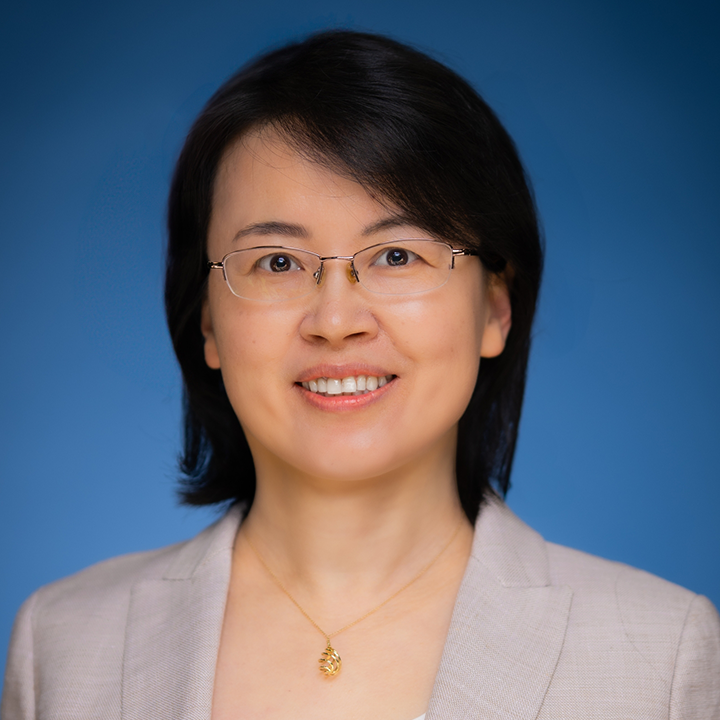
Ioan Manolescu is a professor in the Department of Mathematics at the University of Fribourg, Switzerland. His research focuses on probability theory and statistical mechanics, particularly percolation, random-cluster models, Potts models, and self-avoiding walks. He obtained his PhD from the University of Cambridge under Geoffrey Grimmett in 2012 and was a postdoc at the University of Geneva (2012-2015). Education ENS Paris (student) University of Cambridge (PhD, 2012) Supervisors: Geoffrey Grimmett Research Specializes in critical phenomena in statistical mechanics Key techniques: FKG inequality, Russo-Seymour-Welsh methods, star-triangle transformations Focus on universality and scaling relations across models His recent publications analyze arm exponents in FK-percolation, crossing widths in Poisson Boolean models, and universality in loop O(n) models. He teaches Analyse I & II at University of Fribourg, supported by assistants. Contact: ioan.manolescu@unifr.ch
Karl Rinne is an Associate Professor in the Department of Electronic and Computer Engineering at the University of Limerick, Ireland. His role involves research and education in advanced electronic systems, with a focus on integrated power solutions and digital control methodologies. He operates within the Faculty of Science and Engineering, contributing to the university's expertise in high-efficiency energy conversion technologies. His research centers on power electronics, digital control systems, integrated circuits, switched-mode power converters, and energy conversion. Key themes include the development of low-latency switch drivers, galvanically isolated circuits, and adaptive control algorithms for power management. His work emphasizes miniaturization, efficiency optimization, and robustness in high-voltage applications. Recent publications (2018–2025) demonstrate a strong focus on integrated power devices, digital controllers, and isolation techniques. Trends include CMOS-integrated transformers, mixed-core inductors, and reconfigurable control systems. Dominant subfields are gate drivers, DC-DC converters, and adaptive algorithms, reflecting a consistent drive toward higher efficiency and reduced latency in power electronics.
Dr. Kate Maclean is an Associate Professor at The Bartlett School of Planning, University College London, specializing in feminist geography with a regional focus on Latin America. She joined UCL in August 2022 after holding lectureships at King's College London and Birkbeck, where she served as Director of BiGS (Birkbeck Gender and Sexuality), and a Chair in Development Geography at Northumbria University. Maclean currently chairs the Gender and Feminist Geographies Research Group of the Royal Geographical Society and serves as editor for two leading academic journals: Gender, Place and Culture and Journal of Latin American Studies. Education: PhD in Geography, University of York (2004-2008) MA in Women, Development and Administration, University of York (2003-2004) MA in Mental Philosophy, University of Edinburgh (1993-1997) Post-Graduate Certificate of Academic Practice, King's College London (2010-2011) Maclean's research spans feminist political economy, urban governance, and economic diversity with a focus on Latin America. Her work examines how women navigate economic systems through informal markets, fashion industries, and real estate investments, challenging conventional economic frameworks by centering indigenous and gendered perspectives on value creation. She brings an interdisciplinary background spanning philosophy, politics, development, and gender studies to understanding economic diversity in Latin American contexts. Her scholarship consistently explores how Andean concepts of 'pluri-economy' offer alternatives to Western economic paradigms, with particular attention to intersections of gender, indigeneity, and urban transformation in Bolivia. Maclean's recent publications reveal a trajectory from analyses of cryptocurrency regulation to studies of Bolivian informal markets, demonstrating how economic value is constructed differently across cultural contexts. Research Leadership: Chair of Gender and Feminist Geographies Research Group (RGS) Co-editor, Journal of Latin American Studies (2024-present) Editor, Gender, Place and Culture (2023-present) Maclean actively supervises PhD students and has designed and delivered modules across human geography, economic geography, development studies, gender studies, and urban studies. Her pedagogical approach emphasizes interactive and participatory learning, consistently receiving strong student feedback for her open, inclusive, and engaging methods. She has led teaching teams and championed inclusive pedagogies throughout her career at four UK universities with diverse student communities.
Torsten Klie serves as Managing Director and Senior Research Associate ( Akademischer Oberrat ) at the FAU Research Center Embedded Systems Initiative (FAU ESI) at Friedrich-Alexander University Erlangen-Nuremberg. He is affiliated with the Department of Computer Science, specifically the Chair of Computer Science 12 (Hardware-Software Co-Design). Dr. Klie received his PhD in Computer Science (Dr.-Ing.) from Technical University of Braunschweig in December 2008 under Prof. Dr.-Ing. Lars Wolf (1st Reader) and Prof. Dr. Stefan Fischer (2nd Reader). His academic journey began with a Diploma in Business Informatics from the same institution in January 2003, preceded by research positions at the Institute of Operating Systems and Computer Networks (2005-2009) and the L3S Research Center in Hanover (2003-2005). His research focuses on cyber-physical systems, autonomic communication, and policy-based management, with increasing emphasis on industrial applications under Industry 4.0 frameworks. His work spans from foundational network management systems to current explorations of sustainable smart industry through the Industrial Internet of Things. Dr. Klie has developed a distinctive research trajectory examining how embedded systems can enable smarter industrial processes through advanced communication architectures and autonomous management approaches. Analysis of his publications from 2009-2025 reveals a clear evolution from theoretical network management frameworks toward practical industrial applications. His recent work increasingly addresses sustainability in industrial contexts, embedded AI implementations, and open-source hardware approaches to cyber-physical systems. The recurring theme across his career is the integration of hardware and software systems to create more autonomous, efficient, and responsive embedded solutions for industrial applications. Dr. Klie teaches courses on cyber-physical systems at FAU and previously taught computer networks, distributed systems, and operating systems at Technical University of Braunschweig. His teaching portfolio includes multiple specialized seminars on advanced networking topics, real-time sensor networks, and security in distributed systems. He leads the ESI Application Center focused on Sustainable Smart Industry – The Industrial Internet of Things as a Model for Sustainable Industrial Value Creation as part of the Emerging Fields Initiative. His current research direction emphasizes how embedded systems can drive sustainable industrial transformation through smarter connectivity and autonomous decision-making capabilities.
Dr Danny Cookney serves as Senior Lecturer and Programme Leader for Digital User Experience and Creative Digital Design Degree Apprenticeships at Manchester Metropolitan University's School of Digital Arts (SODA), where he also contributes to the Research Leadership Group. Recognized as a Senior Fellow of the Higher Education Academy, his career includes international teaching experience in Malaysia and China, alongside external examination roles in Singapore and Egypt. Cookney's transdisciplinary research critically examines intersections of sound and image within music contexts, specializing in record cover design, music videos, and musician portraiture for electronic/dance genres. His parallel exploration of visual communication in politics spans right-wing propaganda analysis and protest aesthetics, culminating in a People's History Museum exhibition commemorating the Peterloo Massacre's bicentennial. This dual focus manifests in publications addressing digital archives, political visual culture, and music geography. Publication trends reveal evolving scholarly engagement: recent works (2024-2025) analyze YouTube's rave archives and San Francisco's contested musical identity, while 2017-2019 outputs investigate music video persistence across media platforms, underground dance architecture, and far-right design strategies. Collectively, his output demonstrates consistent methodological innovation in bridging musicology, visual studies, and political discourse. Professional recognition includes: Senior Fellow of the Higher Education Academy As Degree Apprenticeship Programme Leader, Cookney oversees student cohort development in digital design fields; specific advisees and grant projects remain undocumented in available materials. His Research Leadership Group membership reflects active institutional contribution to SODA's academic strategy and research culture.
Prof. Dr. Thomas Rauber is a Professor at the University of Bayreuth in the Faculty of Mathematics, Physics and Computer Science, where he leads the Chair of Applied Computer Science II – Parallel and Distributed Systems. His research spans several decades with continuous scholarly output, demonstrating significant contributions to parallel computing, high-performance systems, and energy-efficient computation. Rauber maintains strong collaborative relationships with researchers including Gudula Rünger and Matthias Korch, with whom he has co-authored numerous publications. His primary research interests include parallel and distributed systems, high-performance computing, task scheduling, energy efficiency in computing, scientific computing with focus on Runge-Kutta methods and ODE solvers, and performance modeling. Rauber's work has evolved from foundational parallel programming concepts to contemporary concerns about energy consumption in computing systems. His research addresses both theoretical aspects of parallel algorithms and practical implementation challenges on modern architectures. Rauber's publication record shows a clear trend toward energy-aware computing, with recent work focusing on the trade-offs between performance, energy consumption, and solution accuracy. His 2023-2025 publications demonstrate continued innovation in task scheduling, software-defined environments for cloud applications, and optimization of numerical methods for modern multicore processors. His textbook "Parallel Programming for Multicore and Cluster Systems" (now in its third edition) has become a standard reference in the field. While specific grant information isn't detailed in the provided text, Rauber's extensive publication record across multiple decades suggests sustained research funding. His work on projects like TGrid (Runtime environment for heterogeneous systems and grid systems) and investigations into task pools for dynamic load balancing indicates involvement in significant research initiatives. Rauber maintains an active research laboratory focused on parallel and distributed systems, with ongoing projects examining communicating multiprocessor tasks, runtime environments for heterogeneous systems, and self-adaptation techniques for time-step-based simulations on heterogeneous HPC systems. His research group continues to produce influential work at the intersection of theoretical computer science and practical high-performance computing applications.
Filippo DOMMA is a Full Professor in Statistics (STAT-01/A) at the Department of Economics, Statistics, and Finance "Giovanni Anania" (DESF) at the University of Calabria. He serves as Manager of the Statistical Computer Laboratory and is an active member of the "Statistica & Demografia" research group. Professor DOMMA teaches advanced courses including Statistical Models and Statistical Learning for Data Science for Business Analytics and Computer Engineering programs, as well as Statistical Methods for Economics for the Economics, Business and Sustainability program. Professor DOMMA's research focuses on statistical methodology development with particular emphasis on distribution theory, reliability models, and applications in economic and demographic analysis. His work spans several key areas: construction and application of new distribution models for continuous and bounded support variables; analysis of relationships between variables of any nature; copula-based dependence modeling; survival analysis; and environmental data analysis. He has developed innovative approaches for constructing distribution classes through hazard function transformations and has made significant contributions to order statistics theory and stress-strength reliability models. His research methodology often involves creating specialized distributions that address limitations of existing models while maintaining mathematical tractability. His extensive publication record spanning over two decades demonstrates consistent theoretical contributions to distribution theory with diverse practical applications. DOMMA has pioneered specialized distributions including Unit-Dagum models and reflected Generalized Topp-Leone Power Series distributions. His work bridges theoretical statistics with applications in income inequality measurement, household financial fragility, environmental monitoring, and medical statistics. A distinctive pattern in his research is the development of distributional frameworks that precisely model real-world phenomena while providing analytical tractability for estimation and inference. As Manager of the Statistical Computer Laboratory, Professor DOMMA oversees research infrastructure supporting advanced statistical computing and methodological development. His laboratory serves as a hub for applying sophisticated statistical techniques to complex problems across multiple disciplines. He maintains extensive collaborative networks with researchers both nationally and internationally, particularly with Francesca Condino, Graziella Bonanno, and Lucia Errico on projects spanning economic inequality analysis, reliability modeling, and environmental statistics. His teaching portfolio reflects his research expertise, focusing on statistical learning models and advanced statistical methods for business and economic applications.
Dr. Md Rabiul Islam is an Associate Professor at the School of Electrical, Computer and Telecommunications Engineering at the University of Wollongong (UOW), Australia. His research focuses on renewable energy technologies, power electronics, smart grids, and electrical machines. He holds a Ph.D. in electrical engineering from the University of Technology Sydney (2014) and has over 400 publications including 130 IEEE Transactions papers and 9 authored/edited books. He has secured $5.48M in ARC grants, including leadership in the ARC Training Centre in Energy Technologies for Future Grids. Dr. Islam's research interests span renewable energy systems, power electronic converters, grid stability, and hydrogen energy integration. He leads projects on solid-state transformers, grid resilience, and high-frequency magnetic links. His work has been recognized with IEEE Best Paper Awards and over 20 conference awards. He serves as Associate Editor for IEEE Transactions on Industrial Electronics and Energy Conversion, and as Book Series Editor for Taylor & Francis. His academic contributions include pioneering advancements in multiport converters, grid-connected inverters, and energy storage systems. Current supervision focuses on advanced control techniques for grid stability and inverter performance optimization.
Brian Thomas is a Lecturer in the Department of Political Science at Western Washington University, affiliated with the College of Humanities and Social Sciences. He holds a PhD from the University of North Carolina-Chapel Hill and focuses on racial justice, distributive justice, and their intersections with political systems. His work critiques institutional arrangements perpetuating racial hierarchies, including anti-black racism and Indigenous disadvantage, and explores mechanisms for addressing inequality through liberal political theory, Black Radical tradition, and postcolonial thought. Education: - PhD, University of North Carolina-Chapel Hill Research interests emphasize: Anti-racist policies and practices Indigenous self-determination and sovereignty Global and national racial dynamics Critical analyses of multiculturalism His publications (2010–2015) highlight themes such as racial identity, power structures, immigration, and Canadian social justice contexts. No notable scientific awards are listed, but his work engages with transformative political thought. He teaches courses like Politics of Inequality and is currently developing a book on Black Canadian experiences. Office hours are Tues/Thurs 11-12 via Zoom.
Babur De los Santos is an Associate Professor in the John E. Walker Department of Economics at Clemson University, specializing in empirical industrial organization, applied microeconomics, and econometrics. He holds a PhD in Economics from the University of Chicago (2008) and serves as Director of the Business Analytics Program. His research focuses on consumer search in online markets, antitrust policy, and the intersection of marketing and economics. He has held positions including Amazon Scholar (2025–present), and previously at Indiana University (2008–2018). Key professional roles include advising the FTC on antitrust matters and collaborating with institutions like the European Commission and the Federal Reserve Board. His work has been published in top journals like the American Economic Review and Journal of Business & Economic Statistics . Research highlights include studies on consumer search behavior, search engine optimization, and pricing dynamics in digital markets. He has secured grants totaling over $90K from AWS and NSF, and his awards include Fulbright and CONACYT scholarships. His teaching spans advanced econometrics, industrial organization, and business analytics at both undergraduate and PhD levels.
Ruchi Sinha is an Adjunct Associate Professor at the UniSA Business School, University of South Australia. Her research focuses on team dynamics, leadership, negotiation strategies, and organizational behavior, with a particular emphasis on conflict management, power structures, and environmental influences on team performance. She collaborates with institutions like HEC Paris and the University of Adelaide, contributing to both applied and theoretical research in these areas. Her work explores topics such as skewed task conflicts in teams, shared leadership, and the role of environmental hardship in shaping team egalitarianism. She has also contributed to gender-focused negotiation training and the effects of voice centralization in teams. Her findings are published in journals like Journal of Applied Psychology and Journal of Organizational Behavior . Ruchi Sinha is actively involved in research supervision, mentoring students in organizational psychology and management. Her TED Talk on negotiation strategies demonstrates her commitment to translating academic insights into practical advice for professionals.
Simone D'Alessandro is a Full Professor of Political Economy at the University of Pisa's Department of Economics and Management. He specializes in Ecological Economics, Development Economics, Industrial Economics, and Ecological Sustainability/degrowth. His research focuses on socio-ecological policy design, labor market transformations, and sustainable economic systems. Current projects include Horizon Europe initiatives like the Well-being in a Sustainable Economy Revisited (WISER), Models, Assessment, and Policies for Sustainability (MAPS), and the MSCA-funded Economic Policies for the Global Bifurcation (EPOG). These projects address climate policy, low-carbon transitions, and equitable economic frameworks. His work bridges macroeconomic modeling with real-world policy analysis, particularly in Italy. Key themes include green policy impacts, labor-saving technology responses (e.g., basic income models), and sustainable development pathways. Recent studies explore carbon inequality reduction, job challenges in ecological transitions, and synergies between working time reduction and universal income schemes. Publications frequently appear in top journals like Nature Sustainability and utilize experimental methods (e.g., public goods games) to assess policy efficacy. His contributions highlight the feasibility of post-growth economies balancing ecological sustainability and social equity.
Jian Rong is a Senior Lecturer at the Department of Agricultural Economics and Rural Sociology at Auburn University, holding positions since 2015. With a Ph.D. in Economics from Fudan University and an MBA from Iowa State University, their expertise spans agricultural economics, rural sociology, and agribusiness management. Professional experience includes visiting roles at UC Berkeley and UC Davis, focusing on agricultural economics and resource economics. Research interests center on agribusiness marketing, agricultural policy, and economic development. Courses taught include Agribusiness Marketing (AGEC 3010), Agricultural Policy and Trade (AGEC 3300), and Principles of Agribusiness Management (AGEC 4000). Professional affiliations include the Agricultural & Applied Economics Association and the American Economic Association. Recent work emphasizes oscillator design and RF technologies, with publications on multi-phase coupled oscillators and low-phase-noise VCOs. They actively engage in faculty development and diversity initiatives through the National Center for Faculty Development & Diversity.
Professor Janice Denegri-Knott is a Professor in Consumer Culture & Behaviour at Bournemouth University, where she has been researching and publishing since 2001. She serves as Head of the Promotional Cultures and Communication Research Centre and is Associate Editor for Marketing Theory while co-editing the Journal of Promotional Communications. Her work has been published in top-tier journals including European Journal of Marketing, Journal of Marketing Management, and Journal of Consumer Culture. Her research focuses on digital consumption phenomena, particularly examining digital possessions, ownership practices, and how digital devices transform consumer behavior. She has developed significant theoretical frameworks around digital virtual consumption, with her work on MP3 technology revealing the power dynamics in digital commodification. Her recent projects explore digital consumption objects, particularly MP3 as an object of consumption, and digital devices and distributed consumption, examining how software-human hybrids transform desire construction and consumer practices across ownership, meal preparation, and decision-making. The trajectory of her research shows an evolution from early work on digital games and eBay consumption to more complex analyses of digital possession, affordance theory, and platformized consumption. Her publications consistently bridge marketing theory with cultural studies perspectives, offering critical insights into how digital technologies reshape consumer culture and behavior. Recent work increasingly addresses ethical dimensions of digital consumption, including sustainable practices and critical pedagogies. Best Paper prize from Consumption, Market and Culture for paper on Digital Virtual Consumption (2011) Editor's Choice List for paper on ownership and possession (Journal of Marketing Management, 2016) Top 10 most downloaded papers in Consumption, Markets & Culture (2011, 2014) "Mapping Consumer Power" selected for New Directions in Critical Marketing Studies (European Journal of Marketing, 2013) Professor Denegri-Knott actively involves students in her research, emphasizing their contribution to knowledge generation. Her current grants include Mapping the Full Scope of Consumer Engagement on Social Media (European Commission, 2024), Digital Advertising Metrics for Good (ESRC, 2024), and Realising the potential for academic publishing among Vietnamese media scholars (British Academy, 2023). She has consulted for major media brands including ITV and Hearst on digital content strategy. As Director of the Promotional Cultures and Communication Centre, she leads a research team exploring the intersections of promotional cultures, digital media, and consumer behavior, with particular expertise in Latin American contexts as evidenced by her work on Chicha culture.
Richard Yu is a Professor at the Carleton School of Information Technology, Carleton University. His research focuses on cross-layer design in wireless systems, security in wireless networks, green information technologies, and multimedia over wireless networks. He holds a Ph.D. from the University of British Columbia and is a Professional Engineer (P.Eng). His work integrates machine learning, edge computing, and reinforcement learning to address challenges in vehicular networks, autonomous systems, and IoT. Education Ph.D., University of British Columbia Research Interests Professor Yu’s research spans wireless communication systems , edge computing , and AI-driven optimization . He explores novel paradigms such as federated learning for industrial IoT, secure UAV-assisted satellite networks, and generative AI for video understanding. His work emphasizes practical applications in autonomous vehicles, smart infrastructure, and industry 4.0 systems. Recent Trends in Publications His recent articles highlight advancements in reinforcement learning frameworks for resource allocation, safety-critical AI in video generation, and cross-modal fusion for embodied agents. He also investigates hybrid NOMA/OMA systems and quantum-inspired algorithms for next-generation networks. Advising & Grants No specific advisees are listed, but his research is supported by grants focusing on edge intelligence, vehicular networks, and secure computing. Labs & Teams Associated with Carleton’s School of Information Technology research groups, focusing on wireless systems and AI for industrial applications.