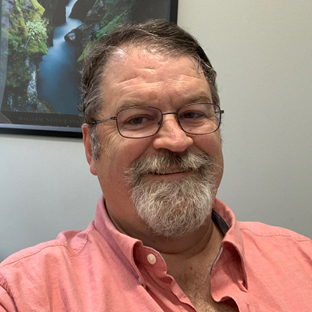
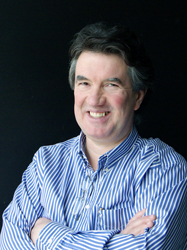
Pak Sing Leung serves as Senior Lecturer at Northumbria University's Faculty of Engineering and Environment, where he has maintained continuous academic service since completing his PhD in 1990. His career spans over three decades of research in mechanical systems with particular focus on sustainable materials and energy applications. Leung's research spans multiple critical engineering domains including advanced composite development for automotive applications, renewable energy systems integration, and marine infrastructure protection. His work demonstrates consistent emphasis on sustainable resource utilization, particularly through waste-to-resource conversion methodologies and eco-friendly material design. Recent publications show increasing focus on renewable energy systems optimization while maintaining strong connections to traditional mechanical engineering challenges. His publication portfolio reveals strong methodological diversity combining experimental validation with computational modeling approaches. Key research trajectories include: sustainable composite development (2022-2024), vehicle aerodynamics optimization (2017-2018), and marine coating technologies (2014-2017). This interdisciplinary approach bridges traditional mechanical engineering with contemporary sustainability challenges.
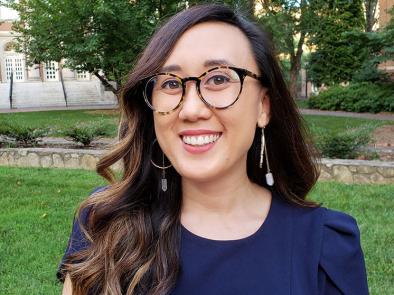
Dr. Marijel (Maggie) Melo is an Associate Professor at the University of North Carolina's School of Information and Library Science (SILS), specializing in equitable makerspace design and critical maker culture. She directs the Equity in Making (EITM) Lab and is a 2020 NSF CAREER Award recipient for her work on makerspaces' spatial equity. Her research focuses on creating inclusive STEM-rich learning spaces in academic libraries, particularly addressing gender and diversity inclusion through spatial analysis and pedagogical innovation. Education: B.A., California Lutheran University M.A. in English, California State University of Northridge PhD in English, University of Arizona (AAUW Fellow) Research emphasizes makerspace design's impact on user demographics, with key projects including the University of Arizona's iSpace/CATalyst Studios expansion and the Southwest's first women-only hackathon. She explores themes like 'pedagogical violence,' VR integration challenges, and post-pandemic makerspace adaptations. Awards include the Deborah Barreau Teaching Excellence Award (2020) and the Peter W. Likins Inclusive Excellence Award (2017). She co-authored Re-making the Library Makerspace and has presented at venues like the Google Developer Group Summit and MIRA conference. Teaching focuses on information literacy, diversity in services, and maker pedagogy through courses like INLS 490: Real-time Data Science in Makerspaces.
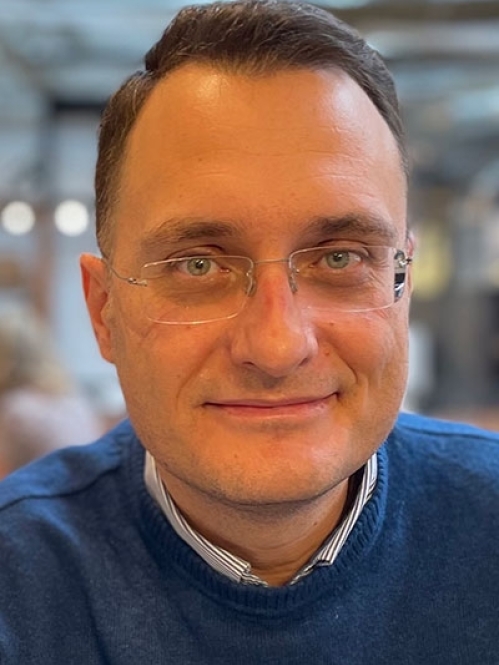
Fred Beyette, Ph.D., is a Professor and Founding Chair of the School of Electrical and Computer Engineering at the University of Georgia College of Engineering. His research focuses on developing point-of-care medical devices for neurologic emergencies, including stroke and traumatic brain injury (TBI), resulting in 12 patent applications. He has trained 55 graduate students and mentored over 125 undergraduates in research and design. Before joining UGA in 2017, Beyette held roles as a Professor of Electrical Engineering and Computing Systems at the University of Cincinnati, serving as Associate Department Head and Graduate Program Coordinator. He earned all three degrees in Electrical Engineering from Colorado State University and completed a postdoctoral fellowship at the University of Sheffield. His research spans biomedical sensor development, wearable health monitoring systems, and adaptive machine learning for medical diagnostics. Recent work includes EEG-based fatigue detection systems, anomaly detection in power grids, and optimization of online laboratory instruction during the pandemic. Publications highlight advancements in brain-computer interfaces (BCI), lightweight neural networks for P300 detection, and pedagogical strategies for remote engineering education. Beyette’s lab focuses on translating engineering innovations into clinical and industrial applications through interdisciplinary collaboration.
Aggelos Bletsas is a Full Professor in the Department of Electrical and Computer Engineering at Rutgers University. Previously, he held academic positions at the Technical University of Crete, where he served as Assistant Professor (2009–2014), Associate Professor (2014–2018), and Full Professor (2018–2024). His research focuses on scalable wireless communication, sensor networks, RFID systems, energy harvesting, and low-power IoT devices. He leads projects on batteryless backscatter sensors for precision agriculture and ambient-powered inference networks. Education: Ph.D. in Media Arts & Sciences (MIT, 2005) M.Sc. in Media Arts & Sciences (MIT, 2001) Diploma in Electrical & Computer Engineering (Aristotle University of Thessaloniki, 1998) Research interests include wireless sensor networks , RFID localization , signal processing for communication , and energy harvesting . His work emphasizes ultra-low-power, low-cost sensors deployable in agriculture and environmental monitoring. Key contributions include commodity-radio-based RFID localization and smartphone-readable backscatter sensors. Honors include IEEE Fellow (202?), IEEE Communications Society Distinguished Lecturer (2022–2024), and multiple best paper awards. His students have won IEEE VTS/AES Greek Chapter Best Thesis Awards (2012, 2013) and ComSoc Student Competition prizes. He serves as Area Editor for IEEE Transactions on Wireless Communications and is a top-2% global scientist per Stanford rankings. Advising and grants: Supervised over 15 students, with notable advisees listed in 'students'. His research has received ERC Starting Grant (A rating) and industry collaborations. Active in IEEE committees and conference organization. Labs and teams: Co-director of WINLAB (Wireless Information Network Laboratory) at Rutgers, focusing on wireless systems and IoT. Collaborates with industry partners on RF energy harvesting and backscatter communication prototypes.
Dr. Lenos Hadjidemetriou is a Research Lecturer at the KIOS Research and Innovation Center of Excellence, University of Cyprus. He holds a Diploma in Electrical and Computer Engineering from NTUA (2010) and a Ph.D. in Electrical Engineering from the University of Cyprus (2016). His research focuses on renewable energy integration, energy storage systems, power electronics control, and smart grid cyber-security. He leads projects like OneNet, Smart5Grid, and national initiatives such as EMPOWER, collaborating with entities like the Cyprus Transmission System Operator. Research interests include grid resilience, digital twins, and ancillary services. He developed advanced research labs at the University of Cyprus for power systems testing and renewable energy applications. Current projects explore energy storage systems for grid ancillary services and cyber-security defenses against man-in-the-middle attacks. He has published over 75 papers, emphasizing smart grid challenges such as voltage management, harmonic mitigation, and 5G-enabled grid monitoring. His work bridges theoretical advancements with practical implementations, such as demonstrating 5G solutions for real-time grid control and developing thermal models for inverter reliability. Ongoing efforts include pilot projects for battery and flywheel storage systems to enhance grid stability. Grants and collaborations span European (Horizon 2020) and national funding, industry partnerships, and KIOS CoE’s complementary support from Imperial College London. His contributions address both technical and systemic challenges in transitioning to sustainable energy systems.
MALAK Derya is an Assistant Professor at EURECOM's Communication Systems department, specializing in networked distributed computing systems. Her research focuses on optimizing communication and computation trade-offs in networks, with a strong emphasis on network coding, information theory, and wireless communication systems. She holds a dual role in advancing theoretical foundations and practical implementations of distributed computing frameworks. Dr. Malak has received prestigious recognitions, including the Best Paper Awards at WiOpt 2023 and WIOPT 2022 for her work on content distribution optimization and random access protocols. Her research explores cutting-edge topics such as non-linear function computation, structured coding for matrix operations, and congestion-aware job scheduling in real-time systems. Key Research Areas: Distributed Algorithms, Network Coding, Machine Learning Systems, Wireless HetNets, and Multi-Server Architectures Awards: WiOpt 2023 Best Paper, WIOPT 2022 Best Paper Professional Activities: Invited speaker at major conferences and workshops, including the National Center on Networks and Systems for Digital Transformation Her work bridges theoretical insights with practical engineering solutions, addressing critical challenges in modern distributed and networked systems.
Dirk Slock is a Professor at EURECOM's Communication Systems department. His research focuses on advanced signal processing for wireless communications, including transmitter/receiver design for 4G/5G systems, Massive MIMO, stochastic geometry, and audio signal processing. He has contributed to areas like interference management, compressive sensing, and Bayesian methods. Slock teaches courses on statistical signal processing and wireless communication techniques. His notable awards include IEEE Fellow (2006) and EURASIP Fellow (2015). Collaborations with students like Christo Kurisummoottil Thomas have yielded Best Student Paper Awards at SPAWC 2018. His work addresses challenges in cell-free MIMO, semi-blind channel estimation, and secure communication systems. Recent research trends explore ultra-massive MIMO signal detection, dynamic channel prediction with tensor methods, and cell-free network optimization. His publications span 639 entries, emphasizing practical implementations of theoretical signal processing advancements.
Dr. Scott Doyle is an Interdisciplinary Fellow in the School of Natural and Computing Sciences at the University of Aberdeen. His research spans theoretical, numerical, and experimental plasma physics with applications in aerospace propulsion, nuclear fusion, and plasma-driven electrochemistry. He is actively supervising and accepting PhD students in Physics. Scott's research focuses on low-temperature plasma physics, magnetic confinement fusion (particularly in the SMART tokamak), plasma propulsion systems, and the control of plasma-liquid interactions. His work integrates electromagnetism, chemical physics, and aerospace engineering principles to develop advanced plasma technologies. Key areas include tailored voltage waveforms in RF and capacitive plasmas, energy efficiency in microthrusters, and plasma-material interactions. The recent publications highlight a strong trend in interdisciplinary plasma applications: from fusion reactor design and tokamak engineering to innovative plasma propulsion and plasma-electrochemical systems. His work increasingly explores the coupling of acoustic structuring with plasma-liquid interfaces, opening new pathways for sustainable chemistry and materials processing. Scientific Awards: None listed in the provided text. Dr. Doyle is actively involved in interdisciplinary research and innovation at the University of Aberdeen. He supervises PhD students in plasma physics and related fields and contributes to large-scale collaborative projects such as the SMART tokamak development. While specific grants are not mentioned, his publications indicate involvement in advanced fusion and propulsion research, likely supported by national and international funding bodies. His team collaborates with experts in plasma modeling, aerospace engineering, and materials science. His research is conducted within the interdisciplinary plasma research group at the University of Aberdeen, contributing to both fundamental science and industrial applications. The group engages in experimental, computational, and theoretical studies, with strong ties to fusion energy and aerospace technology development.
Virginia Dignum is Professor of Responsible Artificial Intelligence and Director of the AI Policy Lab at Umeå University's Department of Computing Science. She serves as senior advisor for AI policy to the Wallenberg Foundations and is an active member of the UN High Level Advisory Body on AI. Her institutional affiliations include the Faculty of Technology Policy and Management at Delft University of Technology. Her research centers on the complex interdependencies between people, organizations, and technology. Key interests include: Responsible AI: Moral/ethical issues in autonomous agent teams and regulatory frameworks Social interaction formalization: Developing computational architectures for agent deliberation based on social practices Human-agent teamwork: Investigating negotiation, trust, and collaboration dynamics in socio-technical environments Her work bridges theoretical AI foundations with real-world policy implementation. Analysis of her recent publications reveals strong focus on AI governance frameworks, explainability mechanisms, and fairness operationalization. Key trends include development of context-sensitive ethical assessment tools, regulatory sandbox implementations, and formal models for human-AI coevolution. Her research increasingly addresses planetary-scale AI impacts and children's rights in digital environments. Major recognitions include: Election to Swedish Royal Academy of Engineering Sciences (IVA), 2020 Fellowship in European Artificial Intelligence Association (EURAI), 2018 Veni Fellowship from NWO for agent-based organizational frameworks, 2006 AI Ethics Professional of the Year award, 2022 Dignum actively shapes global AI policy through leadership roles in the UN High Level Advisory Body, Global Partnership on AI (GPAI), and World Economic Forum Council on AI. She chairs major conferences including AAMAS'24 and serves as Ethics Chair for AAAI'24. Her advisory work extends to the European Commission, IEEE Global Initiative, and UNESCO AI Ethics Recommendation implementation. Current initiatives include the Vatican lecture series on AI ethics and regional AI policy development in Västerbotten. She directs Umeå University's AI Policy Lab, focusing on translating ethical principles into actionable governance frameworks. The lab develops tools for regulatory compliance assessment and stakeholder engagement in AI deployment. Recent projects address digital contact tracing governance and AI's impact on democratic processes.
Gro Klæboe is an Associate Professor in the Department of Electric Energy at NTNU. She holds a PhD in stochastic bidding optimization from NTNU (2015). Her research focuses on energy systems, renewable integration, and hydropower optimization with emphasis on electricity market dynamics, stochastic modeling, and decision-making under uncertainty. Key contributions include analysis of hydropower bidding strategies, solar-hydro complementarity, and energy pricing mechanisms. She has published extensively in journals like Applied Energy and IEEE conference proceedings, addressing topics such as imbalance cost management, market liquidity, and blockchain-based energy trading platforms. Teaching responsibilities include courses on energy systems planning (TET4565) and power market optimization (ET8209). Her outreach activities involve industry seminars on intraday trading strategies and reserve bidding optimization. Current research trends emphasize Nordic power system transformation and renewable energy integration challenges.
Andres Barrado Bautista is a Full Professor in the Department of Electronic Technology at the School of Engineering, Carlos III University of Madrid (UC3M). He leads research within the Electronic Power Systems Group (GSEP), focusing on power electronics, energy conversion, and their applications in aerospace, electric vehicles, and renewable energy systems. His work bridges theoretical modeling and practical implementation, with a strong emphasis on high-efficiency DC-DC converters, fuel cell integration, and smart energy management. PhD in Electrical Engineering (specific date not provided) His research interests center on power electronics for energy systems, including modeling and control of DC-DC converters, fuel cells, batteries, and supercapacitors. He has made significant contributions to the development of advanced converter topologies for photovoltaic systems, electric propulsion in aerospace, and hybrid electric vehicles. His work integrates system-level black-box modeling, small-signal analysis, and real-time digital control, often applied to complex embedded and distributed power architectures. The recent publications (2020–2025) highlight a strong trend in high-performance power converters for space applications (e.g., electrospray thrusters), biomedical devices (e.g., wireless pacemaker charging), and renewable integration. The articles reflect expertise in magnetic component modeling, converter stability, and advanced control techniques, with frequent publication in IEEE Transactions journals. He has supervised numerous theses and leads a wide portfolio of research projects funded by national agencies (AEI, CAM), EU programs, and industry partners such as Airbus, Siemens, CIEMAT, and SENER. Convertidor CC-CC reductor y elevador, método de conversión CC-CC, y planta fotovoltaica que incorpora dicho convertidor (2019) Convertidor y método de conversión bidireccional de corriente continua a corriente continua sin aislamiento galvánico (2019) Active control procedures for the connection of very capacitive loads using SSPCs (2017) Active control procedures for the connection of very capacitive loads using SSPCs (2014) Método y dispositivo de transformación de corriente continua en corriente alterna (2014) Método y sistema de alimentación de una carga constituida por una pluralidad de cargas elementales, en particular de LED (2013) He has secured substantial research funding as principal investigator on projects such as SMARTGREENERGY, ECOSIVE, and several initiatives related to hydrogen-powered drones and space propulsion. He also actively collaborates on projects involving intelligent modular converters, energy storage, and electromagnetic compatibility. His lab, the Electronic Power Systems Group, works on both simulation and experimental validation of power electronics systems, with applications ranging from microsatellites to electric transportation.
Judyth Twigg is a Professor in the Department of Political Science at Virginia Commonwealth University (VCU), within the College of Humanities and Sciences. Her research focuses on public health, demography, and health systems reform in Eurasia, as well as evaluations of multilateral development bank projects in human capital and public sector management globally. Education: B.S. in Physics, Carnegie Mellon University, 1984 M.A. in Political Science and Russian/East European Studies, University of Pittsburgh, 1986 Ph.D. in Political Science and Security Studies, Massachusetts Institute of Technology, 1994 Her research interests include public health policy in Russia and Ukraine, vaccine diplomacy, health system resilience during crises, and the political economy of development. She has extensively studied how health reforms unfold in post-Soviet states and how international institutions influence domestic policy trajectories. Her work combines qualitative political analysis with public health evaluation methodologies. Her recent publications examine the public health consequences of the Russian invasion of Ukraine, Russian vaccine diplomacy, and development evaluation in the Balkans. These works reflect a growing trend toward policy-relevant, interdisciplinary scholarship at the intersection of global health, security, and governance. Scientific Awards: SCHEV Outstanding Faculty Award, 2005 VCU College of Humanities and Sciences Elske v.P. Smith Distinguished Lecturer Award, 2018 "Best of 2021" article award from Council on Foreign Relations "Think Global Health" site, for "Why Aren't Russians Getting Vaccinated" (with Lillian Posner), July 2021 Twigg has served as a consultant evaluator for the World Bank’s Independent Evaluation Group, the Asian Development Bank’s Independent Evaluation Department, and the Inter-American Development Bank’s Office of Evaluation and Oversight. These roles involved leading high-level assessments of country partnership frameworks and development projects. She has also advised the Center for Strategic and International Studies and contributed to policy reports on health reform in Ukraine. She teaches courses such as Ukrainian Politics and Society (with Kyiv School of Economics), Diplomacy Lab (with U.S. Department of State), International Political Economy, Politics of Global Health, and Political Science Senior Seminar, indicating strong engagement with student mentorship and real-world policy training. She is affiliated with several professional and policy institutions, including serving as a Trustee of the Eurasia Foundation and as a Member of the Council on Foreign Relations, reflecting her influence in both academic and policy circles.
Jon Power is a Lecturer at the University of Chester within the Faculty of Health, Medicine and Society . He transitioned to skeletal biology in 1996 after completing his PhD in helminth parasitology at the University of Portsmouth (collaborating with the National Institute for Medical Research, Mill Hill, London). His academic journey includes technical and postdoctoral positions at the University of Cambridge's Bone Research Group and Orthopaedic Research Unit before becoming a full-time lecturer in 2012. Education: BSc Biological Sciences, University of Salford PhD Nematode Parasitology, University of Portsmouth PG Cert Higher Education, University of Chester His research focuses on skeletal diseases , particularly osteoporosis and osteocyte biology . Key areas of investigation include cortical bone microstructure in hip fractures, bone remodeling dynamics, and cartilage repair mechanisms. His work employs advanced techniques like Fourier transform infrared imaging and ovine models for joint repair studies. Teaching responsibilities span histology , microscopy , histopathology , and parasitology . Collaborative research with institutions like the University of Cambridge and clinical partners has produced significant publications in journals including Bone , Journal of Bone and Mineral Research , and Osteoporosis International .
Prof. Jamie Paik is a Full Professor at the Swiss Federal Institute of Technology (EPFL), where she serves as Director of the Reconfigurable Robotics Lab (RRL) and is a core member of the Swiss NCCR robotics group. She holds multiple academic appointments across EPFL's School of Engineering, including positions in the Institute of Mechanical Engineering (IGM), STI-SMT SMT-ENS, and STI-SGM SGM-ENS. Additionally, she serves as a PhD program committee member for the Doctoral Program in Robotics, Control and Intelligent Systems. Her research focuses primarily on soft robotics , origami-inspired robotics , and wearable technologies . Prof. Paik's work leverages multi-material fabrication and smart material actuation to develop novel robotic designs that push the physical limits of materials and mechanisms. Her current research includes self-morphing Robogami (robotic origami) that transforms from planar shapes to 2D or 3D structures through predefined folding patterns, similar to traditional paper origami. Prof. Paik has published extensively on robotic origami, haptic feedback systems, and soft actuators, with her most recent work (2024-2025) focusing on vibration of soft twisted beams for locomotion, semi-autonomous surgical assistance, plug-and-play pneumatic systems, and data-driven kinematic modeling. Her research demonstrates a clear trajectory toward more adaptive, reconfigurable robotic systems with applications in surgery, human-robot interaction, and wearable technologies. Among her notable achievements, she developed a 7-DoF humanoid arm during her PhD at Seoul National University (sponsored by Samsung Electronics), which was the lightest in literature at that time (3.7kg including the 8-DoF hand). During postdoctoral work at Pierre Marie Curie University, she developed the internationally patented JAiMY laparoscopic tools now commercialized by Endocontrol-medical.com. PhD: Seoul National University (Humanoid Arm and Hand Design) Postdoc: Institut des Systems Intelligents et de Robotic, Université Pierre Marie Curie Postdoc: Harvard University's Microrobotics Laboratory Prof. Paik has supervised numerous PhD students, both current and past, including Bakir Alihan, Demirtas Serhat, Jiang Shaopeng, Kanno Ryo, Schüssler Alexander Michael, and Wang Ziqiao. Her teaching includes Topics in Autonomous Robotics, Mechanical Product Design and Development, and Advanced Design for Sustainable Future.
Allen Garner is a Professor and Graduate Program Chairman in Purdue University's School of Nuclear Engineering, with courtesy appointments in Electrical and Computer Engineering and Agricultural and Biological Engineering. He holds a Ph.D. in Nuclear Engineering from the University of Michigan (2006) and maintains an active research program at the intersection of plasma physics, pulsed power, and biomedical applications. Education: Ph.D. Nuclear Engineering, University of Michigan, Ann Arbor (2006) M.S. Electrical Engineering, Old Dominion University (2003) M.S.E. Nuclear Engineering, University of Michigan (1997) B.S. Nuclear Engineering, University of Illinois, Urbana (1996) Garner's research focuses on biomedical applications of pulsed power and plasmas , including platelet activation, bacterial inactivation, and stem cell manipulation using electric fields. His theoretical work spans plasma physics (space-charge-limited current in nonplanar diodes), pulsed power (nonlinear transmission lines), and high-power microwaves (crossed-field amplifiers). The BioElectrics and ElectroPhysics (BEEP) Lab conducts multidisciplinary research bridging theory and experiment. Analysis of his recent publications reveals strong trends in mathematical modeling of electron dynamics (particularly space-charge effects in nonplanar geometries) and biomedical applications of electric pulses (targeting cellular/subcellular structures). His work demonstrates consistent innovation in both fundamental plasma physics and translational medical applications. Garner maintains active military service as a Captain in the U.S. Navy Reserves, commanding a unit supporting naval shipyards. His professional affiliations include IEEE (Senior Member), American Physical Society, and nuclear engineering honor societies. He holds multiple patents related to electric pulse generation and biomedical applications. The BEEP Lab drives his research program, developing novel composites for high-power microwave devices while exploring electroporation mechanisms for medical applications. His work demonstrates significant collaboration across engineering disciplines and with medical researchers, particularly in platelet activation and bacterial inactivation studies.