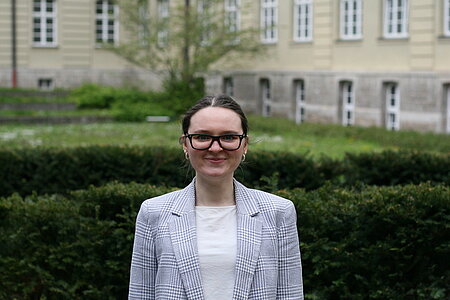
Weiwei Hu is a Professor in the Department of Mathematics at the University of Georgia, specializing in applied mathematics with a focus on control theory and fluid dynamics. Her research bridges theoretical analysis and computational methods to address complex problems in partial differential equations and optimal control systems. She received her Ph.D. in Mathematics from Virginia Tech, establishing the foundation for her expertise in mathematical modeling and analysis. Her educational background directly informs her innovative approaches to fluid dynamics and control problems. Professor Hu's research spans approximation and mathematical control theory of partial differential equations, optimal control of transport and mixing via fluid flows, well-posedness and long-time behavior of mathematical fluid dynamics, data-driven optimal control for network dynamics, computational methods for model reduction, and reliability analysis of renewable systems. She develops advanced theoretical frameworks and numerical algorithms to solve boundary control problems in Stokes and Navier-Stokes flows, with applications in engineering and environmental systems. Her publication record from 2018-2023 reveals consistent advancement in fluid flow control, particularly in optimal mixing and transport phenomena. She has pioneered numerical methods for boundary control of fluid systems while expanding into data-driven approaches for network dynamics and renewable energy applications. Her collaborative work with institutions including Kansas State University, Missouri S&T, and Carnegie Mellon University demonstrates the interdisciplinary impact of her research. Her scientific contributions have been recognized with the prestigious Humboldt Research Fellowship for Experienced Researchers in 2024. Professor Hu has secured over $1.5 million in research funding as principal investigator from NSF, AFOSR, and DARPA, including a 2023-2026 AFOSR grant on hybrid control of semi-dissipative systems and multiple NSF collaborative projects addressing deep-learning-enabled optimization for power systems and computational methods for optimal transport. Her grant portfolio reflects leadership in securing competitive funding for high-impact mathematical research. She actively collaborates with researchers across the United States and Europe on interdisciplinary projects integrating PDE modeling, machine learning, and topology analysis for applications in MRI analysis and renewable energy systems, demonstrating strong leadership in collaborative mathematical research.