معرفی
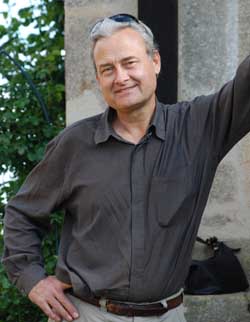
Alan L. Kolata serves as the Bernard E. and Ellen C. Sunny Distinguished Service Professor in the Department of Anthropology at the University of Chicago, with additional affiliations through the Committee on Southern Asian Studies and the Committee on Environment, Geography and Urbanization.
His academic foundation includes a PhD from Harvard University (1978), establishing his expertise in archaeological and anthropological methodologies.
Dr. Kolata's research spans archaeology and ethnohistory, preindustrial urbanism, agricultural systems, and human-environment interactions, with regional focus on the Andes, Mesoamerica, and Southeast Asia. His recent work emphasizes agroecological systems, the human dimension of global change, and urban social ecology, particularly through the Cambodia Project which investigates socio-ecological transformations in the Lower Mekong Basin. His interdisciplinary approach integrates environmental science, anthropology, and development studies to analyze ancient civilizations and contemporary migration patterns.
His publication record reveals consistent focus on Andean civilizations (especially Tiwanaku and Inca) and Southeast Asian environmental dynamics, with increasing emphasis on climate change impacts and rural-urban migration since 2010. Recent works demonstrate sophisticated integration of hydrological modeling, paleoenvironmental data, and ethnographic fieldwork.
His primary scientific recognition includes the Bernard E. and Ellen C. Sunny Distinguished Service Professorship.
- Bernard E. and Ellen C. Sunny Distinguished Service Professorship
Dr. Kolata has secured significant funding from the Neubauer Collegium, Center for International Social Science, Social Science Research Center at the University of Chicago, and National Science Foundation. His research group employs mixed-method approaches including household surveys, socio-economic censuses, and distributed ethnography to study environmental transformation, migration, and urbanization, particularly examining how large-scale infrastructure projects reshape human-environment relationships.
He directs the Cambodia Project Research team, which investigates lived experiences of rural-to-urban migrants, analyzing economic, environmental, and social drivers of migration while documenting changing connections to place and community in the context of dam construction and economic transformation.