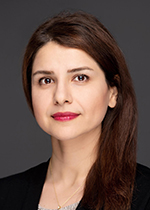
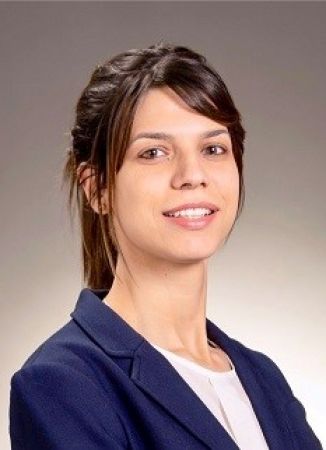
Dr. Malena Sabate Landman is a Research Fellow at the Mathematical Institute of the University of Oxford, where she is a member of the Numerical Analysis research group. Her office is located in the Andrew Wiles Building at the Radcliffe Observatory Quarter in Oxford. Her primary research areas are: Numerical Analysis Inverse Problems Bayesian Methods Optimization Computational Mathematics Medical Imaging Recent publications in 2025 highlight her contributions to the development of flexible Krylov subspace methods for Bayesian inverse problems, inner-product free iterative methods for large-scale inverse problems, and robust optimization techniques. She has also developed the TIGRE v3 toolbox for computed tomography reconstruction. As a member of the Numerical Analysis group at the Mathematical Institute, she collaborates on advancing computational methods for scientific and medical applications.
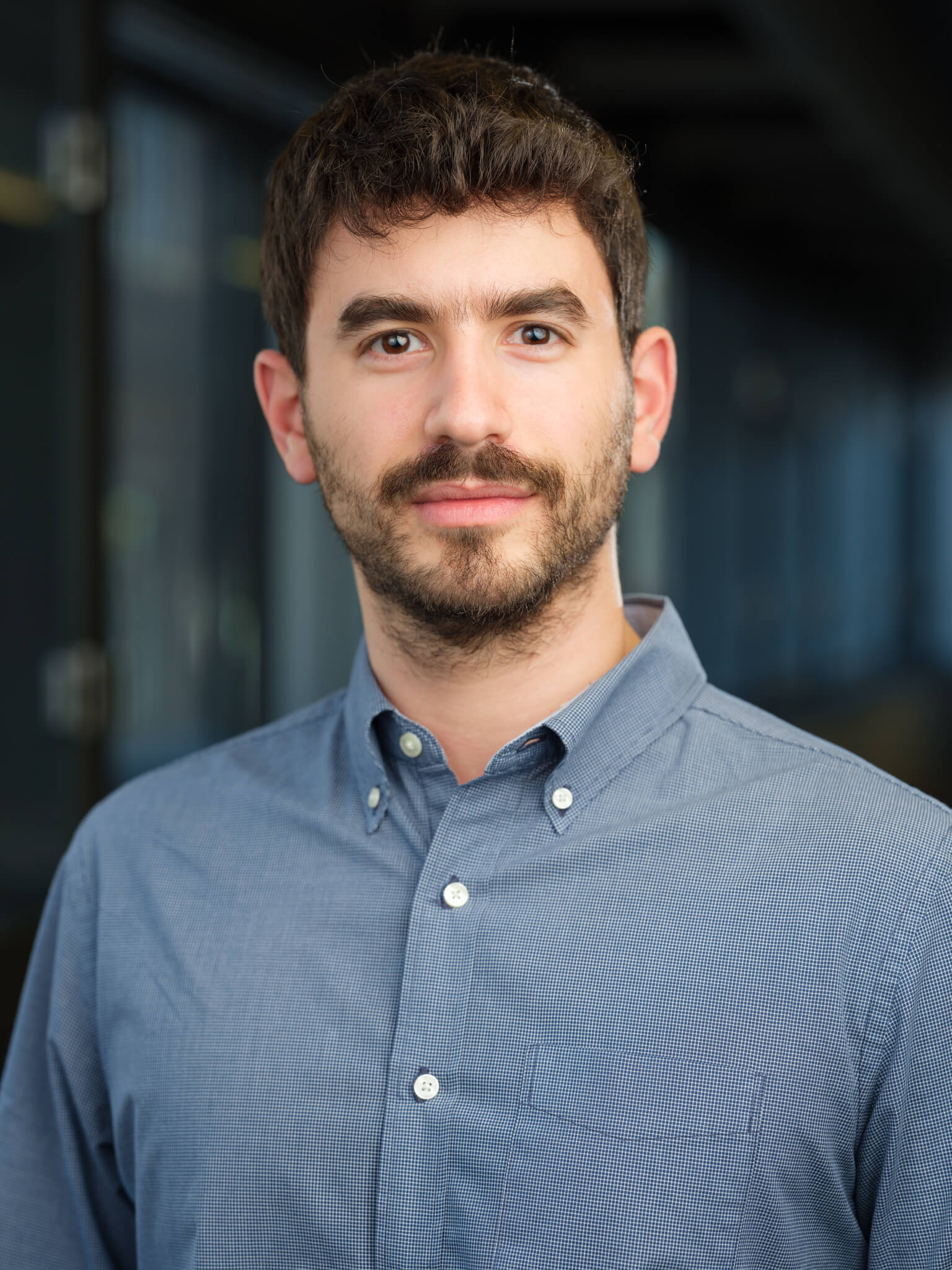
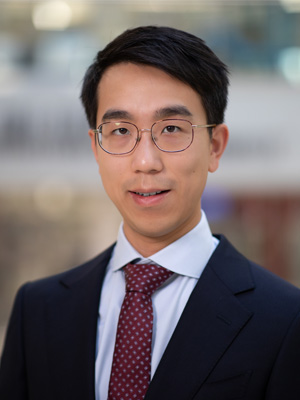
Xiaoming Huo is the A. Russell Chandler III Professor at the H. Milton Stewart School of Industrial and Systems Engineering at Georgia Tech, where he also serves as Associate Director for Research at the Institute for Data Engineering and Science (IDEaS). He holds executive leadership positions including Director of the NSF-funded Transdisciplinary Research Institute for Advancing Data Science (TRIAD) and oversees Georgia Tech's Master of Science in Analytics program in Shenzhen. Education includes: Ph.D. in Statistics from Stanford University (1999) M.S. in Electrical Engineering from Stanford University (1997) B.S. in Mathematics from University of Science and Technology of China (1993) Dr. Huo's research integrates statistical theory with computational methods, focusing on: Foundational machine learning : Theoretical analysis of deep neural networks, adversarial training frameworks High-dimensional statistics : Sparse modeling, regularization techniques, and minimax optimization Data science applications : Anomaly detection, generative modeling, and domain adaptation methods His work consistently bridges theoretical rigor with practical implementations. Recent publications (2023-2025) demonstrate strong focus on: adversarial learning frameworks, neural network theory, anomaly detection systems, and high-dimensional statistical methods. Common themes include theoretical guarantees for deep learning architectures, optimization in statistical estimation, and robust model formulations. Significant scientific recognition includes: Golden Prize, International Mathematical Olympiad (1989) IEEE Senior Member (2004) Sigma Xi Young Faculty Award (2005) Emerging Research Fronts in Mathematics (2006) Multiple competitive fellowships during academic training Leadership in major NSF initiatives includes directing TRIAD and contributing to the NSF AI Institute: ACTION. Manages interdisciplinary teams across data engineering, statistical theory, and machine learning applications.
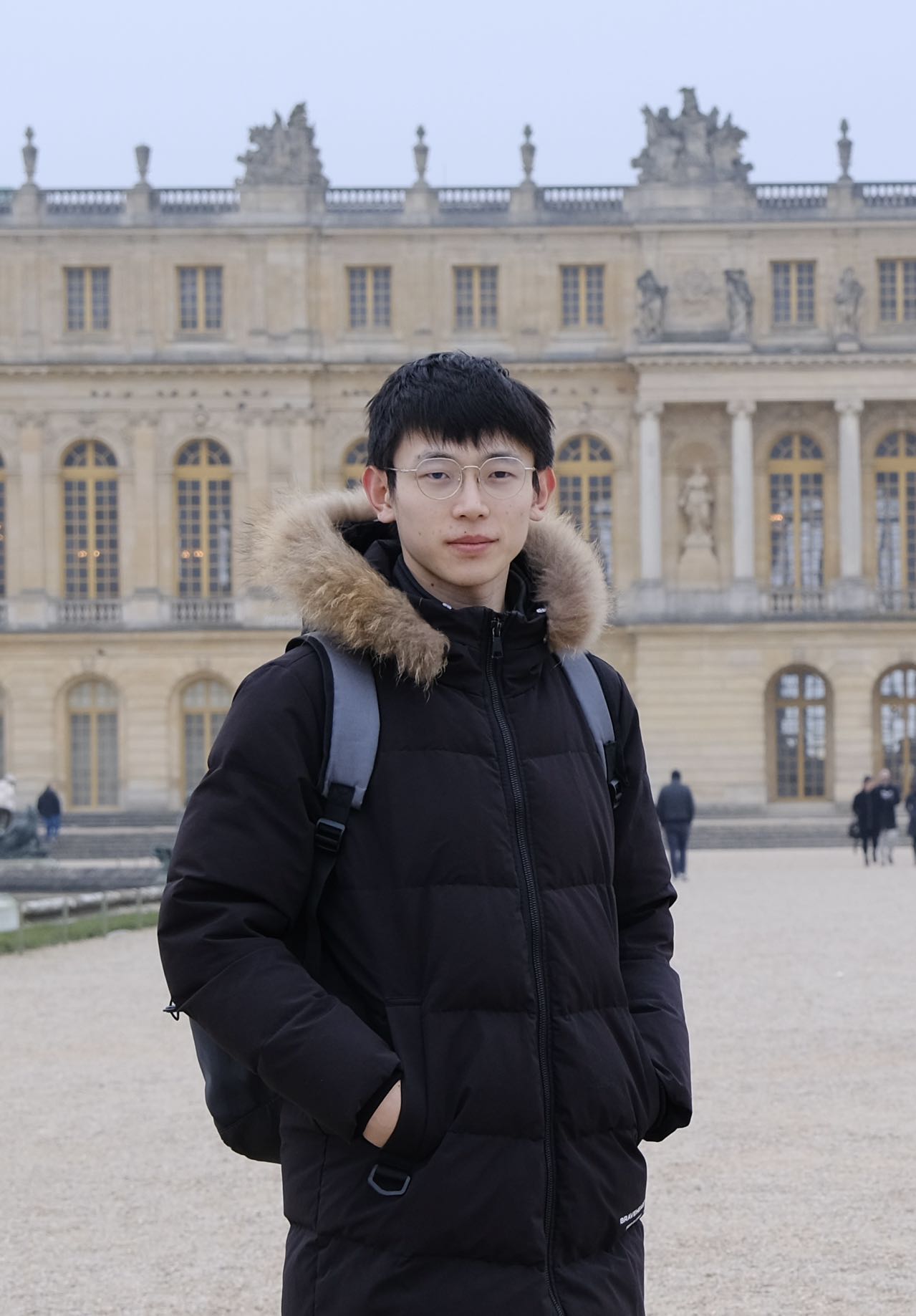
Nam Ho-Nguyen is a Senior Lecturer in the Discipline of Business Analytics at the University of Sydney Business School. He holds a PhD from the Tepper School of Business at Carnegie Mellon University and an Honours degree in Mathematics from the Australian National University. His research focuses on stochastic, robust, and data-driven optimization techniques for decision-making under uncertainty, combining methods from statistics, machine learning, and traditional optimization. Education: PhD in Operations Research, Carnegie Mellon University (2019) Bachelor of Science (Honours) in Mathematics, Australian National University Research Interests: Nam’s work addresses decision-making in uncertain environments through optimization frameworks. He explores applications in finance, healthcare, transportation, and technology, emphasizing scalability and computational efficiency. Key areas include bilevel optimization, adversarial machine learning, and distributionally robust chance-constrained programming. Awards: INFORMS Optimization Society Young Researchers Prize (2022) Gerald L. Thompson Doctoral Dissertation Award (2019) Australian Research Council Discovery Early Career Researcher Award (DECRA) ($470K AUD) Teaching & Grants: Teaches QBUS1040, QBUS2310, BUSS4932, and QBUS6820 courses. Recipient of ARC grants for research on multi-stage optimization with contextual data and forecast reconciliation ($625K AUD). Supervises research students on scheduling problems and multi-agent systems. Lab/Team: His work involves collaborations on optimization tools for choice modeling, electronic trading, and solution design in IT services, supported by interdisciplinary teams at the University of Sydney and international institutions.
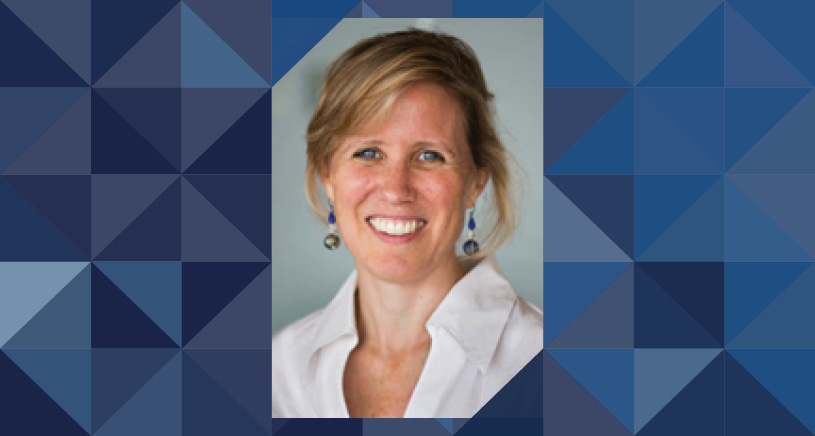
Prof. Dr. Frauke Liers holds the Professorship of Optimization under Uncertainty & Data Analysis at the Department of Data Science (DDS), Friedrich-Alexander-University Erlangen-Nürnberg. Her research focuses on robust and distributionally robust optimization, mathematical programming, and applications in energy systems, healthcare logistics, and quantum computing. Email: frauke.liers@fau.de ResearchGate: Frauke Liers Research Interests span optimization under uncertainty, data-driven mathematical programming, and interdisciplinary applications. Key areas include: Distributionally robust optimization with scenario reduction and chance constraints Quantum computing optimization for gate routing and noise suppression Energy system modeling (photovoltaics, gas networks, electricity networks) Healthcare logistics (patient transport scheduling under uncertainty) Nanoparticle technology and chemical process optimization Recent Publications emphasize: Advancements in quantum circuit optimization (2025) Explainable optimization methods (2024) Robust approaches for particle precipitation control (2024) Dynamic trajectory optimization (2023) Time-expanded models for network flows (2022)
Somayeh Sojoudi is an Associate Professor in the Departments of Electrical Engineering & Computer Sciences and Mechanical Engineering at UC Berkeley, affiliated with the Berkeley Institute for Data Science (BIDS). Her research focuses on Artificial Intelligence, Control Systems, Optimization Theory, and Power and Energy systems. She teaches courses like EECS 127 and EECS 227AT on optimization models in engineering. Education: PhD in Control & Dynamical Systems from the California Institute of Technology (2013). Research Interests : AI and Machine Learning, particularly neural network robustness and generative models Optimization methods for non-convex and low-rank problems Control systems, power grids, and distributed energy resources Game-theoretic approaches in dynamic systems Awards : NSF CAREER Award (2021) ONR Young Investigator Award (2021) INFORMS Optimization Society Prize for Young Researchers (2015) IEEE PES Best-of-the-Best Conference Paper Award (2022) Her work bridges theoretical advancements in optimization with practical challenges in energy systems and AI, emphasizing robustness and safety-critical applications.
Michele Caprio is a Lecturer (Assistant Professor) in Machine Learning and Artificial Intelligence at The University of Manchester. He holds a PhD in Statistics from Duke University (2022) and completed a postdoctoral fellowship at the University of Pennsylvania’s Department of Computer and Information Science. His research focuses on probabilistic machine learning, particularly imprecise probabilistic techniques for uncertainty quantification. He is actively accepting PhD students for projects such as 'Multimodal Credal Learning Theory' and is a member of the London Mathematical Society. Education: PhD in Statistics, Duke University (2022) Postdoctoral Researcher, University of Pennsylvania (Computer and Information Science) Research Interests: Dr. Caprio’s work bridges theoretical foundations and practical applications in machine learning, emphasizing uncertainty quantification through imprecise probabilities. Key areas include conformal prediction, distributionally robust optimization, and the ergodicity of Markov processes. His methods address challenges in ambiguous ground truth, distribution shifts, and epistemic uncertainty in AI systems. Scientific Awards: IJAR Young Researcher Award (2023) IMS New Researchers Travel Award (2023) IMS Hannan Travel Award (2022) Aleane Webb Dissertation Research Fellowship (2021) Advising & Projects: As PI of the MCAIF: Centre for AI Fundamentals project, he collaborates with researchers and students on AI fundamentals. His advisees include over 15 PhD candidates focusing on topics like distribution shift recovery, imprecise neural networks, and continual learning. Labs/Teams: Central to his work is the MCAIF initiative, a multidisciplinary team advancing theoretical and applied AI research through collaborative projects.
Dr. Anastasios Tsiamis is a Lecturer at the Department of Information Technology and Electrical Engineering at ETH Zürich, working in the Automatic Control Laboratory (Professur Control and Computation). His research focuses on the intersection of control theory and machine learning, specifically investigating how system theoretic properties affect the statistical difficulty of learning in system identification, online estimation, and control. Dr. Tsiamis received his Diploma (MEng, five-year degree) in Electrical and Computer Engineering from the National Technical University of Athens (NTUA). He completed his Ph.D. in Electrical and Systems Engineering at the University of Pennsylvania under Professor George Pappas, following graduate research with Professor Petros Maragos and undergraduate work with Professor Kostas J. Kyriakopoulos at NTUA. His primary research areas include Statistical Learning and Control, Data-Driven Control, Online Learning, Risk-Aware Control, and Security and Privacy in Networked Control Systems. Dr. Tsiamis has made significant contributions to understanding the fundamental statistical limits of learning in control systems, particularly focusing on sample complexity. His work on risk-aware optimization develops algorithms that safeguard against catastrophic events while maintaining good average performance, and his security research addresses eavesdropping attacks in remote estimation and motion planning. Analysis of Dr. Tsiamis's recent publications reveals a strong focus on data-driven approaches to control theory with emphasis on distributionally robust methods, risk-aware optimization, and finite sample guarantees. His work bridges theoretical foundations with practical applications across system identification, online learning, and adaptive control, providing rigorous non-asymptotic guarantees for learning-based control algorithms. Dr. Tsiamis has received several notable research recognitions: Best student paper award at IEEE 61th Conference on Decision and Control (2022) Spotlight Presentation at 41st International Conference on Machine Learning (2024) Finalist for best student paper award at American Control Conference (2019) Finalist for young author prize at IFAC World Congress (2017) Oral presentation at 2nd L4DC Conference (2020) Dr. Tsiamis teaches Linear System Theory (227-0225-00L) at ETH Zürich and collaborates extensively with Professor John Lygeros, Professor Manfred Morari, and researchers from the University of Pennsylvania. His publication record demonstrates strong collaborative research across multiple institutions while advancing theoretical foundations of learning-based control. As an active member of the Automatic Control Laboratory at ETH Zürich, Dr. Tsiamis contributes to advancing control systems science through rigorous mathematical analysis and innovative algorithmic development, with applications spanning robotics, energy systems, and networked control.
Fei Miao is a Pratt & Whitney Associate Professor at the School of Computing, University of Connecticut, and a courtesy faculty member of the Department of Electrical & Computer Engineering. She serves as Director of the Miao Embodied AI Lab and is affiliated with the Institute for Advanced Systems Engineering. Previously, she was a postdoc researcher at the GRASP Lab and PRECISE Lab with Professors George J. Pappas and Daniel D. Lee at the University of Pennsylvania. Dr. Miao received her PhD in Electrical and Systems Engineering from the University of Pennsylvania in 2016, where she also earned a dual Master's degree in Statistics from the Wharton School. She completed her undergraduate studies at Shanghai Jiao Tong University, earning a Bachelor's degree in Automation with a minor in Finance in 2010. Her research focuses on developing the foundations for the science of Embodied AI, with emphasis on assuring safety, efficiency, robustness, and security of cyber-physical systems through the integration of learning, optimization, and control. Her technical expertise spans multi-agent reinforcement learning, robust optimization, uncertainty quantification, control theory, and game theory. These methods are applied to connected and autonomous vehicles, intelligent transportation systems, transportation decarbonization, smart cities, and power networks. Her work involves both theoretical development and practical implementation, including system modeling, theoretical analysis, algorithmic design, and experimental validation using real urban transportation data, simulators, and small-scale autonomous vehicles. Dr. Miao's publication record reveals a strong focus on robustness in AI systems for transportation applications, with recent work emphasizing uncertainty quantification, safety guarantees, and multi-agent coordination. Her research demonstrates a clear trajectory from foundational theoretical work to practical implementations in real-world transportation systems. Her notable awards include the prestigious NSF CAREER Award (2021) for "Distributionally Robust Learning, Control, and Benefits Analysis of Information Sharing for Connected and Autonomous Vehicles," a Best Paper Award at ICCPS'21 for "DeResolver: A Decentralized Negotiation and Conflict Resolution Framework for Smart City Services," and the "Charles Hallac and Sarah Keil Wolf Award for Best Doctoral Dissertation" during her PhD studies. Dr. Miao has secured significant research funding, including a $509,573 NSF CAREER Award (2021-2026) and a $2.3 million NSF collaborative grant as PI of UConn (2020-2023). She has also received multiple NSF grants for projects related to electric vehicle fleets, vehicular sensing, and control for smart city systems. She actively collaborates with researchers across institutions and has given talks at leading universities and industry research labs including CMU, Microsoft Research, Northeastern, Caltech, UCLA, USC, UCSD, Facebook FAIR, Lawrence Berkeley National Lab, UC Berkeley, Nvidia, Stanford, Princeton University, Columbia University, Waymo, and New York University.
Dr. Huong Ha is a Senior Lecturer in Computer Science at RMIT University's School of Computing Technologies, located at the City Campus in Australia. Her research focuses on trustworthy machine learning, automated machine learning, and data-driven software engineering. She holds an ORCID ID (0000-0003-2463-7770) and is actively involved in supervising Masters and PhD students. Prior to her academic role, she worked as a Data Scientist at Freelancer International Pty Limited in Sydney from 2017 to 2018. Her research interests emphasize practical applications of machine learning in software systems optimization, including root cause analysis for microservices, Bayesian optimization techniques, and performance prediction for configurable software. She has published extensively in top conferences such as ICSE, AAAI, and NeurIPS, addressing challenges in high-dimensional optimization, system monitoring, and algorithmic efficiency. Current supervision projects include topics like Explainable AI in Human-Agent Planning, Fraud Detection on Blockchain networks, and High-dimensional Bayesian Optimization via Evolutionary Computation. Her work bridges theoretical advancements with real-world software engineering problems, contributing to robust and scalable solutions in AI-driven systems.
Zifan Wang is a doctoral student and researcher at the Division of Decision and Control Systems (DCS), School of Electrical Engineering and Computer Science, KTH Royal Institute of Technology. He is jointly advised by Prof. Karl H. Johansson and Prof. Michael M. Zavlanos at Duke University. He holds a Master's and Bachelor's degree from the Honors School of Harbin Institute of Technology. His research focuses on decision-making under uncertainty, leveraging tools from Machine Learning , Optimal Transport , Game Theory , and Control Theory , with a special interest in generative models and risk-averse optimization . Recent publications highlight his work on risk-averse learning in online convex games, constrained optimization with decision-dependent distributions, and distributional reinforcement learning for LQR systems. His methodological contributions include zeroth-order gradient estimation, one-point sampling strategies, and residual feedback for variance reduction. Honors include a 2024 Travel scholarship from Björns Foundation and a 2023 Travel grant from Karl Engvers Foundation . He actively participates in peer review for top conferences (NeurIPS, ICLR, L4DC, CDC, ACC) and journals (IEEE Transactions on Automatic Control, Automatica).
Amy Cohn is a Professor at the University of Michigan School of Public Health and College of Engineering, with appointments in the Department of Health Management and Policy and Industrial and Operations Engineering. Her work focuses on applying operations research methodologies to healthcare systems optimization. Education PhD in Operations Research from Massachusetts Institute of Technology (2002) AB in Applied Mathematics from Harvard University (1991) Research Interests Dr. Cohn's research centers on improving healthcare delivery through operations research and systems engineering approaches, particularly for patient scheduling , resource allocation , and health information technology . She has developed simulation models for chemotherapy deferrals, surgical training efficiency, and glaucoma clinic wait times. Scientific Awards Arthur F Thurnau Professorship - recognizing excellence in teaching and research Publications Trends Her publications demonstrate a consistent application of discrete-event simulation , stochastic programming , and optimization techniques to address healthcare challenges including telehealth scheduling , residency training logistics , and patient safety improvements through engineering-clinical collaborations. Leadership Roles As Associate Director of the Center for Healthcare Engineering and Patient Safety, she leads multidisciplinary teams in developing practical solutions for complex healthcare operations problems.
Dr. Christopher Kirkbride is a Senior Lecturer in Management Science at Lancaster University's Management School. His research focuses on decision-making under uncertainty, employing methodologies such as stochastic dynamic programming, simulation, and approximate dynamic programming to address challenges in project scheduling, nuclear decommissioning, workforce planning, and asset management. He actively supervises PhD students and participates in interdisciplinary research groups like STOR-i and the Lancaster Intelligent Systems Centre. Key research projects include optimizing nuclear decommissioning processes and developing resource allocation strategies for dynamic environments. He has presented at major conferences such as EURO and IFORS, contributing to both academic and applied operational research communities. His work bridges theoretical advancements with practical applications, emphasizing robust solutions for stochastic systems. Dr. Kirkbride advises PhD students on topics including reinforcement learning applications and optimization for dynamic systems. His grants include projects funded through STOR-i, focusing on reinforcement learning safety and machine learning-optimization integration. He collaborates with teams specializing in simulation, stochastic modeling, and intelligent systems, further enhancing interdisciplinary research impact.
Karmel S. Shehadeh is an Assistant Professor at Lehigh University's Department of Industrial and Systems Engineering, affiliated with the College of Engineering. She holds a Ph.D. in Industrial and Operations Engineering from the University of Michigan, an M.S. in Systems Science and Industrial Engineering from Binghamton University, and a B.S.E in Biomedical Engineering from Jordan University of Science and Technology. Education: Ph.D., Industrial and Operations Engineering, University of Michigan M.S., Systems Science & Industrial Engineering (Health Systems), Binghamton University B.S.E., Biomedical Engineering, Jordan University of Science and Technology Research Interests: Dr. Shehadeh focuses on optimization under uncertainty, integer programming, and scheduling theory, with applications in healthcare operations, facility location, and transportation systems. Her work emphasizes equity-promoting solutions in healthcare resource allocation and stochastic modeling for medical systems. Research Trends: Her publications emphasize stochastic optimization frameworks for healthcare challenges, including surgical scheduling, facility equity, and disaster relief logistics. Notable contributions include integrating machine learning into healthcare analytics and advancing distributionally robust optimization methodologies. Awards: 2022 INFORMS MIF Paper Competition Winner, Lehigh University Awards (2023), and editorial leadership in top journals. Advising & Grants: Actively mentors students in optimization and healthcare analytics. Her work has been supported through postdoctoral fellowships at Carnegie Mellon's Heinz College and ongoing university grants. Labs/Teams: Leads interdisciplinary teams at Lehigh's Harold S. Mohler Laboratory, collaborating on healthcare operations and equity-focused projects.
Zhang Shixuan is an Assistant Professor in the Department of Industrial & Systems Engineering at Texas A&M University. His research focuses on mathematical optimization theory and its applications to data science, operations research, and systems engineering. Education: Ph.D. in Operations Research from Georgia Institute of Technology Postdoctoral: Institute for Computational and Experimental Research in Mathematics (ICERM), Brown University His primary research areas include: Polynomial Optimization Integer Optimization Stochastic Optimization Robust Optimization His recent publications explore advances in distributionally robust optimization, security-constrained power flow algorithms, and theoretical aspects of multistage stochastic programming. Key trends in his work emphasize computational efficiency, algorithm design for nonconvex problems, and applications to energy systems and convex geometry. Doctoral Advisees: Jiamin Chen and Qi Xiao.
Yini Gao is an Assistant Professor of Operations Management at the Lee Kong Chian School of Business, Singapore Management University. She holds a dual bachelor's degree in Business Administration and Chemical Engineering from the National University of Singapore (2012) and a Ph.D. in Decision Sciences from NUS (2017). Her research focuses on supply chain risk management, healthcare analytics, and distributionally robust optimization. She has received prestigious awards including the Lee Kong Chian Research Fellowship and multiple Dean's Teaching Honor Lists. Her work spans critical areas such as disruption risk mitigation in global supply chains, healthcare operations optimization (e.g., cancer screening strategies and pandemic response modeling), and strategic decision-making under uncertainty. She has published in top-tier journals like Management Science , Production and Operations Management , and Manufacturing & Service Operations Management . Education: B.A. Business Administration & Chemical Engineering, National University of Singapore (2008-2012) Ph.D. Decision Sciences, National University of Singapore (2013-2017) Dr. Gao’s research portfolio demonstrates expertise in applying advanced optimization techniques to real-world problems, with notable contributions to anti-counterfeiting strategies, inventory management systems, and public health policy design. Her recent work explores the intersection of technology flexibility and subscription-based business models in operations strategy.