Catherine Neish is an Associate Professor in the Department of Earth Sciences at The University of Western Ontario. She serves as the Associate Director of Research for Western Space and is a Co-Investigator on NASA's Dragonfly mission to Titan. Her research focuses on planetary radar observations, impact cratering processes, and the geological evolution of planetary surfaces, particularly on the Moon, Titan, and other Solar System bodies. Ph.D. in Planetary Sciences, University of Arizona (2008) B.Sc. in Combined Honours Physics and Astronomy, University of British Columbia (2004) Her recent publications highlight studies on lunar impact crater thermophysics, Titan's impact melt dynamics, and radar-based analyses of planetary surfaces. She has contributed to missions including Lunar Reconnaissance Orbiter (Mini-RF), Cassini RADAR, and Dragonfly. Scientific Awards: College of New Scholars, Royal Society of Canada (2021) Early Researcher Award, Ontario (2017) Minor Planet 16972 Neish (2017) AGU Ron Greeley Award (2014) NASA Postdoctoral Fellowship (2012) NASA Group Achievement Award (2010) NSERC Postgraduate Scholarship (2005-2008) Julie Payette-NSERC Research Scholarship (2004-2005) Dr. Neish supervises a dynamic lab with current and former students investigating planetary geology, impact cratering, and remote sensing. Her work bridges field studies (e.g., Earth analogs), laboratory experiments, and spacecraft data analysis.
Eduard Kamburjan is a Researcher at the University of Oslo , affiliated with the Reliable Systems (PSY) and Data and Knowledge Systems (DKM) research groups. His work bridges formal methods , digital twin engineering , and knowledge graph applications . Research interests include: Formal verification of hybrid systems using deductive methods Digital twin architecture with compositional correctness guarantees Semantic lifting and ontology-driven modeling for complex systems Concurrency analysis and non-determinism in program verification Interactive visualization as serious games for formal methods His 2024-2023 publications demonstrate expertise in digital twin reconfiguration , semantic interoperability , and knowledge-based runtime enforcement . Key contributions include Crowbar for active object verification and ABS simulator toolchain for model-driven engineering. Collaborations span institutions like Springer , ACM , and IEEE , with work featured in Lecture Notes in Computer Science (LNCS) , Software and Systems Modeling (SoSyM) , and Science of Computer Programming . His research integrates RDF data management , behavioral contracts , and modular analysis for distributed systems.
Lauri Rautkari is an Associate Professor in the Department of Bioproducts and Biosystems at Aalto University, Finland. His research focuses on water interactions in biomaterials, particularly wood, with an emphasis on developing advanced analytical methods for water vapor sorption, creating novel low-sorption materials, and investigating hygroscopicity and fungal decay resistance in modified wood systems. Research Highlights: Gas-phase ozone treatment for improved wettability, thermal and chemical wood modification, hyperspectral imaging for moisture prediction, bioinspired coatings for fungal protection, and interlaboratory studies on sorption data quality. Recent Publications: Key contributions to understanding lignin's role in moisture interactions, acetylation reversibility, and the impact of fungal degradation on heat-treated wood. The trend in his publications reflects a strong focus on hygroscopicity, chemical modification techniques (acetylation, melamine-formaldehyde impregnation), advanced imaging methods (hyperspectral, neutron scattering), and the development of sustainable wood-based materials for construction and acoustic applications. Collaborative interlaboratory efforts dominate his work, ensuring standardized methodologies for moisture analysis.
Mikael Rinne serves as Associate Professor in Rock Mechanics within the Department of Civil Engineering at Aalto University, Finland. Holding a Doctor of Science in Technology (D.Sc. Tech.), he brings extensive industry experience from Finnish and Swedish consulting firms (1988-2008) where he specialized in rock engineering and project management for tunneling and geological disposal of radioactive waste. His research focuses on rock and fracture mechanics with direct applications to rock engineering, mining, and tunneling. Current investigations center on digital characterization methods including photogrammetry, videogrammetry, and virtual reality systems for both practical engineering solutions and educational advancement. His work addresses critical challenges in fracture hydro-mechanics, rock mass characterization, and sustainable mining practices. Analysis of his 15 most recent publications (2023-2025) reveals a strong emphasis on digital transformation in rock mechanics. Key trends include non-contact surveying techniques for rock mass characterization, scale effects in fracture properties, and virtual learning environments for engineering education. His research bridges theoretical modeling with field applications in tunneling, mining, and radioactive waste disposal, demonstrating consistent innovation in measurement technologies and computational methods. No scientific awards were mentioned in the source materials. While specific advising details and grant information were not provided, his leadership of the Mineral-based materials and mechanics research group indicates active supervision of graduate students and management of research projects. His industry background suggests strong connections with tunneling and mining sectors for applied research collaboration. He directs the Mineral-based materials and mechanics research group at Aalto University, which develops advanced methodologies for rock characterization and engineering applications. Current initiatives integrate digital tools like smartphone LiDAR, 360-degree cameras, and virtual reality systems to enhance both field practices and educational outcomes in rock engineering.
Malin Göteman is an Associate Professor at the Department of Electrical Engineering, Uppsala University. Her research focuses on offshore renewable energy systems, particularly modeling and optimizing large-scale wave power farms and analyzing their resilience to extreme weather conditions. Deputy Director, Center for Natural Disaster Studies (CNDS), Sweden Specialized in wave energy converter dynamics and hybrid offshore energy systems Collaborates on SPH-based numerical wave-current tanks and CFD validation Research Interests: She investigates wave energy farm interactions, hydrodynamic performance of floating platforms, extreme wave load modeling, and survivability strategies using machine learning. Her work spans renewable energy integration, coastal protection, and power system stability under extreme conditions. Recent Publications: Her 2025 articles address resilience of offshore energy systems to metocean extremes and reduced-order modeling via Bayesian design. Earlier works (2023-2024) cover SPH validations for floating wind-wave systems, neural network survivability approaches, and hybrid energy-water supply solutions. Collaborations: She works with international teams on projects like Lysekil wave energy test sites and DeepCwind floating platforms. Key areas include grid-connected wave parks, multi-fidelity surrogate modeling, and comparative studies on offshore wind dependencies.
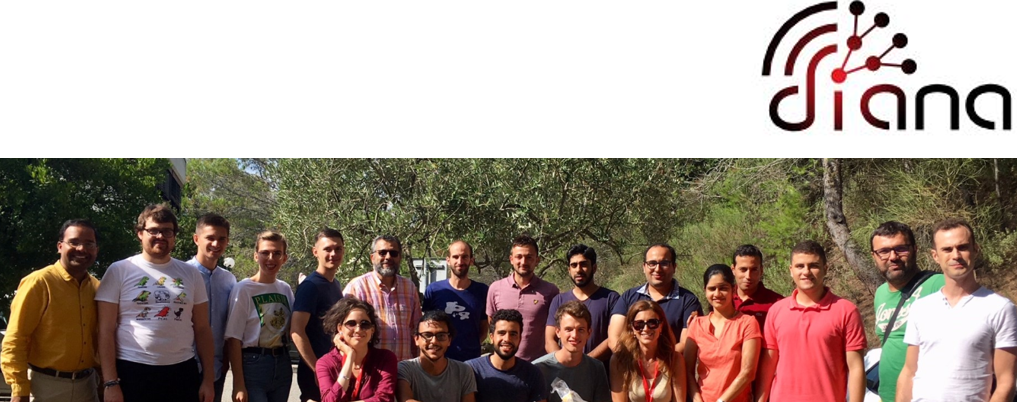
Chadi Barakat is a Senior Researcher (Directeur de Recherche) at Université Côte d'Azur's Inria research center, leading the DIANA project-team. He holds a PhD in Computer Science from University of Nice Sophia Antipolis (2001) and Habilitation (HDR) in 2009, with academic credentials from Lebanese University (1997) and French institutions. PhD: Computer Science (2001), University of Nice Sophia Antipolis HDR: Computer Science (2009), University of Nice Sophia Antipolis Master's: Computer Science (1998), University of Nice Sophia Antipolis BSc: Electrical & Electronics Engineering (1997), Lebanese University His research focuses on Internet measurement and traffic analysis , with significant contributions to Quality of Experience (QoE) modeling, 5G/ICN/SDN network architectures , and network performance evaluation . Recent articles highlight browser-based network monitoring, fidelity-aware network emulation, and ray tracing optimization for radio frequency mapping. He has supervised 12 PhD students to completion and currently directs the Academy of Excellence 'Networks, Information, and Digital Society' at Université Côte d'Azur. His work has received multiple best paper awards at CNSM, CloudNet, and SECON conferences, while serving as associate editor for Elsevier Computer Networks journal and active in ACM/IEEE conference committees. Director, Academy of Excellence 'Networks, Information, and Digital Society' (2025-present) Senior IEEE Member (2010) & ACM Senior Member (2018) General Co-Chair: ACM IMC 2022, ACM CoNEXT 2012 Guest Editor: IEEE JSAC special issue on Internet Sampling
Isabelle Augenstein is a Professor at the University of Copenhagen, Department of Computer Science (DIKU), where she heads the Copenhagen Natural Language Understanding (CopeNLU) research group and the Natural Language Processing section. She is also a co-lead of the Danish Pioneer Centre for Artificial Intelligence, Denmark's largest research center initiated by the Danish Ministry of Higher Education and Science. In October 2022, she became Denmark's youngest ever female full professor. Dr. Augenstein earned her undergraduate degree in Computational Linguistics and Psychology from Heidelberg University, followed by a Master's in Computational Linguistics. She completed her PhD in Computer Science at the University of Sheffield under the supervision of Dr. Diana Maynard and Prof. Fabio Ciravegna. In 2021, she earned a Habilitation at the University of Copenhagen in Explainable Fact-checking. Professor Augenstein's primary research focuses on fair and accountable Natural Language Processing, with particular emphasis on explainability, factuality, and bias detection. Her work spans multiple subfields including automated fact-checking, stance detection, gender bias analysis, and cultural bias in language models. She has pioneered research in explainable fact-checking, developing methods that not only predict claim veracity but also provide meaningful explanations of the decision-making process. Her research group has produced numerous influential papers on measuring model fragility, quantifying gender biases, and developing robust fact-checking systems that account for distribution shifts. Her significant contributions have been recognized with several prestigious awards: ERC Starting Grant on 'Explainable and Robust Automatic Fact Checking' DFF Sapere Aude Research Leader fellowship on 'Learning to Explain Attitudes on Social Media' Karen Spärck Jones Award from the British Computing Society and Bloomberg Hartmann Diploma Prize from the Hartmann Foundation Member of the Royal Danish Academy of Sciences and Letters since 2024 Professor Augenstein has secured significant research funding including her ERC Starting Grant supporting five years of blue-sky research. She actively mentors PhD students and postdoctoral researchers through her 'ExplainYourself' project. She served as President of SIGDAT (which organizes the EMNLP conference series), having previously held leadership roles as Vice President and Vice President-Elect. She is a co-founder of Widening NLP (WiNLP), an initiative to increase diversity in the NLP community, and maintains the BIG Directory of underrepresented groups in NLP. She leads the Copenhagen Natural Language Understanding (CopeNLU) research group, which relocated to the historic Østervold Observatory in Copenhagen's Botanical Gardens in 2023. The group focuses on developing methods for explainable and robust natural language understanding, with applications in fact-checking, bias detection, and social media analysis. Professor Augenstein also co-leads the Speech and Language collaboratory at the Pioneer Centre for Artificial Intelligence, where her team investigates how language models can better serve diverse populations while maintaining accountability and transparency.
Marcus Gerhold is an Assistant Professor in the Formal Methods and Tools group at the University of Twente's Faculty of Electrical Engineering, Mathematics and Computer Science. His research focuses on model-based testing for software reliability in critical infrastructures, particularly railway systems, alongside significant contributions to game design and programming language analysis. His educational background includes: PhD in Computer Science from University of Twente (2018): Choice and Chance: Model-based Testing of Stochastic Behaviour MSc in Mathematics from Friedrich Schiller Universität Jena (2013): Embeddings of Weighted Morrey Spaces BSc in Mathematics from Friedrich Schiller Universität Jena (2011): Entropy-, Approximation- and Kolmogorov Numbers on Quasi-Banach Spaces Gerhold's research integrates theoretical model-based testing with practical critical infrastructure applications . His work on railway conformance testing addresses EULYNX controller validation, while his game design research explores affective mirroring in NPCs and procedural dungeon generation. The code modernity analysis stream leverages static analysis to quantify legacy code evolution across languages like Python and PHP, revealing version identification challenges through deep learning. Publication trends show consistent focus on model-based testing methodologies (40%), railway safety applications (25%), and innovative game design/code analysis (35%). Recent work increasingly incorporates AI/ML techniques for UML assessment and Python version identification, while maintaining rigorous formal methods foundations. He actively mentors 63 students across all academic levels and contributes to major research initiatives: STORM_SAFE (ERDF, 2024): Daily Supervisor for WP1/WP2 on software reliability for critical infrastructures ZORRO (KIC grant, 2023): Daily Supervisor for WP4 on zero downtime in cyber-physical systems MISSION (MSCA RISE, 2021-2025): Interim coordinator (early 2024) for space systems modeling As part of the Formal Methods and Tools research group, Gerhold participates in European collaborations while serving on SAC-SVT 2024 and FormaliSE 2023 program committees.
Steve Boker is a Professor of Psychology at the University of Virginia, directing the Human Dynamics Laboratory and the LIFE Academy. His research focuses on quantitative psychology, structural equation modeling (SEM), and dynamical systems analysis for longitudinal and time series data. Dr. Boker has pioneered methods like Differential Structural Equation Modeling (dSEM) , Latent Differential Equations (LDE) , and the Windowed Cross-Correlation (WCC) method. He co-developed the widely used OpenMx SEM software framework and invented the RAMpath method for path diagram analysis. Key Research Areas: Dyadic conversation dynamics, adaptive systems in addiction, motion symmetry in social interactions, maternal-infant coupling, and resilience modeling through longitudinal data. Awards & Honors: 2024 Distinguished Researcher Award (UVA) 2020 Saul Sells Award for lifetime achievement in multivariate psychology Fellow, American Psychological Association Fellow, Association for Psychological Science His methodological contributions span over 150 publications, with recent work emphasizing nonlinear dynamics, surrogate data validation, and complexity metrics like the Tangle index for short time series analysis.
Matt J. Rutherford is an Associate Professor in the Department of Computer Science at the University of Denver, with a joint appointment in the Department of Electrical and Computer Engineering. He is Deputy Director of the Unmanned Systems Research Institute and a faculty fellow of Project X-ITE. His research focuses on autonomous systems, embedded systems, and software engineering, with extensive contributions to UAV navigation, control systems, and robotics. Rutherford holds a Ph.D. in Computer Science from the University of Colorado Boulder (2006), an MS (2001), and a BS in Civil Engineering from Princeton University (1996). His work emphasizes practical applications of software engineering principles in distributed and embedded systems. Notable projects include radar-based collision avoidance for UAVs, self-leveling landing platforms, and studies on electric vehicle charging impacts on power grids. Rutherford's research bridges theoretical computer science with real-world engineering challenges, particularly in unmanned systems and robotic autonomy. Key publications explore UAV flight control using neural networks, ground/ceiling effects in rotorcraft, and GPU-based real-time pose estimation. His contributions to model-driven systems and distributed testbed automation highlight long-term engagement with software reliability and scalable experimentation frameworks. Rutherford collaborates widely, including with institutions like the University of South Carolina and Politecnico di Torino. His interdisciplinary approach integrates robotics, aerospace engineering, and software engineering to advance autonomous system capabilities.
Joshua Garcia is an Assistant Professor in the Informatics Department at the University of California, Irvine (UCI), within the Donald Bren School of Information and Computer Sciences. His research focuses on software architecture, automated testing, and cybersecurity, particularly in autonomous systems and mobile applications. He leads projects like DeltaDroid, Doppelgänger Test Generation, and Darcy, which address software vulnerability management, architectural consistency, and safety-critical systems. Key achievements include an NSF CAREER Award (2025), an NSF CRI Grant (2018), and a DARPA competition win (2024). His work is adopted by organizations like Boeing, Google, and NASA. Garcia collaborates internationally, involving institutions in Padova and researchers like Luca, Jessy Ayala, and Philipp. Research Interests: Software architecture evolution, automated exploit generation, autonomous vehicle testing, and accessibility in software development Grants: NSF CAREER ($500K+), NSF CRI ($1M+) Labs/Teams: HexHive Group, Autonomous Systems Testing Lab
Hoseung Song is an Assistant Professor at KAIST (Korea Advanced Institute of Science & Technology), affiliated with the Department of Industrial and Systems Engineering and the Graduate School of Data Science. His research focuses on statistical data science, decision making, and biomedical applications, particularly in areas like change-point analysis, two-sample tests, and spatial clustering. His work bridges theoretical statistics with practical biomedical and healthcare challenges. Research interests include advanced statistical methodologies for analyzing complex biological and healthcare data, such as viral genomics, microbiota associations, and immune cell clustering. He develops scalable algorithms and kernel-based methods to address high-dimensional and non-Euclidean data challenges. Recent work highlights applications in infectious diseases (e.g., HSV-2) and postmenopausal health through association studies and differential analysis. His publications emphasize robust statistical testing frameworks, including permutation-based limitations, batch effect corrections, and graph-based methodologies. These contributions enhance reliability in biomedical research and safety-critical data applications. His lab likely integrates computational statistics with real-world healthcare datasets to drive translational insights.
Masoud Majed is an Assistant Professor of Clinical Neurology at the University of Southern California , with expertise in neuroimmunology and autoimmune neurological disorders. His clinical and research focus centers on neuromyelitis optica spectrum disorder, multiple sclerosis, and the diagnostic utility of cerebrospinal fluid biomarkers. Email: mmajed@usc.edu Research Interests Majed's work explores: Neuroimmunological mechanisms in demyelinating diseases Role of MOG and AQP4 antibodies in diagnosis and prognosis Complement-mediated pathologies in neuroimmunological conditions Paraneoplastic syndromes linking cancer and neurological autoimmunity Global epidemiology of neuroinflammatory disorders Publication Trends His research output demonstrates a consistent focus on neuroimmunology since 2016, with increasing emphasis on: Cell-based assays for antibody detection Predictive modeling of disease progression Polypill interventions in cardiovascular comorbidities Interplay between autoimmune disorders and oncological conditions Standardization of neuroimmunological diagnostic criteria CSF biomarker validation across diverse populations
Dr. Fatemeh Azhari is a Lecturer in Structural Engineering at the Faculty of Engineering, Monash University, specializing in multi-scale computational tools for advanced materials and structures. She holds a Ph.D. from Monash University (2018), an M.Sc. and B.Sc. from Isfahan University of Technology (2012, 2010). Her research focuses on composite materials, additive manufacturing, and structural mechanics, with applications in sustainable construction and defense projects. Education: Ph.D. Structural Engineering, Monash University (2018) M.Sc. Structural Engineering, Isfahan University of Technology (2012) B.Sc. Civil Engineering, Isfahan University of Technology (2010) Research Interests: Multi-scale modeling, finite element analysis, composite materials (CFRP/GFRP), titanium alloys, fire dynamics, and structural stability. She leads projects funded by DST Group and collaborates with institutions like UNSW and the University of Melbourne. Research Trends: Her work emphasizes integrating computational models with experimental data to predict material behavior under extreme conditions, with recent studies focusing on pseudo-ductile composites, fire dynamics, and additive manufacturing. Awards: 2023 Advancing Women’s Success Grant 2023 ECA Seed Program Best Research Paper Award (2018, 2021) Supervision & Grants: Supervises multiple PhD candidates and co-leads projects on titanium alloys and dental implant mechanics. Active in teaching structural mechanics and materials courses at Monash. Teams/Labs: Collaborates on ICME projects and leads multi-institutional teams focusing on advanced materials and structural systems.
James O Lloyd-Smith is a Professor in the departments of Ecology and Evolutionary Biology and Computational Medicine at the University of California, Los Angeles (UCLA). His research focuses on understanding the ecological and evolutionary drivers of infectious diseases, with a particular emphasis on zoonotic pathogens and viral transmission dynamics. Key areas of investigation include the spillover of pathogens from wildlife to humans, environmental stability of viruses, and the application of mathematical models to inform public health strategies. His work spans disciplines such as epidemiology, computational biology, and wildlife health, with notable contributions to studies of influenza, leptospirosis, and monkeypox. He has pioneered methods to predict pathogen spread using mechanistic models and has explored the impact of climate, human behavior, and environmental factors on disease emergence. Notable projects include analyzing the stability of SARS-CoV-2 in different environments, investigating the role of childhood immune imprinting in influenza susceptibility, and developing frameworks to assess risks of viral spillover from bats. His research integrates field data with computational approaches to address global health challenges.