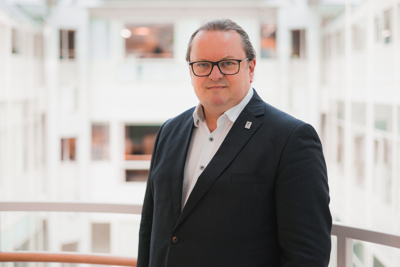
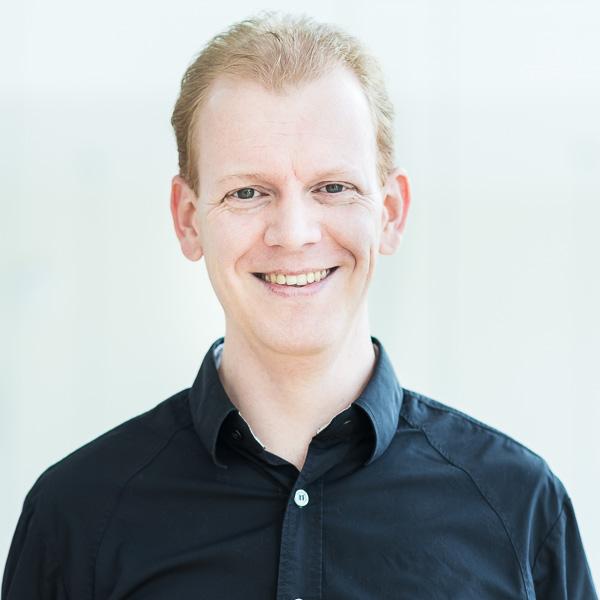
Marco Schutten is an Associate Professor at the Digital Society Institute of the University of Twente, affiliated with the Industrial Engineering & Business Information Systems department. His work bridges Artificial Intelligence , Transportation , and Operations Research , focusing on optimizing complex systems. Expert in Urban Logistics and Freight Transport Specializes in Mathematical Programming and Optimization Research interests include Vehicle Routing , Machine Scheduling , and Agent-Based Simulation . Key trends in his 15 most recent articles (2015–2025) involve: Dynamic scheduling under time constraints Urban logistics and smart city applications Heuristics for combinatorial optimization Integration of MILP and Simulation models No scientific awards, formal supervisory roles, or part-time appointments are explicitly mentioned.
Sandra Stein is a Lecturer at the Technische Universität Wien within the College of Mechanical Engineering and Operations Sciences , affiliated with the Department of Logistics and Quality Management . She also serves as an external Postdoctoral Researcher and holds leadership roles at the Center for Sustainable Production and Logistics (Fraunhofer Austria Research GmbH) since 2013. Academic Director, eMBA Mobility Transformation (2021-2025) Board Member, Logistics Research Austria (since 2020) Expert Evaluator, Horizon Europe and Horizon2020 Research Interests include Physical Internet , Collaborative Logistics Networks , Sustainable Transport Systems , and Inland Waterway Transport . Her work focuses on: Green and Resilient Freight Networks Modal Shift Optimization Dynamic Transport Capacity Planning Intermodal Integration Shared Logistics and Data Utilization Scientific Awards include summa cum laude and cum laude distinctions for her academic achievements. She has contributed to major transport conferences like TRA2018 and IPIC 2019, and her work spans practical projects with organizations like Horizon Europe and the Austrian Ministry for Transport, Innovation, and Technology.
Ville-Petri Friman serves as Professor in the Department of Microbiology at the University of Helsinki, with cross-affiliations at the Institute of Sustainability Science (HELSUS), Helsinki One Health (HOH), and Viikki Plant Science Centre (ViPS). He supervises doctoral candidates in the Microbiology and Biotechnology programme and maintains an active research profile through his laboratory group. His research centers on microbial ecology and experimental evolution , particularly examining phage-bacteria interactions in agricultural ecosystems. Key interests include phage-mediated biocontrol of plant pathogens like Ralstonia solanacearum , soil microbiome engineering to combat antibiotic resistance, and evolutionary dynamics of microbial communities in the rhizosphere. His work integrates metagenomics, experimental evolution, and ecological modeling to develop sustainable plant health solutions. Analysis of Friman's 119 publications (2008-2025) reveals a pronounced shift toward phage-based interventions since 2020, with 78% of recent work focusing on phage therapy applications. Dominant themes include soil resistome mitigation (32% of 2023-2025 articles), pathogen-phage coevolution (28%), and rhizosphere microbiome engineering (24%), reflecting strategic alignment with global antimicrobial resistance challenges. Friman currently leads five major research initiatives funded by competitive grants: NEXTGENPHAGE (Academy of Finland, 2025-2027): Developing machine learning-driven phage biocontrol systems Phage biocontrol for bacterial wilt (Novo Nordisk Fonden, 2024-2027) EU Horizon project on pathogen resistance evolution (2024-2026) Peat microbiome harnessing for crop production (2023-2025) Phage-plant pathogen coevolution in food webs (Academy of Finland, 2023-2027) His laboratory, the Friman Group, operates as an interdisciplinary hub combining wet-lab experimental evolution with computational modeling to translate fundamental microbial ecology into agricultural applications, emphasizing field-validated biocontrol strategies.
Patricia Anthony serves as Associate Professor at Lincoln University's School of Landscape Architecture in New Zealand, where she holds an ORCID identifier 0000-0002-4991-3340. Her academic appointments include Faculty Postgraduate Chair for the Faculty of Environment, Society and Design (2021-2024) and current affiliation with the Centre for Geospatial and Computing Technologies (2025-present). Previously, she served as Head of Department (2016-2017), Department Postgraduate Coordinator (2014-2016), and SHIFT Coordinator (2017-2020). Her educational background comprises a Ph.D. from the University of Southampton, United Kingdom; an M.Sc. from Birkbeck, University of London, United Kingdom; and a BSc (High Honors) from the State University of New York, United States. She is proficient in Malay language, with reading, writing, and speaking capabilities. Dr. Anthony's research centers on agent and multi-agent systems, utilizing artificial intelligence techniques including machine learning, evolutionary computation, and text processing as decision-making strategies for agents. She is recognized as a leading researcher applying intelligent agents across diverse domains such as online auctions, agriculture, education, and social media analysis. Her specialized work in sentiment analysis and emotion identification enables agents to detect emotional states in textual communications, with recent applications in earthquake tweet analysis. Her publication record demonstrates consistent scholarly output with over 130 publications, showing particular strength in applying multi-agent systems to practical challenges. Recent work reveals three major research streams: trust and reputation management in IoT environments (accounting for approximately 30% of recent publications), agricultural technology applications including mastitis detection and water resource management (approximately 40%), and social media analysis focusing on elderly technology adoption and cyber aggression classification (approximately 30%). Adjunct Professor, Hubei University of Technology, Wuhan, China Program Committee/Senior Program Committee member for Pacific Rim International Conferences on Artificial Intelligence (PRICAI) 2016, 2018, 2019 Co-chair for International Carnahan Conference on Security Technology (ICCST) 2014, 2016, 2018, 2020 Member of Institute of Electrical and Electronics Engineers (IEEE) Reviewer for Engineering Applications of Artificial Intelligence, Malaysian Journal of Computer Science, and Adaptive Behaviour Dr. Anthony has supervised numerous postgraduate students across multiple research areas related to multi-agent systems, with completed projects spanning cyber aggression classification, agricultural technology, IoT security, and elderly technology adoption. She serves as an examiner for advanced computing courses including Advanced Database (COMP643), Advanced Programming (COMP642), and Studio Project (COMP639), demonstrating her integration within the university's computing curriculum despite her Landscape Architecture appointment. Her research aligns with Sustainable Development Goal 11 (Sustainable Cities and Communities), reflecting her commitment to applying computational techniques to address real-world challenges in urban and community contexts. She actively collaborates across disciplines through the Centre for Geospatial and Computing Technologies, bridging computational methods with landscape architecture applications.
John A G Roberts is a Professor and Deputy Head of the School of Mathematics and Statistics at the University of New South Wales (UNSW), Sydney. He serves as Chief Investigator of the ARC Centre of Excellence MASCOS and is Vice-President of the Australian Mathematical Society. His academic career spans several decades with significant contributions to nonlinear dynamical systems research. Roberts' research primarily focuses on nonlinear dynamical systems, with particular expertise in integrable dynamical systems, symmetry and time-reversal properties, and algebraic dynamics. His work bridges pure mathematics with applications in mathematical physics, exploring the deep connections between arithmetic properties and dynamical behavior. He has developed novel approaches to understanding integrability through algebraic and arithmetic methods, particularly in the context of discrete systems. Analysis of his recent publications reveals a strong emphasis on algebraic entropy, lattice equations, and the arithmetic structure of dynamical systems over finite fields. His work demonstrates consistent innovation in applying number-theoretic methods to dynamical problems, with a particular focus on symmetry properties and integrability criteria for discrete systems. The interdisciplinary nature of his research connects mathematical physics, algebraic geometry, and computational mathematics. Chief Investigator of the ARC Centre of Excellence MASCOS Vice-President of the Australian Mathematical Society Roberts actively supervises PhD students and has collaborated with numerous research associates including Dinh Tran, Alina Ostafe, Natascha Neumaerker, and Danesh Jogia. He has organized several major conferences including the Workshop on Algebraic, Number Theoretic and Graph Theoretic Aspects of Dynamical Systems (Sydney, 2015) and Dynamics Days Asia Pacific 6 (Sydney, 2010), demonstrating his leadership in the international dynamical systems community. His research program maintains strong connections with institutions worldwide, particularly with collaborators in Europe and North America.
Arne H. Krumsvik is a Full Professor of Media and Communication at Kristiania University of Applied Sciences and previously served as Rector (President). He holds a Ph.D. from the University of Oslo and is a founder of media innovations studies. His research focuses on journalism, media management, digital media strategies, and user involvement in news production. He has held leadership roles in academia and prior experience in media industries as an editor and publisher. Education: Ph.D. in Media Studies from the University of Oslo. Research Interests: Media innovations, digital transformation, participatory journalism, media policy, and organizational adaptation. His work bridges theoretical frameworks with practical challenges in news media sustainability. Grants & Advising: Extensive grants related to media innovation projects (details unspecified). No formal student advisee list published. Active in policy discussions on media funding and digital journalism. Labs/Teams: Collaborates with Oslo and Akershus University College and Westerdals Oslo School of Arts on media innovation initiatives. Formerly led research teams in cross-organizational media projects.
Professor Michelle Cheong Lee Fong is a full-time faculty member at the School of Information Systems, Singapore Management University. She holds leadership roles as Associate Dean for Post-Graduate Professional Education and Director of the Doctor of Engineering program, and is actively involved in designing educational frameworks for technology-driven learning. Current affiliations: Singapore Management University (School of Information Systems) Research focus: Supply chain coordination, spreadsheet modeling, and educational technology Key courses taught: Computer as an Analysis Tool, Financial Modeling, Process Modeling Her research interests in supply chain coordination span strategic hub location optimization, tactical supplier coordination, and operational transportation planning. She also specializes in spreadsheet modeling for business decision-making, having developed textbook resources and case studies for logistics networks and financial planning. Recent work explores AI's role in digital education, including ChatGPT's impact on assessment design and ethical considerations in AI-driven pedagogy. The articles she has written or co-authored demonstrate expertise in operations research, educational technology, and AI applications. Topics include optimization theory, heuristic algorithms for scheduling, and digital assessment frameworks that integrate learning analytics. Her work bridges spreadsheet modeling's pedagogical value with modern challenges like ChatGPT's influence on student learning. Her teaching portfolio includes courses such as IS102 (Computer as an Analysis Tool), IS304 (Process Modeling), and FNCE645 (Financial Modeling). These courses emphasize practical skills in translating business requirements into technology solutions through spreadsheet-based analytical frameworks.
Dr. John Chételat is an Adjunct Research Professor at Carleton University, affiliated with Environment Canada's National Wildlife Research Centre. He holds a PhD from Université de Montréal and MSc/BSc from the University of Ottawa. His research focuses on metal pollution fate in ecosystems, Arctic limnology, and stable isotope applications. He leads projects in the Canadian Arctic (NWT, Nunavut, Nunavik) and Gatineau Park, examining metal bioaccumulation in food webs and environmental recovery from mining impacts. Education: PhD in Biology, Université de Montréal MSc in Biology, University of Ottawa BSc in Biology, University of Ottawa Research emphasizes metal pollution dynamics (mercury, arsenic, lead), geographic gradient studies, and climate change effects on Arctic ecosystems. He co-supervises graduate students in environmental science and collaborates on paleolimnological analyses of wildfire and mining impacts. His work integrates field studies, stable isotopes, and interdisciplinary approaches to address ecological contamination challenges. Advising and Grants: Supervised 7+ graduate students (PhD and MSc) on topics like metal bioaccumulation, Arctic limnology, and environmental recovery. His research is supported by Environment Canada and collaborative funding with universities. Labs/Teams: Based at the National Wildlife Research Centre, collaborating with Carleton’s Department of Geography and Environment Canada teams. Engages in Arctic research networks and interdisciplinary environmental initiatives.
Prof. Dr. Jilles Vreeken is tenured faculty at the CISPA Helmholtz Center for Information Security , where he leads the Exploratory Data Analysis group. He also serves as an Honorary Professor at Saarland University . Research focuses on causal inference, machine learning, and data mining Develops unsupervised methods for robust, interpretable models PI on grants like HAICU's Neuro-Explicit Models and Crushing Antimicrobial Resistance His recent work spans causal discovery in non-stationary time series ( SPACETIME ), federated binary matrix factorization, interpretable neural search patterns, and data modification rule mining from event logs. He applies information-theoretic approaches to address hidden confounding, selection bias, and multi-environment causal modeling. Key trends in his publications include: Integrating causal inference with machine learning via algorithmic Markov conditions Advancing federated learning for privacy-preserving causal discovery Creating interpretable pattern mining frameworks for graphs, sequences, and high-dimensional data Developing MDL-based methods for reliable dependency and rule discovery Scientific Recognition: 2018 - IEEE ICDM Tao Li Award 2018 - IEEE ICDM Best Paper 2015 - UdS-CS Busy Beaver Teaching Award 2011 - ACM SIGKDD Best Student Paper 2010 - ACM SIGKDD Doctoral Dissertation Runner-Up 2009 - ECML PKDD Best Student Paper As an educator, he has supervised 15+ PhD/MSc students and taught courses like Topics in Algorithmic Data Analysis and Information-Theoretic Machine Learning . His research group pioneers methods for trustworthy information processing and causal anomaly detection , with applications in materials science, epidemiology, and cybersecurity.
Dr. Anne Lauscher is a Researcher at the Data and Web Science Group, University of Mannheim, School of Business Informatics and Mathematics. Her work focuses on neural methods for natural language understanding, particularly in Argument Mining, Scientific Publication Mining (scitorics), and ethical considerations in NLP. She investigates language representations, bias detection in models, and fair AI. She has been involved in projects like the Linked Open Citation Database (LOC-DB) and contributes to conferences like ACL and EMNLP. She has taught courses on Text Analytics, Machine Learning, and Ethics in NLP, and supervised theses on topics like detecting unfairness in Arabic text representations and hyperpartisan news detection. Her research bridges computational linguistics with societal ethics, aiming to improve fairness and interpretability in AI systems. Her research interests span Argumentation Mining, Scientific Publication Mining, scitorics, Transfer Learning, Representation Learning, and Ethics in NLP. She explores how to inject knowledge into language models and analyze biases in text representations. Her work on 'scitorics' involves analyzing rhetorical aspects of scientific writing to understand argumentation structures. Publications highlight contributions to bias mitigation (e.g., DebIE platform), specialized language models, and multilingual datasets like Multi2WOZ. Her work appears in top venues such as EMNLP, ACL, and COLING. She actively contributes to the academic community through roles like Publication Co-Chair for EurNLP 2020 and PC member for multiple conferences. Her advising includes guiding students on thesis projects addressing fairness, argumentation, and NLP applications. She collaborates with institutions like Stuttgart Media University and the Data and Web Science Group to advance research in ethical AI and NLP.
Dr. Feras Dayoub is a Senior Lecturer and Chief Investigator at the QUT Centre for Robotics (QCR) , where he co-leads the Visual Learning and Understanding program. He previously served as Chief Investigator at the ARC Centre of Excellence for Robotic Vision (2016-2020) and holds a PhD in Robotics and Computer Vision from the University of Lincoln. Research Focus: Deploying computer vision and machine learning for real-world mobile robotics applications, including autonomous weed control (CRC-P), vision-enabled underwater robots for reef protection (COTSbot/RangerBot), and UAV-based infrastructure inspection. Teaching: Coordinates advanced robotics topics (EGB439) and teaches microprocessor systems (CAB202). His recent publications focus on uncertainty quantification in robotic vision, open-set recognition, and performance monitoring of deployed models. His work has been recognized with multiple awards from the Australian Centre for Robotic Vision and a Google Impact Challenge popular vote award. 2023: Hyperdimensional Feature Fusion for Out-of-Distribution Detection 2023: Class Distribution Shift Prediction for Domain Adaptation 2022: Uncertainty for Open-Set Error Identification 2022: FSNet for Semantic Segmentation Failure Detection Awards include: 2020: ACRV Best-Profile Raising Event 2019: QUT STEM Camp Certificate of Appreciation 2016: Google Impact Challenge People's Choice Award 2015: QUT Vice Chancellor's Performance Award As supervisor, he guides projects on robotic object detection, cross-view localization, and continues to advance visual learning methodologies for real-world autonomous systems.
Sue-Ann Watson is an Associate Professor in the College of Science and Engineering at James Cook University and Senior Curator of Marine Invertebrates at the Queensland Museum Network. Her research focuses on marine organisms' responses to environmental change, particularly ocean acidification and warming. She holds a BSc (Hons) from the University of Nottingham, an MSc from the National Oceanography Centre (University of Southampton), and a PhD from the University of Southampton and British Antarctic Survey. Watson has received numerous awards, including the Queensland Young Tall Poppy Scientist of the Year (2014), ARC Future Fellowship (2024), and Queensland Women in STEM Prize (2023). Her research spans marine invertebrate ecology, physiology, and behavior, with a focus on global change impacts. Key areas include predator-prey dynamics, shell evolution, and latitudinal gradients in marine organisms. She has published extensively on ocean acidification effects on molluscs, cephalopods, and coral reef fish behavior. Watson collaborates internationally and has been featured in media such as the New York Times and ABC News for her groundbreaking work. Affiliations: James Cook University, Queensland Museum Network, ARC Centre of Excellence for Coral Reef Studies Education: BSc (Hons) Biology, University of Nottingham MSc Oceanography, University of Southampton PhD Marine Biology, University of Southampton Her research combines fieldwork and laboratory experiments to assess how marine organisms acclimate/ adapt to stressors like ocean acidification, warming, and light availability. Recent work includes studies on giant clams, cephalopods, and crown-of-thorns starfish. Watson's contributions to climate change science have been recognized through awards like the AMSA Emerging Leader in Marine Science (2023) and Women in Leadership Australia Scholarship (2019–2020).
Luis Barba is a Research Fellow in the Machine Learning and Optimization group at École Polytechnique Fédérale de Lausanne (EPFL), Switzerland, working under Professor Martin Jaggi. He completed his PhD through a cotutelle program between Carleton University, Ottawa and Université Libre de Bruxelles, Brussels, supervised by Professors Stefan Langerman, Jit Bose, Pat Morin and Vida Dujmović. Prior to that, he earned his master's degree at Universidad Nacional Autónoma de México (UNAM) under Professor Jorge Urrutia. Dr. Barba's research spans computational geometry, algorithms, graph theory, and more recently, machine learning and optimization. His work addresses fundamental problems in geometric data structures, Voronoi diagrams, graph coloring, and distributed learning. He has made significant contributions to understanding time-space trade-offs in geometric algorithms and developing efficient methods for problems like geodesic Voronoi diagrams and dynamic graph coloring. Dr. Barba's publication record demonstrates a clear evolution from theoretical computational geometry to practical applications in machine learning. Early in his career, he focused on fundamental geometric problems including linear-time algorithms for geodesic Voronoi diagrams and efficient convex hull computation in polygonal domains with obstacles. More recently, his work has shifted toward machine learning, where he has developed novel optimization techniques for distributed and federated learning settings, including implicit gradient alignment methods and multilayer lookahead approaches. Dr. Barba has published extensively in top-tier conferences and journals including Symposium on Computational Geometry (SoCG), Canadian Conference on Computational Geometry (CCCG), Algorithmica, and Discrete and Computational Geometry. His collaborative work demonstrates strong connections across the computational geometry and algorithms communities, with frequent co-authorship with leading researchers in these fields. Throughout his career, Dr. Barba has maintained a consistent focus on algorithmic efficiency and computational complexity, whether addressing theoretical geometric problems or practical machine learning challenges. His work exemplifies how deep theoretical insights can inform practical computational approaches across different domains of computer science.
Leonardo Arias Alvis is a postdoctoral researcher in the Department of Evolutionary Genetics at the Max Planck Institute for Evolutionary Anthropology, Leipzig. He holds a PhD in Evolutionary Genetics (2018, MPI-EVA) and earlier degrees from Universidad del Valle, Colombia. His research focuses on human population history, genetic diversity in Amazonian indigenous groups, and the impact of sociocultural practices on genetic patterns. He has conducted extensive fieldwork in Colombia’s Amazonia, collecting genetic samples from over 30 ethnolinguistic groups. Education: PhD (2012–2018, MPI-EVA), MSc (2007–2012, Universidad del Valle), BSc (2000–2006, Universidad del Valle). He has taught courses on human population history, molecular anthropology, and applied phylogenetics at the University of Leipzig and MPI-EVA. His grants include a COLCIENCIAS scholarship and a DAAD Research Stay Award. Research interests include genomic analysis of demographic history, fine-scale population structure in Amazonia, and interdisciplinary approaches linking genetics with linguistics/anthropology. His work has revealed extensive intergroup interactions facilitated by river networks and historical migration patterns. Key projects include studies on Northwestern Amazonia’s genetic diversity and the demographic history of Colombia’s Bogotá Altiplano. Scientific awards include the COLCIENCIAS Graduate Scholarship and DAAD Research Stay Award. His work has been published in journals like Science Advances , Molecular Biology and Evolution , and Proceedings of the National Academy of Sciences .
Michael Smart is a Professor in the Department of Economics at the University of Toronto. He holds a Ph.D. from Stanford University (1995), an M.A. from the University of British Columbia (1988), and a B.A. from McGill University (1986). His research focuses on public economics, with a particular emphasis on tax policy, fiscal reform, and international taxation. He has contributed to influential studies on topics like tax havens, income redistribution, and the economic impacts of taxation systems. Key honors include the John C. Polanyi Prize in Economic Science (1999) and the Alfred P. Sloan Foundation Dissertation Fellowship (1995). Professor Smart teaches courses such as Econ 2600, emphasizing critical analysis of tax and fiscal policies. His work bridges theoretical research and practical policy evaluation, addressing issues like the efficiency costs of tax policies and the equitable distribution of fiscal burdens. Education: Ph.D., Economics, Stanford University, 1995 M.A., Economics, University of British Columbia, 1988 B.A., Economics, McGill University, 1986 Awards: John C. Polanyi Prize in Economic Science (1999) Alfred P. Sloan Foundation Dissertation Fellowship (1995) His research integrates microeconomic theory with empirical analysis to assess tax system impacts on behavior, equity, and economic efficiency. Recent work explores pandemic wage subsidies, income tax elasticity, and the role of automobiles in socioeconomic mobility. He is affiliated with the Finances of the Nation project, examining fiscal challenges in Canada and globally.