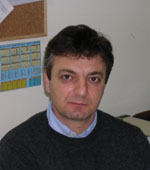
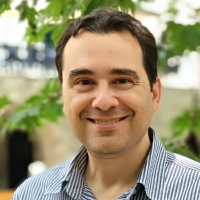
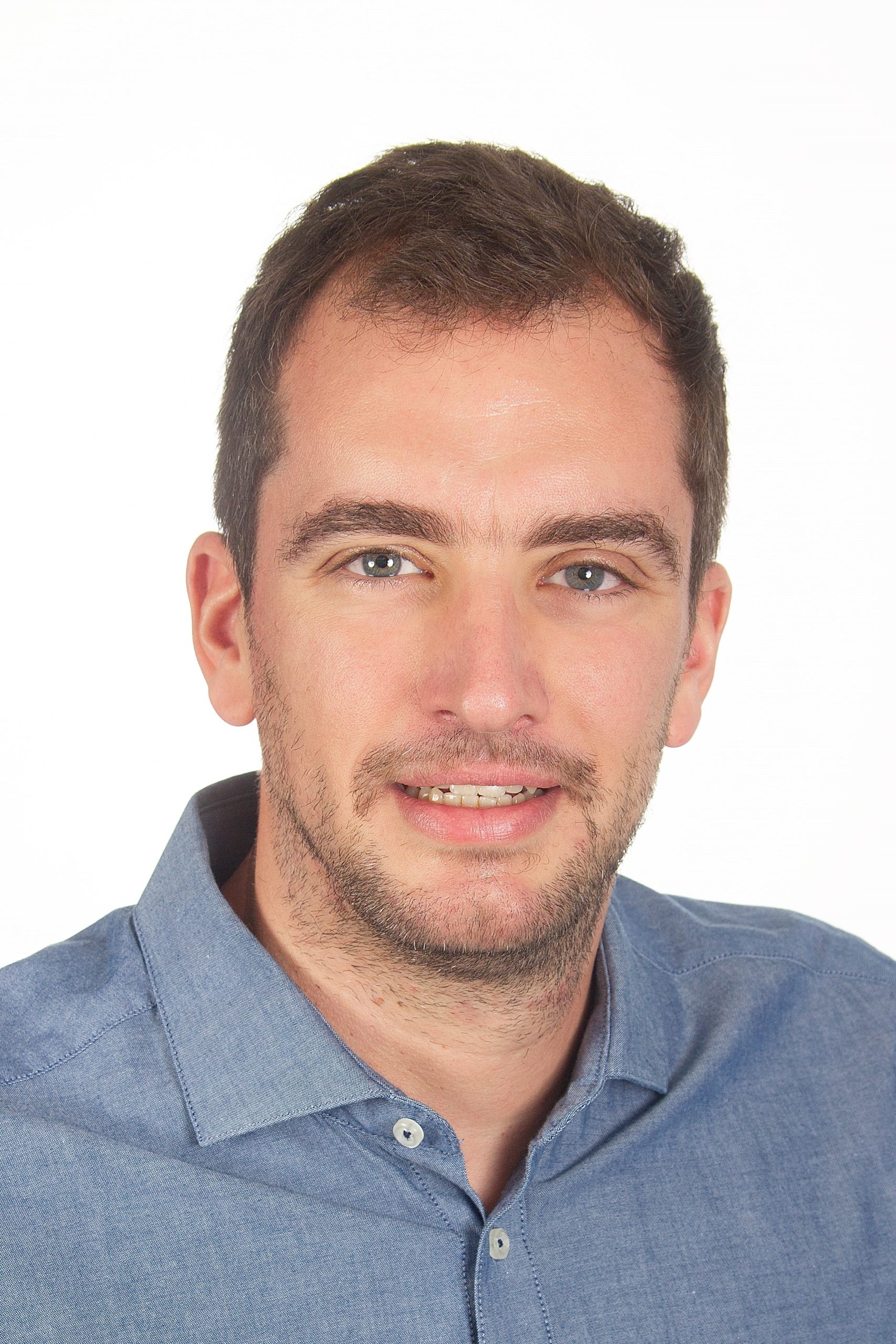
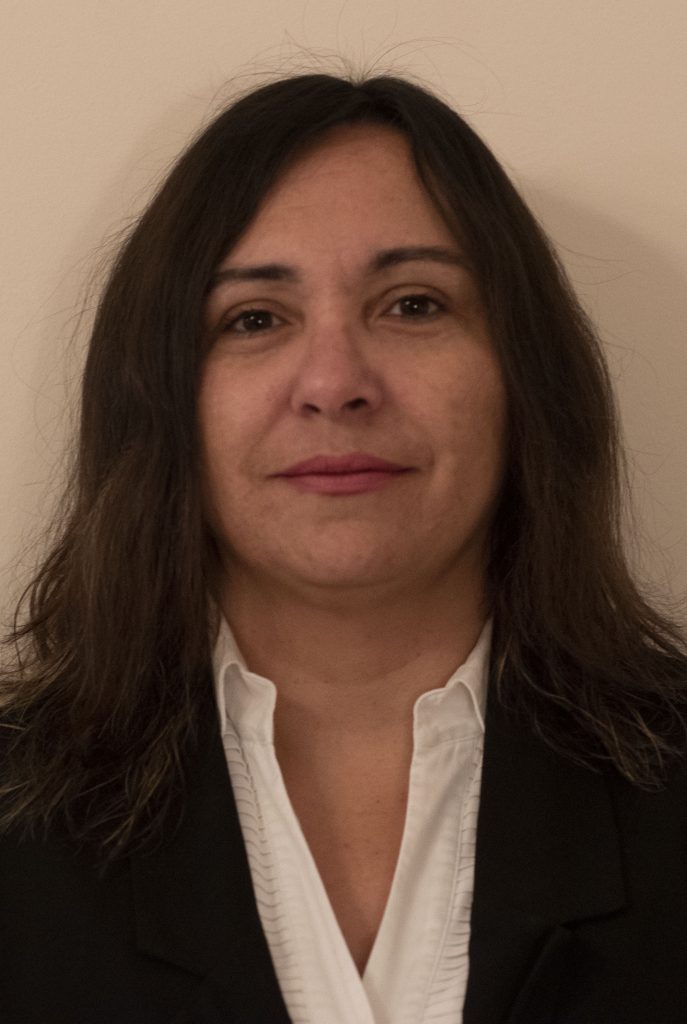
Dr. Petros Gaganis is an Assistant Professor in the Environmental Engineering and Science Sector at the University of the Aegean's Department of Environmental Studies. He holds a PhD in Stochastic-Contaminant Hydrogeology from the University of British Columbia (2000), an M.Sc. in Contaminant Hydrogeology (1997), and a B.S. in Geology from Aristotle University (1986). His research focuses on numerical modeling of groundwater flow and contaminant transport in heterogeneous soils, stochastic methods for risk assessment, and decision models for water resource management. Education: Ph.D., 2000: University of British Columbia, Earth and Ocean Sciences M.Sc., 1997: University of British Columbia, Earth and Ocean Sciences B.S., 1986: Aristotle University of Thessaloniki, Geology Research Interests: Dr. Gaganis specializes in groundwater flow modeling, contaminant transport simulation, stochastic hydrogeology, and climate change impacts on water resources. He develops decision models to integrate multidisciplinary data for risk-cost-benefit analyses and optimal management strategies. His work emphasizes reliability quantification in hydrogeological models and participatory approaches for environmental policy. Key Article Trends: Recent work includes climate change impacts on Mediterranean river hydrology, arsenic contamination in volcanic Lesvos aquifers, and participatory flood risk management in coastal regions. His research bridges hydrology, geostatistics, and policy to address water scarcity and pollution challenges. Teaching: Responsible for courses like Environmental Geology and Water Resources Management. Instructs Environmental Hydrogeology and Special Topics in Environmental Science under the Socrates Program. Lab/Tech Focus: Active in hydrological modeling using advanced geostatistical techniques and numerical simulations, with field studies in Greece and internationally.
Professor Efstratios Gallopoulos is a faculty member at the Department of Computer Engineering & Informatics , University of Patras, where he holds the Division of Computer Software . He currently serves as Deputy Department Chair and Director of the High Performance Information Systems Laboratory (HPCLab) . His academic career spans multiple institutions including the University of Illinois at Urbana-Champaign, University of California Santa Barbara, and collaborations with INRIA Rennes and NASA Goddard Space Flight Center. Education : B.Sc. in Mathematics (First Class Honours) from Imperial College London (1979) Ph.D. in Computer Science from University of Illinois at Urbana-Champaign (1985) Research Focus : His work centers on Large-scale Scientific Computing with emphasis on Computational Linear Algebra , Parallel/Distributed Processing , and Data Mining . Recent publications highlight innovations in Randomized Numerical Linear Algebra , Heterogeneous Cluster Scheduling , and GPU-Accelerated Inversion Techniques . Article Trends : His research bridges High-Performance Computing with Data Science , focusing on scalable algorithms for Matrix Computations , Recommender Systems , and Biomarker Analysis . The work spans theoretical advancements (e.g., Givens Rotations ) and practical implementations (e.g., pylspack library). Scientific Awards : NASA Group Achievement Award for Massively Parallel Processor (MPP) development ACM SIGWEB Hypertext Ted Nelson Newcomer Award (2012) Advising and Grants : He has advised numerous research projects funded by European Research Council , Hellenic Foundation for Research and Innovation (HFRI) , and international bodies like the US National Science Foundation. Notably, he co-organized the 2015 Gene Golub SIAM Summer School and served as Chair of the SIAM Gene Golub Summer School Committee (2020-24). Labs and Teams : He leads the High Performance Information Systems Laboratory (HPCLab) and co-directs the interdisciplinary graduate program Data Driven Computing and Decision Making . His teams have contributed to the Cedar vector multiprocessor project at UIUC and Text-to-Matrix Generator (TMG) tools for data mining.
Efstratiadis Andreas serves as an Assistant Professor in the Department of Water Resources and Environmental Engineering at the School of Civil Engineering, National Technical University of Athens (NTUA), based at the Laboratory of Hydrology and Water Resources Development. His research spans water resources systems, hydropower infrastructure, and the water-energy nexus, with emphasis on stochastic modeling and uncertainty quantification. His primary research interests include stochastic hydrology, flood risk assessment, multipurpose reservoir optimization, and renewable energy integration. He investigates cascading infrastructure failures, spatial reliability in solar PV systems, and climate-energy market uncertainties, often employing advanced simulation-optimization frameworks to address complex water-energy challenges under environmental variability. Recent publications (2023–2025) reveal a strong focus on hydropower dam safety, flood control infrastructure design, and the operational trade-offs in multipurpose reservoirs. His work increasingly integrates Earth Observation data for hydrologic modeling and examines socio-technical dimensions of the water-energy nexus, reflecting a shift toward interdisciplinary systems analysis. Dr. Efstratiadis contributes to NTUA's Laboratory of Hydrology and Water Resources Development, which develops decision support systems like Hydronomeas 2020 and national monitoring infrastructure (OpenHi.net) for Greek surface waters. His lab emphasizes computational tools for water resources management under climate uncertainty.
Konstantinos Parsopoulos is a Professor at the Department of Computer Science & Engineering, University of Ioannina. He holds a Dipl. Mathematics (1998) and M.Sc. in Mathematics of Computers and Decision Making (2000) from the University of Patras, where he also earned his Ph.D. in Intelligent Optimization (2005). Prior to his current role, he served as a Lecturer at the Department of Mathematics, University of Patras (2008–2009). His academic journey includes positions as Assistant Professor (2009–2016), Associate Professor (2016–2022), and Professor (since 2022) at the University of Ioannina. His research focuses on Numerical Optimization, Computational Intelligence (including Evolutionary Computation and Swarm Intelligence), and Computational Operations Research. These areas encompass the development and analysis of metaheuristics, algorithm portfolios, and optimization techniques for real-world applications such as logistics, financial forecasting, and engineering systems. His work emphasizes parallel computing strategies, reinforcement learning for parameter adaptation, and software tools like SOMO-VCB for stochastic optimization. Parsopoulos has contributed to diverse optimization challenges, including crowdshipping models, neural network-based differential equation solvers, and variance counterbalancing in stochastic systems. His publications span topics from theoretical algorithm design to practical implementations in MATLAB and distributed computing environments. Despite his extensive contributions, no scientific awards are explicitly mentioned in the provided texts. In terms of academic leadership, he has advised numerous students (though no names are listed) and has been involved in grants related to optimization software and algorithmic research. His collaborations extend to cross-disciplinary projects in visual sensor networks, traffic light optimization, and bioinformatics, reflecting the broad applicability of his optimization methodologies.
Anastasios Gounaris is a Professor at the Department of Informatics, Aristotle University of Thessaloniki, where he has been a faculty member since April 2008. He previously served as a Visiting Lecturer at the University of Cyprus (2007-2008) and held research positions at the University of Manchester and CERTH. His academic journey includes a PhD from the University of Manchester (2005), an MPhil from UMIST (2002), and a degree in Electrical and Computer Engineering from Aristotle University of Thessaloniki (1999). His research spans Distributed Databases, Autonomous Data Processing, Big Data Management, Workflow Optimization, and Data Mining . He has made significant contributions to large-scale data management systems, massive parallelism techniques, and business process analytics. His work bridges theoretical computer science with practical industrial applications, particularly in predictive maintenance and edge computing environments. His recent publications (2024-2025) demonstrate a strong focus on process mining, anomaly detection, predictive maintenance systems, and edge analytics . These works address critical challenges in handling evolving data streams, optimizing task allocation in resource-constrained environments, and developing parameter-free algorithms for real-world applications. His research shows consistent progression from foundational database systems work to cutting-edge applications in industrial IoT and healthcare analytics. Dr. Gounaris has successfully supervised numerous PhD students to completion, including Athanasios Naskos (2017), Georgia Kougka (2017), Christos Bellas (2022), Theodoros Toliopoulos (2022), Anna-Valentini Michailidou (2023), Ioannis Mavroudopoulos (2024), and Konstantinos Varvoutas (2025). His research has been supported by multiple national and European projects including DataflowOpt, PRECognition, NavGreen, CUREX, Rainbow, Lifechamps, and Trineflex. He is an active member of Datalab (formerly Delab) and has contributed to industry applications through collaborations with companies such as Comidor, Gnomon, Istognosis, Atlantis, AFS, Follow-Apps, Sboing, and Upcom. His work demonstrates a strong commitment to transferring research results to real-world applications while maintaining academic rigor.
Nikolaos Diaggelakis serves as an Assistant Professor in the Department of Process Development, Analysis & Design (II) at the School of Chemical Engineering, Technical University of Crete, where his work bridges theoretical optimization and industrial process applications. Education: Ph.D. in Chemical Engineering, Imperial College London, 2017 M.Sc. in Chemical Engineering, Imperial College London, 2012 Diploma in Chemical Engineering, National Technical University of Athens, 2011 Visiting Doctoral Researcher, Texas A&M Energy Institute, 2017 His research pioneers process systems engineering through mathematical optimization with moving time horizons, simultaneous design-control integration, and multi-parametric programming frameworks. Key applications span chemical process intensification, energy-efficient microgrids, and environmental systems, emphasizing worst-case and nonlinear optimization robustness. His theoretical contributions directly enable industrial implementations in energy systems and manufacturing. Publications from 2015-2022 reveal a concentrated evolution toward real-time optimization and decentralized control architectures , with increasing focus on data-driven surrogate models and robust explicit MPC strategies. The work consistently bridges fundamental algorithm development (e.g., multi-parametric quadratic programming solutions) with tangible industrial applications like air separation units and combined heat-power systems. Scientific Awards: Excellence Award for Outstanding PhD Thesis in Computer Aided Process Engineering (CAPE), Third Place, 2017 Invited Speaker, Distinguished Young Researchers Seminar Series, Northwestern University, 2016 Best Poster Award, CPSE Autumn Industrial Consortium Meeting, Imperial College London, 2014 Dr. Diaggelakis actively secures competitive funding, including U.S. Department of Energy grants (2018-2020) for smart manufacturing in chemical processing and National Science Foundation projects (2015-2016) on integrated process design-control frameworks. His leadership in the PAROC research group drives software development (POP toolbox) and industry collaborations through consortia like CPSE. Current projects emphasize uncertainty-aware scheduling for process industries and energy-efficient microgrid operation. He co-develops the industry-standard PAROC framework and POP toolbox, enabling multi-parametric optimization for complex process systems, and maintains active partnerships with Texas A&M and Imperial College London through ongoing research consortia.
Georgios Tzavelas is an Associate Professor in Probability and Statistics at the Department of Statistics and Insurance Science, University of Piraeus. His academic career includes roles in teaching and research since 1994, with expertise in parametric distribution theory, biased sampling models, and statistical inference methods. PhD in Mathematical Statistics (University of Maryland, 1994) MA in Mathematical Statistics (University of Maryland, 1991) Bachelor’s in Mathematics (University of Patras, 1984) Research focuses on estimation theory, characterization problems, environmental statistics, and biostatistics. Notable contributions include work on failure rate functions, factor analysis rotation effects, and size-biased sampling methodologies. His publications span over 35 peer-reviewed articles in journals like Metrika, Journal of Statistical Computation and Simulation, and Biometrical Journal. Awards include Excellence in Teaching (1993) and top academic performance recognition during undergraduate studies. Serves as a referee for multiple statistical journals. Teaching responsibilities include courses on sampling methods, biostatistics, actuarial science, and clinical trials. Research interests bridge statistical theory and applications in health and environmental sciences, with active participation in interdisciplinary collaborations.
Markos Koutras is a Professor in the Department of Statistics and Actuarial Science at the University of Piraeus, where he has been serving since September 2000. He previously held academic positions at the University of Athens, including Scientific Associate (1981-1983, 1985-1986), Lecturer (1986-1989), Assistant Professor (1989-1993), and Associate Professor (1993-2000). He has also served as Visiting Researcher at several international institutions including the University of Manitoba (Canada), Queen Mary and Westfield College (London), and McMaster University (Canada). His educational background includes: 1979: Degree from the University of Athens, Department of Mathematics (Grade: 9 and 6/20) 1981: MSc from the University of Athens, Department of Mathematics, in Computer Science and Operations Research (Grade: 9 and 7/16) 1983: PhD from the University of Athens, Department of Mathematics, with thesis 'Contribution to the theory of Spherical Distributions and related Taxonomic Problems' (Grade: Excellent) Professor Koutras specializes in several key areas of statistics and probability theory. His primary research interests focus on Reliability Theory, where he has made significant contributions to the understanding of system reliability, failure models, and maintenance policies. He has extensively researched Scan Statistics and Run Theory, developing methodologies for pattern recognition in sequences of trials and applications in quality control. His work in Multivariate Analysis has advanced techniques for analyzing complex data structures, while his contributions to Statistical Quality Control have provided new methodologies for process monitoring and improvement. He has also made notable contributions to Combinatorial Distributions, exploring the theoretical properties and applications of specialized probability distributions. With over 70 publications in international peer-reviewed journals (h-index: 16 as of January 2014) and 13 publications in international peer-reviewed volumes totaling more than 700 citations, Professor Koutras has established himself as a leading researcher in his fields. His work shows a clear progression from theoretical foundations in probability and reliability to practical applications in quality control, medical statistics, and risk management. A significant portion of his recent work focuses on scan statistics, run theory, and their applications in statistical process monitoring, demonstrating his continued contribution to advancing methodological frameworks in these areas. Professor Koutras has received significant recognition for his scholarly work: Associate Editor for 8 international journals including Methodology and Computing in Applied Probability and Journal of Statistical Planning and Inference Referee for papers submitted to more than 30 different journals President of the local organizing committee for 3 major international conferences Co-Chair of the International Organizing Committee for 7 International Workshops in Applied Probability Member of the Scientific Committee for 10 international conferences Elected member of the European Regional Committee of the Bernoulli Society (2013-present) Scientific responsible for more than 10 Research and Educational projects, including MarieCurie (2013-2016) and Aristeia (2014-2015) Professor Koutras has supervised 6 doctoral theses (5 completed, 1 in progress) and has been actively involved in research grant management. His leadership extends to administrative roles, having served as Director of Studies for the Postgraduate Program in Applied Statistics (2001-2004, 2007-2011), Chairman of the Department of Statistics and Actuarial Science (2003-2007, 2011-2013), and Dean of the School of Finance and Statistics (2013-2017). He has also been President of the Interdepartmental Committee for the Interuniversity Postgraduate Program in Biostatistics at the University of Athens. Professor Koutras leads a research group focused on reliability theory, scan statistics, and their applications. His team collaborates internationally, particularly through the International Workshops in Applied Probability that he has helped organize since 2002. His research has practical applications in quality control, medical statistics, and risk assessment, contributing to both theoretical advances and real-world problem solving.
Vangelis D. Karalis is an Associate Professor of Clinical Pharmacy and Pharmacokinetics at the National and Kapodistrian University of Athens, Department of Pharmacy (Section of Pharmaceutical Technology). He is also affiliated with the Computational Pharmacology group at the Institute of Applied and Computational Mathematics (IACM) of the Foundation for Research and Technology Hellas (FORTH) in Crete. His academic roles include teaching undergraduate and graduate courses in Statistics, Clinical Pharmacy, Biopharmaceutics, and Pharmacokinetics, as well as postgraduate programs in Industrial Pharmacy and Dermatopharmacology-Cosmetology. Education : He holds a Degree in Pharmacy, an MSc in Clinical Pharmacy, a PhD in Pharmacokinetics, and has completed postdoctoral research in Pharmacokinetics. Research Interests : Focus on Clinical Pharmacy , Pharmacokinetics , Modeling and Simulation , Artificial Intelligence , In silico Clinical Trials , and Bioequivalence Studies . His work integrates computational methods with clinical practice to optimize drug development and personalized treatment strategies. Recent Research Trends : Recent articles highlight AI-driven approaches for bioequivalence assessment, virtual patient modeling in clinical trials, and novel metrics for drug absorption analysis. His work bridges pharmacokinetic modeling with machine learning to address challenges in drug formulation, regulatory science, and precision medicine. Advising & Labs : Leads the Computational Pharmacology group at IACM-FORTH, focusing on interdisciplinary research in drug delivery systems, AI applications, and in silico methodologies. Teaches across multiple academic programs emphasizing computational and clinical aspects of pharmacy.
Nikolaos Bekiaris-Lymberis is an Associate Professor in the Department of Electrical and Computer Engineering at the Technical University of Crete since 2022. Previously, he served as an Assistant Professor at the same institution from 2019 to 2022, and as a Marie Sklodowska-Curie Fellow (2017–2019) and postdoctoral researcher (2014–2017) at the Department of Production and Management Engineering, Technical University of Crete. He was also a postdoctoral researcher at the University of California, Berkeley (2013–2014). Education : PhD in Mechanical and Aerospace Engineering from University of California, San Diego (2013); MSc in Mechanical and Aerospace Engineering from University of California, San Diego (2010); BS in Electrical and Computer Engineering from National Technical University of Athens (2007). Research Interests span both theoretical and applied domains: Theory : Control of distributed parameter systems, systems with delays, nonlinear control, adaptive control, and switching systems. Applications : Traffic flow control, connected/automated vehicles, biological transportation systems, occupancy detection in smart buildings, vehicle catalysts, 3D printing, vibration control in oil extraction, and networked control systems. Editorial Roles include Associate Editor for Automatica (IFAC) and IEEE Transactions on Intelligent Transportation Systems since 2019, Editor-in-Chief of IEEE Transactions on Intelligent Transportation Systems since 2024, and Associate Editor of IEEE Transactions on Automatic Control since 2026. Scientific Recognition : 2013 Chancellor's Dissertation Medal in Engineering (University of California, San Diego) 2016 Marie Sklodowska-Curie Individual Fellowship 2022 ERC Consolidator Grant Teaching and Lab Affiliation : Instructs courses in Linear Systems, Control Systems, Nonlinear Systems, and Distributed Parameter Systems Control. Affiliated with the Automation Laboratory at the Technical University of Crete.
Leonidas Mindrinos has been an Assistant Professor at the National Technical University of Athens (NTUA) since February 2023, specializing in Partial Differential Equations. His academic career includes postdoctoral research at NTUA's School of Applied Mathematics and Physical Sciences (2022), the University of Vienna's Mathematics Department (2019-2022), and the Johann Radon Institute (RICAM) (2018-2019). He served as an assistant professor at the University of Vienna (2013-2018). Education: PhD in Mathematics (University of Vienna, 2018) Doctorate in Applied Mathematics (National and Kapodistrian University of Athens, 2011) MSc in Applied Mathematics (National and Kapodistrian University of Athens, 2007) BSc in Mathematics (National and Kapodistrian University of Athens, 2006) His research focuses on inverse problems, scattering theory, and mathematical modeling of physical systems. Key areas include soil physics , optical coherence tomography , and elastodynamics , with applications in environmental engineering, biomedical imaging, and computational physics. He has developed numerical methods for infiltration parameter estimation, inverse scattering in OCT, and coupled parabolic-hyperbolic transmission problems. Recent publications highlight his work on soil infiltration modeling , electromagnetic wave scattering , and quantitative imaging techniques . These span mathematical formulations, numerical simulations, and experimental validation in agricultural engineering and biomedical contexts.
Helen C. (Nelly) Leligou is a Professor and Vice-Director at the Department of Industrial Design and Production Engineering, University of West Attica. She also serves as a Visiting Professor at the Hellenic Open University. Her research focuses on Information and Communication Technologies, including blockchain, IoT systems, AI applications in maritime sectors, federated learning, and wireless sensor networks. She has contributed over 150 publications in journals and conferences and participated in EU-funded projects like ACTS, IST, ICT, and H2020. Dr. Leligou has evaluated proposals for EU and other European organizations, emphasizing cybersecurity, smart grids, and innovative educational tools. Her research interests span blockchain applications in networks and supply chains, IoT-enabled systems for energy efficiency and agri-food supply chains, and AI-driven solutions for maritime operational parameters. She teaches undergraduate courses in Internet technologies, cloud computing, and data security, along with postgraduate modules in artificial intelligence, computer architecture, and automation. Dr. Leligou's work integrates technology with societal challenges, such as sustainable energy and digital transformation. Her recent projects address blockchain in next-generation networks (NGNs), AI for 6G reliability, and serious games for renewable energy education. She advocates for transparent workplace compliance via blockchain platforms and explores federated learning security in distributed systems. Dr. Leligou's contributions bridge academia and industry, emphasizing real-world applications of cutting-edge technologies.
Dr. Evangelos H. Papakitsos serves as a Lecturer in the Department of Industrial Design and Production Engineering at the University of West Attica. A physicist by training (National & Kapodistrian University of Athens, 1987), he holds advanced degrees in Information Systems (University of Liverpool, 1992) and Informatics (National & Kapodistrian University of Athens, 2000), with postdoctoral specialization in Semantic Lexical Databases. His academic journey spans four higher education institutions since 1993, including National Technical University of Athens and National & Kapodistrian University of Athens. His research spans interdisciplinary domains at the intersection of technology and humanities, with primary focus on Natural Language Processing , Digital Humanities , and Systems Science . Key research thrusts include computational linguistics for ancient scripts (particularly Linear A and Indus Valley), energy harvesting systems, environmental physics applications, and robotics for defense and environmental monitoring. His recent publications (2021-2025) demonstrate strong activity in nanotechnology applications for water purification, unmanned vehicle systems, and computational approaches to linguistic decipherment. Dr. Papakitsos has developed significant expertise in bridging engineering disciplines with humanities through his work on: Machine-readable dictionaries for ancient scripts Energy harvesting applications in civil infrastructure Computational analysis of historical linguistics Environmental monitoring robotics His laboratory work centers on Electronic Automation, Telematics and Cyberphysical Systems, reflecting his systems-oriented approach to complex interdisciplinary problems. Teaching responsibilities include undergraduate courses in General Physics, Optimization Methods, and Fluid Mechanics, plus postgraduate instruction in Automation Information Systems, Energy Management, and Unmanned Systems within the "Unmanned Autonomous and Remotely Piloted Systems" program. His educational background in career counseling informs interdisciplinary approaches to curriculum development, particularly evident in his work on the systemic evaluation of tourism marketing strategies during the pandemic.
Maravelakis Petros is a Professor at the Department of Business Organization and Administration , University of Piraeus (since September 2022). He previously held academic roles there as Associate Professor (2018-2022), Assistant Professor (2014-2018), and Lecturer (2012-2014). His research focuses on applications of statistics and informatics in business administration , with expertise in control charts, statistical process monitoring, and data-driven quality management. Education : PhD in Statistics (2003, Athens University of Economics and Business), Postgraduate Diploma in Statistics (1998), Mathematics Degree (1996, National and Kapodistrian University of Athens) His research spans statistical methodologies for healthcare, aviation safety, and business processes, including 44 publications in journals like Statistical Methods in Medical Research and European Journal of Operational Research . He has 1472 citations and serves as Associate Editor for Quality Technology and Quantitative Management . His work emphasizes nonparametric control charts and addressing challenges in zero-inflated data, measurement errors, and real-world applications. He has contributed to teaching courses such as Statistics for Business Administration , Computer Applications , and Data Mining in Business , while collaborating on postgraduate programs in quality management and tourism. His editorial and reviewing roles extend to 46 journals, including Computational Statistics and Data Analysis and International Journal of Production Research .
Cyrille Artho is an Associate Professor at the KTH Royal Institute of Technology's School of Computer Science and Communication. He obtained his Master's and Ph.D. degrees from ETH Zurich, with research focused on finding faults in multi-threaded programs. Before joining KTH in 2016, he held research positions at the National Institute of Informatics in Tokyo and the National Institute of Advanced Industrial Science and Technology (AIST) in Japan. His research interests include: Software verification and software engineering Concurrent and networked systems Model-based testing and runtime verification Fault injection techniques Formal methods for distributed systems His recent publications demonstrate strong focus on model checking, test generation, and verification techniques for concurrent/distributed systems, with applications ranging from IoT protocols to Android devices. Notable trends include the development of specialized testing tools and formal verification approaches. Awards and recognitions: ACM SIGSOFT Distinguished Paper Award (ASE 2015) QRS 2015 best paper award Best tool competition winner at SBST 2015 He leads development of several verification tools including Modbat (model-based tester) and Java PathFinder extensions. He is also involved in the KTH Center for Cyber Defense and Information Security management group.