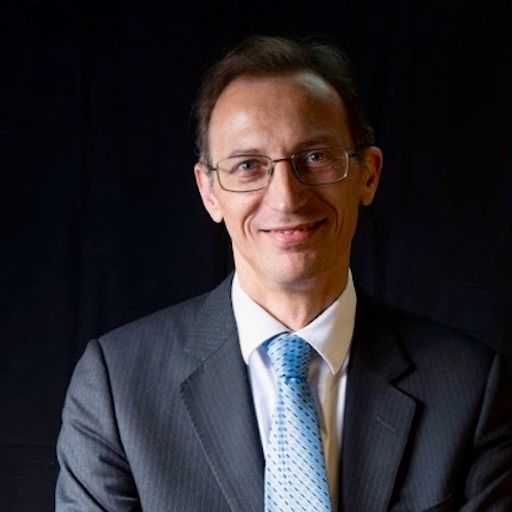
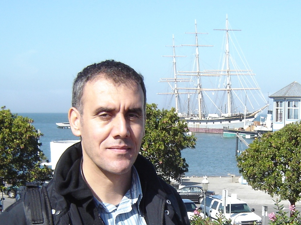
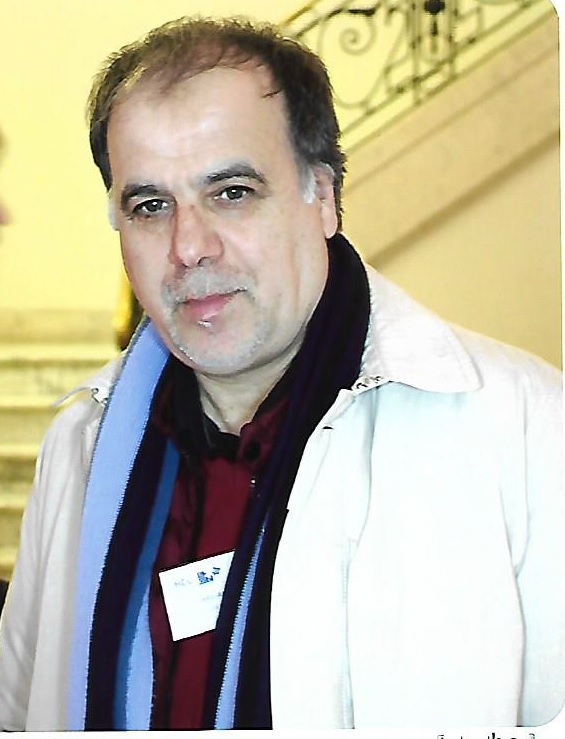
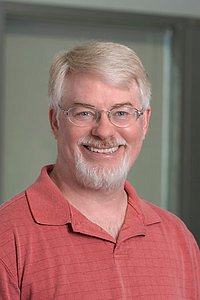
Facundo Alvaredo is an economist affiliated with the Paris School of Economics (PSE) as an Associate Professor and with École des hautes études en sciences sociales (EHESS) as a Lecturer . His work focuses on inequality measurement , wealth distribution , and economic history , particularly in Latin America and Europe. Research Areas Public economics Economics of inequality Economic history Development and distribution economy Key Publications analyze wealth inequality via estate data, reconcile survey and tax data for inequality measurement, and study long-term dynamics of income and wealth concentration. His methodological contributions include validating estate multiplier techniques and addressing shadow economy estimation challenges. Collaborations include Tony Atkinson and Emmanuel Saez, with publications in journals like Journals of the European Economic Association and Oxford Open Economics . He contributes to databases such as the World Top Incomes Database , enabling cross-country inequality comparisons.
Louise Parkin serves as a Lecturer in the Department of Networks and Telecommunications at the University Institute of Technology of Blois (IUT Blois), University of Tours, with additional affiliations at the Polytechnic School of the University of Tours (EPU) and the Fundamental and Applied Computer Science Laboratory of Tours (LIFAT). Her academic profile centers on advancing cooperative methods for knowledge base interrogation and semantic data management. Her research specializes in Semantic Web technologies, focusing on resolving critical challenges in RDF and SPARQL query processing including plethoric answer sets, unexpected results, and scalability limitations. She develops cooperative frameworks that enhance user interaction with knowledge bases like Wikidata through query explanation mechanisms, adaptive result filtering, and on-demand analysis architectures. Her work bridges theoretical database concepts with practical knowledge engineering applications. Within LIFAT laboratory, Parkin contributes to cutting-edge research in semantic data management systems. Her recent projects include Rankingdom's cooperative architecture for Wikidata analysis and scalable techniques for knowledge base exploitation, demonstrating sustained innovation in query processing methodologies from 2020 through 2025 publications.
Dr. Arnaud Soulet is a researcher at the University of Tours , affiliated with the Polytechnic School of the University of Tours and the Department of Computer Science . He works at the intersection of the LIFAT Laboratory (UR 6300) and contributes to the fields of pattern mining and knowledge graph analysis. Research Focus: Data Mining, Knowledge Graphs, Sequential Pattern Mining, Distributed Databases, Cultural Heritage Informatics Publication Trends His recent publications emphasize knowledge graph analysis (e.g., Rankingdom architecture, structural modeling) and pattern mining (reservoir sampling, frequency constraints, sequential patterns). Applications span employee attrition analysis , cultural heritage data , and data stream processing .
Laure Gonnord is a Full Professor in Computer Science at Grenoble INP , affiliated with the Esisar Engineer School in Valence, France, since September 2021. She is a member of the CTSYS research team at the LCIS laboratory and an external member of the CASH team at the University of Lyon / CNRS / LIP / Inria. Her research focuses on compilation , static analysis , and applications to safety , security in high-performance and embedded systems . Fields of Interest : Compiler Design Static Analysis for Safety & Security Abstract Interpretation Embedded Systems High-Performance Programming Hardware Security Engineering Research Trends (from recent publications): Her work explores modular verification through monadic abstract interpreters, complexity bounds in term rewriting , and educational tools for theorem proving . Notable contributions include compiler hardening schemes for hardware security and memory layout optimizations for algebraic data types. Academic Leadership : Scientific Director of the Summer School EJCP (École Jeune Compilation et Programmation) Board Member of the French national research group GDR GPL Teaching Responsibilities at Grenoble INP include courses in architecture , compilation , programming languages , algorithms , and databases . She has also taught at University of Lyon, ENS Lyon, Polytech'Lille, and INSA.
Etienne Wasmer is a Professor of Economics at New York University Abu Dhabi and an affiliated researcher at the Department of Economics and the Laboratory for Interdisciplinary Evaluation of Public Policies (LIEPP) at Sciences Po, Paris. He holds concurrent roles as a CEPR Research Fellow and IZA Research Fellow. His work spans Labour Economics, Urban Economics, and Macroeconomics, with a focus on policy evaluation and public finance. Key roles include co-directing LIEPP (2011-2017) and advising the French government on labor market policies, including the Bozio-Wasmer Mission on social security exemptions. Research Interests: Labour Market Dynamics and Frictions Urban Housing and Spatial Economics Macroeconomic Policy and Growth Public Policy Evaluation Awards: Prix de l'Association Française de Sciences Economiques (2010) Prix Wolowski (2011) Prix Maurice Allais (2023) Grants and Projects: ERC and ANR-funded research projects Co-leadership of Project Liberty's Institute Contributions to global policy reports on labor markets and taxation His work bridges theoretical models with empirical analysis, addressing issues like housing markets, telework dynamics during the pandemic, and tax policy reforms. Collaborations include NYUAD, Sciences Po, and institutions like the French Prime Minister's Office.
Nicolas PRAT is an Associate Professor at ESSEC Business School specializing in Information Systems, Data Analytics and Operations. He serves as Head of the Information Systems Track at the Cergy campus and has been with ESSEC since 1995, progressing from Lecturer to his current position as Associate Professor since 2006. His academic credentials include: Accreditation to supervise research (Université Paris Dauphine-PSL, 2012) PhD in Information Systems (Université Paris Dauphine-PSL, 1999) Specialized Master in Information Systems (ESSEC Business School, 1991) MSc in Management (ESSEC Business School, 1990) International Teachers Programme (Stockholm School of Economics, 2004) PRAT's research focuses on conceptual modeling, design science research, business intelligence, and knowledge management with increasing attention to emerging technologies like AI and blockchain. His work bridges theoretical foundations with practical applications, examining how data and knowledge engineering can support organizational decision-making processes. He has made significant contributions to understanding the evolution of conceptual modeling and taxonomy development for complex technologies. His recent publications demonstrate a clear research trajectory toward exploring generative AI's impact on business intelligence, sustainability frameworks for design science research, and advanced methods for taxonomy development in complex emerging technologies. These works reflect his ongoing engagement with cutting-edge developments while maintaining strong theoretical foundations in information systems research. Scientific recognition includes: Qualification to the function of full Professor in the French University system (Computer Science, 2013) PRAT has supervised doctoral research, including Demigha S. at Université Paris 1 Panthéon-Sorbonne in 2005. His academic leadership includes serving as Academic Director for specialized programs and Head of the Information Systems Track. He actively contributes to the scholarly community through editorial board memberships for "Systèmes d'Information et management" (since 2022) and "Journal of Database Management" (since 2013).
Dario Colazzo is a Professor at Université Paris-Dauphine, affiliated with the LAMSADE laboratory. His research focuses on database systems and programming languages, particularly in cloud databases, type systems for semi-structured data, and query processing optimizations. He has contributed extensively to XML and XQuery research, including parallel query execution and static analysis techniques. His teaching includes courses on programming (Java), UML, database systems, and semantic web technologies at both undergraduate and graduate levels (in French). Key research interests span XML/XQuery optimization, JSON processing, distributed systems, and type systems for safe and efficient data handling. His work emphasizes scalable cloud-based solutions and efficient query execution models. Publications highlight advancements in parallel query processing (e.g., PAXQuery), type-based optimizations for XML updates, and semantic graph analytics. He has collaborated with institutions like EDBT, WWW, and VLDB conferences.
Allel Hadjali is a Full Professor in Computer Science specializing in Data Engineering at ISAE-ENSMA (École Nationale Supérieure de Mécanique et d'Aérotechnique) in Poitiers, France. He is affiliated with the Laboratory LIAS (Laboratoire d'Ingénierie des Applications de la Connaissance et des Systèmes) at ISAE-ENSMA. His academic career includes progression from Associate Professor to his current Full Professor position, with extensive teaching experience across multiple computer science domains. Professor Hadjali's research falls within the data science domain, with particular focus on Exploitation, Extraction, and Recommendation (E2R). His work applies Computational Intelligence and Soft Computing techniques to massive data exploitation and analysis, including flexible querying approaches (Skyline, Gradual, and Bipolar queries), modeling and querying uncertain/incomplete data, cooperative answering techniques, and data reduction through linguistic summaries. He also conducts research in recommendation systems (learning-based and group recommendation) and extraction techniques (mining gradual patterns), along with related interests in data quality, intelligent systems, and crowdsourced data management. His publication record demonstrates consistent contributions to top-tier journals and conferences, with recent work focusing on skyline query processing, uncertain data management, RDF knowledge bases, and explainable AI. His research shows a clear trajectory from foundational work in fuzzy logic and uncertain databases toward more applied research in semantic web technologies and machine learning explainability. Professor Hadjali serves on the editorial boards of several prestigious journals including the Journal of Smart Environments and Green Computing, Sensors Journal, and the Universal Journal of Aeronautics and Aerospace Research. He has also organized special issues on topics such as uncertainty in cloud computing and managing uncertain data. At ISAE-ENSMA, Professor Hadjali teaches courses including Formal aspects of software engineering, Language interpretations and compilation, Programming languages, and Data management and exploitation. Previously as an Associate Professor, he taught courses on object modeling, distributed algorithms, operating systems, and advanced databases focusing on preferences and uncertainty. He leads the Data Engineering team within the Laboratory LIAS, which focuses on developing computational intelligence approaches for modern data challenges. His current projects include work on data quality (QDoSSI project funded by CNRS Mastodons 2016-2018) and research actions in GDR MADICS 2018 related to scientific data quality.
Matthieu LE BAILLY is a Professor at Université de Franche-Comté, affiliated with the CNRS UMR 6249 Chrono-Environnement. His research focuses on paleoparasitology, parasitology, bioarchaeology, and paleoecology, aiming to trace the evolution of human and animal parasites through time using coprology, immunology, and molecular biology. Key projects include studies on ancient parasite biodiversity, host-parasite relationships, and paleoclimatic impacts on parasite prevalence. Notable contributions include analyses of intestinal parasite resistance in ancient soils, interdisciplinary approaches to Neolithic lifeways, and the application of AI to paleoparasitological data. His work spans global archaeological sites, from Peru to Russia, and integrates bioarchaeological and environmental datasets. Recent publications (2021–2025) highlight advancements in understanding parasite migration, Roman urban defense systems, and climate change effects on Neolithic parasite ecosystems. He advises three PhD/Master’s students and collaborates on projects like Mont’Prospect2.0 and Néolithisation du Nord-Ouest de la Russie (2NOR). Labs/Teams: Chrono-Environnement (CNRS/UFC), with multidisciplinary collaborations in environmental archaeology and paleoparasitology.
Jérémy Froidevaux is an Assistant Professor at the University of Franche-Comté, affiliated with the Chrono-environment Research Unit (UMR 6249 CNRS/UFC). His research focuses on conservation biology, eco-acoustics, and bat ecology, with emphasis on evaluating anthropogenic impacts on biodiversity, optimizing monitoring protocols, and assessing conservation measures' effectiveness. Key projects include studies on renewable energy infrastructure (wind turbines, solar farms) and their effects on bat populations. He leads the Silent·Cities initiative, analyzing urban soundscapes during global crises like the 2020 pandemic. Collaborative efforts with international teams address issues like light pollution, electromagnetic field exposure, and biodiversity policy implementation. His academic contributions span 150+ peer-reviewed articles, including work on bat activity patterns at power lines, solar farm impacts, and species-level trait datasets for European bats. Froidevaux advises graduate students, such as Samantha Aguillon, and actively participates in cross-disciplinary initiatives like the Réunion Island Night Environment Observatory. His work bridges ecological research with practical conservation solutions, advocating for evidence-based policies in renewable energy planning and habitat management.
Jeff Offutt is a Professor and Chair of the Department of Computer Science at the University at Albany, part of the College of Nanotechnology, Software, & Engineering. Previously, he was a Full Professor with Tenure in Software Engineering at George Mason University, where he led the MS in Software Engineering program and developed numerous courses in software testing, web engineering, and software analysis. His research has significantly influenced both academia and industry in software testing and engineering education. His research interests span software testing, mutation testing, model-based testing, automatic test data generation, web application testing, and software engineering education. He has pioneered techniques such as bypass testing and model-based testing, with applications embedded in tools like Selenium. His work emphasizes practical, impactful research—what he calls "science fiction"—with a clear path to real-world use by software engineers. His recent publications reflect a strong trend in cost-effective mutation testing, model-based testing strategies, educational innovations like self-paced learning models (e.g., SPARC), and security aspects of web applications. The keywords across his work include software testing, empirical studies, automation, and education, with subfields such as fault localization, test oracles, input partitioning, and scalable pedagogy. John Toups Presidential Medal for Excellence in Teaching (2020) George Mason University Faculty Member of the Year (2020) Virginia Outstanding Faculty Award (2019) George Mason Teaching Excellence Award (2013) 10-year Most Influential Paper Award, MODELS 2020 Best Paper Award, ICST 2021 Most Influential Paper, ISSRE (2019) Jeff Offutt has advised numerous students and collaborated internationally, including at Swedish universities. He has led major educational initiatives such as the NSF-funded SPARC project, aimed at improving scalability and diversity in introductory CS courses. He has also been actively involved in curriculum development, including co-authoring IEEE/ACM guidelines for software engineering programs. His leadership extends to founding and chairing major conferences like IEEE ICST and serving as Editor-in-Chief of Software Testing, Verification and Reliability . He leads research projects on smart test automation, minimal mutation, and K–5 computer science integration. His work has resulted in widely used tools including muJava, Mothra, and SpecTest. He frequently gives keynote talks on testing, education, and research methodology, and is known for his popular talk "How to Get Your Paper Rejected."
Bruno Cousin is an Associate Professor at Sciences Po's Urban School , affiliated with the Center for European Studies and Comparative Politics (CEE) and serving as the College Head of the Department of Sociology across Sciences Po’s seven campuses. He is the Holder and Scientific Director of the Chair of Cities, Housing, Real Estate , focusing on urban sociology , elite sociability , and international comparative studies . His research examines inequality , segregation , and the practices of upper classes in global cities like Paris and Milan. Previously a postdoctoral researcher at Harvard University and lecturer at the University of Lille , he contributes to the UrbEur doctoral program at the University of Milan-Bicocca . His work spans residential segregation , spatial justice , and elite social networks , with recent publications on economic elites , super-rich housing , and urban electoral dynamics . His research themes include comparative urban sociology , elite self-interest , and global inequality . He co-edited D'une ville à l'autre , analyzing international urban comparisons , and authored Les riches sont convaincus de savoir ce que pensent les pauvres , exploring elite perceptions of poverty. His methodological approaches combine ethnographic observation , interviews , and comparative analysis . As part of the Cities are Back in Town group, he investigates urban renewal and residential patterns of elites. His international collaborations include studies on super-rich geographies and islamophobia in Italy. Current projects include World Elite Database (WED) analyses and global super-bourgeoisie research, reflecting his commitment to transnational sociological inquiry .
Fadila Bentayeb is an Associate Professor (HDR) at the University of Lyon 2, affiliated with the ERIC Laboratory and the Department of Informatics and Statistics (DIS). She leads the Complex Data Warehousing and OLAP research team (SID) and has served as Head of the first year of the Master's degree in Computer Science at the Institute of Communication (ICOM) since 2014. Her work bridges academic research and practical applications in data-intensive systems. HDR (Habilitation to Direct Research), University of Lyon 2 (2011) Ph.D. in Computer Science, University of Orléans (1998) Her research focuses on NoSQL data warehouses, text warehousing, and personalization systems, with emphasis on scalable architectures and context-aware analytics. Recent work explores AI-driven security in IoT networks and temporal modeling for evolving data structures. Key trends in her publications include: (1) Graph-based multidimensional modeling (GAMM framework), (2) Optimization of distributed big data warehouses using machine learning, (3) Medical text classification via hybrid CNN-LSTM models, and (4) Temporal data warehouse evolution. As part of the ERIC Laboratory’s leadership team, she contributes to strategic research directions and mentors students in advanced data systems. Her technical expertise extends to Hadoop/Spark optimization, OLAP cube design, and semantic integration of heterogeneous data sources.
Fouad KHENFRI is a Professor and researcher at ESTACA (Ecole Supérieure des Techniques Aéronautiques et de Construction Automobile) , specializing in embedded systems and control engineering. He holds a PhD in Computer Science and Applications from the University of Nantes (2016), a Master's in Automatic Control from EMP Algiers (2011), and an Engineering Degree in Automation from the University of Biskra (2008). Key research areas: Systems Control, Embedded Software Design, and Artificial Intelligence Recent publications focus on UAV control systems, Neural Architecture Search, and energy optimization Supervising doctoral students on topics including drone development and deep learning applications
Thomas Devogele is a Professor at the University of Tours, France, where he serves as Head of the Computer Science Department within the Faculty of Sciences and Technology. He is also Head of the Master 2 in IT and apprenticeships program and deputy director of LIFAT (Tours Fundamental and Applied Computer Science Laboratory). His academic career spans more than two decades, having previously served as an Assistant Professor at the French Naval Academy from 1998 to 2010. His primary research focuses on Geographic Information Systems (GIS), spatio-temporal data mining, and moving object analysis. Dr. Devogele's work specializes in trajectory data-mining, similarity measures between lines or trajectories using Fréchet distance, classification and outlier detection of trajectories, and spatio-temporal database integration. He currently leads research projects DOPAN and PERSONAE. His recent publications (2021-2025) demonstrate an expansion of his research into cycling infrastructure analysis, blockchain applications for business processes, personalized web service recommendations, and health data narratives (particularly tuberculosis in Gabon), while maintaining his core expertise in trajectory analysis and spatial data. His work bridges theoretical computer science with practical applications in transportation, public health, and urban planning. Dr. Devogele has supervised numerous PhD students who have gone on to successful academic and industry careers, including Fournier Sébastien (Assistant Professor at Université de Provence), Noyon Valérie (Leader of GIS department at the city of Niort), and Etienne Laurent (Assistant Professor at Tours University). His teaching responsibilities include Software Engineering, Object-Oriented Programming (Java), Geographic Information Systems, Artificial Intelligence, and Database courses for Computer Science students at the Blois campus. He has made significant contributions to the field through his extensive publication record spanning from 1996 to the present.