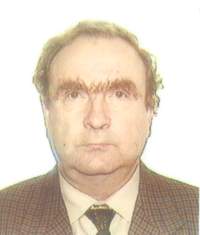
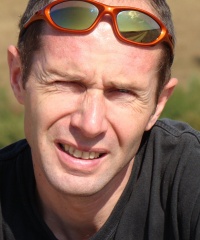
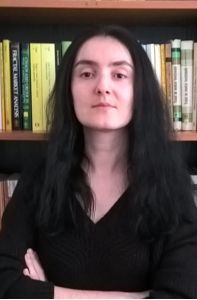
Rareș Florin Boian is an Associate Professor at the Department of Computer Science, Faculty of Mathematics and Computer Science, Babeș-Bolyai University. He teaches courses such as Algorithms, Models and Concepts in Distributed Systems , GPU and Distributed Architecture Computing , Operating Systems , and Virtual Reality . His research interests align with distributed systems, parallel computing, and operating system design.
Darius Bufnea is an Associate Professor at the Department of Computer Science, Faculty of Mathematics and Computer Science, Babeş-Bolyai University in Cluj-Napoca, Romania. His academic address is at No. 1 Mihail Kogalniceanu Street, RO-400084 Cluj-Napoca. He teaches various courses including Web Programming, Security Protocols in Communications, Web Security and Internet, Web Traffic Control, and Operating Systems for Parallel and Distributed Architectures. Dr. Bufnea's research spans multiple domains within computer science, with a strong focus on parallel and distributed computing systems. His work explores innovative frameworks like PowerList-based programming models and their implementation in Java. He has made significant contributions to web security research, particularly in detecting and measuring scraper sites and clickbait content. His research bridges theoretical computer science with practical applications in web technologies and parallel programming paradigms. His publication record shows a consistent trajectory of research in parallel computing frameworks, with recent work expanding into web security and content analysis. The trend indicates a progression from foundational parallel programming models toward applied research in web technologies, security, and educational approaches for teaching complex computing concepts. His work on measuring "scrappiness level" of websites represents an innovative approach to quantifying web spam and content duplication issues. Dr. Bufnea actively engages with students through undergraduate and dissertation thesis supervision, with specific research topics available through university channels. His teaching philosophy emphasizes hands-on learning, as evidenced by detailed laboratory assignments covering web technologies from HTML/CSS to advanced JavaScript and server-side programming.
Ana Cristina Marques Daniel serves as an active Associate Professor at the Higher School of Technology and Management (Escola Superior de Tecnologia e Gestão - ESTG) within Portugal's Instituto Politécnico da Guarda (IPG), where she bridges engineering principles with healthcare innovation through teaching and research activities. Her research program demonstrates exceptional interdisciplinary breadth: Biomechanics : Advanced studies on human balance control, gait dynamics, and plantar pressure distribution inform orthotic design and rehabilitation protocols for mobility impairments. Visual System Engineering : Pioneering work on eye movement simulation, visual stress diagnostics, and orthokeratology contact lenses enhances vision correction methodologies and low-vision assistance. Rehabilitation Technology : Development of mechatronic systems for motor recovery and smart-city-integrated assistive devices represents significant translational impact in assistive technology. Biomedical Modeling : Computational frameworks for human vibration response and corneal mechanics enable predictive healthcare solutions for occupational health and refractive therapy. Examination of her 15 most recent publications reveals an evolutionary trajectory from foundational biomechanical modeling toward integrated smart-city applications, with 2023-2024 works emphasizing predictive analytics for motor dysfunction and innovative visual aid systems. This progression demonstrates movement from laboratory research to real-world implementation, highlighting growing emphasis on user-centered design in healthcare technology development. No scientific awards or major professional honors were documented in the source materials. While specific doctoral advisees aren't listed, her frequent co-authorship on student-involved projects (e.g., 3D printing applications, ocular training apps) suggests active mentorship in engineering education. The absence of dedicated laboratory descriptions indicates collaborative research within institutional frameworks rather than standalone facilities.
Sorin Grigorescu is a Professor in the Department of Automation and Information Technology at Transilvania University of Brașov's Faculty of Electrical Engineering and Computer Science, Romania. His research bridges robotics, artificial intelligence, and computer vision with a focus on autonomous systems development. His core research domains include: Robotics : Specializing in autonomous robotics architectures and complex automation systems Artificial Intelligence : Advancing neuroevolutionary techniques and deep learning frameworks Computer Vision : Developing novel approaches for autonomous vehicle perception Recent publications (2018-2024) reveal a clear trajectory toward integrated AI solutions for robotics, particularly in autonomous driving. His work spans theoretical innovations in one-shot learning and neuroevolution to practical implementations in predictive control systems and AI operating environments. This research consistently demonstrates cross-disciplinary integration of computer vision, deep learning, and control theory. Dr. Grigorescu publishes in premier robotics venues including Journal of Field Robotics and IEEE Robotics and Automation Letters, with significant contributions to autonomous vehicle technology.
Andrei Arusoaie is an Associate Professor in the Department of Computer Science at the Faculty of Computer Science, Alexandru Ioan Cuza University of Iasi, Romania. His office is located at General Berthelot, 16, Building C, Room C402, Iasi 700483. Dr. Arusoaie's research focuses on several key areas in computer science: Program Verification : Developing formal methods for verifying program correctness Programming Language Semantics : Formal definitions of programming languages and their properties Blockchain and Smart Contracts : Security analysis, formal verification, and language design for blockchain applications Symbolic Execution : Frameworks and techniques for program analysis His recent publications show a strong trend toward blockchain security and formal verification of smart contracts, with significant contributions to vulnerability detection in smart contracts and formal semantics for blockchain languages. He has also maintained consistent research in programming language theory and formal methods, with applications to real-world programming languages. Dr. Arusoaie actively advises students at both bachelor's and master's levels, offering diploma projects in blockchain technology, programming language semantics, static analysis tools, and verification of algorithms. His teaching responsibilities include Principles of Programming Languages, Logic in Computer Science, Formal Methods in Software Engineering, and Functional Programming (labs). He supervises research in several key areas including blockchain security, formal semantics of programming languages, and symbolic execution frameworks, contributing to both theoretical foundations and practical applications in these domains.
Mr. Lucian Barbulescu is an Assistant Professor at the University of Craiova , affiliated with the Faculty of Automatic Control, Computers and Electronics . He graduated from the same faculty in 2003 with an engineering degree in computer science, specializing in English-language instruction. Research Interests : Software engineering for aerospace systems, medical informatics, control theory, neural networks, and simulation environments. Notable Projects : Development of tools for satellite trajectory estimation, dynamic inversion flight control, and medical imaging segmentation. Recent Publications : Focus on cardiac diagnostics, orbit perturbations, and simulation frameworks. Contact : lucian.barbulescu@ucv.ro
Dan Mancas is an Associate Professor of Computer Science at the University of Craiova , affiliated with the Faculty of Automatic Control, Computers and Electronics. He teaches courses such as Data Communications, Computer Architecture, and Mobile Networks, focusing on advanced network technologies. Education Engineer in Computers (1985), Faculty of Electrical Engineering, University of Craiova PhD candidate in Computer Science since 2001, supervised by Prof. Dr. Eng. Nicolae Tăpuş at Politehnica University of Bucharest Research Focus Computer networks and distributed computing systems Resource allocation optimization in mobile networks Multimedia traffic congestion avoidance Projects & Collaborations Project Director for Grid Center Oltenia, POS-CCE (2009), CNCSIS Contracts 161 (2006) and 33451 (2002) Conference Chair at WSEAS, SISNTES, RoEduNet Industry collaborations with BMW AG, Siemens AG, NetDania SRL
Laurentia Andrei is a researcher in the Department of Mechanical Engineering at the University of Galați (UALG) . Her work focuses on advanced mechanical systems, particularly in gear design, non-circular gear applications, and contact mechanics. She has contributed extensively to understanding gear meshing quality, transmission errors, and kinematic optimization.
Liviu COSTIUC is a Professor in the Department of Mechanical Engineering at the Faculty of Mechanical Engineering, Universitatea Tehnică din Brașov (UNITBV), Romania. His research focuses on thermodynamics, applied thermodynamics, thermal systems, heat and mass transfer, and numerical simulation. He has contributed to studies on waste heat recovery, pressure wave superchargers, thermal insulation materials, and energy-efficient systems. His work bridges theoretical models with practical applications in mechanical engineering and sustainable energy solutions. Key research interests include thermal systems modeling (e.g., heat exchangers, heat pipes), renewable energy utilization (solar-powered cooling systems), and material characterization (recycled polymers, timber composites). He has published extensively in journals like Environmental Engineering and Management Journal, Journal of Thermal Analysis and Calorimetry, and Thermotechnics, with a focus on experimental and computational methods. Publications highlight innovations in energy efficiency, such as optimizing exhaust manifold heat transfer, analyzing supercharger dynamics, and evaluating biomass combustion properties. His work often addresses industrial applications and environmental sustainability, particularly in waste-to-energy processes and green construction materials. Dr. COSTIUC’s expertise includes thermal modeling tools like CFD and DSC analysis. He collaborates on projects involving interdisciplinary challenges in mechanical engineering, renewable energy, and environmental thermodynamics.
Mihai Lucanu is a Professor at the Gh. Asachi Technical University of Iasi , serving as Dean of the Faculty of Electronics and Telecommunications. His academic work focuses on advanced power electronics and electromagnetic phenomena. Subjects taught: Industrial Electronics, Power Electronics, Pulse Width Modulation Techniques Research areas: Power Converters, Fuzzy Controllers, Electromagnetic Scattering Research Highlights: His expertise spans power electronics optimization, including soft switching converters , power factor correction , and multi-level inverters . In computational electromagnetics, he specializes in Wave Iterative Process simulations for complex scattering problems. Academic Output: His publications cover topics from high-frequency AC choppers to electromagnetic diffraction analysis, with recent 2025 work on voltage ripple and neural network implementations in 3D semiconductor technology. Contact: mlucanu@etc.tuiasi.ro
Radu-Mihai COLIBAN is an Associate Professor at the Department of Electronics and Computers, Faculty of Electrical Engineering and Computer Science, University of Technical Education of Braila. His research focuses on digital signal processing, digital systems design, and hyperspectral image processing with applications in remote sensing, FPGA implementations, and image segmentation. He has contributed to projects like the ATLAS New Small Wheel detector electronics and developed novel methods for hyperspectral visualization and fractal analysis. Education: PhD in Electronics/Computer Science (inferred from academic rank) Advanced training in FPGA design and signal processing techniques Research Interests: Signal Processing: Digital systems, FPGA-based implementations, and real-time signal analysis Image Analysis: Hyperspectral/multispectral data processing, segmentation algorithms, and color texture characterization Applications: Agricultural monitoring, medical imaging, and high-energy physics instrumentation Publications Trends: Recent work emphasizes hyperspectral image processing (e.g., band selection, segmentation) and FPGA-accelerated algorithms (e.g., modular arithmetic, 8b/10b encoding). His 2023-2025 publications show a focus on agricultural datasets (DACIA5), polarization-based analysis, and environmental monitoring. Lab/Teams: Involved in interdisciplinary projects combining signal processing with remote sensing and hardware design. Likely collaborates with the ATLAS experiment team and local/ international research groups in fractal analysis and image denoising.
Anda Zahiu serves as a Lecturer and PhD Candidate at the University of Bucharest's Faculty of Philosophy, Department of Practical Philosophy and the History of Philosophy. She is an active member of the Center for Research in Applied Ethics and contributes to the ERC-funded avataResponsibility project (2024-present). Her educational background includes a Bachelor's (2015-2018) and Master's (2018-2020) from the same faculty, followed by doctoral studies since 2020 focusing on libertarian political theory and redistributive policies. She has conducted research visits at the Uehiro Centre for Practical Ethics (Oxford), Bergen Summer Research School, and participated in specialized workshops in Romania, Norway, and Sweden. Research interests span: Core political philosophy concepts (justice, freedom, property rights) Ethical implications of emerging technologies including VR and AI Digital labor economics and Universal Basic Income frameworks Meaningful work in technological societies Her publication trends reveal a strong focus on virtual reality ethics, redistributive justice frameworks, and digital-age political philosophy, with increasing emphasis on empirical-philosophical intersections since 2020. Teaching responsibilities include seminars across multiple faculties (Philosophy, Mathematics/Computer Science, Psychology, and Business Administration) covering Philosophy of Law, Political Philosophy, and History of Political Ideas. She maintains active international collaboration through conferences like the Bucharest-Oxford-Singapore Conference on Applied Ethics and World Bioethics Congress. Laboratory and research team involvement includes: avataResponsibility project (ERC 101117761) as Research Assistant ENHATEC project (2020-2023) on bioenhancement ethics Center for Research in Applied Ethics core membership
Tamás Néda serves as a Lecturer at the Environmental Science Department within the Faculty of Sciences and Arts at Sapientia Hungarian University of Transylvania, Cluj-Napoca. His academic responsibilities include teaching undergraduate courses in General Physics, Unconventional Energy, Environmental Radioactivity, and Environmental Pollution by Physical Agents, alongside Master's level instruction in Environmental Monitoring of Physical Factors. Dr. Néda's research centers on environmental physics with specialized expertise in radiation dosimetry and the effects of ionizing/non-ionizing radiations. His work extensively investigates environmental radioactivity, particularly radon and thoron dynamics in mofettes and soil gas across Romania's Carpathian region. This research directly addresses environmental health risks through field measurements of natural radiation sources, geological structure analysis, and modeling of radiation exposure pathways in both natural and built environments. Analysis of his 15 most recent publications reveals consistent focus on radon behavior in volcanic and fault zones of Eastern Europe. Key research trajectories include seasonal variation studies in mofettes, national-scale radon mapping initiatives, therapeutic applications of radon-rich emanations, and interdisciplinary connections between radiation physics, geology, and public health. His methodological approach integrates field measurements with computational modeling to assess environmental radiation risks across diverse spatial scales. Scientific Awards: No scientific awards were documented in available sources Advising and Grants: While departmental activities include student participation in conferences like the Transylvanian Scientific Students' Conference and international exchanges with Eötvös Loránd University, specific details regarding Dr. Néda's advisees, research grants, or funded projects were not provided in source materials. His educational contributions are evident through course development and publication of teaching resources including laboratory manuals. Labs and Teams: Source documentation does not specify dedicated laboratories or research teams under Dr. Néda's leadership, though his collaborative publications with institutions like the National Research and Development Institute for Physics and Nuclear Engineering suggest multi-institutional research networks focused on environmental radiation studies in Romania.
Claudia Zaharia is an Associate Professor at the Faculty of Mathematics and Informatics, West University of Timișoara, Romania, actively contributing to interdisciplinary research spanning ecology, statistics, and mathematics. Her work integrates field-based ecological studies with advanced computational methodologies. Her research profile features two dominant pillars: Ecological Conservation : Focused on freshwater ecosystems in the Carpathian Basin, particularly examining native crayfish species (Austropotamobius) threatened by invasive species (Faxonius limosus), habitat fragmentation, and hydrological changes. Her studies investigate headwater refuges, flash-flood impacts, and phylogeographic patterns linked to plate tectonics. Statistical & Mathematical Innovation : Pioneering applications of Additive Bayesian Networks and association rules for antimicrobial resistance analysis, alongside theoretical contributions to probabilistic metric spaces and functional equations. Recent work extends into anthropometric analysis of Romanian populations. Analysis of her 2015-2025 publications reveals a distinctive interdisciplinary trajectory where ecological field data informs statistical modeling, while mathematical rigor strengthens ecological predictions. This synergy is evident in studies connecting crayfish conservation with hydrological modeling and antimicrobial resistance patterns with network theory. No scientific awards were documented in the source materials. Information regarding graduate student mentorship, research grants, or specific laboratory affiliations was not provided in the available documentation.
Valery Volodymyrovych Netrebko is a Professor at the Department of Integrated Welding Technologies and Modeling of Structures under the School of Engineering and Physics at Zaporizhia National Technical University. His research focuses on enhancing mechanical and service properties of high-chromium cast irons, with expertise in welding technologies and materials science. Education: Higher education from Zaporizhzhia Machine-Building Institute named after V.Ya. Chubar (Faculty of Mechanics and Metallurgy, 1979), graduating with honors in “Machinery and technology of foundry production” as a mechanical engineer. Candidate of Technical Sciences (1986, V.Ya. Chubar Mass Media) for research on “Increasing the durability of products made of heat-resistant steels”. Doctor of Technical Sciences (2019, Zaporizhia National Technical University) for his work on “Scientific and technological foundations of improving mechanical and service properties of high-chromium cast irons”. Research Trends: His publications highlight advancements in materials science, particularly in fracture mechanics of high-chromium cast irons under abrasive wear, phase distribution optimization, and neural network modeling for industrial processes. These works bridge metallurgical engineering with machine learning. Labs & Collaborations: He is associated with the Laboratory of Innovative Scientific Programs and Projects for Prospective Materials and Technologies at ZNTU, contributing to research in metallurgical processes and industrial construction.