Prof. Rocco OLIVETO is a Full Professor at the University of Molise, affiliated with the School of Biosciences and Territory. His research spans software engineering, artificial intelligence, cybersecurity, and healthcare technology. He focuses on empirical studies of developer practices, AI-driven code analysis, vulnerability detection in smart contracts, and human-centric computing. His work also addresses challenges in game development, mobile app optimization, and wearable health monitoring systems. Notable research areas include code readability assessment, machine learning applications in healthcare diagnostics, and the effectiveness of AI tools like GitHub Copilot. He has contributed to projects like QualAI (continuous quality improvement for AI systems) and 2Vita-B (cognitive and physical rehabilitation systems). His empirical studies often bridge academic research with real-world developer workflows, emphasizing practical applicability. Prof. Oliveto's recent work explores topics such as automated gameplay analysis for game debugging, detection of engagement issues in video games, and robust methods for identifying security vulnerabilities. He has also investigated Dockerfile quality, developer frustration metrics, and the ethical implications of AI in administrative document simplification.
Maria Chiara Fiorentino is a Research Fellow at the Department of Information Engineering, Polytechnic University of Marche, Italy. Her work focuses on applying deep learning techniques to medical image analysis, particularly in ultrasound, MRI, and CT imaging. Education Master’s in Biomedical Engineering, Università Politecnica delle Marche (Honors) Ph.D. in Information Engineering, Università Politecnica delle Marche (Laude) Research Interests: Dr. Fiorentino specializes in deep learning for medical imaging, with applications in diagnosing neurodegenerative diseases like Parkinson’s, cardiovascular conditions, and musculoskeletal disorders. Her recent work includes federated learning for fetal ultrasound analysis, AI-driven vocal fold pose estimation, and domain adaptation in MRI segmentation. Scientific Awards: Paolo Marziali Thesis Prize for her Master’s research Gruppo Nazionale di Bioingegneria award for her Ph.D. thesis Publications: Dr. Fiorentino’s work spans fetal brain image synthesis, zero-shot learning robustness, and machine learning for catheterization management and stenosis detection.
Patrick Dallasega is an Associate Professor in the Department of Industrial Plants at the Faculty of Science and Technology of the Free University of Bolzano (Italy). He holds a PhD from the University of Stuttgart and has been a Visiting Scholar at Chiang Mai University (Thailand) and Worcester Polytechnic Institute (USA). His expertise spans supply chain management, Industry 4.0 integration in SMEs, lean construction methodologies, and sustainable production planning in ETO/MTO environments. He teaches Project Management and Industrial Plants courses in Industrial Mechanical Engineering programs. His research focuses on digital transformation in manufacturing, including smart mobile factories, augmented reality applications for training, and synchronization of production and on-site assembly processes. Collaborative projects like the AR-enhanced industrial training initiative with Memc aim to reduce errors and costs in complex industrial setups. His work emphasizes human-centered technology integration, sustainability, and real-time data utilization for adaptive production strategies. Education Bachelor/Master: Free University of Bolzano (Italy) MSc: Polytechnic University of Turin (Italy) PhD: University of Stuttgart (Germany) Research Interests Professor Dallasega’s research explores the intersection of Industry 4.0 technologies with lean manufacturing principles, particularly in complex Engineer-to-Order (ETO) and Make-to-Order (MTO) sectors. He investigates how digital twin frameworks, augmented reality (AR), and real-time data analytics can enhance supply chain resilience, reduce operational losses, and improve workforce training efficiency. His work also addresses sustainability challenges in mobile and distributed manufacturing systems, emphasizing eco-friendly logistics and smart factory design. Key Projects Recent collaborations include: Development of an AR-based training module to boost procedural knowledge retention in machinery setups Comparative studies on Industry 4.0 adoption in SMEs across Europe and Asia Framework for digital twin-driven quality control in precast manufacturing Grants & Advising No specific grants or student advisees are listed in the provided data. His focus remains on collaborative industry projects and institutional teaching responsibilities. Labs & Teams Involved in cross-disciplinary teams at the Free University of Bolzano, particularly in the NOI Techpark innovation hub. Leads initiatives on smart mobile factories and human-centered robotics applications in manufacturing environments.
Giuseppe Cavaliere is a Full Professor of Econometrics at the University of Bologna (since 2006) and a Distinguished Research Professor at Exeter Business School. He holds affiliations with the University of Copenhagen and Aarhus University. His research focuses on time series econometrics, financial econometrics, statistical inference, and empirical macroeconomics. He serves as co-editor of the Journal of Econometrics and associate editor of the Journal of Time Series Analysis. Key roles include being an Elected Fellow of the International Association for Applied Econometrics (IAAE), Fellow of the Journal of Econometrics, and Research Fellow of the Granger Centre for Time Series Econometrics. He previously served as President of the Italian Econometric Association (SIdE). His publications appear in top journals like Econometrica, Annals of Statistics, and Journal of Econometrics. Current research emphasizes bootstrap inference, cointegration, and volatility modeling in nonstationary environments. His work addresses challenges in econometric theory, financial data analysis, and macroeconomic policy evaluation. Awards and recognitions highlight his contributions to econometric methodology and its applications in finance and macroeconomics. His advisory and editorial roles reflect his influence in shaping the field's theoretical and practical advancements.
Emiliano Morreale is a Full Professor at Sapienza University of Rome, where he teaches in the Department of Modern Literature and Culture within the Faculty of Humanities. His academic career spans multiple prestigious Italian institutions, having previously served as a Permanent Researcher at both the University of Turin (2011-2015) and Sapienza University of Rome (2015-2020) before his promotion to Professor. His teaching portfolio includes courses such as Theories and Languages of Cinema, History of Cinema, Literature and Cinema, Italian Cinema Forms and Models, and Cinematic Language. Dr. Morreale earned his undergraduate degree from the University of Pisa (1996/1997) and completed his PhD at the University of Teramo in 2009. His scholarly trajectory demonstrates a consistent focus on Italian cinematic culture, evolving from early research on individual filmmakers to broader cultural and historical analyses of Italian cinema. Morreale's research interests center on Italian cinema history with particular emphasis on popular genres, cultural history, melodrama, and nostalgia. His work explores the intersection of cinema with literature, regional Italian identities, and social history. He has made significant contributions to understanding mafia movies, neorealism, and the relationship between Italian cinema and national identity formation. His research demonstrates how cinematic representations reflect and shape cultural memory, particularly regarding southern Italy and post-war Italian society. His extensive publication record reveals a consistent focus on Italian film history, with particular attention to genre studies, director analyses, and the relationship between cinema and broader cultural phenomena. Morreale's work spans from early cinema to contemporary productions, with a distinctive focus on how Italian cinema has represented social change, regional identities, and historical memory. His recent publications increasingly examine gender representation, transnational reception, and the evolving landscape of Italian cinema in the digital age. Premio 'Maurizio Grande' miglior libro di cinema dell'anno (2006) for 'Mario Soldati. Le carriere di un libertino' Premio 'Lo straniero' (2006) for 'Mario Soldati. Le carriere di un libertino' Premio speciale 'Efebo d'oro' miglior libro di cinema dell'anno (2009) for 'L'invenzione della nostalgia' Premio 'Domenico Meccoli' miglior libro di cinema dell'anno (2015) for 'Il cinema di Claudio Gora' Premio 'Diego Fabbri' dell'Ente dello spettacolo per il miglior libro di cinema dell'anno (2015) for 'Racconti di cinema' (with Mariapaola Pierini) Morreale has secured significant research funding through national and international projects, including the PRIN-funded 'CinCit (International Circulation of Italian Cinema)' and 'F-ACTOR. Forme dell'attorialità mediale contemporanea.' He has directed numerous academic conferences focusing on Italian cinema, including events dedicated to The Leopard, Pietro Germi, neorealism, and Mario Soldati. His institutional leadership extends to serving on editorial boards for major film journals and directing publication series such as 'Quaderni della Cineteca Nazionale.' His research supervision has fostered numerous scholarly collaborations and contributed significantly to the field of Italian film studies. Beyond his university responsibilities, Morreale has held significant roles in Italy's cultural institutions, notably serving as Conservatore at the Cineteca Nazionale (2013-2016). His work bridges academic scholarship with cultural preservation, demonstrating commitment to both theoretical analysis and practical engagement with film heritage. His involvement with the 'Il cinema ritrovato' festival programming committee further illustrates his dedication to film preservation and historical contextualization.
Dr. Silvia Bonomi serves as an Associate Professor in the Department of Computer, Control and Management Engineering at Sapienza University of Rome, where she has held academic positions since 2006. Her career progression includes Research Fellow (2010-2011), Tenure Track Assistant Professor (2016-2019), and current Associate Professor appointment since 2019. She maintains her office in Room B114 and is actively engaged in research and teaching within the university's engineering faculty. Her educational background includes: PhD in Computer Engineering, Sapienza University of Rome and Institut de Formation Supérieure en Informatique et Communication (IFSIC/IRISA), Rennes, France (completed under advisors Prof. Roberto Baldoni and Prof. Michel Raynal) Dr. Bonomi's research critically examines dynamic distributed systems where entities autonomously join and leave networks, with applications spanning VANETs, airborne networks, social networks, and distributed cloud services. She pioneers work in Byzantine fault tolerance for mobile environments, blockchain security with emphasis on smart contract vulnerability analysis, and resilient cybersecurity frameworks integrating human factors. Her investigations into publish-subscribe systems focus on quality-of-service enhancements, while her peer-to-peer systems research addresses fundamental connectivity challenges in large-scale decentralized environments. This interdisciplinary approach bridges theoretical distributed computing with practical cybersecurity applications. Analysis of her 15 most recent publications (2021-2024) reveals dominant trends in blockchain security (particularly smart contract vulnerability taxonomies and analysis tool efficacy) and fault-tolerant distributed systems (reliable communication under Byzantine faults in dynamic networks). Her work increasingly integrates human factors into cybersecurity models and develops visual analytics for business-centric risk assessment. Publications span top venues including IEEE CSR, OPODIS, SAFECOMP, and journals like Computers & Security, demonstrating consistent contributions to both theoretical foundations and practical cybersecurity implementations.
Marco Picone is an Associate Professor at the Department of Sciences and Methods for Engineering (DISMI) of the University of Modena and Reggio Emilia. He leads the Distributed and Pervasive Intelligence (DIPI) Group and holds a PhD in Information Technology from the University of Parma. His postdoctoral research at the University of Parma (2012-2015) and a visiting scholar position at the University of Cambridge (2011) further enriched his expertise. He is nationally qualified as an Associate Professor by MIUR (2020). Education: PhD in Information Technology, University of Parma (Italy) M.Sc. (cum Laude) in Computer Engineering, University of Parma Visiting Researcher, NetOS Group, University of Cambridge (UK) His research focuses on Distributed Systems , IoT , Edge Computing , and Digital Twins , emphasizing their applications in smart industries and cities. He has supervised postdocs (e.g., Matteo Martinelli) and PhD students (e.g., Enrico Rossini) on topics like Digital Twin Continuum and Edge-Cloud Systems. Teaching spans courses on Intelligent IoT , Distributed IoT Software Architectures , and Edge Computing , with a focus on lab-based learning and industry-relevant projects. He actively contributes to open-source frameworks like the White Label Digital Twin (WLDT) and collaborates on initiatives such as the Web of Digital Twins (WoDT). Research collaborations include projects on smart city data fusion, livestock waste management, and Industry 5.0 human-centric systems. His work bridges theoretical advancements with practical implementations in cyber-physical environments.
Andrea Morichetta is an Associate Professor at the University of Camerino (UNICAM). His research focuses on blockchain technology, smart contracts, and business process management. He explores the integration of blockchain with choreography-based systems, model-driven engineering, and process mining. His work addresses challenges in smart contract testing, distributed systems coordination, and auditability in decentralized applications. Key research areas include: Blockchain-based execution frameworks for BPMN choreographies Mutation testing strategies for Solidity smart contracts Decentralized identity systems using blockchain Event log analysis for Ethereum applications His publications highlight advancements in: Smart contract security and testing methodologies Choreography-driven architectures for IoT and MLOps Formal analysis of business process collaborations He contributes to international conferences and workshops on blockchain, enterprise modeling, and business informatics research. His work bridges theoretical foundations with practical implementations in distributed systems and process automation.
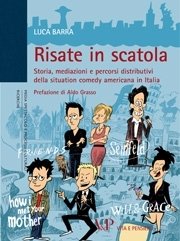
Luca Barra is Full Professor of Television and Digital Media at the Department of Arts, University of Bologna. His research focuses on media studies, particularly television history and contemporary evolution, transnational circulation of content, serialization, and comic/humorous genres. He has coordinated the Master's Degree in Information, Cultures and Media Organization since 2021 and serves as editor-in-chief of VIEW. Journal of European TV History and Culture. University of Bologna, Department of Arts Research areas: Television History, Transnational Media, Digital Transformation, Italian TV Production Barra's work examines the international mediation of ready-made TV formats, Italian streaming partnerships, and the cultural implications of digital television. His recent articles analyze dystopian narratives, sitcom reception in Italy, and the redefinition of celebrity during the pandemic. He contributes to academic discourse through editorial roles in journals like SERIES and Comunicazioni Sociali. His publications include monographs on Italian television programming, sitcoms, and co-edited volumes exploring European premium TV fiction and digital media frameworks. Barra has led research projects such as ATLas and F-ACTOR, and collaborates with international institutions including Brown University and NECS.
Alexander Kocian is an Assistant Professor at the Department of Computer Science, University of Pisa. He holds a Ph.D. in Electrical and Electronic Engineering from Aalborg University (Denmark) and a Master's in Electrical Engineering from TU Vienna (Austria). His research focuses on Machine Learning, IoT, Agro Informatics, Health Informatics, and Real-time embedded systems. He has led major projects like AGRITECH (€40M funded by PNRR) and FuorisuoloSmart, advancing smart agriculture and healthcare technologies. Dr. Kocian serves as IEEE Senior Member (since 2024) and EAI Fellow (since 2022). He is Associate Editor of IEEE Access (2025–present), and Editorial Board member of Stats (2019–present) and Signals (2020–present). He has organized conferences like the EAI Int. Conf. on Intelligent Transport Systems (INTSYS) as General Chair (2024) and Steering Committee Member (2023). His work includes 50+ peer-reviewed publications, 4 patents, and contributions to telemedicine platforms like TESHEALTH (ESA-funded). Key projects span precision farming, IoT-based greenhouses, and AI-driven healthcare solutions. Current efforts emphasize data spaces for agritech and health informatics interoperability.
Paolo Trunfio is a Professor of Computer Engineering at the University of Calabria, Italy, and co-founder of DtoK Lab S.r.l., an academic spin-off focused on data analysis and distributed systems. He holds a Ph.D. and is affiliated with the DIMES Department, specializing in big data, cloud computing, and high-performance computing (HPC). His research emphasizes scalable data analysis frameworks, edge-cloud continuum solutions, and machine learning applications for social media and disaster monitoring. Trunfio serves as an Associate Editor for ACM Computing Surveys and Journal of Big Data , and is on the editorial boards of several journals including Future Generation Computer Systems . He has authored four influential books, including Programming Big Data Applications (2024) and Data Analysis in the Cloud (2015). His work spans distributed systems, IoT-based smart objects, and exascale computing. Notable projects include the EU-funded eFlows4HPC and ASPIDE initiatives, which focus on HPC workflows and exascale programming models. Trunfio’s publications (over 200 papers) address topics like social media analytics, energy-efficient P2P networks, and parallel data mining. He leads research in urgent computing for disaster response, edge-cloud integration for urban mobility, and AI-driven data analysis. His contributions to cloud frameworks (e.g., JS4Cloud, ParSoDA) and HPC libraries (e.g., DCEx) highlight his expertise in bridging theory and practice in distributed computing ecosystems.
Chiara Bodei is an Associate Professor at the Department of Computer Science, University of Pisa. She specializes in cybersecurity, formal methods, and programming languages. Her teaching responsibilities include courses such as 'Programming Fundamentals with Laboratory' and 'Security Methods and Verification' at both undergraduate and graduate levels. She has contributed to research in automotive cybersecurity, IoT security, and formal analysis of software systems. Her work emphasizes secure communication protocols, privacy policies in automotive data, and context-aware security mechanisms. She collaborates with industry and academia on projects related to software-defined vehicles and IoT security. Her research has been published in top-tier conferences and journals, focusing on practical and theoretical advancements in computer security and formal methods. Research Interests: Cybersecurity, Formal Methods, Automotive Systems Security, IoT Security, Programming Languages, Context-Aware Systems. She has co-authored numerous papers on topics such as vehicular communication security, secure automotive protocols, and privacy in IoT systems. Teaching: Bodei has taught courses like 'Fondamenti di Programmazione' (undergraduate), 'Security Methods and Verification' (graduate), and 'Language-Based Technology for Security' (master’s level) across multiple academic years. She emphasizes practical programming skills and theoretical foundations in her courses. Labs/Teams: Her work is supported by the Department of Computer Science labs at the University of Pisa, focusing on applied research in cybersecurity and formal systems.
Prof. Chiara Dall'Asta is a Full Professor of Food Chemistry at the University of Parma's Department of Food Science. Since 2023, she serves as the Rector's Delegate for Doctoral Programs and has coordinated the PhD Course in Food Science since 2019. She acts as the Chancellor’s liaison to the European Food Safety Authority (EFSA) and contributes to EFSA Working Groups, authoring multiple scientific opinions on mycotoxin risk assessment. Her research spans natural bioactive compounds, mycotoxins, metabolomics, and computational toxicology, with recent expansion into food fraud detection using non-targeted mass spectrometry. Key methodologies include HR-MS metabolomics, ion mobility MS, and computational models to study xenobiotic interactions. She has published over 200 peer-reviewed papers and edited the book Masked Mycotoxins . Recent publications (2022-2025) highlight trends in mycotoxin analysis, food safety risk assessment, plant-based product safety, and computational toxicology. Work frequently integrates advanced analytical technologies (e.g., GC-IMS, LC-HRMS) with chemometrics for food authenticity and contamination studies. Teaching responsibilities include courses in Food Characterization, Risk Assessment of Chemical Compounds, and Xenobiotics in Food across undergraduate and graduate programs in Gastronomic Science, Food Safety, and Pharmaceutical Chemistry.
Prof. Alessandro Zaccagnini is an Associate Professor at the Department of Mathematical, Physical and Computer Sciences, University of Parma. He graduated in Mathematics in 1989 and obtained his PhD in 1994, focusing on Analytic Number Theory. His academic journey includes a competitive appointment as Associate Professor in 2004 after serving as a Researcher from 1993 to 2004. Education : PhD in Mathematics (1994), University of Parma Academic Positions : Researcher (1993–2004), Associate Professor (2004–present) His research spans Analytic Number Theory, focusing on additive problems like the Hardy-Littlewood conjectures, Goldbach representations, prime distribution in short intervals, Diophantine equations with primes, and Mertens' constants. He also contributes to Cryptography education. Key Research Areas Additive Number Theory (Goldbach, Goldbach-Linnik problems) Prime Distribution in Short Intervals Diophantine-type Problems with Prime Variables Mertens' Constant for Arithmetic Progressions Cryptography and Mathematical Education Recent publications include studies on Laplace convolutions, Cesàro averages for additive problems, and educational materials using everyday objects for mathematical teaching. His work bridges theoretical research (e.g., Riemann zeta function) and practical applications (e.g., cryptographic protocols). Teaching responsibilities include Mathematical Analysis , Cryptography , and Elementary Number Theory for undergraduate and graduate programs in Mathematics and Computer Science.
Roberto Giorgi is an Associate Professor of Computer Engineering at the Department of Information Engineering, University of Siena, Italy. He has held this position since October 1, 2006, following his tenure as an Assistant Professor since March 15, 1999. His educational background includes a Ph.D. in Computer Engineering from the University of Pisa (1999) with a thesis on coherence protocols for shared-memory multiprocessors, and an Electronic Engineering degree (1995) with a thesis on trace-driven performance evaluation of multiprocessors. Giorgi's primary research focuses on Computer Architecture , particularly on multiprocessor/multicore issues including processor design, coherence protocols, programmability, and energy efficiency. His work spans both theoretical and practical aspects of computer architecture, with emphasis on real-world implementations and educational tools. He has coordinated significant EU-funded projects including AXIOM (2014-2018) on Smart Cyber-Physical Systems and TERAFLUX (2009-2014) on Many-Cores. His recent publications (2022-2025) demonstrate a strong progression toward practical applications of computer architecture research, with particular emphasis on RISC-V architecture, FPGA-based acceleration, dataflow computing models (especially DF-Threads), and graph processing. Many of his papers address educational tools for computer architecture education, real-time object detection on embedded platforms, and novel execution paradigms for edge computing and HPC. IEEE Senior Member ACM Lifetime Member Coordinator of EU-funded AXIOM project (2014-2018) on Smart Cyber-Physical Systems Coordinator of EU-funded TERAFLUX project (2009-2014) on Many-Cores Giorgi has been actively involved in securing research funding and building collaborations, particularly in high-performance computer architecture research with emphasis on scalable architectures and embedded systems. He leads the Computer Architecture Lab (ROOM 223) at the University of Siena, which was established in 2007, and has been instrumental in developing practical implementations of architectural concepts including the AXIOM platform for cyber-physical systems.