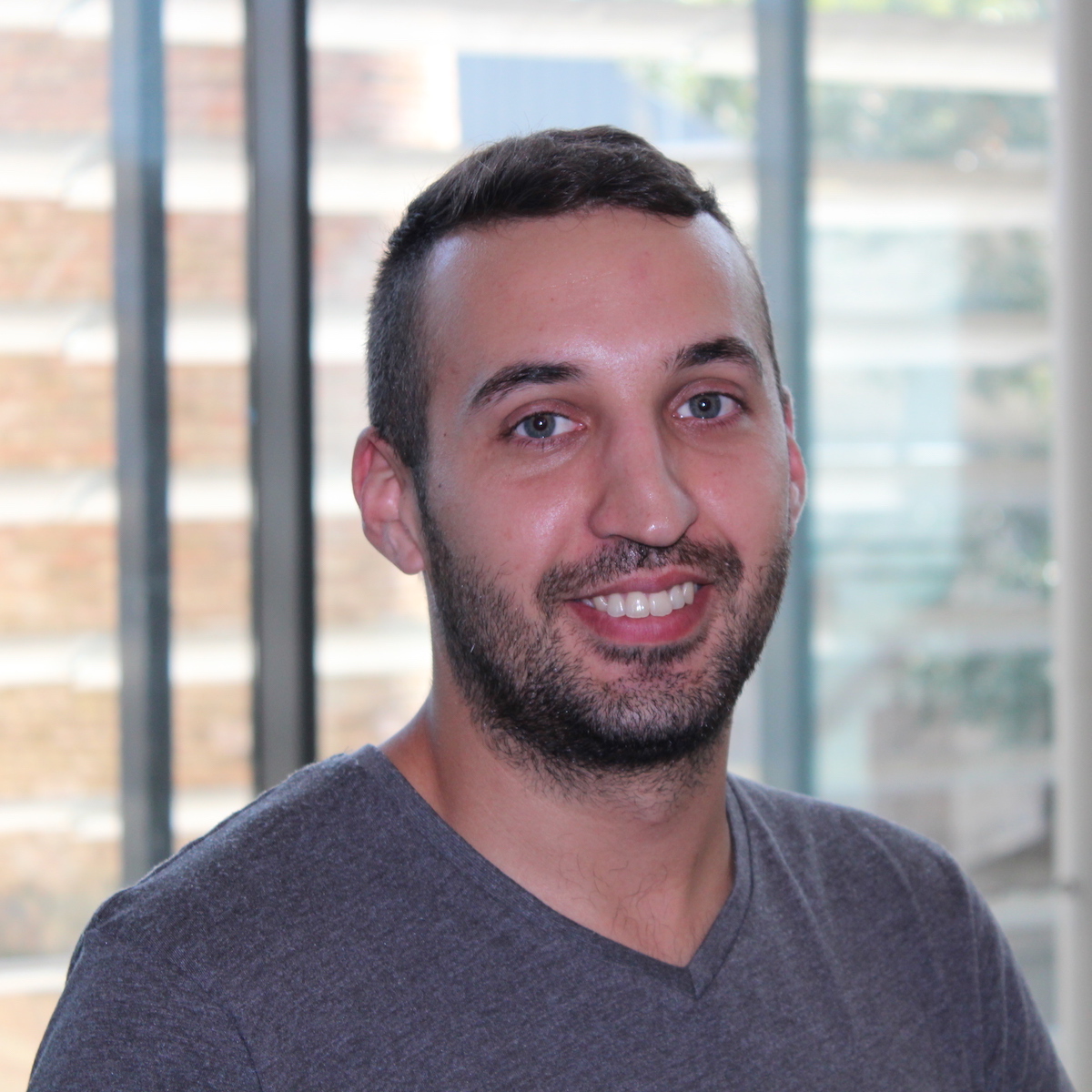
José Herrera Sanz is an Assistant Professor at the Department of Automation, University of Alcalá (Spain). He holds a Doctorate from Universidad Complutense de Madrid (2008) with a thesis titled Modelo de programación para infraestructuras Grid computacionales , supervised by Dr. Rubén Manuel Santiago Montero and Dr. Ignacio Martín Llorente. His research focuses on Grid computing, distributed systems, and sustainability in programming models. He is affiliated with the PROGRESSUS research group (Programming & Sustainability), exploring topics like distributed task scheduling, grid middleware, and high-performance computing applications. His work spans over 15 peer-reviewed articles since 2003, addressing challenges in virtual machine placement, genetic algorithms, and bioinformatics grid benchmarking. Key contributions include the GridWay DRMAA implementation, optimization of fusion physics workflows, and distributed loop execution frameworks. His research emphasizes sustainable computing practices and scalability in grid environments.
Elena Katia Leal Algara is an Associate Professor at Universidad Rey Juan Carlos, affiliated with the Department of Telematic and Computing Systems. She holds a PhD from Universidad Complutense de Madrid (2010) with a thesis on federated grid scheduling. Her research focuses on Grid Computing, Ubiquitous/Pervasive Systems, and Distributed Scheduling. She contributed to projects like Plan B OS, a middleware-free environment for pervasive computing. Notable research groups include PROGRESSUS (Programming & Sustainability) and PMI (Intelligent Mobile Platforms). Her work emphasizes energy-efficient resource allocation, adaptive scheduling in federated grids, and security protocols in ubiquitous environments. Key achievements include proposals for self-adjusting resource sharing policies and reallocation strategies in dynamic systems. Over 20 peer-reviewed articles span scheduling algorithms, grid infrastructure optimization, and pervasive computing design. Leal Algara's academic career involves advancing decentralized scheduling frameworks and exploring middleware alternatives for distributed systems. Current research interests include sustainable computing and autonomous resource management in federated environments.
Elena Garcia de Soto Camacho is a permanent Professor in the Department of Business Management and Marketing at the Faculty of Business and Tourism, University of Huelva. Her academic career focuses on strategic management, tourism, cultural heritage, and environmental sustainability in the hospitality sector. Education: PhD in Business Management (University of Huelva, 2013) - Thesis: Entry Mode, Strategic Flexibility, and Real Options in Internationalization Processes of Hotel Chains Research Focus: Elena's work explores the intersection of tourism management, cultural branding, and sustainable business practices. She applies institutional theory to producer organizations and investigates the role of brand value in event satisfaction. Her studies also address environmental responsibility metrics in hotels and golf courses. Scientific Contributions: Her recent work (2024) examines strategic implications in agricultural producer organizations, while 2023 studies focus on border tourism and music event branding. Earlier research (2010-2015) established her expertise in real options and strategic flexibility for hotel chain internationalization. Collaboration: Affiliated with multiple research groups including HUM066 Observatory of Culture and Heritage, SEJ437 Innovation in Tourism, and SEJ408 Virtual Business.
Dr. Borja Sanz Urquijo serves as a Senior Lecturer at the Faculty of Engineering, University of Deusto, and has been a core researcher at DeustoTech-Computing since 2008, including a tenure as Head Researcher (2015-2018). He holds a cum laude PhD in Information Systems (2012) from the University of Deusto, specializing in Android malware detection. Education PhD in Information Systems, University of Deusto (2012, cum laude) His research spans machine learning, big data, and knowledge discovery, with critical expansion into AI ethics, fairness, accountability, and societal impact. He investigates AI applications in domestic violence intervention, health rights, law enforcement transparency, and Edge Computing optimization, consistently bridging technical innovation with social responsibility. His work demonstrates rigorous methodology in small-dataset machine learning and genomic sequence analysis. Dr. Sanz Urquijo's publication trajectory reveals evolving expertise from foundational cybersecurity (Android malware analysis, spam filtering) to contemporary societal challenges (feminist AI frameworks, quantum software security). Recent articles emphasize interdisciplinary collaboration, particularly in feminist technology studies and ethical AI governance, while maintaining technical depth in Edge Computing and genomic analytics. Advising and Projects He has supervised multiple theses including doctoral work on Edge Computing for digital twins and cybersecurity competency frameworks. As lead researcher in over 50 projects (H2020, national, private), he currently directs BEACON (industrial AI systems) and contributes to EU initiatives like IMPROVE (domestic violence response) and ELKARTEK (Industry 5.0 ethics). His collaborations span social organizations, enterprises, and research centers globally. Research Environment As a pillar of DeustoTech-Computing, he operates within a multidisciplinary unit advancing AI, cybersecurity, and Edge Computing applications. His leadership in projects like AI-Driven Cognitive Robotic Platforms and REal tiME control systems demonstrates integration of theoretical research with industrial implementation in smart manufacturing contexts.
Pedro Moreno-Sánchez is an Assistant Research Professor at the IMDEA Software Institute in Madrid, Spain. He holds a PhD in Computer Science from Purdue University (2018), and previously held a postdoctoral position at TU Vienna. His research focuses on distributed ledgers (blockchain), privacy-enhancing technologies, and applied cryptography, aiming to bridge theory and practice in secure and practical systems. He has advised PhD students (Lukas Aumayr, Erkan Tairi) and master’s students (Jakob Abfalter), and mentored research interns from institutions like TU Delft and Purdue. Education: PhD in Computer Science (Purdue University, 2018), MSc and BSc from University of Murcia (Spain), with visiting stints at Ripple Labs, IBM Research, and Philips Research. Research Interests: Blockchain security and privacy, scalability via Layer-2 solutions, cryptographic tools for transaction privacy, and anonymous communication systems. His work emphasizes formal security guarantees and practical deployment. Key Contributions: Developed protocols like A2L (scalable atomic locks), Blitz (secure multi-hop payments), and SilentWhispers (privacy for decentralized credit networks). His papers address payment channel networks, cross-chain interoperability, and privacy-preserving transaction designs. Awards: Best Reviewer Award at Privacy Enhancing Technologies Symposium (PETS) 2019. Service: Served as Program Chair for FC, NDSS, and multiple blockchain conferences; editorial roles at PETS, IEEE journals, and the Journal of Cryptoeconomic Systems. Labs/Teams: Primary affiliation with IMDEA Software Institute’s security and privacy research group.
Rubén Santiago Montero is an Associate Professor at the Department of Computer Architecture and Systems Engineering, Universidad Complutense de Madrid (UCM). He leads research in distributed systems, focusing on resource provisioning in Grid, Cloud, and edge computing environments. His work emphasizes virtual machine management, cloud federation, and utility computing models. Montero co-leads the OpenNebula project, a widely adopted cloud management platform, and contributed to the GridWay metascheduler. Research interests include distributed resource management, virtualization, and interoperability between cloud infrastructures. He participates in major EU projects such as RESERVOIR, BEACON, and PANACEA, advancing cloud and grid technologies. His contributions span over 200 peer-reviewed publications in top journals and conferences, addressing topics like workflow scheduling, elastic resource allocation, and edge-cloud architectures. Education: PhD in Computer Science (UCM). Grants & Projects: Principal investigator in EU-funded initiatives (e.g., RESERVOIR, BEACON) totaling €20M+. Labs/Teams: Distributed Systems Architecture Group at UCM, collaborating with NASA, IBM, and European research networks.
Pedro M. Ruiz Martinez is an Associate Professor at the Department of Information and Communications Engineering (DIIC) within the Faculty of Computer Science at the University of Murcia, Spain. He served as Dean of the Faculty from 2013 and previously as Head of DIIC (2011-2012). Ruiz holds a Ph.D. in Telematics (2002) from the University of Murcia and has held research roles including Ramón y Cajal fellowship, visiting positions at ICSI Berkeley, UC Santa Cruz, and King's College London. Ph.D. in Telematics, University of Murcia (2002) Ramón y Cajal Research Fellow Visiting Researcher at ICSI, UC Berkeley Research Associate at UC Santa Cruz Visiting Fellow at King's College London His research focuses on efficient communication protocols for distributed and heterogeneous wireless networks , including VANETs , sensor networks , and mesh networks . Key contributions involve energy-efficient routing , multicast protocols , and gateway load-balancing mechanisms. He has received quality awards for the MARTA project and positive evaluation under Spain's I3 research trajectory program . Recent publications highlight trends in vehicular network optimization , mesh network resource management , and beaconless geographic routing for sensor networks. Awards include the MARTA project quality award and MEC I3 program recognition . Ruiz has advised numerous Ph.D. students including Juan A. Sanchez , Francisco J. Ros , and Rafael Marin , with research spanning VANET security , multicast routing , and energy-efficient protocols . He serves as guest editor for journals including Ad Hoc and Sensor Wireless Networks and International Journal of Smart Home . Professional roles include chairing IEEE INFOCOM 2011, ACM MobiCom 2008, and IEEE MASS 2012. Current teaching includes Wireless Networks (M.Sc.) , Networking Architectures , Mobile Computing , and Advanced Telematic Services at the University of Murcia.
Javier Verdu Mula is a Professor at the Departament d'Arquitectura de Computadors (Universitat Politècnica de Catalunya - UPC) and a key researcher at the CRAAX - Centre de Recerca d'Arquitectures Avançades de Xarxes . His work focuses on computer architecture, parallel processing, and networking systems. Fields of Research include RISC-V virtualization, multithreaded processor optimization, and performance analysis of stateful networking applications. Scientific Awards include the BDigital Global Congress (2015) and Wayra Barcelona (2012) recognitions. Collaborations span institutions like Barcelona Supercomputing Center and researchers such as Manuel Alejandro Pajuelo, Mateo Valero Cortes, and Mario Nemirovsky. His recent publications address RISC-V hypervisor extensions, deep packet processing in parallel architectures, and statistical thread assignment models. He also holds patents in hardware virtualization and resource control systems.
Antonio Garrido del Solo is a Professor in the Department of Computer Systems at the School of Computer Engineering, University of Castilla-La Mancha (UCLM). He has been affiliated with UCLM since 1986, becoming a Catedrático (Full Professor) in the area of Computer Architecture and Technology (ATC) in 2003. He served as Director of the School of Engineering at UCLM (2000-2008), Director of the Information Technology section at the Regional Development Institute (IDR) of UCLM (1996-2000), and Deputy Director of the Informatics Department at UCLM (1993). Professor Garrido earned his Licentiate in Physical Sciences from the University of Granada in 1986 and his Doctorate from the University of Valencia in 1991. Since 1993, he has been the co-founder of the High-Performance Networks and Architectures (RAAP) research group at UCLM, which currently includes 23 doctors. His academic leadership includes heading the Computer Architecture and Technology area from 2008 to 2021. His research interests span wireless networks, multimedia communications, video transcoding, software-defined networking, edge computing, and energy efficiency in networks. Professor Garrido has focused on digital image processing, broadband video transmission, video transcoding, and multimedia data transmission over wireless networks. His recent work demonstrates a strong emphasis on software-defined networking applications for wireless LANs, particularly in multicast transmission, load balancing, and energy efficiency. His publication record shows a clear evolution from video transcoding and wireless communications to software-defined networking and edge computing. The past decade reveals a significant shift toward SDN-based solutions for wireless networks, with particular attention to quality of service, resource allocation, and energy efficiency in enterprise WLAN environments. His work often combines theoretical networking principles with practical implementations for real-world applications. Professor Garrido has been deeply involved in university quality evaluation since 2000, serving as an external evaluator for Spain's National University Quality Evaluation Plan (PNECU), ANECA's Evaluation Plan (PEI), and multiple ANECA programs including VERIFICA, MONITOR, and ACREDITA. Since 2018, he has been a member of the EURO-INF seal commission, which he has chaired since 2022. He has also collaborated with regional quality agencies (ACCUEE, AQUIB, DEVA) in evaluating university programs and faculty. His research has been supported by numerous competitive research projects, including MECODIVI (2018-2021), excellence networks in computer architecture and advanced communications (2017-2019), and multiple projects focused on multimedia content delivery, wireless sensor networks, and energy management systems. He has led the RAAP research group for nearly three decades, securing funding from both regional and national sources. Professor Garrido co-founded the RAAP (High-Performance Networks and Architectures) research group at UCLM in 1993, which has grown to include 23 doctors. The group has maintained a consistent research focus on network architectures, wireless communications, and multimedia systems, while adapting to emerging technologies like software-defined networking and edge computing. Their collaborative approach has resulted in numerous publications in top-tier networking journals and conferences.
KC Sivaramakrishnan serves as an Adjunct Professor at the Indian Institute of Technology, Madras and CTO of Tarides, bridging academic research and industrial application in programming languages and systems. His dual roles reflect a commitment to advancing both theoretical foundations and practical implementations in computer science. His research spans Functional Programming, Language Runtimes, Concurrency/Parallelism/Distribution, and Weak Memory/Consistency models, with particular focus on the OCaml programming language. Sivaramakrishnan's work addresses fundamental challenges in concurrent and distributed systems through innovative language design and runtime techniques. Analysis of his publication record reveals a consistent trajectory from foundational work on effect handlers and concurrency models (2015-2020) to more recent contributions in verified systems, multicore programming, and distributed data types (2021-2025). His research demonstrates strong continuity in exploring how programming language principles can solve real-world systems challenges. Sivaramakrishnan actively contributes to the academic community through program committee memberships across major PL conferences including POPL, PLDI, ICFP, and SPLASH. His service spans multiple roles from committee member to track chair and diversity co-chair. As CTO of Tarides, he leads industrial efforts in OCaml compiler development and systems programming, maintaining a productive synergy between his academic research and industry leadership. His work with the OCaml community includes significant contributions to multicore support and effect handler implementations.
Dr. David Buján Carballal is a Lecturer and Researcher at the University of Deusto in Spain. He holds a BSc, MSc, and PhD in Computer Sciences from the University of Deusto, with a dissertation focusing on semantic technologies in Grid computing. His research spans Blockchain, Cloud/Grid computing, Linked Data, and Semantic Technologies. He teaches Web Engineering, Operating Systems, and Distributed Systems, and works at the Mobile Communications Research Group (MORElab) within DeustoTech Institute and Telefónica Deusto Chair. Education: BSc in Computing - Faculty of Engineering, University of Deusto MSc in e-Business - University of Deusto PhD in Computer Sciences - University of Deusto (2016) Research focuses on integrating semantic technologies with distributed systems, including blockchain applications and cybersecurity in connected industries. He actively participates in national projects (ALASTRIA network) and international conferences like HAIS, SOCO, and IoT. His work includes developing context-aware tourism platforms and remote laboratory systems (WebLab-Deployer). Advising & Grants: Involved in national/international research projects and private contracts. Served on program committees for conferences such as CAEPIA and JENUI. Extensive collaboration with institutions like the University of Manchester, UCM, and the University of Westminster. Labs/Teams: Lead researcher at MORElab, part of DeustoTech’s Mobile Communications group.
Antonio de la Oliva is a Professor at the University Carlos III de Madrid, affiliated with the School of Engineering. His primary research focuses on advanced networking technologies, including 5G/6G, Software-Defined Networking (SDN), Network Functions Virtualization (NFV), and mobile edge computing. He leads and contributes to major EU-funded projects such as 5G-CORAL, 5G-Transformer, and 5G-Crosshaul, which aim to integrate and optimize transport networks for industry verticals. He has supervised PhD students like Maria Isabel Sanchez Bueno (awarded UC3M's Special PhD Award) and Sergio Gonzalez Diaz. His work spans experimental evaluations of SDN-based service provisioning, network slicing, and deterministic communications for Industry 4.0. He actively engages in standardization efforts (e.g., IEEE 802.21, IETF) and collaborates with industry partners like Ericsson, Nokia, and Telecom Italia. His research also explores edge robotics, digital twins, and AI integration in networked systems. Key projects include developing the 5G-Crosshaul architecture for integrated fronthaul/backhaul networks and the SLICES-Madrid multi-domain TSN framework. He emphasizes practical applications in healthcare, emergency response, and industrial automation, leveraging edge-fog-cloud architectures.
Francesc Wilhelmi is a Tenure-Track Professor at Universitat Pompeu Fabra (UPF) and a Research Engineer at Nokia Bell Labs . He holds a Ph.D. in Information and Communication Technologies (2020) and an M.Sc. in Intelligent and Interactive Systems (2016), both from UPF. His research focuses on Wi-Fi technologies , machine learning , decentralized learning , and blockchain applications in telecommunications . He previously served as a researcher at CTTC and taught at UPF (2015–2020) and Universitat Oberta de Catalunya (2020–2022), specializing in networking courses. Key contributions include the Komondor wireless network simulator and standardization work at ITU-T , notably editing recommendation Y.3181 on Machine Learning Sandboxes. Active in FG-ML5G , organizing problem statements for the ITU AI/ML in 5G Challenge. Explores blockchain for O-RAN sharing and AI-driven spatial reuse in 5G/6G networks. His work bridges network simulation with machine learning to address challenges in dense wireless environments, emphasizing practical implementations and open-source tools.
Arturo Azcorra is a Full Professor at the University Carlos III of Madrid in the Telematics Engineering Department and serves as Director of the IMDEA Networks Institute . His career spans academic leadership and research in network architectures, communication protocols, and wireless technologies. Full Professor at Universidad Carlos III de Madrid (since 1998) Director of IMDEA Networks Institute (since 2006) Senior Member of IEEE Communications Society Research Interests: His work focuses on network architectures, communication protocols, wireless and mobile networks, peer-to-peer systems, and energy-efficient networking. Current projects include 5G network slicing, microsleep techniques for WiFi, and collaborative file distribution systems. Publications Trends: Recent articles address 5G network optimization, energy-efficient protocols, ad traffic filtering systems, and multicast video delivery mechanisms. His research combines theoretical modeling with practical implementations in real-world network environments. Scientific Awards: IEEE Communications Society Senior Member President of the Association for Telematics Academic Leadership: He has held significant administrative roles including Deputy Vice-Provost and Department Director at UC3M. Currently supervises the NETCOM Research Group and collaborates with IMDEA Networks .
Leocadio Hontoria García serves as Full Professor in the Department of Electronic and Automatic Engineering at the Higher Polytechnic School of the University of Jaén, Spain, where he has maintained an active academic position since 2003. His career bridges advanced research in solar energy systems with innovative educational practices in engineering disciplines. Academic Background: PhD in Physical Sciences, University of Jaén (2002) Hontoria's research program focuses on applying artificial neural networks to solve critical challenges in solar energy utilization, particularly in photovoltaic system design, solar radiation modeling, and renewable energy integration. His work demonstrates exceptional continuity in merging computational intelligence with practical energy solutions, establishing him as a leading specialist in solar resource assessment methodologies. Analysis of his recent publications reveals a strategic evolution toward educational innovation and real-world implementation. While maintaining core expertise in neural network applications for solar radiation prediction, his current work emphasizes urban photovoltaic integration, entrepreneurship education for engineers, and open-access educational resources. This shift reflects growing institutional priorities around sustainable development and practical skill transfer. Research Leadership: Principal Investigator for approximately 50 funded research projects and contracts Director of the Laboratory of Electrical and Electronic Engineering Applied to Solar Energy Extensive collaboration with industry partners in renewable energy sector Hontoria maintains active leadership in the Laboratory of Electrical and Electronic Engineering Applied to Solar Energy, where his team develops practical solutions for solar energy monitoring, system optimization, and educational tool creation. Current initiatives include IoT-based photovoltaic monitoring systems and open-source simulation platforms for engineering education.