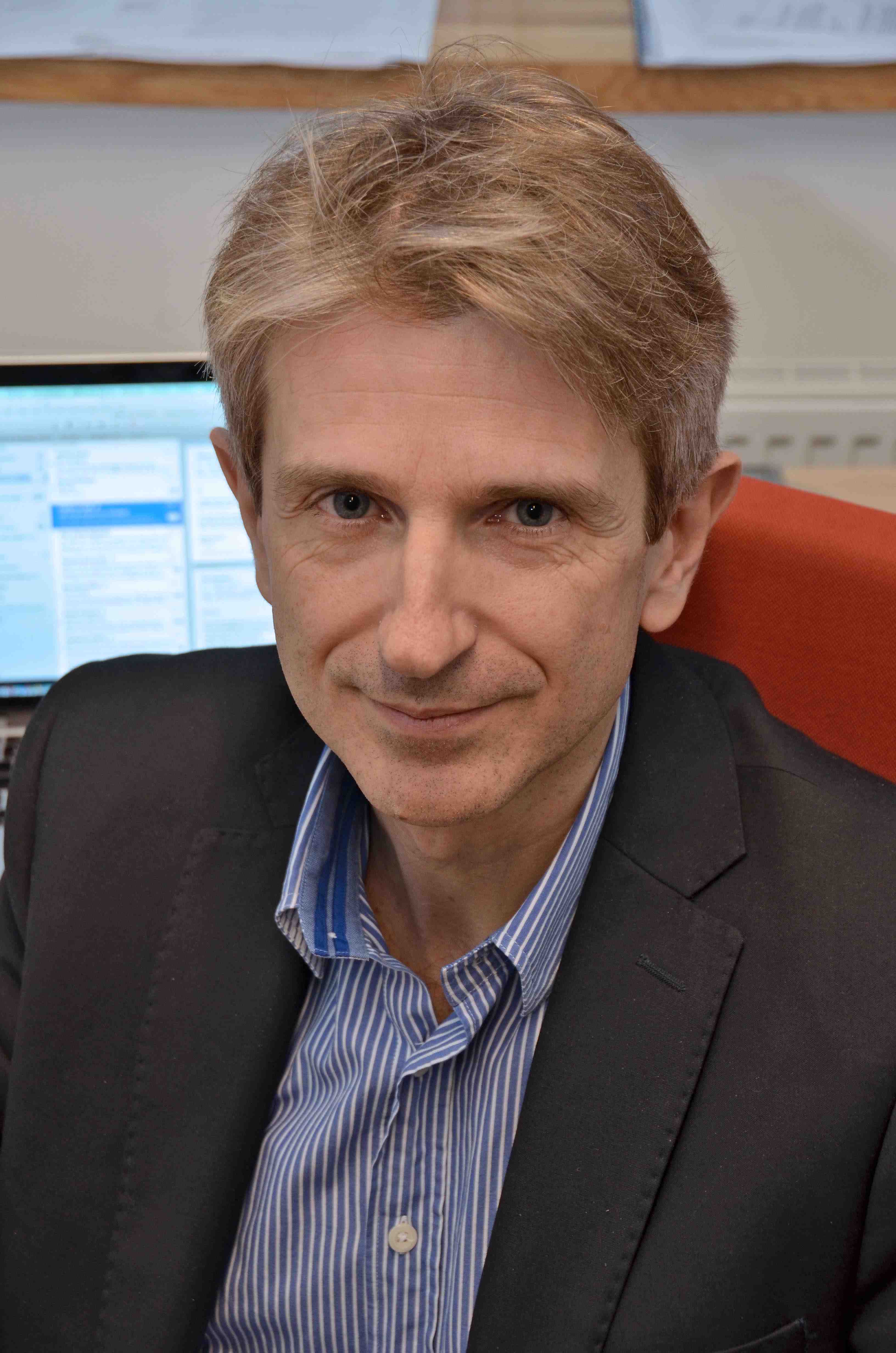
JULIO CESAR SOUSA FERNANDEZ is a Full Professor at the Department of Galician Philology, Faculty of Philology, University of Santiago de Compostela. He is affiliated with the Galician Language Institute (ILG) and part of the FILGA research group (Galician Philology and Linguistics). His doctoral thesis (1998) focused on diachronic analysis of verb constructions in Galician, supervised by Dr. Rosario Álvarez Blanco. Research interests center on Galician dialectology, historical linguistics, and geolinguistic methodologies. He specializes in lexical variation, language contact phenomena, and the digitization of linguistic atlases. Key projects include the digital edition of the Atlas Lingüístico de la Península Ibérica and quantitative analyses of Galician dialectometry.
Ana María Coll Coll is a Senior Lecturer at the University of the Balearic Islands' Faculty of Philosophy and Letters. She obtained her European PhD in History in 2015 and has been a permanent lecturer since 2023. Her research focuses on 18th-century administrative systems, taxation changes, and military logistics in Mallorca, with particular emphasis on inter-institutional conflicts and socio-economic networks. Current member of the 'Defensa y fortificaciones en las islas del Atlántico medio' project (PID2020-115792GB-I00) Principal investigator in the ISEM research group (Institutions and Society in the Early Modern Age) Teaches '18th Century History' and 'Methods of Historical Research' at undergraduate levels Research Themes: Her work analyzes the Bourbon administrative model's implementation in Mallorca, fiscal reforms under Carlos III, and the precarious military infrastructure during the 18th century. She examines how traditional power networks interacted with state modernization efforts. She has conducted comparative studies across institutions like the Scottish Centre for War Studies, Cambridge Faculty of History, and the Maison des Pays Ibériques in Bordeaux. Her publications reveal trends in fiscal documentation analysis, military provisioning challenges, and localized responses to imperial policies. Academic Service: Coll Coll has served as secretary of Labor Historical Sciences and Theory of the Arts. She participates in educational projects connecting university research with secondary school curricula through the 'Grand Tour' initiative.
Pau Marimon Ribas is an Assistant Professor in Ancient History at the University of the Balearic Islands (UIB), specifically within the School of Historical Sciences and Theory of the Arts. He holds a PhD in History from the University of Barcelona, with his thesis focusing on the Rhône River as a factor of communication and economic integration between the Mediterranean and Germanic Limes during the Roman Empire, supervised by Yann Le Bohec from Université Paris-Sorbonne. His academic career includes teaching at the UIB since 2022 for the History degree program and since 2019 for the Teacher Training Master's program. Specializes in Roman Empire economics and administration Member of the Civitas research group at UIB since 2022 Participates in the research project "Entornos para el diálogo: los espacios de la diplomacia en el ámbito provincial romano durante la República" Accredited by ANECA as Profesor de Contratado Doctor and Profesor de Ayudante Doctor Recognized with a research six-year period (sexenio) Marimon Ribas specializes in the economic and administrative aspects of the Roman Empire, with particular focus on the Rhône-Rhine axis as a communication and economic integration route. His research examines how Roman state intervention along this axis organized military supply systems and stimulated economic development across Gallic and Germanic provinces. He has conducted extensive archaeological work, including eight years excavating at Monte Testaccio in Rome. His recent publications (including 2025 articles) focus on Visigothic inscriptions, Gaulish merchants, and the economic integration of Roman provinces. His research output shows a clear trajectory from early work on Balearic Islands in antiquity toward broader Roman economic systems, particularly examining the Rhône River's role in Mediterranean-Germanic connections. His work increasingly incorporates digital methods, as seen in his 2025 paleographic study using 3D modeling to analyze a Visigothic inscription mentioning King Witiza. Recognized research six-year period (sexenio de investigación) ANECA accreditation for multiple academic positions Marimon Ribas has advised on cultural heritage projects including cataloging heritage for municipalities of Campos and Vilafranca de Bonany. His teaching spans undergraduate courses on Ancient History of the Balearic Islands, Ancient Near East, and Societies and Cultures in Ancient Times, as well as graduate courses on Educational Research and Innovation. He has also contributed to educational materials for Bellver Castle, creating teaching guides for various educational levels. His research is supported by the Ministry of Science and Innovation through project PID2022-137408NB-I00. He is actively involved with the Civitas research group at UIB, focusing on provincial diplomacy spaces in the Roman Republic. His archaeological background includes long-term participation in excavations at Monte Testaccio in Rome and cultural management at Bellver Castle. His research network spans major European centers including Maison René Ginouves (Paris X), Université Paris-Sorbonne, and Università degli Studi Roma Tre.
Mónica Anna Giovanniello is an Associate Professor in the Department of Applied Economics at the University of the Balearic Islands (UIB). She teaches courses in Microeconomics, Industrial Economics, and related fields across multiple degree programs including Economics, Business Administration, Tourism, and Hotel Management at UIB's campus in Mallorca. Dr. Giovanniello earned her academic credentials from prestigious institutions: PhD in Economics from the University of Warwick (UK, 2016) Master's degree in Economics and Finance from the University of Federico II (Naples, 2010) Degree in Political Science from the University of Salerno (2009) Her teaching portfolio spans multiple programs, with current responsibilities for the 2025-26 academic year including Competitive Tourism Sector, Environmental and Quality Management, Principles of Economics, and supervision of final degree projects across Hotel Management, Economics, and Tourism programs. She maintains regular office hours in room DB208 of the Gaspar Melchor de Jovellanos building by appointment. Dr. Giovanniello's research focuses on Political Economy, Public Economics, Microeconomics, and Game Theory. Her work examines strategic interactions in political decision-making, public facility location, voter communication dynamics, and economic policy formation. She is currently participating in the project "Heterogeneous Interest Groups and Public Policy Decisions," funded by the Spanish Ministry of Economy. Her scholarly output demonstrates consistent research in political economy, with recent publications analyzing donation relief policies, equity in public facility location, and echo chamber formation in voter communication. Her work employs rigorous theoretical frameworks, particularly game theory, to address complex questions at the intersection of politics and economics. Dr. Giovanniello is an active member of the "Conflicto e Interacción Estratégica (CIE)" research group, a consolidated R&D&I structure at UIB focused on strategic conflict and interaction. She maintains academic profiles on ORCID, ResearcherID, Scopus, and Dialnet, reflecting her engagement with the international scholarly community.
Eric Goubault is a Professor of Computer Science at École Polytechnique , where he leads the computer science department and the LIX laboratory (UMR 7161). His research centers on verification of numerical programs and systems , geometric methods for concurrency , and directed topology with applications in distributed and fault-tolerant computing. He oversees the Engineering of Complex Systems academic and research chair, sponsored by major industry partners like Thales and Naval Group, and manages the COMASIC master program. Current projects include: ACAT (Applied and Computational Algebraic Topology) COVERIF (Abstract interpretation for floating-point verification) MALTHY (Algebraic methods for timed systems) CAFEIN (Numerical invariants analysis) He has supervised multiple students, including: Current: Jérémy Ledent, Bibek Kabi, Nikolas Stott, Jérémy Dubut Past: Khalil Ghorbal
Jesse Read is a Professor at École Polytechnique (Institut Polytechnique de Paris) affiliated with the ORAILIX team within the Data Analytics and Machine Learning pôle of the Computer Science Laboratory (LIX). His work focuses on multi-label and probabilistic inference , explainable and robust methods , and learning from data streams and sequential data with applications in medicine, energy, and transportation. He obtained his PhD from the University of Waikato (2010) and held postdoc positions at INFRES Télécom Paris, Aalto University, and Universidad Carlos III de Madrid before becoming Assistant Professor (2017) and Professor (2019) at École Polytechnique. Research Trends His recent publications emphasize multi-label learning (Classifier Chains, Regressor Chains) and data stream analysis with applications in degradation modeling and medical diagnostics. Key methodological contributions include probabilistic inference in chained models, scalable ensemble learning , and Monte Carlo optimization for sequential tasks. Application domains span healthcare (ECG analysis, insomnia detection), energy systems (wind turbine control), and transportation (route prediction). Scientific Awards Test of Time Award at ECML-PKDD 2019 for foundational work on Classifier Chains Habilitation à Diriger des Recherches (HDR) in Computer Science (2017) Advising & Grants Read has supervised PhD theses from Ekaterina Antonenko (Multi-Target Learning) and Olivier Pallanca (Paradoxical Insomnia Analysis). He secured an ANR grant for Dynamic Graph Signal Processing with Dr. Johannes Lutzeyer and Dr. Luca Martino.
Laurent Feuilloley is a junior CNRS researcher (Chargé de recherche) at LIRIS, Université de Lyon 1 since 2022. He previously held postdoctoral positions at LIRIS, Universidad de Chile, and LIP6 at Sorbonne Université. His research focuses on Distributed Computing , Graph Theory , and Local Certification , with applications in Fault-Tolerant Systems and Algorithm Engineering . He collaborates extensively with researchers like Nicolas Bousquet, Franck Petit, and José Correa. Education: PhD in Computer Science (2018) at IRIF, Université Paris Diderot, supervised by Pierre Fraigniaud. Research: Works on graph algorithms, certification, and robustness in dynamic networks, with a focus on maximal independent sets and self-stabilizing systems. Scientific Contributions: His publications include lower bounds for local certification, robustness refinements in dynamic networks, and space complexity for leader election algorithms. He has received multiple Best Paper Awards at SAND 2023 and SSS 2022 Best Student Paper at OPODIS 2021 Best Reviewer Award at DISC 2020 Advising: Currently supervising Sébastien Zeitoun's PhD (co-advised with Nicolas Bousquet and Éric Duchêne) and Antonin Kiladjian's M1 internship (with Théo Pierron). He has also advised Guillermo Dinamarca's master thesis in 2019-2020.
Yannic Maus is a Professor at the Faculty of Computer Science and Biomedical Engineering at Graz University of Technology (TU Graz), Austria, where he heads the Institute of Algorithms and Theory (founded in 2025). He is also a co-leader of one of the five Fields of Expertise (FoE) at TU Graz, specifically in Information, Communication & Computation. Dr. Maus received his PhD from the Algorithms and Complexity group at the University of Freiburg (Germany) under the supervision of Fabian Kuhn. Prior to joining TU Graz, he was a postdoctoral researcher at the Technion in Israel in the group of Keren Censor-Hillel. His research focuses on theoretical computer science and algorithm design, particularly problems arising in distributed computing. He is fascinated by clean mathematical questions and the techniques involved in solving them, especially when these questions are motivated by real-world systems. His specific interests include distributed graph algorithms, efficient algorithms, data structures, complexity theory, and geometric algorithms. Dr. Maus's work bridges theoretical foundations with practical applications in large-scale networked systems. Analysis of his recent publications reveals a strong emphasis on distributed algorithms for graph problems, with significant contributions to graph coloring, symmetry breaking, and vertex cover problems across various computational models. His research demonstrates increasing focus on massively parallel computation (MPC) models alongside traditional distributed computing frameworks, addressing challenges related to bandwidth limitations, memory constraints, and adaptive algorithms. The interdisciplinary nature of his work connects theoretical computer science with practical system constraints. GI Dissertationspreis 2018 Wolfgang-Gentner-Nachwuchsförderpreis 2019 2020 Principles of Distributed Computing Doctoral Dissertation Award Best Paper Award at PODC 2016 Best Paper Award at SIROCCO 2016 Best Paper Award at DISC 2017 Dr. Maus actively mentors students at all levels, offering bachelor's and master's theses as well as PhD positions in his research group. His research is supported by multiple competitive grants including FWF grants P36280-N (2023-2027), DOC 183 (2024-2028) and I6915 (2024-2028), and FFG grant No. 59263962. His group maintains strong international collaborations with research teams across Germany, Finland, Iceland, and Israel, facilitating knowledge exchange and joint research initiatives. The group provides fully funded PhD positions with excellent working conditions, including competitive salaries and travel support. The Institute of Algorithms and Theory, under Dr. Maus's leadership, is part of TU Graz's rapidly growing Faculty of Computer Science and Biomedical Engineering. The research group maintains an inclusive environment that actively encourages women to apply and supports work-life balance for all members. Located in Graz, Austria's second-largest city, the institute benefits from the city's high quality of life, cultural vibrancy, and proximity to both the Alps and Mediterranean regions, providing an excellent environment for academic work and personal life.
Antoni Ivorra is a Professor at the Department of Information and Communication Technologies (DTIC) of Universitat Pompeu Fabra (UPF) , and a Serra Húnter Fellow and ICREA Acadèmia Fellow . He joined UPF in 2010 after completing a postdoctoral fellowship at the University of California, Berkeley (2005-2009), a short-term position at CNRS-Institut Gustave Roussy (2009), and prior work at the Biomedical Applications Group of the Centre Nacional de Microelectrònica (1998-2005). He earned a PhD in Electronics Engineering from the Universitat Politècnica de Catalunya in 2005. His research focuses on bioelectrical phenomena for biomedical applications , including electroporation , electrical bioimpedance , and injectable electronics for neuroprosthetics. His work spans device development, computational modeling, and clinical translation, with emphasis on tissue ablation and wireless implantable systems. His recent publications highlight advancements in pulsed field ablation , volume conduction for powering implants, and multiscale modeling of electroporation effects. These contributions reflect interdisciplinary expertise in biomedical engineering , electrophysiology , and medical device innovation . Scientific Awards : ERC Consolidator Grant (2016) Serra Húnter Fellow ICREA Acadèmia Fellow
Marta Manzanares is a Lecturer in the Interactive & Distributed Technologies for Education department, focusing on the application of interactive and distributed technologies in educational contexts. She contributes to advancing pedagogical practices through technological innovation. Research Interests: Her work centers on Educational Technology, Distributed Learning environments, Interactive Systems, E-Learning platforms, Technology integration in Education, and Digital Education strategies.
Pradeep K. Chintagunta is the Joseph T. and Bernice S. Lewis Distinguished Service Professor of Marketing at the Booth School of Business, University of Chicago. He has previously taught at Harvard Business School and Cornell University's S.C. Johnson Graduate School of Management. His research focuses on empirical analysis of Consumer behavior in packaged goods, pharmaceutical, and online markets Pricing and advertising strategy Distribution channels Development marketing for emerging economies Recent publications analyze Gender-matched mentorship in entrepreneurship Pharmaceutical price regulation in India Marketing communication in new product categories Platform disintermediation dynamics Technology's impact on managerial performance These works employ structural models and field experiments across diverse markets. Scientific recognition includes Hillel J. Einhorn Award for Excellence in Teaching O'Dell Award finalist (twice) BusinessWeek's top professor recognition He advises policymakers on pharmaceutical regulation and technology adoption through field experiments with Coursera, mobile app firms, and retail chains. His teaching spans full-time, evening, weekend, and international programs, emphasizing continuous learning and market adaptation.
Dr. José Antonio Orosa García is a Researcher at the Department of Navigation Sciences and Marine Engineering, affiliated with the Higher Technical School of Nautical and Marine Engineering at the University of A Coruña. His academic career spans over two decades, with a focus on applied research in maritime technologies and mechanical systems. Research Merits: 2 patents, 2 software registrations Teaching: Over 102 hours in 'Energy and Auxiliary Systems of the Ship' alone Research interests include: Marine Energy Optimization: Ship energy systems, sustainable construction, and wind energy applications Advanced Manufacturing: CNC machining, 3D printing, and mechanical prototyping Smart Maritime Systems: Digital twin technology, machine learning for predictive maintenance Occupational Safety: Human factor analysis in extreme marine environments Educational Innovation: Development of maritime training simulators Recent publications demonstrate his expertise in: Machine learning applications for marine equipment maintenance Energy efficiency in maritime operations Computational fluid dynamics for ship stability analysis Renewable energy integration in marine environments Scientific contributions recognized through: Patente Universidade da Coruña (2008) Software Rexistrado UDC (2006) Multiple book chapters in specialized publications Research grants include funding from: Defense University Center, Military Naval School Universidad de Las Palmas de Gran Canaria Fundación Universidad Empresa de la Provincia de Cádiz Dirección Xeral de Investigación, Desenvolvemento e Innovación
Dr. Francisco Zayas Gato is a researcher at the University of A Coruña (UDC), affiliated with the Ferrol Engineering School within the Department of Systems and Automatic Engineering. He actively contributes to the Cybernetic Science and Technology Research Group, focusing on industrial automation, power electronics, and IoT applications. Teaching roles in Industrial Automation, Power Electronics, and Embedded Systems Key research areas: IoT integration, renewable energy systems, control theory Collaborations: European Union, Navantia, EMALCSA, Red.es His research spans diverse projects including solar energy systems, wireless data acquisition, and digital twin implementations. Recent publications demonstrate expertise in industrial IoT applications, control system design, and educational technology solutions. Scientific contributions appear in journals such as Sensors, Applied Intelligence, and Logic Journal of the IGPL. His work frequently involves multidisciplinary collaborations with institutions like Universidad de Castilla-La Mancha and European Commission research programs.
Albert Esteve Palós is a Professor at the Department of Sociology, Universitat Autònoma de Barcelona (UAB), and holds the Serra Hunter Professorship at the Department of Political and Social Sciences, Universitat Pompeu Fabra (UPF). He serves as Director of the Centre d'Estudis Demogràfics (CED) since 2015 and previously held an Adjunct Professor position at UAB's Geography Department (2015-2021). His research focuses on demographic trends, family formation, household structure, and social stratification. Education: PhD in Demography, UAB (2003) Masters in Geographic Information Systems, University of Girona (2001) Masters of Demography, Center for Demographic Studies (1999) Bachelor of Geography, UAB (1998) His recent work examines global household structure changes, focusing on intergenerational coresidence, fertility dynamics in Latin America and Spain, and the impact of educational shifts on family formation. He has developed the Social Explorer platform for demographic data harmonization and analysis. Scientific Awards: Ramón y Cajal fellow As principal investigator of the European Research Council-funded CORESIDENCE project, he leads research on intergenerational cohabitation. He has supervised multiple PhD students and serves as Director of the European Doctoral School of Demography in Barcelona.
Pablo Dueñas Martínez serves as a Research Assistant Professor at the Institute for Research in Technology (IIT) of the ICAI School of Engineering at Comillas Pontifical University, where he teaches Operations Research. He maintains significant external affiliations as a research scientist at the MIT Energy Initiative, Gas-Electricity Advisor for the Florence School of Regulation at the European University Institute, and member of the directive board of the Spanish Association for Energy Economics (AEEE). Dr. Dueñas Martínez's research centers on economic and regulatory modeling related to energy systems transformation within carbon-constrained environments. His work spans both developed and developing countries, with particular focus on gas and electricity market regulation, energy security in decarbonizing economies, distributed energy resource integration, universal energy access, and mathematical energy system modeling. He has collaborated extensively with power and gas utilities, government agencies, and regulatory bodies worldwide to improve energy system operations and investments. His recent publication portfolio reveals a strategic focus on synthetic grid modeling, energy market design, and decarbonization pathways. The research demonstrates increasing integration of spatial and temporal dimensions in energy technology adoption modeling, with growing emphasis on distribution system challenges arising from electrification, distributed generation, and hydrogen integration. His work bridges theoretical modeling with practical applications across diverse geographical contexts from Texas to India to rural Africa. Dr. Dueñas Martínez has supervised multiple PhD students including F. Heymann (2020) and D. Fioriti (2019), and currently mentors H. Meresa Weldu and O. Rico Díez on off-grid energy systems and clean cooking initiatives. His active research portfolio includes major projects with the National Renewable Energy Laboratory, Sustainable Energy for All, and Enagás, addressing critical challenges in energy system planning and decarbonization.