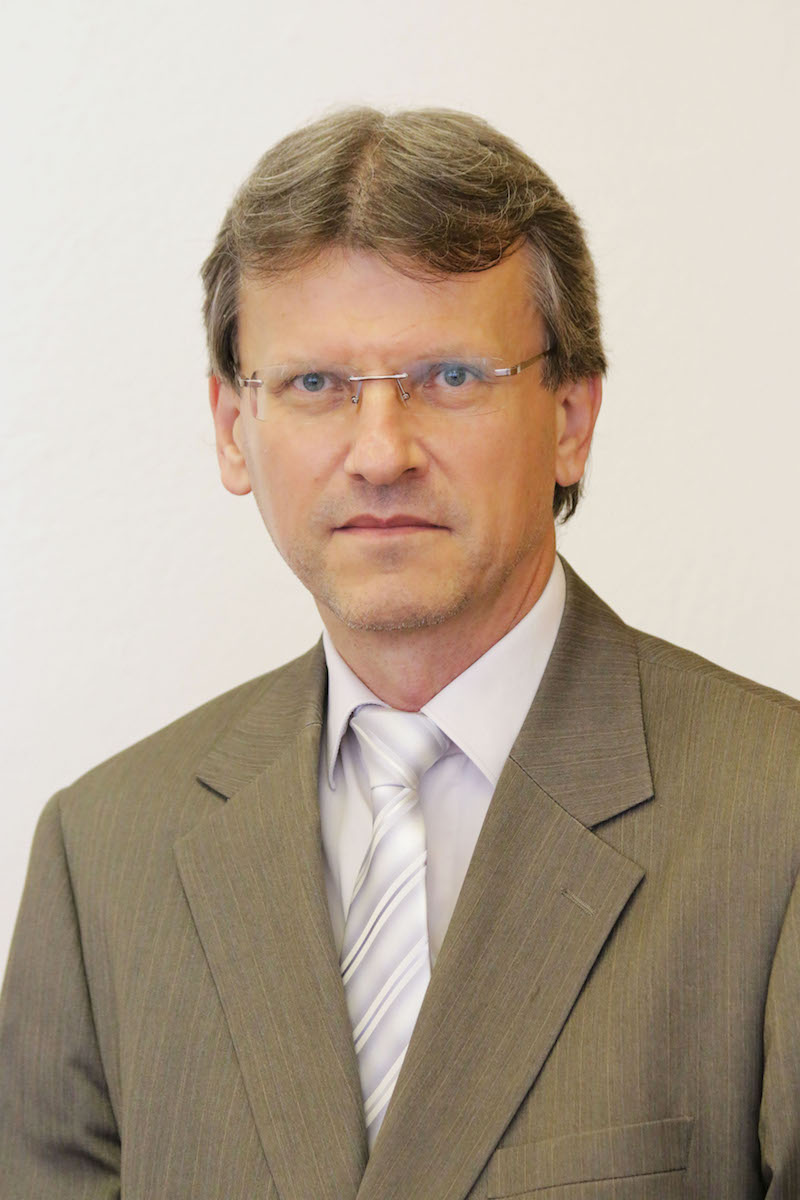
Prof. Gabriela Lubelcová, PhD. (CSc.), is a full professor at the Department of Sociology, Faculty of Arts, Comenius University in Bratislava. With over three decades of academic leadership, she specializes in sociology of social problems, criminology, social policy, and social innovation. Her career spans roles at Charles University (1980-1995) and Ministry of Interior advisory positions (1993-1995). 1979: MA in Sociology, Faculty of Arts, Comenius University 1989: PhD in Sociology, Comenius University 2003: Associate Professor (Docent) in Sociology 2019: Full Professor in Sociology Research focuses on educational inequalities , social stratification , crime prevention , and social economy . Recent projects include APVV-20-0449 "Educational Paths of Young People" (2021-2025) and VEGA 1/0224/19 "Educational Inequalities in Slovakia" (2019-2021). Her work connects macro-level social structures with micro-level life chances. Key publications include: Kriminalita ako spoločenský fenomén (2009) Sociálna ekonomika: koncepty, príležitosti, riziká (2012) Sociálna inklúzia: teoreticko-metodologické súvislosti (2010) Sociálna diferenciácia slovenskej spoločnosti (2014) She supervises 5 BA theses and 3 MA theses annually, with 71 defended master's and 9 PhD theses overall. Her international collaborations include Masaryk University (Brno), University of Economics Bratislava, and Institute for Criminology and Social Prevention (Prague). She contributes to quality assurance frameworks in European tertiary education and serves on national grant committees.
Stanislav Szabo is a Professor in the Department of Commercial Entrepreneurship at the Faculty of Business Economics with seat in Košice, University of Economics in Bratislava. He maintains a workplace in Michalovce and possesses an extensive academic background with qualifications including PhD, MBA, and LL.M, along with honorary distinctions Dr.h.c. and prof.h.c. Position: Professor Department: Department of Commercial Entrepreneurship Workplace: Michalovce Contact: Phone 056/6443290 Professor Szabo's research spans multiple domains of business economics with particular emphasis on air transport economics, financial analysis methodologies, and performance measurement systems. His scholarly work demonstrates expertise in applying analytical frameworks to practical business challenges across transportation, healthcare, and corporate management sectors. His recent publications reveal a strategic research trajectory focused on transportation economics, particularly in aviation, with significant contributions to understanding operational efficiency in aircraft ground handling, pandemic response in air transport systems, and optimization of flight route economics. His work also extends to healthcare management, where he examines staff motivation and efficiency measurement in medical facilities. Teaching activities include: Managing human resources, Communication and Management, Distribution management, and Project management His scholarly output shows consistent productivity from 2004 through 2022 He frequently collaborates with researchers like GAVUROVÁ, B. on performance measurement systems Professor Szabo's research bridges theoretical frameworks with practical applications, particularly evident in his work on airport operations, airline economics, and crisis management in transportation systems. His publications in journals such as Aerospace, Sustainability, and Journal of Applied Economic Sciences demonstrate international scholarly impact in his specialized fields.
Pavol Lipták is a PhD. student at the Department of Marketing, Faculty of Commerce, University of Economics in Bratislava . His work focuses on Category Management , Distribution in Marketing , and AI applications in business . Education: Pursuing doctoral studies since 2023; Master's in Marketing and Trade Management (2022); Bachelor's in Business in Trade (2020). Research Interests: Category Management, AI-driven retail strategies, and post-crisis business adaptation. Grant Involvement: Co-researcher in projects on AI challenges in marketing and linguistics, and distribution management during crises. Conference Participation: Active presenter at ICISAS 2025, Innovations 2024, and ISCDS 2024; member of organizing teams for CEECBE 2024 and faculty anniversary events. Teaching & Outreach: Tutor for MiniErasmus; promoter at university fairs and roadshows. Key Publications: Analyzed AI profitability in category management, post-pandemic retail strategies, and multilingual pricing effects.
Patrik Richnák is an Associate Professor at the Department of Business Economy, Faculty of Economic Informatics, University of Economics in Bratislava. His academic work focuses on production management, logistics, and digital transformation in Slovak industrial enterprises. Academic Rank: Associate Professor Institution: University of Economics in Bratislava Department: Business Economy Research Focus: Industry 4.0, Sustainable Logistics, Digital Technologies His research explores the intersection of Industry 4.0 and sustainable development , particularly in metallurgy, electronics, and wood processing sectors. Key themes include quality management evolution, logistics digitalization, and green innovation adoption. Recent publications analyze trends in smart manufacturing , reverse logistics , and electromobility across Slovak industrial enterprises, with a focus on aligning technological progress with SDGs.
Matúš Sulír is an Assistant Professor at the Department of Computer Science and Engineering, Faculty of Electrical Engineering and Informatics, Technical University of Košice. He specializes in software engineering, program comprehension, and educational methodologies in programming. He teaches courses like Základy softvérového inžinierstva (Foundations of Software Engineering) and actively contributes to research in software build systems, domain-specific languages, and usability evaluation. His research interests include Java build processes, educational tools for programming, and empirical studies on software quality and testing. He has published extensively on topics such as automated test case identification, voice command APIs, and large-scale software build analysis. His work often integrates empirical methods with practical software development challenges. No awards or advisory roles are listed, and there are no explicitly mentioned research grants or projects. His academic contributions focus on advancing software engineering practices through empirical research and tool development.
Prof. Gabriel Juhás is a leading academic at the Institute of Applied Informatics within the Faculty of Informatics at Paneuropean University PEVŠ. With a career spanning over three decades, his expertise bridges formal methods in computer science, particularly Petri net theory, with practical applications in low-code development platforms like Netgrif. Comenius University (BS, Mathematics and Physics, 1993) Slovak University of Technology (PhD, Electrical Engineering and Informatics, 1999) University of Eichstätt-Ingolstadt (Habilitation, Informatics, 2005) His research focuses on modeling event-driven systems using Petri nets, advancing algebraic descriptions of event concurrency, and developing polynomial algorithms for scenario feasibility. He co-created the Petriflow low-code language, enabling process-driven application development deployed in leasing, insurance, healthcare, and energy sectors. Key trends in his publications include formal verification of concurrent systems, token flow analysis in Petri nets, and the evolution of low-code platforms for business process management. His work emphasizes translating theoretical models into practical solutions through startups like NETGRIF. He has supervised over 100 theses, including three doctoral dissertations, and led 15+ research projects. His industry collaborations with AUDI AG and IBM demonstrate his commitment to bridging academia and practice.
Tomáš Hrustič, PhD, is a prominent researcher at the Institute of Ethnology of the Slovak Academy of Sciences in Bratislava, specializing in Roma studies, ethnic and national minorities, political participation of Roma, religiosity of Roma, and social mobility. With over 14 years of experience since joining the institute in 2009, he has established himself as a leading expert in Roma studies in Slovakia and internationally. Dr. Hrustič completed his university education at Comenius University, Faculty of Arts, Department of Ethnology - Religious Studies in Bratislava in 2002, earning his Mgr. degree. He later obtained his PhD in 2008. His international academic experience includes research stays at Charles University in Prague (1999-2000), University College London's Department of Anthropology (2004-2005) with a SYLFF scholarship, and the University of Szeged's Department of Study of Religions (2005) with a CEEPUS scholarship. Dr. Hrustič's research focuses on the complex dynamics of Roma communities in Slovakia and Europe. His work examines political participation, religious conversion patterns, social mobility, and economic structures within Roma communities. He has pioneered research on how religious pathways can facilitate social inclusion of Roma, challenging conventional approaches to minority integration. His extensive ethnographic fieldwork, primarily conducted in marginalized Roma communities in Eastern Slovakia, provides nuanced insights into everyday life, identity formation, and resistance strategies among Roma populations. His methodological approach combines participant observation with qualitative interviews and document analysis. His publication record shows a clear evolution from early work on religious conversion among Roma to more recent analyses of Roma political participation, responses to the COVID-19 pandemic, and welfare policy support for marginalized groups. His research bridges anthropology, sociology, political science, and religious studies, with consistent attention to the intersection of ethnicity, religion, politics, and social mobility in Central and Eastern Europe. Cena prezidenta Slovenskej republiky udeľovaná mladým vedeckým pracovníkom (2010) Cena Jána Komorovského za najlepšiu vedeckú publikáciu z oblasti vedeckého štúdia náboženstiev (2011) Cena Predsedníctva SAV za 3. miesto v súťaži Mladých vedeckých pracovníkov do 35 rokov (2013) Cena Národopisnej spoločnosti Slovenska za najlepšiu akademickú publikáciu (2016) Dr. Hrustič has supervised doctoral students through seminars on research methodology and has led numerous significant research projects funded by VEGA, APVV, and international bodies. His most notable projects include 'Patterns of social mobility of Roma in the light of empirical research' (2019-2022) as principal investigator, and 'Analysis of barriers to access to job opportunities for marginalized population groups' (2018-2022) as co-investigator. He has also provided expert evaluation for government agencies, including the Implementation Agency of the Ministry of Labour, Social Affairs and Social Development. As a member of the Advisory Committee for the Framework Convention for the Protection of National Minorities of the Council of Europe (2014-2018) and a permanent invited member of the Committee for National Minorities and Ethnic Groups (since 2018), Dr. Hrustič actively contributes to policy development at national and international levels. He is also a member of the Gypsy Lore Society since 2010 and the European Academic Network on Romani Studies since 2011.
Ingrid Turisová serves as Associate Professor and Vice-dean at Matej Bel University's Faculty of Natural Sciences, Department of Biology and Environmental Studies. She has been a university teacher since 1998 and is a member of the Central Slovak Center of Science and Education. Her academic leadership includes co-guaranteeing the PhD Environmental Biology program for the 2022/2023 academic year. Education: 2014: Assoc. Prof. in Environmental Protection (VSB - TU Ostrava) 2009: PhD in General Biology (Comenius University) 1989: Dr. in Biology (Comenius University) Turisová's research centers on phytoremediation of heavy metal-contaminated mine heaps through plant bioindication, specializing in heavy metal translocation dynamics in substrate-plant systems. Her work integrates floristic-ecological analysis of anthropogenically impacted areas with grassland management optimization and taxonomic studies of Crepis , Daphne , and Erysimum genera. She examines vegetation responses to environmental stressors across Slovakia's ecosystems. Recent publications reveal consistent focus on heavy metal phytoremediation mechanisms (40% of works), vascular plant taxonomy (30%), and grassland ecology (30%). Her research bridges laboratory analysis of metal translocation with field studies of spoil heap rehabilitation, demonstrating strong interdisciplinary integration between environmental botany and restoration ecology. Scientific Awards: Silver Award at the Green Apple Awards 2004 (House of Commons, UK) 2nd Place in Energy Globe Competition (Winners YOUTH 2004) Turisová actively supervises PhD candidates as co-guarantor of Environmental Biology doctoral studies while leading multiple competitive grants. Her current research portfolio includes 6 major projects (2021-2026) with combined funding exceeding €1.2M, primarily from VEGA and APVV sources. She directs projects on narrow-endemic Daphne arbuscula evolution and alpine lake paleoenvironmental archives. As member of the Central Slovak Center of Science and Education, she collaborates with Slovak Academy of Sciences researchers on mine heap rehabilitation. Her team develops phytoremediation protocols for copper-contaminated sites while maintaining long-term grassland monitoring networks across Slovak Natura 2000 protected areas.
Sándor Szénási is a Professor at the Department of Informatics within the Faculty of Economics and Informatics at J. Selye University, where he serves as the person responsible for the Applied Informatics study program. With over two decades of academic experience, he has established himself as a leading researcher in parallel programming, GPU programming, and image processing, with recent expansion into machine learning applications. Eötvös Loránd University, Faculty of Science and Informatics (2001-2004): Information technology teacher Budapest Polytechnic, John von Neumann Faculty of Information Technology (1997-2001): B. Engineer in Information Technology Óbuda University (2010-2013): PhD in Applied Informatics Habilitation at Óbuda University (2019): Information Science and Technology Professor inauguration at Óbuda University (2022) Szénási's research spans computational methods with practical applications across multiple domains. His early work focused on parallel and GPU programming for image segmentation and heat transfer simulation. More recently, he has integrated machine learning techniques with traditional computational approaches, particularly in metaheuristic optimization, speech processing, and inverse problem solving. His interdisciplinary research bridges computer science with transportation safety, manufacturing, and medical applications. His recent publications reveal a clear evolution toward hybrid computational approaches that combine machine learning with traditional algorithms. There is a strong emphasis on optimization techniques, particularly metaheuristics enhanced with machine learning components. His work spans diverse application areas including speech emotion recognition, autonomous vehicle control, additive manufacturing, and heat transfer simulation, while maintaining a core focus on computational efficiency and parallel processing. Szénási has been actively involved in multiple EFOP-funded research projects including 'Improvement of higher education institutes for better teaching quality and accessibility,' 'Dynamics and control of autonomous vehicles,' and 'Solving the Inverse Heat Conduction Problem with Machine Learning.' His collaborative work with researchers like Gábor Kertész, Zoltán Vámossy, and Imre Felde demonstrates his commitment to interdisciplinary research.
Zuzana Krátka is an Assistant Professor at the Department of Mathematics and Actuarial Science within the Faculty of Economics and Finance, University of Economics in Bratislava. She specializes in quantitative finance and insurance disciplines, with teaching responsibilities including Mathematics I/II , Financial Mathematics , and Enterprise Risk Management . Education: PhD in Insurance, University of Economics in Bratislava (2010) Engineer Degree (Ing.) in Finance, Banking & Insurance, University of Economics in Bratislava (2005) Master's (Mgr.) in Mathematical Structures, Charles University, Prague (1992) Research Focus: Her work centers on developing mathematical frameworks for insurance and financial systems, particularly non-life insurance modeling, risk quantification methodologies, and economic applications of actuarial science. Professional Activities: Member: Committee for Science, Research & Innovation (2015–present) Associated Member: Slovak Society of Actuaries (2013–present) Member: Sector Council for Banking/Financial Services/Insurance (2013–present) Working Group Member: Solvency II Directive Transposition (Ministry of Finance SR, 2010–2015)
Igor Košťál is an Assistant Professor at the Department of Applied Informatics within the Faculty of Economic Informatics at the University of Economics in Bratislava . His research focuses on Distributed Technologies , Parallelization of Applications , and Data Structure Optimization , particularly in the context of .NET frameworks and industrial robotics. University: University of Economics in Bratislava School: Faculty of Economic Informatics Department: Department of Applied Informatics Academic Rank: Assistant Professor Košťál's work emphasizes software performance testing , with publications analyzing execution efficiency in .NET applications using parallel programming , Dijkstra's algorithm , and symbol table implementations . His recent research explores modern UI development in mobile applications and algorithm optimization for industrial robotics. Key trends in his 15 most recent articles (2014-2022) include: Performance analysis of parallel and sequential algorithms in .NET environments Optimization of data structures (arrays, linked lists, skip lists) for search efficiency Integration of asynchronous methods in WCF services and clients Testing precision in KUKA welding robots through structured data extraction
Šlapak Eugen is an Assistant Professor at the Technical University of Košice. His research focuses on autonomous driving systems, edge computing, and network optimization, with a particular emphasis on applying neural networks and blockchain technologies in vehicular and 5G networks. Eugen Šlapak holds a PhD in [specific field not explicitly stated, likely Engineering/Computer Science] and an Ing. (engineer) degree. His academic background combines technical expertise in telecommunications and computer science. His research interests span autonomous driving technologies, including simulation and control systems, as well as edge computing and metaverse integration. He also explores blockchain applications in vehicular networks, resource allocation in 5G and beyond, and the use of graph neural networks for network optimization. His work intersects machine learning, robotics, and telecommunications to address challenges in modern communication systems and intelligent transportation. Recent publications highlight advancements in neural radiance fields for industrial robotics, distributed edge video compression for autonomous driving, and blockchain-based resource allocation in connected vehicles. Earlier work includes optimization of UAV-assisted networks and HetNet topology design using machine learning clustering methods. While no formal awards are listed, his contributions to vehicular networks, edge computing, and AI-driven network design reflect significant scholarly impact. Advising details are not documented here, but his research collaborations likely involve cross-disciplinary teams focusing on autonomous systems and 5G infrastructure. No lab affiliations or teams are explicitly mentioned, though his teaching role in the course Stochastické modelovanie a analýza dát (SMaAD) suggests involvement in data analysis and stochastic modeling initiatives.
Máté Hireš is an Assistant Professor at the Technical University of Košice's Department of Computers and Informatics. He earned his PhD in computer science from the same institution, specializing in Parkinson's disease diagnosis using deep learning for voice analysis. His doctoral research extended his master's thesis on distributed neural radiance fields for autonomous vehicles. Hireš's work bridges neural networks, deep learning, and biomedical applications, particularly in analyzing handwriting, speech, and signal data for neurological disorder detection. His publications demonstrate consistent focus on Parkinson's disease diagnostics through innovative machine learning approaches applied to voice recordings and handwriting samples. Research Focus Deep learning for pathological speech detection Handwriting analysis for neurodegenerative diseases Robust diagnostic model development Biomedical signal processing
Tomáš ČERNĚNKO is an Assistant Professor at the Department of Public Administration and Regional Development , Faculty of Economics and Finance, Bratislava University of Economics and Business. He serves as the AiS coordinator and teaches courses in public administration, regional management, and political decision-making. His research focuses on public sector efficiency, regional development strategies, and EU integration impacts, with a particular emphasis on Slovak local governance structures and administrative reforms. Education & Research: While specific academic qualifications are not detailed, his roles and publications indicate expertise in public policy and regional studies. He coordinates projects like the KEGA-funded curriculum innovation in public administration education. Research Interests: Public Administration Reform : Analyzing administrative fragmentation and municipal restructuring in Slovakia. Regional Policy : Evaluating strategies to address disparities in service provision and socioeconomic growth. Local Governance : Assessing fiscal management, electoral dynamics, and citizen participation in urban and rural areas. Key Projects: Manažment výkonnosti v miestnej samospráve (VEGA project). REDIS and KRENAR projects on knowledge economy and creative economy impacts. International collaborations including OTKA Hungary on subsidiarity in public finances. Labs & Networks: Engaged with the Society for Regional Science and Politics and contributes to interdisciplinary research at the Faculty's Competence Center. His work is part of the Bee4R LAB and SecureDataLab initiatives.
Rastislav Solej is an Assistant Professor at the Department of Finance, Faculty of Economics and Finance, Bratislava University of Economics and Business. His research focuses on public finance, environmental economics, labor economics, and regional development. He has contributed to studies analyzing waste management policies, minimum wage dynamics, cryptocurrency market behaviors, and the impact of socio-political factors on economies and exchange rates. His work frequently emphasizes Slovakia's economic challenges and policy solutions. Dr. Solej also explores education-related topics such as determinants of academic performance in econometrics and educational reforms. He is associated with research initiatives like the bee4R LAB and SecureDataLab, which focus on behavioral economics and data-driven policy analysis. His publications span both Slovak and international journals, covering topics from municipal budgeting during crises to the fragmented administrative reforms in Slovakia. While no formal awards are listed, his active research portfolio demonstrates dedication to policy-relevant economic inquiry.