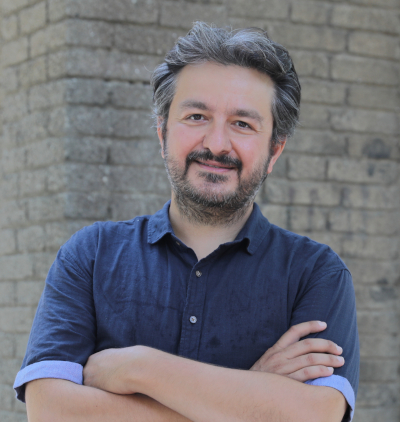
Mahmut Tenruh is an Associate Professor at Muğla Sıtkı Koçman University, Faculty of Engineering, Department of Electrical and Electronics Engineering. He holds a bachelor's degree from Gazi University and a Ph.D. from the University of Sussex. His research focuses on wireless sensor networks, CAN protocols, embedded systems, and renewable energy applications. 2024: Performance analysis of photovoltaic systems in Yemen 2021: Robotics control systems and intelligent vehicle suspension design 2019: Time-triggered CAN FD protocol for real-time distributed control 2015-2014: Network modeling, solar data tracking, and scheduling optimization His work has been cited 23 times across various publications. He has supervised over 20 graduate theses and led multiple TÜBİTAK-funded projects, including remote pool control systems and wireless security solutions. TÜBİTAK Scientific Award (2011) Muğla Sıtkı Koçman University Scientific Award (2011)
Dr. Ömürden Genç is an Associate Professor in the Department of Mining Engineering at Muğla Sıtkı Koçman University's Faculty of Engineering. With a Ph.D. from Hacettepe University (2008), their career focuses on mineral processing and cement production optimization. Education : B.Sc., M.Sc., and Ph.D. in Mining Engineering from Hacettepe University (1995-2008) Their research bridges fundamental mineral processing principles with industrial-scale cement grinding circuit innovations. Key contributions include: Breakage mechanics analysis via drop weight testing Simulation modeling for mill optimization Comparative studies of HPGR vs. conventional milling Grinding media and circuit design improvements Recent publications demonstrate expertise in: Energy-efficient cement production Multi-compartment ball mill performance Advanced modeling techniques (Swebrec function) Industrial process simulation As an active academic, they teach: Mineral Processing Data Analysis in Mineral Processing Ceramics Technology Automation in Mineral Processing Plants They have served as editors for Powder Technology , Minerals Engineering , and other journals, and contributed to international symposia like the International Symposium on Mining and Environment (2017). Their work connects academic research with industrial applications in material processing.
Murat HAMDERİ is a Professor in the Department of Civil Engineering at the Turkish-German University's Faculty of Engineering, where he has served since 2015 as the department's founding faculty member. He progressed from Assistant Professor (2015) to Associate Professor (2020) and full Professor (2024), establishing himself as a key figure in geotechnical engineering education and research in Türkiye. His educational background includes a Doctorate in Civil Engineering from Drexel University (2004-2010), Master's in Geotechnics from Bogazici University (1999-2002), and Bachelor's from Istanbul Technical University (1995-1999). HAMDERİ specializes in geotechnical engineering with research focusing on soil mechanics, foundation design, and earth structure analysis. His work emphasizes numerical modeling of soil behavior, particularly in sand mechanics, retaining wall systems, and pile foundations. He frequently develops analytical solutions for complex geotechnical problems encountered in nuclear power plant construction and seismic zones. His publication trends (2024-2012) reveal consistent innovation in geotechnical computational methods , with 15+ journal articles primarily addressing sand mechanics, earth pressure theory, and foundation settlement. Recent works integrate finite element analysis with practical design solutions, especially for nuclear infrastructure projects like Akkuyu Nuclear Power Plant. While no specific awards are documented, his research demonstrates sustained scholarly contribution through single-author publications and industry-academia collaboration. His career bridges practical engineering experience—including nuclear foundation design in the USA and consultancy for Dutch geotechnical firms—with academic rigor. His research activities involve advanced computational modeling of soil-structure interaction, with particular emphasis on seismic performance of reinforced earth structures and liquefaction mitigation techniques using colloidal silica injection.
Hilmi AYGÜN is an Assistant Professor in the Department of Mechatronics Engineering at Karabük University's Faculty of Engineering and Natural Sciences, where he has been serving since 2019. His academic career began as a Research Assistant in the Electrical and Electronics Engineering Department from 2009-2019 before transitioning to his current position in Mechatronics Engineering. He also serves as the Erasmus Coordinator for both the Mechatronics Engineering Department and the university since 2021. Education: PhD in Electrical and Electronics Engineering (2011-2019), Karabük University, Institute of Science MSc in Electrical and Electronics Engineering (2010-2011), Karabük University, Institute of Science BSc in Electrical and Electronics Engineering (2003-2007), Kırıkkale University, Faculty of Engineering Hilmi AYGÜN's research primarily focuses on electrical machines and energy conversion systems, with particular emphasis on motor control algorithms for electric vehicle applications. His work integrates control theory with artificial intelligence techniques, especially optimization algorithms like Particle Swarm Optimization (PSO) and the Yusufcuk Algorithm. He has made significant contributions to field-oriented control of induction motors, DC motor control systems, and wind energy applications. His publication record shows a clear trajectory toward increasingly sophisticated control systems for electromechanical applications, with recent work focusing on metaheuristic methods for motor control, optimization of wind energy systems, and advanced DC motor control techniques. His research bridges theoretical control concepts with practical engineering applications, particularly in transportation and renewable energy sectors. Hilmi AYGÜN has successfully advised at least one Master's student, Hersh Hasan Taha Al Dawoodı, whose thesis focused on field-oriented control of induction motors using metaheuristic methods. He has participated in two major research projects: one on optimal flux reference direct torque control for asynchronous motors used in electric vehicles (2015-2019), and another on controlling bed temperature in fluidized bed boilers using PSO-PID controllers (2011-2013). As an educator, he has taught numerous courses including Electric Machine Dynamics, Modeling and Control of Biomedical Systems, Control of Electric Machines, Electric and Hybrid Vehicles, Industrial Automation, and various electronics courses. His teaching spans both undergraduate and graduate levels, demonstrating his versatility across multiple engineering disciplines within the mechatronics field.
Professor İsmail Serdar Özoğuz is a distinguished academic at Istanbul Technical University , affiliated with the Department of Electronics and Communication Engineering . Holding the title of Professor since 2009, he has contributed extensively to analog circuit design, neural network applications, and wireless communication systems. Ph.D. in Electronics and Communications Engineering (1995) Department Head (2020-present) Vice Dean (2017-2020) Research Interests: His work spans Electronics , Analog Design , Circuits and Systems Theory , with recent focus on: Neural network-based filter optimization Memristor emulator circuits Spintronic devices for wireless and memory applications Intelligent optimization in RF designs Article Trends: Recent publications highlight AI integration in engineering challenges, power efficiency in wireless systems, and hardware-software co-optimization . His work bridges theoretical models (e.g., fractional-order neural networks) with practical implementations (e.g., GaN amplifiers). Scientific Awards: GEBIP Award (TUBA), 2002 Mustafa Parlar Foundation Research Incentive, 2003 TUBITAK Incentive Award, 2004 Grants & Projects: As Principal Investigator, he has led initiatives on: Spintronic devices for wireless/memory/analog uses Passive combiners in HF transmitters High-power GaN amplifier development Fractional-order neural network models
Prof. Dr. Senol Ataoglu is a Professor in the Department of Civil Engineering at Istanbul Technical University (ITU). He holds administrative roles including Vice Rector (2024–present) and Acting Dean (2020–2020). His expertise includes Structural Mechanics, Numerical Modeling, Solid Mechanics, and Buried Pipes. He has advised numerous graduate students on topics like composite materials, thermal stress analysis, and pipeline design. His research focuses on civil infrastructure durability, material behavior under extreme conditions, and innovative engineering solutions for urban systems. He has published over 38 peer-reviewed articles and contributed to projects such as the 2017 BAP-funded study on concrete shear strength. Education: PhD in Structural Engineering from ITU (1997–1999). Academic career spans roles from Research Assistant (1993) to Professor (2017–present). He has served on editorial boards, including the El-Cezeri Journal of Science and Engineering, and holds patents in plastic pipe design. His work emphasizes practical applications in earthquake-resistant construction, utility tunnel systems, and composite material analysis. Recent research highlights include post-earthquake building assessments in Hatay, stress analysis of pretensioned structures, and utility tunnel applications for natural gas pipelines. He actively collaborates internationally and mentors students via thesis supervision, covering structural analysis, material characterization, and computational methods.
Ceren Vardar Acar is an Assistant Professor in the Department of Statistics at the Middle East Technical University (METU), Ankara, Turkey. She holds a PhD in Mathematics and Statistics from Bowling Green State University, USA (2002-2008), and prior degrees from METU, including a BSc and MSc in Statistics. Her professional experience includes roles as Assistant Professor at TOBB ETU (2011-2015) and instructorships at various institutions in Turkey and the USA. Her research focuses on Stochastic Processes , particularly their path properties, extreme value analysis, and applications in financial mathematics, risk management, and population dynamics. Key areas include fractional Brownian motion modeling, Lévy processes, and the analysis of maximum loss/drawdown phenomena. She has also contributed to methodological advancements in parameter estimation and Monte-Carlo simulation techniques. Academic leadership roles include serving as Co-Head of the Department of Mathematics at TOBB ETU (2013-2015) and coordinating service courses for non-mathematics departments (2010-2015). She secured a TÜBİTAK grant (2011-2014) exploring maximum loss distributions in fractional Brownian motion and Lévy processes. Her work bridges theoretical probability with applied domains like finance and healthcare, evidenced by publications in journals such as Extremes , Journal of Computational and Applied Mathematics , and Statistics and Probability Letters . She maintains active collaborations in interdisciplinary research, including dental education simulation and population modeling with delays.
Seyhan Onbaşıoğlu is a Professor in the Department of Mechanical Engineering at Istanbul Technical University (ITU), actively engaged in thermal engineering research with current projects extending to 2025. Affiliated with ITU's Ayazağa Campus in Istanbul, Turkey, the profile shows ongoing research leadership including principal investigator roles in multiple national projects. Research interests center on heat transfer enhancement, two-phase flow phenomena, and thermal system optimization, with fingerprint analysis indicating strong expertise in heat transfer (100%), flow distribution (94%), and experimental investigation (83%). Key focus areas include nucleate boiling, ice sublimation dynamics, and energy-efficient appliance design. Publication trends since 2016 emphasize experimental validation of thermal systems, with significant contributions to refrigeration technology, domestic appliance efficiency, and microchannel heat transfer. Recent works (2023-2025) increasingly integrate numerical modeling with experimental verification, particularly in suction muffler design and ice sublimation under humidity effects. h-index: 12 Total Citations: 129 (Scopus) Research Outputs: 27 publications Active Projects: 1 (2025) Completed Projects: 6 (2012-2022) As principal investigator, leads projects funded by TUBITAK, SRP, and TTO including refrigerator system development, steam generation technology, and ship diesel engine turbocharger design. Supervised 53 research works to date across thermal engineering applications. Current projects focus on refrigerator cooling system enhancement (2025) and ejector-integrated refrigeration design (2022).
Prof. METİN HÜSEM is a Professor at Karadeniz Technical University's Faculty of Engineering, Department of Civil Engineering, specializing in structural and earthquake engineering. With a career spanning over three decades, he has held key roles including Dean (2016–2020) and Department Head (2014–2016, 2023–present). His research integrates experimental and computational methods to advance seismic resilience, materials science, and sustainable construction. Education: Doctorate in Civil Engineering, Karadeniz Technical University (1990–1995) Postgraduate in Civil Engineering, Karadeniz Technical University (1986–1990) Undergraduate in Civil Engineering, Karadeniz Technical University (1982–1986) Research Focus: His work targets earthquake-resistant structures, material innovations (geopolymers, fiber-reinforced concrete), and structural health monitoring. Key areas include: Seismic retrofitting of buildings and heritage structures High-temperature effects on concrete Development of energy-dissipating devices (e.g., patented seismic dampers) Optimization of prefabricated and composite systems Publication Trends: Recent articles emphasize post-earthquake damage assessment, geopolymer materials, and cyclic load behavior of structures. A consistent theme is the translation of field data into practical design improvements, particularly for reinforced concrete and masonry systems in seismic zones. Grants & Advising: He has led 13 funded projects (e.g., TUBITAK-supported studies on masonry walls and seismic dampers) and advised 45+ graduate students. His patents include innovations like modular energy dissipators and interlocked masonry systems. Laboratory & Teams: Manages advanced structural testing facilities, collaborating with national/international researchers on earthquake simulations and material durability experiments.
Fatih Bay serves as Full Professor and Chair of the Department of Mechanical Engineering at Antalya Bilim University since 2020, leveraging his physics expertise in an engineering leadership role. With a Ph.D. in Physics from the University of Bern (2012), he has driven major contributions to neutrino physics through international collaborations at CERN, Fermilab, and KEK, currently focusing on the DUNE experiment's quest to explain matter-antimatter asymmetry. His academic journey features: B.Sc. in Physics, Kocaeli University (2004) M.Sc. in Physics, Middle East Technical University (2008) Ph.D. in Physics, University of Bern, Switzerland (2012) Dr. Bay's research centers on experimental neutrino physics and advanced detector development, specializing in liquid argon time projection chambers, emulsion detectors, and iron-scintillator calorimeters. His current work with DUNE integrates deep learning for neutrino interaction reconstruction while exploring supernova neutrino detection capabilities. This builds upon foundational contributions to OPERA, T2K, and MicroBooNE experiments. Analysis of his 2023-2025 publications reveals dominant focus on DUNE detector systems, with emerging trends in AI-driven event reconstruction, liquid argon purity optimization, and multi-detector synergies for supernova neutrino studies. His work bridges particle physics methodology with cutting-edge computing techniques to enhance detection precision in large-scale experiments. His exceptional contributions earned recognition through: Breakthrough Prize in Fundamental Physics (2016) for T2K experiment leadership Dr. Bay secured significant research funding including a TÜBİTAK 'Returning Researchers' fellowship (2015) and leads international collaborations requiring substantial project resources. While student advising details aren't specified, his department chair role implies graduate mentorship in mechanical engineering contexts. His laboratory work spans CERN (Switzerland), KEK (Japan), and Fermilab (USA) facilities, with current focus on DUNE's vertical drift technology development and ProtoDUNE-SP calibration systems.
Dr. Ebru Harmandar is an Associate Professor at the Department of Civil Engineering, Faculty of Engineering, Muğla Sıtkı Koçman University. She holds a Doctorate in Earthquake Engineering from Boğaziçi University (2009) and has contributed extensively to earthquake hazard assessment, structural response analysis, and ground motion modeling. Her research focuses on seismic resilience, spatial coherency of ground motions, and infrastructure risk mitigation. Key research areas: Earthquake Engineering, Seismic Hazard Analysis, Structural Engineering Major projects: EMME ground-motion logic tree, Istanbul Rapid Response Network Notable students: Soukaina Mellouk (2021), Hüssam-Almukdad (2022) Her recent work includes improving seismic resilience indices for school buildings (2024) and analyzing multi-point earthquake effects on bridges. She has served as an academic editor for journals like Soil Dynamics and Earthquake Engineering and received the 2016 Yollar Türk Milli Komitesi award.
Assoc. Prof. Dr. Aslı Ulubaş Hamurcu is an Associate Professor at the Department of Urban and Regional Planning, Faculty of Architecture, Istanbul Technical University . She graduated magna cum laude from Middle East Technical University in 2013 and earned her Ph.D. from Istanbul Technical University in 2021, focusing on socio-spatial change influenced by socio-technological factors. Her research spans urban planning , socio-spatial theory , and sustainable urban conservation , with a particular emphasis on digitalization's impact on urban spaces. She has published extensively on topics like the metaverse , COVID-19's spatial patterns , and smart cities . She has received multiple awards, including the YÖK Doctoral Thesis of the Year Award (2022) and TÜBİTAK UBYT grants (2021–2023). Her work bridges science-technology-society interactions and urban policy .
Emre Ugur is an Associate Professor in the Department of Computer Engineering at Bogazici University, where he serves as the head of the Cognition, Learning and Robotics (CoLoRs) laboratory. His research focuses on bridging the gap between continuous sensorimotor experiences and discrete symbolic representations in robotics. Funded by major international sources including the European Commission's Horizon 2020 program and TUBITAK, his work has significant implications for cognitive robotics and autonomous systems. Education: PhD in Computer Engineering from Middle East Technical University (METU, Turkey) Ugur's research interests center on cognitive and developmental approaches to robotics, with particular emphasis on neuro-symbolic integration, affordance learning, and symbol emergence. His work explores how robots can autonomously develop high-level cognitive capabilities through continuous interaction with their environment, similar to human cognitive development. His approach combines machine learning, cognitive science, and robotics to create systems that can learn, predict, and reason about their actions. His recent publications reveal a strong trajectory toward neuro-symbolic robotics, where he develops methods for extracting discrete symbolic representations from continuous sensorimotor experiences. This work enables robots to perform complex planning and reasoning tasks while maintaining connection to physical reality. There is also significant focus on social robotics, particularly in human-robot interaction, social navigation, and embodied cognition. Scientific Awards: The Young Scientist Award by the Science Academy (BAGEP) The Excellence in Teaching Award by the Faculty of Engineering (2023) As Principal Investigator of major projects including INVERSE (EU Horizon 2025), DEEPPLAN (TUBITAK), and previously DEEPSYM and IMAGINE, Ugur has established a robust research program that bridges theoretical advances with practical applications. He has supervised numerous PhD and Master's students who have made significant contributions to the field. His leadership extends to organizing major workshops at top robotics conferences including IROS, RSS, and ICRA. At the Cognition, Learning and Robotics (CoLoRs) lab, Ugur leads research on cognitive robotics, developmental robotics, and neuro-symbolic AI. The lab explores fundamental questions about how robots can develop understanding of their actions, learn from interaction, and form abstract representations necessary for high-level cognition. Current projects focus on symbolic reasoning, prediction, and planning in robotic systems.
Gül GÜLER is an academic researcher specializing in educational measurement and psychometrics. Holding a doctoral degree, her work focuses on scale development, factor analysis, and educational technology. Bachelor's Degree (2008) Master's Degree (2012) Doctoral Degree (2017) Her research interests include: Educational measurement and assessment design Psychometric evaluation of scales Factor analysis in skewed distributions Collaborative learning tools for gifted students Teacher education and professional identity Dimensionality analysis in educational testing Key publications examine wording effects in scales, reliability testing, and bibliometric trends in educational research. She has contributed to projects like the TÜBİTAK 4004 science outreach initiative and Istanbul Governorship's life skills training program.
Idriss Dagal serves as an Assistant Professor at Beykent University's Department of Electrical and Electronics Engineering. With a PhD and Master's in Electrical Engineering from Yildiz Technical University (2015 and 2023 respectively), and additional academic credentials from Ethiopian Airlines Aviation University and Mongo Polytechnics University, his career bridges academic research with industry experience as a Sales Engineer. PhD: Yildiz Technical University (2015) Master's: Yildiz Technical University (2023), Ethiopian Airlines Aviation University (2008) Bachelor's: Mongo Polytechnics University (2006) His research focuses on renewable energy systems , particularly photovoltaic power optimization using metaheuristic algorithms (Hybrid PSO-Salp Swarm, Gray Wolf Optimization). He also explores control systems for solar energy and aircraft dynamics, including PID and fuzzy logic controllers. Additional work spans machine learning applications in energy and medical diagnostics, along with power electronics for battery charging. Recent publications highlight 15 2025 articles on topics like hybrid energy systems , AI-driven MPPT , and aircraft control frameworks . His work appears in journals such as Scientific Reports , IEEE Access , and International Journal of Aeronautical and Space Sciences . Teaching experience includes courses in Electrical Machines and Information Technologies . Non-university roles at Elektra Electronic Company and Aktif Group Company involved sales engineering, complementing his academic profile with industry insights.



.jpeg)