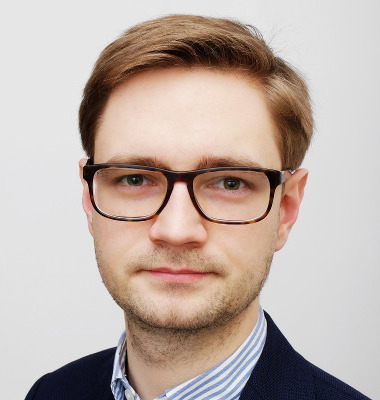
Adam Teodor Polakمشاهده پروفایل
استادیار
Adam Teodor Polak serves as an Assistant Professor in the Department of Computing Sciences at Bocconi University, where his research centers on theoretical algorithms with dual emphases on fine-grained complexity and learning-augmented algorithms. His work investigates fundamental questions about computational hardness while developing prediction-enhanced algorithms that maintain worst-case guarantees. Polak earned his PhD from Jagiellonian University in 2019 under Paweł Idziak, including a research visit at MIT with Virginia Vassilevska Williams. He subsequently held postdoctoral positions at the Max Planck Institute for Informatics and EPFL before joining Bocconi. His research program addresses why computational problems resist efficient solutions and how imperfect predictions can robustly improve algorithmic performance. This manifests in two interconnected streams: establishing conditional lower bounds for problems like 3SUM and Orthogonal Vectors, and designing learning-augmented frameworks for dynamic graph problems, caching, and optimization that blend theoretical rigor with practical machine learning insights. Recent publications reveal accelerating momentum in algorithms with predictions, with over half of his 2023-2025 output appearing in top ML venues (ICML, NeurIPS, ICLR) alongside traditional theory conferences (STOC, SODA). This cross-pollination demonstrates how worst-case theoretical guarantees can coexist with data-driven performance gains across graph algorithms, scheduling, and combinatorial optimization. Scientific recognition includes: Best Paper Award at ESA 2024 for knapsack algorithm breakthroughs Bronze Medal at ACM ICPC World Finals (2011) 2nd Place in PACE 2018 Challenge for Steiner tree algorithms Polak actively shapes the field through program committee service (ESA, ICALP, SOSA) and community building, notably co-organizing the 2022 Workshop on Algorithms with Predictions (ALPS) and decade-long high-school algorithmics workshops. His industry collaborations with Teroplan and Google demonstrate real-world impact in route planning and distributed systems. Current teaching includes graduate Algorithms courses at Bocconi, while his experimental work on GPU-accelerated graph algorithms and medical computer vision continues to bridge theoretical insights with practical implementation challenges.