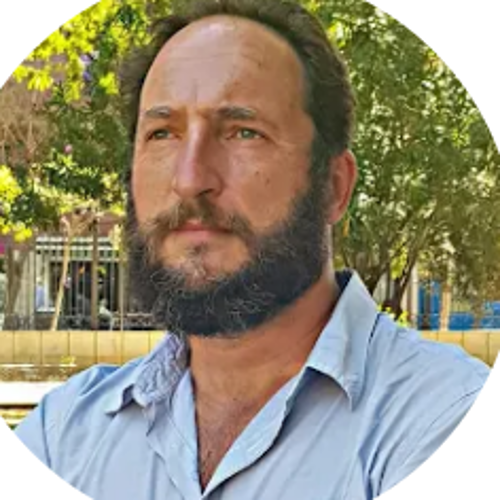
Luo Mai is an Assistant Professor at the University of Edinburgh's School of Informatics , with an upcoming promotion to Associate Professor (UK Reader) in August 2025. He leads the Large-Scale Machine Learning Systems Group and co-leads the UK EPSRC Centre for Doctoral Training in Machine Learning Systems and an ARIA Project on Scaling AI Compute by 1000X . PhD in Computer Science (Imperial College London, 2018) MRes in Advanced Computing (Imperial College London, 2012) His research focuses on the intersection of computer systems , machine learning , and data management . Key contributions include award-winning systems like WaferLLM (wafer-scale LLM inference), Tenplex (elastic ML), and ServerlessLLM (serverless LLM serving), published at top venues (OSDI, SOSP, ICML, NeurIPS, JMLR). Recent publications demonstrate trends in GPU-based distributed systems , LLM optimization , and adaptive machine learning . His team has developed groundbreaking open-source projects including TensorLayer , TorchOpt , and ServerlessLLM . Awarded Microsoft Research StarTrack Scholar (2024) , secured ARIA grant (2024) with Imperial College & Cambridge University, and received Google Fellowship during PhD (2012-2016). As an educator, he designed Edinburgh's popular Machine Learning Systems course (150+ students). His group supervises multiple PhD students including Yao Fu (recognized as 2024 Rising Star in ML & Systems) and Leyang Xue .
Montserrat Cachero Vinuesa is a Full Professor in the Department of Economics, Quantitative Methods and Economic History at Pablo de Olavide University in Spain. She specializes in Economic History and Institutions, with a particular focus on applying network analysis to historical research. Her work bridges the fields of economic history, early modern studies, and digital humanities. Her research interests center on the application of network theory to historical contexts, particularly examining merchant networks in the Atlantic world during the early modern period. She investigates how social and economic networks facilitated trade, colonization, and cultural exchange between Europe and the Americas. Her work spans multiple dimensions including gender dynamics in commerce, book trade networks, risk management in pre-industrial trade, and the institutional frameworks that enabled transatlantic economic integration. Her scholarly output demonstrates a consistent trajectory of applying network analysis to historical questions, with increasing methodological sophistication over time. Recent work has focused on gender dimensions of commercial networks, particularly women's roles in the book trade, alongside continued exploration of Basque merchant networks, Atlantic trade routes, and colonial economic structures. Her research combines traditional archival methods with innovative network visualization and analysis techniques. Dr. Cachero Vinuesa is the creator of RedLab, an academic space dedicated to the application of network analysis to historical research. This initiative reflects her commitment to methodological innovation and interdisciplinary collaboration. She is actively involved in doctoral education through the History and Humanistic Studies program at her institution, with emphasis on European, American, and geographical approaches to historical research.
Ramón Luis Rizo Aldeguer is a University Professor in the Department of Computer Science and Artificial Intelligence at the Higher Polytechnic School of the University of Alicante. He has held this position since 1996 and continues to be actively involved in teaching and research as recently as 2025. He previously served in various leadership roles including Director of the Department of Computer Science and Artificial Intelligence (1997-2004) and Deputy Director of the Institutional Projects Area at the University of Alicante (2012-2020). His educational background includes a PhD in Computer Science from the Polytechnic University of Valencia (1992) and a degree in Mathematics from the University of Valencia (1977). He has been a member of the Spanish Association for Artificial Intelligence since 1990 and has held leadership positions within the organization. Rizo Aldeguer's research focuses on artificial intelligence with particular emphasis on swarm robotics, UAV deployment, and deep reinforcement learning. His work bridges theoretical foundations with practical applications in robotics and autonomous systems. He has made significant contributions to educational methodologies, particularly in integrating computational tools into engineering education. His publication record shows a consistent trajectory in swarm intelligence and robotics, with recent publications (2018-2023) demonstrating increasing sophistication in applying deep reinforcement learning to complex multi-agent systems. His research spans both theoretical advancements and practical implementations in robotics and autonomous systems. Fifteen five-year research periods (trienios) Six teaching merit periods Five six-year research periods (sexenios) President of Organizing Committee of VI Conference of Spanish Association for Artificial Intelligence (1995) President of Scientific Committee of CAEPIA (1999) Rizo Aldeguer has supervised 14 doctoral theses, with many receiving the highest honors (SOBRESALIENTE CUM-LAUDE). He has participated as a researcher in over 30 competitive public research projects, serving as principal investigator in 12 of them. His educational projects include innovative teaching methods and the development of computational tools for engineering education. He has been instrumental in the design and implementation of computer science programs at both the University of Alicante and the Polytechnic University of Valencia. He is a founding member of the University Institute for Computer Research and directed the Industrial Computing and Artificial Intelligence research group from 1992 to 2004. His current research continues to focus on swarm robotics and intelligent systems, with active participation in the Valencian Graduate School and Research Network of Artificial Intelligence since 2021.
Pere Millán Marco is an Associate Professor in the Department of Computer Engineering and Mathematics (DEIM) at Universitat Rovira i Virgili (URV), Tarragona, Spain. He serves as coordinator for Non-permanent lecturers. His research focuses on computer communications, mobile/sensor networks, and IoT, with emphasis on quality prediction and performance optimization in wireless environments. Education: M.Sc. in Computer Engineering (Polytechnic University of Catalonia, 1992); PhD in Computer Engineering (URV, 2018). Research Interests : Specializes in mobile and sensor network architectures, underwater acoustic networks, real-time communication protocols, and low-cost hardware solutions for educational and environmental applications. His work integrates time series analysis, predictive modeling, and social behavior patterns to enhance network efficiency. Publications Trends : Recent work emphasizes IoT applications in environmental monitoring (e.g., deep aquifer pumping systems), optimization of underwater acoustic networks, and low-cost multicomputer systems for teaching. Consistently explores predictive techniques for network topology and quality-of-service improvements in ad hoc and community networks. Awards & Recognition : Holds a granted US patent related to location-based information systems. Advising & Infrastructure : Involved in DEIM's teaching laboratory development. Active in organizing international conferences like UCAmI and VISIGRAPP. Member of the CloudLab research group, advancing cloud and distributed computing solutions.
Abdulmotaleb El Saddik is a University Research Chair and Professor at the University of Ottawa's School of Electrical Engineering and Computer Science. He holds prestigious fellowships including Fellow of the Royal Society of Canada, Canadian Academy of Engineering, Engineering Institute of Canada, and IEEE Fellow. He directs two research laboratories: the Multimedia Communications Research Laboratory (MCRLab) and the Distributed & Collaborative Virtual Environments Research Laboratory (DISCOVER). Research Interests: His work focuses on multimedia computing, communications, and applications. This includes advanced multimedia systems design, network architectures, and innovative applications of multimedia technologies. His research bridges theoretical foundations with practical implementations in telecommunications and computer engineering. Awards & Recognition: Fellow of the Royal Society of Canada Fellow of the Canadian Academy of Engineering Fellow of the Engineering Institute of Canada IEEE Fellow Labs & Teams: Leads MCRLab and DISCOVER labs, which specialize in multimedia systems, virtual environments, and collaborative technologies. These labs drive interdisciplinary research with industry and academic partners globally.
José Ignacio Olmeda Martos is a Professor at the Computer Science Department of the University of Alcalá, Spain. His research focuses on artificial intelligence, neural networks, financial modeling, and applications in tourism and e-learning. He leads the CSRG-UAH Cognitive Science Research Group and the AUDITAI Group for AI Software Development. He earned his Ph.D. in 1996 with a thesis on nonlinear financial models under Dr. Sergio Barba-Romero. His work bridges computational methods with real-world challenges in finance, tourism, and education. Research interests include predictive analytics, algorithmic optimization (genetic algorithms, SOMs), and accessibility in digital systems. His contributions span hybrid models in credit scoring, volatility forecasting using neural networks, and e-commerce adoption analysis. Over 25 years, he has published extensively on topics like tourism demand prediction (PLAZA project), web accessibility metrics, and financial market predictability. Key projects include developing internet-based tourism reservation systems for Castilla-La Mancha and applying wavelet filtering in financial time series. His research emphasizes interdisciplinary applications, integrating AI with tourism management and financial engineering. Education: Ph.D., Universidad de Alcalá, 1996 Publications reflect his expertise in computational finance, tourism technology, and machine learning. Despite no listed awards, his work demonstrates sustained impact in both academic and applied domains. Advising and grant activities are not detailed in the provided texts.
Antonio Garrido del Solo is a Professor in the Department of Computer Systems at the School of Computer Engineering, University of Castilla-La Mancha (UCLM). He has been affiliated with UCLM since 1986, becoming a Catedrático (Full Professor) in the area of Computer Architecture and Technology (ATC) in 2003. He served as Director of the School of Engineering at UCLM (2000-2008), Director of the Information Technology section at the Regional Development Institute (IDR) of UCLM (1996-2000), and Deputy Director of the Informatics Department at UCLM (1993). Professor Garrido earned his Licentiate in Physical Sciences from the University of Granada in 1986 and his Doctorate from the University of Valencia in 1991. Since 1993, he has been the co-founder of the High-Performance Networks and Architectures (RAAP) research group at UCLM, which currently includes 23 doctors. His academic leadership includes heading the Computer Architecture and Technology area from 2008 to 2021. His research interests span wireless networks, multimedia communications, video transcoding, software-defined networking, edge computing, and energy efficiency in networks. Professor Garrido has focused on digital image processing, broadband video transmission, video transcoding, and multimedia data transmission over wireless networks. His recent work demonstrates a strong emphasis on software-defined networking applications for wireless LANs, particularly in multicast transmission, load balancing, and energy efficiency. His publication record shows a clear evolution from video transcoding and wireless communications to software-defined networking and edge computing. The past decade reveals a significant shift toward SDN-based solutions for wireless networks, with particular attention to quality of service, resource allocation, and energy efficiency in enterprise WLAN environments. His work often combines theoretical networking principles with practical implementations for real-world applications. Professor Garrido has been deeply involved in university quality evaluation since 2000, serving as an external evaluator for Spain's National University Quality Evaluation Plan (PNECU), ANECA's Evaluation Plan (PEI), and multiple ANECA programs including VERIFICA, MONITOR, and ACREDITA. Since 2018, he has been a member of the EURO-INF seal commission, which he has chaired since 2022. He has also collaborated with regional quality agencies (ACCUEE, AQUIB, DEVA) in evaluating university programs and faculty. His research has been supported by numerous competitive research projects, including MECODIVI (2018-2021), excellence networks in computer architecture and advanced communications (2017-2019), and multiple projects focused on multimedia content delivery, wireless sensor networks, and energy management systems. He has led the RAAP research group for nearly three decades, securing funding from both regional and national sources. Professor Garrido co-founded the RAAP (High-Performance Networks and Architectures) research group at UCLM in 1993, which has grown to include 23 doctors. The group has maintained a consistent research focus on network architectures, wireless communications, and multimedia systems, while adapting to emerging technologies like software-defined networking and edge computing. Their collaborative approach has resulted in numerous publications in top-tier networking journals and conferences.
Arturo Azcorra is a Full Professor at the University Carlos III of Madrid in the Telematics Engineering Department and serves as Director of the IMDEA Networks Institute . His career spans academic leadership and research in network architectures, communication protocols, and wireless technologies. Full Professor at Universidad Carlos III de Madrid (since 1998) Director of IMDEA Networks Institute (since 2006) Senior Member of IEEE Communications Society Research Interests: His work focuses on network architectures, communication protocols, wireless and mobile networks, peer-to-peer systems, and energy-efficient networking. Current projects include 5G network slicing, microsleep techniques for WiFi, and collaborative file distribution systems. Publications Trends: Recent articles address 5G network optimization, energy-efficient protocols, ad traffic filtering systems, and multicast video delivery mechanisms. His research combines theoretical modeling with practical implementations in real-world network environments. Scientific Awards: IEEE Communications Society Senior Member President of the Association for Telematics Academic Leadership: He has held significant administrative roles including Deputy Vice-Provost and Department Director at UC3M. Currently supervises the NETCOM Research Group and collaborates with IMDEA Networks .
Francisco Contreras de Villar is an Associate Professor in the Department of Industrial and Civil Engineering at the University of Cadiz, Spain. He is affiliated with the Coastal Engineering Research Group (RNM912) and specializes in Natural Resources and Environmental research. He holds a PhD from Universidad de Málaga (2017), where his dissertation focused on validating electric arc furnace slag as a concrete additive under the supervision of Dr. Francisco José Rubio Hernández and Dr. M.ª Dolores Rubio Cintas. His research integrates coastal dynamics, infrastructure resilience, and sedimentology. Key interests include: Coastal defense monitoring using UAV-SfM photogrammetry Sediment settlement analysis and beach nourishment Climate resilience of coastal zones in Andalusia Innovative engineering education techniques Recent publications (2021-2024) emphasize practical solutions for coastal management, geotechnical testing, and educational technology. Trends include drone-assisted coastal surveys, sediment parameter optimization, and e-learning tools for hydraulic and navigation training. His work consistently bridges field applications with academic pedagogy. He leads laboratory development for hydraulic engineering and mentors through the Coastal Engineering Research Group, though specific advisees or awards are not documented.
Ángela Sáenz Herrero is a Lecturer at the Complutense University of Madrid, specializing in audiovisual translation and multilingual communication. Her research focuses on mockumentary adaptation, linguistic accessibility in media, and the pedagogical use of audiovisual translation modes for second language learning. She holds a PhD (2018) titled "The adaptation of mockumentaries: multimodalities in the field of audiovisual translation" . Her work bridges film studies, linguistics, and educational technology, with notable contributions to understanding Spanish language evolution through dubbing practices and the therapeutic applications of botanical extracts like Curcuma Longa. Education PhD in Translation and Audiovisual Studies (2018) Research Interests Audiovisual translation modalities (subtitling, dubbing, audio description) Cross-cultural adaptation strategies for mockumentaries Linguistic accessibility in educational contexts Language learning through audiovisual content Entomological taxonomy and ecological studies Publications Overview Her recent work emphasizes the pedagogical potential of AVT tools (2017-2024), with studies on mockumentary adaptation (2015-2022) and Spanish language evolution via dubbing (2020). She also contributed to entomological research (2018) and herbal medicine applications (2018). Grants & Supervision No specific grants or student advisement information provided in the data. Labs/Teams Affiliated with the University's translation studies research group TRADAVAL .
Dr. Nina Skorin-Kapov is an Associate Professor at the Technical University of Cartagena, associated with the Centro Universitario de la Defensa de San Javier. She holds a PhD in Telecommunications and Informatics from the University of Zagreb and completed a postdoctoral fellowship at Telecom ParisTech. Her research focuses on optimization of communication networks, wide-area optical networks, operations research, and heuristic algorithms. She leads the Computational and Telecommunications Engineering Group (GICOT) and serves on the editorial board of the IEEE/OSA Journal of Optical Communications and Networking. Her academic roles include teaching undergraduate courses on Electromagnetic Exploration Systems and graduate courses on Metaheuristics and Graph Theory. Key research contributions include work on network security, routing algorithms, and capacity planning in optical networks. Notable projects include the Movilidad Ecoeficiente y Conectada para Ciudadanos initiative (2020–2022), funded by IDAE. Her publications span topics like wildfire resource scheduling, drone control systems, and secure optical network design. Dr. Skorin-Kapov’s articles emphasize practical applications of optimization techniques, such as scheduling aerial resources for wildfire management and improving QoE in drone teleoperation. Her work bridges theoretical research with real-world network challenges, particularly in telecommunications and disaster response scenarios.
Jordi Muñoz Mari is an Associate Professor in the Department of Electronic Engineering at the School of Engineering, University of Valencia. He is a key member of the Image and Signal Processing (ISP) research group within the Image Processing Laboratory (IPL), a recognized research institute (ERI) at the university. His research focuses on the intersection of artificial intelligence, remote sensing, and environmental science. Key areas include machine learning for Earth observation, biophysical parameter retrieval, crop yield forecasting, climate modeling, and causal inference in ecological systems. He also explores applications of AI in education, particularly generative models for assessment and digital learning tools. The most recent publications highlight a strong trend toward physics-aware machine learning, uncertainty quantification, and large-scale applications using platforms like Google Earth Engine. His work spans climate extremes (medicanes, hurricanes, droughts), agricultural monitoring, biodiversity, and educational technology, demonstrating interdisciplinary innovation. Jordi Muñoz Mari completed his PhD at the University of Valencia in 2004 on telemonitoring systems for cardiac patients. His ongoing research involves advanced signal processing, kernel methods, and AI-driven geoinformation systems.
Carmen Guerrero López is an Associate Professor at the Universidad Carlos III de Madrid (UC3M), affiliated with the Telematics Engineering Department within the Escuela Politécnica Superior. She holds a Telecommunication Engineering degree from the Technical University of Madrid (UPM) and a Ph.D. in Computer Science from the Universidade da Coruña (UDC). Her career includes roles as an assistant and assistant professor at UDC before joining UC3M in 2003. She has led research in green networking, social networking, P2P systems, content distribution, and network management. Her research focuses on distributed systems, hierarchical architectures, and service-oriented networks. Notable projects include work on H-p2psip for multimedia interoperability and OnMove for wireless delay-tolerant networks. She contributed to the EU-funded CONTENT NoE and BIOGRIDNET projects, emphasizing community networks and bioinformatics applications. Publications span journals like the International Journal on Internet Protocol Technology and conferences such as IEEE ICC and ACM CoNEXT. Teaching includes courses like Telematics and Advance Internet Architectures. She actively participates in professional activities, serving as a guest editor for Computer Networks and on TPC committees for multimedia and networking conferences.
Emilio Gómez Déniz is a Professor at the University of Las Palmas de Gran Canaria, affiliated with the Department of Quantitative Methods in Economics and Management and the IU of Tourism and Sustainable Economic Development research group. His academic rank is University Professor, and he is actively involved in Bayesian statistical techniques and decision-making methodologies in economics and business. His research focuses on actuarial science, econometrics, Bayesian methods, health economics, tourism economics, and risk analysis. He has contributed to projects funded by national and regional bodies, including studies on health economics Bayesian solutions, tourism sustainability, and risk analysis using actuarial data. Key projects include 'Economic Evaluation and Meta-Analysis: Bayesian Solutions in Health Economics' (2022–2026) and 'Laboratory of Tourism Experiences and Sustainability in the Multimedia Environment' (2019–2022). His publications span topics like distribution modeling, Bayesian credibility theory, and tourism expenditure analysis. Awards and grants are not explicitly mentioned in the provided text.
Prof. Guillermo Pérez is a Full Professor in the Department of Computer Architecture at the University of Malaga, Spain. He has been affiliated with the university since 1992, starting as an Assistant Professor during his Ph.D. studies. He holds an M.S. in Computer Science from the Polytechnic University of Catalonia (1992) and a Ph.D. from the University of Malaga (1999). His research focuses on high-performance computing, bioinformatics, and parallel computing, with contributions to tools like SeqTrim and Full-Lengther . He also serves as the technical supervisor of the SuperComputing Laboratory at the University of Malaga, overseeing infrastructure design and implementation for supercomputing environments. Prof. Pérez has over 25 years of teaching experience in computer networks, operating systems, and computer infrastructure design. His work bridges theoretical advancements with practical applications, emphasizing computational efficiency and interdisciplinary collaboration. His publications span topics ranging from bioinformatics pipelines to parallel algorithm design, reflecting a sustained commitment to advancing computational methodologies.