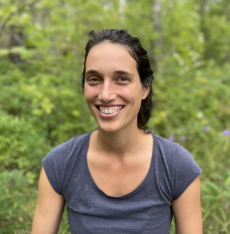
Thomas Berkemeier is a Professor and Group Leader of the Chemical Kinetics & Reaction Mechanisms group within the Department of Multiphase Chemistry at the Max Planck Institute for Chemistry in Mainz, Germany. He leads research on the chemical kinetics of multiphase systems with a focus on the health effects of air pollution and the formation mechanisms of organic aerosols. His work bridges atmospheric chemistry, physiological chemistry, and environmental health through experimental and modeling approaches. Dr. Berkemeier's research interests center on the chemical kinetics of surface and multiphase systems, particularly investigating how air pollutants interact with the respiratory system. His work examines the production of reactive oxygen species in the epithelial lining fluid of lungs, the chemical modification of proteins and lipids due to air pollution, and the formation and oxidative aging of organic aerosols. His research has significant implications for understanding the health effects of air pollution and improving atmospheric models. Analysis of his recent publications reveals a strong trend toward integrating machine learning with traditional chemical kinetics modeling. His work spans from fundamental studies of multiphase reaction mechanisms to applied research on the health impacts of air pollutants. The publications demonstrate expertise in both experimental approaches and computational modeling of complex atmospheric processes, with particular emphasis on reactive oxygen species formation and organic aerosol chemistry. 2016: Otto Hahn Medal of the Max Planck Society 2016: ChBE Postdoctoral Fellowship at Georgia Tech Friedrich Wilhelm Helweg Foundation Award 2012: Best Graduation Award in Chemistry at Bielefeld University Dr. Berkemeier serves in professional capacities including as an Editorial Board member for Atmospheric Chemistry and Physics, Junior Faculty Member of the Max Planck Graduate School, and Ombudsperson at the Max Planck Institute for Chemistry. His research has been supported through prestigious fellowships and institutional funding that enables his interdisciplinary approach to atmospheric chemistry problems. He leads the Chemical Kinetics & Reaction Mechanisms group within the Department of Multiphase Chemistry at the Max Planck Institute for Chemistry. His team collaborates with researchers across disciplines to investigate the complex chemical processes that govern air quality and its impacts on human health, utilizing both experimental and computational approaches to address challenging questions in atmospheric science.