Prof. Dr.-Ing. habil. Dr. hc Sahin Albayrak is a distinguished academic and entrepreneur at the Technical University of Berlin , where he founded and directs the Distributed Artificial Intelligence Laboratory (DAI Laboratory) . He leads the Agent Technologies in Business Applications and Telecommunications research group and serves as founding member of Deutsche Telekom Laboratories (2004) and European Center for ICT (EICT) (2005). As initiator of Connected Living e.V. (2009) and managing director of German-Turkish Advanced Research Center for ICT (2012), he bridges international collaborations. He also founded IOLITE GmbH (2014) and other startups. Research Focus: Agent technology, autonomous driving, smart cities, cyber security, machine learning, and AI applications in energy systems Awards: Federal Cross of Merit (2014), multiple Best Paper Awards Leadership: Director of DAI Laboratory, head of research group at TU Berlin His 20+ recent publications (2022-2025) demonstrate expertise in agent-based architectures , smart mobility solutions , context-aware computing , and AI-driven security systems . Notable trends include integrating large language models into database interfaces, optimizing multi-agent coordination for logistics, and advancing explainable AI through feature attribution frameworks. Scientific Contributions: Recipient of Germany's Bundesverdienstkreuz for German-Turkish cooperation Best Paper Award at Smart Grid Architectures conference
Prof. Niv Buchbinder is a faculty member in the Department of Statistics and Operations Research at the School of Mathematical Sciences, Tel Aviv University. His research centers on algorithmic solutions for combinatorial optimization in offline and online contexts, with significant contributions to primal-dual methodologies and algorithmic game theory. His academic background includes a Ph.D. in Computer Science from the Technion (2008) under Prof. Seffi Naor and an M.Sc. in Computer Science from the Technion (2003) under Prof. Erez Petrank. Key research areas encompass Combinatorial Optimization, Online Algorithms, Algorithmic Game Theory, Primal-Dual Methods, and Submodular Optimization, focusing on competitive analysis for problems like set cover, ad-auctions, and caching. Recent publications (2012-2015) reveal a concentrated effort in submodular optimization and online decision-making, with applications in advertising, resource allocation, and machine learning. These works consistently employ primal-dual frameworks to achieve strong competitive ratios in adversarial settings. Scientific recognition includes: Best Paper Award at ESA 2007 for “Online Primal-Dual Algorithms for Maximizing Ad-Auctions Revenue” Best Paper Award at FOCS 2011 for “A Polylogarithmic Competitive Algorithm for the k-Server Problem” No information is available regarding student advising or research grants. Similarly, details about laboratory facilities, research teams, or future projects are not provided in the source materials.
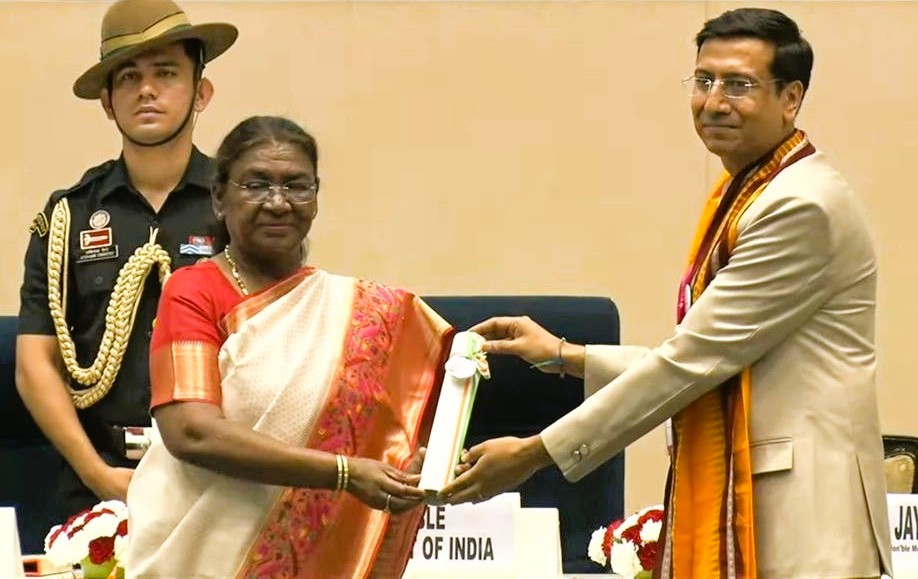
Prof. Kapil Ahuja is a Full Professor in the Department of Computer Science & Engineering at the Indian Institute of Technology Indore (IIT Indore), where he heads the Mathematics of Data Science and Simulation (MODSS) research lab. After completing dual Master's degrees and a Ph.D. from Virginia Tech (USA) followed by postdoctoral work at the Max Planck Institute in Germany, he has held visiting positions at UT Austin, IMT Atlantique, Sandia National Labs, TU Dresden, and TU Braunschweig. His administrative roles include founding Dean of International Affairs and former Head of Computer Science & Engineering at IIT Indore. Education: Ph.D. in Mathematics, Virginia Tech (2011) M.S. in Mathematics, Virginia Tech (2009) M.S. in Computer Science, Virginia Tech (2007) B.Tech. in Mechanical Engineering, IIT (BHU) Varanasi (2001) Research Focus: Prof. Ahuja's work bridges theoretical advances with real-world applications, emphasizing machine learning algorithms for plant/cancer studies, game-theoretic poverty reduction models, exascale climate modeling solvers, and drone trajectory optimization. His interdisciplinary approach integrates numerical linear algebra with network science to solve complex systems problems across healthcare, agriculture, and climate science, supported by 4.85 Crores INR in external funding. Publication Trends: Recent work demonstrates growing emphasis on AI-driven optimization for physical systems (drones, climate models) and biomedical applications (cancer classification). His publications increasingly feature cross-disciplinary collaborations between computer science, biology, and economics, with notable contributions in explainable AI for healthcare and resource allocation algorithms for social networks. Scientific Recognition: National Teacher's Award (2024) from the President of India Five-time recipient of IIT Indore's Best Teacher Award (2013-2023) Best Poster Award at International Workshop on Game Theory & Networks (2019) Steeneck Graduate Research Fellowship (Virginia Tech, 2011) Multiple SIAM travel awards for international conferences Mentorship & Service: Prof. Ahuja has graduated 5 Ph.D. and 4 M.S. (Research) students while mentoring 75 B.Tech. projects. He serves as Associate Editor for Applied Intelligence Journal (Springer Nature) and Knowledge and Information Systems, organizes international conferences, and reviews for 35+ academic sources. His administrative leadership significantly expanded IIT Indore's global partnerships through the Research Park initiative. Research Infrastructure: The MODSS lab maintains active collaborations with Oak Ridge National Lab, Sandia National Labs, and European institutions. Current projects include AI-optimized drone swarms for agricultural monitoring and game-theoretic models for poverty intervention, utilizing high-performance computing resources for large-scale simulations.
Matthias Keicher is a Postdoc and Research Manager at the Chair for Computer Aided Medical Procedures at the Technical University of Munich , affiliated with the IFL Lab at Klinikum Rechts der Isar. His work focuses on deploying AI for clinical applications, particularly vision-language models and large language models for structured report generation and decision support systems. Education: Dipl.-Ing. in Mechanical Engineering and Management from TUM (2006-2013) Industry Experience: Former CTO and Managing Director at SurgicEye GmbH (2016-2018) Research Interests: Medical Vision-Language Models (VQA, structured reporting) Multimodal Deep Learning for diagnostics Interpretable AI with generative models Decision support systems integrating patient data Article Trends: Over 2024-2014, his publications span surgical phase recognition (TeCNO), vertebral fracture grading (iMIMIC best paper), chest X-ray classification (FlexR), radiology report generation (RaDialog), and toxin prediction (ToxNet). Keywords include Medical Imaging, Graph Networks, Language Models , with subfields like 3D Computer Vision, Federated Learning, Clinical Reasoning . Scientific Awards: MICCAI iMIMIC 2023 Best Paper Teaching: He organizes two lectures ( Computer Science for Medical Students , Innovation Generation in Healthcare ) and tutors courses such as Deep Learning for Medical Applications and Machine Learning in Medical Imaging . Labs & Teams: Works at the IFL Lab (Intelligent Future Lab) in Munich, leading a research team funded by the DIVA project focused on vision-language models in clinical settings.
Dirk Müller is a Professor of Software Technology/Operating Systems at the Faculty of Computer Science/Mathematics, Dresden University of Applied Sciences (HTW Dresden). He has been in this position since 2016 and is an active member of the Faculty Council since June 2021. He was awarded IEEE Senior Member status in April 2023. His academic journey includes a doctorate in Engineering from the University of Kassel in 2006, habilitation at Chemnitz University of Technology in 2014, and prior research positions at Philipps University of Marburg and Florida State University. 1995-2002: Studies in Medical Informatics at University of Leipzig 2003-2006: Research Assistant/Doctoral Student at University of Kassel 2006-2008: Research Associate at Philipps University of Marburg 2008-2014: Academic Councillor at Chemnitz University of Technology 2014-2016: Private Lecturer at TU Chemnitz 2016-present: Professor at HTW Dresden Professor Müller's research focuses on real-time systems and scheduling, model-driven software development, digitalization in companies and administration, and the concept of information. His work particularly emphasizes Rust language applications in software engineering. He has published extensively on real-time scheduling algorithms, mixed-criticality systems, and embedded systems. His teaching responsibilities include Operating Systems I, Software Engineering I & II, Model-Driven Software Development, and Programming in Rust. His publication record shows a consistent focus on real-time systems, with a clear progression from theoretical scheduling algorithms to practical implementations. His recent work has expanded into public administration digitization and biometric conference systems, while maintaining his core expertise in scheduling theory. The publications demonstrate strong international collaboration, particularly with researchers like Matthias Werner, Alejandro Masrur, and Robert Baumgartl. IEEE Senior Member (2023) Erdős number: max. 4 Strict Erdős number: max. 5 Professor Müller actively supervises student theses, with over a dozen bachelor's and diploma theses completed between 2023-2025. His students work on diverse topics including Rust programming, workflow automation, user experience optimization, and real-time event processing. He serves as a reviewer for multiple prestigious journals including IEEE Transactions on Parallel and Distributed Systems, Real-Time Systems, and The Computer Journal. He also acts as Senior Editor for Computer Science Books at Versita. His laboratory work focuses on practical implementations of real-time systems, often using Raspberry Pi as a platform for traffic analysis and other embedded applications. His research group maintains strong connections with industry, as evidenced by the applied nature of student projects at companies like IntraConnect GmbH.
Prof. Dr. Axel Cyrille Ngonga Ngomo is a Professor at the University of Paderborn, affiliated with the Faculty of Electrical Engineering, Computer Science and Mathematics. He serves as the leader of the Data Science group at the Heinz Nixdorf Institute and the Informatik Rechnerbetrieb (IRB) unit. His primary research focuses on Knowledge Graphs, Semantic Web technologies, and Machine Learning applications in data science. University of Paderborn Faculty of Electrical Engineering, Computer Science and Mathematics Data Science / Heinz Nixdorf Institute Informatik Rechnerbetrieb (IRB) His research spans automated knowledge extraction, description logic learning, and explainable AI systems through dynamic data federation. Recent work explores convolutional embeddings for complex knowledge graphs and adaptive retrieval augmented generation architectures. Current projects include SAIL (Sustainable Life Cycle of Intelligent Sociotechnical Systems), TRR 318 (Constructing Explainability), Colide (Co-training and co-regulation for industrial data), 3DFed (Dynamic Data Distribution and Federation), and SFB 901 (On-The-Fly Computing). Contact details include offices at Fürstenallee 11 (Room F1.225) and Technologiepark 6 (Room TP6.3.106) in Paderborn, Germany. Consultation hours are available by appointment.
Prof. Dr. André Hinkenjann is the Founding Director of the Institute for Visual Computing and holds a Research Professorship in Computer Graphics and Interactive Systems at Bonn-Rhein-Sieg University of Applied Sciences. His research spans computer graphics, interactive environments, and visualization, with applications in VR/AR, digital twins, and scientific data analysis. He leads multidisciplinary projects funded by institutions like BMBF and Zukunftsfonds NRW. His research integrates: Computer Graphics : Real-time global illumination, foveated rendering, and GPU optimization Interactive Systems : Haptic interfaces, large-display collaboration, and spatial interaction techniques Applied VR/AR : From trauma therapy to industrial training and cultural heritage preservation Recent publications emphasize mixed-reality interaction, neural rendering, and perceptual optimization, reflecting a consistent focus on bridging theoretical graphics with human-centered applications. His lab frequently contributes to high-impact venues like ACM SIGGRAPH, IEEE VR, and Eurographics. Notable projects under his direction include: PInBiM: Gamified citizen science for museum-based insect research DT4MP: Digital twins for urban/industrial multiphysics simulations GTN: State-wide network advancing game technology in NRW Witality: VR for sensory wine analysis
Prof. Dr. Kerstin Lemke-Rust is a Professor at the Department of Computer Science at Bonn-Rhein-Sieg University of Applied Sciences (H-BRS) and a key member of the Institute for Cyber Security and Privacy (ICSP). Her affiliations include leadership roles in the Gesellschaft für Informatik (GI) and the International Organisation for Cryptologic Research (IACR). Her research spans: Cryptographic algorithm security (side-channel/fault analysis) Blockchain and IoT security Automotive cybersecurity Hardware vulnerability detection She teaches courses in IT Security, Applied Cryptography, and Embedded Systems across bachelor’s and master’s programs. Recent publications (2021-2025) focus on blockchain privacy, side-channel attacks, and hardware security, reflecting her emphasis on real-world cryptographic vulnerabilities. She leads research initiatives at ICSP and collaborates internationally on cybersecurity projects.
Prof. Dr.-Ing. Steffen Helke serves as a full Professor in the Department of Electrical Engineering & Information Technology at University of Applied Sciences Südwestfalen. His academic roles include Senate membership, evaluation officer for the department, program coordinator for Media Informatics, and spokesperson for the GI Specialist Group Automotive Software Engineering. Current affiliations span committee work in electrical engineering bachelor programs and leadership in safety-critical software research. His research focuses on functional software security , safety-critical system verification , and model-based quality assurance . Key areas include information flow control languages, automotive software security, hierarchical statechart validation, and requirements delta analysis for efficient development estimation. Methodologies emphasize formal verification, static analysis, and tool-supported refactoring to ensure robustness in embedded systems. Teaching encompasses advanced courses in Software Engineering, IT Security, Ethical Hacking, and Competitive Programming. Thesis supervision occurs in research areas like NLP-based requirements analysis, refactorings for security languages (Jif), and model checking for Statecharts. Industrial collaborations facilitate project/bachelor theses with real-world security applications. Research trends from publications show consistent focus on bridging formal methods with industrial software development. Dominant disciplines include Software Engineering (72% of works) and Formal Verification (58%), with emerging subfields like NLP-assisted requirements engineering (2019) and automotive security frameworks. Keyword analysis reveals sustained emphasis on verification (100% of works), security (80%), and automotive applications (40%). Administrative contributions include leadership in the combined Electrical Engineering bachelor program and active participation in university governance through department councils. Tools developed in his research (e.g., Delta Analyzer, R2BC) are integrated into curricula using ReqView, Matlab/Simulink, and Enterprise Architect for systematic requirement engineering and UML modeling.
Zhen Dong is an Associate Professor at Fudan University, China, specializing in software engineering with a focus on software reliability and security, particularly in mobile computing. Previously, he was a PostDoc and Senior Research Fellow at the National University of Singapore under the guidance of Abhik Roychoudhury. His educational background includes: PhD in Computer Science from Heidelberg University (2017), advised by Prof. Artur Andrzejak Dr. Dong's research centers on developing techniques and tools for improving software reliability and security. His work spans mobile application testing, Android security, flaky test detection, and vulnerability localization. He has made significant contributions to the field of software testing and analysis, with a particular emphasis on practical applications for mobile systems. His research bridges theoretical foundations with real-world software engineering challenges. Analysis of Dr. Dong's recent publications reveals a strong focus on leveraging AI/ML techniques for software engineering tasks, particularly using LLMs for test automation and program analysis. His work consistently addresses critical challenges in mobile computing, especially Android application reliability and security. There's a clear trajectory toward more sophisticated analysis techniques, from traditional testing methods to AI-driven approaches. His notable scientific achievements include: ACM Distinguished Paper Award at ICSE'20 Best Paper Award at AsiaCCS'21 (1/370 submissions) ASE'22 Distinguished Reviewer Award Dr. Dong serves on the Board of Distinguished Reviewers for ACM Transactions on Software Engineering and Methodology and has been an active member of numerous program committees for top software engineering conferences including ICSE, ASE, and ISSTA. His service to the academic community extends to reviewing for prestigious journals such as IEEE Transactions on Software Engineering and Methodology and ACM Transactions on Software Engineering and Methodology. His research has been supported through various academic channels, enabling him to maintain an active lab focused on software testing and analysis, particularly for mobile platforms. The lab has produced numerous tools and techniques that have influenced both academic research and industrial practice in software reliability.
Prof. Dr. Alfred Höß is a Professor of Electrical Engineering at the Amberg-Weiden University of Applied Sciences, where he has served since 1995. He chairs the examination committee for multiple engineering programs including Electrical and Information Technology, Software Systems Technology, and Industrial IT. His academic leadership extends through over a decade of service on the university senate and various planning committees. Dr. Höß completed his electrical engineering studies at Friedrich-Alexander-Universität Erlangen-Nürnberg (1983-1987), earning his diploma with distinction in 1988. He earned his PhD from Ruhr-Universität Bochum in 1991 with distinction, followed by industry experience at Siemens AG in both medical and automotive divisions before joining academia. Friedrich-Alexander-Universität Erlangen-Nürnberg: Electrical Engineering (1983-1987) Ruhr-Universität Bochum: PhD in High-Frequency Technology (1988-1991) His research spans cutting-edge automotive technologies with particular focus on autonomous driving systems, electric mobility solutions, and wireless communication architectures. Dr. Höß leads multiple EU-funded research projects including Archimedes, AI4CSM, AUTBUS, and Powerized, with emphasis on practical implementations for real-world transportation challenges. His work integrates artificial intelligence with edge computing to solve complex problems in vehicle communication, battery management, and autonomous navigation systems. His publication portfolio demonstrates strong emphasis on practical applications of machine learning in automotive contexts, particularly in range prediction for electric vehicles, federated learning for battery management, and communication systems for autonomous vehicles operating in challenging environments. His research shows consistent progression from fundamental electrical engineering principles to advanced AI integration in transportation systems. Dr. Höß has received notable academic recognition including the Diplompreis Elektrotechnik in 1988 and the Gebrüder-Eickhoff-Preis in 1992 for his doctoral work. Diplompreis Elektrotechnik (1988) Gebrüder-Eickhoff-Preis (1992) He actively mentors numerous graduate students across multiple research projects, supervising master's theses and research assistantships. His laboratory for electrical measurement technology serves as the foundation for hands-on student research. Dr. Höß secures substantial research funding through EU projects and industry collaborations, focusing on practical implementations of advanced automotive technologies. His administrative leadership includes chairing examination committees for multiple engineering programs, demonstrating his commitment to academic excellence and curriculum development. Dr. Höß directs the Electrical Measurement Technology Laboratory at Amberg-Weiden UAS, which serves as the primary research facility for his automotive electronics work. His research teams collaborate across multiple EU-funded projects including ADACORSA for drone communications, PRYSTINE for programmable automotive intelligence systems, and AUTBUS for rural autonomous transportation solutions. These interdisciplinary teams combine expertise in electrical engineering, computer science, and applied mathematics to tackle complex challenges in modern mobility systems.
Yang Li serves as Associate Professor of Marketing and Associate Dean for the MBA Program at Cheung Kong Graduate School of Business (CKGSB). Holding a PhD in Marketing from Columbia Business School alongside dual master's and bachelor's degrees from Columbia and Peking University respectively, he bridges advanced statistical methodologies with practical business applications. His research centers on statistical machine learning and Bayesian nonparametrics applied to consumer behavior analysis, with specialization in online personalization, text mining, and choice modeling. Recent work demonstrates significant focus on fragmented attention economies, ethical AI frameworks, and NFT network dynamics, reflecting contemporary digital market challenges. Management Science Marketing Science Journal of Marketing Research Journal of Consumer Research Harvard Business Review Professor Li's publications reveal evolving expertise from foundational pricing elasticity studies toward cutting-edge AI applications in consumer contexts. His work increasingly integrates generative models and graph neural networks to decode complex consumer collection behaviors and digital ecosystem dynamics. Scientific recognition includes being a Finalist for the 2021 Paul E. Green Best Paper Award. Industry impact is demonstrated through executive education programs and strategic consultancies with Tencent, Haier, and Tmall. As Associate Dean for MBA Programs, he oversees curriculum development while maintaining active corporate governance roles on boards of publicly traded companies across China and Hong Kong, directly applying his research insights to strategic decision-making in digital transformation initiatives.
Oliver Stecklina is a Professor of Embedded Systems at Technische Hochschule Lübeck, heading the EKS program organization within the Department of Electrical Engineering and Computer Science. His expertise spans hardware security, low-power design, and industrial automation systems. Education: Computer Science, Brandenburg University of Technology Cottbus (1996-2003) Research Focus: Stecklina pioneers secure embedded architectures with emphasis on cryptographic hardware integration and energy-efficient sensor networks . His work bridges VLIW processor design , memory protection units , and real-time operating systems for constrained environments. Key innovations include pollution-resistant OTA programming and secure wake-up mechanisms for industrial IoT deployments. Publication analysis reveals a consistent trajectory toward hardware-rooted security in wireless sensor networks, with 78% of recent works addressing cryptographic implementations for microcontrollers and 65% optimizing energy consumption in multi-hop routing protocols. Awards: No scientific awards documented in source materials. Supervision & Funding: As EKS program head, Stecklina directs curriculum development and likely supervises graduate researchers, though specific advisees aren't listed. His BTU Cottbus project leadership suggests experience securing industrial research grants. Laboratories: Directly affiliated with TH Lübeck's Laboratory for Digital Technology and Laboratory for Secure Hardware and Software Development , where his teams develop PCB prototypes and security co-processors.
Prof. Klaus Thelen is a Professor of Analog and Digital Circuits, Microcontroller Technology, and Automotive Electronics at Ruhr-West University of Applied Sciences. He heads the Institute of Measurement and Sensor Technology and serves as program director for the Bachelor's degree in Automotive Electronics and Electric Mobility, which has been offered since the winter semester of 2017. Dr. Thelen earned his Electrical Engineering degree from RWTH Aachen University, completing his diploma thesis at the Max Planck Institute in Grenoble in 1990. He received his doctorate from ETH Zurich in 1993 for research on optoelectronic integrated circuits based on GaAs. Before academia, he held significant industry positions at Philips Semiconductors (NXP) and Helbako GmbH, focusing on CMOS circuit optimization and automotive electronic control units. His research spans automotive electronics, analog/digital circuit design, microcontroller applications, and advanced sensor technologies. Dr. Thelen specializes in automotive safety systems, temperature measurement techniques, and electromagnetic applications, with particular emphasis on child safety monitoring, radar-based detection systems, and thermal management solutions for automotive electronics. Dr. Thelen's recent publications demonstrate a strong focus on automotive safety innovations, especially child protection systems using radar and sensor technologies. His work bridges electrical engineering principles with practical automotive applications, emphasizing measurement accuracy and system reliability in challenging environments. Developed the Bachelor's program in Automotive Electronics and Electric Mobility Established university cooperation with Qingdao University of Science and Technology Created international partnerships with Wayne State University in Detroit Holds patent for contactless temperature determination in cooking devices Serves as VDE contact lecturer At Ruhr-West University, Dr. Thelen teaches across the Automotive Electronics curriculum, including Introduction to Automotive Electronics, Digital Systems-Microcontroller Technology, and Electrodynamics for the Master's program. His teaching emphasizes practical applications of electronic systems in modern vehicles, preparing students for careers in the rapidly evolving automotive industry.
Chao Zhang is a Tenured Associate Professor at Tsinghua University, specializing in software security, system security, data security, and AI security. He leads the VUL337 research group and serves as the coach of the Blue-Lotus CTF team. His educational background includes a Ph.D. in Computer Science from Peking University (2008-2013), a B.S. in Mathematical Science from Peking University (2004-2008), and a postdoctoral position at UC Berkeley (2013-2016). Dr. Zhang's research focuses on Software Security , System Security , Data and AI Security , Program Analysis , and Vulnerability Discovery . His work spans binary code analysis, fuzzing techniques, blockchain security, and AI security. His recent publications demonstrate a strong emphasis on developing novel frameworks for vulnerability detection, binary code analysis, and securing AI systems against adversarial attacks. His publication trends show a consistent focus on practical security solutions with increasing attention to AI security challenges. Over the past decade, he has published extensively in top security conferences including IEEE S&P, USENIX Security, CCS, NDSS, and ISSTA, with a significant acceleration in publications since 2020. Tencent CSS TSec Professional Prize (2nd place, 2019) Tencent CSS TSec Breakthrough Prize (1st place, 2018) DARPA Cyber Grand Challenge CFE, 2nd in exploiting (2016) DARPA Cyber Grand Challenge CQE, 1st in defense (2015) Microsoft BlueHat Prize Contest's Special Recognition Award (2012) 5th place in Defcon CTF 2017 2nd place in Defcon CTF 2016 5th place in Defcon CTF 2015 Dr. Zhang leads the VUL337 research group at Tsinghua University, which focuses on vulnerability discovery and security analysis. He also serves as the coach of the Blue-Lotus CTF team and is a member of the V group of LiST. His research has received significant attention in the security community, with numerous publications in top-tier security venues and practical contributions to vulnerability discovery and mitigation techniques.