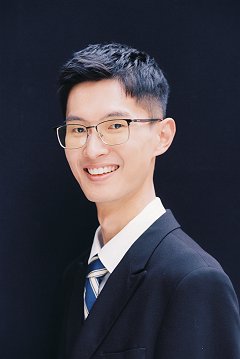
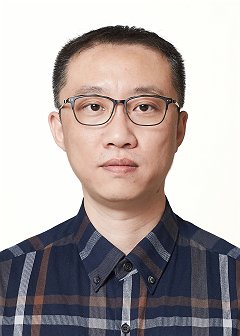
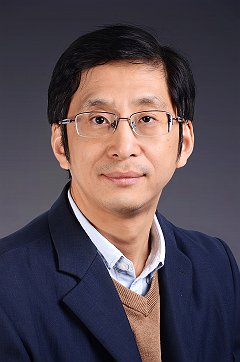
Dr. Sridhar Chimalakonda serves as Associate Professor and Head of the Department of Computer Science & Engineering at the Indian Institute of Technology Tirupati, with an adjunct appointment as Associate Professor at the University of Waterloo. His academic leadership spans software engineering research and educational innovation. His educational qualifications include: Ph.D. from International Institute of Information Technology Hyderabad, India MS by Research from International Institute of Information Technology Hyderabad, India Research expertise encompasses: Software Engineering : Empirical studies, quality assurance, reuse methodologies, product lines, architecture, ontologies, and gamification Educational Technologies : Instructional design optimization, personalized learning systems, and VR/AR applications for educational storytelling and laboratories Human Computer Interaction : User-centered design in educational and software development contexts Publication analysis (2021-2024) reveals a strategic evolution from foundational software engineering research toward integrated educational applications, particularly in gamified machine learning education for K-12 audiences and sustainable software practices. His work demonstrates consistent methodological rigor in empirical studies while expanding into cross-disciplinary educational technology innovation.
Matteo Camilli is an Associate Professor in the Department of Electronics, Information and Bioengineering (DEIB) at Politecnico di Milano, Italy, where he leads research in software engineering and verification. His academic journey includes positions as Assistant Professor at Free University of Bozen-Bolzano and postdoctoral research at the University of Milan and University of Bergamo. His educational background includes a PhD in Computer Science (2015), MSc in Computer Science (2012), and BSc in Computer Science (2009), all from the University of Milan. His doctoral research focused on combining advanced abstraction techniques and big data approaches to address state explosion problems in formal verification. Camilli's research primarily centers on software verification, testing, and methods to improve dependability of autonomous, cyber-physical, service-based, and ML-enabled critical systems. His work spans formal methods, model-based testing, uncertainty quantification, and design-time/runtime verification with applications to complex distributed systems. His recent publications reflect a growing focus on explainable self-adaptation, quality assurance for LLM-based systems, and managing uncertainty in adaptive systems. His publication record includes papers in top journals (TOSEM, TAAS, JSS, EMSE) and conferences (ICSE, ISSRE, ICST, ICSA). He serves on program committees for prestigious conferences including ICSE, ICSA, ICST, and ECSA, and is on the steering committee for the International Workshop on Formal Approaches for Advanced Computing Systems (FAACS). Camilli actively contributes to the academic community through conference organization, including serving as Program Committee Member for numerous conferences and as Program Co-Chair for the Software Architecture track at ACM SAC. He also serves as guest editor for special issues on automated testing and dependable AI systems. His teaching portfolio at Politecnico di Milano includes Software Engineering 2, Software Engineering for Automation, and Distributed Software Development. Previously at Free University of Bozen-Bolzano, he taught Systems Engineering and Verification and Reliability for Dependable Systems.
Dr. Salam Traboulsi is a Researcher at Stuttgart University of Applied Sciences (HFT Stuttgart), affiliated with the Competence Center for Digitalization in Research, Teaching & Economics since 2019. She holds a PhD in Computer Science from the University of Toulouse, France (2008). Her work bridges technology and urban innovation, with a focus on developing scalable solutions for modern cities. Research Focus: Dr. Traboulsi specializes in: Smart City ecosystems integrating IoT and 5G Precision technologies for urban positioning and navigation Data management frameworks for large-scale sensor networks Open-source IoT platforms for building efficiency and environmental monitoring Cloud and grid computing infrastructures Key Projects: She leads/contributes to: iCity 2: UDigiT4iCity – Developing urban digital twins using IoT building data and 5G sensor networks iCity 1 – Foundational research on intelligent urban infrastructure systems Publication Trends: Her recent work (2020-2024) emphasizes 5G-enabled urban solutions, including fleet management optimization, indoor positioning systems, and IoT analytics for smart buildings. Earlier research (2005-2013) focused on distributed computing, storage virtualization, and information retrieval systems, demonstrating consistent expertise in large-scale data infrastructure. Academic Engagement: She serves as a scientific reviewer for journals and conferences and teaches in the surveying study area at HFT Stuttgart.
Yang Li serves as Associate Professor of Marketing and Associate Dean for the MBA Program at Cheung Kong Graduate School of Business (CKGSB). Holding a PhD in Marketing from Columbia Business School alongside dual master's and bachelor's degrees from Columbia and Peking University respectively, he bridges advanced statistical methodologies with practical business applications. His research centers on statistical machine learning and Bayesian nonparametrics applied to consumer behavior analysis, with specialization in online personalization, text mining, and choice modeling. Recent work demonstrates significant focus on fragmented attention economies, ethical AI frameworks, and NFT network dynamics, reflecting contemporary digital market challenges. Management Science Marketing Science Journal of Marketing Research Journal of Consumer Research Harvard Business Review Professor Li's publications reveal evolving expertise from foundational pricing elasticity studies toward cutting-edge AI applications in consumer contexts. His work increasingly integrates generative models and graph neural networks to decode complex consumer collection behaviors and digital ecosystem dynamics. Scientific recognition includes being a Finalist for the 2021 Paul E. Green Best Paper Award. Industry impact is demonstrated through executive education programs and strategic consultancies with Tencent, Haier, and Tmall. As Associate Dean for MBA Programs, he oversees curriculum development while maintaining active corporate governance roles on boards of publicly traded companies across China and Hong Kong, directly applying his research insights to strategic decision-making in digital transformation initiatives.
Dr. Jian Zhang is an Associate Professor in the Department of Solid Geophysics at China University of Geosciences in Wuhan, China. With a strong background in atmospheric science and electronic information, he conducts research focused on atmospheric dynamics using high-resolution observational techniques. Current faculty at China University of Geosciences Department of Solid Geophysics Former researcher at Massachusetts Institute of Technology (2016-2018) PhD from Wuhan University with focus on Atmospheric turbulence Active researcher with publications extending through 2025 Dr. Zhang's research centers on atmospheric dynamics, particularly gravity waves, tropopause physics, and planetary boundary layer processes. His work utilizes high-resolution radiosonde measurements to investigate phenomena such as wind shear variations, double tropopauses, and stratosphere-troposphere exchange. He has developed innovative approaches for analyzing atmospheric data across multiple vertical scales. Analysis of Dr. Zhang's recent publications reveals a strong focus on how vertical resolution affects the interpretation of atmospheric phenomena. His work spans from tropospheric processes to the mesosphere-lower thermosphere region, demonstrating a comprehensive approach to atmospheric dynamics. The research shows particular strength in comparative analysis between observational data and reanalysis products. 528 citations across 31 publications Active research collaborations with multiple Chinese institutions International research experience at MIT Dr. Zhang's research group focuses on atmospheric dynamics using observational data analysis. The group works with high-resolution radiosonde measurements, meteor radar data, and satellite observations to advance understanding of atmospheric processes that impact weather prediction, climate modeling, and atmospheric transport phenomena.
Peter Georg Picht is Professor for Commercial Law at the University of Zurich's Institute of Law, where he conducts research at the intersection of competition law, digital regulation, and intellectual property. His work focuses on the rapidly evolving legal landscape governing digital markets, with particular expertise in Standard Essential Patents (SEPs), FRAND licensing, and the regulatory implications of artificial intelligence. Professor Picht's research interests span several interconnected domains: Digital market regulation under the Digital Markets Act (DMA), Digital Services Act (DSA), and Data Act Competition law implications of algorithms and artificial intelligence Standard Essential Patents and FRAND licensing frameworks Data governance and access requirements in competitive markets The intersection of intellectual property law with emerging AI technologies His recent publications reveal a consistent focus on the practical implementation challenges of EU digital regulations and the adaptation of competition law frameworks to address algorithmic markets. Professor Picht has published extensively on FRAND licensing disputes, contributing to the scholarly discourse on how courts should determine fair, reasonable, and non-discriminatory royalty rates for standard-essential patents. Professor Picht maintains active research collaborations with leading institutions including the Max Planck Institute for Innovation & Competition, ETH Zurich Center for Law and Economics, and the Swiss Federal Institute of Intellectual Property. His work bridges theoretical legal scholarship with practical regulatory challenges facing digital markets today, making significant contributions to both academic discourse and policy development in European competition law.
Eray Tüzün is an Associate Professor of Computer Engineering at Bilkent University in Turkey, where he leads the Bilkent University Software Engineering and Data Analytics Research Group (BILSEN). With over 20 years of experience in software design and development spanning both academia and industry, he bridges theoretical research with practical software engineering applications. His educational background includes bachelor's and master's degrees in Computer Science and a PhD in Information Systems. Before joining Bilkent University, he accumulated substantial industry experience including 9 years at HAVELSAN (serving as Productization Lead, Academy Manager, Product Owner, and Software Engineer), plus roles at Microsoft as a Software Design Engineer in the Online Services group, Senior Software Engineer at Howard Hughes Medical Institute, and Research Engineer at CWRU Genomics Center. His professional certifications include Certified Product Manager, MCSD: Application Lifecycle Management, Professional Scrum Master (PSM), and Professional Scrum Product Owner (PSPO). Tüzün's research focuses on several interconnected areas including Software Product Line Engineering , Empirical Software Engineering , Gamification , Software Engineering Education , DevOps & Agile Software Development , and Bioinformatics . His empirical approach involves mining software repositories to analyze development practices, identify patterns, and propose improvements. Recent work increasingly examines the intersection of AI and software engineering, particularly how large language models can enhance code review and comment quality. His research output shows clear trends toward analyzing code quality metrics, identifying 'smells' in development processes, and applying data analytics to software engineering practices. Key themes include bus factor estimation for measuring knowledge concentration in software projects, empirical studies of code review processes, continuous integration practices, and issue tracking systems in open source projects. Tüzün is a senior member of IEEE and an active member of ACM SIGSOFT and IEEE Computer Society. He represents Bilkent University in the International Software Engineering Research Network (ISERN), connecting his research with the global software engineering community. His service to the field includes program committee roles at major conferences such as ASE, ICSE, ESEC/FSE, and ESEM, with leadership positions including PC Co-Chair for ICSSP 2020 and Industry Track Co-Chair for EASE 2023. As head of the BILSEN research group, he mentors graduate students and collaborates on projects that bridge theoretical research with practical applications. His research has been consistently published in top-tier software engineering venues over the past decade, demonstrating both continuity in core research areas and adaptation to emerging trends like AI-assisted software development.
Shing-Chi Cheung is a Professor of Computer Science and Engineering at the Hong Kong University of Science and Technology (HKUST), School of Engineering. He founded the CASTLE research group and co-founded the International Workshop on Automation of Software Testing (AST) in 2006. His leadership includes serving as General Chair of FSE 2014 and chairing multiple APSEC conferences. His research focuses on software quality enhancement through program analysis, testing, debugging, and AI techniques, targeting Android apps, open-source software, deep learning systems, smart contracts, and spreadsheets. Current projects include metamorphic testing frameworks, binary analysis tools, and vulnerability detection systems for emerging technologies. His publication portfolio demonstrates consistent contributions to software engineering since 2016, with recent work emphasizing AI-integrated testing methodologies, smart contract security, and deep learning system reliability. Key trends show increasing focus on cross-language analysis, data visualization quality, and compiler-level verification for modern software stacks. Distinguished Member of the ACM Fellow of the British Computer Society Editorial board member: Science of Computer Programming (SCP), Journal of Computer Science and Technology (JCST) Former editorial board member: IEEE Transactions on Software Engineering (2006-2009), Information and Software Technology (2012-2015) Four patents in China and the United States Cheung actively mentors through the CASTLE research group and serves on program committees for major conferences including ICSE, ESEC/FSE, and ISSTA. His work bridges academic research with practical applications through industry collaborations and tool development. He has contributed to numerous workshops and symposia as steering committee member and program chair.
Dr. Preetha Chatterjee is an Assistant Professor in the Department of Computer Science at Drexel University's College of Engineering, where she leads the SOftware Engineering and Analytics Research (SOAR) Lab. Her academic career spans software engineering research, teaching, and service, with a focus on improving developer productivity through advanced analytics and tools. Dr. Chatterjee earned her M.S. and Ph.D. in Computer Science from the University of Delaware, advised by Dr. Lori Pollock, following 5+ years of industry experience as a Software Engineer. Her educational background bridges practical industry experience with rigorous academic training. Her research focuses on Software Engineering with emphasis on developing tools, knowledge sources, and strategies to support software maintenance and improve developer productivity. She incorporates evidence from mining software repositories, conducting empirical studies, and adapting state-of-the-art techniques from Natural Language Processing and Machine Learning. Her current research directions include LLM-assisted software development and maintenance, developer collaboration in distributed software teams, and knowledge extraction from large-scale software artifacts. She has made significant contributions to emotion mining in developer communications, toxicity detection in open source projects, and trust dynamics in GitHub pull requests. Dr. Chatterjee's publications demonstrate a clear progression from foundational work on mining developer chat communications and code snippets toward more sophisticated applications of machine learning and large language models in software engineering contexts. Her recent work increasingly focuses on the intersection of software engineering with social aspects like emotions, trust, and toxicity in developer interactions. Distinguished Reviewer Award at FSE 2023 Drexel CCI Research Excellence Award (awarded to her lab member Ramtin Ehsani) Drexel CS Leadership Award (awarded to her lab member Amirali Sajadi) Dr. Chatterjee has advised numerous students at various levels, including Ph.D., M.S., and undergraduate researchers. Her SOAR Lab currently includes Ph.D. students Ramtin Ehsani and Amirali Sajadi, who have received significant recognition for their work. She has served on multiple program committees for major software engineering conferences including ICSE, FSE, ASE, and MSR, and has held leadership roles such as Tutorials Co-chair for MSR 2025 and Journal-first Co-Chair for ICPC 2024. She co-leads the Drexel Programming Systems Seminar and has been an editorial board member for the Journal of Systems and Software. The SOAR Lab focuses on innovative research at the intersection of software engineering, machine learning, and natural language processing. The lab has produced influential datasets like DISCO (Discord Chat Conversations for Software Engineering Research) and comprehensive annotated datasets of GitHub issue threads. Current projects include improving LLM-assisted bug resolution, security assessment of LLM-generated code, emotion mining from software engineering communication, and information extraction from developer chat conversations.
Shangwen Wang is an Assistant Professor in the School of Computer Science at National University of Defense Technology (NUDT) in Changsha, China. He earned his Bachelor's degree in June 2017, Master's degree in December 2019, and Ph.D. in December 2023, all from NUDT. During his graduate studies, he was supervised by Professor Xiaoguang Mao. From May 2022 to July 2023, he was a visiting student at Southern University of Science and Technology under Professor Yepang Liu. His educational background includes: Ph.D. in Software Engineering, NUDT (2020.3-2023.12), supervised by Prof. Xiaoguang Mao Visiting Scholar, SUSTech (2022.5-2023.7), supervised by Prof. Yepang Liu M.A. in Software Engineering, NUDT (2017.9-2019.12), supervised by Prof. Xiaoguang Mao B.A. in Software Engineering, NUDT (2013.9-2017.6) Wang's research focuses on program repair, program comprehension, mining software repositories, software maintenance and evolution, software testing, and AI for Software Engineering. His work bridges traditional software engineering techniques with modern AI approaches, particularly leveraging large language models for various software engineering tasks. He has made significant contributions to automated program repair, fault localization, vulnerability detection, and code generation. His research demonstrates a strong emphasis on empirical validation and practical applicability to real-world software development challenges. His recent publications show a clear trend toward integrating large language models with traditional software engineering tasks. The 15 most recent articles reveal a focus on applying LLMs to program repair, fault localization, vulnerability detection, and code generation, while maintaining strong empirical foundations. His work spans both theoretical advancements and practical tool development, with applications in software security, testing, and maintenance. His notable achievements include: CCF Outstanding Doctoral Dissertation (CCF优博) 2024 Outstanding Doctoral Graduates, NUDT, 2023 Multiple distinguished paper awards including ACM SIGSOFT Distinguished Paper Award (ISSTA'24) and IEEE TCSE Distinguished Paper Awards (ICSME'22, SANER'22) Prestigious scholarships from NUDT throughout his academic career As an active member of the software engineering community, Wang serves on numerous program committees for top conferences including ICSE, ASE, ESEC/FSE, and ISSTA. He has also contributed to teaching as a teaching assistant for courses such as Compiler, Python Programming, Discrete Mathematics, and C++ Programming. His research group appears to be actively mentoring students, as evidenced by his role as corresponding author on multiple student-led publications. Wang maintains an active research presence with collaborations across multiple institutions in China. His work demonstrates a clear trajectory from traditional program analysis techniques toward integrating cutting-edge AI approaches, particularly large language models, into software engineering practices.
Mark Hloch is a Lecturer in the Department of Computer Science at the University of Applied Sciences Niederrhein, where he serves as Coding@HSNR CCNA/CCNAS Instructor for the CISCO Academy and manages computer, network, and server administration in the joint computer science laboratory. His office (Room B 304, Reinarzstrasse 49, 47805 Krefeld) handles consultation by appointment, with contact via +49 (0)2151 822-4758. Dr. Hloch's research specializes in graph-based automatic language processing and semantic search within decentralized systems , complemented by work on content-based network evolution and application-oriented data/text mining . His expertise spans software engineering, distributed systems, and data network management, reflecting deep integration of theoretical frameworks with practical infrastructure solutions. As Head of Coding School, he leads educational initiatives in network technologies. His laboratory responsibilities include project management and maintaining critical server environments for academic operations.
Wei Chen is a Research Fellow at the Institute of Software, Chinese Academy of Sciences, where he serves as a PhD and Master's supervisor. He leads the Software Engineering Technology R&D Center and maintains affiliations with the University of Chinese Academy of Sciences and its Nanjing College. Dr. Chen has established himself as a leading figure in intelligent software engineering research within China's academic community. His primary research focuses on four interconnected areas: intelligent code maintenance and quality assurance (particularly Python ecosystem compatibility based on domain knowledge), reliability assurance of complex IoT systems in human-machine-object convergence scenarios, cloud-native system development with emphasis on Function-as-a-Service optimization, and quality assurance of deep learning frameworks in resource-constrained environments. Dr. Chen's work consistently bridges theoretical advances with practical applications, maintaining strong industry collaborations with major Chinese technology companies. Analysis of Dr. Chen's recent publications reveals a strategic integration of AI techniques with traditional software engineering challenges. His research shows increasing emphasis on leveraging large language models for IoT component synthesis, sophisticated dependency management solutions for Python ecosystems, and innovative approaches to testing autonomous systems. The work demonstrates both theoretical depth and practical utility, with many publications leading to implemented tools and systems. Second Prize of Science and Technology Progress Award of China Institute of Electronics (2022) First Prize of Science and Technology Progress Award of China Institute of Electronics (2021) ACM SIGSOFT Distinguished Paper Award (2023) Special Prize of the 4th China Software Open Source Innovation Competition (2021) First Prize in the 4th China Software Open Source Innovation Competition (2021) OW2 Programming Contest First Prize (2016) Dr. Chen has mentored over ten graduate students who have achieved notable success in academic competitions and industry placements. His laboratory (TCSE, http://tcse.cn/) currently manages multiple significant research projects including 'Complex IoT System Reliability Assurance Key Technology Research' (2025-2028), 'Intelligent Development, Testing, and Maintenance of Cloud-native Software Ecosystems' (2024-2027), and 'Traffic Infrastructure Digital Industrial Software Architecture and Core Technology Standard System' (2021-2024). The lab maintains active collaborations with Huawei, Alibaba, Tencent, and other leading technology enterprises.
Hongyu Zhang is a Professor and Dean of the School of Big Data and Software Engineering at Chongqing University, China, and an Honorary Professor at The University of Newcastle, Australia. Previously, he served as a Lead Researcher at Microsoft Research Asia and an Associate Professor at Tsinghua University, China. He received his PhD from the National University of Singapore in 2003. His academic journey spans prestigious institutions, combining industry research experience with academic leadership. Dr. Zhang's research interests focus on intelligent software engineering, software analytics, data-driven software engineering, software fault management, testing and debugging, and software maintenance and reuse. His work centers on improving software quality and productivity by mining and analyzing vast amounts of software data. Over the years, he has developed innovative methods that apply data mining, machine learning (including deep learning), and information retrieval techniques to extract knowledge from software data and solve complex software engineering problems. His research spans three major areas: intelligent programming (code search, code summarization, code generation), intelligent quality prediction (defect prediction, cloud failure prediction, performance prediction), and intelligent fault detection and diagnosis (log-based fault detection, crash-based fault localization, bug report analytics). His recent publications demonstrate a clear trend toward integrating large language models and deep learning techniques with traditional software engineering practices. The research spans intelligent programming assistance, code security, UI automation, distributed systems optimization, and performance analysis. His work increasingly focuses on practical applications of AI in software engineering, with emphasis on real-world impact in industrial settings, particularly in microservices, cloud systems, and large-scale software development environments. 8 ACM Distinguished Paper Awards Best Paper Award: How Long Will it Take to Mitigate this Incident for Online Service Systems? David Lorge Parnis Fellowship Senior Member of IEEE Distinguished Member of ACM Distinguished Member of CCF Fellow of Engineers Australia (FIEAust) Recognized in The Australian's Top Researchers special edition as leading researcher in Software Systems World's Top 2% Scientists (career-long) Dr. Zhang has successfully advised numerous PhD and Master's students who have gone on to prominent positions at leading technology companies and academic institutions worldwide. His research has been supported by significant grants including Australian Research Council Discovery Projects (as Lead CI) and multiple National Science Foundation of China projects. His work has made tangible impacts in industry, most notably through the Microsoft Developer Assistant project which received over 450K downloads in 2016. He leads research groups focused on intelligent software engineering and software analytics, with strong collaborations between Chongqing University, The University of Newcastle, and Microsoft Research. His teams develop practical tools for code intelligence, log analysis, and fault diagnosis that are deployed in real-world online service systems.
Leander Heldring is an Associate Professor of Managerial Economics & Decision Sciences at the Kellogg School of Management, Northwestern University. He joined Kellogg in 2020 after receiving his PhD in economics from the University of Oxford. His research spans economic development, political economy, and economic history with particular focus on government's role in facilitating or stifling innovation, entrepreneurship, and growth. His research interests include: Economic Development Political Economy Economic History Government Origins and Evolution Innovation and Entrepreneurship Growth Patterns Heldring's scholarly work examines historical government formation, economic effects of historical events like the English Parliamentary Enclosures and the Dissolution of English Monasteries, and long-term impacts of colonialism in Africa. His research combines historical data with economic analysis to understand how institutions shape economic outcomes over time. He has published in top journals including American Economic Review, Quarterly Journal of Economics, and Review of Economic Studies. Heldring has received media coverage for his work in outlets such as the Economist magazine, VOXeu.org, and Forbes. His research has significant implications for understanding historical roots of modern economic development and government structures. Contact information: Email: leander.heldring@kellogg.northwestern.edu Website: http://www.leanderheldring.com/ Twitter: @LeanderHeldring