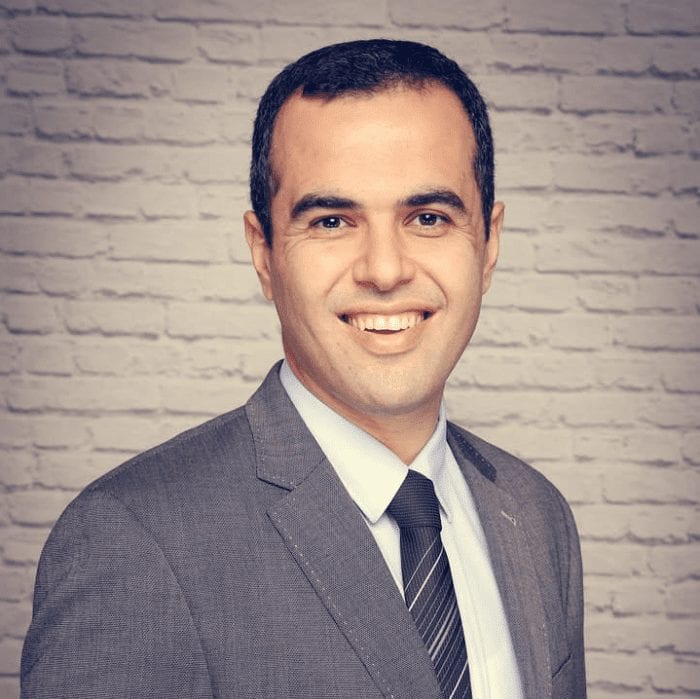
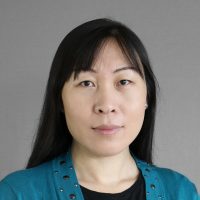
Isik Bicer is an Associate Professor of Operations Management and Information Systems at the Schulich School of Business, York University. His research focuses on analyzing how operational factors impact financial parameters and designing strategies for customer fulfillment using methods from corporate finance, quantitative finance, and optimization theory. His primary research areas include business analytics, demand fulfillment optimization, operational performance analysis, and supply chain management under uncertainty. He has developed decision tools for supply chain valuation and lead time optimization. Bicer's publications focus on supply chain finance, demand volatility modeling, inventory optimization, and disruption risk mitigation. His work integrates operational strategies with financial outcomes to enhance supply chain resilience and efficiency. He maintains research collaborations with institutions including Rotterdam School of Management and the Swiss Federal Institute of Technology (EPFL).
Divinus Oppong-Tawiah is an Assistant Professor of Operations Management and Information Systems at York University's Schulich School of Business. His research focuses on how new technologies transform organizational forms and practices, particularly examining social norms and influence mechanisms in digitally enabled work environments. He employs diverse empirical methods including network science, data science, and randomized controlled trials. His research interests include Business Analytics, Design Science, Digital Platforms, Network Science, and Persuasion & Gamification. His publications frequently explore organizational dynamics in digital contexts, sustainability communication, and behavioral interventions in workplace settings. Research trends show consistent focus on technology-mediated organizational innovation and ethical considerations in digital transformation. Professor Oppong-Tawiah maintains an active research program examining digital innovation across multiple domains including platform ecosystems, sustainable technology adoption, and organizational gamification.
Prof. Jamal Bentahar is a Professor at the Concordia Institute for Information Systems Engineering (CIISE), part of Concordia University's Faculty of Engineering and Computer Science. His research focuses on intelligent agents, multi-agent systems, federated learning, reinforcement learning, cybersecurity, and their applications in healthcare, IoT, and autonomous systems. He leads research initiatives in AI-driven medical imaging, edge-cloud computing, and blockchain-empowered distributed systems. Key research areas include: Multi-Agent Systems: Formal verification of trust and commitments, group trust modeling, and distributed decision-making Federated Learning: On-demand client/model deployment, trust-aware optimization, and privacy-preserving frameworks Medical AI: Cardiac ultrasound analysis, CPR signal processing, and robotic telemedicine systems Edge/IoT Intelligence: UAV-enabled vehicular networks, energy-efficient LoRa gateways, and fog computing optimization His work bridges theoretical foundations (e.g., multi-valued model checking) with practical applications in healthcare robotics, smart city infrastructure, and autonomous vehicle safety. Recent publications highlight innovations in transformer-based reinforcement learning, spherical topic modeling, and explainable AI for cybersecurity. Prof. Bentahar's contributions include tools like MV-Checker for multi-valued verification and frameworks like CACTUS for cardiac ultrasound analysis. He actively publishes in top venues and serves as editor for special sections on federated learning and AI applications.
Todd Eavis is an Associate Professor in the Department of Computer Science and Software Engineering at Concordia University. He received his PhD from Dalhousie University (2003) and completed an NSERC postdoctoral fellowship at Carleton University (Ottawa). His research focuses on programming language design, software development environments, and reducing complexity in build systems. Teaching includes courses on programming languages, operating systems, databases, and parallel programming at both undergraduate and graduate levels, such as COMP 228, COMP 248, COMP 6411, and COMP 6521. Research themes emphasize approachable software frameworks, 90/10 syntax, code generation, platform-agnostic development, and continuous integration/delivery. Key areas include query optimization in parallel DBMS, OLAP systems, and efficient data cube computation. Publications highlight contributions to database systems, parallel processing, and cloud-oriented software design. Notable works include work on real-time OLAP systems, NOX OLAP algebra optimization, and scalable data cube generation.
Gösta Grahne is a Professor in the Department of Computer Science at Concordia University, Montreal, Canada. He holds a Ph.D. from the University of Helsinki and completed a postdoctoral fellowship at the University of Toronto. His research focuses on database theory, data mining, and systems for managing incomplete information and uncertainty. He is affiliated with the Concordia Database Systems Research Group. Education: Ph.D., University of Helsinki (1989) Postdoctoral Fellow, University of Toronto (1990–1992) Research Interests Dr. Grahne's work spans database theory , data integration , and uncertainty management . He has contributed to foundational areas such as regular path queries, XML processing, and probabilistic databases. His recent projects explore provenance tracking and formal methods for data exchange. His publications span over three decades, with notable contributions to conferences like PODS and ICDT. He maintains an active research group and collaborates internationally on theoretical and applied database challenges.
Dr. René Witte is an Associate Professor in the Department of Computer Science and Software Engineering at Concordia University. His research focuses on semantic computing, text mining, artificial intelligence, and data science, with applications in knowledge graphs, semantic publishing, and intelligent information systems. He leads the Semantic Software Lab, developing tools like ScholarLens and OpenTrace to enhance semantic analysis and knowledge integration. Key research areas include semantic user profiles, automated knowledge base construction, and natural language processing (NLP) for scientific literature. His work bridges NLP, semantic web technologies, and software engineering, addressing challenges in data interoperability and user-centric systems. Publications highlight advancements in semantic search, Linked Open Data frameworks, and tools for text mining in biomedical and software engineering contexts. His contributions span academic conferences and journals, emphasizing practical applications of semantic technologies.
Angela Kross is an Assistant Professor in the Department of Geography, Planning and Environment at Concordia University. She holds a PhD in Physical Geography/Remote Sensing from McGill University and an M.Sc. in Geographic Information Science/Remote Sensing from Wageningen University, Netherlands. Prior to joining Concordia in 2015, she was a postdoctoral researcher at Agriculture and Agri-Food Canada. Her research focuses on using geospatial technologies (GIS, remote sensing) combined with ground measurements and models to study ecosystem processes, vegetation dynamics, and land use change in response to anthropogenic and natural factors such as agriculture, mining, and climate change. Her work spans diverse environments, including peatlands, tropical forests, and urban areas. Key themes include habitat suitability modeling, biodiversity assessment, climate change impacts, and sustainable land management. She has contributed to studies in regions like the Congo Basin, Suriname, and the Adirondack-to-Laurentians wildlife corridor. Her methodologies often integrate machine learning and satellite data to address complex environmental challenges. Dr. Kross has published extensively on topics ranging from crop yield prediction using neural networks to assessing mining impacts in the Amazon. She maintains an active research profile with a focus on transdisciplinary solutions for environmental sustainability.
Mélina Mailhot serves as an Associate Professor in the Department of Mathematics and Statistics at Concordia University, specializing in quantitative risk analysis for insurance and financial applications. Her expertise bridges actuarial science, statistics, and climate-related risk modeling. Education: Ph.D., Université Laval, Canada (2012) Research Interests: Professor Mailhot's work focuses on Actuarial Science, Risk Theory, Dependence Modeling, Risk Measures, and Optimization. She develops advanced methodologies for multivariate risk assessment, particularly for extreme events like natural catastrophes. Her research integrates copula theory, extreme value analysis, and machine learning to model complex dependencies in insurance portfolios, with growing emphasis on climate-driven risks such as wildfires and extreme precipitation. Publication Trends: Her recent publications (2021-2025) demonstrate concentrated innovation in dynamic risk measurement and spatial modeling. Key contributions include Bayesian approaches for model uncertainty quantification, multivariate tail-value-at-risk frameworks, and machine learning applications (e.g., Random Forests) for wildfire risk assessment. A significant trend involves translating climate science into actuarial practice, evidenced by spatial interpolation models for extreme rainfall and surge prediction systems using sparse data. Advising and Professional Engagement: She actively mentors graduate researchers including: C. Araiza I. (Tweedie double GLM loss triangles) N. Beck (multivariate extreme expectiles and spatial modeling) B. Kchouk (reciprocal reinsurance treaties) Professor Mailhot maintains strong academic visibility through conferences like the Statistical Society of Canada meetings and international actuarial forums, while also engaging public discourse via Radio Canada appearances on climate-insurance intersections and STEM diversity panels.
Dr. Mary Lesperance is a Professor of Statistics at the University of Victoria's Department of Mathematics and Statistics, part of the Faculty of Science. She is the Founding Director of UVic's Statistical Consulting Centre, providing statistical expertise to internal and external clients. Her research focuses on statistical inference, biostatistics, and applications in genomics and industrial statistics. She holds a Ph.D. from the University of Waterloo and is a Professional Statistician (P.Stat.). Lesperance's work emphasizes the importance of rigorous statistical analysis in healthcare decision-making and policy. Her current projects include semiparametric mixture models, statistical genomics, and palliative care modeling. She teaches advanced courses such as STAT 450: Mathematical Statistics II. Her research interests also extend to environmental statistics, including studies on marine toxins and fecal coliform dynamics. Lesperance has contributed to impactful studies, including the development of the Prognostat tool for palliative care survival prediction and validation of proteomic biomarker panels for stroke diagnosis. Her work bridges theoretical statistics with applied problems in medicine, ecology, and engineering. She advocates for the practical application of statistical tools to address real-world challenges, emphasizing their role in evidence-based medicine and community impact.
Dr. Saeed Moshiri is a Professor in the Department of Economics at the University of Saskatchewan's College of Arts and Science. As Graduate Supervisor and Faculty Member, his research focuses on energy economics, macroeconomic performance, technological innovation, environmental policy, and applied econometrics. His research interests span: Energy and macroeconomic interactions Technological change and productivity Environmental policy effectiveness Development economics in resource-based economies Applied econometric modeling Analysis of Dr. Moshiri's publications reveals consistent focus on energy-economic policy interfaces, with recent work examining carbon taxation, fuel subsidies, oil price shocks, and environmental funding mechanisms. Methodologically, his research employs econometric analysis of firm-level and macroeconomic data to inform evidence-based policy design. Scientific Awards & Grants: STM Teaching Excellence Award (2021) SSHRC Partnership Grant on firm performance (2017-2019) Agricultural Development Fund research (2016-2019) Multiple STM Research Grants (2014-2018) SSHRC grants on oil shocks and ICT impacts Dr. Moshiri has supervised 7 MA students since 2012, with projects spanning energy policy, environmental economics, and development economics. His leadership includes coordinating graduate programs and securing research funding from SSHRC and government agencies.
Dr. Oscar Zapata is an Assistant Professor at the School of Environment and Sustainability (SENS) at the University of Saskatchewan, holding the Centennial Chair in Community Energy Development. He is based in Room 332, Kirk Hall and can be reached at oscar.zapata@usask.ca. His research focuses on socio-economic impacts of energy development and the interplay between individual behavior and economic outcomes in the context of climate change. Dr. Zapata holds a Doctor of Philosophy in Economics from the University of Calgary, complemented by a Master of Science in Economics from the same institution and a Master of Science in Sustainable International Development from Brandeis University. His research interests include understanding how energy development affects low-income populations, analyzing the distributional effects of climate-related policies, and exploring sustainable practices in bioresource waste management. He employs interdisciplinary approaches, integrating economics, environmental science, and systems thinking to address contemporary sustainability challenges. In terms of recognition, Dr. Zapata holds the prestigious Centennial Chair position, underscoring his contributions to community energy development research. His work has contributed to policy discussions on renewable energy adoption in Indigenous communities and the mitigation of climate change impacts on vulnerable populations. Dr. Zapata’s research has been published in leading journals, focusing on themes such as renewable energy’s role in well-being, the socio-economic dimensions of climate disasters, and circular economy strategies. He actively engages in collaborative projects addressing sustainability in Arctic regions and the equitable distribution of environmental resources.
Kerry McPhedran is a Professor and Saskatchewan Centennial Enhancement Chair in the Department of Civil, Geological and Environmental Engineering at the University of Saskatchewan's College of Engineering. She also serves as the Graduate Chair for her department. Her research focuses on municipal and environmental engineering challenges, particularly Indigenous water projects, wastewater treatment optimization, stormwater management, and biochar-based contaminant remediation. Education: PhD in Environmental Engineering, University of Windsor (2006–2012) MSc in Biology, University of Windsor (1999–2001) BSc (Honours) in Biology, University of Windsor (1994–1999) BASc in Environmental Engineering, University of Windsor (2002–2005) BSc in Biology, University of Western Ontario (1995–1996) Research Interests: Dr. McPhedran’s work addresses critical environmental issues such as municipal wastewater treatment innovations, biogas production enhancement, and the fate of emerging contaminants like PFAS and pharmaceuticals. She develops sustainable technologies using biochar and advanced oxidation processes, with a focus on cold-climate applications. Her Indigenous-focused projects emphasize equitable water infrastructure solutions. Public Health Contributions: Her recent work uses wastewater surveillance to track SARS-CoV-2 variants and inform public health strategies, demonstrating interdisciplinary impact. She also explores viral distribution in wastewater systems and antibiotic resistance mitigation. Infrastructure and Policy: Dr. McPhedran advocates for socially inclusive infrastructure, particularly for Indigenous communities, and evaluates the economic and environmental costs of water systems in First Nations regions.
Dr. Craig Lake is a Professor in the Department of Civil Engineering at Dalhousie University's Faculty of Engineering. He specializes in geo-environmental engineering, focusing on containment barrier systems, waste management, and environmental remediation. Prior to his academic role, he worked at Jacques Whitford and Associates in Dartmouth, Nova Scotia. He has been recognized with prestigious awards, including the EIC Fellow induction by the Engineering Institute of Canada and the Canadian Geotechnical Society Colloquium Recipient (2011), the first from Atlantic Canada. His research spans over two decades, addressing challenges such as leachate containment, geosynthetic clay liner performance, and sustainable development in contaminated sediment projects. Education: Ph.D., Geo-environmental/Geotechnical Engineering, University of Western Ontario (2001) Bachelor of Engineering with Distinction, Civil Engineering (Cooperative Program), Technical University of Nova Scotia (1995) Research Interests: Dr. Lake's work combines theoretical and applied research in containment barrier evaluations, landfill design, and wastewater treatment. He investigates diffusion and sorption processes in soil-cement systems, geotextile applications, and the environmental impacts of industrial effluents. His studies often emphasize sustainable solutions, such as biosolids reuse and low-impact development strategies for aquifer protection. Recent Articles Trends: His publications highlight advancements in coastal and agricultural environmental engineering, including saltwater intrusion mechanisms, thermal signatures in tidal environments, and the fate of pharmaceuticals and heavy metals in soils and water systems. He also explores innovative technologies like UV optical screening and lateral flow sand filters for contaminant management. Scientific Awards: EIC Fellow (2019) 2004 R.M. Quigley Award and Thomas C. Keefer Medal Honorable Mentions 2009 A.G. Stermac Award (for service to the Canadian Geotechnical Society) 2006 APENS Young Engineer Award Advising & Grants: Dr. Lake advises graduate students in MASc, Ph.D., and MEng programs, focusing on applied research in geo-environmental barriers and waste containment. His projects, such as the Nunavut Wastewater Treatment Program, emphasize practical solutions for northern communities. He collaborates on initiatives like the HQP List (Summer 2019), involving students in field studies and contaminant analysis. Labs & Teams: He leads research teams in Dalhousie's geo-environmental engineering group, working on projects like dewatering contaminated sediments and optimizing landfill liner systems. His work often involves interdisciplinary partnerships with industry and governmental agencies.
Christina Giovas is an Associate Professor in the Department of Archaeology within Simon Fraser University's Faculty of Arts and Social Sciences, specializing in zooarchaeology and environmental archaeology with fieldwork spanning the Caribbean, Oceania, and Pacific Northwest. Her research focuses on human-environment interactions through ancient fisheries, species introductions, and island settlement patterns. Key projects include the Curaçao Cultural Landscape Project (investigating 5,000+ years of cultural landscapes) and studies on pre-Columbian mammal translocations. She employs behavioral ecology frameworks and integrates zooarchaeology, paleoecology, and isotope analysis to document long-term social-ecological relationships. Recent publications (2021-2024) reveal strong trends in Caribbean environmental archaeology , with emphasis on methodological innovations (e.g., collagen fingerprinting), anthropogenic impacts on biodiversity, and decolonizing research frameworks. Her work bridges zooarchaeological methodology with contemporary conservation challenges, particularly regarding sustainable fisheries and island biogeography. As Co-Editor-in-Chief for the Journal of Island and Coastal Archaeology and editorial board member for Archaeology in Oceania , she shapes scholarly discourse in island studies. Her research program includes international collaborations and community engagement through initiatives like the CCitRes citizen science project in Curaçao. Giovas directs the Curaçao Cultural Landscape Project laboratory team, integrating zooarchaeology, geoarchaeology, and paleoecology specialists. Her work emphasizes building local research capacity through community training in archaeological techniques across Caribbean field sites.
Dr. Yuhong Guo is a Professor and Canada Research Chair in Machine Learning at Carleton University, with cross-appointment as Canada CIFAR AI Chair at Amii. She directs the Artificial Intelligence and Machine Learning Lab, focusing on representation learning, domain adaptation, and limited-supervision learning. Research spans machine learning foundations including domain generalization, few-shot learning, and reinforcement learning, applied to computer vision, NLP, and medical data analysis. Recent work emphasizes efficient learning under constrained resources. Her group develops novel methods for federated learning, cross-domain adaptation, and medical image analysis. Recent publications show strong emphasis on healthcare applications and efficient learning paradigms. First Runner-up Student ML Paper Award (ECML/PKDD 2021) NeurIPS Outstanding Reviewer (2021) Best Paper Award (ECCV Workshop 2020) Leads a team of PhD and MSc students investigating adaptive AI systems. Manages NSERC/industry-funded projects in healthcare AI and efficient learning.