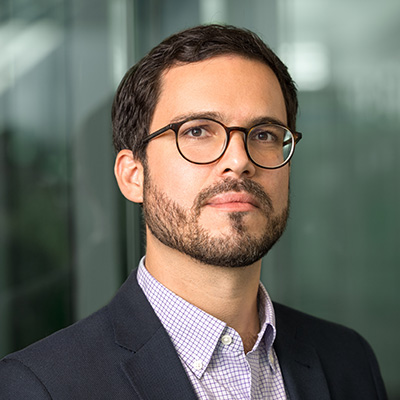
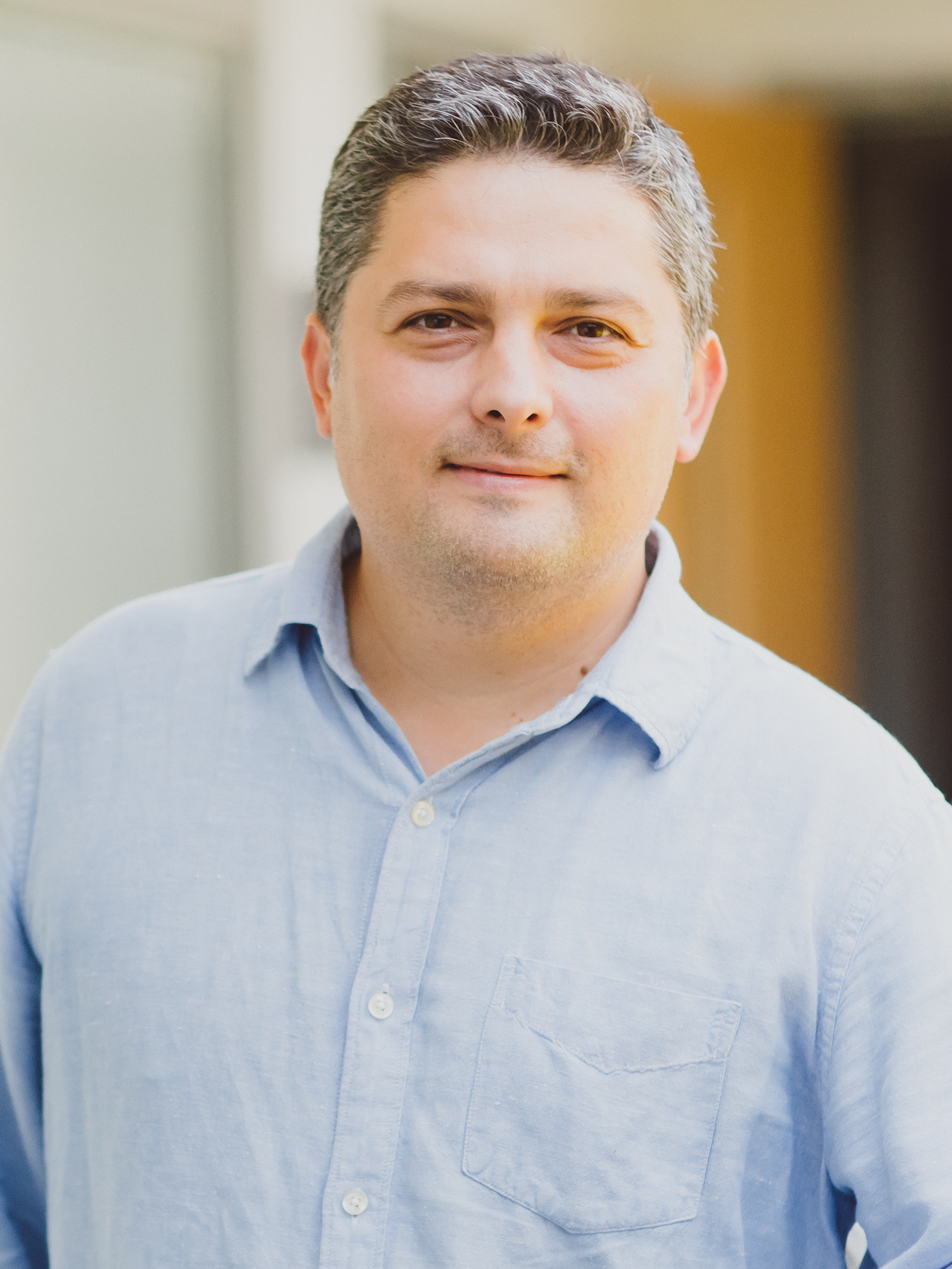
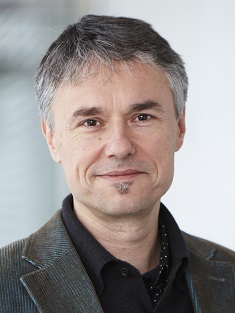
Jean-Louis Scartezzini is an Honorary Professor at École Polytechnique Fédérale de Lausanne (EPFL), affiliated with the School of Architecture, Civil and Environmental Engineering (ENAC) and the Solar Energy and Building Physics Laboratory (LESO-PB). His research focuses on natural/artificial lighting, solar energy systems, and building technology, with a strong emphasis on energy efficiency and sustainability. Director of LESO-PB since 1994 Founded and led several institutes, including the Institute for Infrastructure, Resources, and Environment (2002–2009) Doctorat in Physics from EPFL (1986) Extensive international collaborations, including visiting roles at NUS (2009) and LBNL/UCLA (1988) Research interests include: - Daylighting and lighting control systems - Passive/active solar technologies - Urban microclimate and energy systems - Stochastic simulation and predictive control Recent work addresses climate change impacts on energy systems, urban sustainability, and machine learning applications in energy optimization. Key publications span lighting health impacts, renewable integration, and microclimate modeling Awards include the European Solar Prize (2001/2002) and Walsh-Weston Bronze Medal (1998) Mentored over 20 PhD students, many leading in academia and industry (e.g., Marilyne Andersen at EPFL, Flavio Foradini at E4Tech).
Georgia Fragkouli is a Researcher affiliated with ETH Zürich's School of Computer and Communication Sciences, working within the Institute of Computer Engineering and Communication Systems. Her role is part of the Professorship for Networked Systems, focusing on advanced networking and distributed systems research. She specializes in analyzing network performance, security, and transparency, with a particular emphasis on BGP convergence dynamics, anomaly detection, and decentralized computing architectures. Her research interests include network protocol validation, machine learning-based traffic analysis, and improving internet transparency through innovative measurement frameworks. She has contributed to projects like MorphIT for packet-level transparency and explored failure mitigation in globally distributed systems. Notable recent work includes studies on transient forwarding anomalies, iBGP convergence effects, and data-plane performance consistency. Her publications span both theoretical advancements and practical implementations, aiming to bridge gaps between networking theory and real-world deployment challenges.
Daniel Vogler is a Senior Research and Teaching Associate and Head of Research at the University of Zurich , affiliated with the Institute of Communication Science and Media Research (IKMZ) . He serves as Deputy Director of the fög – Research Center for Public Opinion and Society , with a career spanning over 15 years in academic communication research. Education: Communication Science, Political Science, and Ethnology at University of Zurich (2003-2013), culminating in a 2020 PhD on Media Reputation of Universities . His research focuses on Journalism Research, Public Relations, Online Communication, Crisis Communication, and Computational Social Science , with notable work on media reputation dynamics, AI's impact on journalism, and crisis-driven norm formation. Recent publications analyze Swiss media ecosystems using automated content analysis and longitudinal studies. Key awards include the 2023 ICA Health Communication Top Paper Award and the 2020 ICA Best Student Paper Award . He contributes to editorial boards of journals like the International Journal of Crisis and Risk Communication Research and co-edits the Yearbook Quality of the Media – Switzerland .
Dr. Felix Härer is a Lecturer and researcher at the University of Applied Sciences FHNW, School of Business, Basel, Switzerland, and also teaches externally at the University of Fribourg. He is affiliated with the Digital Trust Competence Center, where he conducts research and teaching in IT Security, Cybersecurity, Digital Trust, Blockchain, AI, Cloud Computing, and Systems Modeling. His research interests span a broad and interdisciplinary range, including: Digital Trust and Cybersecurity Blockchain and Decentralized Systems AI and Knowledge-based Systems (including LLMs and RAG) Software and Systems Modeling (BPMN, ArchiMate) Data Science and ETL-based Analytics Zero Trust and Secure Architectures His recent publications (2020–2023) demonstrate a strong focus on blockchain interoperability, model-driven engineering, decentralized applications, and the integration of AI with conceptual modeling. He explores scalable architectures, cross-chain query languages, and secure attestation mechanisms, often combining modeling approaches with emerging technologies. His work bridges academic rigor with practical implementation in distributed and cloud environments. Scientific awards include: Best Paper Award at IEEE PKIA 2023 He actively supervises bachelor’s and master’s theses and student projects in digital trust and related domains. He has served on PhD committees externally and is a reviewer and program committee member for journals and conferences such as IEEE Transactions, WWW, CAiSE, and EMISAJ. His professional experience includes industry work at Siemens Healthineers in software engineering. He is a member of the IEEE Blockchain Group (Switzerland) and contributes to UN/CEFACT standards for e-commerce and supply chain data. He is involved in organizing workshops and conferences, including B4ISE 2025, B4TDS 2023–2024, and DESRIST 2023, and has delivered keynotes on Computational Trust and Blockchain Interoperability.
Prof. Dan Olteanu is a full professor at the Department of Informatics, University of Zurich, leading the Data Systems and Theory (DaST) group. He holds visiting professorships at the University of Oxford and is an emeritus fellow of St Cross College. His academic journey includes a PhD from Ludwig Maximilian University (2005), postdoctoral roles at Saarland University and Cornell University, and prior faculty positions at Oxford (2007–2020). He has also worked in industry with companies like LogicBlox and RelationalAI, focusing on database systems and AI. Education: Bachelor’s in Computer Science, Politehnica University of Bucharest (2000) PhD in Computer Science, Ludwig Maximilian University (2005) Professional Roles: Full Professor, University of Zurich (since 2020) Visiting Professor, University of Oxford Emeritus Fellow, St Cross College Editorial Roles: ACM TODS, VLDBJ, SIGMOD Conference Chair: ICDT Council (since 2022) His research focuses on data systems theory, including query optimization, probabilistic databases, factorized databases, and in-database machine learning. He co-authored the seminal book Probabilistic Databases (2011) and has pioneered algorithms for efficient machine learning over relational data and incremental maintenance of analytical workloads. His work emphasizes scalable, theoretically grounded solutions for real-world data challenges. Awards: ICDT 2019 Best Paper Award ACM SIGMOD 2018 Distinguished PC Member Award ERC Consolidator Grant (2016) Oxford Outstanding Teaching Award (2009) Grants & Funding: Supported by Google, Microsoft Azure, Amazon AWS, EPSRC, and the European Commission. His research bridges academia and industry, with contributions to commercial systems like LogicBlox and RelationalAI. Labs & Teams: Heads the DaST group at Zurich, focusing on data systems theory and applications. Collaborates widely in the database and AI communities.
Paolo Prandoni is a Lecturer at École Polytechnique Fédérale de Lausanne (EPFL) in the School of Computer and Communication Sciences (IC). He serves as a Scientist in the Audiovisual Communications Laboratory (LCAV) and teaches in the SSC-ENS and SIN-ENS units, focusing on signal processing theory and practical applications in audiovisual communications. He earned his PhD from EPFL after completing all prior education there, driven by childhood fascination with long-distance telephony. His doctoral work established foundations in communication systems that continue to inform his research. Prandoni's research spans audio/image processing, machine learning for media analysis, and DSP education. Key areas include computational photography (e.g., spectral imaging, stained glass rendering), speech quality assessment via transfer learning, music information retrieval (e.g., fingering prediction), and audience analytics through his company Quividi. His work consistently bridges theoretical signal processing with real-world implementation. Recent publications reveal a strategic shift toward machine learning integration in signal processing tasks, particularly non-intrusive speech assessment and lensless imaging reconstruction. Simultaneously, he advances DSP pedagogy through MOOC development and hands-on teaching tools using off-the-shelf hardware, emphasizing accessibility and practical skill development. No scientific awards are documented in the provided materials. He has advised PhD student Thanikachalam Niranjan (thesis: Image Based Relighting of Cultural Artifacts , 2016) and teaches Communication Systems and Computer Science courses. His educational impact extends through the open-access textbook Signal Processing for Communications (2008) and tools like MultiPub for maintainable online classes. Industry engagement includes Quividi co-founding (2006) and ongoing CSO role in attention analytics. As a core LCAV laboratory member, he collaborates on interdisciplinary projects including cultural heritage digitization, embedded signal processing systems, and real-time audience measurement, leveraging EPFL's infrastructure for both academic and commercial applications.
Dr. Alexander Artikis is an Associate Professor of Artificial Intelligence at the University of Piraeus and a Research Associate at the National Centre for Scientific Research (NCSR) "Demokritos". He leads the Complex Event Recognition (CER) group , focusing on symbolic and probabilistic approaches to event recognition and forecasting. University of Piraeus (2025–present) NCSR Demokritos (2017–present) Complex Event Recognition Group (2017–present) His research spans Artificial Intelligence and Distributed Systems , with a focus on: Complex Event Recognition (CER) : Developing logic-based systems for detecting events in real-time data streams Event Calculus : Creating probabilistic and incremental versions for runtime reasoning Multi-Agent Systems : Modeling norm-governed interactions Maritime Informatics : Applying CER to vessel trajectory analysis and fleet management Key publications reveal trends in: Neuro-symbolic forecasting models combining deep learning and logic-based reasoning Symbolic automata with memory for pattern detection Online learning techniques for dynamic event rule generation Tensor-based formalizations for efficient temporal reasoning Handling uncertainty in real-time maritime data streams Optimizing memory usage for scalable stream processing He contributes to open-source tools like RTEC (Run-Time Event Calculus) and holds a European patent on complex event forecasting. His work addresses challenges in: Proactive decision-making systems Knowledge Graph consistency Hybrid human-machine discovery of movement patterns Big Data analytics for time-critical applications
Ueli Maurer is a Full Professor of Computer Science at ETH Zurich and heads the Information Security and Cryptography research group. He received his diploma and Ph.D. in Electrical Engineering from ETH Zurich in 1985 and 1990 respectively. After a fellowship at Princeton University, his research focuses on foundational aspects of cryptography and information security. Education Diploma in Electrical Engineering, ETH Zurich (1985) Ph.D. in Electrical Engineering, ETH Zurich (1990) DIMACS Research Fellow, Princeton University (1990-1991) His research spans information security, cryptographic protocols, discrete mathematics, and theoretical computer science. Key areas include provably secure systems design, digital signatures, public-key infrastructures, and trust management. His work bridges theoretical foundations with practical applications in digital security. His publications demonstrate a consistent focus on advancing cryptographic theory and security proofs. Recent works explore anamorphic encryption, blockchain security frameworks, and composable protocol design. Primary trends include privacy-preserving communication, adaptive security models, and information-theoretic approaches to cryptography. Awards & Honors IEEE Fellow ACM Fellow IACR Fellow Member, German Academy of Sciences (Leopoldina) Rademacher Lecturer (2000) Vodafone Innovation Award (2013) RSA Mathematics Award (2016) TCC Test-of-Time Award (2016) He advises doctoral students on cryptographic protocols and security proofs. His research group works on diverse projects including secure multi-party computation and blockchain technologies. He co-founded the Zurich Symposium on Privacy and Security and serves on editorial boards of major cryptography journals.
Prof. Dr. Aljosa Smolic is a Professor and Co-Head of the Immersive Realities Research Lab at Lucerne School of Computer Science and Information Technology, Lucerne University of Applied Sciences and Arts. He joined HSLU in 2022 and became Co-Head in 2023. Previously, he served as SFI Research Professor at Trinity College Dublin (2016-2021) where he led the V-SENSE group in visual computing, combining computer vision, graphics, and media technology. His career includes positions as Senior Research Scientist at Disney Research Zurich (2009-2016) and Scientific Project Manager at Fraunhofer HHI (2001-2009). He holds a PhD from RWTH Aachen University. Research focuses on immersive technologies including AR/VR, volumetric video, light-fields, and deep learning applications in visual computing. His work has resulted in over 50 Disney R&D projects, publications, patents, and technology transfers. Publications emphasize VR evaluation, volumetric video applications, 3D reconstruction, and XR in education, frequently employing deep learning and computer vision techniques. Awards and Recognition: IEEE ICME Star Innovator Award 2020 TCD Campus Company Founders Award 2020 Multiple best paper awards Co-founded Volograms (volumetric video startup) and holds editorial roles including Associate Editor for IEEE Transactions on Image Processing.
Giorgia Ramponi is an Assistant Professor with Tenure Track at the Faculty of Business, Economics and Informatics at the University of Zurich. She is also an affiliated professor at the ETH AI Center and the Data Science and AI, Computer Science and Engineering department at Chalmers University of Technology. Her educational background includes a Ph.D. in Information Technology from Politecnico di Milano (completed June 2021 with honors), advised by Marcello Restelli, and a Master of Science in Computer Science with Honours Programme (110/110 cum laude) from la Sapienza (July 2017), advised by Flavio Chierichetti and Alessandro Panconesi. Dr. Ramponi's research focuses on machine learning and mathematical modeling, with particular emphasis on reinforcement learning and multiagent learning. Her work bridges theoretical foundations with practical applications, exploring how learning algorithms can make optimal decisions in complex environments. She has made significant contributions to areas including inverse reinforcement learning, multi-agent systems, constrained Markov decision processes, and human-AI interaction through preference learning. Her recent publications demonstrate a strong trend toward addressing fundamental challenges in reinforcement learning, particularly in multi-agent settings, constrained optimization, and learning from human feedback. Her work combines theoretical rigor with practical applications across robotics, economics, and decision-making systems. Hassler Research Grant for "Unified Feedback Integration Framework for Reinforcement Learning" Dr. Ramponi actively contributes to the academic community through conference participation, invited lectures (including at the Mediterranean Machine Learning Summer School), and teaching. She designed and taught the "Data Science and Machine Learning" course for the ETH-Ashesi Master program. She is also a member of the ELLIS community, which connects excellence in AI research across Europe. Her research group focuses on developing frameworks for reinforcement learning with various feedback types, including preferences, rewards, and demonstrations. The group aims to advance the theoretical understanding of learning algorithms while addressing practical challenges in real-world applications.
Robert Soulé is an Associate Professor in the Departments of Computer Science and Electrical Engineering at Yale University, and holds an Adjunct Professor position at the Università della Svizzera italiana (USI) in Lugano, Switzerland. His research focuses on distributed systems, networking, and applied programming languages, with notable contributions to in-network computing, consensus protocols, and energy-efficient systems. He received his B.A. from Brown University and his Ph.D. from New York University, followed by postdoctoral work at Cornell University. Education: B.A. in Computer Science, Brown University, 1999 Ph.D. in Computer Science, New York University, 2012 Research Interests: Dr. Soulé’s work spans distributed systems, networking, and programming languages, emphasizing practical systems such as in-network computing, consensus algorithms (e.g., NetPaxos), and carbon-aware networking. His research bridges theory and practice, addressing challenges in scalability, performance, and sustainability. Articles Trends: Recent work includes innovations in quantum networks (algebraic specifications), carbon-aware networking (energy efficiency), and system optimization (e.g., P4-based data plane verification). He explores network programmability, microservices acceleration, and zero-copy serialization techniques. Awards: Best Paper Awards at ACM DEBS 2012, NSDI 2018, and CoNEXT 2020 Google Faculty Research Award IBM Invention Plateau Award Advising and Grants: He has advised numerous PhD students and postdocs, including Pietro Bressana (Intel Corporation) and Theo Jepsen (Stanford Postdoc). His grants support projects in networked systems, distributed computing, and sustainable infrastructure. Labs/Teams: Active in Yale’s Systems Research group, collaborating on projects like NetChain (sub-RTT coordination) and P4-based systems (e.g., P4xos for consensus). Engages with industry through partnerships on microservices optimization and energy-efficient networking.
Joel Waldfogel is a Professor and Frederick R. Kappel Chair in Applied Economics at the University of Minnesota's Carlson School of Management . He previously held positions at the Wharton School (University of Pennsylvania) and Yale University, and served as Associate Dean for MBA and MS programs at the Carlson School from 2017–2023. His academic journey began with a BA in Economics from Brandeis University (1984) and a PhD in Economics from Stanford University (1990). Education : PhD in Economics, Stanford University (1990) BA in Economics, Brandeis University (1984) Research Interests span industrial organization, law and economics, digital markets, intellectual property, and media economics. He focuses on platform economics, market efficiency in digital environments, and welfare implications of technological change, particularly in creative industries. Recent research trends include: Platform bias and regulatory frameworks (e.g., Digital Markets Act) Welfare impacts of gender-inclusive intellectual property creation Legal challenges from AI-generated content and copyright adaptation Consumer welfare in digital product markets Market structure in media and cultural industries Scientific Awards : Kaminstein Scholar at U.S. Copyright Office (2021–2022) Publications include over 80 articles in top journals like the American Economic Review and Journal of Political Economy , as well as books such as Digital Renaissance and The Tyranny of the Market . His work addresses platform power, digital regulation, and the economics of cultural goods.
Matthias Bannert is a Lecturer at the Department of Management, Technology, and Economics at ETH Zürich, where he works at the KOF Swiss Economic Institute (Konjunkturforschungsstelle). His work focuses on the intersection of economics, software development, and data management, with particular expertise in time series analysis and official statistics. Bannert designs solutions for state-of-the-art data processing, management, and publishing of economic data and research. Bannert completed his doctoral thesis titled "Survey Based Research in Economics - Essays on Methodology, Economic Applications and Long Term Processing of Economic Survey Data" at ETH Zürich in 2016. His academic journey began when he joined KOF in late 2008, initially working as a researcher for the Business Tendency Survey group before transitioning to the institute's IT department. Dr. Bannert's research interests span several interconnected domains at the nexus of economics and data science. He specializes in developing software environments for official statistics, with particular focus on processing and managing economic time series data through open-source driven data pipelines. His technical expertise includes R programming and PostgreSQL database systems, which he applies to create robust solutions for economic data analysis. Bannert is particularly interested in survey methodology, nowcasting techniques, and the development of reproducible research workflows. His work bridges the gap between theoretical economics and practical software implementation, ensuring that economic research can leverage state-of-the-art data processing techniques. Analysis of Bannert's publication record reveals a consistent focus on the application of data science techniques to economic research problems, particularly in the domain of official statistics and survey-based economics. His work demonstrates a progression from theoretical survey methodology to practical software implementation, with increasing emphasis on real-time economic forecasting and data management systems. A distinctive feature of his research is the development of open-source R packages that make advanced economic data analysis more accessible to researchers and practitioners. As an active contributor to the R language for Statistical computing and the open source community, Bannert has developed several notable software packages including timeseriesdb, tstools, and kofdata, which are available on CRAN. These tools reflect his commitment to creating reproducible, transparent, and efficient workflows for economic data analysis. Bannert serves as a data science supervisor for multiple KOF research projects and is a co-Principal Investigator in an SNF-funded Digital Lives project in collaboration with KOF's labor market expert group. His teaching activities include "Hacking for Sciences - An Applied Guide to Programming with Data" and involvement in the Nowcasting Lab, which provides live out-of-sample forecasting and model testing capabilities for economic researchers. Dr. Bannert is affiliated with the KOF Swiss Economic Institute, where he contributes to several research groups including the KOF Macroeconomic Forecasting group and the KOF Data Science and Macroeconomic Methods group. His work at KOF bridges the institute's traditional economic research with modern data science approaches, helping to position the institute at the forefront of data-driven economic analysis.
Manos Athanassoulis is an Associate Professor in the Department of Computer Science at the College of Arts and Sciences, Boston University. He is the Founder and Director of the BU Data-intensive Systems and Computing (DiSC) lab and a member of the BU MiDAS group. His research focuses on data systems, particularly cloud data management, hybrid transactional/analytical workloads, and integration with emerging hardware such as non-volatile memory and heterogeneous computing. His educational background includes a PhD from EPFL (2014), an MSc in Computer Systems Technology, and a BSc in Informatics and Telecommunications from the University of Athens, Greece. Prior to BU, he was a Postdoctoral Researcher and Research Associate at Harvard University, supported by a SNSF Postdoc Mobility Fellowship. His research interests span data systems, database architectures, LSM trees, indexing, storage systems, and performance optimization. He explores how novel hardware can be leveraged to improve data management efficiency and scalability, especially in cloud environments. His recent publications (2021–2025) predominantly focus on LSM trees, covering topics such as compaction policies, Bloom filter tuning, DPU offloading, adversarial resilience, and sustainable caching. Earlier works include foundational contributions on access methods (RUM Conjecture) and optimal key-value stores (Monkey). The trend shows a consistent focus on data system efficiency, adaptability, and robustness under varying workloads and hardware constraints. Scientific Awards: NSF CAREER Award (2022) Facebook Faculty Research Award (2020) NSF CRII Award (2019) Best of VLDB 2017 and Best of SIGMOD 2017 SIGMOD Most Reproducible Paper Award (2017) Multiple ACM SIGMOD Distinguished PC Member recognitions (2018–2025) VLDB 2023 Best Demo Award RedHat Collaboratory Research Incubation Awards (multiple, 2021–2023) SNSF Postdoc Mobility Fellowship (2015–16) IBM PhD Fellowship (2011–12) Dr. Athanassoulis has advised numerous students and collaborators, evident from his co-authorship on works with researchers such as Niv Dayan, Stratos Idreos, and A. Ailamaki. His grants include major awards from NSF, Facebook, and RedHat, supporting research in robust data systems, hardware-software co-design, and learned cost models. He has also been recognized for teaching excellence at Harvard University. He leads the DiSC lab at Boston University, which focuses on data-intensive computing and systems research. The lab explores next-generation data architectures, particularly in cloud and hardware-aware environments. Collaborations with the BU MiDAS group enhance interdisciplinary research in data science and AI.
Prof. Dr. Luis Aguiar is an Associate Professor in the Department of Business Administration at the University of Zurich, Switzerland, and a DSI Professor at the University’s Digital Society Initiative (DSI). He holds a PhD in Economics from Universidad Carlos III de Madrid and previously served as a Research Fellow at the European Commission’s Joint Research Center. His expertise lies in the economics of digitization, focusing on digital markets, media industries, and the impact of technological change on firms and consumers. Educational Background: PhD in Economics, Universidad Carlos III de Madrid MSc in Economics, Finance and Management, Universitat Pompeu Fabra Bachelor’s in Economics, University of Geneva Research Focus: Luis investigates how digitization transforms consumer behavior and market structures in digital media sectors, with particular attention to online platforms, music streaming, and intellectual property policies. His work employs advanced econometric methods to analyze welfare effects, platform power dynamics, and content distribution trends. Key Contributions: His research has been published in top journals like the Journal of Political Economy and Information Systems Research , and has received significant media coverage from outlets such as The Economist and Forbes . He currently co-edits Information Economics and Policy and leads the Swiss National Science Foundation-funded project on online platforms' power dynamics. Professional Roles: DSI Professor, Digital Society Initiative (UZH) Fellow of the CESifo Research Network Labs & Teams: His research is anchored in UZH’s Department of Business Administration and the DSI, collaborating with interdisciplinary teams to address societal challenges posed by digital transformation.