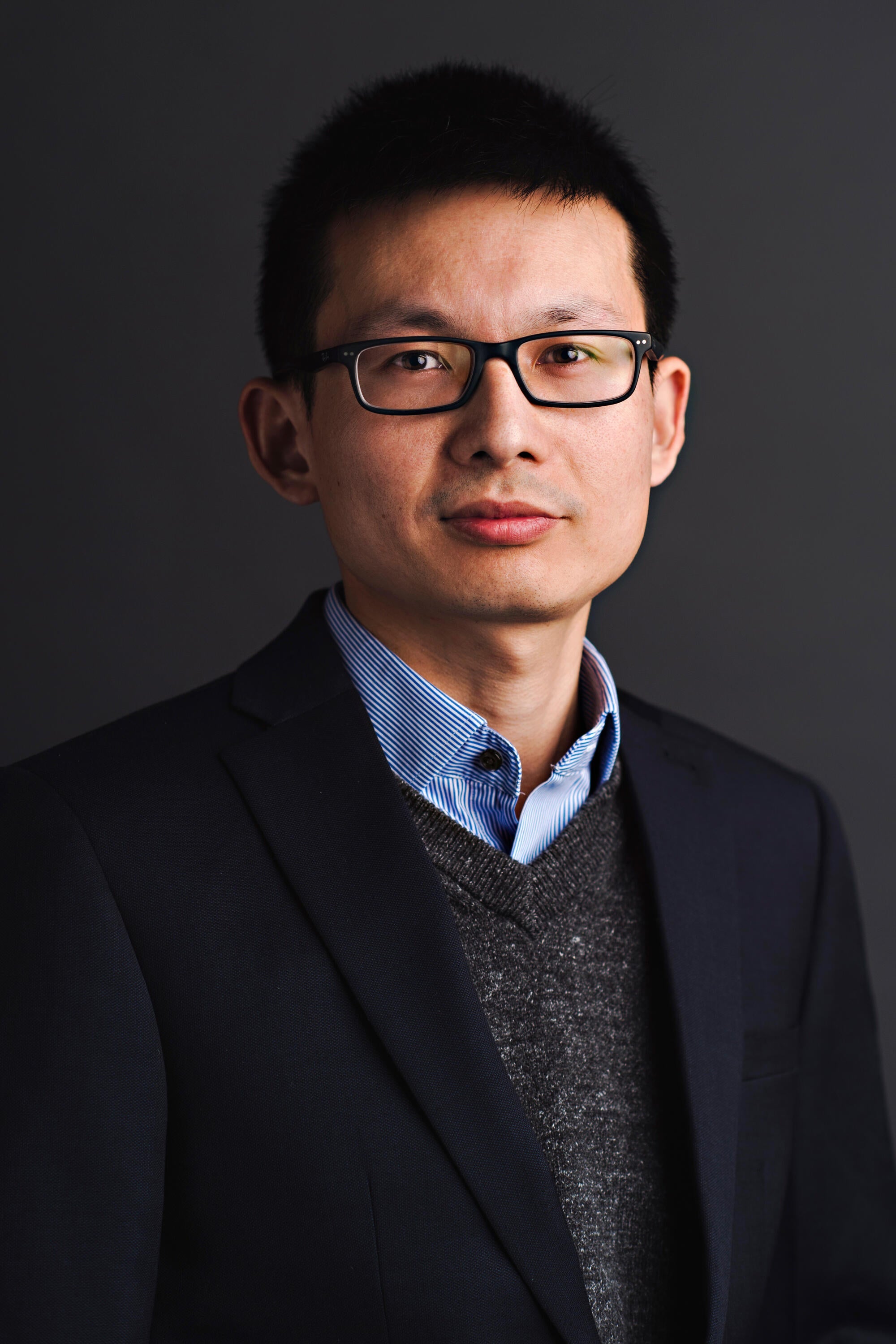
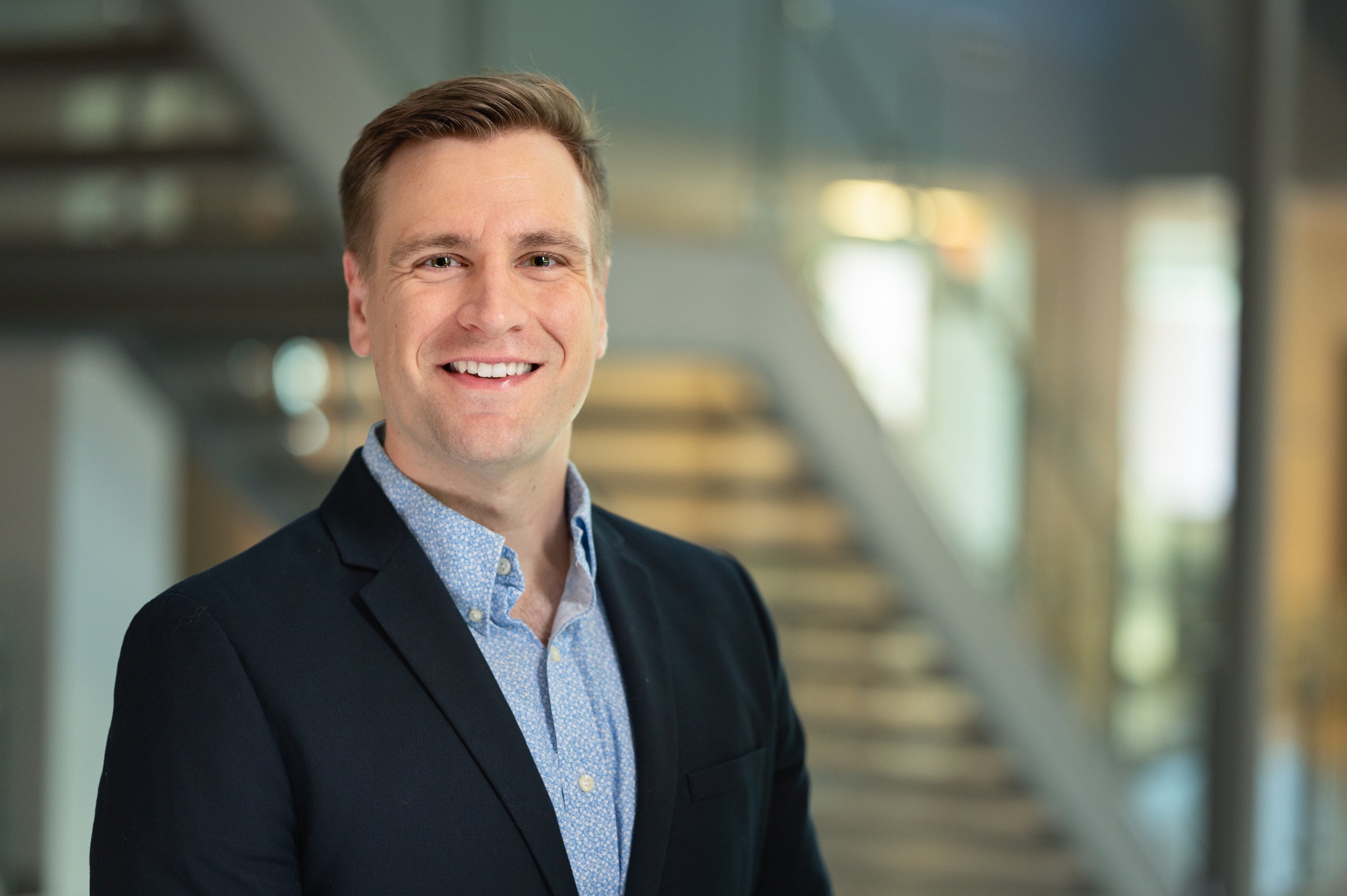
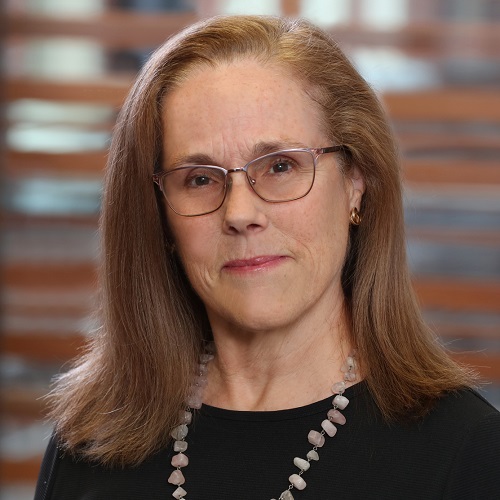
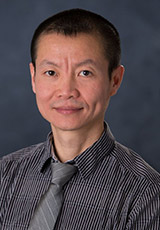
Jun Liu is a Professor and Canada Research Chair in Hybrid Systems and Control in the Department of Applied Mathematics at the University of Waterloo. He directs the Hybrid Systems Lab, focusing on control theory, robotics, and machine learning. His research integrates formal methods with data-driven techniques for nonlinear and stochastic systems. Key areas include neural Lyapunov functions, Koopman operators, and reinforcement learning for safety-critical applications. He co-authored books on formal methods and model-based reinforcement learning. Editorial roles include Automatica and Systems & Control Letters.
Hongyang Zhang is an Assistant Professor at the University of Waterloo's David R. Cheriton School of Computer Science (part of the Faculty of Mathematics) and a faculty member of Vector Institute for AI. His research focuses on machine learning theory and applications, including inference acceleration for large language models (e.g., EAGLE series), world models for robotics and autonomous systems, and AI security. He leads the SafeAI Lab and is affiliated with the AI Institute and Cybersecurity and Privacy Institute. Education: Ph.D. in Machine Learning, Carnegie Mellon University (2019) Postdoc at Toyota Technological Institute at Chicago (2019–2021) Bachelor's degree from Peking University (2015) Research Interests: Inference acceleration (e.g., EAGLE-3 achieving 5× speedup) World models for infinite-horizon video generation (The Matrix) AI security, adversarial robustness, and watermarking System-2 LLMs for alignment and reasoning Awards & Recognition: 1st place in multiple adversarial vision challenges (NeurIPS 2018, CVPR 2021) AAAI New Faculty Highlights (2023) IEEE Senior Member (2024) Amazon Research Award and WAIC Yunfan Award Academic Leadership: Area Chair for ICML, NeurIPS, ACL, and ICLR Action Editor for Data-centric Machine Learning Research (DMLR) Teaching: Introduction to ML, Robustness of ML, and AI Security courses Labs & Teams: Leads the SafeAI Lab, collaborating on projects like EAGLE, The Matrix, and zkLLM.
Jessie Ma is Assistant Professor and Ontario Research Chair in Sustainable Energy with joint appointments in Systems Design Engineering (Faculty of Engineering) and Environment, Enterprise and Development (Faculty of Environment) at University of Waterloo. She holds a PhD in Electrical Engineering from Toronto Metropolitan University and an MPA from Harvard Kennedy School. Research focuses on electricity market design, renewable integration, and distributed energy resources, informed by 20 years of industry experience at Hydro One. Publications demonstrate expertise in demand response optimization, energy storage economics, and interdisciplinary energy education. Recent work analyzes merchant storage revenue models, zonal capacity markets, and co-optimization of real-time demand response. Research consistently addresses grid modernization challenges through mathematical modeling and market-based solutions.
Sue Ann Campbell is a Professor and Core Member at the Centre for Theoretical Neuroscience, University of Waterloo. Her research focuses on theoretical neuroscience and mathematical modeling of neural systems, with expertise in dynamical systems, time-delay effects, and network synchronization. Her work spans neural mass models, coupled oscillators, stability analysis of delayed systems, and applications in epilepsy research and autonomous vehicle networks. She develops mathematical frameworks to understand how delays and coupling configurations influence collective behavior in biological and engineered networks. Her publications demonstrate a strong emphasis on bifurcation analysis, synchronization phenomena, and the role of time delays in neural and ecological systems. Recent work includes modeling spike-wave discharges in epilepsy, stability in vehicle platoons, and plankton dynamics with delayed nutrient recycling.
Nathaniel Stevens is an Associate Professor of Statistics at the University of Waterloo, affiliated with the Department of Statistics and Actuarial Science and the Faculty of Mathematics. He holds roles as Director of the BMATH and BCS in Data Science programs and Director of the Business and Industrial Statistics Research Group (BISRG). His academic journey includes degrees from the University of Waterloo: a BMATH (2010), MMATH (2011), and PhD (2015) in Statistics. Research interests focus on the intersection of data science and industrial statistics, including experimental design, A/B testing, process monitoring, and reliability analysis. He develops methodologies for practical statistical challenges, such as measurement system comparisons and network surveillance. His work emphasizes methodological innovations with real-world applications in quality improvement and decision-making. Recipient of numerous awards, including the 2023 ENBIS Young Statistician Award, 2023 ASQ Feigenbaum Medal, and teaching distinctions like the 2022 Faculty of Mathematics Teaching Award. His contributions span over 40 peer-reviewed publications, with a focus on statistical engineering, network monitoring, and reliability analysis. Education: PhD (2015), MMATH (2011), BMATH (2010) in Statistics from University of Waterloo. Grants: Over $323K in funding, including NSERC Discovery Grants and university startup funds. Leadership: Past President of the Statistical Society of Canada’s Data Science Section, and active in editorial roles for journals like The American Statistician and Applied Stochastic Models in Business and Industry .
Susan Brodt is an Associate Professor of Organizational Behaviour at Queen's University's Smith School of Business, with a cross-appointment in Psychology. She holds a PhD and MS from Stanford University and a BA from UC Berkeley. Her research focuses on interpersonal dynamics in organizations, particularly trust in manager-subordinate relationships, negotiation processes, and the impact of technology on workplace collaboration. A Canadian government grant (SSHRC) supports her work on cultural mosaic theory in multicultural workplaces. Education: PhD in Psychology (Stanford), M.S. in Statistics (Stanford), B.A. in Psychology (UC Berkeley, Summa Cum Laude). Research emphasizes trust repair, negotiation strategies, and cultural diversity. She has held visiting roles at institutions like Stanford, Duke, and Universidad Adolfo Ibañez. Teaching includes negotiation theory, conflict management, and organizational behavior across undergraduate, MBA, and doctoral programs. Professional service includes editorial boards for journals like Organizational Behavior and Human Decision Processes , and leadership roles in the International Association for Conflict Management.
Olga Palazhchenko is an Associate Professor in the Department of Chemical Engineering at the University of New Brunswick. Her research employs experimental and computational methods to study corrosion product transport in nuclear power plant systems, including aqueous chemistry and radioactivity behavior under operational conditions. She is an active member of the Centre for Nuclear Energy Research (CNER), facilitating industry-academia collaboration. Educational background includes a PhD in Chemical Engineering (UNB, 2017), MSc in Materials Science (Ontario Tech, 2012), and BSc in Chemistry (Ontario Tech, 2010). Research interests focus on: Material transport mechanisms in nuclear systems High-temperature corrosion kinetics Computational modeling of reactor chemistry Aqueous phase interactions in power plants Recent publications demonstrate sustained focus on radionuclide transport modeling, corrosion product behavior, and experimental methods for nuclear materials. Collaborative works with CNER highlight applied research for reactor safety and longevity. No awards, students, or grants are detailed in available sources.
Howard Li is a Professor in the Department of Electrical and Computer Engineering at the University of New Brunswick's Faculty of Engineering. His research focuses on robotics, artificial intelligence, unmanned vehicles, control systems, and quantum computing. Dr. Li completed his Ph.D. at the University of Waterloo and has conducted research internationally at institutions including EPFL (Switzerland) and University of Pavia (Italy). He has industry experience developing training systems for fighter aircraft and control systems for autonomous vehicles. His research interests span robotics, autonomous systems, quantum computing, and AI applications in mechatronics. Recent publications demonstrate focus on LiDAR simulation, deep learning architectures, satellite imagery analysis, and geospatial algorithms. Dr. Li has secured over $1,000,000 in research grants from agencies including NSERC, CFI, and DRDC. He chairs the IEEE Autonomous Robotics Group and contributed to the first IEEE robotics standard. Harrison McCain Foundation Young Scholars Award NSERC Postgraduate Scholarship IEEE Senior Member recognition He established the COBRA research group and open-source Quad Rotor Simulator. All his former postdocs/PhDs secured positions at prestigious institutions including MIT and NASA.
Maciej Bazanowski is an Adjunct Professor and Research Assistant at the Department of Geodesy and Geomatics Engineering, University of New Brunswick (UNB), Fredericton. He holds an M.Sc.E from UNB (2010) and an M.Eng in Mining Surveying from the University of Mining, Krakow (2005). Currently a Ph.D. candidate at Wrocław University of Technology, his expertise focuses on geodetic monitoring systems, deformation analysis, and numerical modeling in mining and geotechnical projects. His research emphasizes deformation monitoring in mining areas, geodetic control surveys, and subsidence studies. Notable projects include automation of robotic total station systems, the ALERT deformation monitoring system, and PCS potash mine subsidence analysis. He has contributed to studies on large earth dams (e.g., Diamond Valley Lake Reservoir) using integrated geodetic and finite element methods. Key awards include 2nd place in UNB's 2008 Graduate Student Paper Competition. His work bridges geomatics engineering with practical applications in mining, tunnelling, and infrastructure safety. Current affiliations include the Centre for Concrete Structures and Geotechnical Engineering (CCGE) at UNB.
Alireza Tajbakhsh is an Associate Professor at the University of New Brunswick's Faculty of Management, specializing in Quantitative Methods. He teaches courses in project management, operations management, and quantitative analytics at both BBA and MBA levels. Dr. Tajbakhsh's research focuses on sustainable supply chain management with applications in energy efficiency, agricultural planning, and environmental regulations. Education: PhD in Operations Management, DeGroote School of Business, McMaster University (2012-2016) MSc in Engineering, Industrial Engineering Department, Sharif University of Technology (2006-2008) BSc in Mathematics, Faculty of Science, University of Tehran (2002-2006) His research employs mathematical modeling, empirical analysis, and policy experiments to address sustainability challenges. Recent work explores market dynamics in organic food supply chains, pollution control through game theory, and sustainability performance metrics. Publications demonstrate consistent focus on quantitative approaches to sustainable operations management across diverse industries. Dr. Tajbakhsh has secured multiple SSHRC Insight Development Grants supporting his research program. He supervises graduate students and postdoctoral associates, contributing to UNB's Management Analytics curriculum development. Professional certifications include Project Management Professional (PMP) and SAP Certified Associate credentials.
Pouria Ramazi is an Assistant Professor in Mathematics & Statistics at Brock University. He holds a Ph.D. from the University of Groningen (Netherlands) and a Postdoc from the University of Alberta (Canada). His research focuses on Systems & Control, Decision-making, Causality, Machine Learning, and Bayesian Networks, with applications in epidemiology, environmental science, and social dynamics. He teaches courses such as MATH 1P66, MATH 1P97, and STAT 4P89/5P89 (Bayesian & Causal Bayesian Networks). His work bridges mathematical theory with real-world problems, including forecasting disease outbreaks, analyzing vaccination decision-making, and modeling environmental systems. Recent studies include predicting cyanobacterial blooms using incomplete data and revealing behavioral strategies in public health contexts. Ramazi’s publications span top journals like PNAS Nexus, IEEE Transactions on Automatic Control, and the Journal of Royal Society Interface. He collaborates internationally on topics ranging from climate-dependent pandemic mitigation to multi-agent reinforcement learning for environmental impact assessment.
V Kumar is Goodman Academic-Industry Partnership Professor and Professor of Marketing at Brock University's Goodman School of Business. A leading scholar recognized as a 'Marketing Legend' in the Sage Legend Series, he has held distinguished positions at University of Houston, University of Connecticut, and Georgia State University. His research spans marketing accountability, globalization, customer relationship management, and technology-driven innovation. Kumar's work has generated over $2B+ in revenue gains for businesses implementing his models. Honors include the 2024 Shri BML Jain Lifetime Achievement Award, 2023 Tara Lifetime Achievement Award, and induction into the Analytics Hall of Fame (2019). He has published over 300 scholarly papers and 30 books, receiving 25+ research excellence awards. Recent research examines international marketing transformations, firm resilience during crises, and methodological advancements in cross-cultural studies. His work consistently addresses the intersection of technology, globalization, and marketing strategy.
Dr. Pedro Neto-Peres is Professor and Canada Research Chair in Spatial Ecology and Biodiversity at Concordia University's Department of Biology. Leads research on biodiversity controls across spatial scales. Research integrates field surveys, theoretical models, and quantitative approaches to understand species distribution patterns. Focuses on evolutionary-abiotic-biotic interactions, environmental spatial structure impacts on communities, and developing frameworks linking mechanisms to biodiversity patterns. Current work examines regional to global biodiversity controls, species coexistence mechanisms, and novel ecological/evolutionary theories. Employs large-scale data analytics and ecological informatics approaches. As Canada Research Chair, develops predictive models for conservation applications and ecosystem management.
Dr. Jon M. Husson is an Assistant Professor in the School of Earth and Ocean Sciences at the University of Victoria. His research examines geologic and biogeochemical mechanisms that have maintained Earth's biosphere over its history, using sedimentary records spanning ~3.8 billion years. His approach combines field observations of carbonate sediments with geochemical datasets and database analysis through Macrostrat. His research focuses on disentangling local and global processes controlling ancient carbonate geochemistry, quantifying sedimentary rock creation/destruction, and applying data-mining techniques to Earth history questions. Current graduate students include Connor van Wieren (Ediacaran carbonate geochemistry) and Matthew Stephens (Triassic paleoenvironmental change). Recent publications explore carbon isotope excursions, sedimentary rock preservation patterns, and novel applications of GeoDeepDive for paleontological analysis. His work has appeared in PNAS, Geology, and Earth and Planetary Science Letters.
Hany E.Z. Farag serves as an Associate Professor in the Department of Electrical Engineering & Computer Science at York University's Lassonde School of Engineering, where he has held a faculty position since July 2013. Education: B.Sc. (with honours) in Electrical Engineering from Assiut University, Egypt (2004) M.Sc. in Electrical Engineering from Assiut University, Egypt (2007) Ph.D. in Electrical Engineering from the University of Waterloo (2013) Research Focus: Dr. Farag specializes in smart grid innovation and renewable energy integration , with expertise spanning distributed generation systems, energy storage solutions, electric vehicle infrastructure, and microgrid control. His work emphasizes multi-agent control systems for grid modernization and high-power electronics applications in wind energy integration, driving cross-disciplinary advancements in sustainable power systems. Scientific Recognition: Early Researcher Award from Ontario Ministry of Research (2018) Sandford Fleming Foundation teaching excellence award Marquis Who's Who in the World listing for academic distinction Research Leadership: Secured $500,000+ in competitive funding from NSERC and power utilities while spearheading the development of $2 million in teaching/research laboratories for York's Electrical Engineering program. His Smart Grid Research Laboratory (https://smartgrid.eecs.yorku.ca) serves as the operational hub for these initiatives.