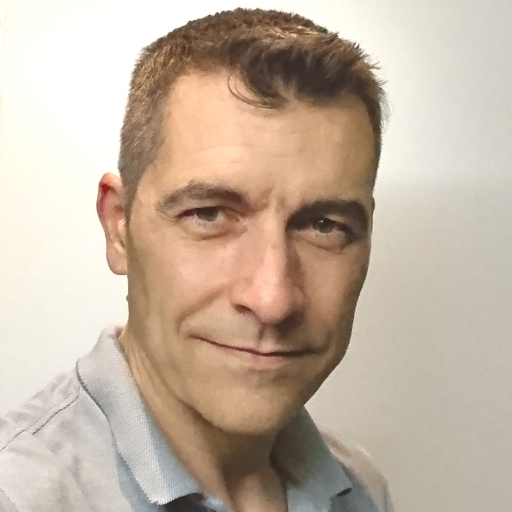
Prof. Dr. Matthias Rosenthal is a Professor of Multiprocessor and Real-Time Systems at the ZHAW School of Engineering, Zurich University of Applied Sciences (ZHAW), where he also serves as Head of the Research/Focus Area Realtime Platforms. He holds a PhD and MSc in Electrical Engineering from ETH Zurich (1993–1997). His research focuses on multiprocessor systems, hybrid multicore architectures, distributed signal processing, embedded GPU computing, and real-time embedded systems. Key projects include In-Flight GNSS Interference Detection, dAIrector (automated multi-camera live production), and novel AFM techniques for industrial quality control. He has led over 15 industry-focused projects, including collaborations with Innosuisse and companies like Harman International. His work emphasizes real-time systems, FPGA-GPU co-design, and embedded AI solutions. Education: PhD (ETH Zurich, 1997), MSc (ETH Zurich, 1993) Awards: CTI Startup Label (2005) Teaching: Lectures on digital systems, real-time computing, and information theory Notable contributions include advancements in embedded machine learning for food waste management, secure boot concepts for Zynq MPSoC, and low-latency wireless video systems. His research bridges theoretical computer engineering with practical industrial applications.
Curdin Derungs is a Lecturer in Data Science at the Lucerne School of Computer Science (HSLU), Switzerland. He specializes in applying statistical and machine learning techniques to energy systems, spatial analysis, and natural language processing. His professional competencies include data-driven automation, deep learning, time series analysis, and energy systems optimization. Derungs holds a PhD in Natural Sciences (University of Zurich, 2013) with a focus on NLP and spatial analysis, and a DAS in Applied Statistics (ETH Zurich, 2019). Earlier degrees include a Master's in Geography (2008) and Atmospheric Physics (ETH Zurich, 2008). His research explores intersections between data science and environmental sustainability, including energy efficiency optimization, spatial language dynamics, and landscape modeling. Recent work focuses on occupant behavior in energy systems, geotagged text analysis, and soil formation modeling. Key projects include SCCER FEEB&D Work Package 2 on renewable energy systems, the Romande Energy Demonstrator, and urban greening studies. He actively contributes to interdisciplinary initiatives like the IGE Innovationswettbewerb 2019 and Innovationspark Zentralschweiz.
Thomas Gysler is a Lecturer at the Lucerne School of Computer Science and Information Technology, Hochschule Luzern. He holds a Dr. oec. publ. from the University of Zurich with a doctoral thesis on IT Controlling in Banking. His professional background includes over two decades in financial services and academic roles, including Director positions at Credit Suisse and teaching at University of St. Gallen. His research focuses on Controlling methodologies, ERP system implementation, and digital transformation in education. Key areas of expertise include business planning, cost management, and regulatory compliance in financial institutions. He has led projects like the 'Masterplan Digitale Kultur in der Lehre' to enhance educational technology and the 'CODEZ' study on decentralized organizational control. Gysler's publications span topics from project portfolio management to banking IT systems. His work emphasizes practical applications of controlling principles in dynamic business environments, with a recent focus on integrating digital tools into academic settings.
Jonas Mühlethaler is a Professor at the Lucerne School of Engineering and Architecture (HSLU), leading the Institute of Electrical Engineering IET CC Digital Energy and Electric Power. He holds a PhD in electrical engineering from ETH Zurich, with a focus on power electronics. Prior to academia, he co-founded the ETH spinoff Gecko Simulations, worked as an R&D Manager at Swissgrid, and consulted for the AWK Group. His research focuses on intelligent energy systems, microgrids, power electronics, and blockchain applications in energy transition. Education: PhD in Electrical Engineering (ETH Zurich), specialized in power electronics. Professional experience includes entrepreneurial ventures, industry roles in the Swiss electricity sector, and academic leadership in energy research. Research interests include advanced magnetic component design, grid flexibility through distributed ledger technologies, and energy storage system integration. Recent work emphasizes core material characterization under DC bias, EMI mitigation in power converters, and optimizing blockchain for energy markets. Notable projects include SWEET LANTERN CC DEEP (grid flexibility), ENFLATE (sector coupling), and DLT for local DC energy systems. His 2024 paper on EMI filter noise emissions highlights contributions to power electronics reliability. Labs/Teams: Head of the Research Group on Energy Storage at the Forum Energiespeicher Schweiz. Active in the Sector Forum Energy Management (SFEM) working group on blockchain and DLT.
Dr. Zebang Shen serves as a Lecturer in the Department of Computer Science at ETH Zurich, affiliated with the Institute for Machine Learning (Institut für Maschinelles Lernen). His research activities are centered at Andreasstrasse 5, 8092 Zürich, Switzerland, with teaching responsibilities confirmed for the Autumn Semester 2025. His primary research domains include Optimization, Machine Learning, and Data Science, with specialized focus on Federated Learning, Stochastic Optimization, and Reinforcement Learning. Shen develops algorithmic solutions for projection-free optimization, minimax problems, and diffusion model applications, emphasizing theoretical guarantees alongside practical implementations in distributed learning environments. Analysis of his 2021-2025 publications reveals consistent innovation in optimization frameworks for machine learning, particularly in federated settings where privacy-utility tradeoffs and straggler resilience are addressed. His work bridges mathematical rigor (e.g., Poincaré inequalities, McKean-Vlasov equations) with scalable algorithms for real-world data science challenges. No scientific awards were documented in the available sources. While the sources confirm his faculty role and publication record, specific details regarding student advising, grant funding, or laboratory leadership were not provided. His current teaching activities indicate ongoing academic engagement at ETH Zurich. Shen operates within ETH Zurich's Institute for Machine Learning, contributing to the Department of Computer Science's research ecosystem focused on advancing machine learning theory and applications.
Dr. Saverio Bolognani is a Lecturer at the Department of Information Technology and Electrical Engineering at ETH Zürich. His research focuses on feedback optimization, control systems, and game theory, with applications to power grids and multi-agent systems. He is affiliated with the Institut für Automatik and teaches courses like 'Game Theory and Control' in the Autumn Semester 2025. His work integrates optimization, stochastic processes, and distributed algorithms to address challenges in energy systems and resource allocation. Recent contributions include PRIME (a feedback optimization framework) and karma-based economies for dynamic resource management. His experimental studies validate real-time control strategies for distribution grids and compressor stations. Research interests span control theory, power systems, game theory, and distributed optimization. He emphasizes practical implementations, such as online feedback optimization for grid flexibility and voltage regulation. His work often bridges theoretical foundations (e.g., Wasserstein space optimization) with real-world applications in smart grids and multi-modal mobility systems. No scientific awards are explicitly listed. His advising and grants involve experimental validation of control systems and participation in collaborative projects. He is involved in labs/teams focused on power distribution networks, reactive power control, and urban motion planning games.
Sinisa Matetic serves as a Lecturer at the Department of Computer Science at ETH Zurich. His research focuses on practical aspects of cybersecurity with emphasis on blockchain technologies, smart contract security, and trusted execution environments. Research Focus His work bridges theoretical cryptography and applied security systems. Key areas include the design of secure smart contract frameworks for cryptocurrencies, privacy-preserving delegation mechanisms using hardware enclaves (SGX), and human-centered security solutions including embedded phishing training methodologies. Recent publications explore blockchain scalability through parallel contract execution, identity management via trusted hardware, and empirical studies on security training effectiveness. He has developed novel architectures like delegaTEE for secure brokered delegation and Teevil for privacy-enhanced identity leasing using Intel SGX technology.
Antonio Carzaniga is a Full Professor and founding member of the Faculty of Informatics at Università della Svizzera italiana (USI), where he has been active since 2004. Previously, he served as an Assistant Research Professor at the University of Colorado at Boulder from 2001 to 2007. He holds a Ph.D. in Computer Science and a Bachelor’s degree in Electronic Engineering from Politecnico di Milano. Full Professor, Faculty of Informatics, Università della Svizzera italiana (2004–Present) Assistant Research Professor, Department of Computer Science, University of Colorado at Boulder (2001–2007) Ph.D. in Computer Science, Politecnico di Milano Bachelor’s in Electronic Engineering, Politecnico di Milano His research spans distributed systems and software engineering, with a strong focus on content-based addressing networks, publish/subscribe systems, middleware, software fault tolerance, and verification. He has pioneered work in information-centric networking and developed the Siena project, a scalable publish/subscribe service. His recent work extends into programmable networks, GPU-accelerated matching, and performance annotations for cloud systems. The 15 most recent publications highlight a consistent trajectory in scalable, high-performance networking and adaptive software systems. Key themes include content-based communication, packet subscriptions, information-centric networking, and leveraging redundancy for fault tolerance and testing. His work bridges theoretical foundations with practical implementations, often involving system-level software and performance evaluation. Best Paper Award, ACM SIGCOMM Workshop on Information-Centric Networking (ICN'13) Carzaniga has advised multiple graduate students, including Michele Papalini, Koorosh Khazaei, and Daniele Rogora, and has collaborated on funded research projects in distributed systems and networking. He has contributed to software development through projects like the Siena Fast Forwarding engine and the Synthetic Workload Generator. His service includes organizing workshops and contributing to major conferences in software engineering and computer systems. He leads research initiatives such as Siena and Content-Based Networking, focusing on scalable, decentralized communication infrastructures. His lab has developed key tools for evaluating publish/subscribe performance and implementing high-speed forwarding algorithms.
Jean-François Affolter is a Researcher at the Haute école d'Ingénierie et de Gestion du Canton de Vaud (HEIG-VD), part of the HES-SO University of Applied Sciences and Arts. He specializes in renewable energy systems, electrical networks, and energy storage technologies. His work focuses on integrating renewable energy sources into smart grids, developing DC microgrids, and advancing hydrogen-based solutions for sustainable energy. Education: BSc HES-SO in Electrical Engineering from HEIG-VD. Research Interests: Renewable Energy Integration (solar, wind, hydro). DC Microgrid Design and Optimization. Hydrogen Storage and Fuel Cell Applications. Power Electronics for Energy Conversion. Key Projects: Hydrogen-based backup systems (2017–2020). Semi-autonomous DC microgrids for industrial sites (2017–2019). Solar-hydrogen hybrid boat prototypes (PlanetSolar, Hydroxy series). Electric marine propulsion studies (2014–2016). Publications highlight innovations in transformer design for resonant converters, solar-PV grid integration, and optimal routing algorithms for solar-powered vessels. Collaborations include industry partners like ABB, MW-Line, and academic institutions across Switzerland and Europe.
Dimitrios Lignos is a Full Professor and Department Chair of the Civil Engineering Institute at EPFL, where he has been since 2016. Previously, he served as a tenured Associate Professor at McGill University (2010-2016) and held postdoctoral positions at Kyoto University and Stanford University . He earned a Ph.D. in Structural Engineering (2008) and an M.S. in Performance-Based Earthquake Engineering (2004) from Stanford, along with a 5-year Diploma in Civil/Structural Engineering (2003) from NTUA. Prof. Lignos specializes in seismic design and assessment of steel and composite-steel concrete structures . His research integrates multi-scale experimental testing , data-driven techniques , and physics-based nonlinear modeling to advance collapse prediction and low-damage structural systems . He contributed to Eurocode 8 revisions (2025) and serves on standards committees for CSA S16 and SIA-263 . His work emphasizes seismic risk assessment , resilient design , and computational mechanics , with articles focused on steel beam-column behavior , panel zone hysteresis , and stiffener spacing requirements . His lab, RESSLAB , develops open-source tools like EaRL for earthquake risk quantification. Scientific Awards : 2025 AISC Special Achievement Award 2022 ASCE Raymond Reese Prize 2019 ASCE Walter Huber Prize 2014 McGill Christophe Pierre Early Career Award Advising : Supervises PhD students and Master’s projects on topics like seismic retrofitting , residual stress modeling , and low-damage systems .
Kai Junge is a robotics researcher at École polytechnique fédérale de Lausanne (EPFL), affiliated with CREATE-LAB in the School of Engineering. His work focuses on developing advanced robotic systems with emphasis on compliant interactions, biomimetic design, and applications in agriculture and food systems. Dr. Junge's research interests span several cutting-edge domains in robotics: Soft robotics and compliant manipulation systems Biomimetic design of anthropomorphic robotic hands Variable stiffness actuation for improved dexterity Agricultural robotics with focus on delicate fruit harvesting Tactile sensing and multi-modal perception for contact-rich tasks Human-robot interaction and imitation learning His recent publications demonstrate a strong trend toward developing robotic systems that leverage compliance and biomimetic principles to achieve human-like or even superior manipulation capabilities. The work spans from fundamental research on compliance in robotic hands to practical applications in agriculture and food safety. A notable pattern is the development of the ADAPT Hand, which incorporates spatially distributed compliance to enhance robustness in manipulation tasks, achieving 93% success rate across 24 objects with varying geometries. His research also extends to agricultural applications where soft robotic grippers have demonstrated 95.4% picking success rate for blackberries while improving shelf life by 30-150%. Dr. Junge has been involved in several research projects funded by various organizations including the European Union's Horizon 2020 program, the Japan Science and Technology Agency, and Berry Gardens Ltd. His collaborative work with Josie Hughes and other researchers has resulted in numerous publications in top robotics conferences and journals. He is actively involved with CREATE-LAB at EPFL, where his team develops innovative robotic systems for manipulation, agricultural applications, and food safety testing. The lab's work on the ADAPT Hand, closed-structure soft grippers for agriculture, and robotic swallowing simulators demonstrates a commitment to translating robotics research into practical applications that address real-world challenges.
Johannes Natterer is a Lecturer and Scientist at École polytechnique fédérale de Lausanne (EPFL) in the School of Architecture, Civil and Environmental Engineering, specializing in structural engineering with a focus on timber construction systems. His work bridges theoretical research and practical application in wood engineering, particularly in innovative structural forms like geodesic shells and multi-layer beam systems. Natterer's research interests center on the structural behavior of timber elements, with particular emphasis on stability analysis, connection systems, and the development of advanced wood construction techniques. His work explores both traditional timber engineering approaches and innovative solutions for modern architectural challenges, including high-rise timber buildings, pedestrian bridges, and large-span spatial structures. He has made significant contributions to understanding the behavior of multi-layer beams with interlayer slips and the stability characteristics of geodesic shell structures with semi-rigid joints. Natterer has supervised numerous student projects focusing on practical timber construction applications, including high-rise timber buildings, stadium tribunes, pedestrian bridges, and the implementation of BIM methodologies in timber construction. His research demonstrates a consistent progression from fundamental structural analysis to practical implementation in real-world construction projects. NATTERER, J.; BURGER, N.; MÜLLER, A.; NATTERER, JOH. Tragwerksplanung Dreidimensionale Rechenmodelle Schalengeometrie NATTERER, J.; BURGER, N.; MÜLLER, A. Bautechnik 77, Heft 11, 2000, 783-792 Roof of the main mall at EXPO 2000 in Hanover, Germany NATTERER, J.; BURGER, N.; MÜLLER, A. Bautechnik 78, Heft 10, 2001, 693-705 Das EXPO-Dach in Hannover als Pilotprojekt für den Holzbau - Entwicklung und Einsatz nicht geregelter Bauweisen NATTERER, J.; BURGER, N.; NATTERER, JOH. World Conference on Timber Engineering, Whistler, BC, Kanada, August 2000 The "EXPO-roof" in Hanover - A new dimension for ripped shells in timber Natterer has advised numerous students on timber construction projects, guiding research on high-rise timber buildings, pedestrian bridges, and innovative structural applications. His teaching focuses on the fundamental and practical aspects of timber structure design, covering beams, columns, assemblies, structural systems, and stability problems. He also helps students understand and design innovative, architecturally and structurally interesting wood constructions through the study of built examples. His professional experience includes significant engineering projects such as the Sauvabelin observation tower in Lausanne, the Hotel Palafitte in Monruz with mixed wood-glass beams, and the Expo 2000 spatial structure in Hanover. These practical experiences inform his academic work, creating a strong connection between theoretical research and real-world application in timber engineering.
Dr. Philip Marmet is a Researcher and Lecturer at the Institute of Computational Physics (ICP) within the School of Engineering at Zurich University of Applied Sciences (ZHAW). His work focuses on Multiphysics and Multiscale simulations, characterization and stochastic modeling of microstructures, with particular expertise in solid oxide fuel cell electrode design. His educational background includes a PhD in Physics/Modeling and Simulation from the University of Fribourg (2019-2023), an MSc in Physics/Soft Matter Theory from the same institution (2013-2016), and an MSc in Engineering from Bern University of Applied Sciences (2011-2013). PhD in Physics / Modeling and Simulation, Solid Oxide Fuel Cells, University of Fribourg (2019-2023) MSc in Physics / Soft Matter Theory, University of Fribourg (2013-2016) MSc in Engineering BFH / Industrial Technologies, Bern University of Applied Sciences (2011-2013) BSc in Mechanical Engineering / Mechatronics, Bern University of Applied Sciences (2003-2007) Dr. Marmet's research spans Multiphysics Simulation, Multiscale Modeling, Microstructure Characterization, and Digital Materials Design. His work bridges theoretical modeling with experimental validation to optimize materials for energy applications. He has developed specialized methodologies for virtual microstructure variation and optimization of porous materials, particularly for solid oxide fuel cells and aerosol filters. His publication record shows a clear progression toward increasingly sophisticated multiscale modeling approaches, with recent work focusing on stochastic microstructure modeling using pluri-Gaussian methods. His research demonstrates strong integration of computational techniques (including GeoDict, Comsol Multiphysics, ANSYS, OpenFOAM, and Matlab/Simulink) with experimental validation. Best graduation results of 2013 "Gold", Master of Science in Engineering Dr. Marmet supervises student projects and lectures Analysis 1 and 2 for bachelor courses. His research has received funding from the Swiss Federal Office of Energy (SFOE) and Eurostars program. He has developed practical software tools including the Python app for stochastic microstructure modeling of SOC electrodes and the Characterization-app for standardized microstructure analysis, demonstrating his commitment to translating research into practical engineering solutions. His work is organized around the Digital Materials Design workflow, connecting virtual microstructure generation, automated characterization, and multiphysics simulation to enable data-driven optimization of energy materials without extensive experimental iteration.
Charbel Toumieh is a Research Fellow at the École Polytechnique Fédérale de Lausanne (EPFL), based in the Intelligent Systems Laboratory (LIS) under the School of Engineering (STI). His research focuses on advanced robotics, particularly in aerial systems, motion planning, and autonomous systems. He holds a postdoctoral position and contributes to projects involving multi-agent coordination, high-speed navigation, and energy-efficient drone designs. Key research areas include teleoperation of aerial swarms, adaptive morphing for avian-inspired drones, and decentralized multi-agent planning. His work addresses challenges in cluttered environments, dynamic obstacle avoidance, and real-time trajectory optimization. The LIS lab, part of the Institute of Microengineering (IGM), emphasizes innovative solutions in intelligent systems and robotics. Recent publications highlight advancements in motion planning algorithms, safe corridor generation using voxel grids, and GPU-accelerated exploration techniques. His research bridges theoretical control systems with practical applications in autonomous robotics, aiming to enhance efficiency and resilience in robotic systems.
Laurent Vanbever is an Associate Professor at ETH Zürich's Department of Information Technology and Electrical Engineering and heads the Computer Engineering and Networks Lab. His research focuses on networking systems, with a strong emphasis on network security, routing protocols, software-defined networking (SDN), and distributed systems. He explores topics such as BGP convergence, energy-efficient router designs, and mitigating routing attacks on cryptocurrencies. His work bridges theoretical advancements with practical implementations, addressing challenges in network scalability, resilience, and sustainability. Key research areas include network verification, programmable packet processing (P4), and the security of decentralized systems like blockchain. Recent projects analyze transient forwarding anomalies, SDN-based network optimizations, and energy consumption in ISP networks. His contributions to network measurement and control plane innovations have significant implications for Internet architecture and operational practices. Vanbever actively publishes in top-tier conferences/journals and collaborates on open-source networking tools. His lab develops frameworks to enhance network performance and security, such as verifying link loads and mitigating BGP hijacks. Current efforts include exploring energy-efficient network designs and safeguarding cryptocurrency infrastructure against routing vulnerabilities.