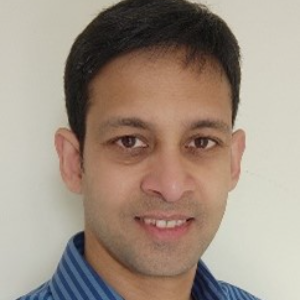
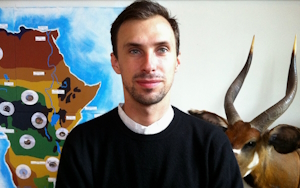
Dr. Alison Griffiths is an Associate Professor at Staffordshire University, specializing in Electrical Engineering and Computing. She holds a PhD in Wireless and Mobile Communications (2004), Chartered Engineer status (CEng, 2006), and a Senior Fellowship from the Higher Education Academy (SFHEA, 2019). Her research focuses on Smart Grids, Renewable Energy Integration, and Communication Protocols for HVDC systems. She has supervised 9 PhD students and actively participates in STEM outreach through Micro:Bit and Raspberry Pi workshops. Affiliations: Staffordshire University, Faculty of Digital, Tech, Innovation & Business Teaching: Course Leader for MSc programs in Electrical Engineering, Robotics, and Smart Technologies Research Interests: Smart Grid Protection, Wireless Sensor Networks, and Signal Processing. Her work emphasizes real-time monitoring and optimization, contributing to both academia and industry collaborations. Publications: Over 40 peer-reviewed articles, focusing on HVDC protection, fault detection, and networked control systems. Recent work includes thermal management of EV batteries and Wi-Fi sensing applications. Awards: CEng, SFHEA, and active roles in WISE and IET.
Dr. Mohammad Hasan is a Senior Lecturer in Digital, Tech, Innovation & Business at Staffordshire University with extensive expertise in cybersecurity, cloud computing, and network engineering. His educational background includes a PhD in Mobile Ad-hoc Networks, MSc in Computer and Network Engineering, and BSc in Computer Science. His primary research focuses on: Computer networks including wireless systems and IoT Cybersecurity frameworks and threat analysis Cloud computing infrastructure and virtualization Machine learning applications in data analytics Recent publications demonstrate strong trends in machine learning applications for pattern recognition (eSports analytics), network security (XSS prevention), and biomedical signal processing (brain source localization). Dr. Hasan maintains professional certifications including CCSK, CompTIA Security+, and Cisco CyberOps Associate, and holds Senior Fellow status with the Higher Education Academy.
Dr. Karen Donaldson is a Research Fellow at the University of Edinburgh's School of Engineering, affiliated with the Scottish Microelectronics Centre and Integrated Micro and Nano Systems Research Institute. Her role focuses on experimental and numerical research in interdisciplinary engineering domains, leveraging facilities like the Scottish Microelectronics Centre (Location: 1.08) for advanced investigations. Her research spans robotics for extreme environments, space exploration systems, plasma physics applications, micro/nano-scale technology, biomedical device innovation, and environmental sensing methodologies. Key projects include modular robotic systems for planetary operations, 3D-printed medical solutions during global health crises, and laser-based soil analysis techniques for terrestrial and extraterrestrial applications. Publication analysis reveals two dominant themes: recent applied research in robotics and biomedical engineering (2020-2022), and foundational plasma physics/space science studies (2013-2019). Earlier work extensively explores cyclotron maser mechanisms, auroral kilometric radiation modeling, and fusion-relevant plasma instabilities through scaled laboratory experiments and 3D particle-in-cell simulations. This evolved toward practical implementations including pandemic-response medical devices and Martian soil analysis systems. Scientific Recognition: Elizabeth Georgeson Fellowship for research contributions She leads investigations at the Integrated Micro and Nano Systems laboratory, specializing in developing multifunctional interfaces for space technology and microelectronic applications. No advising relationships or grant details are documented in available sources.
Professor Jeremy Pitt is a Professor of Intelligent and Self-Organising Systems at Imperial College London, affiliated with the Department of Electrical and Electronic Engineering and the Faculty of Engineering. He leads the Intelligent Systems and Networks Group and the Computer-Supported Social Arrangements Laboratory (SALab). His research focuses on computational models of social processes, self-governance in socio-technical systems, and the ethical implications of technology. Pitt has published nearly 300 articles and secured over 30 grants, emphasizing interdisciplinary collaboration across computer science, political science, and philosophy. His work spans six key areas: computational sustainability, justice, self-governance, social construction, influence, and platform design. Notable contributions include formalizing Ostrom’s institutional design principles and Ober’s theories of classical democracy. As Editor-in-Chief of IEEE Technology and Society Magazine (2018–2023), he addressed societal impacts of technology, including editorials on 'Toxic Technology' and 'Futural Appropriation'. Pitt’s current research tackles re-empowerment architectures to address democratic backsliding and power asymmetries in the Digital Society. He collaborates with institutions like the Council of Europe and focuses on designing ethical AI, public interest technology, and sustainable socio-technical systems. Grants: Over 30 national/EU grants secured Labs: Intelligent Systems and Networks Group, SALab Affiliations: Artificial Intelligence Network, Centre for Cryptocurrency Research and Engineering Key Themes: Self-organisation, algorithmic governance, digital ethics, interdisciplinary policy
Dr. Robert Chatley is a Professor and Director of the Software Engineering Practice group and DoC EdTech Lab at Imperial College London. He holds a PhD from Imperial and has extensive industry experience as a senior engineer and consultant before transitioning to academia. His work bridges industry and academia, focusing on improving software engineering education and developer productivity. Education: Completed his PhD at Imperial College London. His research emphasizes practical software engineering problems, particularly in education, serverless computing, and developer tooling. He leads initiatives to integrate DevOps practices into curricula and has published widely on topics like lean learning and agile methodologies. Research Interests: Software engineering education, serverless computing, developer experience, software testing, and programming languages. His work includes tools like PerfMock for performance testing and Diggit for automated code review, alongside frameworks like Nimbus for serverless applications. Articles highlight trends in education technology, serverless architectures, and developer tools. Collaborations include the Horizon 2020 RADON project and international workshops. He advises prospective PhD students interested in industry-relevant software engineering challenges. Labs/Teams: Leads the Software Engineering Practice group, focusing on industrial skills and tools. Collaborates with the Royal College of Art and global institutions. His consultancy, Develogical, extends his industry-academia bridge.
Paolo Costa is a Senior Principal Research Manager at Microsoft Research Cambridge and Honorary Lecturer at Imperial College London. His research bridges distributed systems and networking with focus on optical technologies for next-generation data centers. Key innovations include Sirius nanosecond optical switching architecture, soliton microcomb-based circuit switching, and PANAMA in-network aggregation for machine learning clusters. Research explores programmable switches, hardware acceleration, and AI infrastructure optimization. Projects include 'CamCube' and 'Predictable Datacenters' enhancing application-network integration. Recent publications examine memory systems for AI, stateful in-network computing, and lite-GPU clusters for scalable AI infrastructure.
Ning Gao is a Professor of Finance at Alliance Manchester Business School, University of Manchester, where he also serves as Deputy Director of the Centre for the Analysis of Investment Risk (CAIR). He is an editor of the Journal of Sustainable Finance and Accounting (Elsevier), an advisor to the Manchester China Institute, and the founder and organizer of the Annual Corporate Finance Conference in the UK. His academic background includes a B.A. (Econ.) from Renmin University of China and a Ph.D. in Finance from the Hong Kong University of Science and Technology (HKUST). Education: B.A. (Econ.) – Renmin University of China Ph.D. in Finance – Hong Kong University of Science and Technology (HKUST) Research Interests: Ning Gao’s research focuses on corporate finance, sustainable finance, ESG risks, mergers and acquisitions, and corporate governance. He explores how environmental regulations impact corporate financial decisions and credit access, and investigates investor behavior in response to global ESG incidents. His work also delves into the implications of control rights disparities, debt maturity structures, and market transparency, contributing to the understanding of information dynamics in financial systems. His studies frequently address topics such as horizontal integration, antitrust case selections, and the role of corporate cash reserves in acquisitions. Recent Publications: His recent publications examine the interplay between environmental policies and corporate finance, the diverging investor responses to ESG events, and the dynamics of mergers and acquisitions. He has also explored the impact of climate policy risks on capital structure and the effects of disproportionate control rights on debt maturity. Earlier work includes studies on default risk in financial markets, distributive inefficiencies in horizontal mergers, and the influence of hedge funds on merger payments. Scientific Awards: No scientific awards explicitly mentioned. Advising and Grants: Ning Gao has supervised six postgraduate students, though their names are not specified here. He served as Principal Investigator for the ESRC-funded project “WHY DOES ACQUIRING FIRM'S CASH RESERVE HAVE A NEGATIVE WEALTH EFFECT: AGENCY OR OVERVALUATION?” (2008–2010), analyzing the negative wealth effects in acquisitions. He has also reviewed over 20 prestigious journals in finance, accounting, and management, and contributed to program review committees for the European Finance Association (EFA) and Financial Management Association (FMA). Labs and Teams: He is associated with the Centre for the Analysis of Investment Risk (CAIR) and actively organizes the Annual Corporate Finance Conference in the UK. His research collaborations span topics in finance, accounting, and management, with notable international partnerships.
Siddhartha Datta is a Researcher at the University of Oxford's Department of Computer Science, specializing in distributed machine learning and adaptive systems. His research develops end-to-end solutions for model training, security, and deployment. Key research areas include: Adaptive learning algorithms for dynamic environments Defense mechanisms against adversarial attacks Human-centered AI interfaces and tools Cross-reality systems blending digital/physical spaces Efficient model compression techniques Current projects investigate prompt engineering for generative models, online learning under data drift, and 3D object detection refinement. His work combines theoretical frameworks with practical implementations, resulting in tools like GreaseTerminator for digital sovereignty and DeepObfusCode for source protection. Datta has collaborated with Google and Cornell University during his doctoral studies. His open-source contributions include neurocogpy (ECoG processing) and Polysemy Word Tagging Tool, demonstrating commitment to accessible research tools.
Professor Ling Qian is a Professor of Computational Fluid Dynamics and Director of the Centre for Mathematical Modelling and Flow Analysis (CMMFA) at Manchester Metropolitan University (MMU). His research focuses on computational modeling of water and air flow interactions with structures, with applications in offshore, ocean, and aerospace engineering. He leads projects funded by EPSRC and other bodies, with a focus on numerical wave tank (NWT) software for coastal and ocean engineering, particularly offshore renewable energy systems. Education: PhD in Aerospace Engineering, University of Glasgow (2001) MSc and BSc in Applied Mechanics (Aerodynamics), National University of Defence Technology, China Research Interests: CFD modeling of fluid-structure interactions Numerical wave tank (NWT) development Offshore renewable energy systems (wind/wave) High-performance computing for engineering flows Grants & Awards: Total research income exceeding £2.8M from EPSRC and other grants Baker Medal (2022), EPSRC project shortlist (2017), ORS Award (1995–1998) Teaching: Numerical methods, computational fluid dynamics, and engineering mathematics courses Labs & Teams: Director of CMMFA, collaborating on projects with industry partners like Hohai University (China) and international journals.
Shao Ying Zhu is a Lecturer in Computing at the Department of Electronics, Computing and Mathematics. Their research focuses on network security, cloud computing, IoT systems, and medical image analysis. Key contributions include frameworks for secure IoT service orchestration in multi-cloud environments and comparative studies of IPv6 routing protocols. Publications span areas like SDN security solutions, big data analytics algorithms, and cloud assurance methodologies. Notable work includes a textbook on cloud security assurance and analysis of HEp-2 medical images using machine learning techniques. Research outputs demonstrate expertise in both theoretical frameworks and applied solutions for modern computing challenges, with a focus on security and scalability across distributed systems.
James Hardy is a Senior Lecturer in Computer Networks at the College of Science and Engineering. His research focuses on optimizing network systems, with particular emphasis on IoT healthcare applications, edge computing, social media data analysis, and energy efficiency in next-generation networks. He has contributed to frameworks like Mobilouds and algorithms for service matching in IoT environments. His work spans diverse areas including traffic congestion reduction through queueing theory applications, URI encoding schemes for IPv6, and cloud computing infrastructure optimization. Recent publications highlight advancements in real-time streaming scheduling and user-interest-driven content discovery in peer-to-peer networks. Hardy's research demonstrates a strong interdisciplinary approach, blending computer science fundamentals with practical applications in healthcare, transportation, and urban systems. His output includes over 700 views and 290 downloads across his publications, reflecting significant academic impact.
Simon Willcock is a Full Professor at Bangor University's School of Environmental & Natural Sciences, with a research focus on ecosystem services , tropical forest dynamics , and human-environment interactions . He utilizes innovative methods like smartphone surveys and machine learning to address sustainability challenges. Current position: Professor, Bangor University Previously: Senior Lecturer at same institution Academic qualifications: PhD (University of Leeds), BA in Biological Sciences (Oxford University), Postgraduate Certificate in Academic Practice (University of Southampton) His research spans climate change , land use change , and ecosystem resilience in tropical regions. Key projects include deforestation-neutral mining in Madagascar, smartphone-based ecological monitoring , and urban greenspace accessibility frameworks. Recent publications address: Sanitation systems and quality of life Tropical forest carbon sinks Machine learning for environmental data Ecosystem service interoperability Rural-urban service flows Professor Willcock supervises seven PhD students and contributes to university governance as a Senate member. His work aligns with UN Sustainable Development Goals through ecosystem service assessments and biodiversity conservation research.
Dr. Maxwell Farrell is a Lecturer in Artificial Intelligence at the University of Glasgow's School of Biodiversity, One Health and Veterinary Medicine and an Affiliate Researcher at the MRC-University of Glasgow Centre for Virus Research . He earned a PhD in Biology from McGill University and conducted postdoctoral work at the University of Georgia , University of Toronto , and University of Glasgow . Since 2024, he has led a research group focusing on the ecology and evolution of infectious diseases through a macroecological lens. Research Affiliations: MRC-University of Glasgow Centre for Virus Research Leverhulme Programme for Doctoral Training in Ecological Data Science Crucible-funded Data Sonification Working Group Research Interests include: Host-pathogen interaction networks Text mining and AI for biodiversity science Phylogenetic comparative methods in disease ecology Macroecological modeling of multi-species pathogens Computational statistics for ecological synthesis Biodiversity genomics for disease surveillance Publication Trends show sustained contributions to Proceedings of the Royal Society B , Nature Microbiology , Lancet Planetary Health , and Philosophical Transactions of the Royal Society B , with recent articles emphasizing large language models for pest control synthesis, text mining frameworks in ecology, and global threat interconnections between climate change and zoonotic diseases. Supervision: Avery Holmes (Wellcome Trust IIB PhD) Erwin John Sioson (NorthWest Bio DTP) Claire Walden (VetFund PhD Scholarship) Collaborative Networks include the Viral Informatics, Biostatistics, and Evolution (VIBE) Lab , the SBOHVM Stats Support Group , and the Leverhulme Ecological Data Science DTP .
Dr. Elaine Ferguson is a Researcher at the University of Glasgow , affiliated with the Infectious Disease Ecology group. Her email is Elaine.Ferguson@glasgow.ac.uk . Research Interests : Rabies control, vaccination campaigns, epidemiology, zoonotic diseases, statistical modeling, and public health policy. Key Collaborations : Projects in Tanzania, Bangladesh, and global health initiatives. Her recent work focuses on mathematical modeling of rabies transmission and control strategies, community engagement in vaccination campaigns, and spatio-temporal analysis of disease dynamics. She has contributed to genomic studies and public health interventions. Supervision : Supervised Luka, Martha Muthina in a project on rabies control in East Africa.
Professor Kenneth D Gibb is a leading academic in Housing Economics, affiliated with the University of Glasgow's School of Social and Political Sciences. He holds the title of Professor in Housing Economics within the Urban Studies and Social Policy department. Since 1989, he has been a full-time faculty member, progressing from an ESRC research fellow to his current professorial role. He directs the UK Collaborative Centre for Housing Evidence (CaCHE), established in 2017, and previously led Policy Scotland and What Works Scotland. His research focuses on housing economics, policy evaluation, and sustainable housing solutions, with notable contributions to net-zero retrofitting, homelessness, and affordable housing. His work spans international collaborations, including roles with the OECD and European Union. He advises multiple government bodies, including the Scottish Parliament and UK Government advisory groups on housing strategies. Key areas of expertise include housing affordability, policy diffusion, and the economic impacts of housing interventions. Gibb’s interdisciplinary approach integrates urban studies, public policy, and economics, with over 140 publications since 1996. He chairs critical housing steering groups in Scotland, Ireland, and the UK, emphasizing evidence-based policymaking. Recent projects include analyzing Glasgow’s homelessness crisis and evaluating housing retrofit projects. His articles highlight topics like cost-benefit analysis in housing, rent regulation debates, and the political economy of social housing reform. Active in editorial roles for journals like Urban Studies, Gibb’s work bridges academic research and real-world policy impact.