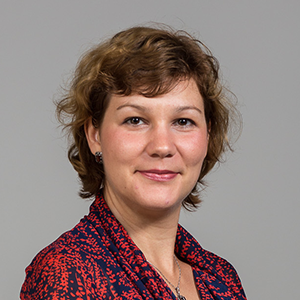
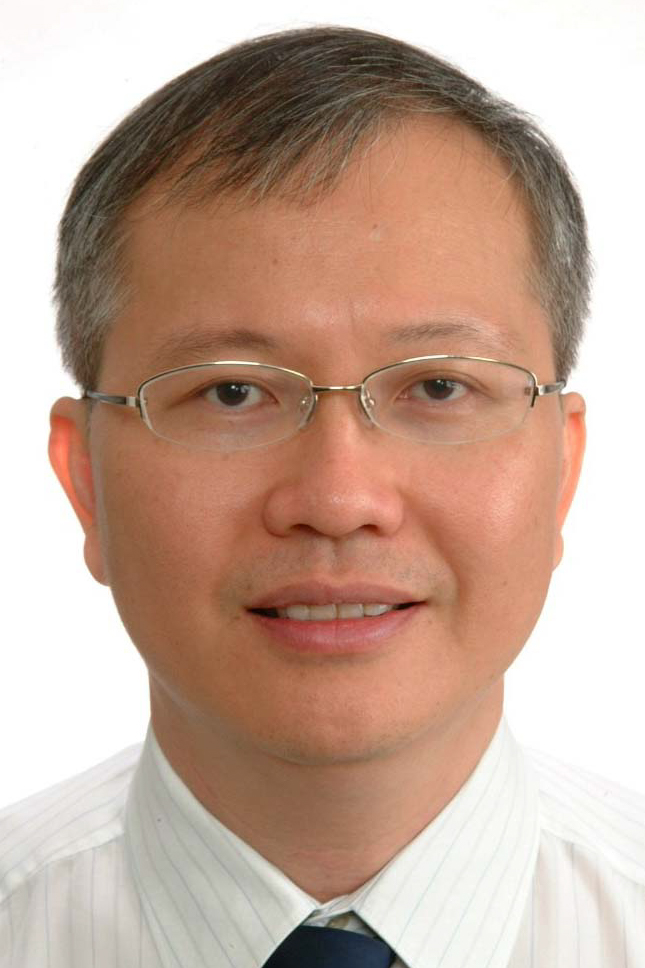
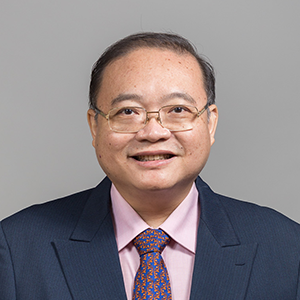
Cristina Carbunaru is a Senior Lecturer at the National University of Singapore in the Department of Computer Science. She holds a Ph.D. in Computer Science (2013) from NUS and a B.Eng. in Computer Engineering from Politehnica University of Bucharest. Her teaching focuses on software engineering, computer networks, parallel computing, and performance analysis. Education: Ph.D. (NUS, 2013), B.Eng. (Politehnica University of Bucharest) Research Interests center on analytic modeling and performance analysis for distributed systems, alongside educational innovations in authentic learning and automatic assessment . Her work examines peer-assisted file distribution, flash crowd dynamics, and heterogeneous swarm behavior. Scientific Awards include: Singapore Ministry of Education Graduate Studies Award (2008-2014) Special Merit Fellowship from Politehnica University of Bucharest (2002-2007) She has published extensively on distributed system performance, focusing on peer-to-peer networks and scalability challenges.
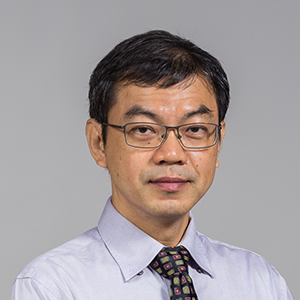
CHANG Ee-Chien is an Associate Professor in the Department of Computer Science at the School of Computing, National University of Singapore (NUS). He serves as the Lead Principal Investigator of the National Cybersecurity R&D Laboratory (NCL) and previously served as Deputy Director of the Center for Technology, Robotics, Artificial Intelligence and the Law (TRAIL) from 2019 to 2022. He also chaired the Joint Academic Committee for the Bachelor of Computing in Information Security program from 2016 until April 2023. Dr. Chang received his Ph.D. in Computer Science from New York University in 1998, following his M.Sc. and B.Sc. in Mathematics from the National University of Singapore in 1993 and 1991 respectively. He completed postdoctoral work with DIMACS at Rutgers University and NEC Labs America. His research focuses on information security, multimedia security, and their intersection. His work spans from foundational research in cryptographic techniques for noisy data and image watermarking to contemporary challenges in data privacy, cloud security, and adversarial machine learning. Dr. Chang has published extensively in top-tier security and computer science venues including CCS, EUROCRYPT, USENIX Security, and ACM Multimedia. Analysis of his recent publications reveals a strong emphasis on practical security solutions using hardware features like Trusted Execution Environments, innovative approaches to watermarking using generative models, and addressing emerging threats in machine learning systems. His work bridges theoretical cryptography with real-world security challenges, particularly in cloud infrastructure and privacy-preserving technologies. Active leadership in National Cybersecurity R&D Laboratory Extensive service on program committees for major security conferences Consultancy roles with Huawei, i-Sprint, and Singapore Accreditation Council Media commentary on cybersecurity issues for major Singaporean outlets Dr. Chang has mentored numerous research fellows and students who have gone on to academic and industry positions worldwide. His educational contributions include developing cybersecurity curriculum and innovative teaching methods such as penetration testing using real-world university applications. He has taught core security courses including CS2107 Introduction to Information Security continuously since 2014.
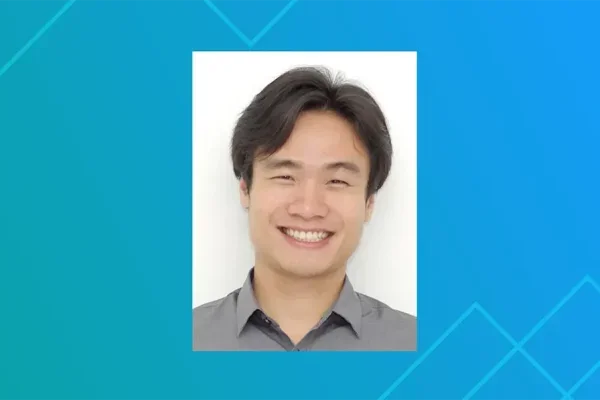
Prof. Xiaokui Xiao is a Professor and Deputy Head (Research & Graduate Matters) at the Department of Computer Science, National University of Singapore (NUS). He previously held an Associate Professor position at Nanyang Technological University (NTU). His academic journey includes a PhD from the Chinese University of Hong Kong (2008) and a postdoctoral stint at Cornell University. His research focuses on data management and analytics, with emphasis on large data algorithms, privacy (e.g., differential privacy), and data mining. Notable contributions include the PrivBayes system for private data release and scalable network embedding techniques. Awarded the 2024 ACM SIGMOD Test-of-Time Award, IEEE Fellowship (2022), and ACM Distinguished Membership (2021), Xiao is also a trustee of the VLDB Endowment and Editor-in-Chief of Proceedings of the VLDB Endowment . He has advised over 30 PhD students and researchers, many of whom hold academic or industry leadership roles. His work bridges theoretical foundations with practical systems, addressing challenges in privacy, scalability, and machine learning integration.
Professor Rachel Watson is an Executive Director at A*STAR Skin Research Labs (SRL) and the Skin Research Institute of Singapore (SRIS). She holds adjunct roles as Chief Scientist at the National Skin Centre and Adjunct Professor at Lee Kong Chian School of Medicine, Nanyang Technological University. Her research focuses on skin aging mechanisms, extracellular matrix repair, and ethnic skin differences. With a BSc (Hons) and PhD from the University of Sheffield, her work addresses intrinsic/extrinsic aging, Asian skin biology, and therapeutic development. She leads collaborative programs involving 18+ researchers across dermatology, bioinformatics, and genomics. Research emphasizes menopause effects on skin biomechanics, UV-induced inflammation, and dietary interventions like omega-3 fatty acids. Methodologies include clinical trials, transcriptomics, proteomics, and advanced imaging. Her lab team comprises 9 staff scientists and research officers. Key collaborations include Johns Hopkins Dermatology, University of Manchester, and multiple A*STAR institutes. Publications span 1997–2024, focusing on retinoid therapies, photoprotection strategies, and ethnic skin variability. Her work bridges fundamental research with clinical applications, addressing Singapore's aging population challenges and multi-ethnic healthcare needs.
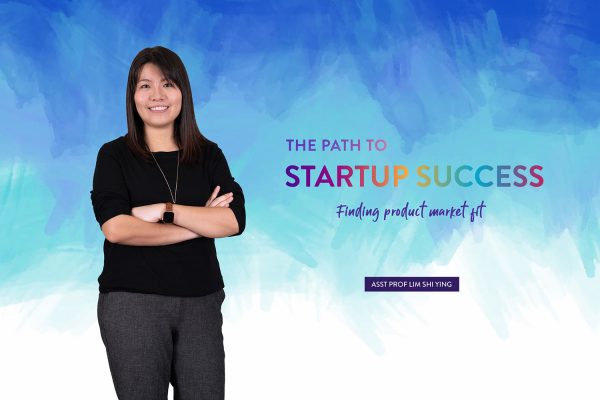
Dr. LIM Shi Ying is an Assistant Professor in the Department of Information Systems and Analytics at the National University of Singapore (NUS School of Computing). She holds a Ph.D. in Information Systems from The University of Texas at Austin, an M.P.H. in Health Management from Yale University, and a B.A. in Molecular & Cell Biology (Immunology) and Economics from UC Berkeley. Her research focuses on digital entrepreneurship, healthcare IT, and computational social science, emphasizing strategic reorientations in nascent ventures and digital artifact impacts. She has been recognized with teaching awards and nominations for best papers at ICIS and HICSS. Education: Ph.D. (UT Austin), M.P.H. (Yale), B.A. (UC Berkeley) Affiliations: NUS School of Computing, McCombs School of Business (UT Austin), Yale School of Public Health Her research explores how digital tools and platforms enable creative problem-solving in uncertain markets, particularly in healthcare and digital ecosystems. Notable projects include analyzing startup trajectories to product-market fit and investigating institutional barriers in digital health innovation. Collaborations span industries including hospitals, pharmaceuticals, and the WHO. Publications highlight themes like generativity in user innovation (e.g., IKEA hacks), platform versioning impacts, and telemedicine coordination. Awards include teaching excellence and multiple best paper nominations for work on resource mobilization and digital health ventures.
Chew Ek Peng is an Associate Professor and Deputy Head at the Institute of Operations Research and Analytics (IORA), part of the National University of Singapore’s Smart Nation Research Cluster. His research focuses on optimizing port logistics, maritime transportation systems, and inventory management through advanced simulation techniques and data-driven methodologies. His work spans critical areas such as automated port operations, simulation-optimization frameworks, and stochastic systems analysis. Notably, he develops solutions for challenges like AGV scheduling, container relocation problems, and intermodal terminal design. His research integrates machine learning (e.g., hybrid neural networks) with traditional operations research methods. Recent publications highlight contributions to electric vehicle sustainability in carsharing systems, multi-agent reinforcement learning for AGV recharging, and facility location under random utility models. His work emphasizes practical applications in smart logistics, disaster response optimization, and supply chain resilience. Chew Ek Peng collaborates on projects like digital twin validation frameworks and modular simulation pipelines for residential energy modeling. His research has been applied to real-world scenarios such as Singapore’s construction demand forecasting and pandemic impact analyses using modified SEIR models.
David Yau is a Professor in the Information Systems Technology and Design (ISTD) pillar at the Singapore University of Technology and Design (SUTD). He holds a B.Sc. from the Chinese University of Hong Kong and M.S./Ph.D. from the University of Texas at Austin, all in Computer Science. Previously, he was Distinguished Scientist at the Advanced Digital Sciences Center (ADSC) in Singapore and Qiushi Chaired Professor at Zhejiang University, China. His research focuses on network security, cyber-physical systems, and smart grid resilience. He has led over 15 research projects funded by agencies like Singapore's NRF, A*Star, and the U.S. NSF. Notable awards include the IBM Fellowship, NSF CAREER Award, and Best Paper awards at IPSN 2017 and IEEE MFI 2010. Yau has advised numerous PhD/Master’s students, many now in academia and industry. His work spans secure protocols, intrusion detection in critical infrastructures, and privacy-preserving smart grid technologies. He has authored over 100 peer-reviewed publications and served on editorial boards of ACM Transactions on Sensor Networks and IEEE journals.
Bikramjit Das is an Associate Professor and Associate Head of Pillar (Graduate Programme) at Singapore University of Technology and Design (SUTD). He holds a PhD in Operations Research from Cornell University and prior to SUTD, was a postdoctoral researcher at ETH Zurich’s RiskLab. His research focuses on extreme events analysis using applied probability, optimization, and statistical learning, with applications in finance, telecommunications, federated learning, and climate modeling. He teaches courses in Probability, Stochastic Modeling, and Analytics, and directs the Master of Science in Technology and Design (Data Science) program. Education: PhD in Operations Research (Cornell University), B.Stat & M.Stat (Indian Statistical Institute). Research emphasizes heavy-tailed distributions, risk contagion, and network modeling. Key areas include risk analysis in financial networks, robust optimization under uncertainty, and extreme value theory. His work bridges theoretical probability and real-world applications in data science and public policy. Notable contributions include studies on asymptotic independence in high dimensions, robust newsvendor models, and inference techniques for heavy-tailed data. His articles explore topics ranging from federated learning under noise to climate modeling and congestion phenomena in sparse networks. Collaborations include visiting positions at MIT and the Karlsruhe Institute of Technology. Active in academic leadership, he has contributed to technical reports on healthcare provider choice analysis and probabilistic flood risk assessments for nuclear power plants.
Venky Shankararaman is Professor of Information Systems (Education) and Vice Provost (Education) at Singapore Management University. A PhD graduate from University of Strathclyde (1992), he holds the SMU Fortitude Fellow in Computing Education position and serves as President of Asia-Pacific Association for International Education. Research expertise spans digital transformation, educational analytics, and enterprise architecture. Primary focus areas include AI governance frameworks, curriculum analytics, and microservices design patterns. Publications emphasize practical applications in government AI systems (ACQAR framework), educational technology (ChatGPT mentoring), and enterprise architecture (microservices decision frameworks). Recent work explores explainable AI for public sector and project-based learning models. Major Awards: Public Administration Medal (Silver) - Singapore Government (2023) Distinguished Education Award - SMU (2023) AIS Best Conference Paper Award (2020) Public Administration Medal (Bronze) - Singapore Government (2017) SAP Outstanding Academic Award (2014) Advises PhD students Kevin TAUKOOR Heman and Ng Kok Leong. Leads university-wide education initiatives including the Data Access and Use Committee and Teaching Bank project. Pioneered SMU's competency-based curriculum analytics tools and digital transformation frameworks for banking. Serves on ACM Education Advisory Committee and developed national skills frameworks for Singapore's IT workforce.
Jason Grant Allen is a Full-time Faculty member at Singapore Management University , currently serving as an Associate Professor of Law and Director of the Centre for Digital Law (since 2024). He holds a PhD in Law from the University of Cambridge (2017), an LLM in International Economic Law from Universität Augsburg (2010), and a dual BA & LLB (Hons) from the University of Tasmania (2007). He is admitted as an Australian Lawyer and Attorney/Counselor-at-Law in New York. PhD in Law, University of Cambridge (2017) Graduate Diploma in Legal Practice, College of Law Australia (2011) LLM in International Economic Law, Universität Augsburg (2010) BA & LLB (Hons), University of Tasmania (2007) Allen specializes in Law and emerging technology , Monetary law , and Digital assets . His research explores intersections between constitutional law, financial systems, and decentralized technologies. Key projects include AI Singapore’s Trustworthy Large Language Models initiative and Singapore MoE’s Responsible AI in Public Administration grant. Recent publications analyze digital economy governance , smart legal contracts , and cryptoasset legal frameworks . His work with the UNIDROIT Project LXXXII on digital assets and the Cambridge Digital Asset Program highlights global impact. AI Singapore Award (SGD 500,000, 2024-2027) Singapore MoE Tier 1 Grant (SGD 250,000, 2023-2025) DFG Grant (EUR 620,000, 2020-2023) ESRC Sub-Grant (GBP 60,000, 2019-2020) Allen actively collaborates with institutions like Cambridge JBS Centre for Alternative Finance and QMUL Centre for Commercial Law Studies , and has held visiting roles at ANU and UNSW. He served as Judicial Assistant to Chancellor Sir Geoffrey Vos (2016-2017).
ZHENG Baihua serves as Professor of Computer Science at Singapore Management University's School of Computing and Information Systems (SCIS), concurrently holding leadership roles as Associate Dean for SCIS Post-Graduate Research Programmes and Director of the Master of Science in Computing programme. Currently on leave but maintaining full-time faculty status, his academic career spans over two decades with foundational training from Hong Kong University of Science and Technology. Professor Zheng's research program integrates artificial intelligence, data science, and urban computing to solve critical challenges in mobility and sustainability. His expertise centers on trajectory data management, social network analysis, and spatio-temporal modeling, with significant contributions to trajectory compression algorithms, influence minimization in social networks, and real-time traffic prediction systems. His work bridges theoretical database innovations with practical applications in smart city infrastructure and public health interventions. Analysis of recent publications (2024-2025) reveals a dominant focus on physics-informed trajectory processing, GPU-accelerated indexing for high-dimensional data, and transformer-based models for urban mobility prediction. Key trends include the fusion of graph neural networks with spatio-temporal dynamics, novel approaches to contact tracing through timeline graphs, and differentiable search techniques for structured data discovery. These works consistently target real-world deployment in transportation systems and epidemic control. No scientific awards are documented in available institutional records. Information regarding student supervision, research grants, laboratory facilities, or collaborative teams remains unspecified in current public profiles.
Roland YAP Hock Chuan serves as an Associate Professor in the Department of Computer Science at the School of Computing, National University of Singapore (NUS), and previously held the role of assistant director at The Logistics Institute Asia Pacific (TLI-AP). His academic foundation was built at Monash University, Australia, where he earned comprehensive qualifications in Computer Science. Education: Ph.D. in Computer Science, Monash University, Australia M.Sc. in Computer Science, Monash University, Australia B.Sc. (Honours) in Computer Science, Monash University, Australia Research Focus: Renowned for pioneering the CLP(R) system that revolutionized Constraint Programming, Prof. Yap's work now spans artificial intelligence, security, programming languages, and social networks. His research bridges theoretical rigor with real-world applications, particularly in data analytics and knowledge compilation for industrial systems. Publication Evolution: His scholarly output reveals a strategic progression from foundational constraint logic programming (1990s) to cutting-edge security mechanisms and AI-driven solutions (2010s). Recent works demonstrate expertise in robust search algorithms, memory protection systems, and social network defense strategies, reflecting continuous adaptation to emerging computational challenges. Scientific Recognition: Best student paper award at SCA 2011 for social network research Best student runner-up paper at CIKM 2009 1995 Australian Computer Science Ph.D. Prize (1996) Praxa Computer Prize for theoretical computing achievements (1985) Academic Leadership: Prof. Yap directs the Tier 1 research project 'Investigating Product Configuration as Knowledge Compilation,' developing accelerated industrial solvers through innovative KC integration. His teaching portfolio includes advanced security courses (CS4239/5439/6231), shaping next-generation cybersecurity expertise. Mentoring excellence is evidenced by multiple student award-winning publications in top-tier conferences. Collaborative Infrastructure: Through his leadership role at TLI-AP, he contributes to NUS's interdisciplinary logistics research ecosystem, connecting computer science with supply chain innovation and operational optimization challenges.
Maria De Iorio is a Professor at the Yong Loo Lin School of Medicine and holds a joint appointment at the Faculty of Science , both at the National University of Singapore. Her work bridges statistics, epidemiology, and clinical sciences through advanced Bayesian modeling and computational methods. Key research areas: Statistics, Epidemiology, Genetics, Clinical sciences, Medical biochemistry Primary affiliations: Paediatrics department (YLLSoM) and interdisciplinary projects in Science faculty Recent publications focus on extreme value theory, digital numismatics, metabolomic simulations, and maternal-child health Her statistical innovations include: Repulsive mixture models for interpretable clustering Bayesian semi-parametric approaches for longitudinal studies Novel prior distributions for graphical models Application domains span: Pediatric oncology (ALL treatment response modeling) Metabolic syndrome analysis (obesity, diabetes, bone health) Digital humanities (coin distribution patterns, ceramic artifact analysis) Financial forecasting (discrete survival methods for invoice prediction)
Dr. Koteswar Rao Jerripothula is an Assistant Professor in the Department of Electrical Engineering at the Indian Institute of Technology Kanpur (IIT Kanpur), specializing in the SPCOM stream. Previously, he served as an Assistant Professor at Indraprastha Institute of Information Technology Delhi (IIIT-Delhi). He holds a PhD from Nanyang Technological University (Singapore) and a BTech from IIT Roorkee. His research focuses on Computer Vision, Artificial Intelligence, and Multimedia Signal Processing, with applications in healthcare informatics and federated learning. Education: PhD (2017), Nanyang Technological University BTech (2012), Indian Institute of Technology Roorkee Research Interests: Computer Vision and Image Processing Multimedia Computing and Systems Artificial Intelligence and Machine Learning Computational Health and Biomedical AI His Visual Intelligence and Multimedia Signals (VIMS) Lab explores topics like co-saliency detection, federated learning, and light-weight biometrics. The lab seeks students with strong coding and communication skills. Contact: vims.iitk@gmail.com.
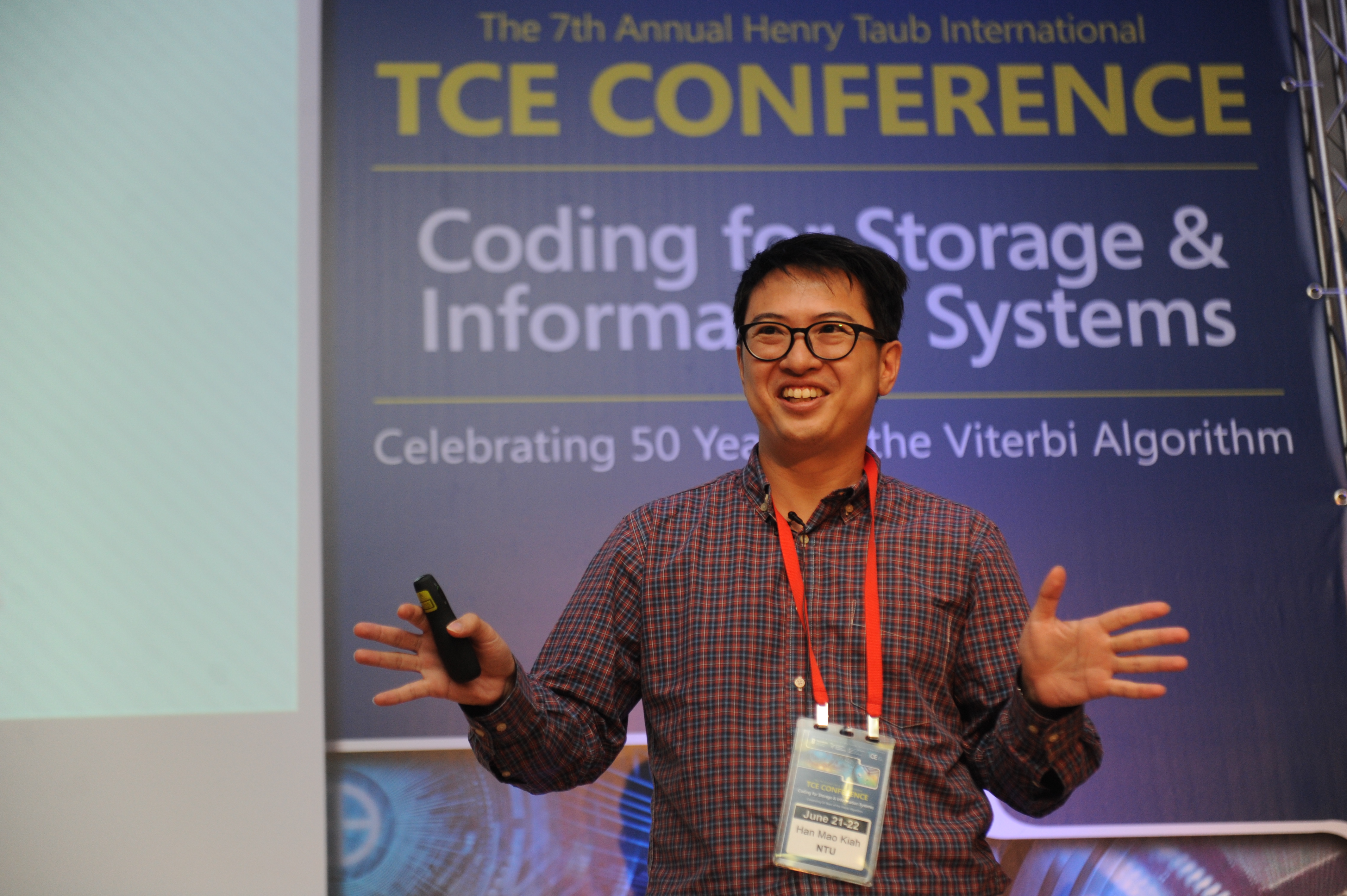
Han Mao Kiah is an Assistant Professor at Nanyang Technological University , specializing in Coding Theory and Combinatorics . He earned his Ph.D. in Mathematics at NTU under Yeow Meng Chee and held a postdoctoral position at the Coordinated Science Lab, University of Illinois at Urbana-Champagne with Olgica Milenkovic . Current Role: Assistant Professor, NTU, Department of Mathematics Education: Ph.D. in Mathematics (NTU), Postdoc (University of Illinois) His research focuses on Coding Theory for applications in DNA-based data storage , Reed-Solomon codes , and combinatorial designs . Recent work includes Private Information Retrieval , Sequence Reconstruction , and Error Correction in distributed systems. Key trends in his publications involve Reed-Solomon codes , Private Information Retrieval , and DNA sequence profiling with a focus on Efficient Algorithms and Constrained Coding for error control in emerging storage systems. ISITA Early Career Researcher Paper Award (2022, Researcher: D. T. Dao) Memorable Paper Award Finalist (2021, Student: J. Chrisnata) Best Student Paper Award (2020, Student: J. Chrisnata) Student Paper Award Finalist (2012)