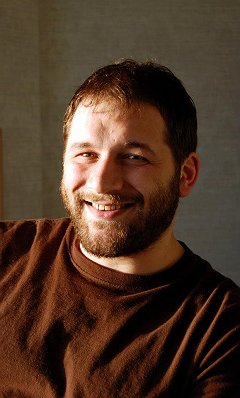
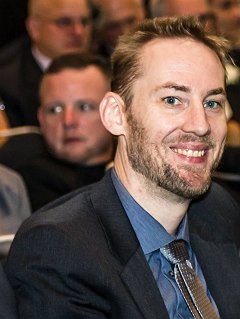
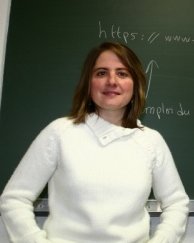
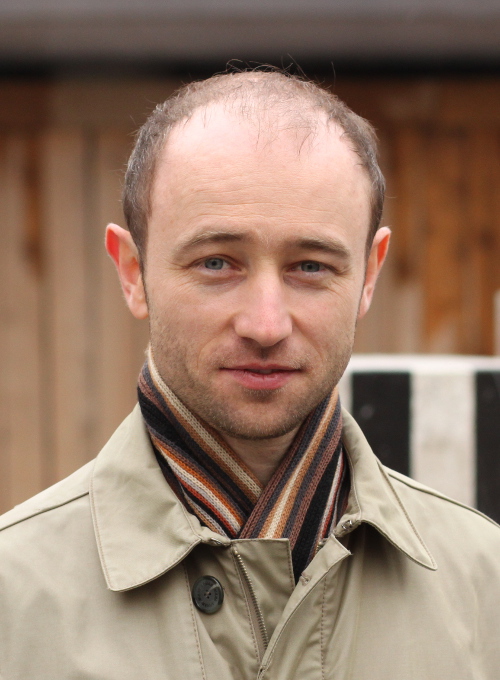
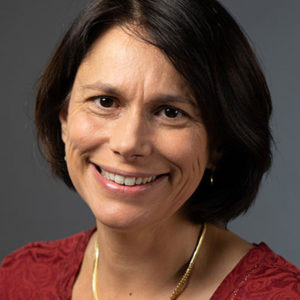
Colin Gordon is a researcher at Drexel University with a focus on type theory, formal verification, and concurrency. His work bridges theoretical and practical aspects of programming languages. His research interests include: Type Theory Separation Logic Verification Concurrency and Parallelism Capabilities Type and Effect Systems Colin's recent publications address challenges in effect systems, formal verification, and programming language design. His work spans conferences like POPL, PLDI, and SPLASH, reflecting a strong commitment to advancing software correctness and language design.
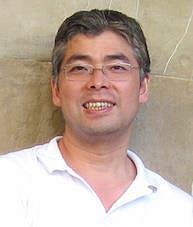
Zhong Shao is the Thomas L. Kempner Professor of Computer Science at Yale University. He leads the FLINT research group and is a prominent researcher in programming languages, formal methods, operating systems, and computer security. His work focuses on building certified system software through mechanized proofs to create dependable software systems that can manage increasing complexity in modern computing. Professor Shao's research spans multiple domains including programming language design, OS kernel development, formal semantics, compiler construction, and proof engineering. His work addresses challenging problems in concurrency and distributed computing, with a particular emphasis on creating hacker-resistant systems. He has collaborated with researchers at Princeton, University of Pennsylvania, and MIT on the NSF Expedition project 'The Science of Deep Specification.' Shao's recent publications demonstrate a strong focus on compositional verification techniques for distributed systems and certified compilation. His work on DeepSEA language, CertiKOS operating system, and various verification frameworks shows a consistent trajectory toward building fully verified system software from the ground up. Key themes include linearizability, Byzantine fault tolerance, compositional reasoning, and refinement-based verification approaches across concurrent and distributed systems. As an educator, Professor Shao teaches courses including CS430 Formal Semantics (Spring 2025), CS421 Compilers and Interpreters, CS422 Operating Systems, and CS428 Language-Based Security. He participates in systems seminars on APLAR and SPAM, contributing to the academic community through both research and teaching. Professor Shao leads the FLINT research group at Yale, which focuses on building novel certified system software. The group's work has resulted in breakthroughs such as the CertiKOS operating system, which represents a significant advancement in hacker-resistant concurrent operating systems. The group collaborates with the DeepSpec project, an NSF Expedition focused on deep specifications for trustworthy systems, and has developed frameworks like LiDO, Adore, and AdoB for verifying distributed systems with strong guarantees.
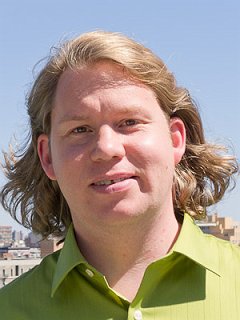
Johannes Borgström is an Associate Professor in the Department of Computer Science at Uppsala University, Sweden. He serves as the program director for the Bachelor's program in Computer Science and has been actively involved in numerous academic conferences including ESOP, POPL, and FASE as a committee member. His research spans theoretical computer science with practical applications in programming language design and analysis. Borgström's research primarily focuses on semantics for programming languages and process algebras , with significant contributions to both theoretical foundations and practical applications. His work centers on two major strands: probabilistic programming languages for statistical models and Bayesian inference, and psi-calculus as a framework for modeling communicating systems. His research integrates formal methods with practical programming language implementation, creating bridges between theoretical computer science and real-world applications in statistical computing and distributed systems. Analysis of Borgström's recent publications reveals a strong trajectory in probabilistic programming and formal verification. His 2021 work demonstrates applications of probabilistic programming to statistical phylogenetics, while his foundational work on lambda-calculus for universal probabilistic programming (2016) established important theoretical frameworks. The research shows increasing integration of statistical methods with programming language theory, particularly in Bayesian inference techniques. His work on psi-calculi continues to evolve with applications to wireless protocols and higher-order systems, demonstrating the versatility of process calculi approaches. Borgström has served on program committees for numerous prestigious conferences including ESOP, POPL, ICFP, and FASE, demonstrating his standing in the programming languages research community. His service includes roles as committee member for NWPT 2023, ESOP 2019, POPL 2017-2018, and ICFP 2016. His research laboratory appears to be part of Uppsala University's Department of Information Technology, with collaborations extending to Microsoft Research (Andrew Gordon appears as frequent co-author) and other international institutions. Borgström's work on the Psi-Calculi Workbench suggests active development of practical tools for formal verification, bridging theoretical research with software engineering applications. His current research trajectory indicates continued exploration of probabilistic programming semantics and their applications to statistical modeling across diverse domains.
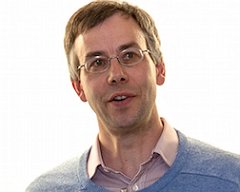
Simon J. Gay is an active researcher affiliated with the University of Glasgow, UK, specializing in theoretical computer science with a focus on programming language theory and type systems. His work centers on session types, concurrency models, and formal verification, evidenced by consistent contributions to premier conferences including POPL, ECOOP, ICFP, and ESOP since 2012. His research interests span foundational and applied aspects of programming languages: Session types for communication protocols Actor-based concurrency models Type systems for distributed systems Formal verification of liveness and safety properties Applications of linear logic in process calculi Analysis of his recent publications (2015-2025) reveals a clear trajectory from theoretical foundations (e.g., behavioral prototypes, liveness verification) toward practical applications of session types in actor systems and mailbox programming. His 2023-2025 work demonstrates increasing focus on real-world implementation challenges, particularly runtime adaptation and protocol safety in distributed environments. Gay maintains active roles in academic service as program committee member for major conferences including POPL, ECOOP, and ESOP, reflecting his standing in the programming languages community. His 2023 ST30 co-chairing role and book-writing experience indicate leadership in session types research dissemination.
David Walker is a Professor at Princeton University in the Department of Computer Science . His research spans multiple areas including Programming Languages , Networking , Type Systems , and Semantics . His recent work focuses on Network Verification , Logic Programming , and Type-Theoretic Synthesis . He has contributed to conferences such as PLDI , POPL , SPLASH , and ICFP , with research trends emphasizing Formal Methods , Distributed Systems , and Language Design . Scientific Contributions: 2024 PLDI: Modular Control Plane Verification via Temporal Invariants 2023 SPLASH: SwitchLog and Saggitarius DSL 2022 PLDI: Safe Packet Pipeline Programming 2021 SPLASH: Data-Driven Invariant Inference 2020 POPL: Abstract Network Control Plane Interpretation
Luc Pellissier is an Assistant Professor at the Department of Computer Science, Paris-Est Créteil University, and a member of the LACL research team. His work focuses on the semantics of proofs and programs, leveraging tools like linear logic, category theory, and realizability. Research Interests : Proof theory, computational semantics, linear logic, categorical models, and intersection type systems. Selected Publications : Recent work explores connections between structuralist/distributional hypotheses and formal logic, coinductive programming, and resource-based proof structures. Collaborations : Co-organizes the Sémiomaths and SemioLog seminars, collaborating with researchers from ETH Zurich, Université de Paris, and IMERL (Uruguay). Grants & Projects : Participated in EU Horizon 2020 (SemioMaths) and ANR Rapido projects. Contact : Email: luc.pellissier@u-pec.fr
Micaela Mayero is a Researcher at the Laboratoire d'Informatique de Paris Nord (LIPN), affiliated with the Institut Galilée at Université Paris Nord. Her work focuses on formal proofs, numerical analysis, and verification using the Coq proof assistant. Education : PhD in Computer Science (2001) from Université Paris VI, Habilitation à Diriger des Recherches (2012). Her research spans formal verification , type theory , and numerical analysis , with a strong emphasis on mechanized proofs in mathematics and programming. Recent publications highlight applications in Lebesgue integration , polynomial approximations , and partial differential equations , reflecting her expertise in bridging theoretical mathematics with computational verification. Key trends across her articles include formalization of mathematical theorems in Coq, verification of numerical algorithms, and refinement of Petri net models. Collaborations with teams across France and Europe underscore her interdisciplinary approach.
Vianney Perchet is a Professor at CREST (Centre de recherche en économie et statistique) , affiliated with ENSAE since October 2019. His research bridges Machine Learning , Game Theory , and Economics , focusing on theoretical and applied problems in algorithm convergence, recommender systems, and multi-agent decision-making. He also holds a part-time principal researcher role at the Criteo AI Lab in Paris. His research interests span pure and applied domains, including Reinforcement Learning , Social Learning , Online Matching , Bandit Algorithms , and Auction Theory . He actively advises 5 PhD students and has mentored 4 who have successfully defended their theses. Recent publications highlight his work on Learning-Augmented Algorithms , Regret Minimization , and Fair Resource Allocation , appearing at top conferences like NeurIPS , ICML , and AISTATS . His projects often integrate game theory , online learning , and optimization frameworks.
Olivier DOARÉ serves as a Professor at ENSTA Paris within the Mechanics Unit (UME) and holds an Associate Professor position at École Polytechnique. His academic career spans fluid-structure interaction, acoustics, and smart materials research, with significant contributions to energy harvesting from fluid instabilities and dielectric elastomer applications. His research interests span multiple interdisciplinary domains with particular emphasis on fluid-structure interaction phenomena , acoustic metrology , and smart material applications . He has developed innovative techniques for analyzing acoustic fields using boundary element methods and robotic measurements. His work on piezoelectric and dielectric elastomer loudspeakers has led to multiple patents and publications. The professor's research on energy harvesting from flutter instabilities in piezoelectric flags represents a significant contribution to renewable energy technology. Analysis of his recent publications (2017-2025) reveals a strong focus on wind turbine acoustics , dielectric elastomer technology , and energy harvesting systems . His work combines theoretical modeling with experimental validation, often employing advanced computational methods. The research shows increasing emphasis on practical applications of fluid-structure interaction phenomena, particularly in renewable energy contexts. Professor DOARÉ has developed several software tools for mechanical analysis including measpy (Python module for data acquisition), FX-Mechanics (audio plugins), and mesuMat (Matlab acquisition functions). His teaching portfolio includes courses on fluid-structure interaction (offered at ENSTA Paris, École Polytechnique, and Centrale Supélec), acoustics, and experimental methods in mechanics. He has also contributed to educational initiatives through Coursera MOOCs on fluid-solid interactions and wave vibrations.
Stéphanie Chaillat-Loseille is a CNRS Research Scientist HDR at ENSTA Paris, working within the Applied Mathematics Unit (UMA) and the Wave Propagation, Mathematical Study and Simulation (POEMS) laboratory. She is actively involved in the GDR Ondes modeling and simulation thematic group and serves on the Academic Council of Institut Polytechnique de Paris, where she leads the parity, diversity and equal opportunities committee. Dr. Chaillat-Loseille's research focuses on developing fast algorithms and numerical methods for simulating wave propagation problems in large-scale domains, particularly acoustic and seismic wave propagation. Her work centers on advancing the boundary element method for mechanical problems, including seismic wave simulation in soil, underwater explosions, contact problems, and radiated noise analysis. She has developed the fast solver COFFEE, which integrates her research contributions and is distributed through collaborations. Her recent publications demonstrate a strong focus on boundary integral equation methods, Green's functions, and multi-physics wave propagation problems. Her work spans applications from geophysics to underwater acoustics, with particular emphasis on developing fast and accurate numerical algorithms for complex wave phenomena. Her research has significant practical applications in seismic hazard assessment, underwater acoustics, and structural engineering. Dr. Chaillat-Loseille participates in teaching activities at ENSTA ParisTech and collaborates extensively with researchers across multiple institutions. Her work combines mathematical rigor with practical engineering applications, making significant contributions to computational methods for wave propagation problems.
Alexander Oleinick is a Research Fellow in the Department of Chemistry at École normale supérieure (ENS), Paris. His work focuses on theoretical and computational electrochemistry, particularly processes involving electron transfer, ion transfer, and diffusion in biological and nanoscale systems. Research Interests: Electrochemistry, physical chemistry, mathematical modeling, simulations, biological processes His publications highlight expertise in scanning electrochemical microscopy (SECM), neurotransmitter release mechanisms, and electrochemical sensor design. He has collaborated extensively with researchers like C. Amatore and I. Svir.
Alexandre Vigny is an Assistant Professor at University Clermont Auvergne in France, focusing on the intersection of logic, algorithms, and graph theory. He has previously held postdoctoral positions at the University of Bremen (2019-2023) and the University of Warsaw (2018-2019), and completed his PhD at University Paris Diderot (2015-2018) under Arnaud Durand and Luc Segoufin. Current role: Junior Professor at University Clermont Auvergne (2023-present) Postdoctoral experience: University of Bremen (2019-2023), University of Warsaw (2018-2019) PhD: University Paris Diderot (2015-2018) His research interests span theoretical computer science, with a focus on first-order logic, graph algorithms, and complexity analysis. Recent work includes advances in algorithmic meta theorems, reconfiguration problems on sparse graphs, and distributed domination algorithms. Publications highlight applications of logic in solving graph-theoretic problems and query enumeration in database theory. Key trends in his 2025 publications include lower bounds analysis for dominating sets in sparse graphs, token sliding reconfiguration on DAGs, and elimination distance metrics. Earlier works (2017-2024) cover dynamic query evaluation, monadic stability, and parameterized distributed complexity frameworks. Teaching roles have included courses in algorithm design, object-oriented programming, database systems, and model theory across Clermont Auvergne, Bremen, and Paris institutions. Co-supervises PhD student Jona Dirks (2024-present) in reconfiguration problems on directed graphs.
Florence d'Alché-Buc serves as Professor at Telecom Paris (Institut Polytechnique de Paris) and holds a Simons chair at Isaac Newton Institute, Cambridge (May-June 2025). She leads the Signal, Statistics and Machine Learning Research Team (S2A) within LTCI laboratory's Image, Data and Signal Department, and co-organizes the 2025 thematic programme 'Representing, Calibrating and leveraging predictive uncertainty' at Isaac Newton Institute. Her research centers on Machine Learning & Artificial Intelligence with applications in bioinformatics, medical domains, and industrial settings. Key subdomains include (Operator-valued) Kernel Methods, Structured Output Prediction, Complex data analysis, Reliable Machine Learning, and Dynamical Systems Modeling. Her work emphasizes robust theoretical frameworks for real-world deployment, particularly in safety-critical applications requiring interpretability and uncertainty quantification. Recent publications (2019-2024) reveal consistent innovation in kernel-based structured prediction, sketching techniques for scalability, and graph learning with optimal transport. She bridges theoretical advances with industrial applications through collaborations with Airbus, ENGIE, SAFRAN and others, focusing on efficient algorithms for complex data while maintaining rigorous statistical foundations. Scientific recognition includes: Simons chair at Isaac Newton Institute (2025) Ellis Fellow and Board member overseeing European AI PhD programmes She advises doctoral candidates like Jayneel Parekh and leads major initiatives including the Télécom Paris Chair on Data Science & AI (2019-2023) funded by industrial partners, and the ELIAS project (European Lighthouse on AI & Sustainability). Her service includes senior editorial roles at IEEE TPAMI and JMLR, plus program leadership at NeurIPS and ICML. As LTCI laboratory member and occasional CMAP collaborator at Ecole Polytechnique, she drives cross-institutional research through the S2A team while co-organizing international workshops on frugal AI and kernel methods.
Marc Massot is a leading Professor and head of the Laboratory for Molecular and Macroscopic Energetics, Combustion . With a research portfolio spanning combustion, multiphase flows, and high-order numerical methods, he has published 49 peer-reviewed works since 2024 addressing polydisperse sprays, solid-propellant combustion, and advanced Eulerian/Lagrangian modeling. Research Interests: Multi-scale modeling of reacting sprays and solid propellant combustion High-order accurate numerical schemes for hyperbolic balance laws Eulerian multi-fluid and moment methods for polydisperse two-phase flows Experimental validation of numerical simulations in aeronautical and automotive burners Across his recent articles, Massot focuses on coupling large-eddy simulation with sophisticated spray models to predict flame–spray interactions in realistic engine geometries. His work systematically addresses size-distribution effects, evaporation, coalescence, and turbulent dispersion, while developing stable, high-order algorithms suitable for unstructured meshes and stiff chemistry. A common thread is the derivation of minimal yet accurate Eulerian closures from kinetic theory, validated against canonical experiments ranging from counter-flow spray flames to pulsed jet injection. These studies advance both fundamental understanding and engineering design tools for liquid-fueled propulsion and internal-combustion systems. Scientific Awards: No awards are mentioned in the provided text. Advising & Grants: No explicit list of students or funded projects is supplied, though the extensive co-authorship network indicates active mentoring of PhD students and post-docs such as Aymeric Vie, François Doisneau, Frédérique Laurent, and Lucie Fréret. Laboratories & Teams: Marc Massot leads the Laboratory for Molecular and Macroscopic Energetics, Combustion , whose research bridges fundamental combustion science and applied computational fluid dynamics for energy and propulsion applications.
Romain Bourdais is a researcher at the Rennes Institute of Electronics and Telecommunications (University of Rennes), focusing on hierarchical and distributed predictive control for complex systems. His work addresses challenges in energy management, hybrid systems, and optimization algorithms. Recent research highlights include advancements in Data-Enabled Predictive Control using Willems' lemma, robust strategies for handling uncertain inputs in solar home energy systems, and security mechanisms for distributed control frameworks. He has contributed to open-source benchmarks and theoretical foundations in LTI system preservation. Key methodologies involve computational efficiency enhancements, stochastic constraint integration, and stability analysis for nonlinear switched systems. Collaborations span institutions like INSA Rennes and TU Delft, emphasizing applications in building thermal regulation, shading control, and grid reliability under uncertain conditions.