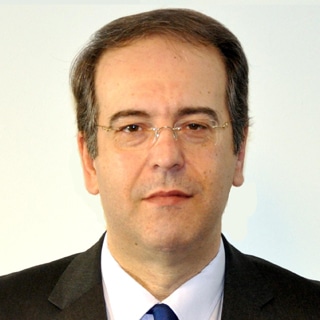
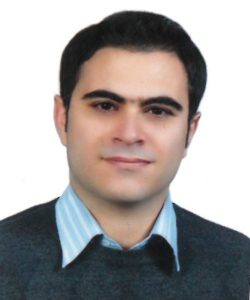
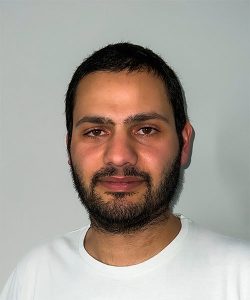
Anastasia Ioannou is a Lecturer in the Department of Computer Science and Engineering at the European University Cyprus. She is affiliated with the School of Sciences and focuses on research in artificial intelligence, medical imaging, and optimization algorithms. Her academic qualifications and employment history are listed in her profile but lack detailed descriptions. Her research interests include deep learning applications for healthcare, medical image classification, and dynamic environment modeling using swarm intelligence. Recent work emphasizes Alzheimer’s disease detection through advanced machine learning frameworks and semi-supervised techniques. Publications highlight contributions in medical AI and computational optimization, with notable work in 2024 and 2023 advancing diagnostic tools for neurodegenerative diseases. Earlier research (2017) addressed colony size optimization in dynamic systems, reflecting her cross-disciplinary approach. No specific awards or grants are explicitly mentioned in the provided text. Advising and lab affiliations remain unlisted, though her profile references academic consulting roles and editorial committee involvement.
Vasilios Raptis is a Visiting Associate Professor in Computational Chemistry at the School of Sciences, European University Cyprus. He holds a PhD in Chemistry (2004) from the National and Kapodistrian University of Athens, specializing in molecular simulation of polymers. His academic qualifications include an MSc in Polymer Science (2000) and a Diploma in Chemical Engineering (1994) from the National Technical University of Athens. His research focuses on computational methods for materials science, including molecular dynamics simulations of polymers, perovskite materials, and drug delivery systems. Key areas of interest include structure-property relations in nanomaterials, bio-plastic production from waste, and the development of computational tools like POLYANA for analyzing molecular systems. Raptis has participated in multiple research projects funded by the EU and Greek institutions, including REMAP (mask patterning), AMPERCEL (perovskite solar cells), and B2B (bio-waste to bioplastics). His work spans interdisciplinary collaborations in nanotechnology, sustainable materials, and energy harvesting. His publications highlight contributions to perovskite interface modeling, polymer synthesis, and graph theory applications in chemistry. While no awards are explicitly listed, his extensive project involvement underscores his role in advancing applied computational chemistry.
Panayiotis Andreou holds the position of Deputy Head of the School of Sciences and is an Associate Professor in Data Management at the University of Central Lancashire Cyprus (UCLan Cyprus). He is also the Course Leader for the MSc Data Analytics program. His academic journey includes a PhD in Computer Science (University of Cyprus, 2011), an MSc in Advanced Computer Technologies (2006), and a BSc in Computer Science (2003). He became a Fellow of the Higher Education Academy in 2016. Roles: Deputy Head (School of Sciences), Associate Professor, MSc Data Analytics Course Leader Research Interests: Data Management, Adaptive Computing, eHealth, Ambient Assisted Living Administrative Roles: Senate Member, Innovation and Enterprise Committee Chair, Internships Coordinator His research focuses on optimizing data systems for networks and healthcare, with contributions to wearable technologies, mobile applications, and elderly care systems. He has supervised PhD projects on adaptive visualizations and data management frameworks. Key grants include leadership on EU-funded projects like SLICES-DS (€2.9M) and RegTek (€1M), as well as national grants such as IDEALVis (€250K). He has also led cybersecurity and environmental monitoring initiatives like FireWatch (€160K). Awarded the Best PhD Award (EWSN’2012), eHealth Award for DITIS, and World Summit Award (WSA) for innovative healthcare systems. His outreach includes co-founding InSPIRE and serving on EU evaluation panels.
Marinos Themistocleous is a Professor and Associate Dean in the School of Business at the University of Nicosia, leading the Department of Digital Innovation. He also serves as Director of the Institute For the Future 22367214 and holds external roles including Professor at the University of Piraeus since 2017. His research focuses on blockchain technology, decentralized systems, and their applications in healthcare, energy, and smart environments. Education: PhD from Brunel University London (2002), Master’s from Athens University of Economics and Business (1997), and Bachelor’s in Informatics (1995). Research Interests: Blockchain consensus algorithms and governance frameworks IoV (Internet of Vehicles) and demand response management Cryptocurrency regulation and policy analysis Metaverse architecture and digital asset ecosystems Decentralized autonomous organizations (DAOs) Blockchain applications in energy grids and healthcare systems Publications reflect a strong focus on blockchain scalability, cross-industry applications, and emerging technologies like the Metaverse. His work integrates technical innovation with policy considerations, emphasizing real-world implementations. Labs/Teams: Director of the Network Oriented Systems and Services Laboratory at the University of Piraeus, leading interdisciplinary research on networked systems and blockchain integration.
Dr Aimilia Savva is a Lecturer in Mathematics and Statistics at the School of Sciences within the University of Central Lancashire Cyprus (UCLan Cyprus). She holds a PhD in Statistics (University of Cyprus, 2024), an MSc in Statistics (University of Sheffield, 2017), and a BSc in Mathematics and Statistics (University of Cyprus, 2016). Her academic roles include teaching Linear Models and Computational Statistics and Data Analysis at UCLan Cyprus, alongside serving as a Risk Consultant at EY Cyprus. Her research focuses on Adaptive Bayesian non-parametric inference , asymptotic performance of posterior distributions , and hierarchical/empirical Bayes procedures . She has contributed to peer-reviewed publications, including a 2024 article in Bernoulli on Bayesian methodology in white noise models. Her work bridges theoretical statistics with practical applications, emphasizing spatially inhomogeneous unknowns and p -exponential priors. Prior to her current roles, Dr Savva served as a Teaching Assistant at the University of Cyprus, instructing courses like Probabilities II and Statistical Methods . She actively engages with academic communities, presenting research at events such as the European Young Statisticians Meeting (2021) and the Pancyprian Statistics Day (2022). She is a member of the Cyprus Statistical Society.
Professor Constantia Alexandrou is a distinguished physicist at the Department of Physics, School of Natural and Applied Sciences, University of Cyprus. She leads state-of-the-art research in Lattice Quantum Chromodynamics and hadron structure, heading the Lattice QCD Computational Lab at the university. Professor Alexandrou serves as Chair of the Council of PRACE (Partnership of Advanced Computing in Europe), is a member of multiple prestigious scientific councils including the National Council for Research in Greece and the Helmholtz-Institute Mainz, and represents Cyprus at IUPAP. B.A. in Physics with First Class Honors from University of Oxford (1980) Ph.D. in Theoretical Strong Interactions Physics from MIT (1985) Research positions at Paul Scherer Institute, Switzerland and Erlangen University, Germany Professor Alexandrou's research focuses on Lattice Quantum Chromodynamics, hadron structure, and high-performance computing applications in theoretical physics. Her work bridges fundamental particle physics with advanced computational techniques, particularly in studying nucleon properties and quantum chromodynamics from first principles. She has pioneered methods for calculating parton distribution functions, hadronic vacuum polarization, and nucleon spin decomposition using lattice techniques, contributing significantly to our understanding of strong interaction physics. Her recent work has expanded into quantum computing applications for high-energy physics problems. Analysis of Professor Alexandrou's recent publications reveals a consistent focus on advancing lattice QCD methodologies for calculating fundamental properties of hadrons and nucleons. Her work spans both traditional lattice calculations and emerging quantum computing applications, demonstrating leadership in adapting computational physics to new technological frontiers. The publications show particular emphasis on precision calculations of nucleon structure, hadronic contributions to fundamental constants, and developing non-perturbative methods for quantum field theory. Fellow of the American Physical Society Principal Investigator of three European Joint Doctorates (approximately €3.7 million each) Principal Investigator of Excellence Center Quantum Computing for Science and Technology (QSciTec) under Teaming action (€35 million) Professor Alexandrou has secured approximately €15 million in competitive funding for the Computational-based Science and Technology Research Center of the Cyprus Institute, including two ERA Chair projects of €2.5 million each. She has served as the first Head of the Department of Physics at the University of Cyprus and held leadership positions at the Cyprus Institute from 2004-2022. With over 300 scientific publications and numerous invited talks at international meetings, she has organized several workshops in Cyprus and abroad, significantly contributing to the international lattice QCD community through the Extended Twisted Mass Collaboration (ETMC). She heads the Lattice QCD Computational Lab at the University of Cyprus, which operates dedicated computing clusters for lattice QCD calculations. As a member of the Extended Twisted Mass Collaboration (ETMC) - comprising major European and US research groups - she plays a key role in advancing international collaboration in computational particle physics. Her leadership extends to multiple scientific advisory bodies where she influences research directions in high-performance computing and theoretical physics across Europe.
Dr. John Bellos is an Associate Professor of Structural Design and Construction Technology at Neapolis University Pafos (since 2018), serving as Head of the Department of Civil Engineering and Coordinator of the BSc in Civil Engineering Programme. He holds a Ph.D. in Structural Dynamics from SUNY Buffalo (1989), an MSc in Mechanical Engineering from SUNY Buffalo (1986), and a BSc in Naval Architecture & Mechanical Engineering from National Technical University of Athens (1984). His expertise spans structural design of reinforced concrete buildings, seismic analysis, progressive collapse resistance, and non-conservative dynamic systems. His research integrates machine learning for structural behavior analysis and aesthetic-form integration. He previously served as Director of Information and Learning Services (2009–2013), contributing to the university's technological infrastructure. Key research areas include reinforced concrete mechanics, seismic retrofitting, steel frame dynamics, and soil-structure interaction. He has published extensively on structural safety, vibration control, and computational methods in construction engineering. His work bridges theoretical analysis with practical applications in resilient infrastructure design. Bellos has advised on structural design projects for industrial and civil infrastructure, contributing to Eurocode compliance and advanced simulation techniques. His collaborations include the PROINDUSTRY project on seismic isolators and the Hellenic Navy's vibration studies on offshore vessels.
Salomi Evripidou is a Lecturer in Algorithms and Complexity at Neapolis University Pafos, affiliated with the Intelligent Systems Laboratory (ISLab). She holds a B.Sc. in Computer Science from Aristotle University of Thessaloniki (Greece), an M.Sc. in Management from the University of Leicester (UK), and a Ph.D. in Educational Robotics from the joint doctoral program between Neapolis University and the University of Peloponnese (2021). Her research focuses on educational robotics, algorithms, deep neural networks, and intelligent tutoring systems. Notable contributions include integrating AI into educational support systems, cybersecurity frameworks leveraging LLMs, and IoT-robotics in learning environments. She has published widely on topics ranging from adaptive learning frameworks to robotic platform selection for education. Evripidou actively contributes to interdisciplinary projects, emphasizing technology's role in modern pedagogy. Her work bridges theoretical computer science with practical educational tools, aiming to enhance interactive and accessible learning experiences.
Milad Shahvali serves as a Post-Doctoral Researcher at the KIOS Research and Innovation Center of Excellence, University of Cyprus since January 2023, holding the academic rank of Research Fellow in systems and control engineering. His academic credentials include: M.Sc. in Systems and Control from Islamic Azad University of Najafabad, Iran (2014) Ph.D. in Systems and Control from Ferdowsi University of Mashhad, Iran (2022) His research focuses on advanced control methodologies with emphasis on event-triggered mechanisms for resource-constrained networks, stability analysis of fractional-order dynamical systems, and integration of reinforcement learning with game-theoretic approaches for multi-agent systems. These investigations target efficient solutions for cyber-physical infrastructure and distributed control applications. No scientific awards were documented in the source material. Information regarding student supervision, grant funding, or laboratory leadership was not provided in the available documentation. He operates within the KIOS Research and Innovation Center of Excellence, Cyprus' premier research hub for intelligent systems and critical infrastructure protection, which conducts interdisciplinary work spanning control theory, computer science, and electrical engineering.
Kirtan Gopal Panda serves as a Research Associate at the KIOS Research and Innovation Center of Excellence, University of Cyprus. He holds a Ph.D. from the Indian Institute of Technology, Kharagpur (2024), an M.Tech from the National Institute of Technology, Silchar (2016), and a B.Tech from the Biju Patnaik University of Technology, Rourkela (2010). His academic credentials include: Ph.D. (2024), Indian Institute of Technology, Kharagpur M.Tech in Communication and Signal Processing Engineering (2016), National Institute of Technology, Silchar B.Tech in Electronics and Communication Engineering (2010), Biju Patnaik University of Technology, Rourkela Dr. Panda's research centers on UAV-assisted networks , wireless sensor networks , and resource optimization . His work develops advanced algorithms for network efficiency in drone-based communications and distributed sensor systems, addressing critical challenges in bandwidth allocation and energy management for next-generation wireless infrastructures. These areas intersect telecommunications, aerospace engineering, and computational optimization. No scientific awards or fellowships were documented in the source material. The provided information does not specify student advising responsibilities or grant funding details. He actively contributes to research at the KIOS CoE, a specialized center focused on cyber-physical systems and networked control technologies within the University of Cyprus ecosystem.
Professor Georgiou Chrysis holds the position of Professor and Department Chair at the Department of Informatics, University of Cyprus. His academic background includes a Bachelor of Mathematics (1998) from the University of Cyprus, followed by an M.Sc. (2002) and Ph.D. (2003) in Computer Science and Engineering from the University of Connecticut, USA. He has authored over 115 articles in leading journals and conferences, co-authored two books on Distributed Cooperative Computing, and contributed to the 2021 book on Blockchain Systems. Research Focus: Algorithms, Distributed Systems, Fault Tolerance, and Machine Learning. Professional Service: Served on Technical Committees for EATCS DISC, ACM PODC, and multiple conference roles (e.g., General Chair of PODC 2015). Editorial Role: Editor of Information Processing Letters (2018–2023). His work is funded by the University of Cyprus, Research and Innovation Foundation, and the European Commission.
Professor Marios Dikaiakos is a full-time faculty member at the University of Cyprus (UCY), Department of Informatics. He holds a Ph.D. in Computer Science from Princeton University (1994) and has been at UCY since 1998. His roles include serving as Chair of the Department of Informatics (2010-2014) and Founding Director of the Entrepreneurship Center (2014-2021). He leads the Internet Computing Laboratory, focusing on Network-Centric Systems, Cloud Computing, and Social Media Analysis. His research has resulted in over 160 publications and 22 funded projects. Research interests include edge computing, cloud systems, IoT energy modeling, and polarization detection in news media. He has developed open-source tools like Fogify and BenchPilot for edge computing emulation. Active in academic governance, he has reviewed proposals for EU, national, and Chinese institutions. His work bridges theoretical computer science with practical applications in telemedicine, smart grids, and entrepreneurship ecosystems.
Μάριος Μαυρονικόλας is a Professor at the Department of Computer Science, University of Cyprus. He holds a PhD in Computer Science from Harvard University (1992) and a Diploma in Electrical Engineering from the National Technical University of Athens (Summa cum Laude, 1985). He has held visiting positions at the University of Paderborn (Guest Professor, 2006–2007), University of Connecticut (Assistant Professor, 1999), and University of Crete (Visiting Assistant Professor, 1992–1993). Research Interests: His work focuses on theoretical foundations of computer science, including Game Theory, Distributed and Parallel Computing, Networking, and Internet-related algorithms. He has authored over 100 publications in top-tier conferences and journals. Professional Activities: He currently serves at the University of Cyprus and has held academic roles in Germany, USA, and Greece. His expertise bridges algorithmic theory with practical applications in networked systems.
Philippos Isaia is a Scientific Collaborator at European University Cyprus and a Senior Software Engineer at the KIOS Research and Innovation Center of Excellence, University of Cyprus. He holds a Bachelor of Science in Computer Science (2012) and a Doctor of Philosophy in Software-Defined Networking (2018), both from Loughborough University, UK. Currently, he is pursuing a part-time Bachelor of Science in Astronomy via distance learning at the University of Central Lancashire, UK. Research Focus: His work centers on emerging network technologies, including: Architecture and optimization of Software-Defined Systems (SDS) IoT infrastructure and applications Routing and communication protocols for Vehicular Ad-hoc Networks (VANETs) Design and implementation of network emulation platforms
Harry Soteriou is a Researcher at the KIOS Research and Innovation Center of Excellence, affiliated with the University of Cyprus. He specializes in Machine Learning and Artificial Intelligence, with technical expertise spanning Python/C++ programming, databases, and distributed systems. BSc in Particle Physics and Cosmology from Lancaster University MSc in Data Science and Entrepreneurship (joint degree from Tilburg University and TU/Eindhoven) His research focuses on: Large Language Models (LLMs) for advanced NLP applications Multi-Agent Systems for distributed AI architectures Deep Reinforcement Learning in complex decision-making scenarios Technically, he works with Linux GPU clusters, Docker containers, and both SQL/NoSQL databases, maintaining proficiency in Python and C++ programming. His professional experience includes 4 years in core ML domains like Reinforcement Learning, Computer Vision, and Natural Language Processing.