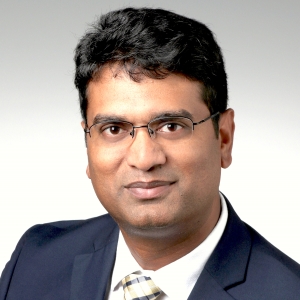
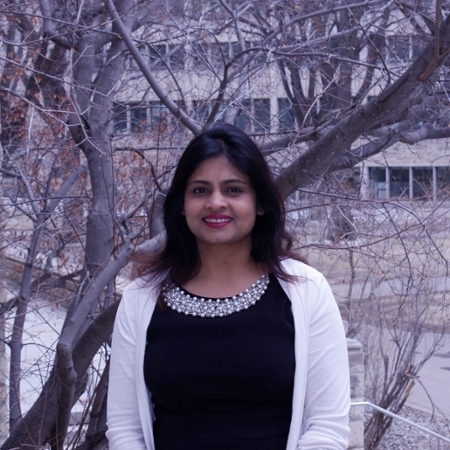
Abu Syed Kabir is an Associate Professor and Associate Chair of Graduate Studies (Academic Advising) in Mechanical and Aerospace Engineering at Carleton University. He leads the Advanced Materials Lab (AML) and holds degrees from BUET (BSc), Concordia (MASc), and McGill (PhD). Research Focus: Advanced materials processing including: Additive manufacturing and 3D printing optimization Welding/joining technologies for aerospace alloys Coating processes and tribology Microstructure-property relationships in structural metals Publications: Recent work demonstrates extensive expertise in titanium/aluminum welding, additive manufacturing process optimization, and surface engineering. Research consistently bridges computational modeling with experimental validation.
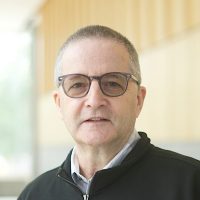
Danny Krizanc is an Adjunct Professor at the School of Computer Science, Carleton University. His affiliation includes the Herzberg Laboratories located at 1125 Colonel By Drive, Ottawa, Ontario. Contact information includes the email dkrizanc@wesleyan.edu and a listed phone number. While specific research interests are not detailed in the provided text, his academic role in Computer Science suggests potential focus areas such as algorithms, theoretical computer science, and distributed systems. No awards, grants, or publications are explicitly mentioned in the current data. Technical support and general inquiries for the School can be directed via phone at 613-520-4333 or fax 613-520-4334 during operational hours (8:30-16:30).
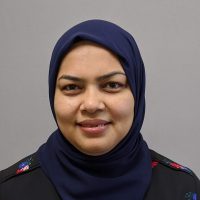
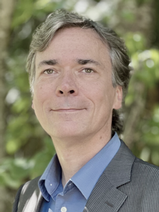
Michel Barbeau is a Professor and Director at the School of Computer Science, Carleton University. He holds a Ph.D. in Computer Science from Université de Montréal (1991) and has held academic roles at Université de Sherbrooke (1991–1999) and a visiting position at the University of Aizu, Japan. His research focuses on non-classical wireless networks, including underwater acoustic communication systems, quantum networks, and resilience assessment of cyber-physical systems. He leads projects involving acoustic signal processing, underwater node communication, and challenges like multipath propagation in aquatic environments. His team tested prototypes in Ottawa’s Rideau Canal. His work spans underwater communication protocols, quantum encryption, and AI-driven network optimization. He is active on YouTube and Twitter, and his ORCID profile highlights interdisciplinary contributions. His research emphasizes practical applications in environmental monitoring, coastal navigation, and secure quantum communication frameworks. Education: Ph.D. Computer Science, Université de Montréal (1991) M.Sc. Computer Science, Université de Montréal (1987) B.Sc. Computer Science, Université de Sherbrooke (1985) Research Interests: Underwater Acoustic Networks Quantum Communications and Cryptography Cyber-Physical Systems Resilience Ad Hoc and Mobile Networks Machine Learning for Network Optimization His current projects address challenges such as signal interference in underwater environments and developing quantum-safe cryptographic algorithms. Collaborations involve interdisciplinary teams of students and researchers. Advancement and Grants: Lead projects on underwater surveillance systems Explores quantum encryption protocols for post-quantum security Investigates AI-driven solutions for UAV and MIMO networks Labs and Teams: His research group focuses on experimental prototyping, including underwater acoustic networks and quantum communication frameworks. Collaborations span academia and industry for real-world applications.
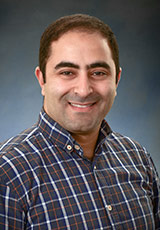
Farah Chanchary is a Lecturer and Lab/Course Coordinator at the School of Computer Science, Carleton University. She specializes in areas such as data structures, cloud computing, and educational technologies. Her work spans algorithm design, privacy in advertising, and challenges in e-learning, particularly in Saudi Arabia. She coordinates laboratory and course activities, supporting academic infrastructure. Research Interests: - Data Structures and Algorithms - Cloud Computing and Migration - Privacy-Preserving Models in Advertising - E-Learning Readiness and Challenges - Machine Learning Applications (Neural Networks, Genetic Algorithms) - Geometric Query Processing Publications Trends: Her recent work focuses on efficient data structures for window queries, privacy concerns in online advertising, and cloud computing challenges. Earlier research includes studies on e-learning adoption in Saudi Arabia and neural network applications in rainfall forecasting. No awards or grants are listed. She has no documented advisees. She manages laboratory facilities and course coordination in the School of Computer Science.
Avery Miller is an Associate Professor in the Department of Computer Science at the University of Manitoba. His research focuses on theoretical computer science, particularly distributed algorithms, graph theory, and algorithmic lower bounds. He holds a Ph.D. from the University of Toronto, supervised by Faith Ellen, and has held postdoctoral positions at Tel Aviv University and Université du Québec en Outaouais. Education: Ph.D. in Computer Science, University of Toronto (Supervisor: Faith Ellen) M.Sc. in Computer Science, University of Toronto (Supervisor: Faith Ellen) B.Math. in Computer Science and Combinatorics & Optimization, University of Waterloo Research interests include distributed computing in anonymous networks, wireless networks, and graph burning. His work explores deterministic protocols, fault-tolerant systems, and the role of information in distributed algorithms. Recent projects involve reconfiguration of multisets, fast rendezvous in labeled networks, and cop-and-robber games on planar graphs. Publications highlight contributions to distributed algorithms, radio networks, and graph theory, including a best paper award at SPAA 2019. His work often bridges theoretical foundations with practical network challenges. Awards: Best Paper Award at SPAA 2019 Academic service includes roles as Organizing Chair of PODC 2021, Treasurer of PODC 2020, and committee memberships in SPAA, DISC, and other conferences. He reviews for top journals like ACM Transactions on Algorithms and Theoretical Computer Science. Teaching includes courses on automata theory, algorithms analysis, and distributed computing. He is part of the Geometric, Approximation, and Distributed Algorithms Lab at the University of Manitoba.
Dr. Jian Tang is a Professor in the Department of Computer Science at Memorial University of Newfoundland. He holds a M.Sc. from the University of Iowa and a Ph.D. from Penn State University. His primary affiliation is within the Faculty of Science. His research focuses on database systems, distributed computing, data mining, and IoT security. Key projects include fault tolerance in distributed systems, workflow management, intrusion detection in IoT networks, and machine learning applications in healthcare and genomics. He has published extensively on topics like autonomous IoT security systems, feature selection methods for microarray data, and probabilistic resource scheduling in grid environments. Dr. Tang’s work bridges theoretical foundations with practical implementations, particularly in cybersecurity, bioinformatics workflows, and scalable distributed systems. His recent publications emphasize real-time autonomous IoT security solutions and machine learning-driven predictive models for healthcare outcomes.
Hassan Alkomy is an Assistant Professor in the Department of Engineering at the University of New Brunswick, affiliated with the Faculty of Science, Applied Science and Engineering. He holds a PhD (2022), MSc (2016), and BSc (2010) in Engineering. His research focuses on robotics, control systems, and energy-efficient autonomous systems, with emphasis on dynamics, motion planning, and vibration reduction in UAVs and robotic manipulators. He leads the Cooperative Robotic Manipulation for Industrial Applications project targeting safe, energy-efficient payload manipulation in industrial settings. Dr. Alkomy’s teaching interests include kinematics, dynamics of machines, mechanics of materials, and feedback control. He actively engages in academic service, including organizing symposiums on Industry 4.0 technologies, attending workshops on accessible education and equity, and presenting at conferences like the International Conference on Unmanned Aircraft Systems (ICUAS). His lab includes advanced robotic systems like Quanser QArm manipulators for collaborative manipulation research. Key grants include the NBIF-TRF Talent Recruitment Fund (2023). His research outputs span IEEE Transactions on Industrial Electronics, Mechatronics, and journals like Nonlinear Dynamics. He mentors undergraduate and graduate students in robotics, and his recent experiments include UAV payload transportation and distributed control for multi-quadrotor systems. Collaborative projects include the Strato-Science Campaign with the Canadian Space Agency.
Professor Gabriel A. Wainer holds a Ph.D. from the Universidad de Buenos Aires and is a Full Professor at Carleton University's Department of Systems and Computer Engineering, Faculty of Engineering and Design. His research focuses on Discrete-Event Modeling and Simulation (DEVS), Real-Time Systems, and Parallel/Distributed Simulation. He leads the Advanced Real-Time Simulation (ARS) Lab at Carleton's V-Sim Centre, collaborating with industry partners like Ericsson Canada on projects such as channel reconstruction for wireless networks and AI-driven spectrum sharing. Wainer is a Fellow of the Society for Modeling and Simulation International (SCS) and an ACM Distinguished Speaker, with over 450 publications and significant grant funding. He has mentored numerous students and researchers, contributing to Carleton's academic and research excellence. Education: Ph.D. (Computer Science, Universidad de Buenos Aires, 1998), M.C.S. (Universidad de Buenos Aires, 1993). He has held visiting roles at institutions worldwide, including INRIA and the University of Nice. Research interests include DEVS formalism, cellular models, and real-time operating systems. His work bridges theory and application, addressing challenges in embedded systems, IoT, and pandemic modeling. Awards include the McLeod Founder Award (2022), SCS Outstanding Professional Achievement (2020), and IEEE Outstanding Engineering Award (2019). Labs/Teams: Advanced Real-Time Simulation Lab (ARS), part of Carleton's V-Sim Centre. Grants: Over $4.3M as PI and $1.2M as co-applicant, totaling $30M+ in collaborative funding. Advising: Supervised 12 postdocs, 19 PhDs, 16 RAs, 71 MSc students, and 150+ undergrads since 1997.
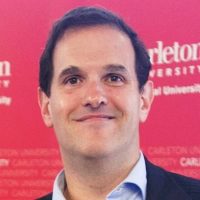
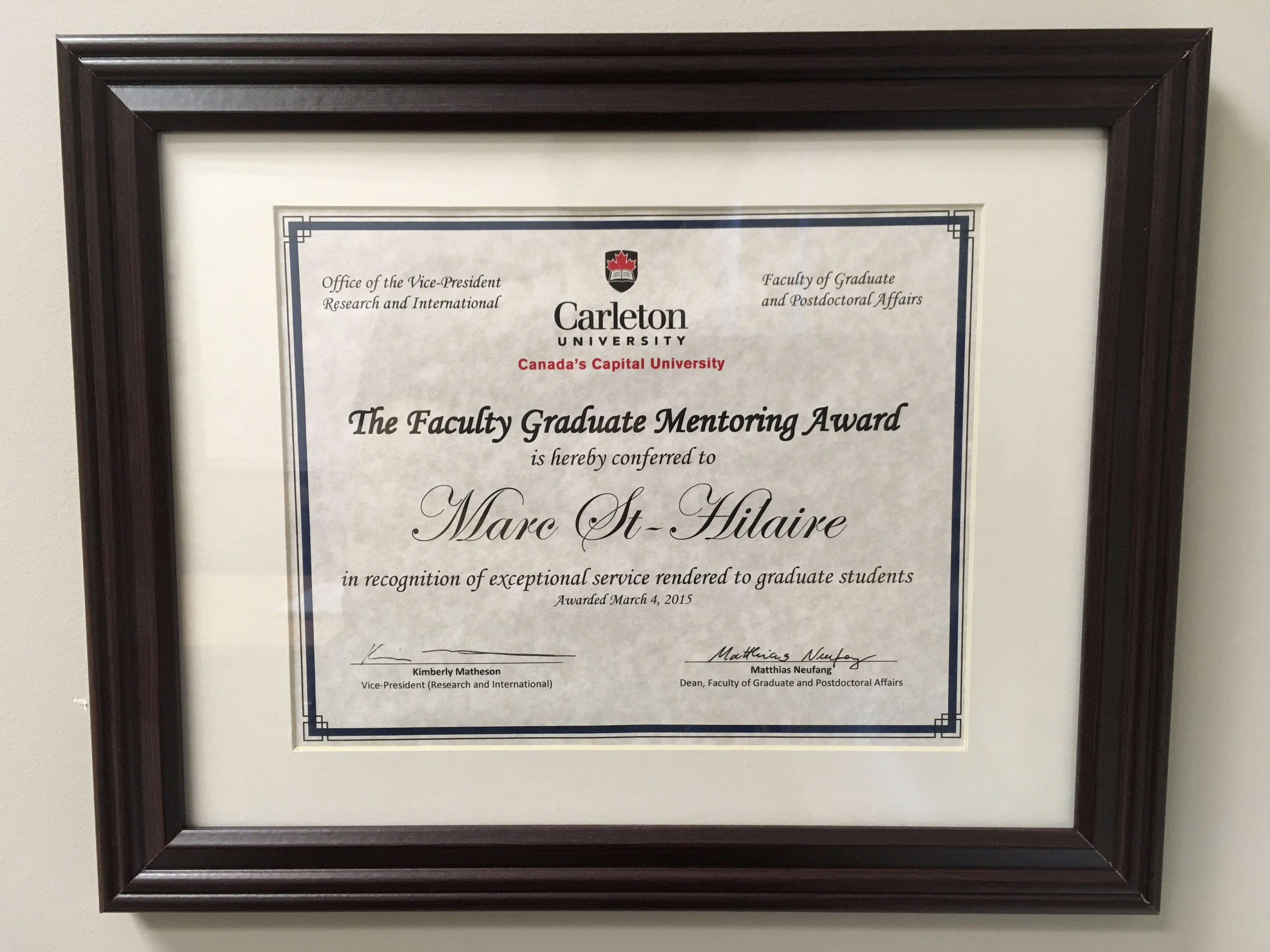
Marc St-Hilaire is a Professor at Carleton University, cross-appointed between the Carleton School of Information Technology and the Department of Systems and Computer Engineering. He holds a Ph.D. from École Polytechnique de Montréal and is a Senior Member of IEEE. His research focuses on telecommunication networks, including network planning, optimization, mobile computing, and emerging technologies like fog/edge computing and software-defined networking (SDN). He leads the NET Program and actively contributes to research through his team and collaborations with labs such as the Broadband Communications and Wireless Systems (BCWS) and Real-Time and Distributed Systems Group (RADS). Dr. St-Hilaire has supervised numerous graduate students, with current advisees in Ph.D. and M.Sc. programs. His work has garnered multiple awards, including Best Paper Awards at conferences like ADHOCNETS and iThings, as well as the Carleton Faculty Graduate Mentoring Award. He is deeply involved in academic service, serving as editor for journals like JSAN and MONET, and organizing committees for major conferences such as IEEE ICC and IEEE Globecom. His research explores cutting-edge areas like vehicular cloud networks, blockchain-based edge intelligence, and resource allocation in distributed systems. He actively seeks to mentor talented students and collaborate on projects addressing challenges in future networks, including 5G/6G integration and industrial IoT reliability.
Dr. George O.M. Yee is an Adjunct Professor at the School of Computer Engineering, Carleton University. He holds a Ph.D. from Carleton and is a licensed Professional Engineer (P.Eng.). His research focuses on information security, privacy protection, computational intelligence, software engineering, and performance optimization. He has received numerous awards, including the IARIA Fellow (2017), AINA-2007 Outstanding Service Award, and multiple Nortel and IEEE accolades. His work emphasizes secure system design, privacy compliance, and cybersecurity metrics. Recent publications address behavioral security postures, attack surface reduction, and threat mitigation strategies. He has contributed to frameworks for privacy protection in distributed systems and cloud computing, leveraging computational methods for policy enforcement and vulnerability analysis. Dr. Yee’s awards reflect his industry and academic impact, including awards for innovation (Nortel Gold Pride, 2000) and IEEE recognition. His research aligns with Carleton’s focus on engineering excellence and interdisciplinary collaboration.
Dr. Derek Eager is a Professor in the Department of Computer Science at the University of Saskatchewan. His research focuses on computer system performance evaluation, distributed systems, and internet multimedia applications. He holds a Ph.D. from the University of Toronto (1984) and has held academic positions since 1984. His work includes contributions to content delivery systems, video streaming optimization, and cache algorithms. He has served in leadership roles at ACM SIGMETRICS and has authored numerous influential publications. Education: B.Sc. (Hons.) in Computer Science from the University of Regina (1979), M.Sc. and Ph.D. from the University of Toronto (1981, 1984). Research Interests: Design and performance evaluation of internet applications, particularly in content distribution and multimedia systems. Recent work includes optimizing cache strategies for 360° video and analyzing user behavior patterns. Professional Contributions: Served as SIGMETRICS Chair (2001-2003), program chair for SIGMETRICS 1987, and co-chair for SIGMETRICS 2005. Current roles include program committee memberships in ACM SIGMETRICS, MAMA, and MASCOTS (2025). Awards: Best Paper Award at ACM SIGCOMM 2013 Workshop on Future Human-Centric Multimedia Networking (FhMN 2013). Labs/Teams: Active in distributed analytics and multimedia systems research, collaborating on projects such as Spark resource management and agricultural IoT systems.
Dr. Banani Roy is an Assistant Professor in the Department of Computer Science at the University of Saskatchewan. Her research focuses on software maintenance, empirical software engineering, program comprehension, and scientific workflow management systems. She explores challenges in quantum computing applications for software engineering, AI-driven code tools, and reproducibility in computational experiments. Her work includes developing frameworks like VizSciFlow for scientific workflow visualization and Nutrient App for environmental monitoring via smartphone applications. Her research interests span topics such as code quality analysis, gender disparities in software systems, and XAI (Explainable AI) challenges. She has contributed to tools like CloneCognition for code clone validation and FSECAM for feature-to-architecture linkage. Her recent studies address developer challenges with large language models and federated learning approaches for real-time bug prediction. Dr. Roy's publications emphasize interdisciplinary applications of software engineering principles in scientific computing, quantum algorithms, and community-driven problem-solving platforms. She advocates for reproducible workflows and FAIR (Findable, Accessible, Interoperable, Reusable) data practices in collaborative scientific research. While no awards are explicitly listed, her extensive contributions to open-source tool development and empirical studies highlight her impact in advancing software engineering methodologies. She collaborates on projects involving legacy system reengineering, cloud-based code clone validation, and asynchronous collaboration frameworks for scientific teams.
Yvonne Coady is a Professor in the Department of Computer Science at the University of Victoria. She leads the MOD(ularity) Squad, focusing on system infrastructure modularity, mixed reality systems, and geospatial computing. Her research spans scalable distributed systems, immersive technologies, and AI-driven applications. She has co-authored over 170 papers and supervised numerous graduate students. Research interests include citizen science integration, advanced software modularity, and cloud computing architectures. Collaborations include projects with IBM, Ericsson, and Urthecast, addressing Earth observation, urban planning, and virtual reality analytics. Recognized with the 2015 Knowledge Mobilization Award, her work emphasizes real-world impact through industry partnerships. Current projects explore immersive applications via VR/AR, such as the RAVR and SAVR initiatives, and accessibility-enhanced interfaces. She also investigates geospatial computing for environmental monitoring and disaster response. Awards and grants include NSERC Collaborative Research and Mitacs Accelerate funding. Grants: NSERC grants (2023-2024), Mitacs projects (2020-2024) Labs/Teams: MOD(ularity) Squad, RAVR (Research in Augmented and Virtual Reality) Key Collaborations: Ocean Networks Canada, SALA Lab (UBC)
Professor Daniela Damian holds the ECS-CAPI Chair in Inclusive Science, Technology and Engineering at the University of Victoria's Faculty of Engineering and Computer Science. Her research focuses on inclusive design, software ecosystems, and global software development, with particular emphasis on diversity and privacy in technology. She leads the SEGAL Lab, fostering collaborative, globally distributed software engineering practices. Damian is a Distinguished Visiting Professor at institutions like the University of Auckland and Singapore Management University, and has received accolades such as the Royal Society Catalyst Award and the SIGSOFT Distinguished Paper Award. Her teaching emphasizes experiential learning and real-world software engineering challenges, including courses on Global Software Engineering and Requirements Engineering. She pioneered the INSPIRE: STEM for Social Impact Program, empowering students to create tech solutions for societal issues. Damian actively contributes to academic communities through conference organization, editorial roles (e.g., ACM Transactions on Software Engineering), and mentoring doctoral students like Colin Werner and Zane Li. Research Interests: Inclusive software design, global collaboration, requirements engineering, privacy compliance (GDPR), and team coordination in distributed environments. Key Projects: Non-Functional Requirements in Continuous Software Engineering; Diversity and Inclusion in Software Engineering. Her work bridges academia and industry, advocating for ethical practices and equitable technology access. Damian’s TEDx talk on empathy as a technological force underscores her commitment to human-centric innovation.
Jens Weber is a Professor and Associate Dean of Professional Programs & Development at the Faculty of Engineering and Computer Science, University of Victoria. He holds a PhD from the University of Paderborn and is a Professional Engineer (P.Eng.) in British Columbia. His research focuses on software engineering with emphasis on safety and security assurance in critical systems, particularly in healthcare, transportation, and defense sectors. He also investigates systems incorporating artificial intelligence and self-adaptation. He teaches courses on security engineering, software architecture, and formal methods. His affiliations include the School of Health Information Science at UBC and the Faculty of Medicine at UBC. Key research projects include GRAPE VINE (graph transformation tools), Information Security Assurance, Medical Device Software Certification, and Medical Systems Hazard Analysis. He serves on the Board of Engineers and Geoscientists BC, chairs the Academic Integrity Committee, and organized conferences like IEEE Health Informatics 2021. His work emphasizes bridging engineering practices with real-world software deployment challenges, especially in health informatics. Awards include the 2019 Société de Biomécanique Young Investigator Award for human body model validation research. Current initiatives include developing data quality frameworks for clinical systems, tool support for functional graph programming, and safety analysis methodologies for adaptive systems.