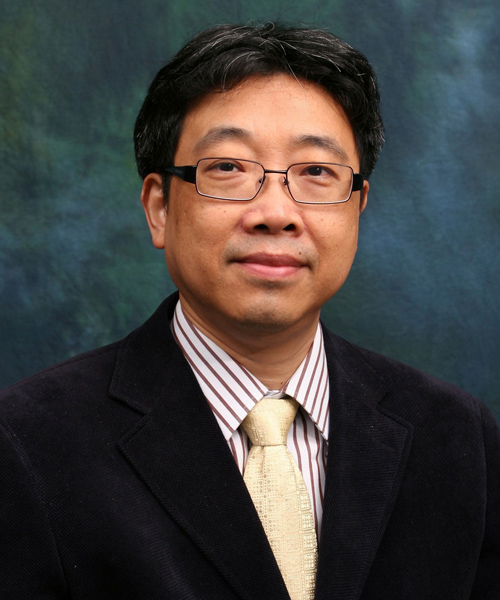
Emmett Witchel is a Professor of Computer Science at the University of Texas at Austin , with research spanning computer architecture, systems, networking, security, and privacy . His work focuses on low-level systems optimization and secure concurrent execution. Research Interests: Concurrent systems, secure execution environments, GPU integration, distributed systems. Teaching: CS 380L (Advanced Operating Systems), CS 371M (Mobile Computing). Scientific Awards: Runner-up Best Paper, ASPLOS 2013 Runner-up Award for Outstanding Research, USENIX Symposium 2012 IEEE Micro Top Pick Award 2007 ACM Honorable Mention 2004 George M. Sprowls Award, MIT EECS 2004 Recent Publications demonstrate leadership in CXL pod databases ( Tigon ), stateful serverless computing ( Boki ), SmartNIC-accelerated file systems ( LineFS ), and GPU security ( Telekine ). His work bridges hardware-software co-design and practical systems implementation.
Kartik Hosanagar is the John C. Hower Professor of Technology and Digital Business and a Professor of Marketing at The Wharton School, University of Pennsylvania. He is also the Co-Director of the Wharton Human-AI Initiative. His work spans the Department of Operations, Information and Decisions, focusing on the intersection of technology, business, and society. Education: PhD in Management Science and Information Systems, Carnegie Mellon University MPhil in Management Science, Carnegie Mellon University Masters in Information Systems, Birla Institute of Technology and Sciences (BITS, Pilani), India Bachelors in Electronics Engineering, Birla Institute of Technology and Sciences (BITS, Pilani), India Research Interests: Kartik’s research focuses on the digital economy, particularly the impact of AI, algorithms, and analytics on consumers, businesses, and society. His work explores internet marketing, e-commerce, digital media, information diffusion, platform economics, and the ethical implications of AI. He investigates how technology transforms business models and consumer behavior in online environments. Publication Trends: His recent research combines machine learning, causal inference, and behavioral modeling to study digital platforms, user behavior, and AI applications in marketing and operations. The articles reflect a strong focus on empirical analysis of social media, search engines, and platform design, with applications in advertising, content sharing, and product adoption. Scientific Awards: Best Information Systems paper published in Management Science, 2013-2016 Finalist for Best Information Systems paper in Management Science (2012-2015) Recognized as one of the world’s top 40 business professors under 40 Eleven-time recipient of teaching excellence awards at Wharton MBA Excellence in Teaching Award, 2007 “Goes above and beyond the call of duty” award (multiple years) Advising and Grants: While no formal PhD students are listed, Kartik has supervised independent studies and mentored numerous students through research projects. His entrepreneurial ventures, such as Yodle and Jumpcut Media, reflect real-world applications of his research. He has also secured significant industry engagement through consulting and executive education with major firms like Google, American Express, and Citi. His work is supported by academic recognition, editorial roles, and media outreach. Labs and Teams: Kartik co-directs the Wharton Human-AI Initiative, a research hub exploring the integration of human and artificial intelligence in business. He also leads research groups focused on digital platforms and AI ethics, collaborating with scholars across disciplines to advance understanding of algorithmic decision-making and its societal impact.
Alastair Beresford is Professor of Computer Security and Head of the Department of Computer Science and Technology (The Computer Laboratory) at the University of Cambridge. He is also the Robin Walker Fellow in Computer Science at Queens' College, Cambridge. His leadership spans both academic administration and research innovation within one of the world's leading computer science departments. Professor Beresford's research focuses on the security and privacy of large-scale distributed computer systems, with particular emphasis on networked mobile devices such as smartphones, tablets, and laptops. His work examines both device-level security and the privacy implications of interactions between mobile devices and cloud-based services. His methodological approach combines critical evaluation of existing products, development of novel prototype technologies, and empirical measurement of human behavior in security contexts. His recent publications reveal a strong focus on confidentiality computing, anonymity networks, mobile security, and secure group communication. Notable projects include Pudding (private user discovery in anonymity networks), CoverDrop (secure whistleblower-journalist communication), and research on the practical viability of anonymity networks on smartphones. His work consistently bridges theoretical security concepts with practical implementations that have led to real-world security improvements in iOS, Android, and OpenSSH. Scientific Awards: Andreas Pfitzmann Best Student Paper Award (PETS 2022) for work on secure initial contact between whistleblowers and journalists Professor Beresford leads several major collaborative research initiatives including the Centre for Mobile, Wearable Systems and Augmented Intelligence (co-directed with Prof Cecilia Mascolo), the Cambridge Cybercrime Centre, and the Raspberry Pi Computing Education Research Centre. He also serves as technical director for the Isaac Learning Platform, which has supported over 500,000 users making more than 120 million question attempts since 2015. His research has practical impact, with findings leading to security fixes in major commercial products including iOS 12.2 (CVE-2019-8541), watchOS 5.2, Android 11, and OpenSSH 9.8 (CVE-2024-39894).
Shiva Nejati is a Professor at the University of Ottawa 's School of Electrical Engineering and Computer Science . He holds a PhD in Computer Science from the University of Toronto and previously worked as a Senior Scientist (2012-2019) and Scientist (2009-2012) at the SnT Centre (University of Luxembourg) and Simula Research Laboratory. Research focus: Software engineering for cyber-physical systems (autonomous vehicles, IoT), blending formal verification, machine learning, and search-based testing Key tools developed: ARIsTEO, SOCRaTEs, SimCoTest, EPIcuRus Editorial roles: Associate Editor for EMSE Journal (2025–), ASE Journal (2025–), IEEE Transactions on Software Engineering (2020–2024) His work combines formal methods , empirical software engineering , and AI/ML to address verification challenges in complex systems, particularly through evolutionary algorithms and surrogate modeling . Notable collaborations include industry partners in telecommunications, automotive, and aerospace sectors. Recent publications emphasize large language models for requirements analysis, adversarial testing of vision systems, and multi-objective optimization for test generation. His Sedna Research Lab actively trains graduate students in these cutting-edge methodologies.
Roxana Geambasu is an Associate Professor at Columbia University's Department of Computer Science, with affiliations to the Software Systems Lab and the Cybersecurity Committee . She specializes in systems security, differential privacy, and resource management for modern computing environments. PhD: University of Washington (2011) Undergraduate: Polytechnic University of Bucharest, Romania Her research focuses on integrating differential privacy as a first-class computing resource in infrastructure systems, with key contributions in: Privacy Budget Management (PrivateKube, DPack, Turbo) Web & Mobile Privacy (Cookie Monster, Big Bird) Security Abstractions (POSIX, Vanish, XRay) Article trends show a strong emphasis on differential privacy (8/15), resource scheduling (5/15), and privacy-preserving advertising (3/15). Key subfields include budget optimization, browser APIs, and ML pipeline privacy. Scientific awards include: Alfred P. Sloan Fellowship NSF CAREER Award Google Ph.D. Fellowship in Cloud Computing Best Paper Awards at SOSP, EuroSys She advises M.S. and undergraduate students, teaching courses in Distributed Systems and Privacy Curriculum . Her lab develops tools like PixelDP and Sunlight for operationalizing privacy in real-world systems.
Tariq Iqbal is an Assistant Professor at the University of Virginia , with joint appointments in the Department of Systems and Information Engineering and Department of Computer Science . He leads the Collaborative Robotics Lab (CRL) , specializing in human-robot teams and embodied AI . Previously, he was a Postdoctoral Associate at MIT's CSAIL , advised by Prof. Julie Shah , and earned his Ph.D. in Computer Science from University of California San Diego (UCSD) under Prof. Laurel Riek . Ph.D. in Computer Science, University of California San Diego (2017) M.S. in Computer Science, University of Texas at El Paso (2012) B.S. in Computer Science and Engineering, Bangladesh University of Engineering and Technology (2007) His research lies at the intersection of artificial intelligence and robotics , focusing on human-robot collaboration in dynamic environments. Key areas include motion prediction , multimodal fusion , trust modeling , and collaborative learning . His work integrates cognitive science and deep learning to enhance robotic fluency in naturalistic settings. Recent publications (2023–2025) highlight advancements in human-robot team dynamics , multimodal dataset creation , and motion prediction algorithms . Notable works include Energy-Based Transformers for scalable AI, PoseTron for motion prediction, and Accessible Navigation Mapping for assistive robotics. These contributions span trust modeling , cloud robotic infrastructure , and safety in close-proximity collaboration . National Science Foundation (NSF) CAREER Award Air Force Office of Scientific Research (AFOSR) Young Investigator Program (YIP) Award Commonwealth Center for Advanced Manufacturing (CCAM) Innovation Award As faculty, he has secured grants from NSF and AFOSR , mentored research students, and taught courses like Stochastic Modeling I (SYS 6005) and Robots and Humans (SYS 4582/6465, ECE 4502/6465, CS 6465) . His prior industry roles at IBM Watson Lab and Grameenphone Ltd. inform his applied research in telecom infrastructure and cognitive robotics . He leads the Collaborative Robotics Lab (CRL) at UVA, which develops multimodal datasets , real-time coordination algorithms , and adaptive pathfinding systems . Current projects explore human motion prediction , team synchrony , and embodied question-answering , reflecting his commitment to advancing human-robot fluency and contextual AI .
Andrew Warfield is an Adjunct Professor in the Department of Computer Science at the University of British Columbia (UBC) and a Senior Principal Engineer at Amazon. His research focuses on computer systems software, including virtualization, distributed storage, security, and high-availability systems. He previously held roles as Associate Professor at UBC, CTO at Coho Data, and Technical Director at Citrix Systems. His work has led to projects like Remus (high-availability replication), Tralfamadore (execution analysis), and secure hypervisor development with Xen. Warfield's education includes a PhD from the University of Cambridge's Computer Laboratory, where he researched I/O device virtualization under Steven Hand. He has held visiting roles at Intel Research Cambridge and internships at AT&T Research and Nortel Networks. Research Grants: Supported by Intel Research, NSERC, Network Appliance, and the Communications Security Establishment. Professional Activities: Technical Advisory Board Member at Teradici, and involvement in program committees for conferences like HotOS, EuroSys, and FAST. His research emphasizes practical systems, aiming to bridge the gap between theoretical computer science and real-world applications. Notable contributions include innovations in storage for virtualized environments, secure hypervisor architectures, and disaster-tolerant systems like SecondSite. Warfield is affiliated with UBC's Department of Computer Science and maintains active collaboration with industry partners. Though currently not actively recruiting students, his prior mentorship has influenced many in systems research.
Dr. Samuel Cheng is an Associate Professor at the Gallogly College of Engineering , University of Oklahoma , specializing in Electrical and Computer Engineering . He holds a Ph.D. in Electrical Engineering from Texas A&M University (2004), preceded by M.S. and M.Phil. degrees from the University of Hawaii and Hong Kong University of Science and Technology. Education: B.S. (University of Hong Kong, 1995), M.Phil. (HKUST, 1997), M.S. (University of Hawaii, 2000), Ph.D. (Texas A&M, 2004) Professional Experience: Senior Research Engineer at Advanced Digital Imaging Research (2004-2005), prior internships at Microsoft Asia and Panasonic Technologies His research focuses on Information Theory , Signal and Image Processing , and Pattern Recognition , with applications in remote sensing, urbanization analysis, and disaster monitoring. His publications span topics including urban impervious surface mapping , nighttime light analysis , and machine learning for environmental data . His work often integrates multi-source datasets (e.g., Landsat, LiDAR, social media) for spatiotemporal modeling. Technical Expertise: Spectral unmixing, machine learning, thermal remote sensing, GIS integration Key Applications: Power outage detection, vegetation-crime correlation, PM2.5 estimation, smart meter data fusion Dr. Cheng holds three US patents in digital watermarking and is affiliated with IEEE, Sigma Xi, and AAAS. His recent articles demonstrate a trend toward leveraging AI for remote sensing challenges and analyzing urbanization impacts on ecosystems.
Jiannong Cao is a Chair Professor and Director of the University Research Facility in Big Data Analytics at the Department of Computing, Hong Kong Polytechnic University. He has held various academic roles since 1990, including Assistant Professor at City University of Hong Kong and Lecturer at Australian universities. PhD in Computer Science, Washington State University (1990) MSc in Computer Science, Washington State University (1986) BSc in Computer Science, Nanjing University (1982) His research focuses on cloud and edge computing , parallel and distributed computing , and mobile computing , with significant contributions to wireless sensor networks (WSN) for structural health monitoring (SHM) and software-defined networking (SDN) for vehicular communications. Recent work includes WiFi-based non-invasive health monitoring systems and multi-user computation partitioning in mobile cloud environments. Dr. Cao’s publications demonstrate trends in WSN optimization , SDN architectures , and cognitive modeling for network embedding , with applications in smart healthcare , transportation systems , and industrial IoT . Ministry of Education Natural Science Award (2018) ACM Distinguished Member (2017) IEEE Fellow (2014) Best Paper Awards at IEEE DSAA, SMARTCOMP, WCNC He has mentored numerous researchers, including Linchuan Xu , Xuefeng Liu , and Weigang Wu , who have authored key publications in top venues like ACM WSDM and IEEE INFOCOM . His professional roles include chairing IEEE committees and serving on grant panels for the Hong Kong Research Grant Council.
Prof. Dr. Fabian Gieseke is a Professor and Chair of Machine Learning and Data Engineering at the University of Münster. He holds a PhD in Computer Science from Carl von Ossietzky University of Oldenburg and a dual degree in Mathematics and Computer Science from the University of Münster. His research focuses on Machine Learning, High-Performance Computing, and their applications in Geosciences, Smart Cities, and Astrophysics. Education: PhD in Computer Science (2012), Carl von Ossietzky University of Oldenburg University studies in Mathematics and Computer Science (2006–2011), University of Münster Research Interests: Data Mining and Machine Learning High-Performance Computing & Distributed Systems Deep Learning Applications in Environmental Science and Astrophysics Geospatial Data Analysis using Satellite Imagery Publications Trends: His recent work emphasizes large-scale environmental monitoring via deep learning, including canopy height estimation, forest biomass prediction, and national-scale tree counting. He also explores interactive systems for geospatial data retrieval and optimization of machine learning models for resource-constrained environments. Advising & Grants: Supervised over 30 theses on topics like satellite image analysis, deep learning on microcontrollers, and data marketplaces for smart grids. Active in securing grants for interdisciplinary projects combining AI with Earth observation. Labs/Teams: Leads the Machine Learning and Data Engineering group at the University of Münster, focusing on scalable AI solutions for real-world challenges in science and industry.
Yashar Ganjali is a Professor in the Department of Computer Science at the University of Toronto , leading the Systems and Networking Group . His research spans computer networks , with a focus on data center networking , software-defined networking (SDN) , and congestion control . Education : Not explicitly detailed, but inferred from academic rank as a Professor. His work on flow consolidation , load migration in SDN controllers , and machine learning for network management has been influential. Recent projects include FORESIGHT (2025) for ML-driven scheduling and Meta-Migration (2023) to reduce switch migration latency. Scientific Awards include the IFIP Networking 2025 Best Paper Award . Collaborations with institutions like Google (2024) and Facebook (2019) highlight his industry impact. Advisees include Sepehr Abbasi Zadeh (PhD, 2024). Current projects integrate optical packet switching and eBPF-based network augmentation , aiming to address scalability, micro-bursts, and resource allocation efficiency in cloud environments.
Stephan J. Goetz is a Professor in the Department of Agricultural Economics, Sociology and Education at the College of Agricultural Sciences, Pennsylvania State University. He is based at 207C Armsby Building, University Park, PA 16802, and can be reached at sjg16@psu.edu. His research spans agricultural economics, regional development, and rural policy, with a strong emphasis on human and social capital, innovation, and community well-being. His research interests focus on the role of markets and human capital in economic growth and poverty reduction. Key areas include regional food systems, self-employment, social network analysis, targeted regional development, agritourism, direct farm sales, and the digital divide. His work often integrates data science, spatial analysis, and policy evaluation to understand rural economic dynamics. The recent publications highlight a consistent trend in analyzing rural innovation, food system resilience, and socioeconomic impacts of technology and crises. His work combines empirical methods with optimization models, often using county-level U.S. data. Themes include food hub logistics, cloud computing in rural economies, pandemic-related food insecurity, and gender impacts in farming. While no specific awards are listed, his extensive publication record in high-impact journals reflects scholarly recognition. He has collaborated with researchers across disciplines, suggesting active grant-funded projects and likely student mentorship, though formal advisees are not named. He is involved in research on equitable communities and the built environment, and affiliated with initiatives related to health and environmental sustainability. His work with extension services indicates engagement with public outreach and community development programs.
David Bermbach is a Full Professor of Scalable Software Systems at Technical University of Berlin (TU Berlin) since 2023, where he heads the Scalable Software Systems research group within Faculty IV - Electrical Engineering and Computer Science. He is also co-affiliated with the Einstein Center Digital Future (ECDF). Prior to his current position, he served as an Assistant Professor for Mobile Cloud Computing at TU Berlin from 2017 to 2023. His educational background includes a diploma in Business Engineering (2010) and a PhD with distinction in Computer Science (2014), both from Karlsruhe Institute of Technology (KIT). Prof. Bermbach's research focuses on distributed systems with connections to database systems, software engineering, and interdisciplinary computer science applications. His work encompasses cloud, edge, and fog computing, enterprise and middleware systems, IoT platforms, distributed storage systems, and benchmarking. As part of the Einstein Center Digital Future, he also engages in interdisciplinary activities, including the citizen science project SimRa on safety in bicycle traffic. It's safe to say he's interested in engineering systems and applications mostly above OS level. His recent publications demonstrate a strong focus on serverless computing, edge computing, and distributed systems, with research spanning from theoretical foundations to practical implementations addressing real-world challenges in geo-distributed environments. Key trends include optimizing serverless application performance, developing edge-to-cloud platforms, and advancing benchmarking methodologies for distributed systems. Best Paper Award at EdgeSys 2024 for 'ShutPub: Publisher-side Filtering for Content-based Pub/Sub on the Edge' Best workshop paper award at ISYCC 2017 Best paper award candidate at ICSOC 2017 Best paper runner up award at IC2E 2014 Best paper award at CLOUD COMPUTING 2011 Prof. Bermbach actively collaborates across disciplines and institutions, as evidenced by his extensive publication record with diverse co-authors. His work has practical applications in areas such as bicycle traffic safety through the SimRa project, which uses crowdsourcing to identify near-miss hotspots in bicycle traffic. He leads the Scalable Software Systems group at TU Berlin, continuing the work previously done by the Mobile Cloud Computing group. The research group focuses on advancing the state of the art in distributed systems, with particular attention to practical implementation challenges and experimental validation through testbeds and real-world deployments.
Michael Ferdman is an Associate Professor in the Department of Computer Science at Stony Brook University, where he leads research in computer architecture and systems. His office is located in Room 343 at Stony Brook, NY 11794-2424, and he can be contacted via phone (631-632-8449) or email. Ferdman directs the Computer Architecture and Systems Laboratory (compas.cs.stonybrook.edu), focusing on next-generation server infrastructure. Ferdman's research spans the entire computing stack with emphasis on: FPGA integration for server environments (Intel HARP, Microsoft Catapult) Machine learning accelerators for convolutional neural networks Server systems optimization in the post-Moore era Network processing and software-defined networking Programming models for emerging memory technologies (HBM, 3D XPoint) Reconfigurable hardware and high-level synthesis His work addresses both performance and security challenges in modern computing infrastructure. Analysis of his 15 most recent publications (2022-2025) reveals consistent focus on: Hardware acceleration techniques (FPGAs, specialized processors) Memory hierarchy optimization and cache management Security vulnerabilities in web applications and systems Post-Moore computing architectures Parallel processing and distributed systems His research shows strong emphasis on practical implementations bridging hardware and software layers. Awards recognizing his contributions include: Graduate Teaching Award (2014) Best Paper Award at ASPLOS XVII Best Paper Finalist at HPCA XVII Three IEEE Micro Top Picks selections (2009, 2012) He teaches advanced courses including CSE 502, CSE 602, and CSE 506 at Stony Brook University.
Dr. Azadeh Ghari-Neiat is a Senior Lecturer in Software Engineering at the University of Queensland's School of Electrical Engineering and Computer Science. She completed her PhD in Computer Science from RMIT University in 2018. Prior to joining UQ, she held academic positions at Deakin University as a Senior Lecturer and at the University of Sydney as a postdoctoral research fellow. Her research focuses on the intersection of Internet of Things (IoT), Mobile Computing, Crowdsourcing, and Cybersecurity. She develops innovative solutions for enhancing connectivity and security in modern computing environments through crowdsourced approaches. Key areas include service composition in sensor clouds, trust management frameworks, and optimization of drone-as-a-service systems. Her publications demonstrate consistent focus on IoT service ecosystems, with recent work exploring blockchain applications and machine learning techniques for dynamic systems. The research trends show evolution from fundamental service composition to AI-driven optimization in distributed environments. Dr. Ghari-Neiat leads projects involving energy service crowdsourcing and secure architectures for cyber-physical systems. Her work maintains strong emphasis on practical applications in delivery systems, UAV networks, and IoT marketplaces.